 In honor of Jurassic Park‘s 25th Anniversary, I want to revisit why the film works so incredibly well, and never gets old. Just like Dr. Alan Grant states at the beginning of the film, “raptors have far more in common with present day birds than they do with reptiles,” that same analogy can be drawn with the original Jurassic Park and its proximity to horror compared to action-adventure. Borrowing from Dr. Grant, the original Jurassic Park has far more in common with scifi-horror than it does with action-adventure, hence why it has held up over the years and continues to be a favorite film for many cinephiles and fans alike. While all the sequels, including Jurassic World are far more action-adventure than the original, Jurassic Park can be likened to Ridley Scott’s Alien. The latter is a quintessential space scifi-horror with action-adventure sequels just like the former. And like Jurassic Park, the original Alien is considered far superior to that of the sequels. But why is this? There are many reasons from script to director to cinematography; but at the end of the day, it’s the fact that both these critically acclaimed and admired films have their respective roots in the American horror film and not action-adventure movies. More so than any other genre, horror is (1) uniquely American and (2) the most time tested, given it can trace its roots back to the 1890s and was perfected by Universal Pictures in the 1920s and 30s.
So what separates Jurassic Park from the sequels? Both have life-threatening dinosaurs, both have action, both have adventure, etc. But, only the original carries with it social commentary, rich subtext, and well-developed themes told through a brilliant combination of horrific frights and believable sciences taking place within a world of fiction grounded in reality. Furthermore, the focus in both Jurassic Park and Alien is largely on the drama between the characters and the oppositional forces in the film. The sequels in both franchises place far less emphasis on well-developed conflict and drama, and instead sacrifice those golden elements of cinematic storytelling for high-concept CGI-filled adventure movies with lots of dinosaurs or aliens. The proliferation of gimmicks and effects is often used to hide a weak story. Fortunately, Jurassic Park provides audiences with a strong plot told through exceptional cinematic storytelling.
Jurassic Park‘s screenplay benefitted from being penned by the award-winning author Michael Crichton who also wrote the novel by the same name. Often times, when the author of the novel also writes the screenplay, the screenplay forms a stronger foundation upon which the technical elements can be build. A more recent example of a brilliant screenplay adaptation of a novel is Gone Girl, the author of the novel was the screenwriter. Although a screenplay is visually driven whereas a novel is internally driven, when a novelist with a penchant for visual storytelling writes the screenplay for the movie adaptation, the screenplay tends to contain better developed characters, strong subtext, effective conflict, and excellent dialogue. Crichton created incredibly memorable characters who each spoke with their own voice. Casting the right actors to portray the characters is obviously important–and the cast for Jurassic Park is exemplary–but even before the actor steps into the character’s shoes, the character has to be created. Each character in Jurassic Park possesses unique traits, strengths, weaknesses, dialect, and behaviors. Instead of the conflict being arbitrary, the conflict develops through the interpersonal relationships between the characters and the relationship between the characters and the opposition–human and nature.
I was in elementary school when the movie hit theatres in the summer of 1993; and although under 13, my parents allowed me to go see the movie. It was my first PG-13 film, and what an experience! Not unlike Dr. Grant’s reaction to his first encounter with a dinosaur in the film, my reaction to Spielberg’s masterpiece was eyes-wide-open, mouth gaping wide, and racing endorphins. And then comes the macabre contrast in Acts II and III. “Ooo, ahh–that’s how it begins, and then there’s running and screaming” (Dr. Ian Malcolm, The Lost World). Aptly stated. The opening scene hooks the audience with a disaster, but does not reveal much about the dinosaur in the secured transport–brilliant. Because this scene did not show a dinosaur, the audience’s curiosity is pricked which creates an eagerness to see a dinosaur and a degree of nervousness or apprehension accompanying that curiosity. We wanted to see more. If you’re familiar with Hitchcock’s bomb theory, he states “you must never let the bomb go off.” More than simply shock audiences with the death of that employee at the beginning of the movie, this scene serves as information more than a glimpse at that which would be horrific in real life. This delay of seeing a dinosaur forces the audiences to pay more attention to the characters, dialogue, and conflict than looking for the next dino. Furthermore, the delay in seeing a dinosaur, perfectly setup audiences for the grand reveal on the way from the helipad to the Visitors Center. Interestingly, if you add up all the screen time that dinosaurs receive in the film, you’ll find that they are only on screen for about 20-minutes. Just like Hitchcock transferred the terror from the screen into the minds of the audience after the Psycho “shower scene,” Crichton and Spielberg did the same with Jurassic Park.
It’s the soft introduction to the man-made dinosaurs that makes the horror of the dinosaurs feel so much more intense later on in the film–and make you scream! In terms of the type of science-fiction horror film Jurassic Park could be classified as, it shares many commonalities with man vs nature and man vs technology horror films. Crichton is known for his believable science within his works of fiction. It is obvious that genetics and paleontology were researched enough to use real, hard science to inspire a fictional science that feels just out of reach of the current trends in the science, technology, and engineering fields. Pair that with horror, and you have a solid cinematic film. The brilliance of horror films is how they can creatively comment on or provide a different perfective on a anthropological or psychological observation; moreover, it can be helpful when exploring philosophical questions. And these topics are visually explored through the movie and externalize the themes. One area that separates popcorn action-adventure movies from horror films is the cultural significance of the subtext and themes. Typically, action adventure movies do not carry with them social commentary nor significantly pull on our emotions and tap into our most primal fears. Jurassic Park contains all of this. There is something about horror films that beckons the audiences to find enjoyment in, that which in real life, would not be enjoyable—and not only see it once, but repeat it. And furthermore, find the unfamiliar and grotesque fascinating to behold as what should remain hidden comes to light. Certainly the dinosaurs in the movie should have remained “extinct,” but were brought back to life and engaged in violence in which we find enjoyment.
Some of the themes found in Jurassic Park that are told through the visceral horror and tense dramatic moments are: man vs nature, foolishness and folly, greed, wisdom vs knowledge, man vs technology, and parenting. Why don’t the Jurassic films have the chache that the original does? You try to find to find rich themes such as these in the subsequent films. They don’t exist. Why? Because it is far more difficult to explore what it means to be human and social constructs in a scifi action movie than in scifi horror. An action movie would be ill-equipped to tackle questions of a philosophical nature because the focus is largely on the action itself and not necessarily the characters, and almost never the subtext and theme. For an action film to delve into that which causes the film to take on an intellectual nature, it would lose the attention of those who simply want a good popcorn movie. Don’t get me wrong, there are excellent action-adventure movies that contribute to the world of cinema in exceptional ways. Indiana Jones Raiders, Doom, and Last Crusade do that. Obviously, the inability to reconcile nature’s resistance to control is one of the most important themes of Jurassic Park. Dr. Ian Malcolm tells the group that “life finds a way,” and it immediately becomes the film’s mantra (and a quotable line), true in every demonstrable, measurable way; the dinosaurs survive outside their design and engineering, the lost children survive with the help of a kid-averted paleontologist who discovers his parental side, humanity survives despite meddling in the natural order of things by playing God because that’s what we do–we survive. Every character in the film either understands or is reminded of this–some of them, by force when it’s too late–through the course of events.
Jurassic Park uses horror film techniques in a brilliant fashion to force its audience into considering the larger philosophical questions mentioned in the previous paragraph. It reinforces those questions with clever parallels: Dr Grant’s way of paleontology is about to go “extinct” due to the rise of computer technology (the line “don’t you mean extinct” came from a comment behind-the-scenes regarding CGI encroaching upon animatronics, puppetry, and special effects); the power of the natural world is exponentially magnified when the park’s technology failure is combined with a disastrous tropical storm; money causes literally every ill in the film, even when it is being used for supposedly admirable purposes; and “you were so pre-occupied with whether or not you could, you didn’t stop to think if you should.” The inability to reconcile nature’s resistance to control is one of the most important themes of the film, of course. Ian Malcolm tells the group that “life finds a way,” and it abruptly becomes the tale’s rallying cry, true in every conceivable way; the dinosaurs survive outside their engineering, the lost children survive with the help of a paleontologist who discovers his paternal side, humanity survives despite its meddling because it’s what we do. Every character in the film either understands this, or is made to by the course of events.
Beyond exploring themes, it’s the intent of the film that determines whether is a thriller (suspense) or horror film. The films speak for themselves. If the intent is to horrify, then it’s a horror film; if the intent is to thrill, then it is a thriller. In all fairness, Jurassic Park is borderline; but it’s the level of shock, fear, and dread that may just be enough to tip the scale toward horror instead of thriller, and certainly evidence enough to prove that it is NOT simply a dark action-adventure movie. Much like Stanley Kubrick’s The Shining and Scott’s Alien, Spielberg’s Jurassic Park is also an intellectual film. Whereas an action-adventure movie would have provided audiences with a few minutes collectively of some surface-level chit-chat above ethics in order to technically give the film a theme, Jurassic Park provides audiences with an entire film about ethics that will have them talking about the various dilemmas and challenges facing the characters throughout the film. It’s brilliant! And quite the rarity these days. The hand of Spielberg’s penchant for horror (Jaws and Poltergeist) is seen in Jurassic Park from requesting that Crichton rewrite the original screenplay to be more cinematic and less internally driven because Spielberg desired to take the novel and adapt it to screen as a Jaws on land. If his intent was to make a sequel to Jaws, then we have to conclude that his intention was to horrify audiences in some measurable amount.
With a film as dynamic as Jurassic Park, it may be nearly impossible to prove that it is a horror film at its roots; but, the body of information provided in this article help to support the thesis that it is a horror film based upon the intention, conflict, themes, and visceral terror. “Well, there is it.”
You can catch Ryan most weeks at Studio Movie Grill Tampa, so if you’re in the area, let him know and you can join him at the cinema.
Ryan teaches screenwriting at the University of Tampa. If you like this article, check out the others and FOLLOW this blog! Interested in Ryan making a guest appearance on your podcast or contributing to your website? Send him a DM on Twitter!
Follow him!
Twitter: RLTerry1
Instagram: RL_Terry

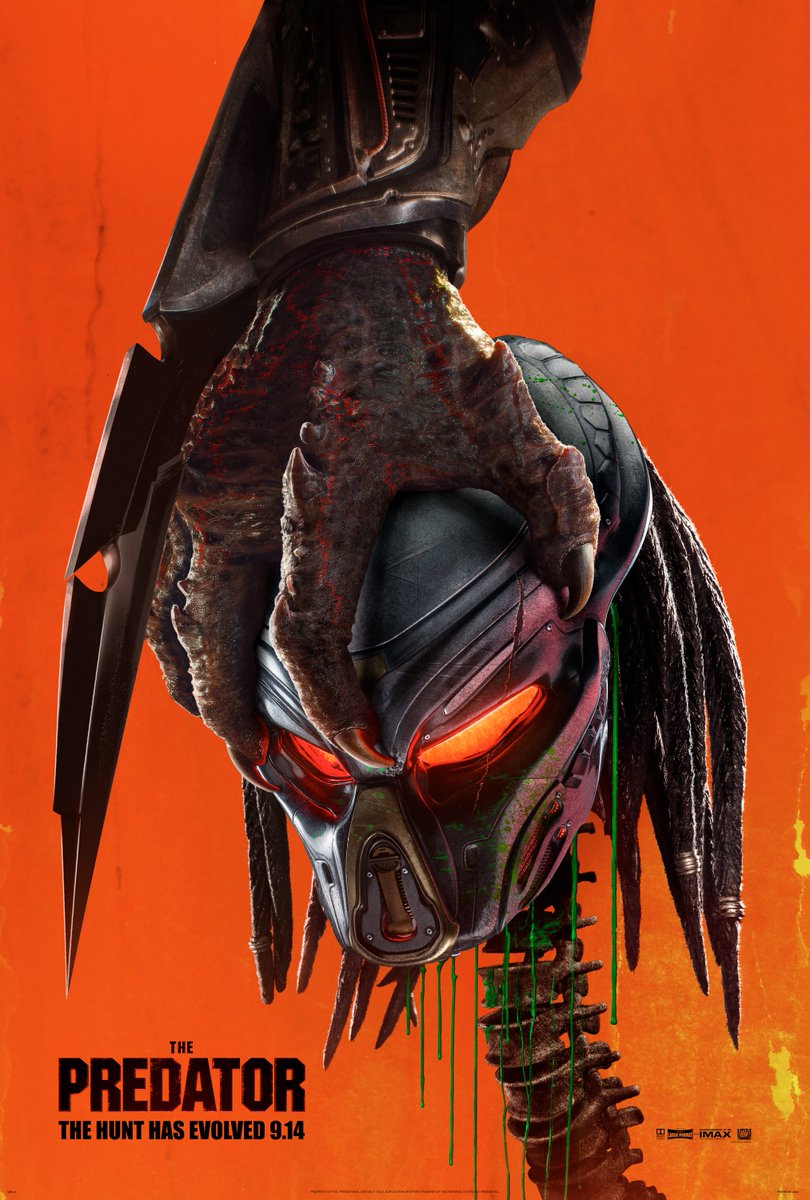 A solid reboot/sequel for the Predator franchise! Don’t pay attention to the plethora of reviews from critics who are hating on Shane Black’s The Predator. With an entertaining action-horror plot, fantastic cast, and excellent pacing, this is the Predator that we wanted and got! And I am not alone in this, several podcasts and even the Roger Ebert site agree on Black’s Predator. The tone of the movie feels like a throwback to the original, while acknowledging the other movies to maintain just enough continuity where you don’t question where this film falls of what has happened prior. I went into this movie with moderately low expectations because of what I read in the initial reviews, but I was completely surprised by how much I enjoyed it. And not only me, all of my friends who were with me between Rounds 1 and 2 of Halloween Horror Nights opening weekend. You get it all, grizzly action, humor, and entertaining kills. Unlike past movies that tried to “improve” on their 80s predecessors, this quintessential action-horror takes us back to what made the 80s horror endure the test of time. Instead of building the movie around the title character, it builds it around the lead human cast. And a memorable cast of characters, at that. Where some reviewers have found irreverence or offensiveness in the fact that many of the characters demonstrate cognitive and emotional disabilities, this is actually what works well for the film. Furthermore, it highlights how emotional, physiological, or cognitive disabilities do not determine someone’s degree of courage, determination, empathy, or sense of humor. Each of the lead and supporting characters in the ensemble cast overcome any obstacles that stand in their way, whether the obstacle comes from within or from the outside. It is a fun, exhilarating horror movie that will keep you entertained!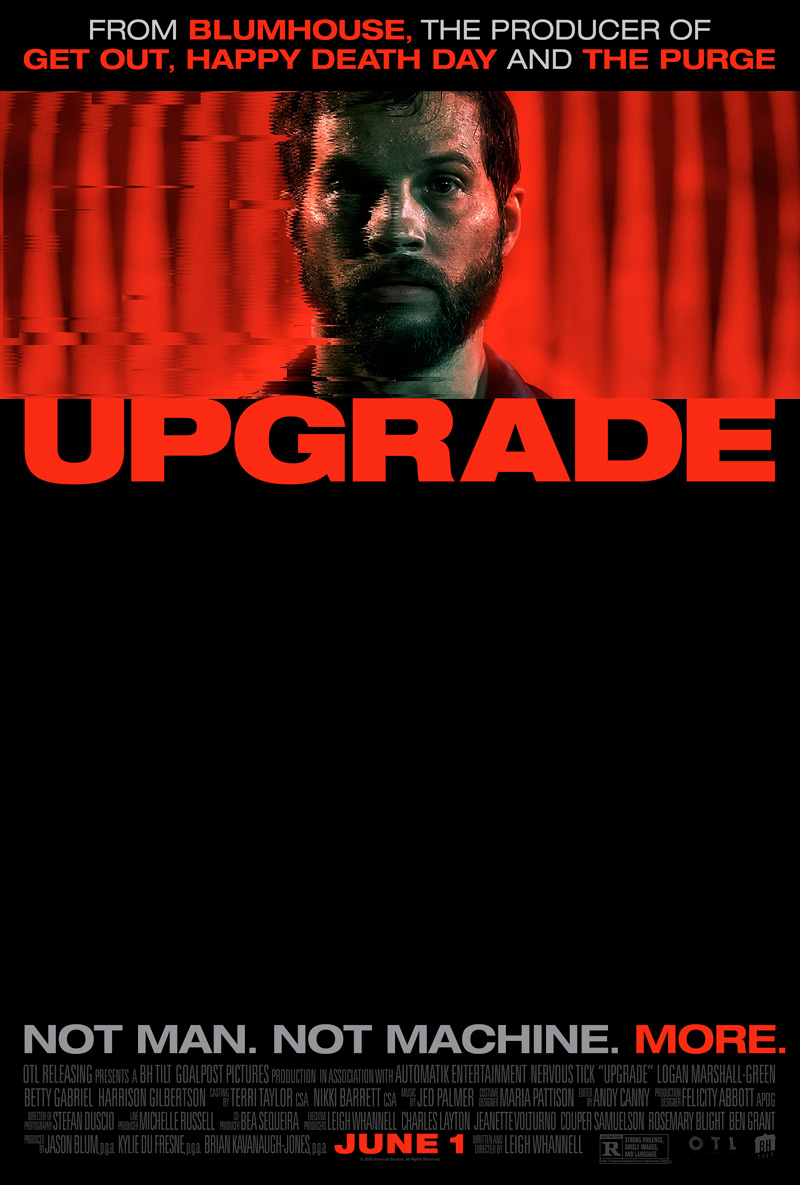

 R.L. Terry ReelView