“The Shape of Water” film review

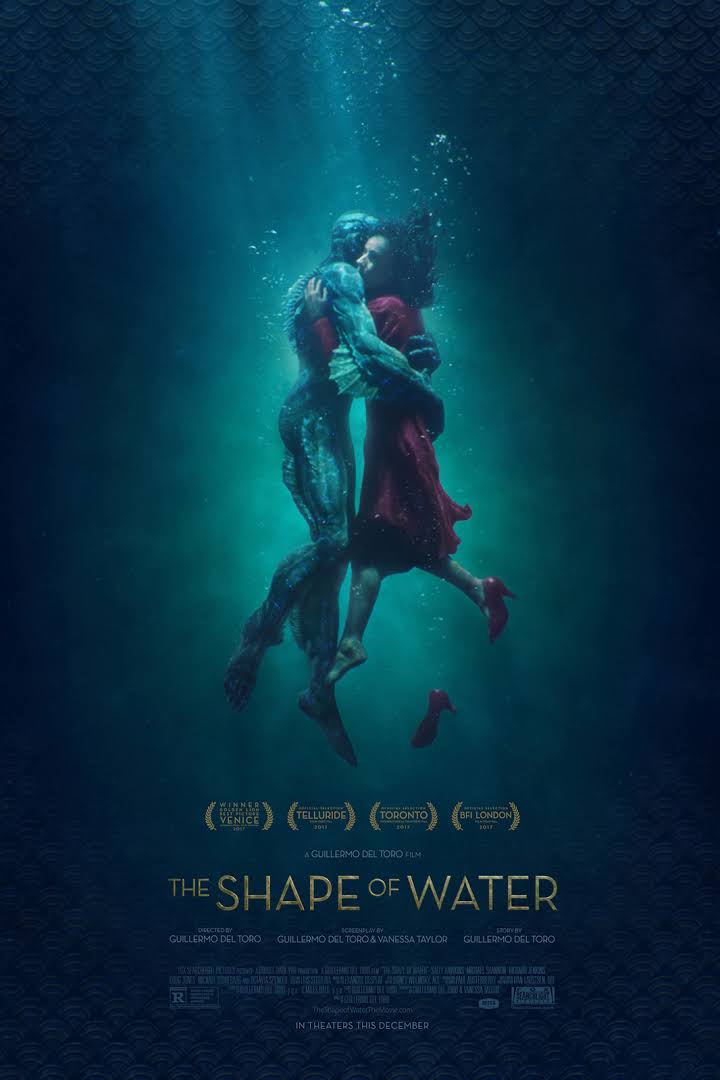
Absolutely enchanting! Guillermo Del Toro’s The Shape of Water is a beautiful modern fairy tale told through a classical means. From the provocative first scene to the endearing final moments, this film explores the human condition in an innovative way that highlights the spirits of kindness, generosity, and love. In a film that could have so easily played out like many other-worldly science-fiction love stories, this story demonstrates the power of cinematic storytelling full of brilliantly developed characters and excellent direction from Del Toro. Positively gripping. The Shape of Water provides audiences with a fresh perspective on the “monster movie” genre by taking you on a whimsical journey into the belly of a government research facility during the Cold War where you meet characters you love and love to hate along the way. As with many of his other films, Del Toro once again crafts an imaginative experience through the creation of memorable characters grounded by solid writing, direction, and cinematography. It seems like “genre films” are becoming a thing of the past, because so many want to exist in multiple planes; however, for all the elements at its heart, The Shape of Water is a classic monster genre film but breaks new ground.

Elisa (Sally Hawkins) is a mostly isolated mute young lady who works in housekeeping at a remote, underground government research facility near Baltimore. With only her starving artist neighbor Giles (Richard Jenkins) to keep her company at home and her close friend Zelda (Octavia Spencer) to watch over and speak for her at work, she leads a rather mundane life but longs for music, adventure, and romance. Taking place during the Cold War in 1962, Elisa’s encountered the strange and questionable over her time in and out of cleaning labs. Her nondescript life will be forever changed when she discovers the lab’s newest secret–a mysterious amphibian-like creature who lives in an aquarium tank. Over the days, Elisa feels compelled to visit the creature as the two of them develop a trusting bond. When the creature’s very life is at stake, Elisa must work quickly to construct a plan for his safe evacuation.

The Shape of Water has one of the most innovative openings to a film in that it juxtaposes a serene, calming yet mesmerizing sequence of underwater shots during the opening title sequence against a rather provocative first scene. Del Toro will successfully have your attention for the entirety of the film. It isn’t often that we get fairy-tale like narration at the beginning of a monster movie, and Del Toro’s choice for the beginning narration was absolutely perfect. It not only provided strategic exposition, but set the tone of the film. What we are about to watch may contain elements of monsters and mysteries, but it is a modern romantic fairy tale. Horror and science-fiction have often been used as conduits for filmmakers to explore the human condition and all its imperfections and growth; so by combining elements from both to create an innovative monster movie, Del Toro provides audiences with a fantastic opportunity to use the film’s diegesis as a mirror to our modern lives. Although the “beauty and the beast” style love story is central to the film, the film also comments on topics such as race, marriage, and class during the 1960s. There is also a side story that alludes to how members of the LGBTQ community were treated in the workplace and within the community. An incredibly comprehensive plot that never loses focus on the main story.

What an excellent cast! Sally Hawkins brings such endearing and powerful subtlety to her mute character. Her commitment to Elisa is so exquisite that you will swear that you can hear her voice through her sign language. Much in the same way we explored interspecies communication in last year’s Arrival, we witness just how the movement of hands and facial expressions know no bounds when establishing relationships with those with whom we cannot verbally communicate. In many ways, this movie is a combination of Beauty and the Beast, TV’s Swamp ThingArrival, and a little Creature from the Black Lagoon. Hawkins’ exceptional performance may very well land her an Oscar nomination, and quite possibly a win. Doug Jones’ creature is a brilliant combination of monster and lover. From the moment you encounter him, you will feel a human-like connection to his character. Like with Hawkins’ Elisa, Jones’ creature exhibits the power of subtlety. That seems to be a common element of this film: subtlety. So often the techniques of the pioneers of cinema are forgotten. Hitchcock proved over and over again that the camera itself can create suspense. Of course, he took many of his techniques from silent cinema where the camera was instrumental in visually communicating so much. Del Toro utilizes this power of the camera to not only visually create emotions but to work through actors to allow subtle powers of character to enhance the experience of this movie.

Beyond our central characters, Zelda (Octavia Spencer) and Giles (Richard Jenkins) have mini-movies of their own. And indirectly, their mini-movies have an impact on the larger story; however, these side stories never eclipse the central plot and only serve to bolster the overall experience. Spencer’s character enables audiences to explore marriage in the 1960s and Jenkins’s character provides a platform for discussion regarding how ostracized members of the LGBTQ community were before more modern times. There is also a scene where a classy looking black couple was denied seating at a diner. So many societal themes that can be used as a framework through which to understand the time in which this story takes place, and now the characters can be used to explore modern themes as well. Each and every chiefly supporting player has a significant impact upon the central diegesis of The Shape of Water. Del Toro took special care in integrating every element and making sure each aspect of the story was never just filler or for shock value. Each character, each scene, each camera angle moves the story forward.

The reality of love and relationships juxtaposed against an imaginative backdrop grounded in a literal view of life in the 1960s comprise this world created by Guillermo Del Toro. Whether you enjoy an excellent monster movie or old-fashioned romance, you will enjoy The Shape of Water. The brilliance of this film can be found in how this modern fairy tale is told through classical means. I also enjoyed the references to classic Hollywood movie musicals and dramas that can each be seen in the plot of this film. No image is ever wasted in Del Toro’s film. If there is one negative critique, the second act is a little drawn out and could have been trimmed a little, and some added suspense would have been appreciated in the second act as well.

“Blade Runner 2049” film review

Just as mesmerizing as the original! Denis Villeneuve’s Blade Runner 2049 is nothing short of a future classic that demonstrably possesses the soul of the original and pairs it with a new plot brought to life by a fantastic cast. Every minute is filled with beautiful cinematography that is perfect in every way and a haunting score that penetrates down to the bone. At its core, Blade Runner 2049 wrestles with this one central question: what does it mean to be human? A question that can spawn hours of debates or an exquisite nearly three-hour motion picture. Considering that Ridley Scott has not delivered the same quality for which he provided precise and poignant direction, it was a solid decision to attach Villeneuve as the director. This sequel 35 years in the making may not have had the classic Ridley Scott at the helm, but Villeneuve channels his inner Scott to provide audiences with the same profound cinematic experience today as Scott did when Blade Runner first released. From the color palette to the lighting to the sound design, this motion picture is one that typifies the power of the art of motion pictures and one that will surely be regarded as iconic as the years more along, very much in the same way that the original has been regarded over time.

Officer K (Ryan Gosling) is tracking down the remaining legacy Replicant models created by the infamous Tyrell Corporation, and his latest mission takes him to an obscure farm in the middle of dessert California. After retiring the replicant at the farm, K uncovers what will become a metaphor for Pandora’s Box, as it opens a mystery that law enforcement and the Wallace Corp. seek to solve. The secret contained within the box is one that could potentially plunge all “humanity” into complete chaos, not there there isn’t enough of that already for those left on earth. K’s journey takes him from the gritty, grimy streets of Greater Los Angeles to the dust bowl that was once Fabulous Las Vegas. There, he meets former Blade Runner Deckard  (Harrison Ford) who has been hiding from law enforcement and the Wallace Corporation for three decades. Together, they must work to locate the miracle that no one ever could have thought would happen–or could happen.

Despite not pulling the numbers that Blade Runner 2049 was forecasted to bring in over its October opening weekend, the film did what fans wanted–it kept the very essence of the original movie alive and well. For all the artificial intelligence in the film, there is nothing artificial about this long-awaited and highly anticipated sequel to the Ridley Scott classic. The reason for not pulling the numbers that it was predicted to do can likely be attributed to the tone of the film and the stylistic filmmaking approach that borders on neo-noir meets the avant-garde. Although not completely necessary, it is incredibly helpful to have seen the first film. And seeing the first film gives an appreciation for the sequel that cannot be experiences without having knowledge of the first. The slow-pace and dark atmosphere may be some of the reasons why more people did not wish out to see it as the weekend moved along. Looking at the two films side by side, this film is a direct extension of the original so the authenticity of this universe and story is genuine and almost visceral. For those who prefer more dialog or higher concept plots, the film may not strike the same level of enthusiasm because of the heavy visuals and dark themes in addition to the profound questions. This combination is not one that will attract the general populous in doves; however, this film IS what it needed to be. Sometimes a long-awaited sequel has to be made to remain true to its soul because that is what the fans want to see, and it’s the true fans who continue to visit the cinema year after year. Blade Runner 2049 may not win over new fans, but it keeps the diehard ones happy.

At the heart of Villeneuve’s cinematic masterpiece are existential questions that drive the plot forward. A plot driven by such questions told through a sedated pace is one that is not as easy to digest as one that is more superficial and more rapidly paced. Still, these questions are profound and cause one to think hard about what it means to be human. What sets this film apart from other science-fiction rapid fire blockbusters is the commitment to visual storytelling and the art of creating a motion picture. Blade Runner 2049 mirrors its predecessor and remains true to the experience of the first. Cinephiles will especially appreciate this film for it harkens back to a time when German expressionism was at the foundation of the set design and lighting. There are many exaggerated and elongated shapes that exist in a world of harsh shadows and dimly lit alleys throughout the film. Although the look of the future world in the original was one that audiences may not have believed would come true or could come true is seen differently by today’s audience that can easily see just how accurate the world of the Blade Runner movies actually is–the mediation of society today seems to be not that far off from this not-so-distant future.

Cinematographer Roger Deakins captures a wold through the lens that seems to go on forever in a world of greys and beiges. The only color to be found is in the prolific advertising on the sides of buildings. Deakins further extends the artistic approach to the cinematography by paying homage to Stanley Kubrick’s The Shining in a shot that was actually added to one of the more recent recuts of Scott’s Blade Runner. That score, though. The sound design and score are an audible extension of the visual landscape. Composers Benjamin Wallfisch and Hans Zimmer have created one of the most haunting scores to ever be heard in the cinema. The combination of ghostly groans and blood curdling howls echo the very look and feel of the landscape. I’ve rarely encountered such an immersive sound design and score in a film. Just as the world on screen is an uneasy place to live and one that contains faint images of the grandeur of a world that once was, the score accompanying this motion picture places you in the midst of this post-apocaltyic world that most natural-born humans have left.

Definitely a film that I want to watch for a second time in order to appreciate this film, boasting with artistic achievement, even more than I already do. Although most of the themes and subtext are centered in and around “what it means to be human,” there is a real message regarding the importance of bees. An important visual statement in the film because the populations of bees, the most prolific pollinators, are dwindling. Not for the casual movie-goer, this film is for those who want to experience a sequel in the vein of the original that shows the artistic side of the creation of motion pictures.

“Dark Tower” movie review

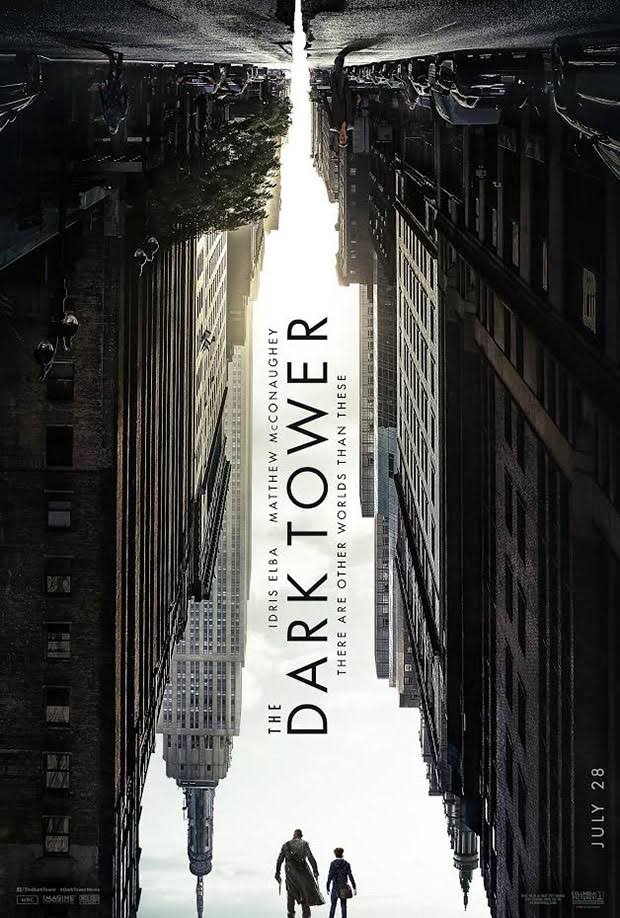
A paint-by-the-numbers “epic” story with a prolific number of Stephen King references. Adapted from the Dark Tower series of novels by Stephen King, Dark Tower introduces movie audiences to one of King’s masterpiece works of literature. Unfortunately, the movie takes place in the middle of the series and fails to leave audiences wanting to see more. For the most part, it offers up little more than an enhanced SyFy Channel original movie or a one-time HBO film. With a powerhouse leading cast consisting of Idris Elba and Matthew McConaughey, it constantly feels that the actors were held back from that which we are normally accustomed. That is, not to say that there aren’t enjoyable parts of the movie–certainly seeing all the King references are fun and it is a great premise. I only wish the story and characters had been allowed to develop over the course of three films. Although there is sufficient evidence to suggest that some movies in the recent past that have been forced into a trilogy instead of a strong, concise single film, this is an example of a one-time film that truly needed the room of three films to develop and emotionally connect with audiences. There is never a dull moment in the film, nor an opportunity to become bored because the film is incredibly rushed and turning points are forced into place.

At the center of the universe stands a massively tall dark tower that keeps the bulk of evil forces at bay. Under attack by Walter (McConaughey), the last gunslinger Rolland (Elba) must destroy Walter and his following before they destroy the dark tower and wreak havoc on Keystone Earth and the other planets in the universe. Harvesting children with “the shine” from earth, to use their minds to destroy the tower, is the method employed by Walter and he has his eyes on a child whose shine is greater than any other. After Jake (Tom Taylor) evades capture by Walter’s henchmen, he finds himself on Mid World where he meets gunslinger Rolland. Under constant siege by Water, Rolland and Jake must make a arduous journey to Walter’s headquarters where he is mounting his attack against the tower. With the fate of the universe at stake, Rolland, Walter, and Jake face-off in an epic battle of good versus evil.

There is not much to dissect here. One thing is for sure–and I have not read the books–BUT, from what I know of the books, fans of the literature will not like the film because it takes what happens over the course of “King” sized novels and condenses it down to little more than a short story turned 2hr film. Not having read the books, I was not set up for disappointment. That being the case, I enjoyed the film for the most part. But it was obvious that it was incredibly rushed and there was little if any development in plot or character. No emotional investment to be found. It’s a shame; the premise of the film is fascinating and I think there is a high degree of probability that I would have enjoyed following the franchise had it been more than one film. The way the movie ends does lend itself to possible sequels, but after the very “television” feel of this one, it is going to have a hard time convincing future audiences to invest time and spend money on it. If anything, this film does prompt me to read the novels upon which it is based. One argument that could be made in the film’s defense is the same one that can be made when looking at many of the films based upon King’s works. His novels are so dense, internally driven, and detailed that is is difficult to successfully translate effectively from page to screen. Obviously, there are exceptions to this trend (i.e. the upcoming IT theatrical release).

If you are a fan of fantasy and adventure films with a hint of science-fiction, then you will likely enjoy this movie. If you love the series of books, I feel fairly confident that you will not like this adaptation. Perhaps this film will inspire a network to spearhead an epic television series. I think that is where this story will be best shown.

Written by R.L. Terry

Edited by J.M. Wead

“Alien: Covenant” movie review

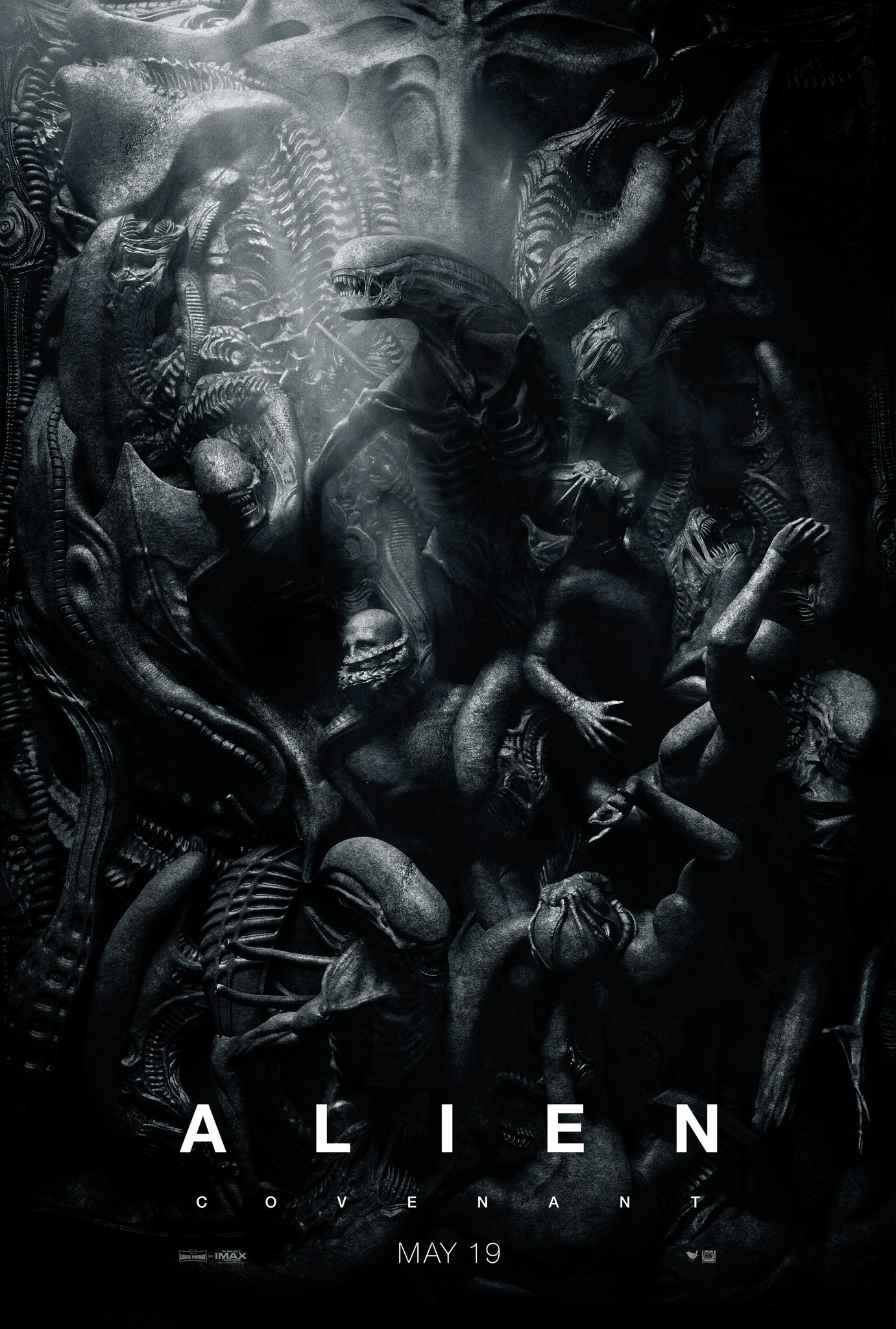
Alien: Covenant returns to its roots in horror. In 1979, Ridley Scott convinced audiences around the world that “in space, no one can hear you scream.” And the newest film in the line of prequels leading up to the terrifying events aboard the Nostromo, attempts to make up for the rejection of 2012’s Prometheus as a true prequel to Alien. Fortunately for fans of the franchise, Alien: Covenant is mostly successful at delivering what audiences loved about the original and missed in the subsequent Cameron and Fincher movies–the trademark horror of the xenomorph and facegrabbers. Starting off like Prometheus and finishing more like the original Alien, the newest film in the nearly 40-year-old franchise will have you screaming, cringing, and completely immersed in blood-curdling terror. That is, until you realize that only some questions from Prometheus are answered, and all new questions about events in this movie are generated and left unanswered. That appears to be Ridley Scott’s Achilles heal: always leaving more questions unanswered than providing closure or exposition, thus prohibiting the movie from being as great as it certainly had the potential to be. With one more film between this current installment and 1979’s Alien, perhaps there will be far fewer unanswered questions and provide the history for which fans are looking.

On a colonization mission, the complement of the Covenant is traveling into deep space towards a new planet that earth’s humans hope to make a new home. After encountering some severe spacial turbulence enroute to the destination, the crew of the Covenant intercept a transmission from an uncharted planet that, according to the sensors, appears to be a complete paradise. After some deliberation, it’s decided to head for this new planet. Most of the time, when something is too good to be true, it usually is. Led by the new captain Oram (Crudup) and first officer Daniels (Waterson). After an attack from an alien species, the crew is rescued by David (Fassbender), a synthetic android-like human, who is the only remaining survivor of the Prometheus expedition from some years earlier. Unbeknonst to the crew and scientists of the Covenant, they are about to come face to face with the most terrifying nightmare imaginable–make that–an unimaginable fight for survival when paradise turns to hell.

One of the first technical elements that fans of Alien will notice is the opening title sequence. It is reminiscent of the manner in which the opening credits and title of the original were revealed in the emptiness of space on screen. I appreciated this homage to the original because it set me up to prepare for an Alien movie and not a second Prometheus. Perhaps that does not seem important to non-fans; but to make a long story short, while Scott was in the conceptual phase of a sequel to Prometheus (prequel to Alien), he was told by the studio that audiences didn’t want another Prometheus–they wanted Ridley Scott’s Alien. And now the rest is history. In order to best understand the flaws of Alien: Covenant it’s necessary to understand the similar flaws of Prometheus. One of the many diegetic and technical problems with Prometheus was the fact that there was little direct connection to Alien and it felt like a whole new franchise and not an extension of the original. This lack of connection is best represented by the number of unanswered questions dwarfing the answered ones. Essentially, audiences only learned about David’s origin and, to a lesser extent, why that particular planet. But enough about Prometheus, we are here to talk Alien: Covenant.

Although vastly improved, Covenant also leaves audiences with many unanswered questions; albeit, it is successful at making up for many of the diegetic flaws of the preceding film. To get into the questions would reveal too much about the film and perhaps hint at some spoilers, so I won’t go into specifics. But enough about the flaws of this otherwise exciting and well-produced film–just know that the writing is weak but hopefully will be better in the next installment. The most impressive elements of the movie are related to the cinematography, editing, and visual effects. From the sweeping landscape shots to intimate closeups of the xenomorph and its victims, Covenant is absolutely visually stunning. There is even a mild romantic encounter between David and a member of the Covenant crew that was shot incredibly well and strategically placed in the narrative. Where the story is weak, Scott makes up for in creating an impressive cinematic experience for long-time and new fans alike. There are even shot sequences that are taken directly out of Alien. Often times, I am extremely critical of computer-generated effects and characters versus practical effects and animatronics–and for good reason–nothing can replace the way real light bounces off real objects and is really captured by the glass lenses on a camera. Furthermore, it’s rare that a character react in genuine fear to an object, villain, or murderous alien that is not really present on set. However, the combination of CGI and practical effects in Covenant is breathtaking and convincingly real. You will almost feel the facegrabber latching onto you and the xenomorph’s wet acid-breath on your skin.

Aside from the unanswered questions still residing in the minds of those who have seen the film, Covenant fails to live up to Alien in another rather conspicuous way. For everything that this film did right and make up for (in respect to Prometheus), it lacked any memorable crew members–more specifically–this film differs from Alien by not developing Dani(els) to be the strong female character that she had the potential to be. Dani could have been Covenant‘s answer to Sigourney Weaver’s Ripley in Alien. One of the diegetic elements that is most talked about and is often the topic of horror film humanities classes is the breaking of gender roles and heteronormative expectations by Ripley in Alien. Perhaps that is why Alien is almost avant-garde in the cinematic experience whereas Covenant is impressive but does not typify the art of cinematic storytelling nor contributes to groundbreaking character-types. Beyond strong female lead, the film simply fails to leave the audience with any one memorable character period. No one will be talking about any one particular character years from now. Both the unanswered questions and the lack of memorable significant characters can be traced by to one root cause: flawed writing.

If you loved the original Alien, then you will mostly enjoy Alien: Covenant. The experience is equally terrifying as it is beautiful. Whether you have seen Prometheus or not will not affect your enjoyment factor in this film. If you have seen Prometheus, then I would suggest watching the Ridley Scott short film The Crossing because it ties Prometheus to Alien: Covenant. Think of it as an extended prologue. This short film helps audiences to make the connection between the two films in hopes that it does answer some otherwise unexplained circumstances and events. After watching this film, I have an urge to rewatch the original in order to begin making those direct connections between this one and Alien. With one more film to release to finalize the events between Prometheus and Alien, I am eager to have my remaining questions answered. Bottom line: Alien: Covenant demonstrates Scott’s newfound commitment to return audiences to the space horror that makes the original so iconic.

“LIFE” movie review

Chilling! In space, no one can hear you scream. Although that tagline is associated with Ridley Scott’s groundbreaking space-horror Alien, director Daniel Espinosa’s LIFE delivers an intensely dark thriller that will have you screaming and cringing from the moment life on Mars is discovered. In the same vein as AlienLIFE is a science-fiction horror that may look like Gravity and might even have the strong orchestral sounds of Interstellar, but provides audiences with an entirely different experience. Borrowing from Alien and Gravity, Sony and Columbia Pictures craft a new space-horror narrative that can sufficiently serve as a standalone film–and be great in that–but also has potential for a sequel or two. Interestingly, there are parallels to Ridley Scott’s Alien beyond the premise; LIFE also features the same number of crew members and other more subtle elements. That being said, LIFE is definitely not a knockoff Alien nor is it trying to be Ridley Scott’s critically claimed film as it does not contain the social commentary on gender, sex, and family. However, imitation is the highest form of flattery, and LIFE pays both homage to the film that likely inspired it but delivers a comprehensive science-fiction horror experience that provides ample twists, turns, and even some emotional connection along the way.

A group comprised of engineers and researchers on board the International Space Station (ISS) are on the brink of one of the most important discoveries in human civilization: life on Mars. Rory Adams (Ryan Reynolds), David Jordan (Jake Gyllenhaal), Miranda North (Rebecca Ferguson), Sho Murkami (Hiroyuki Sandana), Hugh Derry (Ariyon Baker), and Ekaterina Golovkina (Olga Dihovichnaya) represent several different counties, all working in cooperation on this groundbreaking mission. After the satellite, carrying the Martian sample, is retrieved from spiraling out of control towards the ISS is secured, the group of astronauts are faced with the crisis and task of retrieving it. After a daring retrieval, what should be a joyous discovery–something out of a scientists dreams–soon becomes a living nightmarish game of hide and seek. When the specimen from Mars begins to grow rapidly and become more and more intelligent, it stops at nothing to continue to feed the alien’s insatiable appetite and its goal to find a new home.

Initial impressions of LIFE leave you with noticing just how much like Alien it feels. It’s been nearly forty years since the Ridley Scott cinematic masterpiece, but in that time, no other science-fiction/horror film has come this close to delivering a similar (note: not as high on the cinematic totem pole as its predecessor) experience to that which first terrified audiences in 1979. One of the primary differences between Alien and LIFE is just how much closer to home this horrifying experience occurs. Whereas with the former, the alien encounter takes place hundreds of lightyears away, the latter’s narrative takes place just outside of our atmosphere on the ISS. Not that LIFE feels more intimate than Alien–it doesn’t–but the proximity of this story might add a little something more to the edge that you’re already sitting on as the horrific events unfold on the space station. Pacing is similar to Alien in that LIFE has a slow burn during the first act. To balance this slow burn or to keep audiences from thinking that it’s taking forever for the movie to really get started, the film begins with the “big event” right at the very beginning. The “big event” being the apprehension of the satellite carrying the Martian specimen. But for all it’s similarities, this movie provides a different experience that can certainly stand on its own. LIFE may have been inspired by Alien, but it is certainly not a ripoff.

I’ve been quite critical of the CGI-effects of films in more recent years, but the brilliance of the alien life form in LIFE is the degree to which it feels organic. In the beginning, the life form is little more than a single-celled organism; however, as the plot thickens, the organism begins to take a more chilling form and shape. Eventually, the alien develops a frightening grin and a mysterious-like form. One of the scariest parts of Ridley Scott’s Alien was the degree to which the Xenomorph feels so real that, even in your seat, you could feel the acidic slime and your body likely felt the excruciating pains of that iconic moment when the alien shoots out of the stomach. Part of that can be attributed to the use of pneumatics, animatronics, miniatures, and other practical effects standards. Yes, the alien life form in LIFE is computer-generated, but it also has a very real nature to it. Instead of focussing on how to make the alien as impressive as possible, it would appear that the special effects artists (whose work can be seen in the Transformers movies) focussed more on the small details that ordinarily give a CGI character away. Just like with the brilliant visual effects work in Ex Machina, the visual effects of the alien are flawless.

There is an inherent level of unpredictability in LIFE even after the unavoidable similarities to AlienLIFE plays around with the final girl trope and the killings have a strategy or method to their madness. Conspicuously missing from the characters of LIFE in a comparison to Alien is a Ripley-like character. Does the film portray strong female characters? Certainly. But LIFE keeps you guessing because the order of the deaths do not follow any predictable pattern. Do not allow yourself to fall into the trap of being predisposed to the order of the killings to be based up on star billing. Speaking of the characters, effectively managing an ensemble cast is always difficult. So often, some characters in the ensemble get lost or do not receive nearly as much development as the more obvious leaders. Not true with LIFE. True that there is not a large degree of character development all the way around, but each of the characters is treated with equal screen time and emphasis. That is, until death occurs. The excellent handling of this ensemble gives LIFE an extra dynamic that lacks in other ensemble cast films, thus helping this science-fiction horror to stand out from others that are similar in premise or plot. This movie has a “life” of its own.

2017 seems to be shaping up to be a year of excellent movies! We are just about to finish the first quarter of the year, and already there have been some great motion pictures. Furthermore, 2017 seems to be the year of the horror film because so many have made the theatrical distribution circuit. For those who love a good science-fiction thriller, you will not be disappointed with LIFE. Albeit the film may not be able to sustain the magic and horror for the entire runtime, it successfully delivers a terrifying experience for most of the film. If you don’t mind some cringeworthy moments and the dark tone of the film, then this is definitely one to see this weekend.

PS. I saw Power Rangers this week as well, and it was a delightful film! Yeah, it’s a little campy, but that’s to be expected. Definitely the best Power Rangers motion picture. All-in-all, it sufficiently pays homage to the 90s show but provides audiences with a new story. Go-go see it too!

Written by R.L. Terry

Edited by J.M. Wead