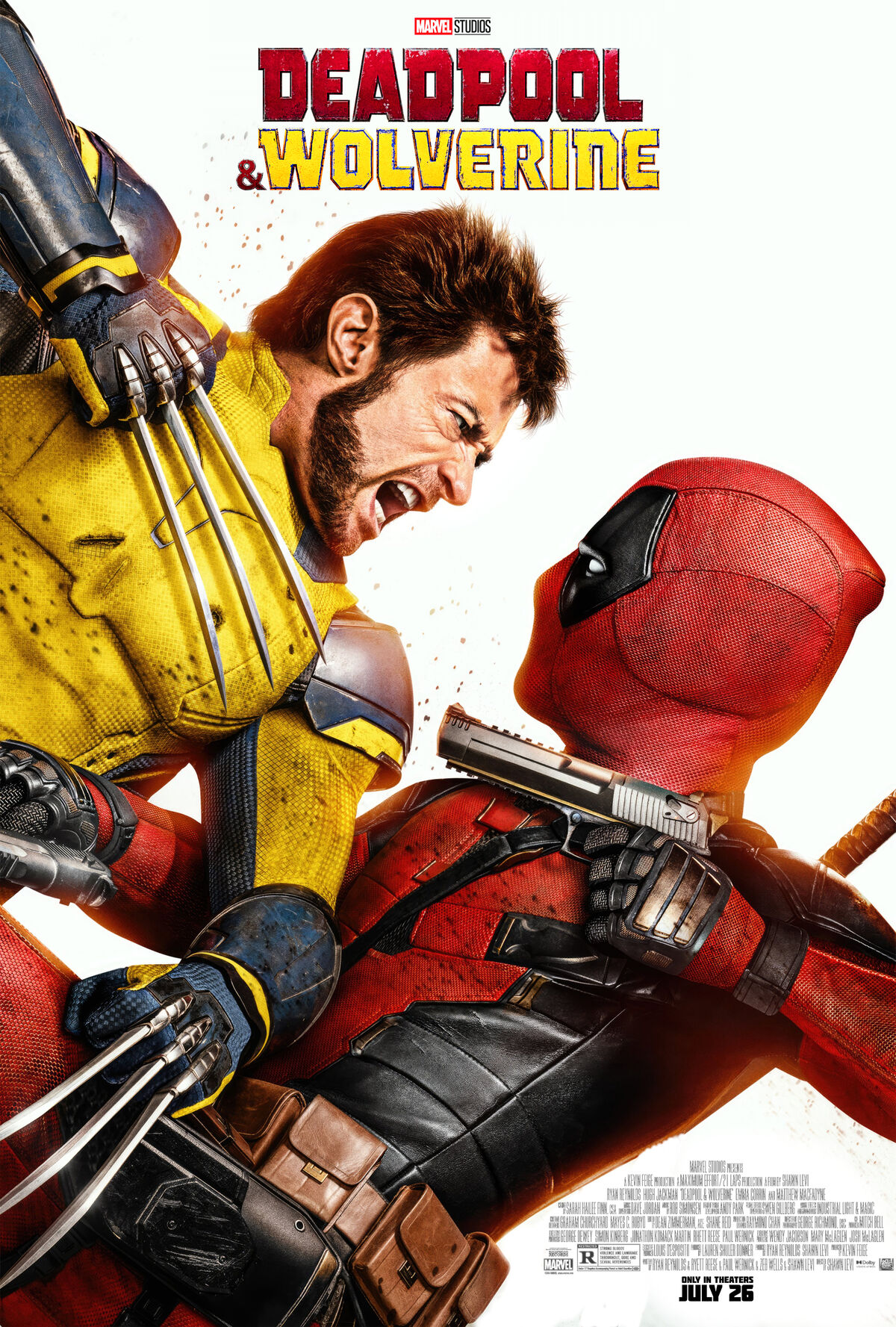
DEADPOOL & WOLVERINE movie review

Exhausting. Deadpool & Wolverine is a step down from its predecessors in terms of quality and cleverness of storytelling. While clearly intended to be a movie that reinvigorates the MCU, the screenwriting is both pandering and derivative. While effective in smaller doses, the hyper-meta humor is overplayed to the point of being obnoxious. Moreover, there are many gags that are recurring to the point of boredom. While expertly choreographed, shot, and edited, the endless barrage of fight sequences overstays its welcome. In terms of the premise, the whole multiverse idea that has been integrated into so many superhero movies (both MCU and DCEU) is overplayed. Had the movie been closer to 90-100 minutes, then perhaps the pacing would’ve been better and the Deadpool jokes, satire, and gags would not have felt overplayed, but the 2+ hours runtime works against the full potential of the narrative. If you can’t get enough of the Deadpool schtick, then you’ll undoubtedly like this movie. But if you were hoping for something as clever as the first two Deadpool movies, then you may be as disappointed as was I.

When the multiverse is threatened by a powerful Omega class mutant, Deadpool’s services are retained to protect the multiverse from complete collapse. In order to defeat this new deadly enemy, Deadpool teams up with the Wolverine, whom is recovering from psychological injuries.

Because of the movie’s setup, I had hoped that Deadpool and Wolverine’s goal would have been to eliminate all timelines except the sacred timeline (I guess that’s supposed to be the real/our world), putting an end to the multiverse, but that wasn’t the motivation or goal. So, I suppose that means the multiverse theory will continue steamrolling through this and other franchises. The whole multiverse theory needs to die. At this point, it is way past its half-life and rather limiting on the stories that can be told. Sounds counterintuitive, right? For how could a multiverse limit the stories that can be told? Simple. Everything is connected in a codependent sort of way. In a cinematic (including television counterparts) multiverse, no story, character, or plot is truly independent of the other; therefore, a filmmaker is unable to craft an original story; for any story involving the characters in a multiverse, has to fit in with the rest of the multiverse.

In a manner of speaking, a multiverse actually mitigates freedom of expression and variety of storytelling. When filmmakers return to crafting original expressions of stories and plots for comic book characters, then the quality of comic book movies may agin reach the levels of the Burton-verse. To this day, Batman 89 and Batman Returns are still the two best examples of superhero/comic book movies with X-Men the Animated Series being the best example of a superhero/CBM television series.

Fortunately, Hugh Jackman’s Wolverine’s gritty, no nonsense personality helps to balance out Ryan Reynolds’ manic Deadpool. While I have many reservations with this movie, I cannot deny the great chemistry between the two of them. Jackman’s X-Men the Animated Series inspired Wolverine was my favorite part of the whole movie. Partly because I grew up with X-Men TAS and have enjoyed the X-Men 97 series. Seeing that yellow and blue suit filled me with such happiness. Additionally, there are other nods to X-Men TAS and the Fox X-Men movies, including a particular surprise cameo that I know my friend Shawn of the Solving for X podcast will immensely enjoy! (If you’re an X-Men fan, then you should add this podcast to your lineup). What I liked most about this movie was the X-Men dynamic. Even though I have my reservations, I am curious how this newest iteration of cinematic X-Men will be adapted for the big screen. It is my hope that it will have the quality of storytelling of X-Men TAS that successfully addressed difficult topics in the real world both creatively and accessibly, all while bringing everyone to the table. Just as Professor X dreamed humans and mutants could engage in meaningful discourse one day.

Breaking the fourth wall and meta-humor can be effective tools for both humor and plot/character development; however, recurring pot shots and real-world references detract from the cleverness of the humor, and can ultimately take the viewer out of the movie. More so than the previous installments in the Deadpool franchise, this one is particularly packed with, what I am calling, hyper-meta humor. Hyper in that it’s so over the top and repetitive that it loses its charm quickly and grows stale. Most movies serve as a means of escape from the dullness, harshness, or complexities of reality; this is certainly true of superhero/comic book movies–or rather, was. I don’t know about you, but I don’t go into most movies hoping to be reminded of reality. Unless of course, for example, it’s based on a true story or a melodrama that is intended to evoke a real-world emotive response. So many of the jokes in Deadpool & Wolverine take me out of the movie, especially one recurring pot shot, that I won’t mention, that is borderline disrespectful of an historic Hollywood institution.

Despite most of the movie, in my opinion, to be lacking in genuine, clever humor, I manages to at least laugh here and there. The problem with a movie built entirely on the humor of middle school boys is that the move is ironically inappropriate for that same age group. When the first Deadpool released (by 20th Century Fox), they did the responsible thing by reminding parents that, even though this was a superhero movie, that its intended audience was 17+. I’ve yet to see an effort on Disney/Marvel’s part to remind potential audiences that this movie is rated R, and not appropriate for younger audiences due to the sexual innuendoes and language. Violence wise, other than the increased amount of blood, it’s on par with many PG-13 movies. When Deadpool hit the scene, he was different from that of most other superhero characters at that point, and his schtick was refreshingly funny; now, with the increased amount of middle school base humor in many comic book movies (mainly the MCU), it’s no longer refreshing and now borderline obnoxious. If I had to select one word that best describes Deadpool & Wolverine it would be obnoxious.
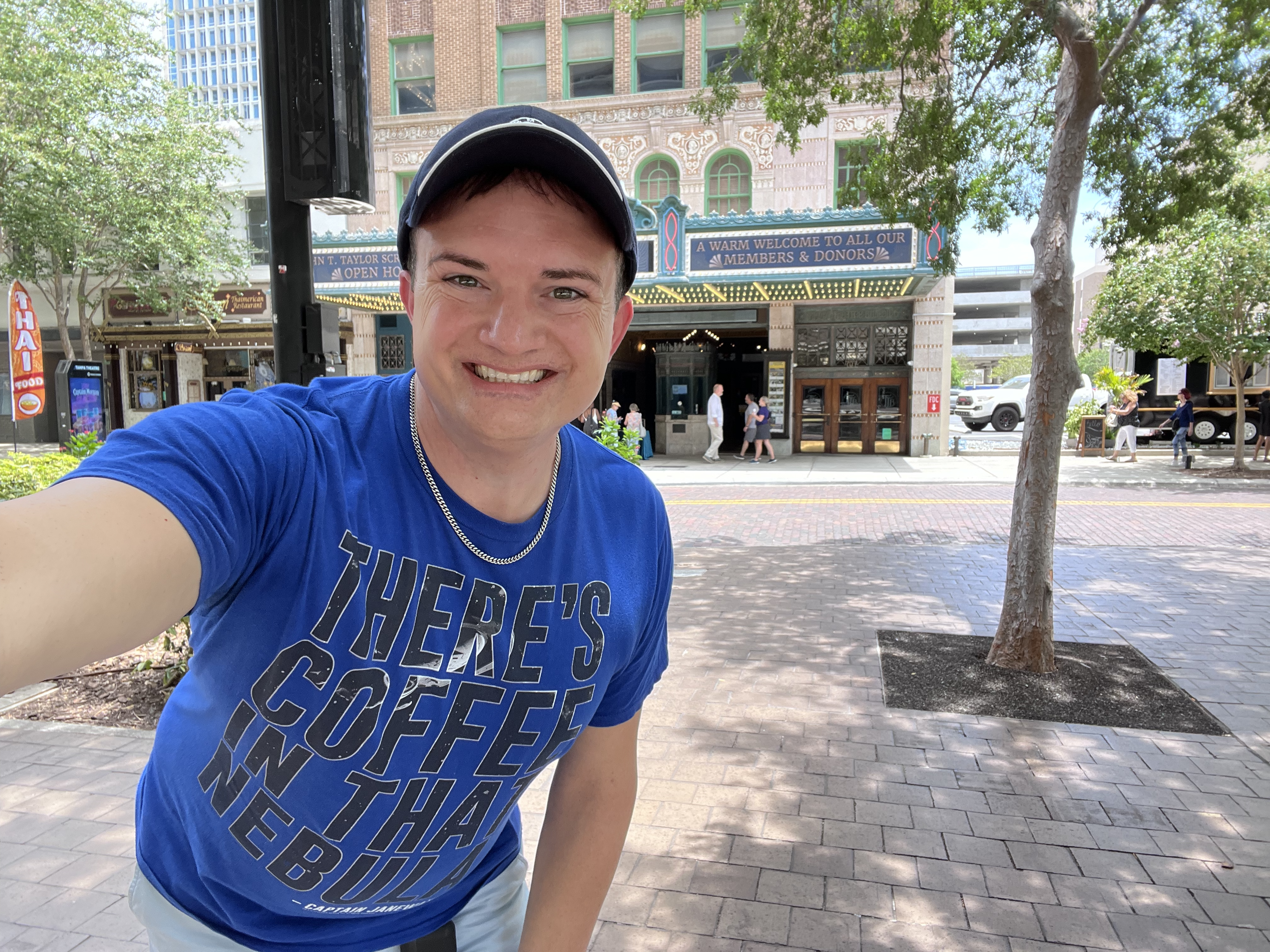
Ryan teaches Film Studies and Screenwriting at the University of Tampa and is a member of the Critics Association of Central Florida and Indie Film Critics of America. If you like this article, check out the others and FOLLOW this blog! Interested in Ryan making a guest appearance on your podcast or contributing to your website? Send him a DM on Twitter. If you’re ever in Tampa or Orlando, feel free to catch a movie with him.

Follow him on Twitter: RLTerry1 and LetterBoxd: RLTerry

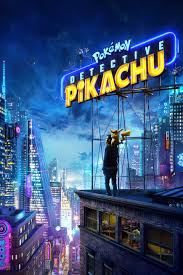
Detective Pikachu movie review

Gonna catch an uplifting time at the cinema with Detective Pikachu! Whether you are first generation Pokemon fans (mid 20s-mid 30s) or the more recent generation of fans, you are sure to have a great time at this movie. That being said, you definitely need to be familiar with Pokemon if you are going to get the full enjoyment out of this live-action animated story. I describe the movie in this way because the plot and characters are right out of a typical animated movie. Do you need to have reached high levels in Pokemon GO or have books of trading cards to enjoy this movie? Certainly not. Even with a little knowledge, you will wax nostalgic and “feel it in your jellies.” At the root of this movie is the theme of reconciling father-son relationships. That being the case, it would have made far more sense to have opened on Fathers Day weekend as opposed to Mothers Day weekend. There are lots and lots of movies about mothers and daughters/sons, but far fewer about fathers and their kids. Therefore, releasing this movie on Fathers Day weekend would have made more sense.

A major challenge for the screenwriters was to write a movie that was entertaining for both 20/30s and kids. Would I love to see a Deadpool version of Pikachu? Sure! But that would have excluded the kids, so the fact it was entertaining for me and appropriate for kids and entire families was an accomplishment! After that abominable Sonic trailer, I wasn’t entirely sure what to expect in this movie, even though the clips from the trailer looked good. Suffice it to say, the CGI design of the Pokemon and the production design of the setting worked together very well! All the practical and digital elements complimented one another. Although the plot was developed well enough for this movie, the dialogue suffered majorly. Most of the lines are uninspired, unimaginative, and vapid. However, there is a moment that a certain theme song is kind of sung, and it is brilliantly delivered! Well, that’s pretty much it for this review. To be honest, there isn’t much here to dissect. So do yourself a favor, and catch this movie in theatres this weekend.

You can catch Ryan most weeks at Studio Movie Grill Tampa, so if you’re in the area, let him know and you can join him at the cinema.

Ryan teaches screenwriting at the University of Tampa. If you like this article, check out the others and FOLLOW this blog! Interested in Ryan making a guest appearance on your podcast or contributing to your website? Send him a DM on Twitter!

Follow him!

Twitter: RLTerry1

Instagram: RL_Terry

“Deadpool 2” movie review

“Deadpool, can you hear me?” Subversive, irreverent, brilliant, meta. It very well may be better than the first. How often do we get to say that about direct sequels? Ryan Reynolds’ witty, crass, charmingly naughty superhero is back to take even the most unrelentingly serious movie patron, and drive them to complete laughter. The square peg of the X-Men’s round universe returns with non-stop action, antics, and fourth-wall breaking humor virtually deconstructing everything from the opening credits to the post-credit scenes. Nothing new there; however, Deadpool assures the audience that the story they are about to see is a family movie. And after watching it, it may be unconventional, but it’s a solid family film. Maybe not “family entertainment,” by the Disney definition, but about family nevertheless. Speaking of which, we may have just watched the final Deadpool as we know it before it gets the Big D sanitization treatment, should Comcast (NBC Universal) not swoop in to save 20th Century from the otherwise inevitable Disney acquisition. Deadpool 2 isn’t just better than the first one simply because it’s funnier, more risqué, or more clever; in measurable ways, it possesses stronger villain(s), stronger opposition to the goal, and a better plot overall. Not your everyday “family” film, but filled with emotional tugs at your heart strings, all the same. Just with a heaping helping of self-aware and self-deprecating bawdy humor.

For two years, Wade Wilson/Deadpool (Ryan Reynolds) has continued his mercenary work, taking down villain after villain, crook after crook; but, after he fails to kill one of his targets on an extra-special day to him, he is faced with tragedy. Through a series of bizarre events–yes, even bizarre for Wilson–Wilson finds himself in a maximum-security prison ran by the DMC (Dept of Mutant Control) along with a renegade 14yo mutant named Russell. When Cable (Josh Brolin), a high-tech assassin, arrives from the future to take out a target that he claims leads to total destruction, Wilson must battle inner and outer demons in order to get his heart into the right place. Knowing he’s facing the most dangerous villain he’s ever encountered, Wilson forms the X-Force, a diverse “superhero” group of many talents in order to apprehend the target to prevent the world from plunging into complete chaos.

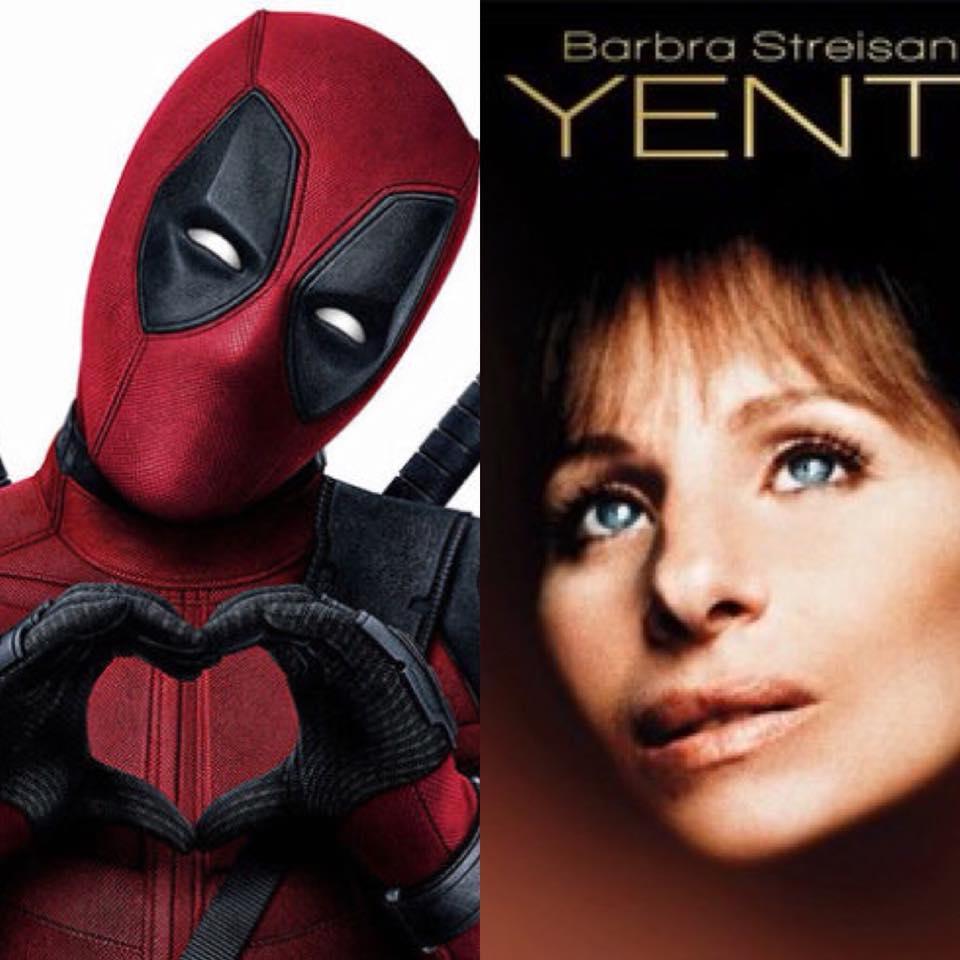
There is a comedic power in the plot of Deadpool 2 that invites the audience, at every turn, to laugh with the movie as it laughs at itself. There are a few running schticks throughout the film, but my favorite is the continued references to Barbra Streisand’s groundbreaking film Yentl featuring the iconic Streisand ballad Papa, Can You Hear Me? To which, Deadpool points out sounds an awful lot like Do You Wanna Build a Snowman from Disney’s Frozen. And it’s the implication of Disney appropriating Streisand’s song where the “Disney joke” was likely cut from the movie. Other jokes carry over from the first film such as the X-Men mansion with only Negasonic Teenage Warlord and Colossus roaming around. Some of the schticks from the first movie are transformed for this direct sequel. Contrary to the Wade Wilson from the first film, this one, this one diverts from his persistent aversion to companionship and a desire to be the “lone ranger,” as it were, and expresses a need for family. This desire for family serves as the backdrop of running jokes, gags, and extreme snark.

Streisand isn’t the only female vocal artist highlighted in the film, Dolly Parton’s 9 to 5, Pat Benatar’s We Belong, and Cher’s If I Could Turn Back Time are all featured, all that we were missing was Cyndi Lauper’s Time After Time. Unlike the completely unconventional opening credit sequence from the first Deadpool, this sequel’s opening credit sequence takes a page out of the James Bond handbook, complete with the new single Ashes by Celina Dion. Like the opening credit sequence from the first film, this one also replaces the names with jokes that certainly aid in setting the irreverent mood of the film. Although a film should never primarily rest upon the music, as the plot should stand on its own, the score and featured songs are incredibly important assets that can greatly enhance the experience. Deadpool 2 contains a few montages set to song that will certainly have you rolling over laughing. Sometimes it’s the complete contrast or juxtaposition that the lyrics provide against the action in the foreground that drive the audience to complete hysterical laughter.

For all the first film got right, one of the elements missing from it was a well-developed, dynamic villain (more specifically, opposition to the external goal). Deadpool 2 provides solid central opposition to the external goal (which, for spoiler sake, I won’t mention) flanked by two villains taken directly out of the X-Men comics (and X-Men: the Animated Series). Cable, mentioned earlier, and the Juggernaut. Not to pigeonhole Cable into the villain category, there is more to this villain than first meets the eye. He can be more accurately described as an anti-hero because of his reasons for returning to the past to stop Armageddon, so to speak. Knowing Cable’s backstory, his goals, and that which he sees as opposition to his goals, gives him a character depth seldom seen in many superhero villains. When a villain (or anti-hero) can get the audience to empathize with his or her plight, then the villain succeeds in being well-developed and complicated. Having a complicated villain enables the audience to love or love to hate the villain. But in both cases, the audience loves to see the villain (or anti-hero) on screen. Supplementing the cast of villains in Deadpool 2, is the iconic X-Men character Juggernaut. His introduction into the film comes at a strategic turning point that launches the plot into the showdown.

The film makes an important observation about the lack of plus-sized lead characters in superhero movies. Russell is a plus-sized mutant who wants so desperately to be a superhero, but sends the message to Wilson (and by extension, the audience) that there should be room for non-athletic types in the superhero universe. It’s an important message that I think would have played out more effectively had the actor not been so childish. I understand that the character is a 14yo mutant who is still struggling to find his place in this world and understand his powers, but I kept seeing the actor and not the character. The ability to bring a character to life without the actor showing is part of the art of acting. In most cases, the audience wants to see the character, not the actor playing him or her. I liked the character of Russell, just think he could have been portrayed by another actor who could have more effectively driven the message home that diversity in the superhero universe mans more than male, female, straight, gay, etc. It should also incorporate a diversity of body types. Having non-athletic body types represented in lead characters–superheroes specifically–is an element that I hope continues to improve.

There truly is so much to enjoy about Deadpool 2. Behind the ballsy jokes, suggestive poses, and hilarious meta observations, is solid writing and direction. With the Disney acquisition of 20th Century Fox all but complete, with the wild card of Comcast’s (NBC Universal) bidding 19% more than Disney in cash that could alter the direction of the deal, I hope that we did not witness the last Deadpool free of Disney sanitization. Knowing that they strong-armed Fox into cutting a Disney joke from the film during post-production, does not help matters any. Hopefully, the third installment of Deadpool will be just as funny, if not funnier than the first two. Oh yeah, it should go without saying but this NOT a superhero movie for kids.

“LIFE” movie review

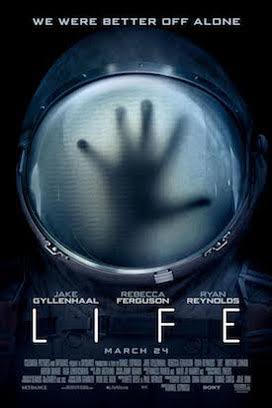
Chilling! In space, no one can hear you scream. Although that tagline is associated with Ridley Scott’s groundbreaking space-horror Alien, director Daniel Espinosa’s LIFE delivers an intensely dark thriller that will have you screaming and cringing from the moment life on Mars is discovered. In the same vein as AlienLIFE is a science-fiction horror that may look like Gravity and might even have the strong orchestral sounds of Interstellar, but provides audiences with an entirely different experience. Borrowing from Alien and Gravity, Sony and Columbia Pictures craft a new space-horror narrative that can sufficiently serve as a standalone film–and be great in that–but also has potential for a sequel or two. Interestingly, there are parallels to Ridley Scott’s Alien beyond the premise; LIFE also features the same number of crew members and other more subtle elements. That being said, LIFE is definitely not a knockoff Alien nor is it trying to be Ridley Scott’s critically claimed film as it does not contain the social commentary on gender, sex, and family. However, imitation is the highest form of flattery, and LIFE pays both homage to the film that likely inspired it but delivers a comprehensive science-fiction horror experience that provides ample twists, turns, and even some emotional connection along the way.

A group comprised of engineers and researchers on board the International Space Station (ISS) are on the brink of one of the most important discoveries in human civilization: life on Mars. Rory Adams (Ryan Reynolds), David Jordan (Jake Gyllenhaal), Miranda North (Rebecca Ferguson), Sho Murkami (Hiroyuki Sandana), Hugh Derry (Ariyon Baker), and Ekaterina Golovkina (Olga Dihovichnaya) represent several different counties, all working in cooperation on this groundbreaking mission. After the satellite, carrying the Martian sample, is retrieved from spiraling out of control towards the ISS is secured, the group of astronauts are faced with the crisis and task of retrieving it. After a daring retrieval, what should be a joyous discovery–something out of a scientists dreams–soon becomes a living nightmarish game of hide and seek. When the specimen from Mars begins to grow rapidly and become more and more intelligent, it stops at nothing to continue to feed the alien’s insatiable appetite and its goal to find a new home.

Initial impressions of LIFE leave you with noticing just how much like Alien it feels. It’s been nearly forty years since the Ridley Scott cinematic masterpiece, but in that time, no other science-fiction/horror film has come this close to delivering a similar (note: not as high on the cinematic totem pole as its predecessor) experience to that which first terrified audiences in 1979. One of the primary differences between Alien and LIFE is just how much closer to home this horrifying experience occurs. Whereas with the former, the alien encounter takes place hundreds of lightyears away, the latter’s narrative takes place just outside of our atmosphere on the ISS. Not that LIFE feels more intimate than Alien–it doesn’t–but the proximity of this story might add a little something more to the edge that you’re already sitting on as the horrific events unfold on the space station. Pacing is similar to Alien in that LIFE has a slow burn during the first act. To balance this slow burn or to keep audiences from thinking that it’s taking forever for the movie to really get started, the film begins with the “big event” right at the very beginning. The “big event” being the apprehension of the satellite carrying the Martian specimen. But for all it’s similarities, this movie provides a different experience that can certainly stand on its own. LIFE may have been inspired by Alien, but it is certainly not a ripoff.

I’ve been quite critical of the CGI-effects of films in more recent years, but the brilliance of the alien life form in LIFE is the degree to which it feels organic. In the beginning, the life form is little more than a single-celled organism; however, as the plot thickens, the organism begins to take a more chilling form and shape. Eventually, the alien develops a frightening grin and a mysterious-like form. One of the scariest parts of Ridley Scott’s Alien was the degree to which the Xenomorph feels so real that, even in your seat, you could feel the acidic slime and your body likely felt the excruciating pains of that iconic moment when the alien shoots out of the stomach. Part of that can be attributed to the use of pneumatics, animatronics, miniatures, and other practical effects standards. Yes, the alien life form in LIFE is computer-generated, but it also has a very real nature to it. Instead of focussing on how to make the alien as impressive as possible, it would appear that the special effects artists (whose work can be seen in the Transformers movies) focussed more on the small details that ordinarily give a CGI character away. Just like with the brilliant visual effects work in Ex Machina, the visual effects of the alien are flawless.

There is an inherent level of unpredictability in LIFE even after the unavoidable similarities to AlienLIFE plays around with the final girl trope and the killings have a strategy or method to their madness. Conspicuously missing from the characters of LIFE in a comparison to Alien is a Ripley-like character. Does the film portray strong female characters? Certainly. But LIFE keeps you guessing because the order of the deaths do not follow any predictable pattern. Do not allow yourself to fall into the trap of being predisposed to the order of the killings to be based up on star billing. Speaking of the characters, effectively managing an ensemble cast is always difficult. So often, some characters in the ensemble get lost or do not receive nearly as much development as the more obvious leaders. Not true with LIFE. True that there is not a large degree of character development all the way around, but each of the characters is treated with equal screen time and emphasis. That is, until death occurs. The excellent handling of this ensemble gives LIFE an extra dynamic that lacks in other ensemble cast films, thus helping this science-fiction horror to stand out from others that are similar in premise or plot. This movie has a “life” of its own.

2017 seems to be shaping up to be a year of excellent movies! We are just about to finish the first quarter of the year, and already there have been some great motion pictures. Furthermore, 2017 seems to be the year of the horror film because so many have made the theatrical distribution circuit. For those who love a good science-fiction thriller, you will not be disappointed with LIFE. Albeit the film may not be able to sustain the magic and horror for the entire runtime, it successfully delivers a terrifying experience for most of the film. If you don’t mind some cringeworthy moments and the dark tone of the film, then this is definitely one to see this weekend.

PS. I saw Power Rangers this week as well, and it was a delightful film! Yeah, it’s a little campy, but that’s to be expected. Definitely the best Power Rangers motion picture. All-in-all, it sufficiently pays homage to the 90s show but provides audiences with a new story. Go-go see it too!

Written by R.L. Terry

Edited by J.M. Wead

“Deadpool” movie review

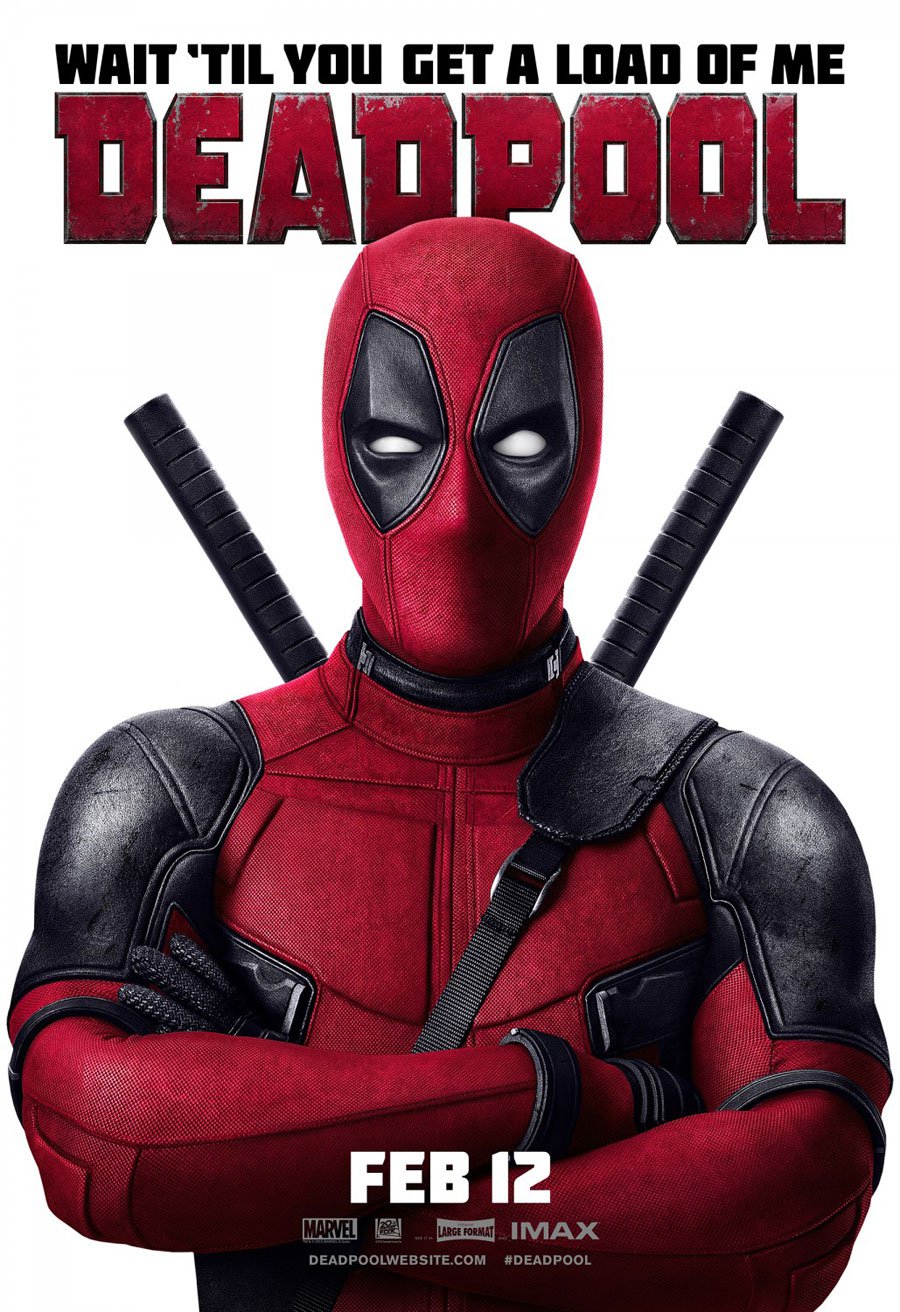
Deadpool-poster-2Absolutely brilliant super not-hero film! For those who often get the feeling that I simply do not like high-concept or superhero movies, let this be evidence that there certainly ARE superhero films that I feel are exceptional. And this is definitely one of those movies. As many memes across social media have indicated–and I will reiterate–this movie is NOT for kids (and no, your kids are not the exception). This is a super not-hero [and the not is important, but you must see the movie in order to understand] movie that is written for a mature audience. From the groundbreaking self-aware opening credits to the perfectly paced and strategic adult-humor, this movie is sure to have you laughing from beginning to end. And it’s not just the writing that is super but the visual effects, stunt sequences, and fight scenes are far above par for this action movie genre. Ryan Reynolds captures the character of Deadpool so incredibly effectively that you will swear that he was made for this role. Not your Disney-Marvel movie, Fox and Marvel bring you a spectacular combination of action and comedy to show off this unique anti-hero, so to speak, for fans of the comic and those who just enjoy a super movie.

Former special forces Wade Wilson (Reynolds) leads a very interesting post-dishonorable discharge life as a mercenary. The last man you’d ever expect to fall in love with anyone, Wilson falls for a burlesque dancer (who most likely moonlights as a hooker–let’s be honest). Following months of unparalleled passion and ecstasy, and after the unconventional proposal, Wilson finds out that he has an aggressive form of cancer that is unfortunately late in discovery. Devastated, Wilson has no idea what to do, but does not want his fiancé to have to go down the cancer road with him even though she clearly states that she is in it for the long haul. Acting upon a chance meting with a mysterious and well-dressed man in a bar, Wilson takes the man’s advice and undergoes a treatment from another equally mysterious but more sinister scientist. The results of the treatment will become clear as Wade Wilson becomes Deadpool and develops into the most unusual super anti-hero ever to come to the screen.

Simply from the opening credits, it is clear that this movie is incredibly self-aware and playing to the audience one hundred and ten percent. BEST opening credits ever, in terms of creativity and being an extension of the narrative itself. The idea of a self-aware movie is not a common one to begin with and certainly not a trope of traditional superhero movies. I think that is what I appreciated most about the movie. The brilliance behind the self-awareness is that the film is equally self-aware as it does take itself seriously as a superhero movie. Never before have I witnessed the fourth wall being broken so incredibly much. For those of you who do not know what breaking the fourth wall is, in its simplest form, it is when the character addresses the audience. This is apparently an element that was brought over from the comic, according to my comic and anime enthusiast coworker that went with me to screen the movie last night. What makes Deadpool’s continuous commentary so effective and entertaining is the fact that he says what many of us would be thinking given if we encountered the same scenario. The candor is such a breath of reality within this world of fantasy or augmented reality.

So often a movie will either choose to rest upon its strong writing, impeccable acting/direction, or visual effects; the sheer remarkable innovation in this movie is supported by not one but all the aforementioned elements. Ordinarily, I am able to find flaws in a movie–especially within the superhero genre–but not this time. I suppose, the fourth wall was broken a little too much, but that would be the only flaw I could identify. Sometimes a movie can be a great superhero movie but not a great film; however, Deadpool exceeds expectations both as a superhero movie and as a film in and of itself. At first thought, you may feel that a movie with endless diegetic and non-diegetic commentary may overshadow or steel attention or coherence from the narrative itself, but the writers did such a fantastic job of integrating the narrative and commentary so seamlessly that the movie is doubly entertaining as it would be without the offensive, explicit, hormonal commentary from the earthiest and most human of superheroes. And yes, I realize I am using superhero even though Deadpool reminds me over and over again that he is not a hero, but you get the idea.

Ryan Reynolds is one of those actors who is equally talented as he is attractive, and he gets to show off for this movie in ways that many actors wish they could in movies. But, it does not come off as obnoxious at all. That’s the beauty in the direction of this movie. You’d think that his over sexualizing of himself and the continuous adult commentary that he (or the movie) would play off as exceedingly obnoxious, but you’d be mistaken. There is a perfect balance struck by the writers and director that enable Deadpool to be a total douchebag, but oddly enough, in the most endearing way. For fans of the X-Men comics, 90s cartoon, or the X-Men movies, you will get to witness a crossover of movies in Deadpool. In an ever growing effort to recruit Deadpool to join the elite mutant force lead by Charles Xavier, Colossus and Negasonic Teenage Warhead confront Deadpool. This subplot is an important elements to Deadpool because it helps to build Fox’s X-Men universe by bringing two franchises.

Without getting into a lot of IP (intellectual property) rights discussion, despite the procurement of Marvel in 2012, as long as Fox keeps making X-Men movies, Sony makes Spiderman movies (even though he is appearing in the Avengers series), and Universal Studios Florida keeps modifying and improving attractions, then Disney does not have the rights to use the respective characters in movies or rides. Now, IP rights are a little more complicated than that, but I wanted to provide you with a general idea. Back to the crossover. Including the X-Men in Deadpool is strategically important for three simple reasons: (1) as I mentioned earlier, it helps to rebuild and reinforce the respective timelines of both franchises (2) it builds the foundation for a larger character universe, much in the same way Disney is doing with the Avengers and related movies and (3) part of what makes Deadpool so incredibly fascinating is his ability to play the anti-hero off of legitimate superheroes or, as Fox is able to officially call them, mutants.

If you are a fan of Disney-Marvel’s Guardians of the Galaxy, and you are NOT a kid, then you will definitely enjoy Fox-Marvel’s Deadpool. Prepare yourself to experience a superhero-action movie like no other. From being mesmerized at the stunning visual effects and editing to the incredibly funny writing and acting, you are sure to be entertained and will definitely crave more. Good thing that Deadpool has already received the green light for a sequel.