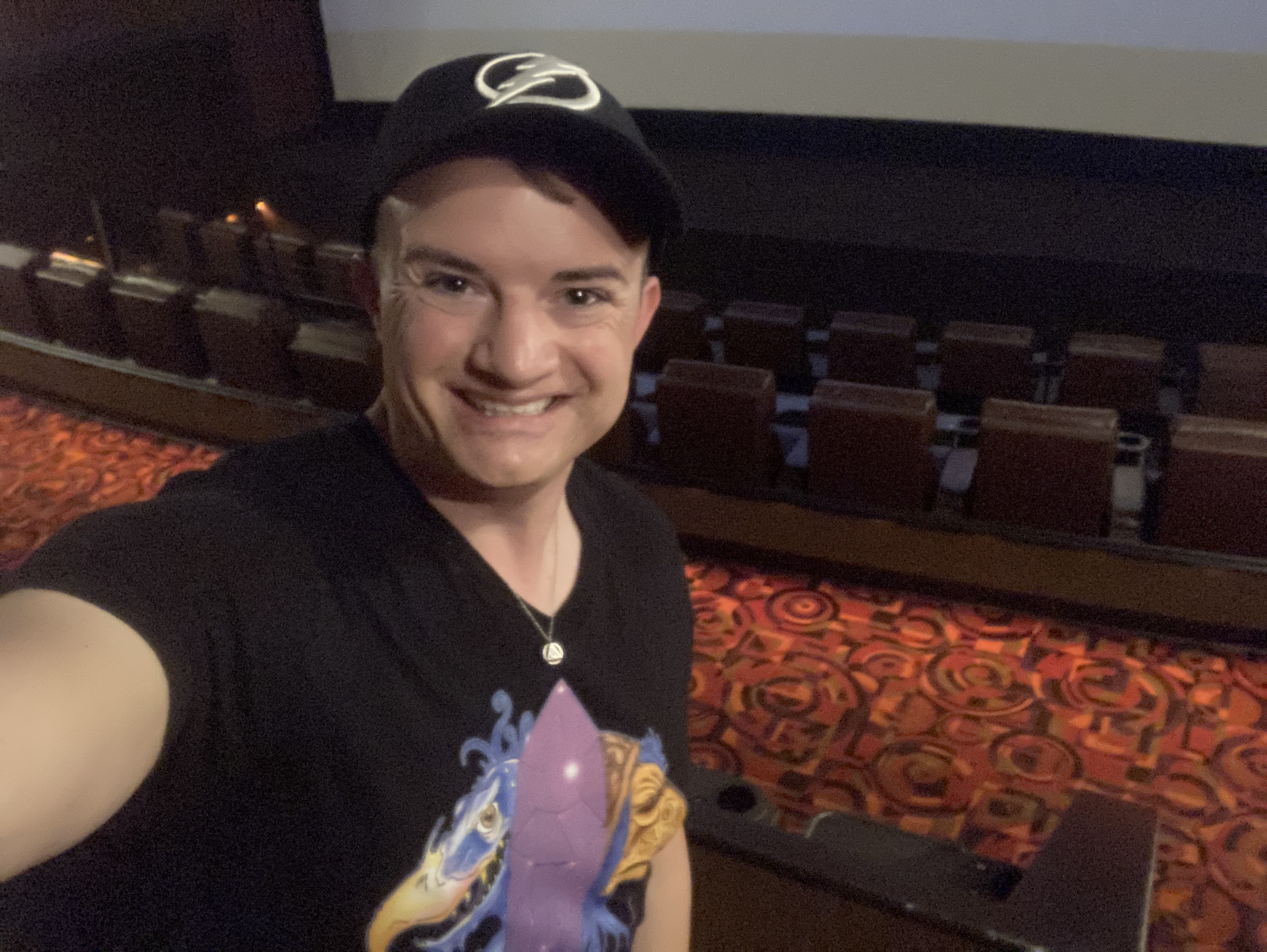
Predator: Let’s Play. When streaming content hits the big screen.
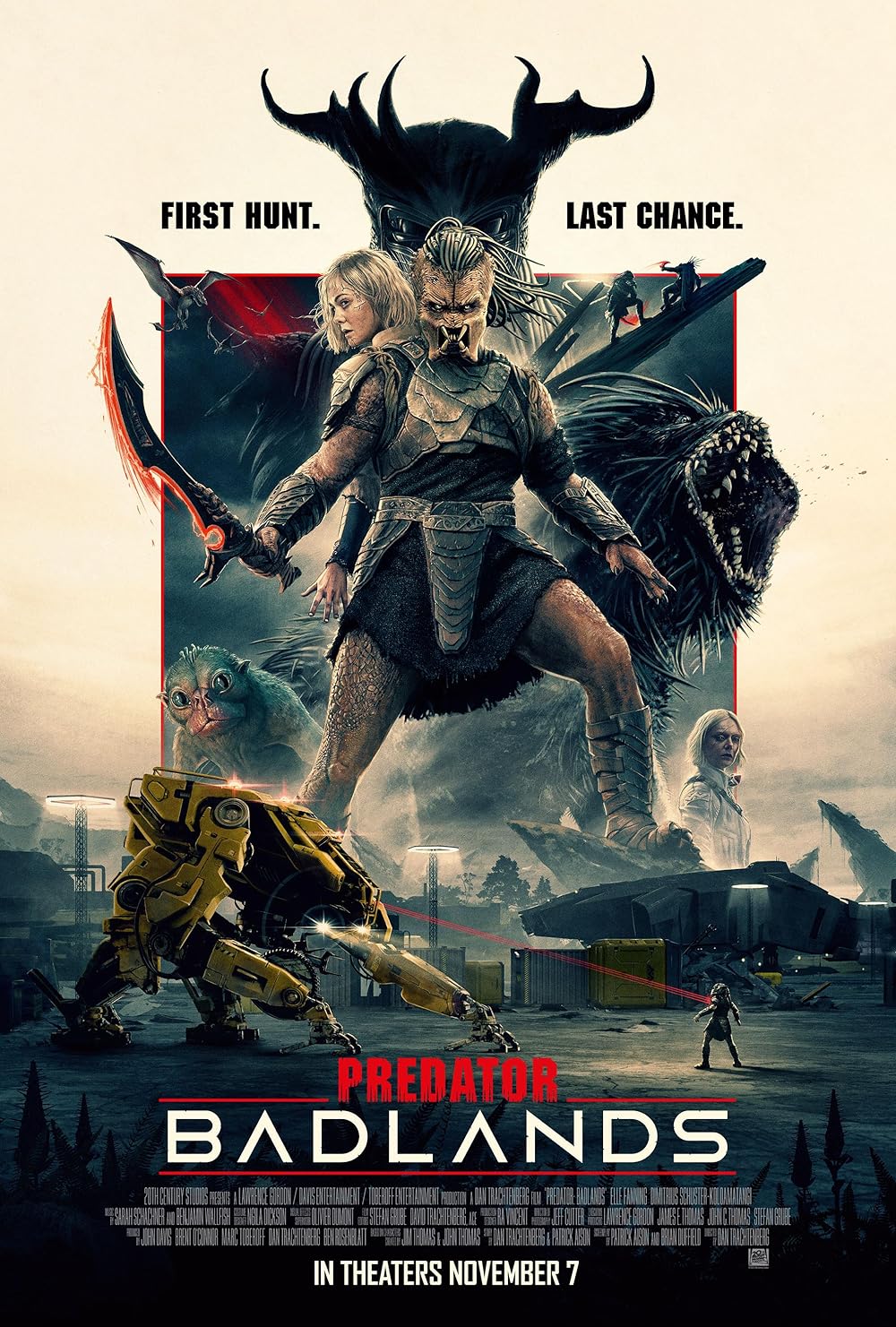
Predator: Badlands is the equivalent of a “Let’s Play,” but with bigger explosions. The nonstop action, constant motion offer little to no substantive emotional investment. You’re an observer, not a participant—which might be fine for streaming, but it’s a strange fit for cinema. The latest in the Predator franchise plays like a two-hour sizzle reel with delusions of grandeur. It’s a glossy barrage of explosions, digital dust, and quippy one-liners that evaporate before they even hit the floor. By the time the credits roll–that’s if you haven’t fallen asleep—you’ve seen everything and felt nothing. It’s not that the film is aggressively bad—it’s that it’s aggressively empty–little more than content to pander to short attention spans with shiny movement instead of meaningful momentum.
Cast out from its clan, a Predator and an unlikely synthetic ally embark on a treacherous journey in search of the ultimate adversary.
The screenplay feels like it was written by an algorithm trained on reaction videos and Reddit threads. Every line of dialogue sounds like a placeholder; it’s as if someone said, “We’ll fix it later” or “funny line here,” and neglected to return to the page in order to fix it–before principle photography. There’s no sense of escalation, tension, or rhythm; it’s a series of flashy moments loosely stitched together, like a highlight reel of a game you didn’t play. Even the humor feels synthetic–much like the characters– punching at air instead of connecting with character or tone.
As for the characters, they exist mostly as camera targets. They are little more than digital avatars running, shooting, and shouting for reasons that never feel personal or compelling. The lead could be replaced by a different actor mid-film and you might not notice. This critic isn’t even convinced that Dek (our central Predator character) wasn’t entirely CGI, though it may have only been the facial area. “What’s my motivation?” Difficult to say–there wasn’t much upon which to build. Motivations are paper-thin, arcs nonexistent. The Predator itself, once a symbol of primal fear and unseen menace, now feels like a boss-level NPC waiting to be triggered by the next quick-time event.
Visually, Badlands has all the spectacle money can buy; but its spectacle is divorced from any meaningful purpose. The explosions are massive, the sound mix thunderous, and yet it’s as emotionally engaging as watching someone else play Call of Duty. Every frame screams “look at me!” without ever inviting you to feel something. The editing, too, is manic. And it’s not even as though the narrative demanded it; rather, the dynamic editing was most likely employed because the movie was terrified that you’d look away or down at your watch, which I did several times.
And maybe that’s the point. Predator: Badlands is far less like a movie and more like a cinematic exercise in a large scale “Let’s Play.” For those that are unfamiliar with the term, it’s a type of (usually) YouTube video of someone playing a video game and often their reactions to the game play. Think of it as a passive experience of someone else’s thrill ride. The ultimate, disconnected form of living vicariously. Don’t question anything, because it won’t take long to realize that this movie is hollow. You don’t engage; you just witness. The irony is that the film could’ve been a fascinating critique of screen-mediated experiences, but it never once stops to think.
This is just the latest in a growing trend from Disney’s genre arm: a reliance on brand nostalgia and visual polish in place of storytelling. Ever since the corporate appetite turned to IP recycling, the studio has mistaken familiarity for depth. Badlands is what happens when you try to “optimize engagement” instead of crafting a narrative, resulting in the film equivalent of clickbait dressed in billion-dollar armor.
Predator: Badlands doesn’t so much hunt its audience as it does chase its own tail. A movie that is fast, flashy, and utterly pointless; and desperately wants to go viral but forgets to be cinema. You don’t leave exhilarated; you leave wondering if you accidentally spent $15 to watch a YouTube compilation in IMAX.
Ryan is the general manager for 90.7 WKGC Public Media and host of the show ReelTalk “where you can join the cinematic conversations frame by frame each week.” Additionally, he is the author of the upcoming film studies book titled Monsters, Madness, and Mayhem: Why People Love Horror. After teaching film studies for over eight years at the University of Tampa, he transitioned from the classroom to public media. He is a member of the Critics Association of Central Florida and Indie Film Critics of America. If you like this article, check out the others and FOLLOW this blog! Follow him on Twitter: RLTerry1 and LetterBoxd: RLTerry
 R.L. Terry ReelView