“Pet Sematary” (2019) horror film review

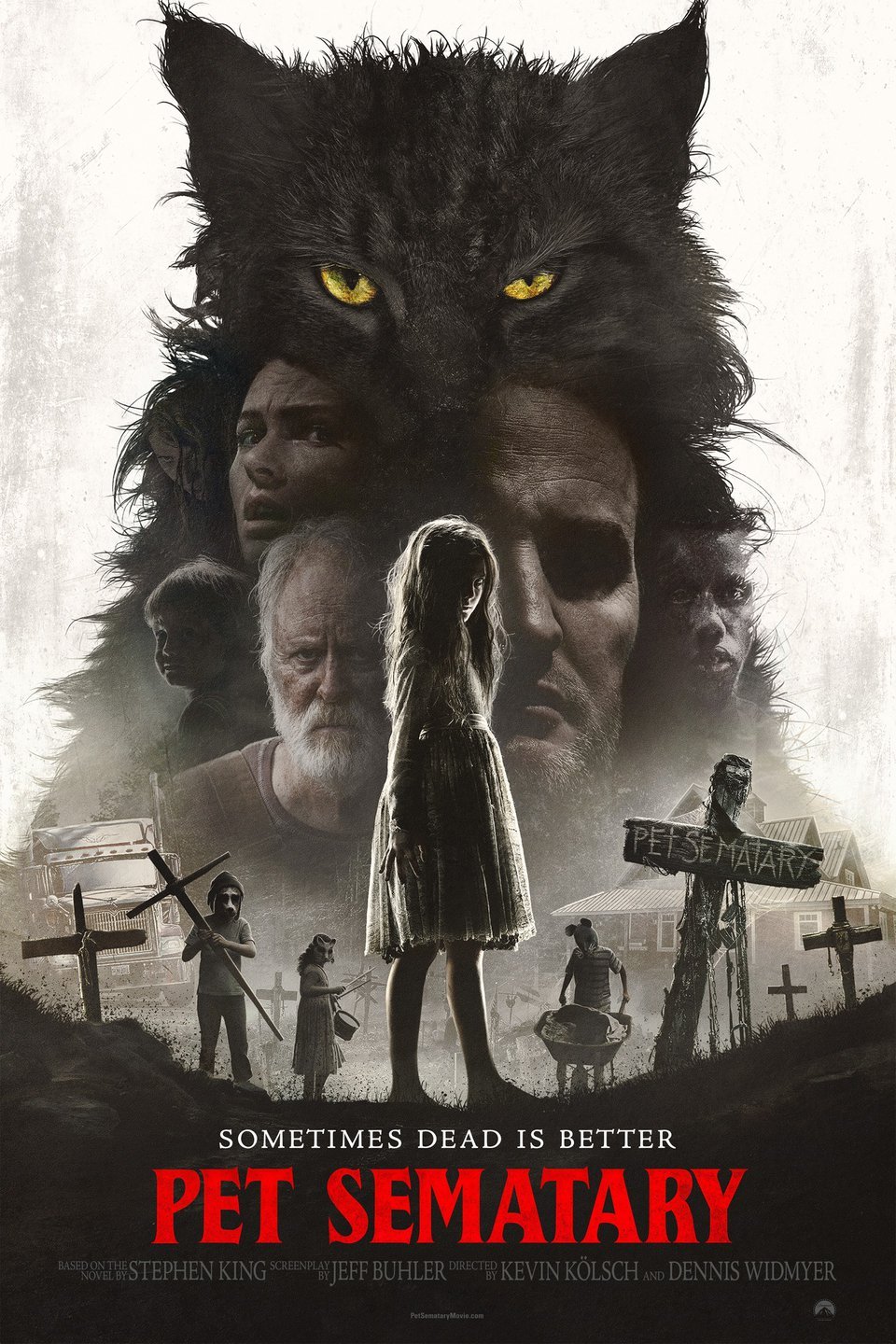
“Sometimes dead is better.” Unless you’re back from the dead with a vengeance! Brace yourself for the spine-chilling, immensely terrifying 2019 adaptation of the best-selling novel Pet Sematary by the legendary Stephen King. Whereas many remakes/reboots of earlier horror films often suffer, this one emerges from the soured soil as a force to be reckoned with. Directors Kevin Kolsch and Dennis Widmyer deliver a heartpounding rollercoaster of a nightmarish experience as Pet Sematary opens everywhere this weekend. Instead of a direct from page to screen adaptation, much like the fantastic 1989 original version (and yes, it still holds up), this version takes some creative liberties; however, the soul of the novel and even the 1989 version is clearly there. This creative latitude enabled the film to deliver new, surprising scares that are sure to frighten you. If you haven’t seen the extended trailers–DON’T–cannot say that enough. It’s best to go into this film with only the name and the initial teaser trailer in your mind. Not a spoiler, because it’s well known this this horror film and novel deals with loss, grief, and the uncanny (i.e. the return of the repressed), so the challenge of this adaptation was to force the conflict to derive from those issues and inspire the hellish events for which the story is well known. 2019’s Pet Sematary delivers in spades–quite literally. You will feel the ominous sense of dread from the moment the Creeds move into their new house and that feeling will stay with you as you are buried in a nightmare. This plot is solid.

I joined the popular podcast Mike Mike and Oscar to discuss this film, so click below to listen to the show. You are also invited to continue reading my written review.

Dr. Louis Creed (Jason Clarke) and his wife, Rachel, relocate from Boston to rural Maine with their two young children. The couple soon discover a mysterious burial ground hidden deep in the woods near their new home. When tragedy strikes, Louis turns to his neighbor Jud Crandall (John Lithgow), setting off a perilous chain reaction that unleashes an unspeakable evil with horrific consequences (IMDb summary). Sometimes dead is better

Let’s address the white ‘el’ephant in the room first. And I don’t mean the major plot twist changed from the novel and 1989 film that we saw in the trailer (c’mon, this is a well-known story and trailer at this point)–I mean the dialogue. Is the dialogue horribly bad? No. But it’s definitely the weak element in the script. Fortunately, this movie makes up for that with incredible windup, excellent deliveries, and the fact it is nightmarishly creepy. The pacing and tone are excellently crafted, and the visuals are fantastic. Never one does this film attempt to prove that it’s better than the original; in fact, it takes what many of us love about the original and use those moments as expertly designed fake-outs and false setups that are followed with something new and fun. So, it acknowledges the original without remaking it. Furthermore, it integrates many elements from the novel and original into the plot seamlessly. Achieving an overwhelming sense of dread from the very beginning of a horror film is quite difficult. That sense of unease is a combination of the atmosphere, setting, and ominous visual elements. Not five minutes into this movie, you are feeling that sense that something is definitely not right about this place. Yes, this is in part because many of us know what is to come; but even for new folks, the evil of this place can be felt all over your body. One of the creepiest scenes features the warped mirror image of an earlier cheerful moment, but it has been affected by the sour soil of the ancient burial ground.

While there isn’t much time to develop these characters, the writers were challenged with developing them enough for the story, and it works pretty well. The script isn’t quite as well-written as IT, but the margin of difference is not tremendously wide wither. As much of a fan of the original version as I am, there are areas that this version got better. For instance, the Zelda subplot–much more organically integrated into the main plot of Pet Sematary and even drives the main plot forward by revealing aspects to Rachel’s character. Two things for sure, these are two bad parents and Jud is an irresponsible neighbor. We don’t spend much time in the campus hospital where Luis Creed works, but we still get the big event of the passing of Pascow. Pascow’s character, whereas his harbinger of death or Jacob Marley (as so eloquently put by Mike Mike and Oscar) character isn’t as integral to the plot of this version, he looks more terrifying and doesn’t take a turn for the humorous. Of all the characters, I was most curious about John Lithgow’s performance as Jud. I was cautiously optimistic because Lithgow often has a way of delivering memorable performances, no matter how minor the role. His expression of Jud differs from that of Fred Gwynne’s but he still stays true to the character of Jud. And there are even moments that he channels Gwynne’s interpretation of the infamous neighbor. Just wish he had a Maine accent since he is still a local boy in this village (which is very close to Derry, according to a road sign). One of the best scenes in the movie take place as Lousi and Jud sit around a campfire, drinking, smoking and having an ill–fated heart-to-heart.

Contemporary remakes of earlier horror films often rely upon CGI versus practical effects. Cast that worry away because other than a few moments of CG, there are lots of fantastic practical effects from set design to the kills. There is such a high level of authenticity in everything the camera allows us to see, and even those moments that lie just off screen. Yes, there is still the inescapable supernatural factor in this story, but everything else is pretty well grounded in reality. From the parents building a fence to the proximity of the ancient burial ground, everything works to craft an authentic setting and characters. And yes, your Achilles tendon will still hurt in that famous kill. The directors truly seem to take into account that you cannot replace the way real light bounces off real objects and into the camera lens. Out two houses, the characters, and Church the cat exist in the time and space of each and every scene. With the exception a couple scenes that were not necessary or drawn out too far, they all work quite well to setup the following scene and point to the end of the film. There are moments that will cause you to look under beds, under stairs, and even analyze your pet more when you get home. For young audience members, watching this story for the first time, I imagine that they will be terrified just like I was when I saw the 89 one as a kid.

While I’ve read reviews claiming that this is the best Stephen Kind page to screen adaptation, I feel that other films have been more effective. Off the top of my head, I’d say that Misery is a better film both in terms of its cinematic critical value and faithfulness to the novel. Not to mention the Oscar-winning performance by Kathy Bates as Annie Wilkes! No mistaking it, 2019’s Pet Sematary is a good horror movie and one that has a moderate level of rewatchability. Highly recommend for horror fans!

You can catch Ryan most weeks at Studio Movie Grill Tampa, so if you’re in the area, let him know and you can join him at the cinema.

Ryan teaches screenwriting at the University of Tampa. If you like this article, check out the others and FOLLOW this blog! Interested in Ryan making a guest appearance on your podcast or contributing to your website? Send him a DM on Twitter!

Follow him!

Twitter: RLTerry1

Instagram: RL_Terry

“Instant Family” brief movie review

Surprisingly good! You’ll want to adopt this movie into your heart. Have you ever seen a trailer for a new theatrical release and just assumed it was another generic Hallmark or Lifetime movie making its debut on the big screen? That is precisely what I thought of Mark Wahlberg’s Instant Family. In fact, the only reason I watched it last night was because there wasn’t anything else (and I didn’t want to see the neutered Deadpool cash grab). But, I am glad that I decided to watch it! Not for reasons that it’s a “great film,” but because it was a heartwarming, inspirational story told effectively! There is a refreshing unapologetic approach to familial conflict that holds nothing back. It’s a no-holds-barred dramedy that addresses the mountains and valleys of fostering/adoption, specifically sibling fostering/adoption. If I was to liken this movie to one that we are largely familiar with, I would compare it to Parenthood, but one that is for the 21st century and concerns itself with the foster system. The movie, through the trailers, sets itself up to be an over-the-top comedy, but it was far from being a farce or slapstick comedy. When Instant Family comes from the same director of Daddy’s Home and Daddy’s Home 2, you already have preconceived notions of what the experience of this movie is going to be. Fortunately for audiences, this movie is far from the former two. And why is that? The short answer is that there is a sort of flawed humanity underscoring everything. No pretense about any of the characters. If you’re looking for authenticity, a realness about true-to-life characters, situations, and conflict, then you will definitely want to catch Instant Family.

When Pete and Ellie decide to start a family, they stumble into the world of foster care adoption. They hope to take in one small child, but when they meet three siblings, including a rebellious 15-year-old girl, they find themselves speeding from zero to three kids overnight. Now, Pete and Ellie must try to learn the ropes of instant parenthood in the hope of becoming a family. (IMDb)

While there is a lot of satire in the movie, there is never a moment that you lose your empathy for Pete and Ellie. They come from families that could very well be your own, with all the jabs, competition, and patronization that comes along with them. Even the adoption center and fair scenes, there are elements of the conversations and experiences that may be exaggerated for comedic purposes, but they are all still very much grounded in reality. Pete and Ellie are extremely eager to do a good job, and even employ some of the same approaches they use for flipping houses, but in stead use them to flip people. Some of the irreverent jokes are hilarious! There is one about rebranding foster children as rescue children like the pound for animals was rebranded rescue. The movie also takes audiences behind the faces at the adoption center to reveal the tragic, hard lives that the children and teens come from. Truly highlights the importance of looking at becoming a foster or adoptive family in order to give a child a nice home. Beyond the social commentary on the adoption and foster system, there is also a lesson to be learned that can apply to any number of areas of our lives. Such as knowing precisely why you want to do something, not just the fact you feel it’s what is supposed to be done. The movie will hit you with thought-provoking moments that will force you to face what you think of foster kids and the foster system. I also appreciate the movie for depicting difference kinds of parents–quite the modern bunch! So much diversity is represented, and each prospective parent(s) is inspired by ones encountered by the writer-director Sean Anders’ own journey as he and his wife adopted three siblings.

This is a shorter review because I am getting busy with the end of the semester, but I wanted to provide some brief thoughts on it anyhow. After this week, I’ll be back to my regular article entries.

Ryan is a screenwriting professor at the University of Tampa. If you like this article, check out the others and FOLLOW this blog!

Follow him!

Twitter: RLTerry1

Instagram: RL_Terry

Thrillz (theme parks): Thrillz.co

Star Trek Warping into Universal Orlando Resort? Engage!

To boldly go where no one has gone before! Ordinarily, I don’t make it a point to write about rumors. But, being a longtime Star Trek fan (specifically TNG followed by Voyager), I thought that this would be a fun one to discuss. Rumors of a Star Trek attraction or land have been floating around for a while, but more recently gained traction after discussions of a new attraction coming in the relatively near future. According to the Disney and More blog, Universal Orlando is considering licensing the Star Trek IP from Paramount for an attraction or land. Less of a rumor really, Universal Orlando IS considering The Bourne Identity or Star Trek franchise for the old T-2 (Terminator 2: 3D) building [UPDATE: recent news suggests UO is deciding between Jason Bourne and James Bond for the old T2 show bldg]. In terms of franchise strength, Star Trek is a no-brainer given the two choices; however, the direction for theme parks in the 21st century is building entire worlds that immerse the park guest into–not only the respective movie(s)–but into the universe of the IP. Therefore, it would be more advantageous to utilize the T-2 show building for Bourne than Star Trek. Why? Because Bourne exists in the “real world,” it fits in well-enough with the Beverly Hills set; it’s believable in that present location. However, Star Trek brings with it decades of stories that would be better suited to its own land. With the confirmed 4th theme park (confirmed, but no properties associated with it yet) coming in the near future, the Star Trek IP might just find itself a home at the 4th gate. Perhaps the 4th park will have Nintendo, DreamWorks, and now Star Trek. Talk about a powerhouse of IPs.

With the attendance slipping at Universal Parks and Resorts in 2017, after years of encroaching upon Disney numbers and growth, Universal Parks is definitely working diligently to not fall behind. I imagine that the Universal Creative executives and directors are all-hands-on-deck with the opening of Toy Story Land this year and the highly anticipated Star Wars: Galaxy’s Edge in 2019 at both Disneyland and Walt Disney World. As big as Harry Potter is (and it IS), it cannot compete against Star Wars as an equal (in terms of the fanbase, merchandise, etc). But, combine DreamWorks, Nintendo, and Star Trek with the expanding Harry Potter offerings at the parks, and then you likely have what it takes to be a formidable competitor against Disney, Star Wars, Pixar, and Marvel. Not to mention who winds up with 20th Century Fox, given that Comcast (parent company to NBC-Universal) is offering an all cash deal that dwarfs the Disney bid. If Star Trek doesn’t go in Universal Orlando’s 4th theme park, then it’s entirely possible that it might be what is used to eventually replace Marvel Superhero Island at Islands of Adventure.

Without getting into the argument that one is science-fiction (Star Trek) and other other kin to Future-Fantasy (Star Wars), one of the primary differences between the two franchises is Star Trek‘s lack of memorable or reoccurring planets that factor into the plot. By extension, this makes developing a world difficult because it limits the number of places that you can transport your park guests. Star Wars is more focussed on the conventional adventure whereas Star Trek is traditionally more focussed on the human condition. One’s internal and the other external. That does spell difficulty for adapting Star Trek to a theme park setting, and by the same token, works brilliantly for Star Wars. Maybe it doesn’t have any memorable planets, but Star Trek does have a HUGE iconic location that can effectively be translated to an experiential theme park setting: the Enterprise! My personal favorite being none other than the NCC-1701-D under the leadership of the definitive Star Trek captain–Captain Picard! Regardless of which iteration of the Enterprise (or Voyager) may be your favorite, there are plenty of ways to adapt it into multiple attractions. Star Trek also has some incredible villains such as The Borg and Romulans and famous anti-heroes like Q.

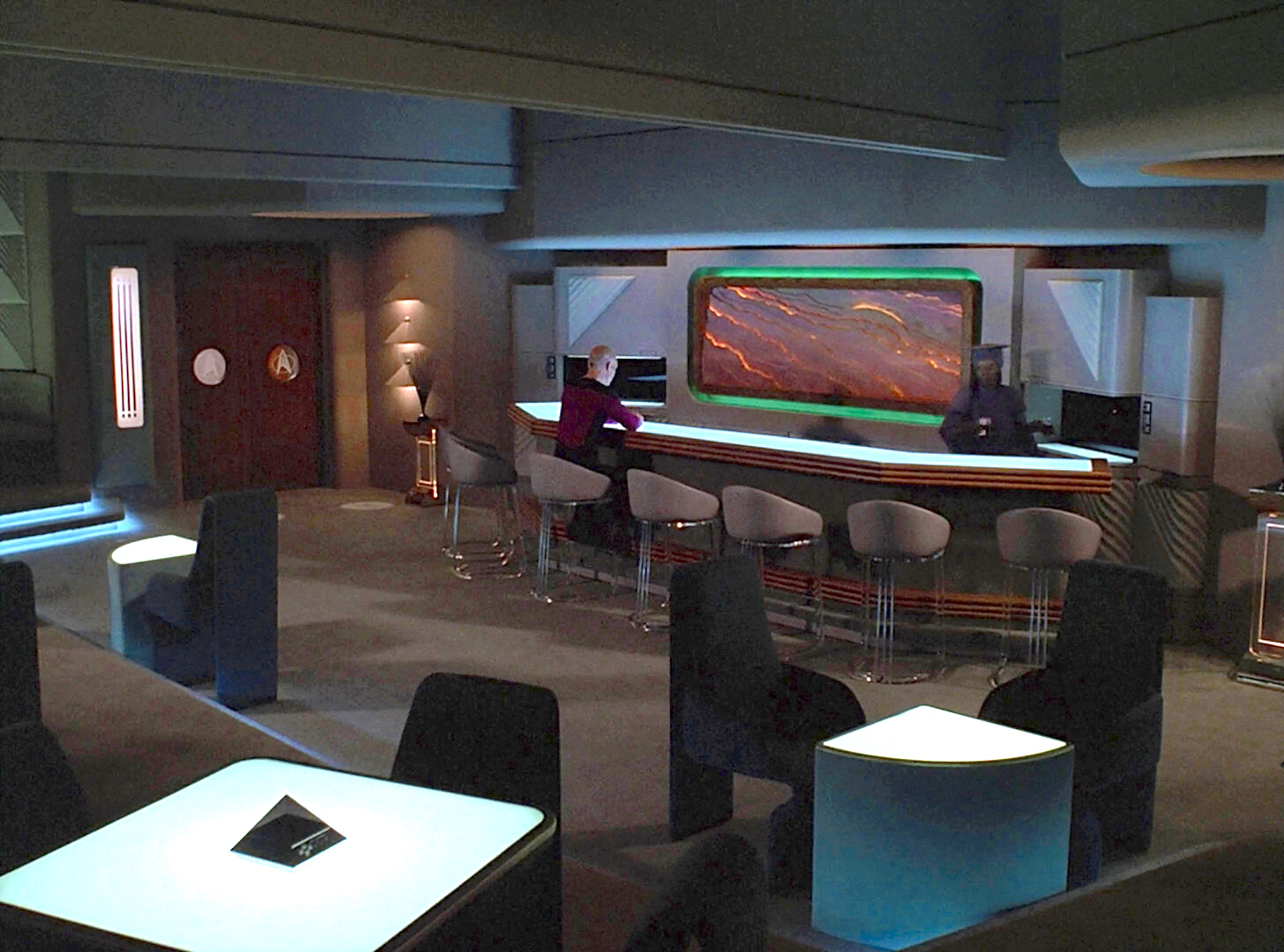
Just off the top of my head, here are some great ideas for attractions and offerings in the future Star Trek land: For starters, the famous 10-Forward lounge on the Enterprise D would make for an excellent bar & grill for park guests. The trademark transporter serves as an excellent platform on to conceptualize a ride. Just the bridge of the Enterprise makes the perfect backdrop of a simulator style attraction in the vein of Star Tours at Hollywood Studios (but on steroids). A brilliant platform to build an attraction from is the holodeck. The possibilities of sourcing that location to inspire an attraction are as infinite as the imagination. One-off special events are a no-brainer too. A Star Trek land would make for the perfect location of a Star Trek convention, just as Star Wars Galaxy’s Edge will undoubtedly serve as the location for Star Wars conventions. In terms of resorts, the often references and occasionally visited planet of Risa (from TNG) could be a perfect resort or developing a hotel that immerses the guests into the world of the Enterprise. The guest rooms would be modeled after the ones on the starship and there are plenty of lobby, lounge, and restaurant ideas too.

Only time will tell if these rumors are true. I certainly hope they are! If not, maybe Universal will consider the idea with so many people talking about the rumor. Here’s to the future of possibilities coming to theme parks in the coming years. Engage!

“Annihilation” film review

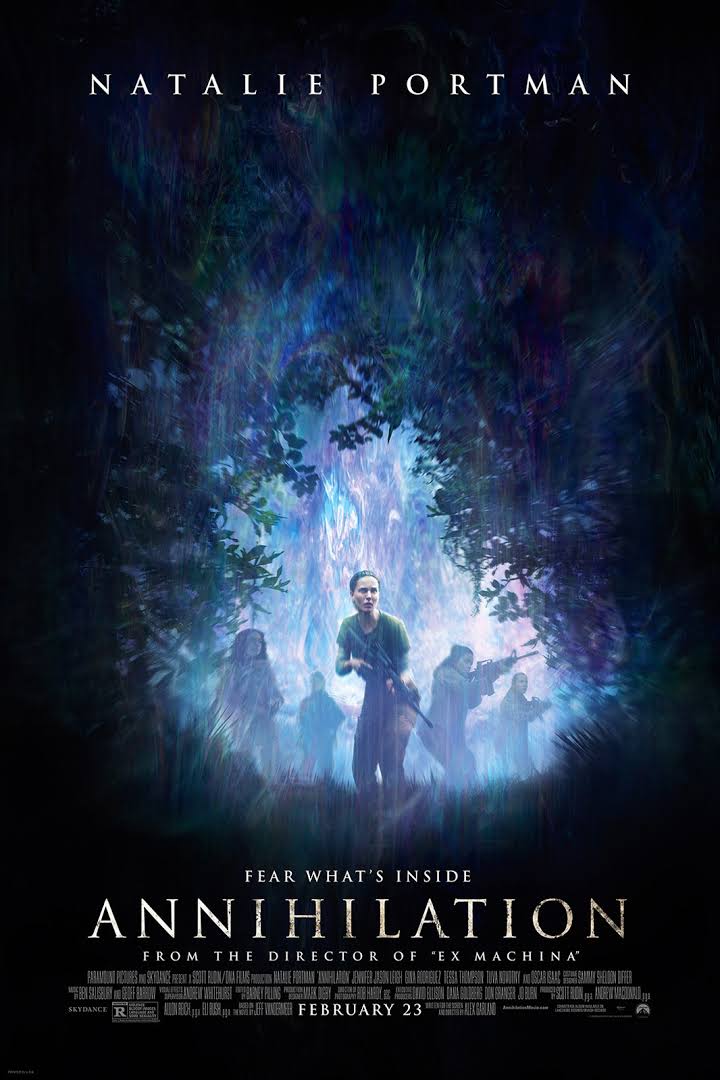
Outstanding craftsmanship that provides a trippy, surrealist experience! It’s been a long time since I’ve seen a horror science-fiction film like this one–one that harkens back to the manner in which Stanley Kubrick terrified audiences with his cinematic masterpieces. The brilliance of this film is the visually disturbing storytelling that’s built upon metaphysical and philosophical queries as well as Freud’s uncanny. Written and directed by Alex Garland (Ex Machina) and based upon the Southern Reach book series by Jeff VanderMeer, Annihilation boasts an all-female lead cast that takes the audience on a gripping, nail-biting adventure into the unknown that is frocked with wonder and tragedy. Falling in line with extraterrestrial films, this one exists somewhere between Alien and Arrival with influences from Kubrick and even Salvador Dali. Don’t wait for it to be released on Netflix internationally to avoid watching it at your local cinema; this IS a film best viewed, experienced, and enjoyed on the BIG screen–and not the 65in in your living room. For those who look for and appreciate science-fiction and/or horror films that explore psycho-social and institutional themes, then this is truly a film for you. Cognitively engaging and physiologically disturbing, Annihilation is a turbulent, horrific adventure.

After a mysterious meteor-like object strikes a lighthouse in Area X (most likely the swamplands of northwestern Florida), an increasingly growing membrane-like phenomenon is slowly swallowing up the land around it. When several paramilitary and scientific expeditions do not return from exploring the anomaly, biology professor Lena Kane (Natalie Portman) is aggressively recruited to work on the next team of scientists to track, report, analyze and potentially rescue former teams from what’s being called “the shimmer.” Professor Kane and her team have no idea that they will be facing their worst nightmares inside the shimmer as they explore this unknown world filled with dangerous opposition from the creatures that live within and the psychosis-like tension between the team members themselves.

Definitely not a film for the general masses. And you know what??? That is perfectly fine. In fact, that’s why this film works so incredibly well as an avant-garde-like science-fiction horror film. Had it directed for the masses, the film would not be nearly as stimulating psychologically and physiologically. Much like Garland did with the Oscar-winning Ex Machina, he crafts a world based on the best-selling series that takes the audience on a disturbing journey into the macabre, which juxtaposes the physical and metaphysical dimensions. Garland’s Annihilation is a masterful cinematic work that combines excellent writing with exceptional imagery and stunning practical effects. If Dali were alive today, this is the kind of film that he would have wanted to work on because there is such a heavy surrealist approach to the production design and visual effects. But this film is so much more than just the cinematic beauty of the motion picture. There are philosophical questions that one may ask oneself that create an added dimension of engagement that further immerses the audience into the world of the film.

Much like with Ex Machina, Garland shows an obsession with the need to see and see through when observing an unknown entity that may or may not be sentient. Paralleling how he set up the glass wall between Caleb and Ava (the AI) in the compound/lab designed by Nathan (Oscar Isaac, who is also in Annihilation), Garland sets up the interrogation room in which we are first introduced to Lena while she is being interviewed by the team in hazmat suits. I love the play on perspectives, vantage points if you will in both movies. That fluctuation between a filtered and unfiltered view of the phenomenon under observation offers much depth to the storytelling. In Annihilation, we are initially introduced to the shimmer, and world within, through sensors, readouts, and other “filters” but then we are thrust into the horrifying flora, fauna, and animal life without any type of protective boundary. Freud refers to the revealing of that which should remain hidden or the return of the repressed (which we literally get to witness in this film) as that which is uncanny (click for article). Just as our characters are constantly searching for clarity, you will find yourself paying close attention to the unknown to gain an unhindered understanding of what you are witnessing.

Not your average science-fiction horror film, this one will truly get under your skin–much like The Shimmer invades the bodies of those who choose to enter the dark twisted, refracted world of that which lies beyond our senses. Truly terrifying, this film is one for those who love a sci-fi horror that will prompt you to contemplate the themes and subtext of the movie. One of the quandaries that face the characters, and by extension, the audience is the idea of self-destruction versus suicide–the physiological versus the psychological components. For those who may worry that the film is “too intellectual,” the story is told in such a way that it not only appeals to film critics, academics, or horror aficionados but can be enjoyed by those who like a good, disturbing scare. The fact that there is the “intellectual” dimension to the film adds to the experience for those who appreciate that element in visual storytelling.

Don’t Pass GO, Don’t Collect Your Oscar

Corporate monopoly is the enemy of creativity and variety. The biggest news in entertainment this week was the talks between Disney and Fox to sell most of 21st Century Fox to The Walt Disney Company. Whether the talks are still going on behind closed doors or not presents a fascinating topic to discuss! This deal, which would be the biggest film/media deal ever, has far reaching effects upon the industry. Some may even argue that it has danger written all over it. If there wasn’t already a rigid oligopoly amongst the studio/distribution companies, there will be if this goes through. Should this go through without the government swooping in to save the day with monopoly claims in the vein of the historic Paramount Decision, the lion’s share of the cinematic marketplace would be controlled by Disney, TimeWarner (Warner Bros.), and Comcast (Universal), with Sony (Columbia) and Viacom (Paramount) bringing up the rear. Five. That’s right. Five companies would essentially determine the future of the industry, and control the majority of the motion pictures released in theaters and the content on cable television (and the streaming services that access it). It’s a mirror image of the 1940s. Instead of The Big Five and The Little Three, we have The BIG Three and the Little Two.

From the big screen to the small screen, you will notice the effects in the programs you watch. When one company controls the majority of any marketplace, it usually spells disaster for the consumer; furthermore, it means that there will be a primary gatekeeper in future artists getting his or her work out there. Not to mention that the programming on FX and other Fox (non-broadcast) subsidiaries could begin to gradually feel and look more like ABC programming. Could this put shows like The Simpsons and Family Guy on an endangered species list of sorts? Not right now. The deal, in off-and-on talks, would sell off 21st Century Fox (movie studios) and not Fox or Fox Sports (an acquisition of that sort would not be permitted because it WOULD be illegal). So, even if this buyout were to happen, The Walt Disney Company would still continue to be the brunt of many jokes on The Simpsons and Family Guy. A buyout could mean, however, that program options will seem less varied and just more of the same ABC-schlock that already pervades the bandwidth. The two companies that have the most TV programming are Fox and Disney, with Sony (CBS), Viacom (non-broadcast Nickelodeon), Comcast (NBC), and TimeWarner (CW) trailing in original programming. That being said, TimeWarner has done very well with The CW, and I hope it continues to churn out programs such as Vampire Diaries, Supernatural, Riverdale, etc.

Beyond the negative impacts on content, which, in all honestly, can be quite subjective in nature, are there legal or ethical implications here? Is there perhaps a past precedent that could be used in the courts to stop such a buyout (or sellout rather–Fox)? Let’s look at the most famous suit brought against the major motion picture studios: The Paramount Decision [(U.S. V. PARAMOUNT PICTURES, INC., 334 U.S. 131 (1948)]. Prior to the Paramount Decision, the motion picture industry was controlled by a few companies that were heavily vertically integrated. The Studio owned the facilities, production companies, staff (under long-term contracts), the films themselves, distribution channels, and the movie theaters. When the studios were growing so large that they began infringing upon the free marketplace, the US Government forced the (then) eight major/minor studio players to end the practice of block booking (meaning, films would now be sold on an individual basis), divest themselves of their respective theatre chains (sell them off), and modify the practice of long-term employee contracts (though, this would continue until the 1960s). This marked the beginning of the end of the Studio System, AKA Hollywood’s decentralization. There are many similarities between the situation in the late 1940s and today. In fact, it’s a little worse today because the industry is mostly controlled by five (instead of eight) companies, and these companies have heavy investments in streaming and television programming.

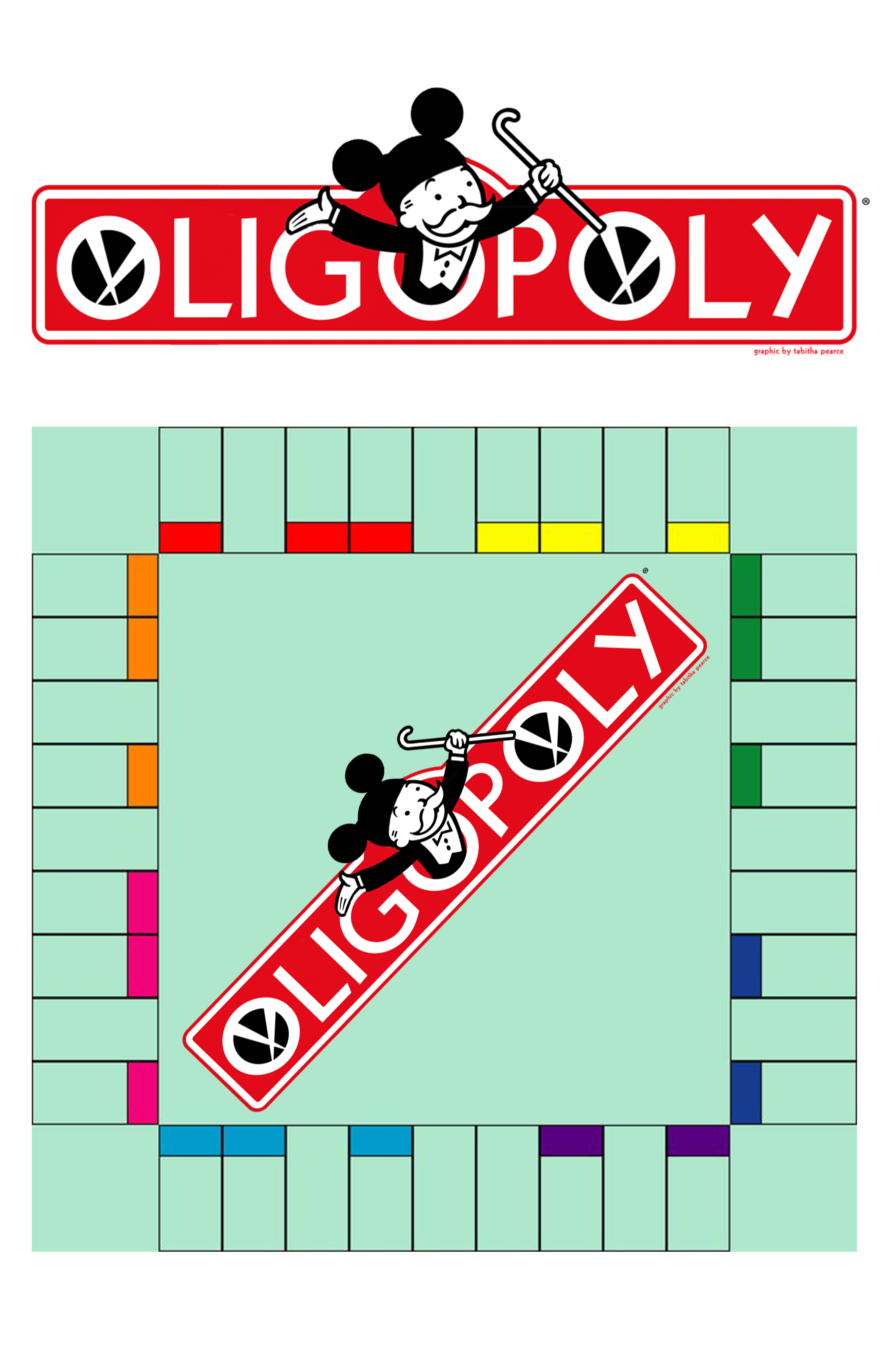
The problem with the current state of capitalism in the Unites States isn’t worries of monopolies but oligopolies (monopolistic practices between a few firms that essentially control a market). Certainly the state of the film industry already lends itself to an oligopoly because of the few companies; but the buyout of 21st Century Fox by The Disney Company would greatly increase this issue of a blatant oligopoly. If a monopolist (in many other industries) did what Disney is doing, neither the public nor the government would stand for it; but because it’s Disney, and because it’s the film industry, most of the general public is unaware of the negative consequences of such a buyout. Technically speaking, oligopolies are not illegal nor is monopolistic competition; however, this can be a slippery slope towards stifling creativity or making is increasingly difficult to break into any given industry as a newly emerging competitor. Incidentally, monopolistic competition causes the variety or level of differentiation of similar products (i.e. moves and TV shows) to become less heterogeneous and nearly come across as homogenous. For many, it will feel like there are only two primary companies controlling the majority of programming on TV and a few companies controlling a large portion of the movies that get released in movie theaters.

When a strong oligopoly exists within a specialized industry (for our purposes, media & entertainment), one of the side effects is a concept known as parallel exclusion. This concept can be described as the collective efforts of the few industry leaders who essentially act as the main gatekeepers to prevent or make it difficult for would-be newcomers to enter the arena. Parallel exclusion is nothing new, and has been in the news as recently as the last 2-3 decades within the airline and credit card industries. Throughout the eighties and nineties, Visa and MasterCard essentially blacklisted any bank that set out to do business with AmEx. Thankfully, the U.S. Justice Department stepped in when the manner in which the exclusionary rules were written crossed legal, fair trade boundaries. There were similar issues within the airline industry as well. When a few companies control the content or services in the marketplace, antitrust issues are raised.

Although we are not facing a technical monopoly with the possible acquisition of Fox by Disney, we are looking at an abuse of power that leads to anticompetitive conduct. If nothing else, the consumer should be worried about having fewer options for programming. Not that the number of programs or movies will shrink, but there will be little difference between what is released under the Disney banner and the Fox name (if it’s still even called that). In a deal like this, it’s the consumer who gets the short end of the stick. The consumer would be wise not to give Disney a pass just because there are a small group of big film studios instead of just one. While Marvel fans may be excited that the X-Men can join the MCU (Marvel Cinematic Universe), there is the possibility of a lack of competition between brands thus mitigating innovation and ingenuity. Competition is the mother of innovation just as necessity is the mother of invention.

Because the Walt Disney Company is primarily focussed on producing the biggest movies possible (after all, they made five of the 10 most successful films last year), the mid-budget dramas and comedies that used to thrive in Hollywood–you know, the ones that cause you to cry and laugh–would dwindle in number–there would be little room for them to make their respective ways into theaters in a predominantly Disney controlled industry. What we are essentially talking about here is a corporate cinematic monolith, the likes of which, has never been seen before.

Written by R.L. Terry

Graphic by Tabitha Pearce