Sinister Summer: Friday the 13th Retrospective Review

Ch ch ch, ah ah ah. The sleepaway summer camp experience was forever changed in the summer of 1980 when a slasher slaughtered a bunch of horny teenagers along the shores of Crystal Lake. Spanning more than three decades and a dozen feature films (too bad it’s not a baker’s dozen, wink), the Friday the 13th franchise made us never look at a hockey mask in the same way after Part 3. This iconic franchise has also found its way back into the headlines with the legal battle over the rights to the Friday the 13th name between the original screenwriter Victor Miller and producer/director Sean S. Cunningham. I recently ran a Twitter poll to determine which is the crowd favorite in the series, and the majority of respondents voted for the original movie, followed by Jason Lives. Like the majority of the 80 respondents in the poll, the original is also my favorite, although it is not a “Jason” movie per se. Releasing in 1980, Friday the 13th helped shape the modern slasher along side Texas Chainsaw Massacre and HalloweenA Nightmare on Elm Street would arrive in 1984. With his trademark hockey mask and machete, very few have lived to tell the tale of their encounter with one of the most terrifying slashers to ever appear on the silver screen. His body count is in the triple digits! From screen to screen, Jason has gone from the cineplex to your TV and computer by way of interactive media. Unlike the campy-ness of Freddy or more focussed kills of Michael, Jason is by far the scariest of his iconic counterparts. My friend Dani is a diehard Jason girl, while I am Freddy and our friend Derek is Leatherface. Let’s take a stab at exploring why this franchise continues to be a favorite!

Variety! That is what you get with Jason as opposed to Michael. Although Leatherface and Michael began the teen slasher genre, it was Jason who revolutionized it by his variety of gruesome methods of killing his victims. Whereas Freddy, much like a cat, loves to toy with his victims before going in for the final kill, Jason is a death machine who wastes no time in taking out all those who stand in his way. Motivated by his death brought about by teenage lifeguards making love while he drown in the murky waters of Crystal Lake, Jason typically murders those who are engaging in promiscuous activities. Sometimes, he will throw you for a loop by taking out someone in a wheelchair or another passerby. He is relentless. And before universe crossovers were commonplace between franchises, Freddy vs Jason got together for a terrifyingly good time in 2003, and then again at Halloween Horror Nights in 2016. While installments 2–12 feature the mask-wearing (burlap sack followed by goalie mask) machete yielding hulking man, the first film features Mrs. Pamela Voorhees (Jason’s mom) as the killer. It’s because of this that the original film feels much different than the others. But it certainly inspired the rest of the franchise. Think of the first one as Hitchcock’s Psycho in reverse,  precisely how Norman thought it was happening. A killer mother who’s overprotective of her son. Although it’s not a “Jason” movie, it did lay the groundwork for the rest of the series and the ending of the film provides the haunting moment that gave birth to the lore and legend of Jason that would carry through the remainder of the films.

Keeping the identity of the killer a secret, until the very end of the film, sets this movie apart from its predecessors Halloween, Texas Chainsaw Massacre, and Jaws. Furthermore, Friday the 13th adds more gore, kills, and gruesome makeup effects that look cheesy today but were quite shocking, back in ’80, to up the ante against the competition. The news of the gruesome effects was so intriguing that horror fans turned out in masses to see the film. By all accounts the characters are not terribly memorable–we certainly don’t have a Laurie Strode–and the killer’s identity isn’t revealed long enough to truly form an opinion; but it’s that jump scare/twist at the end that gave birth to a mammoth of a franchise that has lasted for over thirty years on big and little screens alike.

The perspective of the killer. One of the most memorable elements from the original Friday the 13th is being in the shoes of our mysterious killer. Unlike other slashers that preceded, the identity is kept secret as I mention in the previous paragraph. But it’s HOW this is accomplished that still fascinates horror fans today. We are the killer, or at least, we see through the eyes of the slasher. By Miller writing this element into the screenplay, we are forced to see things from the killer’s perspective in order to relate to and empathize with the killer. Brilliant, really. Although we sometimes assume an objective position just before or during a kill, we spend enough time as the killer’s eyes that we begin to identify with the killer. Not only can we identify with the killer, but because the main characters are teenagers, and slasher horror films are particularly of interest to teens, teenagers can easily relate to the characters in the movie. Essentially, we have a perfect combination of relatability in this film. Audience members are forced, at times, to view characters and events from the killer’s perspective but many in the audience can and will concurrently identify with the main characters. A great way to scare the audience is to place them in a situation that is close enough to reality that the prospect of something similar happening is terrifying.

First appearing in Part II but not fully taking his iconic form until Part III, Jason Voorhees has endured as one of the most recognizable horror villains who still terrifies people today. Furthermore, he has evolved to represent various thematic symbols that provide ample opportunity for analyses and close readings. While Freddy’s motivation is clear–revenge, plain and simple but still solid–Jason’s motivation(s) is a bit more complex. His mother’s motivation is clear; much like Freddy, her motivation is revenge against the camp and those who represent the horny teenagers who allowed her son Jason to drown while “getting it on,” so to speak. Jason, on the other hand, demonstrates motivations that must reach beyond classic revenge. For starters, we cannot ignore his physiological deformities that undoubtedly affected his emotional and psychological health, predisposing him to atypical or abnormal behavior prior to his untimely drowning. Judging from the misty flashbacks in the original Friday the 13th while Mrs. Voorhees is delivering rushed exposition, we can gather from Jason’s shadowed body that he is likely afflicted with hydrocephalus, a condition that traps excess fluid in the cranial cavity that compresses the brain causing a significant loss of neural activity (essentially, born with brain damage). Beyond the internal problems from hydrocephalus, this abnormally developed cranium often causes the eyes to be widely spaced and the subject typically has an enlarged skull.

Now that we have established his cognitive and physiological disabilities, we can explore just how the aforementioned plus the persistent taunting, teasing, and physical abuse from the other campers in 1957 all formed the perfect storm to motivate Jason to be the unstoppable slasher we know today. If we follow the lore of the later films, we are prevued to Jason being forcibly thrown into the lake where he eventually drown while the camp counselors were engaging in the horizontal mamba. There is sufficient evidence from the cannon of Jason films that he likely suffers from schizophrenia. As many of us are aware, this emotionally and cognitively debilitating disease causes sufferers to hallucinate imagery and voices that are controlling their mind. Jason’s ability to communicate with his mother and Mrs. Voorhees’ ability to communicate with her son, is also evidence that the schizophrenia was passed from mother to son. In real life, this disease can be hereditary. So, it is not a far reaching plausible idea to hypothesize that Mrs. Voorhees passed her schizophrenia on to Jason. But unlike mother, Jason suffered from additional disabilities that increased the intensity of the cognitive disease.

Formerly known as multiple personality syndrome, dissociative identity disorder (DID) is another affliction that Jason demonstrates through his abnormal behavior. DID is a severe psychological disorder that fragments an individual’s personality into two or more distinct personalities (or identities) coexisting, switching from one to another. Think of it as two or more people inhabiting the same body. Although one can be predisposed to DID, as Jason likely was, this disorder is often brought on by repetitive childhood trauma (which Jason experienced). Perhaps sometimes “a cigar may only be a cigar” but in this case, a mask is more than a mask. The trademark hockey goalie mask! What is it? It’s a mechanism or tool that enables Jason to disconnect himself from the murders he commits. By wearing the mask, he figuratively dissociates himself from the gruesome murders. The wearing of the mask is a direct result of DID because the mind processes the mask as conduit through which to engage in abnormal behavior because the abnormal behavior cannot be reconciled against the true self. In a sense, the mask allows for active cognitive dissonance because the behavior is opposite of how the brain wants to process information or experiences. This dissociation with the violent behaviors, enables Jason to continue on his murderous campaigns without his conscience ever prompting him to question his choices. Without the mask, he is vulnerable and may even question what he is doing; but with the mask, he is a killing machine.

The setting of Friday the 13th is also something of note. Much like Hitchcock did with the privacy of one’s bathroom in Psycho, Miller set the events of the original at a summer camp in order to shock the mind because it’s an innocent place that is about to play host to something traumatic and uncanny. Kids and teenagers attend sleepaway summer camps every year. They are traditionally seen as places where you form platonic or romantic relationships with your fellow campers or counselors. They are places of innocence that get a violent treatment in this film. Unlike Psycho where we are not prevued to the violent past of the iconic location and thus proceed through the story with our guard down, we are immediately introduced to Camp Crystal Lake’s violent past between the opening scene and the townsfolk. So, we are primed to expect something macabre at the camp. This does one very important thing. The camp immediately possesses an eerie feel, a feeling of dread of what is about to happen. The once popular summer camp falls prey to something sinister that makes the grounds incredibly creepy. Loss of innocence can be read as a theme throughout the films because we have an innocent camp that is plunged into violence, camp counselors losing their virginity, or campers engaging in dangerous behaviors. When innocence is lost, that’s when the violence begins.

Violence and gore are commonplace today (perhaps to the detriment of horror films as it has become cliche), but back in 1980, most audiences were not expecting to see closeups of murderous acts, even after Halloween and Texas Chainsaw Massacre. Despite the cheesy nature of the practical effects with blood bags and prosthetics, the violence in Friday the 13th was unexpected. In many ways, this film revolutionized the genre. But the F13 franchise didn’t start out with overstuffing itself with gore. The body count in the original is the least of the series, but it is certainly the favorite in the series by a moderately wide margin, according to my personal poll and other polls online. Therefore, we have to draw the conclusion that it’s not Jason’s kills or the gore that prompt audiences to like one over the other. If seeing Jason kill people was what audiences were looking for, then the original would not be the favorite. Now, don’t get me wrong, Jason has some pretty awesome kills and he’s fun to watch; however, don’t assume that it’s the kills or violence themselves that make a horror movie a favorite. Interestingly, the original is quite tame compared to the rest, but it’s still regarded as the crowd favorite.

If you follow the horror community on the Twittersphere or Blogosphere or even just caught the story in the news, you’ve likely heard of the fight over the rights to the Friday the 13th name between the original writer Victor Miller and Sean S. Cunningham. As to not complicate this story with the details, the long and short of it is the copyright on the Friday the 13th title is expiring soon, and according to “Mickey’s Law” (an unofficial name for what I am about to describe because it was started by the Walt Disney Company in order to continually retain the rights to Mickey), it is time for the rights to be renegotiated or the name and original plot fall into the public domain. That’s right. This iconic name Friday the 13th is on the verge of belonging to the public. Miller urges that he has the rights to the name because the title along with the story was his original concept. Cunningham argues that Miller’s screenplay was work-for-hire. Under work-for-hire, Cunningham retains the rights and is able to make decisions with it. This is a classic IP lawsuit. But one that has major implications. Essentially, Miller wants to be (and in my opinion, rightly so) compensated for using the names Friday the 13th and Jason in future films and interactive media. While he does not have the rights to Jason’s trademark look, he could own the name itself. This legal battle surfaced after the launch of the recent Friday the 13th video game, and caused the next installment in the long-running franchise to be put on hold. The decision will likely boil down to whether Miller was hired to write the original screenplay or he developed it himself then sold/optioned it to Cunningham.

It’s been 38 years since we were first introduced to Camp Crystal Lake, and the horror landscape was forever changed. Mrs. Voorhees and Jason have been terrifying audiences since before I was born, and will continue to cause you or your kids to think twice about going to summer camp. I think summer camp was made more fun because there is a little piece of you that thinks Jason could be lurking outside your cabin. I don’t always ch, ch, ch but when I do, I always ah, ah, ah.

Happy Friday the 13th!

Ryan is a screenwriting professor at the University of Tampa and works in creative services in live themed entertainment. If you like this article, check out the others and FOLLOW this blog!

Follow him!

Twitter: RLTerry1

Instagram: RL_Terry

Thrillz (theme parks): Thrillz.co

Sinister Summer: “A Nightmare on Elm Street” (1984) Retrospective Review

Summertime often means sleep away camps, beach trips, road trips, and more. So many horror films take place during the summer and others serve as material for ghost stories around a campfire. This summer, I thought I would have a shortrun series on some of my favorite horror films that I’ve titled Sinister Summer. With the Friday the 13th next month falling on the precise day that the original Friday the 13th movie takes place and it being Jason Voorhees’ birthday, I first thought I would take a look at the original movie. But then I figured, why not do a retrospective on other horror films during June, July, and August? First up on the Sinister Summer series is my favorite slasher series A Nightmare on Elm Street featuring my favorite horror icon Freddy Krueger. Unlike with other slasher icons who hide behind masks and never speak, I consider Freddy to be the most terrifying because he can talk to his victims and attack you in your sleep–a time in which you are most vulnerable. Moreover, dreams are a private time and he invades that sacred scape. Furthermore, we don’t pay much attention to the actor behind other icons such as Jason, Leatherface, and Michael but actor Robert Englund is synonymous with Freddy because we get to appreciate the actor’s performance, charisma, and enthusiasm. Let’s get started.

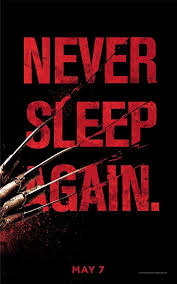
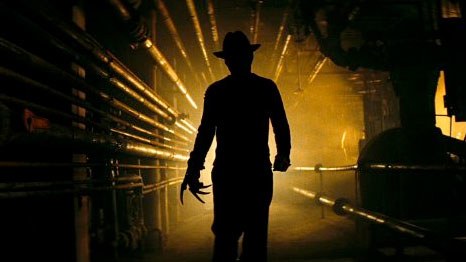
1, 2 Freddy’s coming for you; 3, 4 better lock your door, 5, 6 grab your crucifix, 7, 8 gonna stay up late, 9, 10 never sleep again. If that jingle still sends chills down your spine, you’re not alone. Writer-director Wes Craven’s nightmare on screen has been terrifying audiences for more than 30yrs and has even had a crossover with Jason Voorhees. Beyond the silver screen, the Nightmare on Elm Street (NoES) franchise has been featured at Universal Studios Halloween Horror Nights, interactive media (video games), and Robert Englund reprised his most famous role in the Halloween episode of The Goldbergs [in October 2018]. Inspired by a series of articles in the LA Times; three small articles about men from Southeast Asia, who were from immigrant families, who died in the middle of nightmares—and the paper never correlated them, never said, ‘Hey, we’ve had another story like this.” From that short series of articles came the franchise that we know and love today. But there is so much more to NoES than the fact it was inspired by truly unexplained deaths during nightmares. I’ve written before that the horror genre is the best genre for creatively exploring the human condition, questioning standards and observations, providing different perspectives on sociologically, exploring psychology, heteronormativity, and more, often in terrifying ways to get you to think, and NoES certainly gives us lots of material to talk about. At its core, NoES provides ample opportunity to discuss the distinction between dreams and real life, manifesting in the actions of the teens in the film; furthermore, the events of the film transgress the boundary between imagination and reality that provocatively toy with the audience’s perceptions of the real and imagined. It’s like an episode of The Twilight Zone on crack.

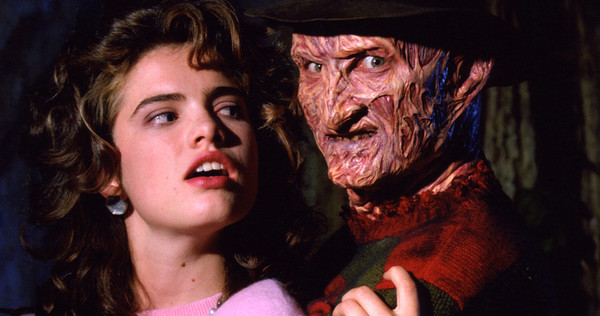
On the surface, it appears that the only motivation of Freddy’s kills and trauma-inducing actions is revenge–plain and simple. After all, he was burned alive by the parents of the Elm Street teens. And so he takes his revenge out on the teens and occasionally their parents. Albeit revenge is a classic motivator, it lacks substance; however, there is much more to Freddy and the NoES series than revenge. What truly separates classic Freddy from new (remake) Freddy and from Michael and Jason is his sick commitment to showmanship. It’s just about the kills, it’s about putting on a show for his own amusement. Almost exclusively attacking teenagers, Freddy’s attacks on the mind and body can be interpreted as being symbolic of the various and often traumatic experiences encountered by young people. Our central character Nancy is the straight-laced strong-willed teenager that experiences social and sexual anxiety around her peers and parents. Clearly she is someone who has had a strong relationship with her parents–especially her father–but that relationship has become strained due to her parents becoming increasingly disconnected from her through abuse of alcohol, pills, or simply not being present. One could go so far as to assess that the parents serve as opposition to the goal of defeating Freddy and survival.

Way before the proliferation of YA movies today and unlike typical slasher films, Craven makes it a point to place the power of survival into the hands of the teenagers. He then transfers the importance of physiological control to psychological control over the unconscious mind and that which induces fear. The ability to defeat Freddy lies within the mind of Nancy. And of course, Dream Warriors places that power into multiple minds. Originally Wes Craven wanted Nancy’s entire experience to be one big nightmare but New Line Cinema wanted a darker, more macabre ending in order to pave the way for sequels because that is there the money is. Just like John Carpenter desired for Halloween to be ONE film, Craven originally desired for NoES to be one and done. Fortunately for us, both have become hugely successful franchises. However, many agree that the originals (or even extended to the first 2-3 films) are the timeless ones.

Freudian imagery and analogies are in no short supply in NoES. Even more so than in other horror films where sexual content is common, the manner in which it is used in NoES is symbolic of Freudian themes that are manifested in the manner by which Freddy stalks, toys with, and kills his prey. For the most part, the Freudian imagery is shown through a sexual context in threatening and mysterious ways that play with the teens’ perceptions of their reality versus a nightmarish imagination. Each sexual image or action is representative of some type of trauma to the body that is connected to the mind and thus becomes part of the subconscious that impacts thoughts and actions.

The various scenes that take place within the dreams of the teenagers quite possibly represent Craven’s own nightmares or perhaps even your own. Just like you might talk to a therapist about a recurring dream or nightmare in order to interpret the imagery and meaning, Craven may be working through his own dreams on the screen. The dreams and Freudian symbolism are what separate NoES from the likes of Halloween. Strip away the dreams, and you have a slasher who kills teenagers. These dreams give NoES depth, and this dimension is what beckons us to face the uncanny and pleasurable unpleasures of this film. Importantly, cinephiles and horror enthusiasts should note that the dreams never end. Evidence of this occurs at the end of the film. In terms of Freudian terminology, there is sufficient evidence in the film to suggest that Freddy represents the id (the part of the mind in which innate instinctive impulses and primary processes are manifest). He acts impulsively, killing those who are connected to the ones who burned him alive in that boiler room after discovering he was a child killer (although the original script refers to him as a child molester). He feeds off fear and comes to life in dreams, full of revenge. Clearly audiences are witnessing a battle between the id, ego, and superego throughout the events of the movie. Unfortunately, there is no real winner in this battle of the mind and body. But there is a winner in the actor Robert Englund. Arguably, he is the biggest single horror genre star since Vincent Price.

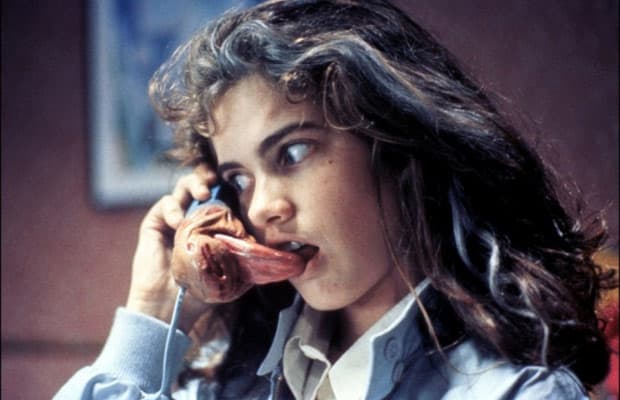
Let’s not forget the comedic components of NoES. Beyond the dreams and thematic depth that sets this film apart from Halloween and Friday the 13th, is the dark comedy. Part of Freddy’s dark comedic charm is the fact that he can talk and toy with his victims in ways that Jason, Leatherface, and Michael cannot. For one simple reason, Freddy is not hidden behind a mask. Freddy has a sense of humor. Strange as it may seem for a slasher, he often integrates humor into his dialogue and actions. This is what makes him fun to watch. The original NoES could be read as the parents being the villains and Freddy being an anti-hero. For all the reasons to be terrified of Freddy, he comes off as a little goofy. As if he just grabbed the first hat, shirt, and pants he saw walking though a rummage sale. His taunting of Tina in the opening scene of the film comes off as taunting, not horrifying. It’s like he’s a cat, toying with his victims because it is way more fun than going in for an immediate kill. Another favorite comedic moment in the movie is when the long, disgusting tongue comes out of the phone when Nancy is talking on it, and Freddy says “I’m your boyfriend now.”

Variety ran a great article on this very subject. Here is what columnist Jason Zinoman stated, “[Freddy] has a weakness for catchphrases (“better not dream and drive”), dopey word play (“feeling tongue tied?,” he asks a victim tied to a bed by tongues) and a predilection for a certain word that makes him sound like a catty teenage girl (“Bon appetit, bitch”; “Welcome to prime time, bitch,” etc). But there’s no denying the star of so many nightmares knows how to deliver a line. He sells his stale material with an admirable professionalism—he’s the Jay Leno of serial killers.”

Looking back at A Nightmare on Elm Street and the legacy it inspired, it is clear that this film and franchise has so much to offer those of us who have been watching for years and those who are beginning to explore the fascinating genre of horror. NoES has it all. Comedy, visceral horror, commentary on the human condition, explorations of the subconscious, and more. It’s this delicate balance of all these elements that bolsters the plot and characters, gives us a horror film of substance. A film that is more than cheap thrills and chills.

Ryan teaches screenwriting at the University of Tampa. If you like this article, please subscribe! Follow Ryan on Twitter @RLTerry1 and Instagram @RL_Terry for more on movies, theme parks, and entertainment news.

“Life of the Party” movie review

Positively uplifting! Melissa McCarthy and Ben Falcone’s comedy Life of the Party releasing everywhere today is a quintessential Mothers Day flick that you can take your mom to and enjoy together this Sunday afternoon. McCarthy shines as the brilliant comic she is in this film. Whereas she is typically the brunt of the jokes in the film’s she and her husband often cowrite together, this film provides McCarthy with a platform to truly showcase her talents as a comedic actor who can not only play the butt of the humor but also the vixen who’s captured the eye of a hot frat guy as she sets out to complete her education. McCarthy’s brand of comedy–that authenticity, candidness, optimism–that we have come to know and love, will have laughing and empathizing throughout the movie.

Although themes such as inspiration, determination, and resilience are not uncommon for a comedy, I appreciate many tropes often associated with fish-out-of-water plots were abandoned for something more unconventional yet infectiously charming. Instead of ultimately changing herself for the world around her or changing the world to fit her, she finds her place in the world and creatively directs it to make room for her. Whatever your age, you will likely find yourself connecting with one or more of the characters in this film as it proves that you are never too old to learn something new or complete that which you chose not to earlier in life. From acoustic guitar tunes to Cyndi Lauper and even a surprise performance by Christina Aguilera, the music will have you dancing in your seat. Watch as nervous, scared girls who are afraid of unknown elements in school, grow to become incredible women who form meaningful relationships and heal from tragedy. Each of the principle cast is unique in some way, and it’s these traits that setup conflict and allow the comedy to flow from the conflict naturally. From McCarthy’s Deanna’s endearing vampire-like roommate who low key longs for a friendship to the girl who is also a non-traditional student because of being in a coma for eight years, the film is filled with a colorful cast of likable characters and of course Deanna’s ex and mistress who we love to hate.

McCarthy is joined by comedienne Maya Rudolph and the pair of them dominate any scene they are in together. It never feels overwhelming because they are both saying precisely what you and I are thinking. The two of them exhibit kind of friendship that perhaps your closest friend and you desire to have. Although there is a mild degree of suspense, the film derives most of its energy from the brilliant cast’s reactions to the varying conflicts throughout the film. As there is not much to analyze in this film, you’ll find this review far shorter than my usual ones. But, I desired to write up a piece on it because it’s been largely panned by most critics. Variety and I seem to be among the few who find so much that’s “right” with this film as opposed to what’s “wrong.” Maybe it’s not terribly deep, but it boasts a simple plot with complex characters that provides McCarthy with an opportunity to show a different side to her trademark comedy. With honors!

“The Conjuring 2” movie review

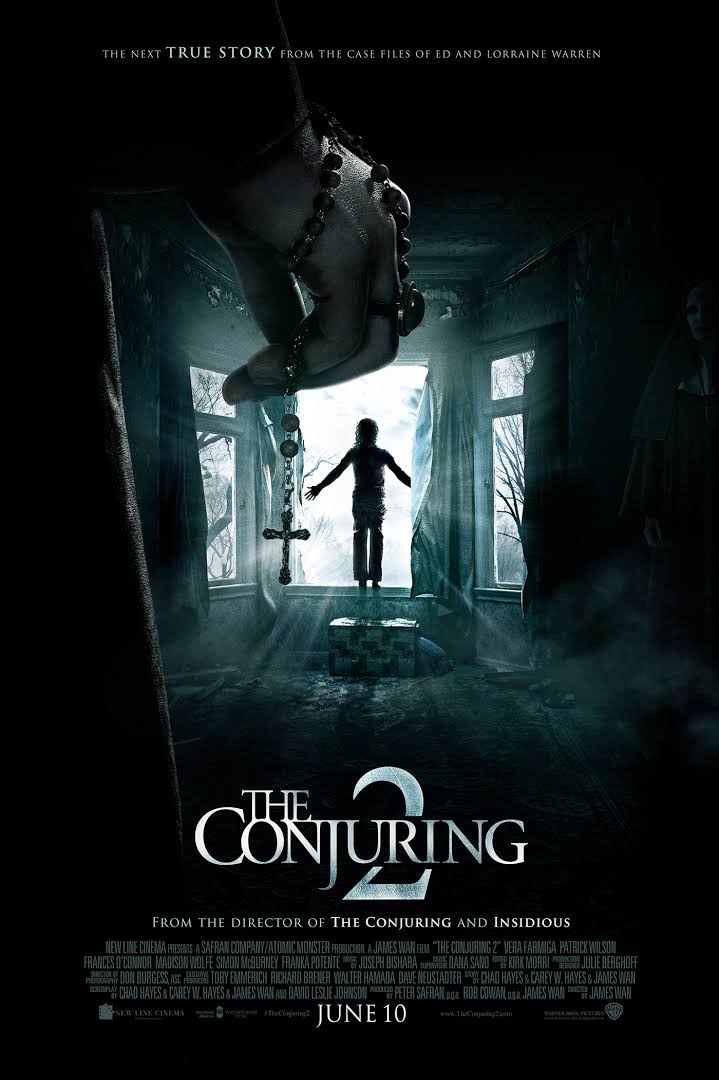
Conjuring2Outstanding horror film! Director James Wan has once again provided audiences with a brilliant work of the macabre and supernatural. From the writing to the directing to the acting and cinematography, Conjuring 2 is on par with, if not better than the first. Sometimes the best stories are true ones. And, although elements of the story have to be fictionalized in order to construct a cinematic narrative, grounding the Conjuring movies in the real work of Ed and Lorraine Warren (Patrick Wilson, Vera Farmiga) infuses a dynamic emotional response that directly impacts the increased frightening nature of these films. One of the observations that I appreciate most about, not only this but the predecessor, is not relying upon the jump-scare to curdle the blood. Are jump scares part of the movie? Well, of course! What fun would a horror film be without the entire theatre gasping for breath, jumping, or screaming together??? But Wan goes beyond the jump scare and channels his inner Hitchcock to build suspense and intrigue. The horror film is best appreciated in a group setting. It is a genre that specifically engages the audience on a visceral level. Wan is truly a master at his craft; and I love witnessing how he continues to prove his ability to develop creative horror films.

Ed and Lorraine Warren are back; and have been called upon, by the Catholic church, to investigate the, what’s been dubbed as the “Amityville” of London. Following a self-imposed sabbatical after the investigation of the infamous Amityville haunting on Long Island, Ed and Lorraine fly to London’s Enfield neighborhood to evaluate a reported haunting and possession. Struggling single mother of four Peggy Hodgson hopes that Ed and Lorraine will be able to drive the evil out of her home, and more specifically her youngest daughter Judy. In an effort to discover the truth behind the well-documented alleged demonic haunting and possession, Ed and Lorraine find that they have also become a target. Facing their most challenging case, Ed and Lorraine are determined to help the Hodgson family and drive the evil from the house.

Following the increasing trend for a film, including but not limited to horror, to begin with an elaborate prologue, Conjuring 2 starts with a fantastic moving shot of the famous eyelet windows of the 112 Ocean Avenue house in Amityville. Often filmed from the outside, this shot sequence takes place inside the attic. A much more intimate feel, this was an excellent choice for establishing the case that launched Ed and Lorraine Warren into the public eye. There have been numerous movies and documentaries based on the arguably most infamous haunting in the United States, so it was not necessary for Wan to spend too much time on it. It is, however, a very important scene because the plot/case of Conjuring 2 is directly related to the experience that the Warrens went through during the Lutz investigation. Beyond the establishing a connection between the Amityville and Enfield cases, beginning with the Warrens in the middle of the 112 Ocean Avenue investigation allows for Wan to visually show how and why the Warrens would seek a self-imposed sabbatical from supernatural and demonic investigations. Moreover, this sequence of events that provides copious amounts of plot development material are also instrumental in significant contributions to character development. Although this prologue lasts less than ten minutes, it contains prolific information vital to the plot of Conjuring 2.

It should not be of surprise that Wan uses the camera very strategically to tell this visually driven story. From the rule of thirds to lighting to creative use of angles and movement, the camera is instrumental in setting the macabre mood of the film. One of the visual storytelling elements that Hitchcock was most known for, especially in Psycho, is using the camera’s placement and angle to foreshadow something or someone. Wan takes a page from the Hitchcock handbook and utilizes the camera movement in such a way that you are predisposed to feeling certain that something or someone is about to appear or emerge from the shadows but your game is thrown off when that doesn’t happen–but then totally happens when you least expect it! Throughout the diegesis, you will encounter moment when the characters are faced with inner demons that parallel or symbolize the actual evil entities in the film. Having this subplot concurrent to the foreground aids in creating and maintaining an emotional connection to the characters. Shocking the audience both emotionally and physically. By eliciting dynamic and comprehensive responses to the horror on screen, the film becomes an immersive experience–that is the brilliance behind this dark and sinister tale.

Beyond the exceptional direction by Wan, part of what makes the Conjuring franchise so successful is the exquisite casting. Patrick Wilson (Insidious) and Vera Farmiga (Bates Motel) are perfectly cast in these films. From what I have read about the real Ed and Lorraine Warren, Wilson and Farmiga respectively stay true to the real-life people they are portraying while adding in the necessary acting skills necessary to increase the impact and believability of the film. The quality of the acting that Wilson and Farmiga bring to the film is outstanding. Sometimes, a horror film can have an compelling plot but the actors are so uninteresting that it prohibits the story from making the impression that it should. Wilson and Farming make the characters of Ed and Lorraine Warren interesting to watch and add a performance quality to the film that keeps your attention the whole time. The degree to which they add a sincere care for the victims of hauntings to their respective characters is refreshing and will stay with yowling after the movie closes. As the Warrens are reoccurring characters in the Conjuring franchise, it is vitally important that they are as interesting to watch as the plot itself since their cases are the inspiration for the whole franchise, at least put to this point.

If there is one negative element in the film, it is the weak showdown. Not weak in that it was anticlimactic or uninteresting, but that it felt a little rushed. At 2hrs and 15mins, the film is longer than the average horror film, so it was not necessary to rush the climax of the film. It certainly does not mitigate the experience of the movie, but I feel that it could have been a little more intense. That being said, if you are looking for an excellent movie to kickoff your weekend, then this one is it! At last check, it out-performed both Now You See Me 2 (which should’ve been entitled Now You Don’t) and Warcraft. Even if you have not seen the first Conjuring, you will still enjoy this installment. However, seeing the first one will help you to better understand the Warrens and their unconventional line of work. Can’t wait to see where James Wan and the Warrens take us next!

The Gallows movie review

The GallowsA new twist on the found footage genre. Blumhouse’s The Gallows is the movie adaptation of the urban legend that sprung out of the real accidental death of Charlie Grimille at Beatrice High School in Nebraska during a play. This is the type of movie that you already know is going to be built upon the concept of the jump-scare, but it takes the often overly employed plot device and actually couples it with sub-plots and proper pacing. Even for the avid horror film fan, this movie will definitely curdle your blood and send your anxiety level through the roof. Surprisingly, this found footage horror film deviates from some of the most common tropes appropriately associated with this horror sub-genre. Although any substantial narrative and dynamic plot lacks from the film, it still provides thrills, chills, and gasps. You may even find yourself resisting closing your eyes to avoid the horror on screen. Be sure to bring a friend or significant other along if you dare to watch!

The Gallows takes place during the final rehearsals for Beatrice High School’s production of the play The Gallows. Back in 1993, the school produced The Gallows but due to a prop malfunction, the character of August was actually hanged. Ever since then, the school until today, never produced the play again. Despite rumors and alleged sightings of paranormal activity in the school’s theatre, Pheifer (Pfeifer Brown) has decided to spearhead a revival of the cursed show. On the evening prior to the show’s opening, Pfeifer catches her co-star Reese (Reese Mishler), his douchey best friend Ryan (Ryan Shoos), and Ryan’s cheerleader girlfriend Cassidy (Cassidy Erin Gifford) dismantling the set. Unfortunately, this chance encounter inside the theatre, is the beginning of a night of terror and mystery.

Due to the very nature of the essence of a found footage movie, it is the type of movie that should be appreciated for what is it–some good scares for an hour or so. This movie genre is not produced to typify the art of filmmaking; but it’s produced for pure unpleasureable pleasure. So, given the goal of the movie, it was very successful in producing frightening imagery for the eyes and embedding terrifying thoughts in the minds of the audience whilst sticking to a coherent plot. I especially liked how the writers included subplots that underscored the more superficial narrative. This is something that is usually left out of found footage movies. Furthermore, the ending is definitely unique to what is typically expected in this sub-genre.

If you’re a fan of horror films, this is definitely one to check out! Even if you are not fond of found footage movies (as is the case with yours truly), you will still find a great deal of enjoyment in being scared for a short while. For further reading, check out the true story and urban legend that serves as the inspiration for this film. http://www.hauntedhovel.com/beatice-high-school-beatrice-nebraska.html and/or https://supernaturalinvestigations.wordpress.com/2008/11/16/the-charlie-grimille-case-beatrice-nebraska/