“I hate that word [comeback]. It’s a return! …”

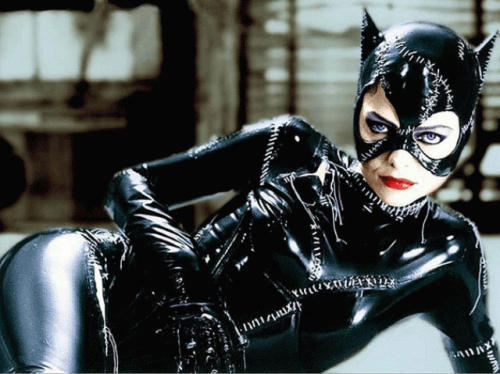
“…a return to the millions of people who have never forgiven me for deserting the screen.” A powerful line from the iconic Norma Desmond in Sunset Boulevard–but–this also rings true for Michelle Pfeiffer, who is returning to the big screen following a self-imposed exile from Hollywood. After a long “famine” (the term Darren Aronofsky attributes to the Oscar-nominated actress’s absence), Pfeiffer is making a triumphant return to the big screen, and in BIG ways. Whether your favorite Pfeiffer performance is her universally critically acclaimed interpretation of Selina Kyle/Catwoman in Tim Burton’s Batman Returns or as Elvira Hancock in Scarface, cinephiles and fans alike can agree that the big screen has missed Pfeiffer’s bold screen presence and incredible beauty. What makes Pfeiffer unique in the world of cinema, is her ability to be incredibly ballsy and completely vulnerable all at the same time. Few actresses possess the ability to be a tomboy one minute and the portrait of sensuality the next. Why would one of the brightest stars in Hollywood in the 1980s and 90s slip away from the silver screen so conspicuously? The long and short of it is she desired to make time to raise her children. In a rare interview with Vanity Fair, Pfeiffer stated that she required so many schedule and location accommodations for her to continue to be a working-mother that she became “unhireable.” Now that her children are grown and out of the house, she is ready to get back to work!

While many may be focussing on Pfeiffer’s return to the big screen–to movies that are a match for her talent–the larger picture here could be lost. Approaching 60, Pfeiffer is at the age when many actresses are either not hired as often and/or are placed in grandmother roles; however, she is busier than ever! And in high profile roles in highly anticipated films. For the fans of her brilliant performance as the definitive Catwoman, she is returning to the superhero genre in the new Ant-Man and more recently she commanded the screen in Murder on the Orient Express. Pfeiffer also told Variety that should would very much like to reprise her role as Catwoman in a future film but not go to the lengths she had to before (citing placing the real bird in her mouth and the iconic sexy, but uncomfortable costume). Pfeiffer’s return to the screen is a testament that Hollywood is beginning to show that older established actresses are still bankable.
Pfeiffer comments that being an empty-nester has provided her with the push to get back out there. She wasn’t even sure that she would be able to step right back into acting because she often remarks that she sometimes feels like a fraud because she never received any formal training. Her rise from grocery store clerk to household name happened nearly overnight. Just goes to show that even though formal training and education are valuable tools in a show business professional’s tool belt, formal education itself does not an acclaimed actor make. Part of preparing to return to the superhero genre in Ant-Man and Wasp has her pouring over old comic books to prepare for her highest profile role in more than a decade. It is clear from the few interviews Pfeiffer grants (she is self-admittingly scared of interviews) that her favorite role in her career IS her role as Selina Kyle/Catwoman. Even today, she says that she is met by fans, young and old, of her work in that role. She quickly gives credit to Tim Burton who was highly instrumental in providing exceptional direction and a creative genius in the, what many critics call the, Batman movie that typifies the franchise. So, her return to the superhero movie genre is one that is highly anticipated.

While she is excited to get back out there, she still admits that she will continue to be choosy in her roles. She is an actress that has to feel a connection to a character in order to bring it to life. Whereas before she turned down roles in Silence of the Lambs and Thelma and Louise because of making sure she had time to be a mom, first and foremost, she will continue to exhibit her desire to not simply get out there and act again, but thoroughly enjoy the characters she plays. Part of Pfeiffer’s timeless charm is her ability to be 100% sexy feminine and 100% humorous tomboy at the same time. It’s this dichotomy that gives Pfeiffer her unique blend of charisma and screen presence that commands your attention and makes her memorable. Of all the qualities that aid in creating the standout actress that many of us love, she is equally humble and still learns from those actresses like Judi Dench and others that she continues to admire.

This past Halloween, I did my best to emulate her iconic Catwoman costume!

 

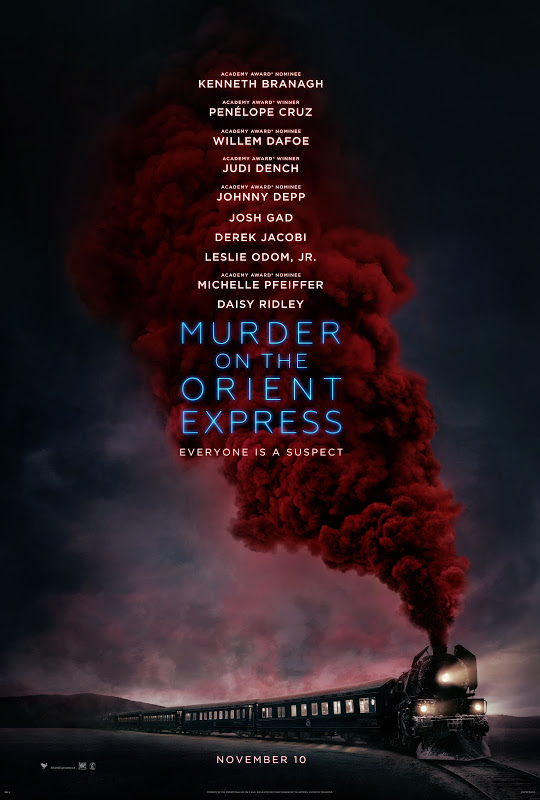
“Murder on the Orient Express” (2017) Film Review

The classic Hollywood style mystery successfully pulls into the station. Grab your ticket from the box office and board the legendary Orient Express with this all-star cast. Kenneth Branagh’s adaptation of the timeless Agatha Christie novel is as bold and elaborate as Hercule Poirot’s famous mustache. Feel as though you are traveling aboard the famous transcontinental train as you attempt to put all the pieces together to solve the mystery right along with “quite possibly the greatest detective in the world.” Hollywood style movie mysteries are nearly a thing of the past, but Branagh stokes the fire in the engine of the once popular genre and conducts an exciting journey through the classic whodunit plot. The film’s namesake is a novel that has inspired so many mystery novelists, and hopefully this film inspires a new generation of filmmakers to create their own movie mysteries fit for the big screen. Because the 1974 version including a cast ranging from Ingrid Bergman to Anthony Perkins to Sean Connery has not stood the test of time as well as it was thought to have done, this cleared the tracks for Branagh’s adaptation of Christie’s most famous novel.

After he successfully solves the mystery of the theft of precious religious artifact from the Wailing Wall area of Jerusalem, Hercule Poirot (Branagh) is beseeched to head back east to solve another mystery. Over the years, Poirot has made many friends, and one of these friends is the son of the railroad tycoon who owns the opulent Orient Express. When a passenger doesn’t show, Poirot is given his seat and boards the transcontinental train bound for western Europe. Although Poirot was promised a rail journey free of crime, a nice break, and to be pampered during his travels, he finds himself solving the most peculiar of mysteries–a most gruesome murder. The victim: an unscrupulous man with many enemies. When a freak avalanche forces the Orient Express to stop on a breathtaking, precarious stretch of track, Poirot finds the time to interview each and every one of the suspects—confined to the twelve first and second-class passengers who might have had access to the victim’s cabin. When each piece of evidence opens one Pandora’s Box after another, and the web of lies and connections between the passengers grows to Poirot’s mustache proportions, Poirot faces a complex mystery that prompts him to call his very approach to crime solving into question.

Nevermind the solution to the tentpole mystery novel is one of the worst-kept secrets in British literature history, Branagh crafts a cinematic mystery full of intrigue, revenge, lies, deceit, and the central murder. The plot revolves around a seemingly perfect crime committed on a railcar with no access to the outside, and only the passengers and crew on board the suspects. But even Poirot is stumped at the who, how, and why. Whether you know the ending or not, this film provides an excellent example of a genre that harkens back to Hollywood’s golden era. There was once a time that mysteries and musicals were a staple of the industry, but times change. Still, Branagh shows audiences that the timelessness of an old fashioned whodunit cannot be overstated. Since the ending of the mystery is known by so many people, Branagh was challenged with providing the audiences with something different, something that creates a new take on a well-known story. He accomplishes this by throwing in some additional subplots, character connections, and evidence that suggests that the solution may turn other otherwise than it does in the novel. The changes he brings to the story are organic and fit in well. The end result is a fantastic film that keeps your attention from beginning to end, even for those who know–or think they know–the solution to the mystery.

From the sweeping landscape shots of the Alps to the wide variety of shots to bring the audience onto the train with the rest of the passengers, the production design is excellent. The attention to the detail and visual elegance of the story are treated with creative precision, just as the Christie plot is woven together. Production designer Jim Clay’s meticulously recreated Orient Express is truly something to behold. Unfortunately, despite Branagh’s decision to shoot on 65mm film, there are times that the train set feels almost too perfect–a little artificial–similar to The Polar Express. Although there are times that the production design is not being showcased to the degree that it should to increasingly immerse the audience into the world of Poirot, there are plenty of beautiful shots that serve as a testament to the opulence of rail travel that once was. Of the few weak areas of this film, the cinematography is the weakest because it could have been used to truly create a visually stunning film and not fall victim to surrealism. Patrick Doyle’s score complements the film by feeling like an extension of the plot itself, in time and space. The combination of big band, jazz, and orchestral music immerses the audience into this world. All the technical elements work effectively to transport you from your seat to a compartment on the legendary train.

Branagh’s screen adaptation of Christie’s characters is brilliantly entertaining and developed well. Each character represents a different type of person, a different walk of life. No two characters are alike, which makes great for interjecting some social commentary into the mystery. From a professor spouting pro-Nazi sentiments to a nurse turned missionary, you will find the characters intriguing in and of themselves, never mind how they may be connected to the victim. Alexandra Byrne’s costumes are perfect appointed extensions of the characters that wear the authentic period clothing. Each costume was designed to be as much a part of the respective character as the accents, hairstyles, and backstories. Josh Gadd proves that we can successfully play a serious role, which will prove to bolster his career, Willem Dafoe is perfect as the professor, Dench portrays the princess in only a way that she could so successfully accomplish, and the rest of the cast are all excellent. Coming in a close second to Branagh’s screen time, as the iconic inspector Poirot, is the beautifully talented Michelle Pfeiffer as the widowed heiress Mrs. Hubbard (Lauren Bacall’s character in the original). She truly showcases her talent for adding depth to the characters she plays in order to make them complex and memorable. The diverse cast of characters is incredible to watch and couldn’t have been deleted better for this highly anticipated film.

Climb aboard The Orient Express for the whodunit that started it all. Branagh’s fresh take on the classic tale would satisfy even the harshest of critics Agatha Christie herself. He treats the source material with the respect it deserve, all the while, adding in new material to craft a new experience for those tho have read the novel and/or seen the original film adaptation of this story. Do yourself a favor and don’t ask anyone whodunit, because you need to experience the solution for yourself. Perhaps you can solve it more quickly than Poirot. Don’t let the train leave the station before you pack your bags and travel back to a time when trains went full-steam ahead into adventure and intrigue.

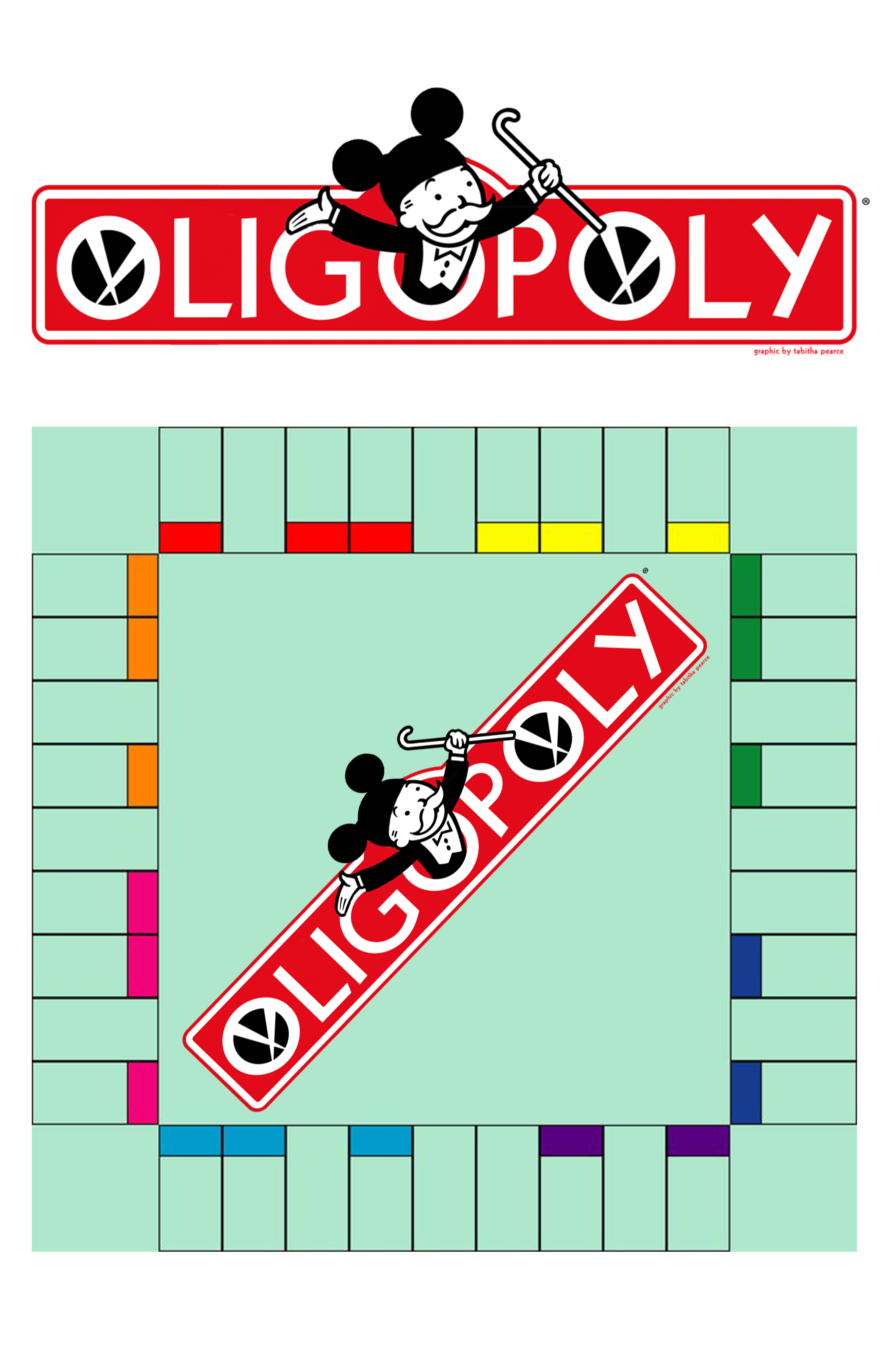
Don’t Pass GO, Don’t Collect Your Oscar

Corporate monopoly is the enemy of creativity and variety. The biggest news in entertainment this week was the talks between Disney and Fox to sell most of 21st Century Fox to The Walt Disney Company. Whether the talks are still going on behind closed doors or not presents a fascinating topic to discuss! This deal, which would be the biggest film/media deal ever, has far reaching effects upon the industry. Some may even argue that it has danger written all over it. If there wasn’t already a rigid oligopoly amongst the studio/distribution companies, there will be if this goes through. Should this go through without the government swooping in to save the day with monopoly claims in the vein of the historic Paramount Decision, the lion’s share of the cinematic marketplace would be controlled by Disney, TimeWarner (Warner Bros.), and Comcast (Universal), with Sony (Columbia) and Viacom (Paramount) bringing up the rear. Five. That’s right. Five companies would essentially determine the future of the industry, and control the majority of the motion pictures released in theaters and the content on cable television (and the streaming services that access it). It’s a mirror image of the 1940s. Instead of The Big Five and The Little Three, we have The BIG Three and the Little Two.

From the big screen to the small screen, you will notice the effects in the programs you watch. When one company controls the majority of any marketplace, it usually spells disaster for the consumer; furthermore, it means that there will be a primary gatekeeper in future artists getting his or her work out there. Not to mention that the programming on FX and other Fox (non-broadcast) subsidiaries could begin to gradually feel and look more like ABC programming. Could this put shows like The Simpsons and Family Guy on an endangered species list of sorts? Not right now. The deal, in off-and-on talks, would sell off 21st Century Fox (movie studios) and not Fox or Fox Sports (an acquisition of that sort would not be permitted because it WOULD be illegal). So, even if this buyout were to happen, The Walt Disney Company would still continue to be the brunt of many jokes on The Simpsons and Family Guy. A buyout could mean, however, that program options will seem less varied and just more of the same ABC-schlock that already pervades the bandwidth. The two companies that have the most TV programming are Fox and Disney, with Sony (CBS), Viacom (non-broadcast Nickelodeon), Comcast (NBC), and TimeWarner (CW) trailing in original programming. That being said, TimeWarner has done very well with The CW, and I hope it continues to churn out programs such as Vampire Diaries, Supernatural, Riverdale, etc.

Beyond the negative impacts on content, which, in all honestly, can be quite subjective in nature, are there legal or ethical implications here? Is there perhaps a past precedent that could be used in the courts to stop such a buyout (or sellout rather–Fox)? Let’s look at the most famous suit brought against the major motion picture studios: The Paramount Decision [(U.S. V. PARAMOUNT PICTURES, INC., 334 U.S. 131 (1948)]. Prior to the Paramount Decision, the motion picture industry was controlled by a few companies that were heavily vertically integrated. The Studio owned the facilities, production companies, staff (under long-term contracts), the films themselves, distribution channels, and the movie theaters. When the studios were growing so large that they began infringing upon the free marketplace, the US Government forced the (then) eight major/minor studio players to end the practice of block booking (meaning, films would now be sold on an individual basis), divest themselves of their respective theatre chains (sell them off), and modify the practice of long-term employee contracts (though, this would continue until the 1960s). This marked the beginning of the end of the Studio System, AKA Hollywood’s decentralization. There are many similarities between the situation in the late 1940s and today. In fact, it’s a little worse today because the industry is mostly controlled by five (instead of eight) companies, and these companies have heavy investments in streaming and television programming.

The problem with the current state of capitalism in the Unites States isn’t worries of monopolies but oligopolies (monopolistic practices between a few firms that essentially control a market). Certainly the state of the film industry already lends itself to an oligopoly because of the few companies; but the buyout of 21st Century Fox by The Disney Company would greatly increase this issue of a blatant oligopoly. If a monopolist (in many other industries) did what Disney is doing, neither the public nor the government would stand for it; but because it’s Disney, and because it’s the film industry, most of the general public is unaware of the negative consequences of such a buyout. Technically speaking, oligopolies are not illegal nor is monopolistic competition; however, this can be a slippery slope towards stifling creativity or making is increasingly difficult to break into any given industry as a newly emerging competitor. Incidentally, monopolistic competition causes the variety or level of differentiation of similar products (i.e. moves and TV shows) to become less heterogeneous and nearly come across as homogenous. For many, it will feel like there are only two primary companies controlling the majority of programming on TV and a few companies controlling a large portion of the movies that get released in movie theaters.

When a strong oligopoly exists within a specialized industry (for our purposes, media & entertainment), one of the side effects is a concept known as parallel exclusion. This concept can be described as the collective efforts of the few industry leaders who essentially act as the main gatekeepers to prevent or make it difficult for would-be newcomers to enter the arena. Parallel exclusion is nothing new, and has been in the news as recently as the last 2-3 decades within the airline and credit card industries. Throughout the eighties and nineties, Visa and MasterCard essentially blacklisted any bank that set out to do business with AmEx. Thankfully, the U.S. Justice Department stepped in when the manner in which the exclusionary rules were written crossed legal, fair trade boundaries. There were similar issues within the airline industry as well. When a few companies control the content or services in the marketplace, antitrust issues are raised.

Although we are not facing a technical monopoly with the possible acquisition of Fox by Disney, we are looking at an abuse of power that leads to anticompetitive conduct. If nothing else, the consumer should be worried about having fewer options for programming. Not that the number of programs or movies will shrink, but there will be little difference between what is released under the Disney banner and the Fox name (if it’s still even called that). In a deal like this, it’s the consumer who gets the short end of the stick. The consumer would be wise not to give Disney a pass just because there are a small group of big film studios instead of just one. While Marvel fans may be excited that the X-Men can join the MCU (Marvel Cinematic Universe), there is the possibility of a lack of competition between brands thus mitigating innovation and ingenuity. Competition is the mother of innovation just as necessity is the mother of invention.

Because the Walt Disney Company is primarily focussed on producing the biggest movies possible (after all, they made five of the 10 most successful films last year), the mid-budget dramas and comedies that used to thrive in Hollywood–you know, the ones that cause you to cry and laugh–would dwindle in number–there would be little room for them to make their respective ways into theaters in a predominantly Disney controlled industry. What we are essentially talking about here is a corporate cinematic monolith, the likes of which, has never been seen before.

Written by R.L. Terry

Graphic by Tabitha Pearce

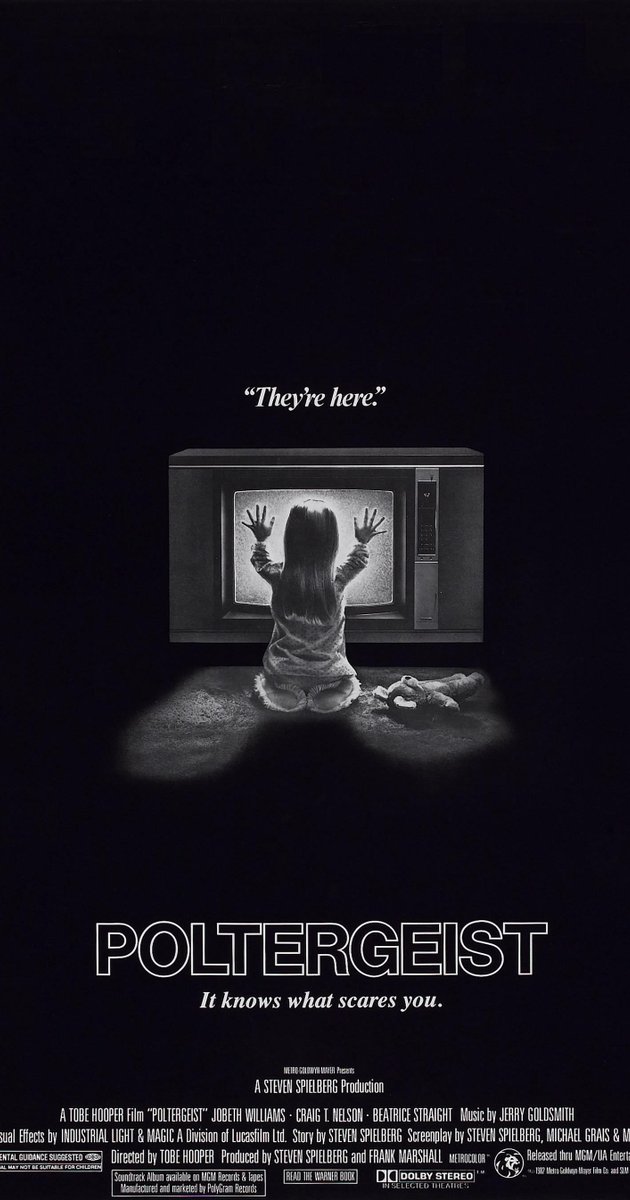
“Poltergeist” (1982) Retrospective Film Review

“They’re [still] here!” 35 years later, Stephen Spielberg and Tobe Hooper’s Poltergeist still terrifies audiences today. Coming off the successes of Spielberg’s Jaws & Close Encounters of the Third Kind and Hooper’s Texas Chainsaw Massacre, this powerhouse producer-director team (note: Hooper received the official director credit) crafted a horror film that became an instant classic then, and still holds up today. With Spielberg heading up the story and Hooper in the director’s chair, both cinematic geniuses combined their talent for generating material for nightmares to take the “haunted” house film sub-genre of horror to the next level. Storytelling and cinematic elements aside, another primary reason the film still haunts and intrigues audiences today is the lore of a lengendary curse attached to this film. For audiences back in 1982, and possibly still to this day, following watching the film, friends may have found themselves only venturing by an alleged haunted house on a dare. The film’s impressive ability to take the haunted house concept up to a level never seen before–in fact–it essentially created the modern haunted house genre seen in today’s horror films. In short, Poltergeist is an icon, and stands alongside films such as PsychoThe Exorcist, and The Shining. Probably the most terrifying element of all is the setting–mundane upper middle class America suburbia. No longer where “haunted” houses confided to old mansions or hotels, but could be located next door to you. That is, if your neighborhood is also built upon a burial ground.

At the end of the day, regardless of who actually directed this film, Poltergeist remains one of the strongest films in either Spielberg’s or Hooper’s canon. And the legend of a curse certainly doesn’t hurt the strong fanbase of this horror classic. Curse and directorial authorship aside (though, the latter is a valid topic for discussion), the brilliance of this film is almost self-reflexive in that it displays quite the dichotomy while commenting on the secularized versions of heaven and hell as seen in the film due to both having their due screen time. This bifurcation paves the way to read past the ghostly apparitions and (real) skeletons, to the root of what I feel Spielberg and Hooper were foreshadowing as the real threat to a traditional familial bond–that box in your living room with moving images flickering on the screen. The way the movie opens and closes are very much book ends to one another as it attempts to deal with the quandary of an inability to “choose between life and death, when [we’re] dealing with what is in between.” The foreshadow of the seemingly one-sided conversation between Carol Ann (the late Heather O’Rourke) is a great depiction of how families are today. The kids are entertaining themselves by and form connections with characters seen on the TV while mom and dad are in their own world getting lit. That is not unlike what is seen today. Now, keep in mind, televisions are not responsible for fracturing the nuclear family; but the television is often relied upon as a babysitter and becomes the object that receives the most attention to the point that some get sucked into the moving picture world. Perhaps there is a lesson here in that the television should not be the center of attention in a household.

Poltergeist has much in common with a roller coaster at a theme park, and that metaphor can can aid in explaining why a film with such a simple plot and one-dimensional characters was and still is so incredibly successful in terms of cultural references and the fan base today. Why do most people go see a horror film? Is it the complex plots and multi-dimensional characters with brilliant on screen chemistry and excellent development? Not particularly, as great as those things are AND are often found in the best horror films. The pacing of this film reminds me of the pacing of a roller coaster at a theme park because of the lift at the beginning, the plummet into danger, the feeling that it’s almost over, followed by one final plunge into the twists and turns before pulling into the station. Compared to films such as The ConjuringAmerican Psycho, and Nightmare on Elm Street (not to mention many others), the plot is somewhat nonsense; however, the film is–without argument–sensationally effective, terrifying, memorable, and the horror imagery is beautiful–filled with metaphor and familial commentary. It’s an impressive array of haunting visual effects juxtaposed against a typical American family living in the suburbs. That, and ever since this movie, static on a TV is frightening! If you can find it anywhere anymore. With all channels on 24hr programming now, I suppose that the ghosts have to find another way into our world.

The innocence of the characters is also an intriguing and atypical part of this movie that aids in the frightening imagery and nightmarish inducing apparitions. It’s atypical because the victims of death, haunting, or injury in a horror film are usually horny teenagers who are sexually promiscuous, adults who have skeletons in the closet, played God, broken the law, or just plain old sociopaths. Not true with this family. Everyone in the Freeling household are wholesome family members from the hardworking father who wants the best for his family to stay-at-home mom who loves her kids, and even the siblings who appear to get along just fine. Almost too picturesque, and ultimately a bit unrealistic. Despite the tight, healthy nuclear family, the Freelings are thrown into chaos when Carol Ann gets sucked into the world that exists between life and death behind a thin veil. That innocence helps to uncross the level of terror in the movie because it hits members of the audience that no one is safe from the reigns of evil. The fact that everything in the film happened to a normal family creates added anxiety in the minds of the audience as many go home to a similar world first depicted in the movie. Looking back, Middle American must’ve been completely shocked when a family, not unlike its own, was plunged into a world of hellish gateways, ghosts, and ghouls and other circumstances out of its control.

There is something for everyone in this film. Because it is likely that most in the audiences then and now are afraid of something in the film: unexplained physics-defying phenomena, clowns, the underside of the bed, ghosts, closets, scary trees, pools, or subdivisions. Perhaps the relatability to the characters or the scary elements of the film are what help to connect new audiences to this classic horror film. There is a wittiness about the film that reminds me of something that Alfred Hitchcock may have developed for the screen had he ventured into paranormal movies. As nightmares go, Poltergeist is thoroughly enjoyable because you know your an always wake up from it and none of the characters are permanently damages at the end of the film. Eerie, beautiful, gruesome. That’s why this film still holds up today and will continue to haunt audiences for many years to come.

“Blade Runner 2049” film review

Just as mesmerizing as the original! Denis Villeneuve’s Blade Runner 2049 is nothing short of a future classic that demonstrably possesses the soul of the original and pairs it with a new plot brought to life by a fantastic cast. Every minute is filled with beautiful cinematography that is perfect in every way and a haunting score that penetrates down to the bone. At its core, Blade Runner 2049 wrestles with this one central question: what does it mean to be human? A question that can spawn hours of debates or an exquisite nearly three-hour motion picture. Considering that Ridley Scott has not delivered the same quality for which he provided precise and poignant direction, it was a solid decision to attach Villeneuve as the director. This sequel 35 years in the making may not have had the classic Ridley Scott at the helm, but Villeneuve channels his inner Scott to provide audiences with the same profound cinematic experience today as Scott did when Blade Runner first released. From the color palette to the lighting to the sound design, this motion picture is one that typifies the power of the art of motion pictures and one that will surely be regarded as iconic as the years more along, very much in the same way that the original has been regarded over time.

Officer K (Ryan Gosling) is tracking down the remaining legacy Replicant models created by the infamous Tyrell Corporation, and his latest mission takes him to an obscure farm in the middle of dessert California. After retiring the replicant at the farm, K uncovers what will become a metaphor for Pandora’s Box, as it opens a mystery that law enforcement and the Wallace Corp. seek to solve. The secret contained within the box is one that could potentially plunge all “humanity” into complete chaos, not there there isn’t enough of that already for those left on earth. K’s journey takes him from the gritty, grimy streets of Greater Los Angeles to the dust bowl that was once Fabulous Las Vegas. There, he meets former Blade Runner Deckard  (Harrison Ford) who has been hiding from law enforcement and the Wallace Corporation for three decades. Together, they must work to locate the miracle that no one ever could have thought would happen–or could happen.

Despite not pulling the numbers that Blade Runner 2049 was forecasted to bring in over its October opening weekend, the film did what fans wanted–it kept the very essence of the original movie alive and well. For all the artificial intelligence in the film, there is nothing artificial about this long-awaited and highly anticipated sequel to the Ridley Scott classic. The reason for not pulling the numbers that it was predicted to do can likely be attributed to the tone of the film and the stylistic filmmaking approach that borders on neo-noir meets the avant-garde. Although not completely necessary, it is incredibly helpful to have seen the first film. And seeing the first film gives an appreciation for the sequel that cannot be experiences without having knowledge of the first. The slow-pace and dark atmosphere may be some of the reasons why more people did not wish out to see it as the weekend moved along. Looking at the two films side by side, this film is a direct extension of the original so the authenticity of this universe and story is genuine and almost visceral. For those who prefer more dialog or higher concept plots, the film may not strike the same level of enthusiasm because of the heavy visuals and dark themes in addition to the profound questions. This combination is not one that will attract the general populous in doves; however, this film IS what it needed to be. Sometimes a long-awaited sequel has to be made to remain true to its soul because that is what the fans want to see, and it’s the true fans who continue to visit the cinema year after year. Blade Runner 2049 may not win over new fans, but it keeps the diehard ones happy.

At the heart of Villeneuve’s cinematic masterpiece are existential questions that drive the plot forward. A plot driven by such questions told through a sedated pace is one that is not as easy to digest as one that is more superficial and more rapidly paced. Still, these questions are profound and cause one to think hard about what it means to be human. What sets this film apart from other science-fiction rapid fire blockbusters is the commitment to visual storytelling and the art of creating a motion picture. Blade Runner 2049 mirrors its predecessor and remains true to the experience of the first. Cinephiles will especially appreciate this film for it harkens back to a time when German expressionism was at the foundation of the set design and lighting. There are many exaggerated and elongated shapes that exist in a world of harsh shadows and dimly lit alleys throughout the film. Although the look of the future world in the original was one that audiences may not have believed would come true or could come true is seen differently by today’s audience that can easily see just how accurate the world of the Blade Runner movies actually is–the mediation of society today seems to be not that far off from this not-so-distant future.

Cinematographer Roger Deakins captures a wold through the lens that seems to go on forever in a world of greys and beiges. The only color to be found is in the prolific advertising on the sides of buildings. Deakins further extends the artistic approach to the cinematography by paying homage to Stanley Kubrick’s The Shining in a shot that was actually added to one of the more recent recuts of Scott’s Blade Runner. That score, though. The sound design and score are an audible extension of the visual landscape. Composers Benjamin Wallfisch and Hans Zimmer have created one of the most haunting scores to ever be heard in the cinema. The combination of ghostly groans and blood curdling howls echo the very look and feel of the landscape. I’ve rarely encountered such an immersive sound design and score in a film. Just as the world on screen is an uneasy place to live and one that contains faint images of the grandeur of a world that once was, the score accompanying this motion picture places you in the midst of this post-apocaltyic world that most natural-born humans have left.

Definitely a film that I want to watch for a second time in order to appreciate this film, boasting with artistic achievement, even more than I already do. Although most of the themes and subtext are centered in and around “what it means to be human,” there is a real message regarding the importance of bees. An important visual statement in the film because the populations of bees, the most prolific pollinators, are dwindling. Not for the casual movie-goer, this film is for those who want to experience a sequel in the vein of the original that shows the artistic side of the creation of motion pictures.