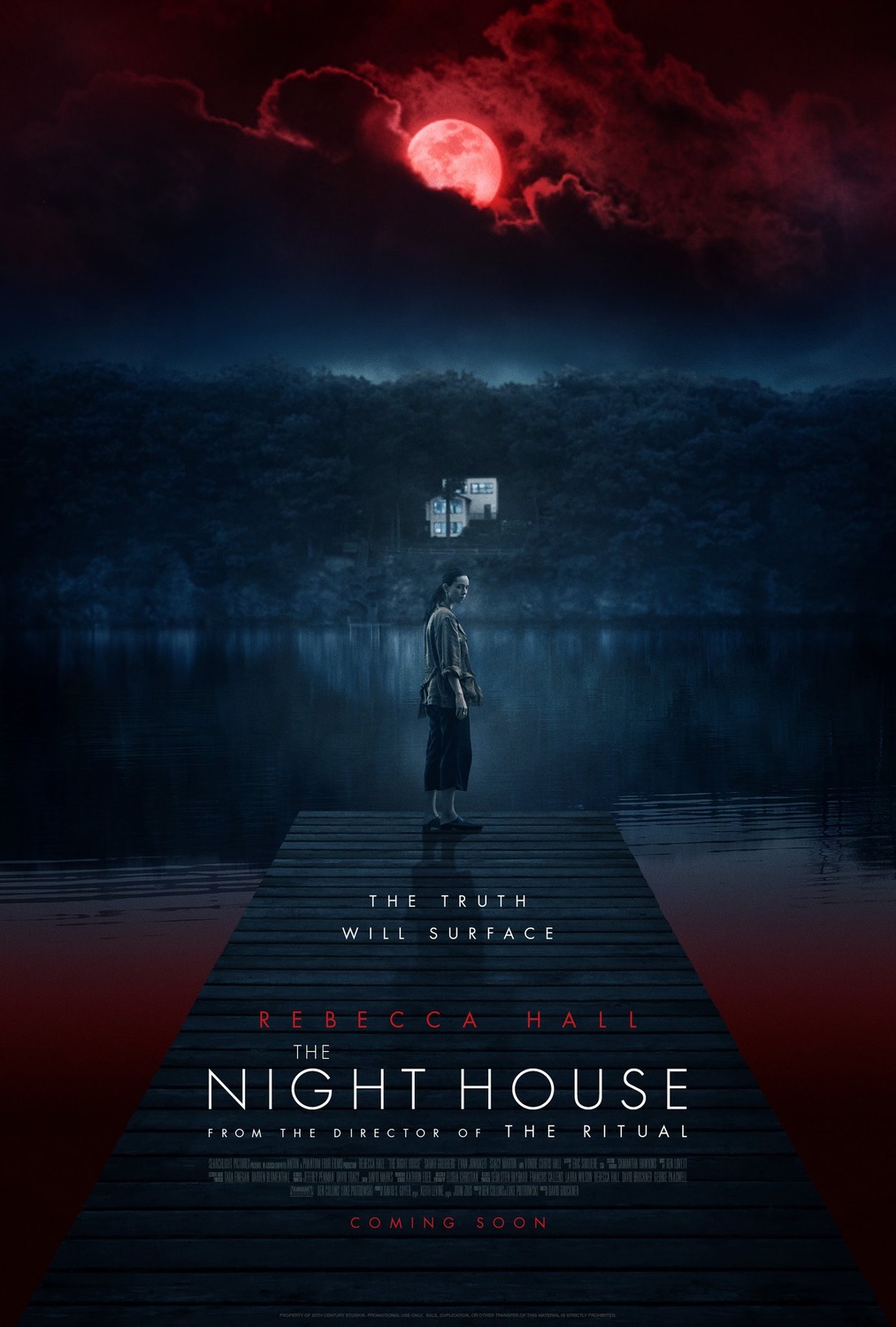
“The Night House” Sheds ‘Light’ on Spectacle Over Narrative

Plot and story take a backseat to the technical and performative elements of the mise-en-scene. The Night House represents a trend in horror that began as an emerging art house cinematic form championed by studios like A24 in the mid 2010s, continuing today. Many of the films that fall into this category are highly stylized through overtly artistic approach (artistic in that the hand of the auteur is clearly visible) or a minimalist approaches. While many of these films DO have a strong story told though established narrative conventions, some of them (and an increasing number) place so much emphasis on the look and feel of the film, that the filmmakers forget that they also need to tell a good story with a beginning, middle, and end that makes sense within the world that has been established on screen.

This house looks gorgeous, but the bones are weak. The Night House certainly delivers a haunting and unnerving atmosphere, excellent production design, fantastic editing, and a tour de force performance by Rebecca Hall, but its labyrinth-like plot and meandering story ultimately lead to “nothing.” If nothing else, this film works as a showcase for Hall in her one-woman show! And no mistaking it, her performance is outstanding–nearly Toni Collette Hereditary levels. Further notable elements in the film are the exquisite editing and cinematography that help to generate the ominous feeling of dread that you will feel the entire time. All of the aforementioned sounds like an incredibly effective mise-en-scene, doesn’t it? The problem with The Night House isn’t in the mise-en-scene as much as it is in the bones of the house itself, or the screenwriting.

My problem with films like The Night House, The Lighthouse, (am I sensing a trend here?) and others is the trend to ostensibly convince audiences, through the thoughtful craftsmanship of the mise-en-scene, that the film is more important than it is, that it has something substantive to deliver, or that the filmmaker is elevating horror (a term I despise because horror has always been the most truthful and progressive of all the genres). When this happens, the plotting suffers greatly. Why? Because the filmmaker considers themselves an artist that is above established conventions because there is a clear attempt to be unconventional, to be be a nonconformist, to rage against the system, if you will. So because they do not feel that they should abide by the guidelines or conventions of screenwriting or image montage (montage is French for assembly), they expect audiences to be so impressed by the gorgeous imagery on screen that the story or plot is of little consequence. Or there is the idea that these films aren’t for everyone or they are used as fuel for the pretentious you just don’t get it conversations on #FilmTwitter. Oh, many cinephiles just love that one, because they can elevate themselves.

Now, you are probably wondering if I think all films need to follow conventional filmmaking approaches. And the answer is NO. What?!? Did I just contradict everything I just wrote? Again, no. It’s when the filmmaker crafts a motion picture that they’ve clearly positioned to give the pretense that it’s more important than it actually is and fail to deliver the story that is so clearly attempting to be told. That is where I find fault with the filmmaker or screenwriter. Does that mean narrative/fictional films can’t be poetic in their form? Certainly not. One of my favorite horror films is Dario Argento’s Suspiria. And, even though I include this masterful work of cinema in my World Cinema class, I will also be the first to tell you that the plot is not very good. But, the beauty of Suspiria isn’t in the story, but in the euphoric experience of watching Argento create cinematic art with this violent, technicolor world accompanied by the mesmerizing score. The difference between Suspiria and The Night House is the simple fact that Argento did not create Suspiria to tell an important story. It’s a film that has grown in importance through the decades because we can find meaningful expression in the mise-en-scene. But that film didn’t hit cinemas to tell an important or thoughtful story. It hit cinemas to provide an experience!

What we have here is spectacle vs narrative. A subject I covered in my academic book On the Convergence of Cinema and Theme Parks. In the book, I look at the storytelling approached in themed entertainment when it intersects cinema. Without going too deep into that subject, I explore the idea of cinema of attractions. And films that do not tell a plot-driven story, are more about the attraction or experiential factors, not unlike a theme park attractions. With the increase in IP (intellectual property) based attractions (think: attractions based on movies), attractions have integrated story elements that aim to take the physiological experience and add the dynamic of story to it. A good example of this is found in Universal Orlando’s Hagrid’s Magical Creature Motorbike Adventure in the Wizarding World of Harry Potter: Hogsmeade at Islands of Adventure. Universal coined the term story-coaster. But I digress. When I evaluate a film, I often look at the implied attempt by the director (and marketing agency or distribution company), and I ask myself questions like: does the film give the impression that it is more important than it actually is? Is there an attempt to have a thoughtful message or some social commentary on dominant or emerging ideologies, and the film form takes precedence over the actual story? Are the films technical elements and acting so impressive that it hopes you don’t notice that the plot or story are weak?

While I have established that there is rightly a place amongst the greats for films that are visually stunning that don’t necessarily follow a traditional story structure (ie. Suspiria), the best films are often those that have a simple plot and complex characters. A simple plot forms the solid foundation and structure of the house (the bones, if you will), while the film form is everything that you see with the naked eye. It starts with the firm foundation and strong structural elements. Everything else is window dressing–important–but ultimately meaningless if the narrative is’t sound. What good is the building material of the walls, the paint, the type of windows, or kitchen cabinetry if the foundation or structure are weak??? I appreciate the intimate feel of the trend to release films that look artful so we can witness the cinema stylo of the auteur, but the filmmakers also need to remember the importance of plotting, pacing, and structure.

This image has an empty alt attribute; its file name is profile_pic.jpg

Ryan teaches American and World Cinema at the University of Tampa. If you like this article, check out the others and FOLLOW this blog! Interested in Ryan making a guest appearance on your podcast or contributing to your website? Send him a DM on Twitter or email him at RLTerry1@gmail.com! If you’re ever in Tampa or Orlando, feel free to catch a movie with or meet him in the theme parks!

Follow him on Twitter: RLTerry1

Candyman (2021) Review

Candyman (2021) - IMDb

Sweet on the outside, sour on the inside. A visually impressive attempt to provide a thoughtful exploration on duality and identity, is overshadowed by heavy-handed ideology. Nia DaCosta delivers audiences a spiritual sequel to the cult horror film Candyman (1992) that is grounded in much of the lore of the original, yet forges a new frontier that simultaneously serves as a vehicle for horror legend Tony Todd to pass the hook onto Yahya Abdul-Mateen II. DaCosta is joined by writer-producer Jordan Peele and screenwriter Win Rosenfeld to “tell everyone” who dares to look in a mirror and call out his name five times. Admit it, even in our most rational state, we are still a little apprehensive to stare at our reflection and call out Candyman, Candyman, Candyman, Candyman, Candym–. That’s the power of horror films! These fictional stories on screen have their mystical ways of affecting the collective conscious in such a manner that we change or question our behavior. Another great example of this effect is the iconic highway scene in Final Destination 2. And challenging audiences was certainly what the three screenwriters had in mind when writing the story for Candyman (2021). Unfortunately, the agenda-driven message steels the focus away from the stunning visuals, and ultimately fails to effectively paint a portrait of reality that invites all to engage in the important conversations the film is trying to have, instead, alienating audience members that don’t share the filmmakers’ opinions. Suffice it to say, this film is Peele for the course.

In present day, a decade after the last of the Cabrini towers were torn down, rising star artist Anthony (Abdul-Mateen II) and his partner move into a loft in the now gentrified Cabrini. A chance encounter with an old-timer exposes Anthony to the true story behind Candyman (Todd). Anxious to use these macabre details in his studio as fresh grist for paintings, he unknowingly opens a door to a complex past that unravels his own sanity and unleashes a terrifying wave of violence. (IMDb)

If you’ve never seen the original Candyman, don’t worry. While having seen the original will certainly help audiences to appreciate world-building and backstory elements, there is enough context given to help those that may be unfamiliar. Following the screening I attended, I heard individuals negatively critique the retconning of plot elements in the original; truth is, the parts of the original that were reimagined to fit the backstory of 2021’s Candyman were thoughtfully adapted.

While I have my reservations with the film, I would be remiss to not highlight the excellent direction, cinematography, editing, costuming, production design, and even the performances! Visually, the movie is stunning! All the mise-en-scene elements work together to create a BIG SCREEN experience. And talk about outstanding performances. Back in the heyday of the slashers (late 70s through the 90s), we did not expect to be impressed by the performances of the cast. And while there are notable exceptions of horror films WITH brilliant performances, usually it’s not expected. Over the last 7–10 years, horror films have been stepping up their performance game. The lead and most of the supporting cast will all captivate you. Unfortunately, there are useless characters like Brianna’s (Anthony’s girlfriend’s) brother and his boyfriend. Having no real affect on the plot, this interracial gay couple was little more than a token that could be removed from the movie, and the movie still play out the same way. However, if it weren’t for these two characters, the movie would be lacking ANY humor. So I suppose that was their purpose, to add humor.

There are so many beautifully crafted shots and shot sequences in this film. From juxtapositions of the old meeting with the new to geometric shapes and lines, there are many excellent compositions. The production and set design and lighting, of this film, are used in similar ways that the designs in expressionism are used. Expressionism uses the design of buildings, costumes, lighting, and camera angles to externalize emotions, psycho-social states of being, and ideas. And with expressionism being part of the formula of horror (expressionism+surrealism+Poe+Freud), it makes sense how and why there would be this care shown in the mise-en-scene.

All the backstory elements are communicated through the brilliant use of shadow puppets. The shadow puppet sequences are perhaps my favorite recurring diegetic device used in the film. Not only do these shadow puppets provide exposition, they also move the plot forward in action and subtext.

The idea of shadow puppets as a storytelling device is best explored in Plato’s Cave. French film theorist Jean-Louis Baudry likened the movie theatre to Plato’s famous allegory Plato’s Cave found in Plato’s Republic. But since we’re not all film or philosophy theorists, here is a quick explanation of Plato’s Cave:

The allegory states that there exists prisoners chained together in a cave. Behind the prisoners is a fire, and between the fire and the prisoners are people carrying puppets or other objects. This casts a shadow on the other side of the wall. The prisoners watch these shadows, believing them to be real. Essentially, what Plato is exploring is the concept of “belief vs knowledge.” The prisoners (or audience) in this analogy believe the images on the wall as reality; when in actuality, it is only the puppeteers version of reality. The analogy goes on further to describe a prisoner breaking free and venturing from the cave out into the real world. Two things happen (1) the newly freed prisoner completely rejects the imagery in the cave and returns to warn the prisoners of their one-dimensional view of reality, and risk being killed for a radical view, or (2) the freed prisoner fears or cannot reconcile actual reality and retreats back into the cave, where there is comfort in the surroundings, to warn the prisoners not to leave. Therefore, this highlights how a lack of knowledge leads to blind belief.

Despite being centuries old, the allegory is appropriate for filmmaking. After all, the audience watches images on a screen. We’re meant to believe it to be real, but we know it’s false. Only when we step out of the theater back into reality can we take what we’ve learned in the cinema and apply it to our lives. In a literal sense, a movie is just a series of images. But digging deeper, they present unique ideas and themes that we can take with us into the real world. Numerous movies utilize this concept in their plots and themes. You have probably seen films where a character believes one reality and then becomes exposed to another, greater reality and is never the same. In the case of 2021’s Candyman, DaCosta, Peele, and Rosenfeld have metaphorically trapped the audience in an ideological cave to present their versions of our reality that exists outside the cinema’s doors.

The movie has some great kills! But it highlights a moral problem plaguing this movie. From the art gallery to the critic to the girls at the prep school, the only victims, to meet their gruesome demise ON screen, are white characters. While there are a couple of off-screen deaths of black characters, the only ones in the visible mise-en-scene to meet with Candyman’s iconic hook are white. Had this movie been directed and/or written by a white writer-director and only killed and disparaged black characters, there would already be a #cancel campaign on Twitter. In my five years as a film professor and seven years as an active critic, I cannot ever recall a horror movie (in particular, a slasher movie) that ONLY killed black characters and disparaged the black community in virtually every scene from the opening to the closing. So if that would not be tolerated by the public–and for good reason, a movie released like that in 2021 (or ever) would be in incredibly poor, despicable, disrespectful taste–then the inverse should not be acceptable here.

I get what DaCosta, Peele, and Rosenfeld are trying to do with this horror movie. From the time of Cabinet of Dr. Caligari and Nosferatu, horror has been used to comment on societal observations to either warn of an impending dangerous ideology, to provide allegorical material that can be used as a framework to better understand marginalized groups, or even to challenge systems or institutions. Which is why horror is often far more truthful than a straight drama. Of course, one can make the argument that this is a fictional film in a fictional Chicago, which is not untrue; however, the problem therein is that little (if anything) in this fictional Chicago sets it apart from the real world, except for the supernatural character of Candyman, because these filmmakers have a point to make. But the problem here is that the very people that these writers want to challenge are the very people that are being unfairly represented in the movie. How is any of that constructive to the conversations of race relations and policing??? Short answer: it’s not.

The symbolism I did appreciate in the film are the moments that we explore the duality in ourselves and our environments. This is represented through literal and metaphoric reflection. Mirrors (or reflections) are regularly used to communicate duality. One of the best examples in recent years, in how mirrors are an effective cinematic device, is the mirror scene in I, Tonya. Just before her final competition in the film, as Tonya is applying her high contrast makeup, we witness in the mirror the internal struggle. On the outside, she is this accomplished figure skater (probably the best athlete the sport has ever seen) but on the inside she is tormented by her mother, her abusive marriage, and what she did or didn’t know about the incident. Likewise, in Candyman we explore the history and identity of Anthony and his neighborhood. Anthony has a secret in his past that has been painted over, that is trying to resurface, and his neighborhood of Cabrini Green has a sordid history that it has tried to cover and hide behind a fresh coat of paint. History is always there. It cannot be erased. And if it’s not dealt with, it can become a specter and haunt you and your environment. The mirrors and other reflective surfaces of Candyman are brilliantly used to communicate this idea of duality.

It is clear that DaCosta is a gifted director, but I hope that she works with different writers in the future that can find that balance of commenting on or raising awareness of something important, but also finding the ways to bring everyone to the table for a thoughtful discussion. The power of cinema, and in particular horror films, is that it can bring diverse groups of people together from all walks of life to both be entertained and challenged through screams, jumps, and laughter.

This image has an empty alt attribute; its file name is profile_pic.jpg

Ryan teaches American and World Cinema at the University of Tampa. If you like this article, check out the others and FOLLOW this blog! Interested in Ryan making a guest appearance on your podcast or contributing to your website? Send him a DM on Twitter or email him at RLTerry1@gmail.com! If you’re ever in Tampa or Orlando, feel free to catch a movie with or meet him in the theme parks!

Follow him on Twitter: RLTerry1

The Protégé (2021)

Nonstop action, perfectly punctuated with humor and thrills! Don’t miss The Protege as it blasts its way into cinemas this week from the director that brought us Casino Royale. THE most summer movie of 2021!

Everything about this explosive action thriller works brilliantly, and it truly is the don’t miss movie of the summer. From beginning to end, you will be glued to your seat as the story unfolds. The Protégé takes the action plot of a 1980s action movie and combines it with contemporary characters to deliver a movie that is simultaneously both familiar and fresh. This movie is the whole package: high flying action, killer fight sequences with outstanding choreography, and a well-developed lead cast that you will love to see on screen.

Rescued as a child by the legendary assassin Moody, Anna is the world’s most skilled contract killer. However, when Moody is brutally killed, she vows revenge for the man who taught her everything she knows. As Anna becomes entangled with an enigmatic killer, their confrontation turns deadly, and the loose ends of a life spent killing weave themselves ever tighter.

Where so many action movies suffer is in the screenwriting. Not so with this one. The dialogue snaps, crackles, and pops, and there is plenty of humor to break up the darker elements of the film. Even with its 2hr runtime, you will never feel restless or bored because the pacing and plotting are both on point! Audiences will be delighted at the ideal balance in both violence and humor. But when you have Samuel L and Michael Keaton, both known for their action and comedic chops, you know you’re guaranteed to be highly entertained! Rounding out the lead cast is Maggie Q, and she is a force to be reckoned with as a ruthless assassin that is also a delight to watch as she kicks ass. Where these characters stand out compared to comparable ones in contemporary action movies is remembering that these same strong characters also need to be vulnerable, relatable, and appropriately funny. Never once does this movie falter in taking its high concept seriously, but it knows when to interject comedic lines and kills that help to break up the more violent elements in order to help the senses reset. Crafting moments that are strategically used for emotional resets (even brief ones) allows the filmmaker to keep the audience engaged without ever feeling bored or exhausted.

It saddens me to see that the review embargo for The Protege was until the early screenings on Thursday, because this is a movie that needs to be seen on the BIG SCREEN! While there is some thoughtful social commentary on strong, leading women that can still be incredibly sexy (on that note: Michelle Pfeiffer’s Catwoman has been proving that since 1992), non-traditional families (otherwise known as found families), and toxic parenting, this movie never forgets that it is an entertainment piece that can be both exciting and thoughtful. It never sacrifices thrilling storytelling for an agenda. Furthermore, it boasts a diverse cast that is also never made into the center piece. The film isn’t saying “look at our diverse cast.” No, it is saying “look at our outstanding characters” that happen to look like the people you and I interact with on a weekly basis. That is how you promote representation in cinema in movies that twenty years ago would’ve been filled with predominantly white characters.

As I was watching this, I kept thinking of Die Hard. Not that it’s a similar plot. It isn’t. But it does deliver a similar story in terms of tone and action. And there is probably no better action film to emulate in some cinematic form or fashion. What makes Die Hard the best action movie of all time, in my opinion, is the characters and dialogue. Sure the action is great, but we remember the characters themselves, the things they said, and how they reacted to emotionally charged situations the most. While The Protégé may not be on the same level as Die Hard (hard to meet or beat), it is striving for that level of excellence in terms of storytelling and audience experience.

This image has an empty alt attribute; its file name is profile_pic.jpg

Ryan teaches American and World Cinema at the University of Tampa. If you like this article, check out the others and FOLLOW this blog! Interested in Ryan making a guest appearance on your podcast or contributing to your website? Send him a DM on Twitter or email him at RLTerry1@gmail.com! If you’re ever in Tampa or Orlando, feel free to catch a movie with or meet him in the theme parks!

Follow him on Twitter: RLTerry1

Old (2021) Mini Review

Welp, that’s an hour and a half, or 18 months, of my life on which I’ll never see a return. M.Night Shyamalan is up to his old tricks again in his latest film about one of the most primal fears of all: aging. From the moment we are born, we start to die, and it’s that fear of aging and death that links everyone on earth together. While many horror films feature slashers, ghouls, demons, monsters, the living dead, nature on a rampage, or just your mother-in-law, the chances of you encountering any of those are about as slim as Netflix reviving Santa Clarita Diet–well, except for the mother-in-law; that one is likely. Shyamalan chooses to focus on the one fear we all share: the ravages of aging. And it’s because of this, that virtually every character in the film is relatable on some level (unfortunately that level is quite minimal). Combine the primal fear of the inevitability of aging with the ticking time bomb literary device, and you have the makings of a thrilling plot. That is, if this plot and these characters weren’t written by the cinematic king of head-scratch bizarre endings, huh?, and what the? moments. Since his feature debut of The Sixth Sense in 1999, I am convinced that M.Night is a gifted director. But he should probably work with more talented screenwriters. What we have here is an original premise (as far as I know) with so much potential for intense windup and explosive delivery; moreover, there is even a prime opportunity to have thoughtful commentary on aging, emotionally, physically, and mentally. It’s all there! But sadly, and to my bewilderment, M.Night chooses to simply move the characters around the island aimlessly, with only occasional meaningful conflict that serves a greater purpose than simply the shortest distance between action beats A and B. Other than the mechanics of screenwriting themselves, perhaps the biggest problem is trying to focus on too many main ideas. He should have had one main action plot, and then supported it with emotionally or psychologically-driven subplots that weave together to point back to the central idea he was trying to convey. Unfortunately, OLD is a convoluted collection of ideas, none of which are ever thoughtfully developed and strategically executed.

For my full thoughts, you will need to listen to me on the Reel Spoilers podcast on July 29, 2021.

This image has an empty alt attribute; its file name is profile_pic.jpg

Ryan teaches American and World Cinema at the University of Tampa. If you like this article, check out the others and FOLLOW this blog! Interested in Ryan making a guest appearance on your podcast or contributing to your website? Send him a DM on Twitter or email him at RLTerry1@gmail.com! If you’re ever in Tampa or Orlando, feel free to catch a movie with or meet him in the theme parks!

Follow him on Twitter: RLTerry1
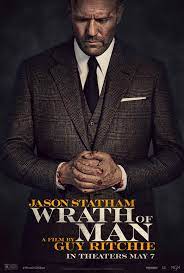
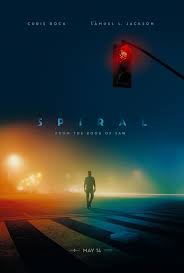
WRATH OF MAN and SPIRAL Reviews

The former is a must-see that delivers no-holds-barred explosive fun, while the latter is best left to die in the trap that it poorly setup for itself.

The last couple of weeks have seen some motion pictures return to exclusive theatrical runs. Guy Ritchie’s Wrath of Man and Chris Rock’s Spiral: from the Book of Saw. In-theatre press screenings have also returned! Whether the movies that are receiving exclusive theatrical runs are your cup of tea or not, it is highly encouraging to see the BIG SCREEN experience return around the country. 

Fortunately, I’ve been able to enjoy motion pictures in the cinema since July of last year, but most of the country hasn’t had that opportunity. Between the two movies I saw this week, I can tell you that you do not want to miss Wrath of Man in cinemas! Spiral, on the other hand, you can either skip it altogether or just wait for it to hit streaming/VOD. Oh, if you go to Cinemark, watch Wrath of Man in XD; and if you’re going to AMC, watch it in Dolby Cinema!

Guy Ritchie’s Wrath of Man is a no-holds-barred heist movie! It’s an extravaganza of beginning to end action and thrills. Jason Statham does his best Stathaming, and the nonlinear storytelling never loses the audience – while packing a punch. I sat down with Brad of The Cinema Speak podcast to chat with him about this film, so for the full conversation, click HERE. In short, there is literally nothing to dislike about this action-thriller! Although it is fast-moving, you know everything you need to know about each character. On the topic of characters, no one is safe! In addition to Jason Statham, a former 90s/2000s heartthrob returns to the screen (and this time not with a kinda-weird yet adorable haircut, nor is he surviving Michael Myers or shape-shifting aliens at school) – Josh Hartnett.

Everything about this movie just works — and works nearly flawlessly. From the moment it opens until the credits roll, it is non-stop balls-to-the-wall action, and at the center of that action is Jason Statham. I commented on the Cinema Speak podcast that I view Statham as a bonafide movie star in the classical sense. Much like other modern-day “classical” movie stars like the definitive example Tom Cruise or The Rock, Statham IS the movie. Even when he is playing a supporting role, such as in SPY, he is larger-than-life on the screen. Often playing the same type of character (or an extension of), movie stars are attached to sell the movie and up the ante, and act as a de facto identifier. Pretty soon, we will be referencing Statham’s movies as “are you going to see the new Statham movie” instead of referencing the movie by its title.

Wrath of Man is one of those movies that doesn’t pretend to be anything other than what it is. And what is that? A fun, entertaining movie without case for any kind of thoughtful subtext or socio-political agenda. Just an entertaining movie, plain and simple. And yet, you enjoy the characters and know just enough about each to care about them (or hate them). Point is, you feel something for these characters. We have a simple plot, and a complex central character. And this central character has a well-defined external goal that is met with obstacles brought on by a character of opposition. In other words, this is a movie with solid bones and foundation.

One of the standout storytelling devices in this film is the non-linear narrative. While we’ve certainly seen films employ non-linear storytelling, many films that do this often run the risk of or, do in fact, confuse audiences. Or, just as bad, the stylistic choice doesn’t add anything to (and sometimes even detracts from) the experience of the film.

Guy Ritchie’s non-linear choices are successful not only because they are clearly labeled, but because each flashback adds to the story through a process called character accumulation. This is the process a character goes through that reveals more layers to the audience that reinforce who the character is, what to expect from the character, the internal needs of the character, and what motivates the character. Think of it as character familiarization. In addition to learning more about our characters, the nonlinear flashbacks also provide different perspectives on key scenes that advance the plot to the explosive finale. These different perspectives aren’t used to complicate the plot, but rather to provide a means for the audience to reasonably grasp what’s going on without being patronized. Guy Ritchie assumes his audience arrives at the film with some modicum of intelligence.

Wrath of Man delivers a wildly entertaining experience at the cinema! You don’t want to miss seeing this on the BIG SCREEN. And don’t allow the paint-by-the-numbers surface lull you into perceiving this as just another generic action movie. Guy Ritchie’s clever, stylistic approach to this tried-and-true genre film feels just familiar enough, whilst delivering a fresh approach that will remind you that movies needn’t have a heavy-handed, agenda-driven message. 

So often, films and movies today are filled with agendas not characters. Not that there isn’t a time and a place for motion pictures to take a sociopolitical or faith-based stance –those kinds of films are important too — but too often nowadays, this has become the foundation for a movie, not the plot or characters. Wrath of Man has mass appeal but never sacrifices quality storytelling for the sake of commercialism. Treat yourself to this explosive experience!

Spiral is the movie equivalent of a comedian that only knows the punchlines. It’s derivative and predictable. Just as the victims have zero chance of surviving the traps, this movie has zero chance of re-watchability. Just watch the original instead.

Should you choose to watch the new film, in hopes of capturing even an infinitesimal amount of what made the original innovative, spawning countless movies in the torture-porn sub-genre of horror, you will be sorely disappointed. Everything about this agenda-driven movie feels heavy-handed and forced. Very little, if anything, happens organically. It’s common knowledge that this movie was a passion project for Chris Rock, inspired by his fandom of the SAW franchise — but where is the passion??? Even his acting is wooden and lifeless.

I am going to break my own rule and suggest that you NOT see this in cinemas. Why? Because I am trying to spare you from the torturous trap that I was in as I watched the longest hour and twenty-minute movie.

There is no sense of fun in this movie at all. While I do not care for the SAW franchise, and feel that there is no redeeming quality nor does it offer at cultural value, what fans enjoy about the franchise is the unrealistic, hyperbolic, Rube Goldberg-like traps. The traps in this movie played it far too close to reality, rendering the movie sickening to watch, devoid of entertainment value. And then there is the perpetuation of the narrative that law enforcement is simply corrupt by nature. I’m not going to go down that rabbit trail, but most law enforcement officers are NOT corrupt. A small fraction of a percentage are (just like with any vocation), yet this movie paints the portrait that entire precincts are corrupt. Unfair, and unfounded. 

This movie follows suit with so many that do not afford characters the opportunity for a redemptive arc. This was a problem that I had with Promising Young Woman as well. Ostensibly, filmmakers that create films with a heavy-handed (not subtle or subtextual) message have demonstrated the gull to set themselves up as self-righteous in the most self-aggrandizing manner, and have decided to be judge and jury.

Aside from the problems I have with the agenda-driven plot and characters, the kills themselves are simply overly violent to be overly violent. The only element of the traps that was creative (albeit cliché) is for the trap to be a dark mirror for that which Piggy/Spiral is accusing (and in most cases, not inaccurate). Think of it as SE7EN meets SAW. Otherwise, these traps and this movie do little to nothing to add to the world of cinema either critically or culturally.

This image has an empty alt attribute; its file name is profile_pic.jpg

Ryan teaches screenwriting and film studies at the University of Tampa. If you like this article, check out the others and FOLLOW this blog! Interested in Ryan making a guest appearance on your podcast or contributing to your website? Send him a DM on Twitter or email him at RLTerry1@gmail.com! If you’re ever in Tampa or Orlando, feel free to catch a movie with or meet him in the theme parks!

Follow him on Twitter: RLTerry1