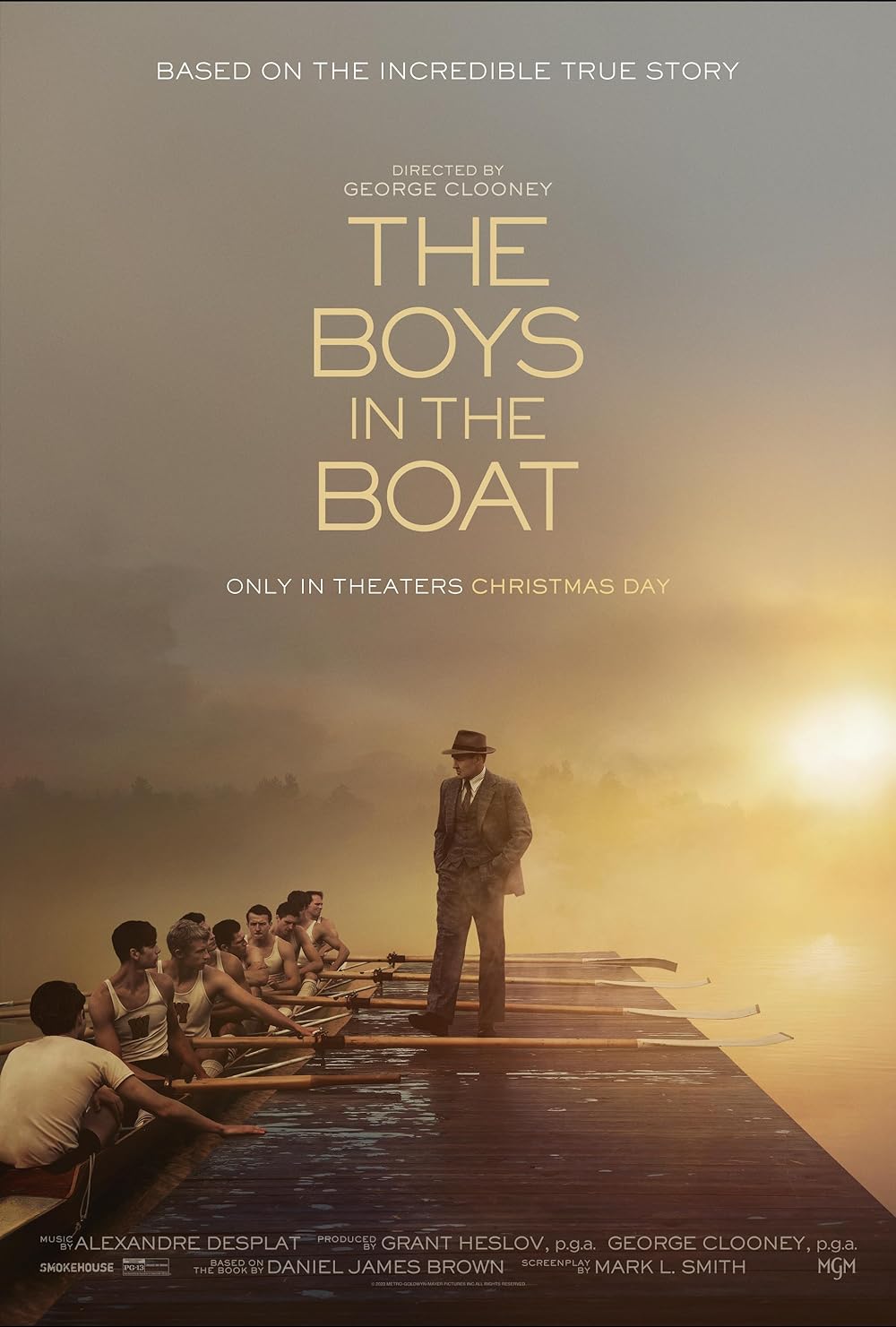
THE BOYS IN THE BOAT film review

A solid but unremarkable film. The Boys in the Boat is a standard historical drama that sufficiently meets expectations. Unfortunately, there lacks anything truly remarkable about the film. While the performances are better than average, the directing and screenwriting fall slightly short of where they should have been for this film. Thematically, the film delivers a big screen adaptation of a truly inspirational story, but beyond the uplifting feeling of a traditional underdog story, the film itself doesn’t particularly leave an emotive mark upon the mind and soul. Still, I was unaware of this story connected with the 1936 Summer Olympics held in Berlin, and am thankful that I now know about it. If nothing else, this film does a sufficient job of reminding us that we are more than the sum of our parts and really can achieve greatness by working collaboratively with one another to overcome the obstacles of life.

During the height of the Great Depression, members of the rowing team at the University of Washington get thrust into the spotlight as they compete for gold at the 1936 Olympics in Berlin.

While the screenplay demonstrates an understanding of what it means and the importance of a well-developed outside/action story with solid plotting, the screenplay falters in delivering a well-developed emotional drive that supports the action plot. Moreover, the screenplay fails to develop ancillary plots that it sets up in the first act. Without going into details, our central character has a need for a job (which is what leads him to go out for Rowing Crew) but we never revisit that need. And later, a member of the crew is deathly ill, but we never revisit that either. The author of the book upon which the film is based, co-wrote the screenplay, and it shows. Often times, novelists demonstrate difficulties in a storytelling medium that is cognitively-driven to one that is visually-driven. And we have a lot of telling instead of dramatizing in this film.

George Clooney makes some questionable directorial choices that leave me scratching my head. Clearly the talent for directing is there, but scenes that should be allowed to breathe aren’t given the chance, and other scenes that steep, should have been ended or started later. Some scenes work very well, but there are too few of those. Funnily, there is this sexual tension that is observable in two characters between whom there is no romantic interest, and that is based upon how the scenes were directed and subsequently assembled in the editing room. There is even a quick scene (and scene is being generous as it’s more of a cutaway) between the Crew from Washington and famed Olympian Jesse Owens that was sloppily executed.

The Boys in the Boat reminds me more of a movie that I’d expect to find as content on a streaming platform than it does genuine cinema. In the hands of a different director and screenwriter, this movie could’ve easily been crafted to be more impactful that it presently is. It has it’s high points, and for that, the filmi s above average, but the lack of anything truly remarkable about it drags it down from where I feel it wanted to be. Perhaps had more attention been paid to developing characters instead of focusing on the outside/action story, then we may have had something more meaningful than it is. Many movies these days place a substantial amount of focus on the ethos, subtext, or emotional parts of a story, thus sacrificing the art and science of proper plotting, so I am glad to witness proper A-story plotting; however, that does not excuse the lack of care paid to the B and C stories and emotional drive that parallels and supports the outside/action narrative.

While I don’t find anything remarkable about the film, it’s not a bad film either. In fact, I am so glad that I now know of this inspirational underdog story. I wish more than the mere knowledge of the historical event is was what was inspirational, but we can take from it that those that are perceived to be least likely to succeed, may just need the right coach and opportunity to demonstrate to the world what they are made of and capable to accomplish.

Ryan teaches Film Studies and Screenwriting at the University of Tampa and is a member of the Critics Association of Central Florida and Indie Film Critics of America. If you like this article, check out the others and FOLLOW this blog! Interested in Ryan making a guest appearance on your podcast or contributing to your website? Send him a DM on Twitter. If you’re ever in Tampa or Orlando, feel free to catch a movie with him.
Follow him on Twitter: RLTerry1 and LetterBoxd: RLTerry

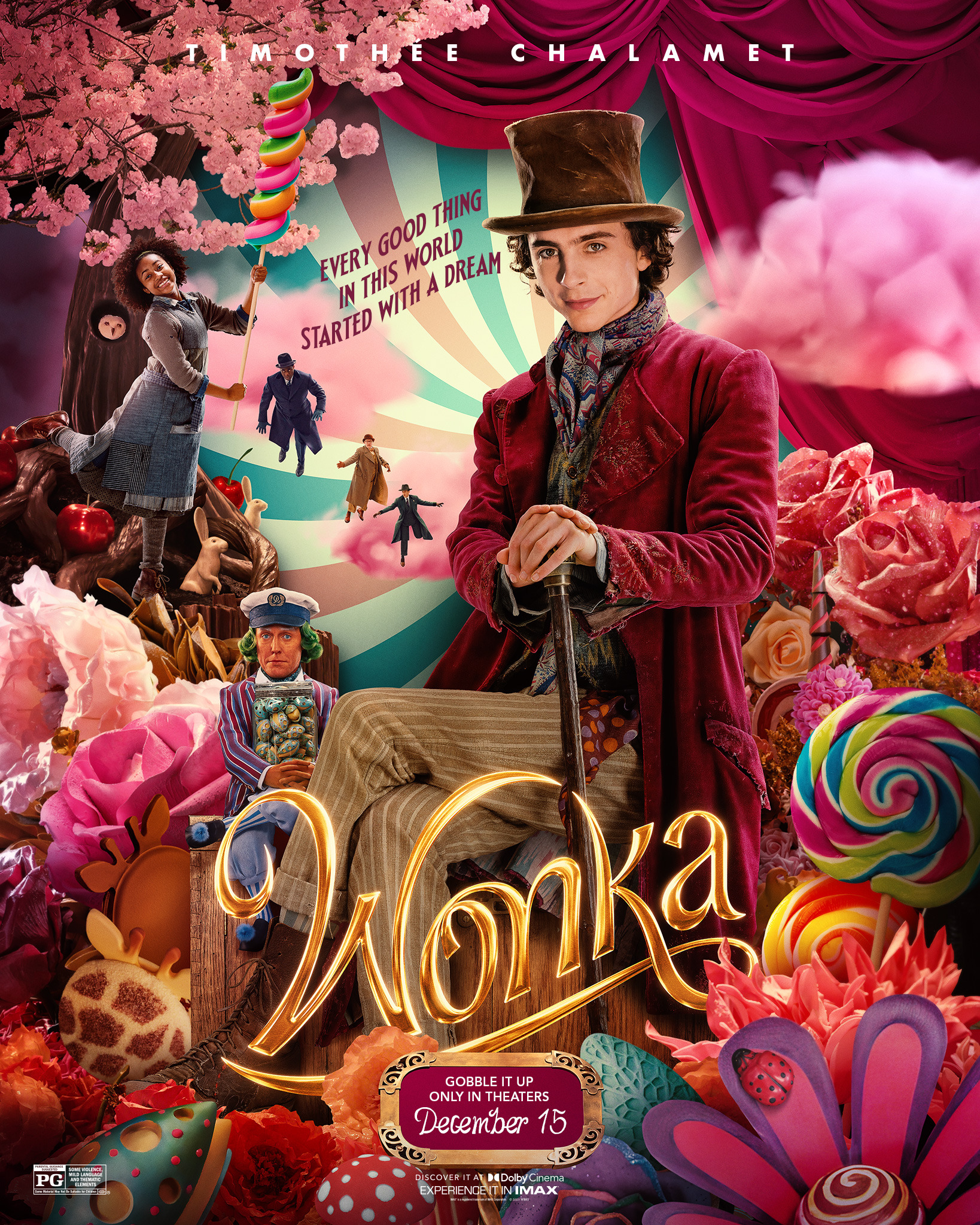
WONKA movie musical review

Charming but forgettable. Wonka is like a rich piece of candy, tasty in small amounts, but less appetizing the more you consume. However, the sufficiently charming musical will keep you entertained. But, it’s missing the moments of horror adjacency and the commentary on greed, pride, gluttony, etc. that gave the OG Willy Wonka and the Chocolate Factory some real bite! While it may not deliver the depth or quality of storytelling of the original, Wonka still delivers an entertaining diversion from the stressors of life with its whimsical world of chocolate and magic. The standout musical number is the Scrub Scrub number that is the G-rated answer to Chicago‘s infectious Cellblock Tango. Over all, Wonka will delight audiences with a throwback style musical that tastes best if not much thought is placed into the quality of ingredients.

Armed with nothing but a hatful of dreams, young chocolatier Willy Wonka manages to change the world, one delectable bite at a time.

Gone is the clever commentary on gluttony, pride, greed, sloth, lust, envy, and wrath as represented by the children and Wonka in the original book and film, but what this Wonka origin story lacks in thoughtfulness it makes up for in–well–the candy-like nature of this throwback style movie musical. It’s not deep and the quality of ingredients may be average, but it’s still sufficiently entertaining for the duration of the movie.

The casting is mostly solid! Despite his popularity, I find Chalamet to be an average actor–neither inordinately good or bad–just average; however, he was perfectly cast in this film even though there are plenty of moments that he looks like he’s phoning in his performance. He has the right look and energy for Wonka, so his casting works well. The other standout performance is Olivia Coleman as Ms. Scrubbit–she’s a great villain! And while it was great to see Sally Hawkins, she has little more than a cameo in the movie. We are treated to a brief performance by Rowan Atkinson, but he is also little more than a cameo. The rest of the actors play their respective roles sufficiently well, and each has some moments of hilarity. But the comedic stylings of Keegan Michael Key as the chief of police went grossly underutilized.

It isn’t so much the cast or music that are the true stars of this film as much as it is the outstanding production design and costuming. The whimsical production design and creative costuming are the highlights of the film. We are never told where the movie is taking place, but it’s most likely London; however, the imaginative set design creates an other-worldly sense about the movie that transports audiences from the auditorium to someplace magical that feels adjacent to our own. There is an expressionistic quality in the production design, externalizing the emotive dimension of the characters and story. It’s a combination of neo-Gothic and industrial revolution-inspired designs.

Despite its clear desire to be this year’s Greatest Showman, one of the biggest differences between the two movie musicals is the quality of original songs. Other than the Scrub Scrub number, none of the other songs are memorable. Scrub Scrub works very well, and I love how it’s clearly inspired by the Cellblock Tango from Chicago. The lyrics are rhythm are memorable and I foresee it being the material for many future GIFs. It’s a fun number along with it’s easy to sing. The rest of the songs are lacking in any degree of inspiration, and thus fall flat and forgettable. In the moment, they are fun and entertaining, but are soon forgotten. For fans of the original film, the memorable, beautiful song Pure Imagination is referenced in both score and lyric. The score for the timeless song is at the bedrock of much of the score for the film, and Wonka applies new lyrics to the music at the end, which acts as a fantastic nod to the original without feeling like it’s a vapid attempt to inject nostalgia to remind us of a better movie. It is tastefully done.

While the plotting for the A-story is good enough, there are ancillary B and C stories that are setup and resolved, but they lack any kind of development, and just come off as a lazy attempt to give the film some emotive depth. It would’ve been better to have taken the time it took to think-up the B and C stories and applied it to the A-story or the music. What the film is lacking is any meaningful subtext. One of the brilliant attributes of the original film is the commentary on the Seven Deadly Sins are represented by the kids and even Wonka. The film provides audiences with a cautionary tale of what can happen when any of those sins takes hold of the mind and body. Plus, we get those iconic Oompa-loompa musical lessons as a result of the kids’ missteps.

Wonka will provide a couple hours of laughter and glee during this Holiday season, which may come in handy if the stressors of the Holidays begin to pile up and family drama occurs while you’re home for Christmas. It may not be one that will earn near the rewatchability of the original, but as I’ve stated several times, it is sufficiently entertaining.

Ryan teaches Film Studies and Screenwriting at the University of Tampa and is a member of the Critics Association of Central Florida and Indie Film Critics of America. If you like this article, check out the others and FOLLOW this blog! Interested in Ryan making a guest appearance on your podcast or contributing to your website? Send him a DM on Twitter. If you’re ever in Tampa or Orlando, feel free to catch a movie with him.
Follow him on Twitter: RLTerry1 and LetterBoxd: RLTerry

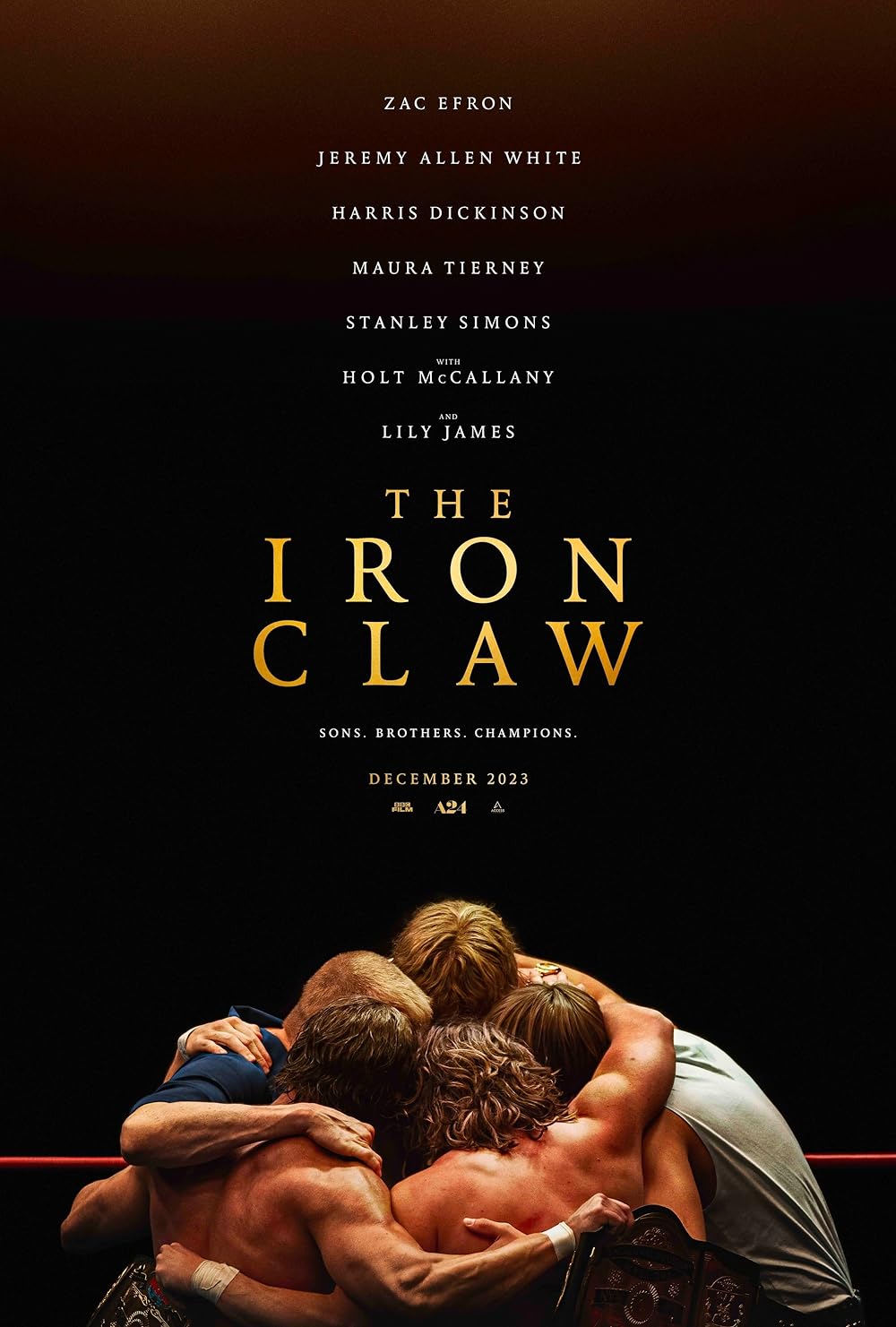
THE IRON CLAW film review

A compelling story with one-dimensional characters. The Iron Claw has all the ingredients for a masterpiece, but still misses the punch. My initial reaction to this film was an eagerness to like it much more than I did, for it was missing something. At the time, I was unsure what was missing, but the most likely culprit is the lack of character dimension and development. However, the film is saved from falling completely flat by the outstanding performance by Zac Efron. He has the weight of this film on his shoulders and it shows clearly throughout the story. Like with other sports-related biopics or sports movies, it’s not really about the wrestling; but rather, it is about the life of wrestling legend Kevin Von Erich and his relationship with his family and the tragedies that haunted them. It’s a film to watch for the excellent performance by Efron and to learn about the biggest competitor to the WWE from the 1960s-80s. Clearly the real-life story is incredibly tragic, but as it was expressed in the film, it leaves me with a feeling that there was a great film in there somewhere, but it unfortunately fell victim to lackluster screenwriting.

The true story of the inseparable Von Erich brothers, who make history in the intensely competitive world of professional wrestling in the early 1980s. Through tragedy and triumph, under the shadow of their domineering father and coach, the brothers seek larger-than-life immortality on the biggest stage in sports.

When I say I wanted to like this film more, I am certainly not alone. Most of the other critic in my screening had the same or similar reaction. We were in agreement that this film was missing something, but at the time, we did not know what that was. After much thought, I am left with the fault being in the screenwriting, specifically, the lack of character development. This is most noticeable during the three deaths (this isn’t a spoiler as this is based on real family). None of the deaths feel particularly impactful because we failed to spend a sufficient amount of time with any of the characters prior to the tragedy.

Most of our time is spent with Kevin Von Erich (Efron) and the patriarch of the family Fritz, They are the only two characters that are ever given anything substantive to do during the film. This is especially true for Kevin’s girlfriend/wife Pam Adkinsson (Lily James) and the Von Erich matriarch Doris (Maura TIerney). Neither character is given much to do; therefore, in most scenes, both ladies are unfortunately treated like little more than furniture. Yes, this is a story about the Von Erich bothers; however, your central cast is often only as interesting and dynamic as the supporting cast around them. You can remove either Pam or Doris from this movie, and it plays out nearly the same, until the very end.

While in real life, death can come at any moment, therefore there lacks a measurable buildup to the tragic passing, in a film, there is the creative latitude to both pace and structure the story in such a way that characters are developed sufficiently and there is adequate breathing room between deaths. When deaths occur occur in the film, it feels like a matter of fact. Yes, it is a factual event, but the deaths do not exactly emote much. Combine this with the lack of connection between the audience and most of the characters in the film, and it’s nearly impossible for the deaths to truly impact–suffice it to say–the deaths in this film are felt more or less cerebrally. You will find yourself thinking about them, but you won’t feel them to any great extent.

Saving the film from completely falling flat is the outstanding performance by Efron as Kevin Von Erich. We’ve seen Efron flex his acting chops in the past, but this role is certainly the most dramatic of his career. Not knowing anything about the real Kevin Von Erich, aside from what I learned in the film, it appears that Efron completely transforms into the wrestling legend. And I am not just talking physique, but mentally and physically he became Von Erich. In every scene, he delivers a nuanced performance that communicates in spades to the audience the weight of the world on his shoulders. Never once did I feel that I was watching Efron portray Von Erich, I felt I was watching Kevin Von Erich on screen. His performance and characterization of Kevin Von Erich will captivate you, and almost make you forget the film is lacking in the writing department.

Lastly, a theme that the film touches on, but fails to lean into more heavily is legacy; moreover, a cautionary story of what can happen when a parent attempts to live out his or her career or professional accomplishments through their chid even when the child is not necessarily gifted in the same way nor has the same goals and ambitions. Fritz Von Erich represents a toxic parenting trait of forcing kids to fit his mold and to accomplish what he couldn’t, thus allowing him to vicariously live out the dreams he never realized. The emotional and psychological (and sometimes physical) effects upon the child often end in negative growth because the child is rarely ever able to live up to the expectations of the parent demanding the child achieve for the family what the parents was unable to do.

If you’re a wrestling fan, I highly encourage you to watch The Iron Claw in cinemas, but if you are not particularly a wrestling fan, then it’s one that is still a good watch, but watching it at home will be sufficient enough. It’s an intimate film, but the family is larger than life.

Ryan teaches Film Studies and Screenwriting at the University of Tampa and is a member of the Critics Association of Central Florida and Indie Film Critics of America. If you like this article, check out the others and FOLLOW this blog! Interested in Ryan making a guest appearance on your podcast or contributing to your website? Send him a DM on Twitter. If you’re ever in Tampa or Orlando, feel free to catch a movie with him.

Follow him on Twitter: RLTerry1 and LetterBoxd: RLTerry

BLACKBERRY film review

Positively kinetic! This wildly entertaining biographical drama just clicks on so many levels! From beginning to end, the film commands your attention as it delivers razor sharp dialogue and outstanding performances. Whether you are a former CrackBerry addict like myself (2007–2011) or are fascinated by how the world’s first smartphone came to be, there is something for everyone in this film.

BlackBerry explores the incredible growth and tragic collapse of the world’s first smartphone and how it smashed huge enterprises before surrendering to Silicon Valley’s fiercely competitive companies.

Destined to be a film shown in business and technology classes, this cautionary tale is a brilliant depiction of what happens when you give into the system you so desperately tried to avoid or the dangers of extreme naivety and stubbornness. Moreover, the characters are both repulsive and sympathetic. You will both empathize with their plight and shake your had at the obvious missteps that would eventually lead Research In Motion, which rocketed to the top of the tech food chain, to its cataclysmic downfall. It’s in the vein of Wolf of Wall Street and The Big Short.

There is a Greek tragic or mythological quality about this film as it reminds me of the story of how Icarus flew too close to the sun and had his wings clipped. BlackBerry was king of the smartphone world for however brief a time, but its impact upon the industry will be felt in perpetuity. But this movie isn’t about the history of smartphones per se or even the company Research in Motion itself, but rather three human stories of the men whom founded, developed, and (two of which) eventually crashed the company. So, it’s a very human story.

There are three different personalities at play in the film, each represented by one of the key figures int he meteoric rise and cataclysmic fall of BlackBerry/Research in Motion. Jim Balsillie (played by Glenn Howerton) represents insatiable greed and control, Mike Lazaridis (played by Jay Baruchel represents insecurity and naivety, and Doug Fregin (played by Matthew Johnson) represents childlike pride and blind belief. Each one of these men, especially the former two, played significant roles in the rise and fall of Research in Motion. Each one demonstrated a tragic flaw that was instrumental in the eventual demise of the tech giant. Greed, naivety, and pride greatly limit resiliency, adaptability, and teachability. And it’s the refusal to apply common sense and adapt that sent BlackBerry to the exit for Defunctland.

Everything works so demonstrably well in this film! The directing, screenwriting, and performative elements are all working at peak efficiency and at incredible precision. However, even efficiency can have a downside; and in this film, the third act’s pacing isn’t quite on par with the first two. Often times in films, it’s the first or second acts that suffer from poor pacing, setup, or development; but in BlackBerry, it’s the third act. That said, it’s still mostly written and directed well, but the third act is wherein we do find flaws in the story delivery.

From the three central characters to the chief supporting players, the performances are outstanding! Supported with razor sharp dialogue that snaps, crackles, and pops, all the actors will entertain you from beginning to end! It’s one of few films this year that feels quotable and earns multiple rewatches. Perhaps the performances border on caricatures or exaggerated versions of the real people, but they are appropriate for the over-the-top nature of the film. BlackBerry was, at a time, a larger than life company, ran by larger-than-life people, so the performative dimension should be just as over-the-top, which it was, and in all the best ways possible.

One might be tempted to refer to this movie as a depiction of the word’s most famous losers that quite literally paved the way for iPhone, Galaxy, Pixel, and more. Believe it or not, if it wasn’t for Research In Motion/BlackBerry chartering new territories and pioneering new communications technologies and formulas for data/voice coverage, we may not have iPhone or Galaxy today. BlackBerry simultaneously created a new communications device and completely re-imagined how cell service works on principle. The characters are fascinating and the story mesmerizing. Easily one of the year’s best films!

Ryan teaches Film Studies and Screenwriting at the University of Tampa and is a member of the Critics Association of Central Florida and Indie Film Critics of America. If you like this article, check out the others and FOLLOW this blog! Interested in Ryan making a guest appearance on your podcast or contributing to your website? Send him a DM on Twitter. If you’re ever in Tampa or Orlando, feel free to catch a movie with him.

Follow him on Twitter: RLTerry1 and LetterBoxd: RLTerry

POOR THINGS film review

Imaginative and provocative! Yorgos Lanthimos’ adaptation of POOR THINGS is a fascinating motion picture that takes audiences on a whimsical, otherworldly exploration, but unfortunately suffers from sluggish pacing midway through the adventure. This interpretation of Frankenstein, in both substance and form, delivers a labyrinth of social commentary on expectation versus reality, pretense versus disillusionment and the consequences of metaphoric prisons.

Brought back to life by an unorthodox scientist, a young woman runs off with a lawyer on a whirlwind adventure across the continents. Free from the prejudices of her times, she grows steadfast in her purpose to stand for equality and liberation.

The most striking element of the film is stunning production design! It’s whimsical and dark, gothic and post-modern all at the same time. Audiences will be completely transported to a highly stylized variation of the real world that is clearly inspired by the gothic imagination of Tim Burton filled with quirky characters that feel lifted right out of a Wes Anderson film. If it sounds like a Frankenstein’d film, you’d be correct because the very apparatus of the film is a bunch of pieces sewn together to create a new whole that arrives on screens by way of The Isle of Dr. Moreau. There is even a nod to a famous sene and shot in Metropolis!

From what I could tell, the entirety of the film was shot on a sound stage with highly theatrical, emotive sets and costuming. Lanthimos combined the best of German Expressionism and French Surrealism to craft a 19th century world that both felt part of our own, yet, not of our world. I liken the highly stylized designs to the motion pictures of Tim Burton in the 1980s-90s with exaggerated shapes, harsh shadows, and a substantial helping of dark whimsy. This intentional move to create a world that resides in this liminal space between that which we know to be real(istic) and fantasy works to the film’s advantage because we are prompted at the very beginning that we are about to embark on a bizarre adventure. Lanthimos’ story needed this stylized version of our 19th century world to be the playground for his quirky characters so that we believe and become vested in the journey. 

Without getting into plot points that spoil the film, it’s difficult to go into the degree of detail that I would like in order to analyze the very apparatus of the film itself, as it is in many ways self-reflexive of the narrative itself. But, I’d be remiss to not spend some time on spotlighting the Frankenstein’s creation-like form the film takes in telling this reimagined interpretation of Frankenstein. It is not simply by chance that this Lanthimos film looks different that his previous works such as The Lobster, The Killing of a Sacred Deer, and The Favourite, he intentionally took discernible tropes and elements of his own cinematic authorship and combined it with the gothic-inspired stylized worlds of Burton with the quirky characters and dry humor of Anderson to create a new experience for audiences. In essence, he Frankenstein’d his film, which is populated by Frankenstein and Isle of Dr. Moreau characters and animals. There are animals that are right out of the latter and characters that are expressions of the former. 

Poor Things captures the imagination and whisks audiences away to this whimsical world, but this adventure is not without its rich subtext and theming. Honestly, this is going to be one of those films wherein each member of the audience may read it differently. In my screening alone, I overheard conversations ranging from #MeToo to modernity versus postmodernism to capitalism versus socialism and even a critique of the affects of Victorian culture on society. 

My reading of the film consists of arguments around the ideas of the expectation versus reality, the expectations placed upon us by the world and society in which we live (which can feel like a prison) and the reality of when the world and society do not meet our expectations placed upon it. Moreover, we can expand upon this idea by including what happens to us when we become disillusioned by the pretenses and facades that are projected by various individuals in our lives—we learn who and how they really are. And lastly, the film depicts many different images of prisons. These prisons can be our family of origin, our occupation(s), or the norms and mores of society—we feel trapped and long for adventure; we long to stimulate our senses with new experiences that challenge the status quo.

Tony McNamara and Alasdair Gray’s screenplay is mostly well-crafted; however, after a solid first act, the second act drags on and on to the point there are many redundant scenes and repeated sexual exploits that cross the line from being able to justify them dramatically to self-indulgent and gratuitous. As a film professor, my philosophy for sex, drugs, and violence in screenplays (and in motion pictures)  is that as long as it can be justified dramatically and adds to character or world-building, then it is appropriate. However, it’s when these elements are used for shock value or to indulge warped fantasies that they become inappropriate. And I must say that the sexual content of the film borders on gratuitousness.

I don’t bring this up as some sort of moral judgment on the film as much as I bring it up because it’s due to this borderline gratuitousness that the second act gets bogged down, which it could have easily been written much more leanly. Beyond the repeated sexual exploits of the second act, there are other sequences and scenes that simply drag. Sufficient time developing the story is one thing, but some of the sequences and scenes become superfluous and excessive, revisiting the same conflicts or relationships over and over to the point that it feel pedantic. 

Fortunately, after the protracted second act, the third act returns to proper pacing and delivers a satisfying resolution. However, there is a coda (of sorts) that I could take or leave. It is definitely setup, but was it necessary? I’ll leave that up to you. 

For everything in the film that works so incredibly well, it needed another editing pass to mitigate the self-indulgent second act that continues to the improper pacing. Fortunately, the cast is superb and the candid, brutal honest of the film is intoxicatingly funny. Because of the phenomenal production design, it is a film that will be best experienced on the BIG screen, so I advise not waiting until it’s available to rent on-demand to watch at home. 

Ryan teaches Film Studies and Screenwriting at the University of Tampa and is a member of the Critics Association of Central Florida and Indie Film Critics of America. If you like this article, check out the others and FOLLOW this blog! Interested in Ryan making a guest appearance on your podcast or contributing to your website? Send him a DM on Twitter. If you’re ever in Tampa or Orlando, feel free to catch a movie with him.

Follow him on Twitter: RLTerry1 and LetterBoxd: RLTerry