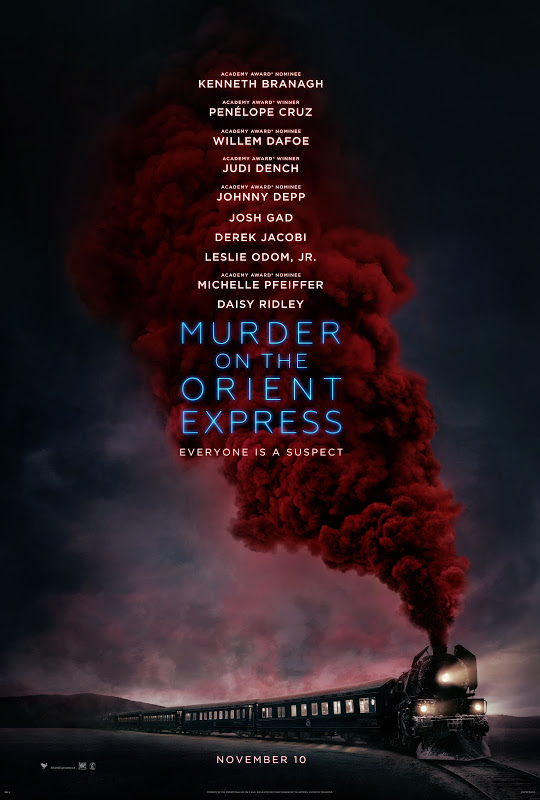
“Murder on the Orient Express” (2017) Film Review

The classic Hollywood style mystery successfully pulls into the station. Grab your ticket from the box office and board the legendary Orient Express with this all-star cast. Kenneth Branagh’s adaptation of the timeless Agatha Christie novel is as bold and elaborate as Hercule Poirot’s famous mustache. Feel as though you are traveling aboard the famous transcontinental train as you attempt to put all the pieces together to solve the mystery right along with “quite possibly the greatest detective in the world.” Hollywood style movie mysteries are nearly a thing of the past, but Branagh stokes the fire in the engine of the once popular genre and conducts an exciting journey through the classic whodunit plot. The film’s namesake is a novel that has inspired so many mystery novelists, and hopefully this film inspires a new generation of filmmakers to create their own movie mysteries fit for the big screen. Because the 1974 version including a cast ranging from Ingrid Bergman to Anthony Perkins to Sean Connery has not stood the test of time as well as it was thought to have done, this cleared the tracks for Branagh’s adaptation of Christie’s most famous novel.

After he successfully solves the mystery of the theft of precious religious artifact from the Wailing Wall area of Jerusalem, Hercule Poirot (Branagh) is beseeched to head back east to solve another mystery. Over the years, Poirot has made many friends, and one of these friends is the son of the railroad tycoon who owns the opulent Orient Express. When a passenger doesn’t show, Poirot is given his seat and boards the transcontinental train bound for western Europe. Although Poirot was promised a rail journey free of crime, a nice break, and to be pampered during his travels, he finds himself solving the most peculiar of mysteries–a most gruesome murder. The victim: an unscrupulous man with many enemies. When a freak avalanche forces the Orient Express to stop on a breathtaking, precarious stretch of track, Poirot finds the time to interview each and every one of the suspects—confined to the twelve first and second-class passengers who might have had access to the victim’s cabin. When each piece of evidence opens one Pandora’s Box after another, and the web of lies and connections between the passengers grows to Poirot’s mustache proportions, Poirot faces a complex mystery that prompts him to call his very approach to crime solving into question.

Nevermind the solution to the tentpole mystery novel is one of the worst-kept secrets in British literature history, Branagh crafts a cinematic mystery full of intrigue, revenge, lies, deceit, and the central murder. The plot revolves around a seemingly perfect crime committed on a railcar with no access to the outside, and only the passengers and crew on board the suspects. But even Poirot is stumped at the who, how, and why. Whether you know the ending or not, this film provides an excellent example of a genre that harkens back to Hollywood’s golden era. There was once a time that mysteries and musicals were a staple of the industry, but times change. Still, Branagh shows audiences that the timelessness of an old fashioned whodunit cannot be overstated. Since the ending of the mystery is known by so many people, Branagh was challenged with providing the audiences with something different, something that creates a new take on a well-known story. He accomplishes this by throwing in some additional subplots, character connections, and evidence that suggests that the solution may turn other otherwise than it does in the novel. The changes he brings to the story are organic and fit in well. The end result is a fantastic film that keeps your attention from beginning to end, even for those who know–or think they know–the solution to the mystery.

From the sweeping landscape shots of the Alps to the wide variety of shots to bring the audience onto the train with the rest of the passengers, the production design is excellent. The attention to the detail and visual elegance of the story are treated with creative precision, just as the Christie plot is woven together. Production designer Jim Clay’s meticulously recreated Orient Express is truly something to behold. Unfortunately, despite Branagh’s decision to shoot on 65mm film, there are times that the train set feels almost too perfect–a little artificial–similar to The Polar Express. Although there are times that the production design is not being showcased to the degree that it should to increasingly immerse the audience into the world of Poirot, there are plenty of beautiful shots that serve as a testament to the opulence of rail travel that once was. Of the few weak areas of this film, the cinematography is the weakest because it could have been used to truly create a visually stunning film and not fall victim to surrealism. Patrick Doyle’s score complements the film by feeling like an extension of the plot itself, in time and space. The combination of big band, jazz, and orchestral music immerses the audience into this world. All the technical elements work effectively to transport you from your seat to a compartment on the legendary train.

Branagh’s screen adaptation of Christie’s characters is brilliantly entertaining and developed well. Each character represents a different type of person, a different walk of life. No two characters are alike, which makes great for interjecting some social commentary into the mystery. From a professor spouting pro-Nazi sentiments to a nurse turned missionary, you will find the characters intriguing in and of themselves, never mind how they may be connected to the victim. Alexandra Byrne’s costumes are perfect appointed extensions of the characters that wear the authentic period clothing. Each costume was designed to be as much a part of the respective character as the accents, hairstyles, and backstories. Josh Gadd proves that we can successfully play a serious role, which will prove to bolster his career, Willem Dafoe is perfect as the professor, Dench portrays the princess in only a way that she could so successfully accomplish, and the rest of the cast are all excellent. Coming in a close second to Branagh’s screen time, as the iconic inspector Poirot, is the beautifully talented Michelle Pfeiffer as the widowed heiress Mrs. Hubbard (Lauren Bacall’s character in the original). She truly showcases her talent for adding depth to the characters she plays in order to make them complex and memorable. The diverse cast of characters is incredible to watch and couldn’t have been deleted better for this highly anticipated film.

Climb aboard The Orient Express for the whodunit that started it all. Branagh’s fresh take on the classic tale would satisfy even the harshest of critics Agatha Christie herself. He treats the source material with the respect it deserve, all the while, adding in new material to craft a new experience for those tho have read the novel and/or seen the original film adaptation of this story. Do yourself a favor and don’t ask anyone whodunit, because you need to experience the solution for yourself. Perhaps you can solve it more quickly than Poirot. Don’t let the train leave the station before you pack your bags and travel back to a time when trains went full-steam ahead into adventure and intrigue.
The Art of BATMAN RETURNS (1992): a retrospective movie review

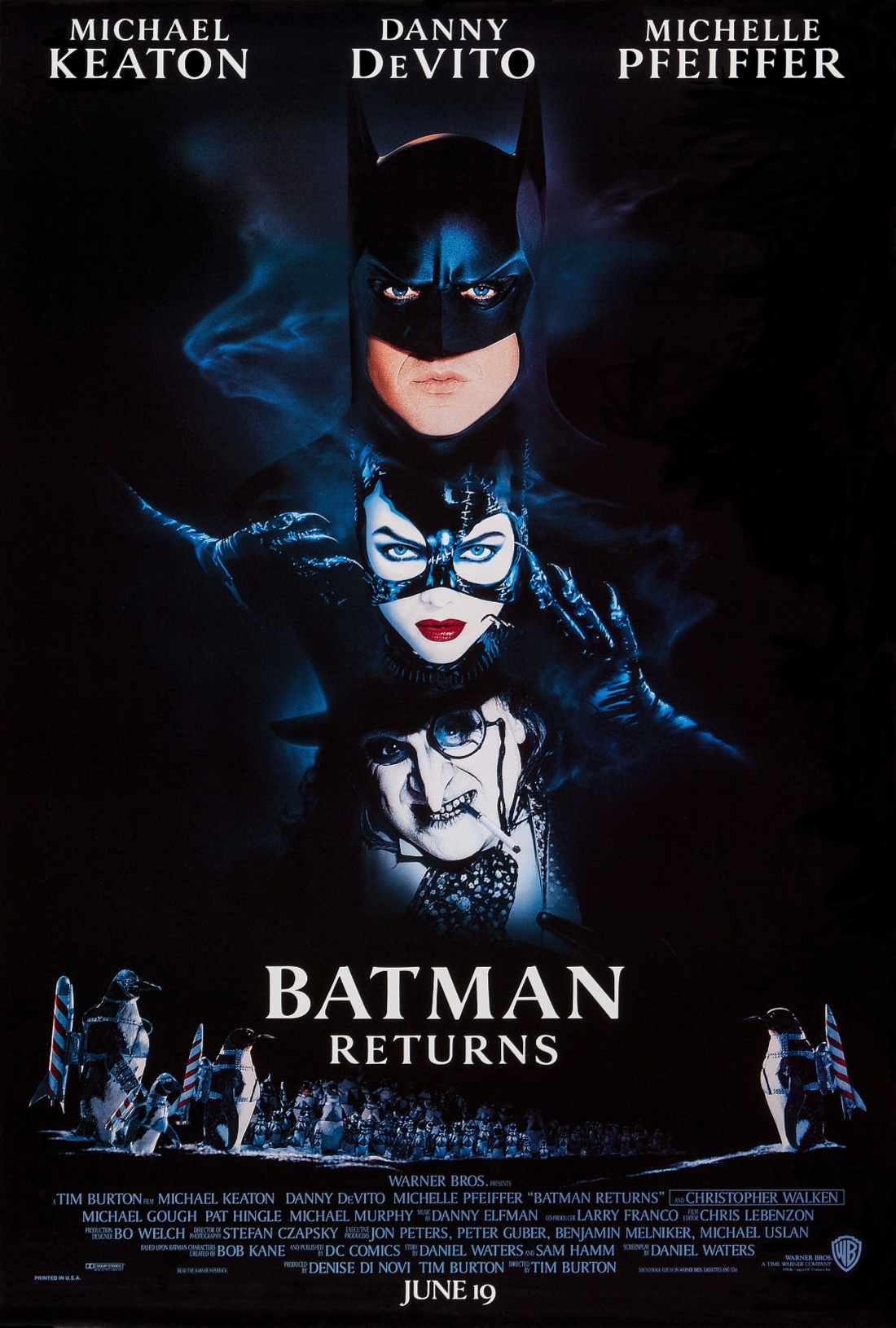
By far, still the sexiest Batman movie! With the reviews from fans and critics alike regarding this weekend’s release of the highly anticipated Suicide Squad ranging anywhere from horrible to moderately enjoyable, I decided to rewatch and review the Batman movie that is still considered by many, and yours truly, to be the most Batman out of all of them. Released in 1992, Tim Burton’s Batman Returns boasts a star-studded cast complete with the German expressionistic filmmaking style and gothic production design often associated with this iconic superhero franchise. The brilliance of Batman Returns can be witnessed in recognizing that Tim Burton provided audiences with an art house film masquerading around as a superhero Hollywood blockbuster. From the architecture to the costumes and cinematography, this Batman movie has more in common with art than a movie. Not that movies lack artistic appeal, quite the contrary–after all cinema is the art of visual storytelling; but there is a certain artistic charm that surrounds Batman Returns uncommon in other superhero movies. In other words, the focus was more on the art of a Batman story than the plot. Many comic book enthusiasts also regard this installment (as well as its predecessor) as very close to the comics in plot and visual design. Furthermore, hands down, the most memorable element of the movie is Michelle Pfeiffer’s Catwoman, and with good reason. Incredibly sexy, seductive, slightly psycho, playful, and conniving. Juxtaposed against Danny DeVito’s monstrous Penguin, Michael Keaton’s timeless Bruce Wayne/Batman, throw in the self-centered and ruthless Christopher Walken’s Max Shreck, and you have a brilliant cast bringing to life iconic characters under the direction of a then-visionary director before he became a parody of himself.

Beneath the streets of Gotham City lies a world of water, waste, and The Penguin. Abandoned by his wealthy parents, Oswald Cobblepot is raised by the Penguins of the former Gotham City Zoo. He grows to resent the world above and the blue bloods of society that cast aside those who they deem as undesirable. High above the sewers, Selina Kyle is nervously tending to her boss’ every need. Not the most meticulous secretary–oh sorry, assistant–she has failed her ruthless boss Max Shreck for the last time, and gets shoved out a window to be nursed back to life by cats. Both abandoned and left to die, but return to life with revenge and warped justice on the mind. During the annual tree lighting ceremony, The Penguin and his henchmen thwart the celebratory atmosphere with gunfire, looting, chaos, and violence. Valiantly defending the good citizens of Gotham, Batman fights off the havoc that The Penguin with which The Penguin is enveloping the city. However, all the public knows is the good, kindhearted Penguin with a love of public service? Although initially setting out to kill Batman, in an ironic twist of fate, sparks begin to fly between Batman and Catwoman AND Bruce and Selina. Revenge, love, violence, and trademark gadgets. This Batman movie has it all.

Even the most dedicated Batman fans will admit that this film certainly has cinematic problems. But why are the flaws in this movie somehow forgiven but the flaws in Batman v Superman or this weekend’s Suicide Squad held against them respectively? Rewatching this Batman movie reveals that it is likely held is such high regard by superhero movie buffs and fans of the comics alike due to of the A-list talent and the artistic or stylistic approach to this story. Because the focus of the film is definitely on the art versus the plot, narrative flaws can easily be overlooked as the experience of this film rests upon the feel and look of everything more so than the plot in and of itself. It is rare for a superhero film to also be so incredibly artistic. And that is why this particular Batman movie stands unique amongst all the others that have been produced over the decades. The passion for visual design is seen in every shot, every costume, and in the sexiness of the interpersonal relationships between the characters. Just like with interpretive art, various interpretations of tone, feel, message, and impression can be found throughout Batman Returns. Regarding the tone of the film, it repeatedly switches from a campy melodrama to tragic love story to action/adventure. In many ways, this film is representative or even self-reflexive of cinema from the 1930s to the 1950s. Paralleling the film’s repeated switches of tone and pace, the characters also change personalities, demeanors, and motives. Moreover, control over situations constantly changes hands throughout the movie. Whether as the audience or a bystander in the movie, it is difficult, at times, to discern the villain from the hero. The magic of this Batman movie is that it bridges the boundaries of so many different interpretations of the Batman universe over the years into a film that embodies the art of filmmaking.

Not a direct follow up to the successful 1989 Batman, this installment is often celebrated as the most Batman of the Batman movies; it’s the one that somehow manages to reflect more about the hero and his world than any other on-screen representation he’d enjoyed before or since. It’s a celebration of the Dark Knight that succeeds, in large part, by its refusal to go too dark, but remains off-kilter and uncomfortable, just enough, all the way through. Likewise, the villains are psychotic, larger than life, and legendary. From the tragic character of The Penguin thrown into the river in a warped Moses fashion on Christmas to the beaten down mousy secretary turned bondage clad 1990s feminist Catwoman, Batman Returns is a quintessential Tim Burton film before he just went way too bizarre in recent years. Both The Penguin and Catwoman can be seen as two different mirrors for our caped crusader. Penguin represents a child of wealth who was abandoned by his parents (not unlike our Bruce Wayne) and Catwoman represents the sensual side of Batman that we seldom get to see but we know it’s there because he is human. The combination of characters, settings, and behaviors makes this film a fun, erotic, and entertaining Batman movie. The stratified emotions, experiences, and interpretations provides audiences with a dynamic story that plays out beautifully on screen. In fact, the film is so entertaining to watch that you will likely forget that the pacing, plot, and structure of the film lacks critical value.

If you are leery about spending money to watch Suicide Squad this weekend, I suggest rewatching–or for some of you watching for the first time–Tim Burton’s artistic masterpiece Batman Returns. If for no other reason, you will enjoy the brilliantly sexy Catwoman, tragic monstrous Penguin, and the definitive Batman/Bruce Wayne as played by Michael Keaton. Such fantastic actors and characters!

Ryan teaches Film Studies and Screenwriting at the University of Tampa and is a member of the Critics Association of Central Florida and Indie Film Critics of America. If you like this article, check out the others and FOLLOW this blog! Interested in Ryan making a guest appearance on your podcast or contributing to your website? Send him a DM on Twitter. If you’re ever in Tampa or Orlando, feel free to catch a movie with him.

Follow him on Twitter: RLTerry1 and LetterBoxd: RLTerry

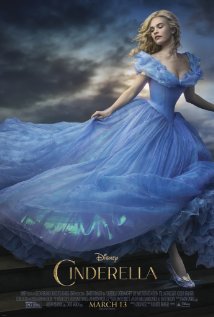
Cinderella (2015)

Cinderella (2015)Bibbidi Bobbidi Bomb! That’s precisely what the most current adaptation/remake of the timeless classic is. Watch as everything you loved about the original Disney Classic is sucked out of this version. But, after this same tired story has been remade again, and again, and again, and again, what can you expect??? From the casting–with Cate Blanchette being the exception–to the writing to the over all poor execution of the famous fairy tale, you will understand why Disney had to add the Frozen short film prior to the opening credits just to get people to see this travesty unfold. On that note, it too was poorly produced and shoved down the movie patrons’ throats. After the tragic adaptation of the beloved Into the Woods, laughable revisionist Sleeping Beauty/Maleficent, and this year’s flavor of Cinderella, I am fearful of the upcoming live-action remake of Beauty and the Beast.

Ordinarily, this is where I summarize the plot; however, this story has been remade so many times that I won’t bother. But, I will tell you that in an effort to add some new zest to the story, Disney does modify some of the events and adds in additional backstory. And, I will say that I liked the modifications and additions. So, I suppose the whole thing wasn’t a total flop.

One of the cardinal rules of filmmaking: don’t remake a classic and virtually change nothing! Your audience will most likely be bored to tears. It was Cecil B. DeMille who said, “the greatest art is the art of storytelling.” Unfortunately, the storytelling in this movie was not artful or original at all. And I use the term original lightly. I’m aware that many films are based on other works of literature or plays. However, it is vitally important that, when adapting a work of fiction, adding something new is required. Nobody wants to see the same thing over and over. Good examples of creative twists on the Cinderella story were Ever After, with Drew Berrymoore, and the funny, entertaining Cinderella with the beautifully talented Bernadette Peters. Both these versions took the familiar story and created something new. Speaking of Ms. Peters, I have yet to understand Disney’s blatant aversion to casting her in roles that are made for her, such as the witch in the recent Into the Woods and the role of Godmother in today’s Cinderella. Another excellent choice for Godmother would have been the incomparable Michelle Pfeiffer.

On the note of casting, I am overall very disappointed with the performances. I will directly point out that I am very happy that Disney chose Lily James for the iconic role of Cinderella, because she boasts a very natural beauty that is not typical of those ordinarilly chosen to play–or drawn to play–Disney princesses. She is someone girls could look up to and not feel like they could never measure up to the unrealistic Disney princess image that often graces the screen. Another positive casting choice was Blanchette as Lady Tremaine (stepmother). She played the role with excellence and truly brought the character to life. At first, I wasn’t too sure about her when the cast was initially announced; but, I stood corrected when everything from her look, to her tone of voice, to her attire screamed ‘I am the evil stepmother.’ She took the Disney villain to a whole new level with the addition of taunting and belittling. As far as the rest of the cast, yes–including Helena Bonham Carter (as Godmother)–I am very disappointed and was constantly thinking of who else should’ve been cast in the various roles. 

Pacing is very important to the structure of a screenplay, and the pacing was way too quick for this story. There were many times that it felt like key turning points or plot twists were just glazed over for the sake of runtime. Another area that structurally suffered was the very ridged narrative. It’s like we jumped from scene to scene without well-crafted transitions. An example of this is when Lady Tremaine has Ella’s glass slipper. We are never even given any clue as to how she thinks to look for the iconic shoe. One of the elements that made Ever After such a hit when it came out was the writing and casting. It took a story most people are familiar with and came at it from a whole new angle. This angle allows the storytellers/filmmakers to include what was loved in the more fictitious fairy tale and build upon it to being the story as close to reality as possible. Between the narrative structure and the casting, this live-action Cinderella still remains a favorite by many. Likewise, the (also Disney, by the way) movie musical adaptation of Cinderella in 1997 made its mark on the classic tale/broadway show by giving it an impeccable cast and adding new musical numbers (“Falling in Love with Love” being a fantastic addition). As you can see, both these movies (as well as Into the Woods and the other Cinderella adaptations over the years) often put their own spin on the story to essentially create a new experience for the movie audience. I find that this version of Cinderella failed to create something new and simply rehashed poorly what has already been done.

Note to Disney: Disney, you need to try something new! Please stop your current trend of creating live-action versions of your beloved animated movies that made you the king of the industry that you are, because you are losing sight of the art of storytelling. I really hope this live-action adaptation of the animated movie is not a foreshadow of what we are to expect with Beauty and the Beast. At this point, I wouldn’t be surprised if they do not cast Angela Lansbury as Ms. Pots–and no one can play that role like she can. Movie go-ers beware: this is not your childhood Cinderella.