BLACK BAG film review

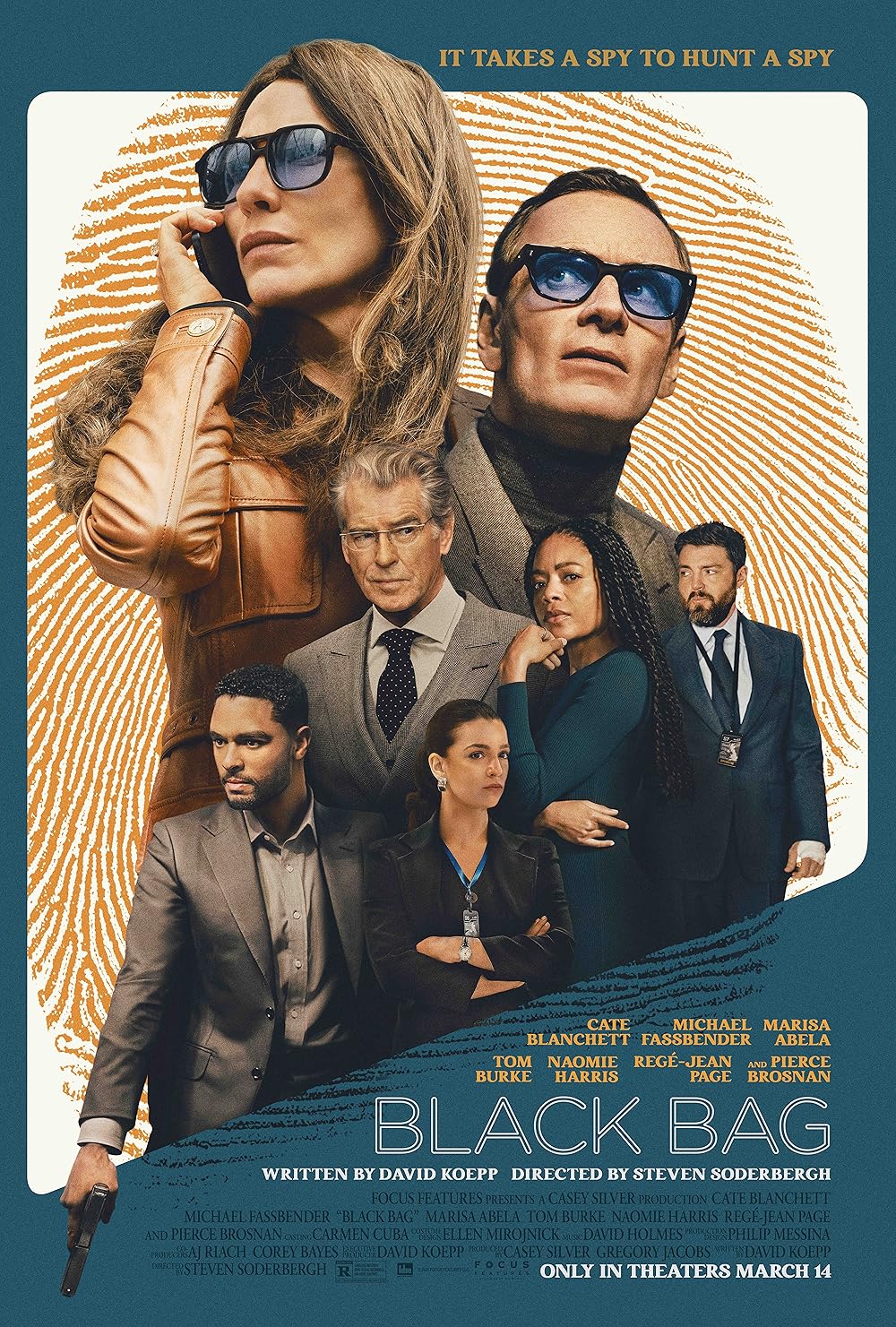
A sleek and suspenseful espionage thriller. Steven Soderbergh teams up with screenwriter David Koepp to craft a cinematic world of intrigue and deception in Black Bag. The duplicitous nature of the film is witnessed in the gripping marital drama that underscores the covert spy activity. Rooted in themes of trust, betrayal, and the cost of secrecy, this film places audiences deep within the labyrinthine world of British intelligence, where loyalty is as much a weapon as it is a liability.

When his beloved wife, Kathryn, is suspected of betraying the nation, intelligence agent George Woodhouse faces the ultimate test — loyalty to his marriage or his country.

Michael Fassbender and Cate Blanchett lead the charge as George Woodhouse and Kathryn St. Jean, a married couple whose bond is tested when George is tasked with unmasking a mole inside the British National Cyber Security Centre (although not stated, the Centre is reminiscent of MI6). When suspicion falls on Kathryn, the mission becomes personal, forcing the couple into a high-stakes psychological chess match where every move could be their last. David Koepp’s screenplay strikes a deft balance between razor-sharp dialogue and simmering tension, drawing audiences into a narrative that is as much about human connection as it is about spycraft.

Fassbender delivers a layered performance, portraying a man caught between duty and devotion, while Blanchett’s enigmatic presence keeps audiences guessing until the final frame. Their electric chemistry brings an emotional weight to the thriller, grounding the high-stakes espionage with raw, personal stakes.

Adding depth to the intrigue is an exceptional supporting cast, including Naomie Harris as a perceptive psychiatrist and Regé-Jean Page as a brash but brilliant operative. Each performance contributes to the film’s palpable atmosphere of uncertainty, where shifting alliances and hidden motives drive the tension ever higher.

Soderbergh’s signature directorial style is on full display, with dynamic camerawork, crisp editing, and a refined aesthetic that gives Black Bag an effortlessly cool veneer. Complemented by David Holmes’s pulsating, jazz-infused score, the film moves with a rhythmic intensity that keeps the tension taut from start to finish.

David Koepp’s screenplay is a masterclass in taut, intelligent storytelling, seamlessly blending espionage thrills with deeply personal stakes. The interplay between George and Kathryn is laced with suspicion and longing, making every conversation feel like a battle of wits. Koepp’s ability to navigate shifting alliances and hidden motives ensures that no scene feels wasted, keeping audiences engaged in a labyrinth of deception. While the plot’s complexity demands careful attention, the payoff is both satisfying and thematically rich, cementing Black Bag as a sleek and sophisticated entry in the spy thriller genre. My only negative critique of the screenwriting is that Koepp’s screenplay does suffer from some poor pacing in the first act. 

While he doesn’t play a prominent role in the film, seeing former Bond Pierce Brosnan return to (what we may as well call) MI6 was a nice treat and nod to his tenure as the definitive fictional British spy.

While some may find the intricate plotting requires a close watch, the payoff is worth the investment. More than just a spy thriller, Black Bag is a stylish, smart, and suspenseful exploration of trust in a world where deception reigns supreme. A must-watch for fans of sophisticated espionage cinema.
Ryan is the general manager for 90.7 WKGC Public Media in Panama City and host of the public radio show ReelTalk about all things cinema. Additionally, he is the author of the upcoming film studies book titled Monsters, Madness, and Mayhem: Why People Love Horror. After teaching film studies for over eight years at the University of Tampa, he transitioned from the classroom to public media. He is a member of the Critics Association of Central Florida and Indie Film Critics of America. If you like this article, check out the others and FOLLOW this blog! Follow him on Twitter: RLTerry1 and LetterBoxd: RLTerry

THE KILLER (2023) movie mini-review

The sleeper. David Fincher’s The Killer is lethargic and uninteresting. It’s an uninspired and predictable deconstruction of a hitman that is self-indulgent, lacking any concern for the audience experience.

After a fateful near-miss, an assassin battles his employers, and himself, on an international manhunt he insists isn’t personal.

From the opening credits that are reminiscent of a 1990s movie-of-the-week (MOW) to the exhaustive voiceover narration from beginning to end, this is one movie that you neither want to see in cinemas nor allocate time for at home to watch on Netflix. I am reminded of Fox and FX’s Deliberate Intent (2000), which was a MOW about a first amendment scholar whom is recruited by an attorney to sue Paladin Press after a hit man commits a triple murder by allegedly following a its how-to manual titles Hitman. The deconstruction of the book and hitman contained therein was far more engaging than this sleep-inducing character study by Fincher. Seems hard to believe that a movie about a hitman could lack less dimension and interesting qualities than sheet of cardboard. I kept waiting for the first act to transition into the second, but it’s nearly two hours of a first act and a very rushed third. Anticlimactic best describes the conclusion to this sleep-inducing character study.

Ryan teaches Film Studies and Screenwriting at the University of Tampa and is a member of the Critics Association of Central Florida and Indie Film Critics of America. If you like this article, check out the others and FOLLOW this blog! Interested in Ryan making a guest appearance on your podcast or contributing to your website? Send him a DM on Twitter. If you’re ever in Tampa or Orlando, feel free to catch a movie with him.

Follow him on Twitter: RLTerry1 and LetterBoxd: RLTerry
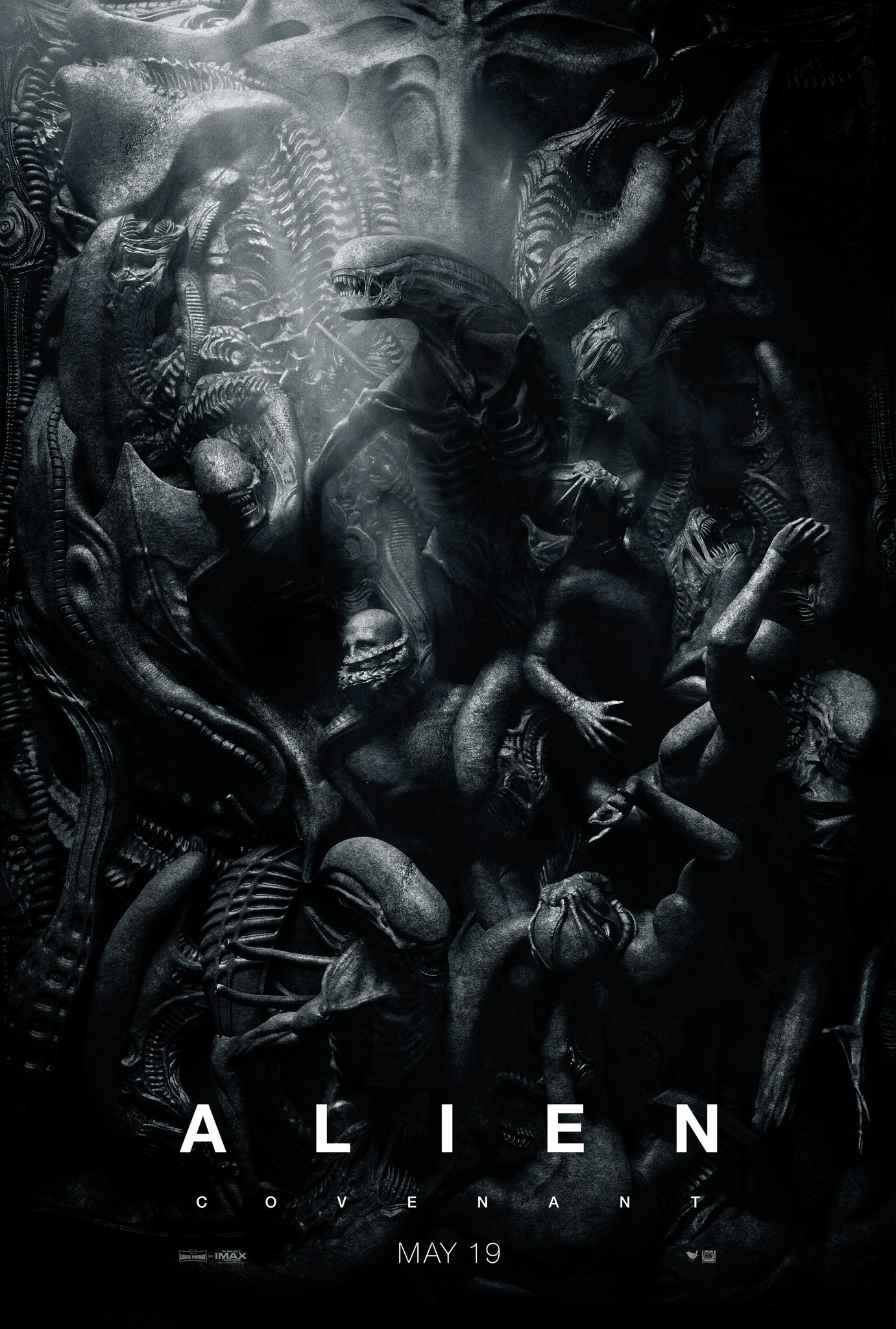
“Alien: Covenant” movie review

Alien: Covenant returns to its roots in horror. In 1979, Ridley Scott convinced audiences around the world that “in space, no one can hear you scream.” And the newest film in the line of prequels leading up to the terrifying events aboard the Nostromo, attempts to make up for the rejection of 2012’s Prometheus as a true prequel to Alien. Fortunately for fans of the franchise, Alien: Covenant is mostly successful at delivering what audiences loved about the original and missed in the subsequent Cameron and Fincher movies–the trademark horror of the xenomorph and facegrabbers. Starting off like Prometheus and finishing more like the original Alien, the newest film in the nearly 40-year-old franchise will have you screaming, cringing, and completely immersed in blood-curdling terror. That is, until you realize that only some questions from Prometheus are answered, and all new questions about events in this movie are generated and left unanswered. That appears to be Ridley Scott’s Achilles heal: always leaving more questions unanswered than providing closure or exposition, thus prohibiting the movie from being as great as it certainly had the potential to be. With one more film between this current installment and 1979’s Alien, perhaps there will be far fewer unanswered questions and provide the history for which fans are looking.

On a colonization mission, the complement of the Covenant is traveling into deep space towards a new planet that earth’s humans hope to make a new home. After encountering some severe spacial turbulence enroute to the destination, the crew of the Covenant intercept a transmission from an uncharted planet that, according to the sensors, appears to be a complete paradise. After some deliberation, it’s decided to head for this new planet. Most of the time, when something is too good to be true, it usually is. Led by the new captain Oram (Crudup) and first officer Daniels (Waterson). After an attack from an alien species, the crew is rescued by David (Fassbender), a synthetic android-like human, who is the only remaining survivor of the Prometheus expedition from some years earlier. Unbeknonst to the crew and scientists of the Covenant, they are about to come face to face with the most terrifying nightmare imaginable–make that–an unimaginable fight for survival when paradise turns to hell.

One of the first technical elements that fans of Alien will notice is the opening title sequence. It is reminiscent of the manner in which the opening credits and title of the original were revealed in the emptiness of space on screen. I appreciated this homage to the original because it set me up to prepare for an Alien movie and not a second Prometheus. Perhaps that does not seem important to non-fans; but to make a long story short, while Scott was in the conceptual phase of a sequel to Prometheus (prequel to Alien), he was told by the studio that audiences didn’t want another Prometheus–they wanted Ridley Scott’s Alien. And now the rest is history. In order to best understand the flaws of Alien: Covenant it’s necessary to understand the similar flaws of Prometheus. One of the many diegetic and technical problems with Prometheus was the fact that there was little direct connection to Alien and it felt like a whole new franchise and not an extension of the original. This lack of connection is best represented by the number of unanswered questions dwarfing the answered ones. Essentially, audiences only learned about David’s origin and, to a lesser extent, why that particular planet. But enough about Prometheus, we are here to talk Alien: Covenant.

Although vastly improved, Covenant also leaves audiences with many unanswered questions; albeit, it is successful at making up for many of the diegetic flaws of the preceding film. To get into the questions would reveal too much about the film and perhaps hint at some spoilers, so I won’t go into specifics. But enough about the flaws of this otherwise exciting and well-produced film–just know that the writing is weak but hopefully will be better in the next installment. The most impressive elements of the movie are related to the cinematography, editing, and visual effects. From the sweeping landscape shots to intimate closeups of the xenomorph and its victims, Covenant is absolutely visually stunning. There is even a mild romantic encounter between David and a member of the Covenant crew that was shot incredibly well and strategically placed in the narrative. Where the story is weak, Scott makes up for in creating an impressive cinematic experience for long-time and new fans alike. There are even shot sequences that are taken directly out of Alien. Often times, I am extremely critical of computer-generated effects and characters versus practical effects and animatronics–and for good reason–nothing can replace the way real light bounces off real objects and is really captured by the glass lenses on a camera. Furthermore, it’s rare that a character react in genuine fear to an object, villain, or murderous alien that is not really present on set. However, the combination of CGI and practical effects in Covenant is breathtaking and convincingly real. You will almost feel the facegrabber latching onto you and the xenomorph’s wet acid-breath on your skin.

Aside from the unanswered questions still residing in the minds of those who have seen the film, Covenant fails to live up to Alien in another rather conspicuous way. For everything that this film did right and make up for (in respect to Prometheus), it lacked any memorable crew members–more specifically–this film differs from Alien by not developing Dani(els) to be the strong female character that she had the potential to be. Dani could have been Covenant‘s answer to Sigourney Weaver’s Ripley in Alien. One of the diegetic elements that is most talked about and is often the topic of horror film humanities classes is the breaking of gender roles and heteronormative expectations by Ripley in Alien. Perhaps that is why Alien is almost avant-garde in the cinematic experience whereas Covenant is impressive but does not typify the art of cinematic storytelling nor contributes to groundbreaking character-types. Beyond strong female lead, the film simply fails to leave the audience with any one memorable character period. No one will be talking about any one particular character years from now. Both the unanswered questions and the lack of memorable significant characters can be traced by to one root cause: flawed writing.

If you loved the original Alien, then you will mostly enjoy Alien: Covenant. The experience is equally terrifying as it is beautiful. Whether you have seen Prometheus or not will not affect your enjoyment factor in this film. If you have seen Prometheus, then I would suggest watching the Ridley Scott short film The Crossing because it ties Prometheus to Alien: Covenant. Think of it as an extended prologue. This short film helps audiences to make the connection between the two films in hopes that it does answer some otherwise unexplained circumstances and events. After watching this film, I have an urge to rewatch the original in order to begin making those direct connections between this one and Alien. With one more film to release to finalize the events between Prometheus and Alien, I am eager to have my remaining questions answered. Bottom line: Alien: Covenant demonstrates Scott’s newfound commitment to return audiences to the space horror that makes the original so iconic.

“X-Men: Apocalypse” movie review

XMenApocalypseEpic! It isn’t often that one word can sum up the screening experience of a movie, especially when going into the film, one had lots of hesitations that stemmed from the questionable trailers. Prepare yourself for the heaviest of the X-Men movies future or past. Probably the best feeling to take away from this one is the storytelling quality of the cartoon paired with Bryan Singer’s unparalleled handling of what is arguably the most successful Marvel franchise over the decades (that may be changing with the unprecedented popularity of The Avengers). While some may describe this movie as a failed attempt at reliving the glory days of the X-Men, I venture to say that there is enough evidence to support this being a strong third movie. As much as I enjoyed the movie–and do not mistake me, I did–there was a LOT going on in this movie and it came close to failing to effectively and successfully tell A complete three-act story. Just like in Batman v Superman, where Warner Bros bit off more than they could chew, 20th Century Fox came close to making the same mistake. Thankfully, the story was just strong enough to drive excitement and thrill through the minds and bodies of the audience.

X-Men: Apocalypse is the third movie in the Bryan Singer reboot (fourth installment if you count the original X-Men movie from 2000). The world of Ancient Egypt was once the center of the universe; and in that great empire, there lived the original mutant [Apocalypse] (Oscar Isaac). He grew in strength and power to the point that he ruled the world. After several of his fellow Egyptians betrayed him in attempt to bury him alive, he was cast into a deep sleep hundreds of feel beneath the surface. Due to a dedicated group of followers thousands of years later, Apocalypse was awaken and he has set out to reclaim the planet as his own and raise his children. Determined to build his mutant army, he begins to recruit the most powerful X-Men including Storm (Alexandra Shipp). When Professor Xavier (James McAvoy) encounters Apocalypse while in Cerebro and is captured, the still-fractured X-Men must go to great and nearly impossible lengths to rescue him and save the world. Teaming up with new student Scott (Tye Sheridan), Jean Grey (Game of Thrones’ Sophie Turner), and Nightcrawler (Kodi Smit-McPhee), Quicksilver (American Horror Story’s Evan Peters), Mystique (Jennifer Lawrence), Beast (Nicholas Hoult), and Havoc (Lucas Till) will battle Apocalypse and his four horsemen including Storm, Angel (Ben Hardy), Psylocke (Olivia Munn), and Magneto (Michael Fassbender).

What a cast! The quality of talent in and of itself is an outstanding accomplishment and is responsible for a great deal of the success of the film. Writers create characters and directors craft them, but it is the actor who ultimately brings the characters to life for the silver screen. Each and every actor is an excellent match to their respective characters. In addition to the actors we have been introduced to in past films, the newcomers quickly cement themselves in this and future movies. With so much material and less than three hours to deliver a movie that could be on par with the previous two and The Avengers films, it was vitally important to have an impressive cast that could win you over instantly. There simply wasn’t time for an actor to grow on you or to decide how you felt about a particular character. Each actor needed to his a homerun as soon as they stepped out of the dugout. I paid close attention to Sophie Turner because I was only familiar with her from Game of Thrones, and I just wasn’t sure how I would feel about her as one of the omega class X-Men (Jean Grey). Oh, I knew she looked the part, but could she pull it off??? And the answer to that is a resounding yes.

Much like Captain America: Civil WarX-Men: Apocalypse is nothing short of a superhero extravaganza. And although they are similar in many respects, there are two completely different tones in the respective movies. Are they both serious? Yes, but the former also includes comedic relief sequences and dialog (and yes, if you read my review, I found those to be poorly handled but I am not going to revisit that tarmac scene or the annoying Spider-Man in this article) while the latter retains the serious tone throughout the movie. However, it is successful in not becoming a parody of itself as was the case with Batman v Superman. I will state this: Civil War does boast a dynamic plot that flows smoothly the whole time, whereas Apocalypse flows smoothly most of the time, but at others, it does feel a mite bumpy. We could discuss symptoms of the problems all day, but the root of the problem is simply trying to tell too much story in one movie. To be honest, I have a felling that I am going to decide that I like X-Men more but that is likely because, in all fairness, I grew up with the cartoon. What works for X-Men, much like Captain America, is the fact that the audience does not need to be familiar with the comics in order to enjoy the movie. Singer makes sure that anyone who enjoys high concept comic book superhero action movies will enjoy this film. Well, that is, unless you happen to be a diehard comic book aficionado. This movie is simply exciting and visceral.

Memorial Day weekend will either be dominated by powerful mutants or charicatures from the other side of the mirror. Although X-Men will probably not perform as well as Civil War, I don’t think Alice has a chance of topping this quintessential summer blockbuster on the unofficial start to the summer. Unless you live here in Florida where summer started in March. Haha. Speaking of Florida, and in particular Orlando where MegaCon 2016 is being held, knowing that most of the theaters would be filled with cosplayers and enthusiastic fans, I had the challenge of finding a theatre in the area at which to watch the movie and not face cols out auditoriums and nose-bleed seats. I was successful in finding a small privately owned theatre in the vicinity and has the whole thing practically to myself. Running camera for a medical convention, so I am writing from the Rosen Shingle Creek instead of my condo in Tampa. It’s been quite nice to stay on site versus driving an hour here for the event each day. Happy Memorial Day!

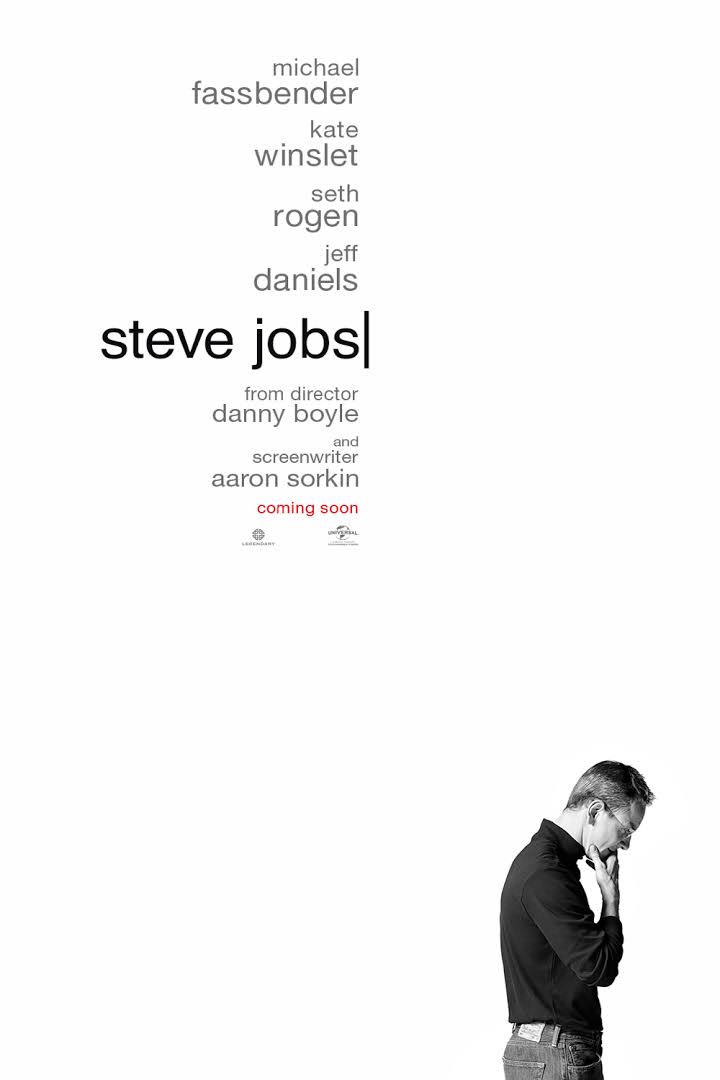
“Steve Jobs” movie review

SteveJobsA mesmerizing and controversial bio-pic. This seems to be the year for the biographical motion picture. Universal Pictures and Legendary’s Steve Jobs takes you on a journey through the most signifiant product launches of the late co-founder of Apple’s career. Despite the fact that Jobs is revered as a genius and one of the most influential men in American history, this movie does not shy away from painting an accurate portrait of his personal and professional life. Although he is loved and admired by so many people, his character is one that you will most likely dislike through most of the narrative. From open to close, you will be glued to your seat in awe and surprise. This is definitely one of the most intriguing and intense bio-pics I have seen in a long time. Throughout the narrative, there is a constant theme of control and design. Complete with a brilliant cast and impeccable writing, this is definitely one to watch out for at the next Academy Awards.

Steve Jobs is about the early career of the co-founder of Apple. You will go on a journey through the most important product launch successes and failures of Jobs’ (Fassbender) career. From being fired from the very company that he co-founded to the love-hate relationship he has with his daughter and the hatred for her mother, you will learn what prompted Jobs to make the decisions he did and how each decision affected his relationships with friends and colleagues. Discover why “end to end control” was so important to the designs of the MacIntosh and Apple computers.

Michael Fassbender truly shines as the genius behind Apple’s phoenix-like return from the ashes of its darkest days. Not only does he resemble Jobs in appearance, but he also captures the very essence of what made Jobs tick and why he became the success he was professionally. Fassbender also delivers powerful performances in his altercations with colleagues and his presumed family. The intenseness of his conflicts and triumphs transcends the screen and compels your attention through the entire film. Often in movies, you either want to love or love to hate the protagonist; and that element rings very true in this film. For nearly the entire movie, I hated Steve Jobs. Funny, because I use all Apple products. But, during the end of the third act, I made a radical shift and saw the glimmer of hope that has caused millions of Apple fans to adore him so much during the latter years of his career. More than anyone else, he believed in his designs and methods of product launches. Only his director of marketing Joanna Hoffman (Kate Winslet) seemed to be the one he confided in most or could control the man who was insistent on “end to end control” throughout his dynamic career. Winslet also delivers a commanding performance as Hoffman who stuck by Jobs from product to product, advising him when he wouldn’t hear of anyone else’s opinions. She is the single person who held helped the public not to despise him as much as most everyone else did behind the scenes.

So often I find that bio-pics can tend to romanticize the protagonist by glossing over the more negative events of his or her life. Not so with Steve Jobs. The remarkable element of the writing is the commitment to reality and just laying all the positive and negative events and encounters out there for the audience. Highlighting the more negative events is extremely important to this film because that is where the very dynamic character arc comes from. If you loved or hated Jobs the entire time, it would not be nearly as impactful. But because you will likely hate him for most of the movie until the end and then quickly turn a 180, that is where the magic of this movie lies. There are times that you think that he will budge from his stances on design teams and products, but then he is just as stubborn or relentless as he is throughout the story. Oddly enough, his penchant for complete control is what tanks and then resurrects the tech company. The story is gripping and whether you are an Apple product fan or not, this movie is an excellent example of how a completely candid bio-pic can still prompt the adoration of the public despite the dark elements and poor decisions in relationships with friends and lovers.

If you are an Apple product fan, this is definitely a film to catch because it takes you behind the sleek product displays and technology launches. Learning about Steve Jobs the man actually gives a new-found appreciation for the company he helped start, got fired from, and rehired again. The amazing cast and brilliant writing enables this film to be admired for its commitment to the art of biographical motion pictures.