MAESTRO film review

Maestro‘s reach exceeds its grasp. Bradley Cooper’s biopic on Leonard Bernstein is an exemplary motion picture in many respects, but ultimately its potential for excellence is hampered by a disjointed screenplay. The performative dimension of the film is impressive, as is the emotive apparatus of the film itself. Furthermore, Cooper’s talent for the director’s chair is witnessed beautifully in most areas of the film except for the storytelling mechanics–not the story itself–but rather how the story is told. Another example of the dangers of being both writer and director (and in this case producer too). Most films need the checks and balances that come from having a different individual at the helm of writing, directing, and producing. If most of what you know of Bernstein’s legendary career comes from West Side Story, then you should read up on his accomplishments prior to watching the film, as it feels very inside baseball. There is a great story in this film, but the screenwriting mechanics hold it back from being truly outstanding.

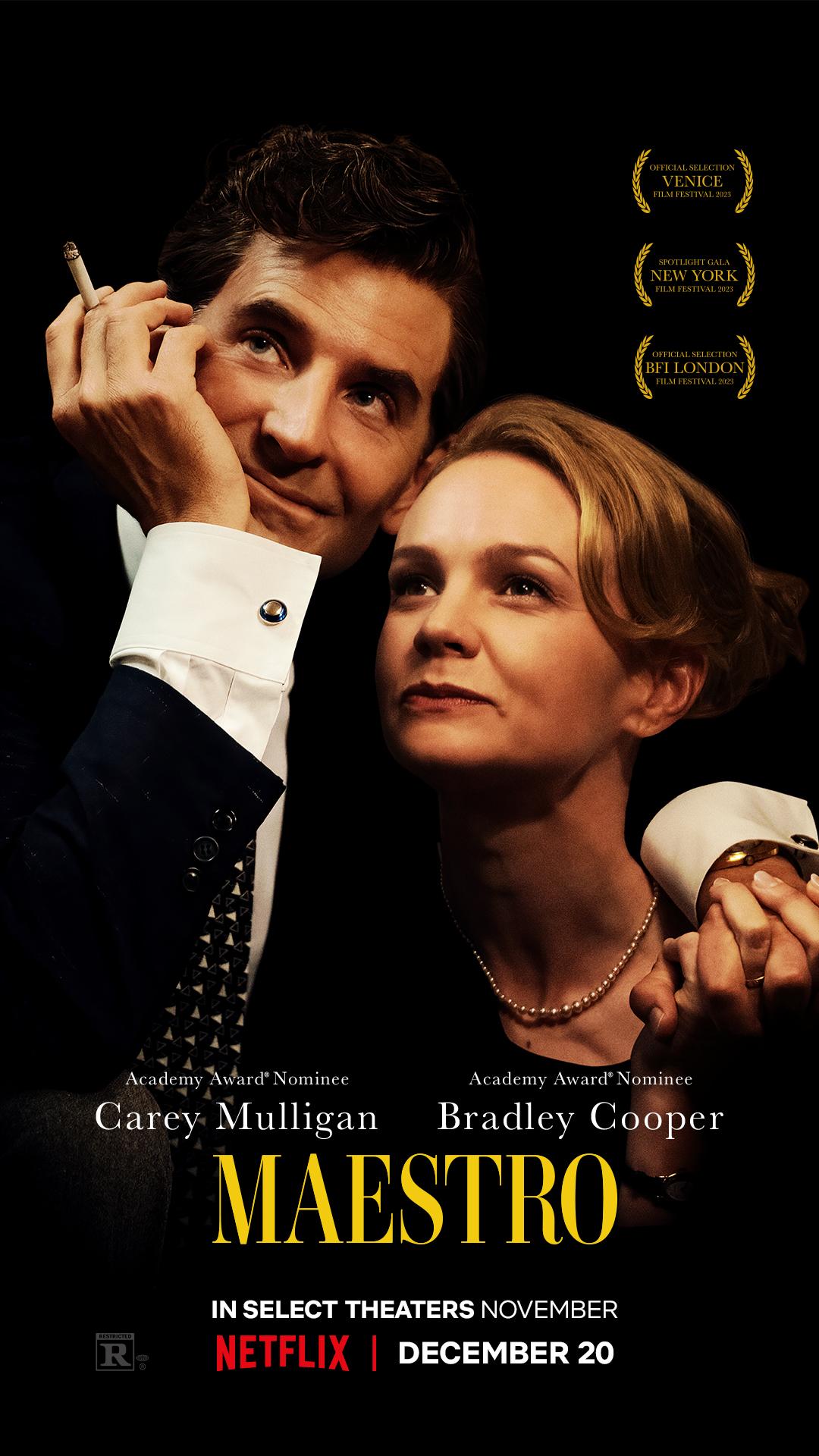
Maestro tells the complex love story of Leonard and Felicia, a story that spans over 30 years-from the time they met in 1946 at a party and continuing through two engagements. It also chronicles the prolific and influential career of one of the greatest composers and conductors in American history.

The most striking dimension of the film is the apparatus of the film itself, the mechanics employed to visually craft the method of telling this story. The film starts in then-present day with an on-camera interview in color and widescreen, then as the film jumps back to the 1940s, it changes to a 4:3 ratio and is in grayscale (with a blue tint). As the story unfolds, the film transitions from 4:3 grayscale to 4:3 color to eventually 16:9 (if you will) color. To the casual observer, this was to signify time jumps alone–and to stop there would be limiting the art and affects of this tool. More than signifying chronology, it was used to spotlight the emotive dimension of the film as it evolves (or devolves, depending on how you look at it) from an old Hollywood conventional romance to post-modern subversive romance.

Bernstein goes from being in love with people to being in love with his music, but always in need of muses and people around him. He was almost never alone–he was scared of being alone. The irony in that is he simultaneously brought people together with his music but drove them away because his first love was his music. Beyond the montage of the film, this emotive apparatus incudes a complete score by Bernstein, and the inclusion of Bernstein’s music to accompany audiences along this journey was a brilliant choice to increase the intimacy of the story for audiences both familiar and unfamiliar with his library of compositions. Cooper’s use of a cinematic storytelling apparatus such as this, elevated mere storytelling montage for cause/effect chronology to that which communicates emotion and introspection.

Both Bradley Cooper and Carey Mulligan shine in their respective roles; moreover, Mulligan’s Felicia Montealegre-Bernstein is truly the heart and soul of this film. Not mere impersonations, both Cooper and Mulligan completely transform into the real-life characters they are portraying. The performances were so incredibly intimate and personal that the authenticity leaped off the screen. When they hurt, we hurt, and when they were joyous, we were joyous. While Leonard is the title role, the character with whom most in the audience will identify is Felicia. She is the conduit through which we experience most of this biopic. Furthermore, she is the character that feel the most human, because Leonard’s level of talent was so out-of-the-world that it is hard to connect with him to the same degree most in the audience connect with the unconventional romance of Felicia and Leonard.

On a more personal note, I found myself connecting with Leonard the most because there is a line from Bernstein in the movie that goes something to the effect of (and I am paraphrasing) “I am so many things, but society only wants me to be one thing. I cannot be that one thing because I am all these things, and to not be any one of them would be to deny who I am.” Despite the fact I feel that Cooper is as much a screenwriter as Sorkin is a director, this line is representative of the central theme in the film and one with which I identify greatly. For I too am so many things, but society wants me to pick (and be successful) at just one of them, but I cannot because I am all these things. I am a professor, academic writer, event planner, film critic, and public speaker. For me to not do any one of these things would be to deny who I am. On that level, this film felt incredibly personal.

With all these wonderful elements going for this motion picture, the film’s reach exceeds its grasp due to the disjointed screenwriting. I’ve said it before, and I will say it again, most directors are not screenwriters (and the inverse is also true). Very few writer-directors can do both jobs equally well. If for no other reason, a film built upon a writer-director lacks sufficient checks and balances to ensure the narrative mechanics are adequate for translating a story from the mind of a screenwriter to the screen of a director. And this is where I draw the inside baseball analogy I mentioned earlier. The full potential of this film requires audiences to be knowledgable in the career of Bernstein beyond West Side Story and Our Town.

The screenplay fails to start on common ground before its deep dive into the career and romances of Bernstein. For example, unless you are a student of music, it is doubtful that you were aware of his work outside of West Side Story and Our Town. Therefore, since that is most people, the screenplay should have established a common connection between Bernstein’s work and general audience members early on in the film. Then, once common ground was established, take audiences on the journey through his personal and professional life. His contributions to Broadway are little more than one-off mentions during the film. The pacing of the story also plagues the film as it provides few, if any, transitional scenes and simply jumps from time period to time period. The stylized editing and cinematography mentioned earlier in the review help to communicate chronology, but there is more to telling a biographical story than time and place.

Alfred Hitchcock stated to start every scene in a film as close to the end of the scene as possible and end the scene as soon as possible all while ensuring that something dramatic happens at the end of the scene (in screenwriting terms a button) that sets up the proceeding scene. Nothing should happen in scene B that wasn’t setup in scene A and every scene should in some way point to the end of the film. It is basic screenwriting conventions that are ignored in hopes that the stylistic apparatus and performative dimensions of the film will make up for the lack of care in the how the story is being told. Screenwriting is more than a narrative to be delivered on the silver screen, it’s more than dramatize don’t tell, it’s all of that plus how story is being told even before the first shot is filmed. Screenwriting mechanics (inclusive of conventions and guidelines) are important because they work.

Bradley Cooper’s Maestro is a beautiful-looking motion picture that attempts to capture the gravitas of the professional and personal life of one of the greatest composers and conductors in American history. While it’s no Amadeus or Mr. Holland’s Opus, it is a solid film that students and fans of his career will thoroughly enjoy. For those that may only know him from his contributions to Broadway, the film will still be interesting enough, but may not be as impactful without more in-depth knowledge of his career and life.
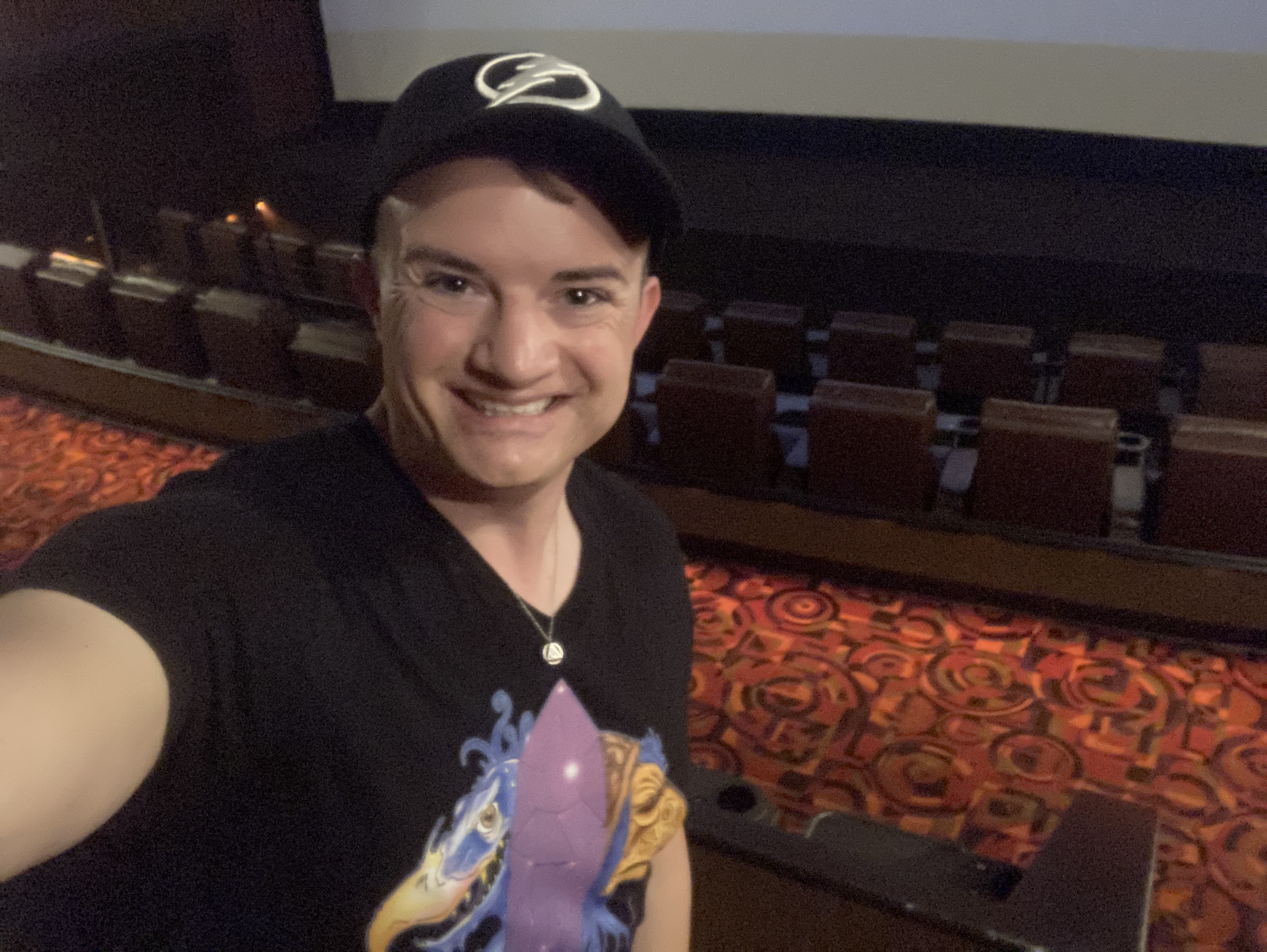
Ryan teaches Film Studies and Screenwriting at the University of Tampa and is a member of the Critics Association of Central Florida and Indie Film Critics of America. If you like this article, check out the others and FOLLOW this blog! Interested in Ryan making a guest appearance on your podcast or contributing to your website? Send him a DM on Twitter. If you’re ever in Tampa or Orlando, feel free to catch a movie with him.
Follow him on Twitter: RLTerry1 and LetterBoxd: RLTerry

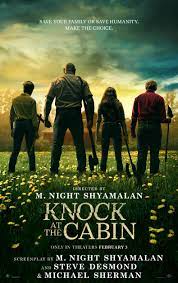
KNOCK AT THE CABIN movie review

Knock on a different cabin. M.Night Shyamalan’s latest horror film Knock at the Cabin attempts to explore thoughtful themes but the storytelling is clunky due to the poor plotting and contrived character development. Moreover, this is a case wherein film form is employed as a tool to compensate for underdeveloped meaning and story structure. Where the film excels is in the characters and casting. Yes, the character development is contrived, but I appreciate Shyamalan’s character mix. In particular, it’s a refreshing mix because the fact the parents are a same-sex couple doesn’t factor heavily into the plot nor become a sermon, like it so often does. It simply is and that’s it. Furthermore, the casting of not only the central parental couple, but all of the characters shines because of the realistic representation of everyman. Bautista is provided a platform to portray a much different character than he has in the past, which is fantastic to witness! He is given an conduit through which he can more freely exercise his acting chops. Visually, the film is striking; there is an emotive dimension to the montage of the motion picture and the cinematography. Again, the film form is outstanding! Unfortunately, the screenplay is lacking the same degree of thought that was found in the technical approach to crafting this film.

While vacationing at a remote cabin in the woods, a young girl and her parents are taken hostage by four armed strangers who demand they make an unthinkable choice to avert the apocalypse. Confused, scared and with limited access to the outside world, the family must decide what they believe before all is lost.

Knock at the Cabin excels in montage and cinematography because of how the eye of the camera oscillates between subjective and objective placement, much in the same way our own eye (and mind’s eye) operates in real life. Treating the camera as our own eyes allows Shyamalan a brilliant opportunity to bring the audience into the narrative. Unfortunately, this is hampered by the clunky storytelling. However, because of the stylistic choices for camera placement and scene framing, the film is successful in delivering an unsettling mood and suspense with the camera (in a Hitchcockian manner). Furthermore, the film proves to be exemplary in the area of montage (or dramatic film assembly) demonstrated by the stylistic choices that provide the film with steady pacing and guiding our focus from character to character or scene to scene. While the story may be lacking refinement, the editing crafts a visual narrative that is lean and mean.

Struggling narratively, the film fails to sufficiently provide thoughtful critique (or commentary) on any area on which it concerns itself. I don’t mean to sound vague, but to discuss the themes, symbolism, or commentary would require me to divulge spoilers. What I can say, without getting into spoilers, is that there is an attempt to critique: preconceived opinions or judgments of people, willful disbelief in the face of evidence, and toxic ideologies. I appreciate what Shyamalan set out to accomplish; it’s clear that this film was supposed to be a vessel to foster conversations about the themes and subtext, but no single area of theme or subtext was setup or developed adequately. We receive glimpses in the dots Shyamalan attempted to connect, but they are glimpses at best. Flashbacks are used as a tool to provide clarity on present conflicts, but that (often abused) storytelling tool is wielded ineffectively and wastefully.

Ryan teaches Film Studies and Screenwriting at the University of Tampa and is a member of the Critics Association of Central Florida and Indie Film Critics of America. If you like this article, check out the others and FOLLOW this blog! Interested in Ryan making a guest appearance on your podcast or contributing to your website? Send him a DM on Twitter. If you’re ever in Tampa or Orlando, feel free to catch a movie with him.

Follow him on Twitter: RLTerry1 and LetterBoxd: RLTerry

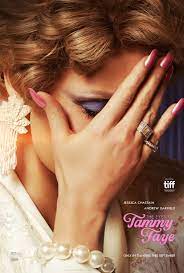
“The Eyes of Tammy Faye” Film Review

The Eyes of Tammy Faye will penetrate to your soul. You may think you know Tammy Faye’s story, but go beyond the tabloids in Michael Showalter’s (The Big Sick) heartfelt, hilarious, honest film that paints a humanizing portrait of the ridiculed and often parodied Tammy Faye Bakker. You will undoubtedly be blown away by Jessica Chastain’s jaw-dropping performance as the “Queen of Eyelashes” in this powerful rise, fall, and redemption story. Tammy’s eyelashes may be fake, but there is nothing fake about this candid portrait of the late television icon. Playing the mastermind of the PTL Network scandal is Andrew Garfield in a showcase performance that will have you despising Jim, but praising the uncanny portrayal. The film highlights Tammy Faye’s genuine love for God and her love for people–everyone! Even in the 1980s, when the LGBT community had little to no voice, especially amongst fundamental evangelicals, she was a loving voice for them. While it would have been so easy for the film to have been devoid of genuine levity, audiences will find there are some hilarious scenes that work as fantastic humanizing elements, especially early on when Jim and Tammy Faye engage their lustful adolescent interests as hormonally charged young adults and newlyweds. Showalter, Chastain, and Garfield deliver a fresh perspective on Jim and Tammy Faye Bakker that depicts human beings, not one-dimensional caricatures of televangelism.

In the 1970s, Tammy Faye Bakker and her husband, Jim, rise from humble beginnings to create the world’s largest religious broadcasting network and theme park. Tammy Faye becomes legendary for her indelible eyelashes, her idiosyncratic singing, and her eagerness to embrace people from all walks of life. However, financial improprieties, scheming rivals and a scandal soon threaten to topple their carefully constructed empire.

I already want to see it again! And it’s definitely becoming an addition to my physical media collection. This narrative film is based on the award-winning documentary by the same name, directed by Fenton Bailey and Randy Barbato, and I suggest watching it as a companion piece. In many respects, the storytelling structure of The Eyes of Tammy Faye parallels the approach Craig Gillespie took in I, Tonya. In addition to the awards-talk around the performances, I would look to see this film in other conversations such as makeup, screenplay, and perhaps directing and picture. Showalter’s film explores the world of Tammy Faye, as seen through her unmistakable eyes; furthermore, he treats the character (the person) of Tammy Faye with respect as a flawed but loving woman rather than the heavy-makeup-wearing satirical and parodied caricature that many remember from the tabloids. Perhaps the thousands of times she said “God loves you” may have came across as insincere; but the truth is, she wanted the world to know that God and Tammy both love them.

Showalter’s candid picture gives Tammy Faye and Jim the full treatment as he takes audiences on a journey through their story, including the scandal that rocked a nation, whilst treating them with dignity and respect as they are–as we all are–flawed humans. This biographic drama seeks to understand (mostly Tammy Faye, but a little of Jim too) the Bakkers, not mock them or their work. Tammy Faye is a breath of fresh air in an environment polluted by stale, lifeless, and downright rotten individuals. From the beginning of the film, you learn that her faith in God and love of Jesus was not going to be defined by her circumstances or what people thought of her. If you told her she couldn’t, she would prove to you that she could. That is a trait that she could continue through her entire life, even after her scandalous fall from grace. You also learn that while she lived an opulent lifestyle, she was never defined by her material possessions. Oh don’t get me wrong, she loved her signature clothing style and trademark makeup and hair, but those things did not define her or her faith. Well, except for her eyes. She said “if you remove my [fake] eyelashes, I wouldn’t be me.”

While her husband was pulling the strings, she was doing everything she could to reach people for Christ; however, it was also clear that she loved the performance, the camera, and the microphone. If she hadn’t gone into televangelism, she very well could have been a Broadway star with her larger than life showmanship and personality. We also learn that Tammy Faye was likely unaware of the dishonest and illegal dealings of her husband, even though she at times suspected he wasn’t being honest. Chalk it up to extreme naivety. Despite no reports of Jim being physically abusive to Tammy Faye or their two kids, he was shown to be psychologically and emotionally abusive to Tammy Faye. Even to the extent that he used Tammy’s minor indiscretion with a Nashville music producer against her, to humiliate her on international television in an effort to raise more money because of her testimony. Tammy’s flirtation with the an elicit affair goes to show that we are all flawed individuals that toy with or fall victim to the same temptations, in whatever form they take. But we understand how and why Tammy Faye was tempted to search for love elsewhere; she was not appreciated as a person by Jim, but only as a tool to get more money out of PTL’s “partners.” Even when the reality of Jim would peak through, she never let that detour her from spreading the love of God to everyone in her signature style.

While we ostensibly watch the events of the rise and fall of the Bakkers through Tammy Faye’s eyes, in a similar fashion we did in I, Tonya, we also get glimpses of the story through Jim’s perspective when it serves to advance the emotional journey of the characters, especially when it comes to his complicated relationship with the then and now unlikable Pat Robertson and Jerry Falwell. For example, I did not know that it was Jim and Tammy Faye that started the 700 Club. But when the innovative Christian talk show became a popular program on the fledgling CBN Network, Pat Robertson placed them on a maternity/paternity sabbatical, but was actually steeling their show in a jealous power-grab. The Bakkers then started what would become the TBN Network, but were ran off from there too. Finally, they began the PTL Club (later massive, worldwide PTL Satellite Network), and the success of that venture would eventually spawn a 24-hour network, neighborhoods, and a theme park that would become the third most visited in the country after Disneyland and Disney World.

While PTL was growing by leaps and bounds, Robertson and Falwell were seething with jealously at the success of Jim and Tammy Faye, a motive that comes into play when they discover the payment of PTL funds for the hush-money regarding Jim’s affair. Little did Tammy Faye know that Jim surrounded himself with a conniving mafia-like group of “Christians” that sought to take down the power couple after they departed from the Robertson-Falwell fundamentalist agenda. This mafia-like mentality is most apparent when Tammy Faye televises the emotional interview with a gay AIDS patient, also a Christian pastor, on her show. She ends the interview with reminding the viewers that Christians are called to love as Jesus loved. It was shortly after that, that Robertson and Falwell actively looked for ways to dethrone the king and queen of televangelism. Of all the examples of Christians in the film, amongst the lead and supporting characters, Tammy Faye is the best example of how a Christian should love and act.

Chastain has instantly shot to the front of the Best Actress in a Leading Role category, and Garfield may find himself in the Best Actor conversations as well. Chastain disappears behind the trademark Tammy Faye makeup and delivers a larger than life performance! And since Tammy Faye, herself, was the definition of camp and larger than life, it’s an incredibly authentic, sincere performance. It’s easy to see how the LBGTQ community was drawn to the person of Tammy Faye then and now, because the LGBTQ community often greatly admires women who remain strong in the face of adversity. But Chastain’s performance of the person of Tammy Faye will undoubtedly inspire and win the admiration of all kinds of people from all walks of life. While Chastain is brilliantly portraying the character of Tammy Faye, we learn in the film (and in the documentary, the interviews, and PLT flips that many will undoubtedly pour through after leaving the film) that Tammy Faye wasn’t a character at all but one of the most genuine, sincere loving people that ever walked the planet. Chastain captures every nuance of Tammy Faye with uncanny precision.

Even the indelible Cherry Jones as Tammy Faye’s love-to-hate mother that was so often Tammy Faye’s harshest critic may be in the supporting actress conversations. She’s a scene steeler herself, much like Allison Janney was as LaVona Harding in I, Tonya. All the lead and supporting performances are perfectly executed, and the hair/makeup on everyone leaves an uncanny resemblance between the actors and the real-life people that are being portrayed. If Tammy Faye was still alive, I feel strongly that she would appreciate the film. Her son Jay appears to like the film from what I’ve read of his comments.

I’d be remiss not to mention, what is perhaps the most telling scene of who Tammy Faye was. Months or perhaps years after the collapse of the PTL Empire and all her fine things were sold (and house actually burned to the ground), and she’s driving a crappy Honda Accord and living in a rundown apartment, she pulls into her parking spot one day. And she gets out, she hears a few of the neighborhood punk teens making fun or her. She walks over to them, and graciously says, “if you’re going to talk about me, since I am your neighbor, you should at least shake my hand and meet me first; hi, I’m Tammy Faye” (or something to this effect).

What we have here is a brilliantly produced biographical drama that works as trifecta comprised of a cautionary tale, a redemption story, and film that provides social commentary on topics such as politics, religion, and patriotism as our country is becoming increasingly polarized on these subjects.

This image has an empty alt attribute; its file name is profile_pic.jpg

Ryan teaches American and World Cinema at the University of Tampa. If you like this article, check out the others and FOLLOW this blog! Interested in Ryan making a guest appearance on your podcast or contributing to your website? Send him a DM on Twitter or email him at RLTerry1@gmail.com! If you’re ever in Tampa or Orlando, feel free to catch a movie with or meet him in the theme parks!

Follow him on Twitter: RLTerry1

“JUDY” Biopic Film Review

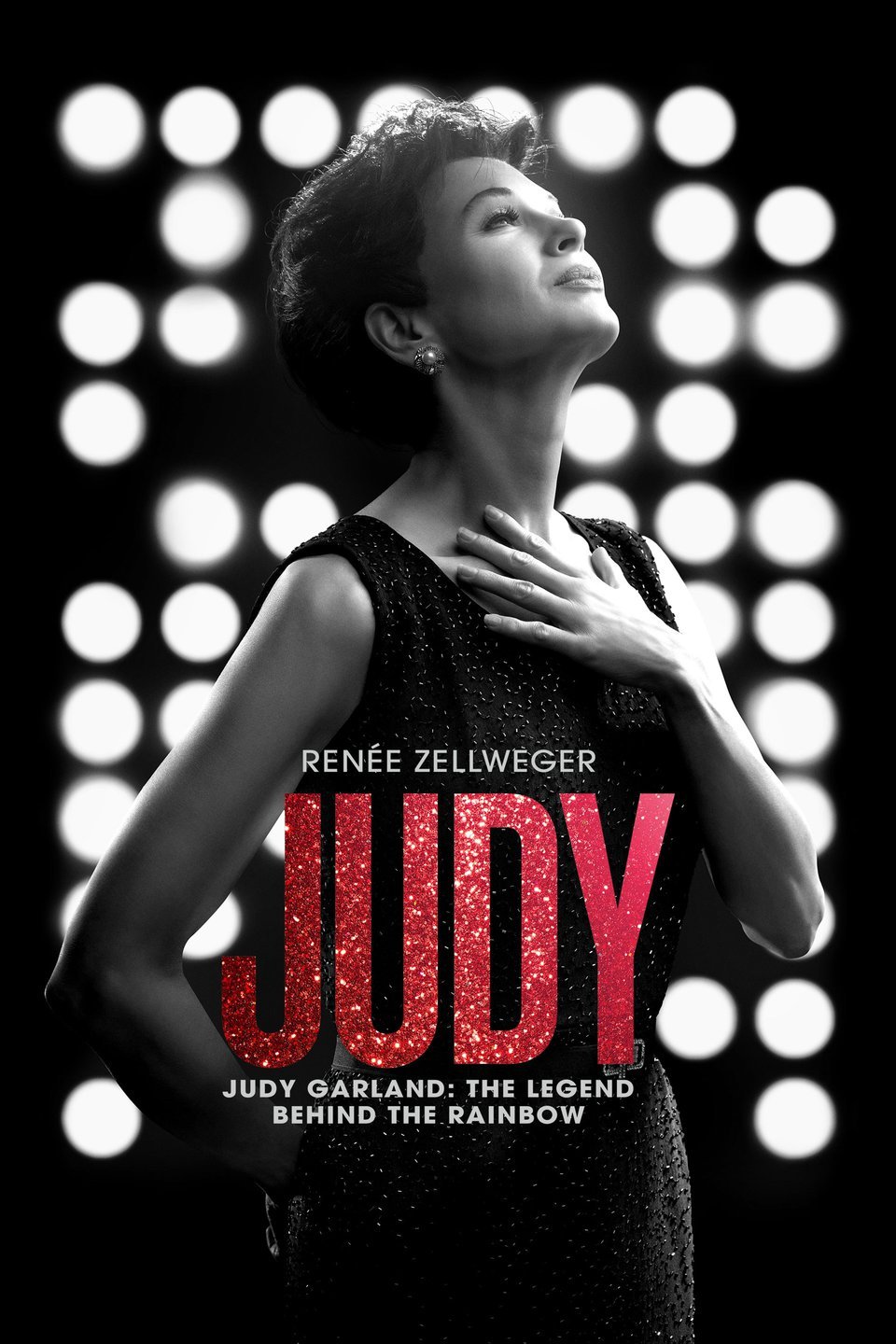
A truly gripping motion picture that will bring you to tears during this somewhere over the rainbow redemption story. Bring tissues. Renee Zellweger is captivating as Judy Garland, and you’ll swear that you’re watching Garland on the big screen. Although we may be familiar with the broad strokes career of the legendary entertainer, this film goes beyond the headlines and tabloids to deliver a true life story that could ironically be titled A Star is Born, or perhaps reborn. Ironic in that this film shows the life of a movie star after the lights have faded and the offers stop coming in, much like the movie she starred in. It’s a rise and fall story, of sorts, but is more precisely a fall and rise story as the movie focusses in on the last year of Judy Garland’s life. If you are worried that the film ends on her death, you can be relived that the film chooses to stop the story prior to the end of the iconic star’s life. And it works so incredibly well! While there are many movies (not unlike A Star is Born) that focus on the rise and fall of a talent in showbusiness, this movie skips all the glitz and glamor to paint a realistic portrait of what it is like for those whom grow up in front of the camera, controlled by those around them, just to wind up in front of booing crowds, empty bank accounts, homelessness, and a tumultuous custody battle. Not to mention her addiction to pills that was caused by abusive treatment at the hands of the old studio system because of being force fed pills from an early age. Whether you are a fan of the iconic diva or not, if you love command performances, then you do not want to miss the uncanny performance of Zellweger as Judy. All the way down to the mannerisms, vocal inflections, and over all behavior, she IS Judy. Although we all know of the tragic ending, no mistaking it, this film is an inspirational story of redemption.

The money is gone, career on the rocks, and risking the loss of custody of her two youngest children, that is the last year’s of Judy Garland’s life. Unfortunately the other side of the rainbow for Judy was anything but magical. Three decades after starring in one of the greatest film musicals of all time The Wizard of Oz, the beloved actress and singer is in dire straights. She is left with virtually nothing except her name and what remains of her timeless voice that charmed millions throughout her early illustrious career. In order to prove that she can provide for her two youngest children, she accepts a gig in London playing to sold-out shows at the Talk of the Town night club. While there, she reminisces with friends and fans, fights her depression and anxiety over performing, and begins a whirlwind romance with her soon-to-be fifth husband.

“For one hour, I am Judy Garland, and the rest of the time I am just like everyone else…I want what everyone wants, I just seem to have a harder time getting it” is a paraphrased quote from the movie, but it illustrates how the actress and singer felt about her relationship with the world. The movie chronicles her inability to stay afloat financially in Los Angeles and must accept a gig in London where her personal troubles continue to follow and haunt her. Her character is so incredibly relatable because many of us have found ourselves in traps that we have stepped in and are at a loss as to how to get out. If you thought this was going to be another cliche musical biopic, then you would be mistaken. No pretense about it, this is an unapologetic look at the dark side of Hollywood in perhaps one of the greatest stories that is right up there with Norma Desmond. Now, I am not equating Judy with what is, in my opinion, the greatest film of all time Sunset Boulevard, but her story is not unlike the one experienced by Norma. The movie also comments on the far reaching effects of childhood trauma on the adult psyche. No one understood the extent that she was abused by the studio system except for Judy herself. If her present-day handlers knew what she went through during the years that American fell in love with The Wizard of OzMeet Me in St. Louis, and more, then they would not-so-casually write her off as a wrecked hasbeen who mismanaged her money and relationships. The film deals with perception versus reality. Strategically placed in the film are flashbacks to her childhood at MGM that provide context for moving the present story forward as each moment reveals a new layer to the legendary entertainer.

Zellweger delivers a performance for the ages in this film. More than a spot-on impression, she transforms into Judy Garland to the extent that you will almost believe that you are watching the iconic actress and singer on the big screen. It is clear that Zellweger studied Judy Garland for months in order to get into character. Her movement, speech pattern, posture, and other behaviors completely sell the audience on this audacious portrayal of such an icon. Never once does she break character and allow the actor to shine through, she remains committed to this phenomenally genuine portrayal of Judy Garland. We all know Zellweger can sing, after all, she wow’d us in Chicago (a rare example of when the movie adaptation IS better than the live show); but nothing will prepare you for the power of her singing in this movie. Other than Have Yourself a Merry Little Christmas, you will hear Zellweger sing other famous songs by Garland such as Get HappyThe Trolly SongCome Rain or Come Shine, and of course the encore of Over the Rainbow during the movie’s climactic, emotionally charged, showdown. Even when singing, Zellweger is determined to deliver the songs just as a late-40s Garland did, complete with all the stubbornness, anxiety, and even anger. I truly hope that Zellweger is nominated for this role.

Perhaps the reason why Liza Minelli was quite objectionably vocal about her mother’s portrayal in this movie is because there are creative liberties taken by the writers in order to further dramatize Judy’s story. As I’ve told my screenwriting class, dramatize don’t tell. If a “based on a true story” or biographical film was simply concerned with the timeline of events, the cold hard facts, and cause and effect, then it might feel more like a police procedural or college lecture. Hence why it is imperative that writers DO get a little creative in the dramatization of events for cinematic purposes. For instance, the facts are largely correct in this story as I have compared them to Wikipedia and other newspaper articles, but where I can see the difference is Judy’s reaction to the timeline of events. Articles and tabloids may be able to show what happened, but it is up to the screenwriters to dramatize the reaction to the conflict. So perhaps that is what Liza is upset with, she doesn’t agree with the story details between what we know from Hollywood history. One of the tangential components in the movie is Judy meeting up with “Friends of Judy” at the end of one of her shows. Judy joins them, rather than be by herself for a night of poorly made omelets and casual singing around a piano. It’s an emotionally moving tribute to all the gays who’ve loved her over the years. In all likelihood, this was written for the movie as there is no way of verifying if this night ever happened. This is the scene where I feel that she should’ve sang Have Yourself a Merry Little Christmas because tonally it was similar to that scene in Meet Me in St. Louis. Instead, she sings Get Happy.

Maybe this is an unconventional redemption story, but that quality is clearly communicated through the film. Rising up against the internal and external monsters in your life that have dragged you down so far that there is no end in sight. Whereas Judy may not have changed as dramatically as Scrooge did in  A Christmas Carol, she does change during the climax of the movie. If you want to know just how, then you need to go out and watch it!

Ryan teaches screenwriting at the University of Tampa. If you like this article, check out the others and FOLLOW this blog! Interested in Ryan making a guest appearance on your podcast or contributing to your website? Send him a DM on Twitter or email him at RLTerry1@gmail.com!

Follow him!

Twitter: RLTerry1

Instagram: RL_Terry

“Knife + Heart” French Horror Review

As heard on One Movie Punch

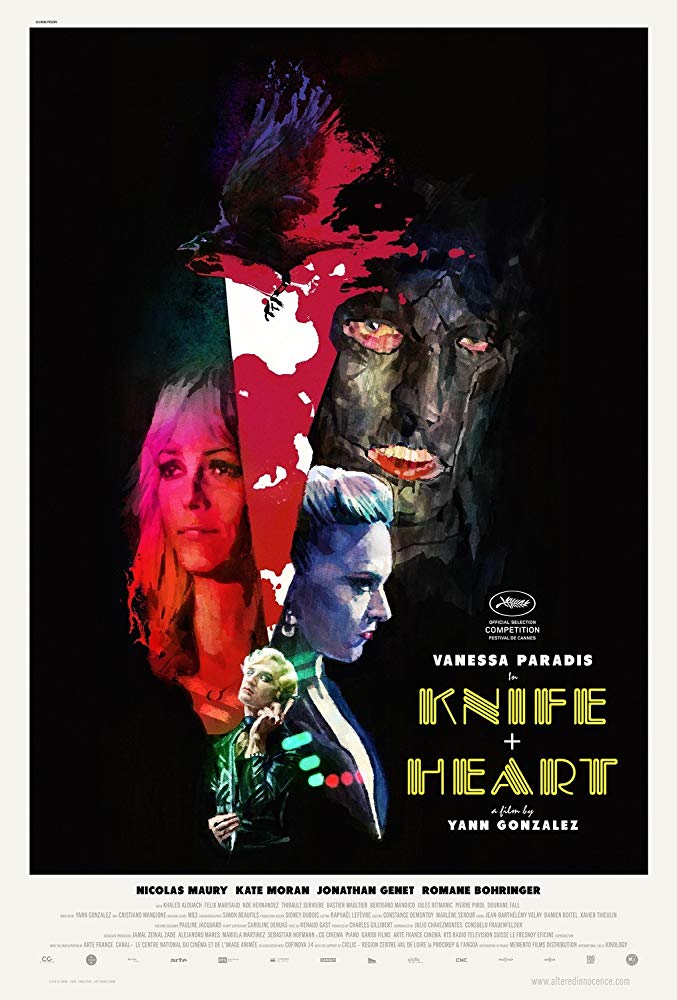
Brian de Palma’s Dressed to Kill meets William Friedkin’s Cruising in this 1970’s inspired French slasher. Throw in a splash of Black Christmas and the concept of dealing with the heartbreak of loss, and you have this spectacularly haunting slasher. To the casual observer, this film might seem like an auteur’s masturbatory dream; but upon closer examination, the many layers to the story reveal a motion picture that is just as concerned with its messages as it is the medium through which it expresses the narrative. At the center of this film is one poignant message of social commentary: the panic of being gay in a potentially hostile world. While the killings are explicitly violent, the sexuality is not. Gonzalez keeps the focus on the mystery of the identity of the serial killer preying on the actors of the blue films within this film instead of the sexuality being in the forefront of the plot. It’s just as much a whodunit as it is a campy slasher movie.

For the podcast review, click HERE.

It’s Paris, summer of 1979, and gay porn producer Anne finds herself suddenly single when her editor and lover Lois leaves her. To win her back, Anne sets out to produce her most ambitious film yet with her assistant producer, the flamboyant Archibald. Following the brutal murder of one of Anne’s stars, she gets caught up in a bizarre “Black Dahlia” like investigation that turns her life upside-down. When more and more of her stars wind up victims of the sadistic killer, she finds herself in a whodunit of cinematic proportions.

There is also a time capsule of sorts in this film as it takes place in 1979, just before the AIDS crisis, much like Cruising. But this — what could have so easily been simple a throwback gay exploitation horror film — is a comprehensive motion picture that uses the setting of Paris 1979 to reflect upon the present state of affairs for the queer community, and the world in which they live today. As the content of this film is extremely dark, there was need to inject some comedic relief into it in order for it not to become too heavy. So while you may be cringing at the kills, especially the first few ones, you will have moments of levity that keep the emotional rollercoaster going. Moments of comedy are very important to a horror film. If a heavy horror film lacks moments that make you laugh, then it becomes too heavy and off putting.

Clearly inspired by the films of Argento, de Palma, and even Kubrick, Gonzalez shows a command of the screen and the power of the moving image coupled with emotion communicated through colors, shapes, and angles. Despite being made in the 21st century, the film has an exquisitely recreated vintage sound, look, and feel. The dream-like colors, horror tropes, and synth score composed by M83 work together to create a film that is truly “dressed to kill”. In terms of the screenwriting, the film’s opening is extremely strong and expertly hooks the audience. Following the shocking opening, the plot and characters seem to take a backseat to the imagery, emotion, messages, and directorial style.

Gonzalez may look similar to de Palma and Friedkin, but he lacks their emphasis on a narrative that showcased exemplary character drive supported by the action plot. Evidence of this lack of direction and plot can be witnessed in the film’s repetitive scenes in acts two and three. After such a terrific first act, the second and third acts don’t play out as effectively, and often feel like they’re in a holding pattern. Even the kills eventually lose shock value because the uniqueness fades after a while. While the film successfully depicts the horrors of being gay in a world that wants to see you dead, the plot feels thinly stretched.

However, holding the film together, and keeping it gripping, is the character of Anne, because her performance is outstanding. We may not fully buy into why she does what she does, because so much seems to be so unrealistic even for that time; but she definitely comes across as a real person through whom we connect to the story. We’ve all been heartbroken, so we can identify with her trauma following being dumped by Lois.

In short, “Knife + Heart” does so many things very well, but the plot is not executed with the same caliber as the film’s visuals. Perhaps it is due to having bits and pieces of so many different genres and even plots. Essentially, Gonzalez tries to balance a tormented lesbian love story against a homophobic serial killer movie. Both point to the message of being gay in a hostile world; but had the focus been on one or the other, instead of both, then narratively, the film would have worked better. Thankfully, the artistic achievement of this film works to compensate for the lack of proper pacing and plot development. For fans of immersive artistic horror or erotic whodunit films like the original Suspiria, The Black Dahlia, Cruising, or Muholland Drive, this is definitely one to check out.

Knife + Heart is included with Shudder (highly recommended for horror fiends like me) or available for rent on Amazon Prime.​

  • Rotten Tomatoes: 82% (Certified Fresh)
  • Metacritic: 69
  • IMDb: 6.3
  • One Movie Punch: 6.0/10

Podcast: onemoviepunch.libsyn.com/episode-542-knife-heart-2018

Ryan teaches film studies and screenwriting at the University of Tampa. If you like this article, check out the others and FOLLOW this blog! Interested in Ryan making a guest appearance on your podcast or contributing to your website? Send him a DM on Twitter!

Follow him!

Twitter: RLTerry1