
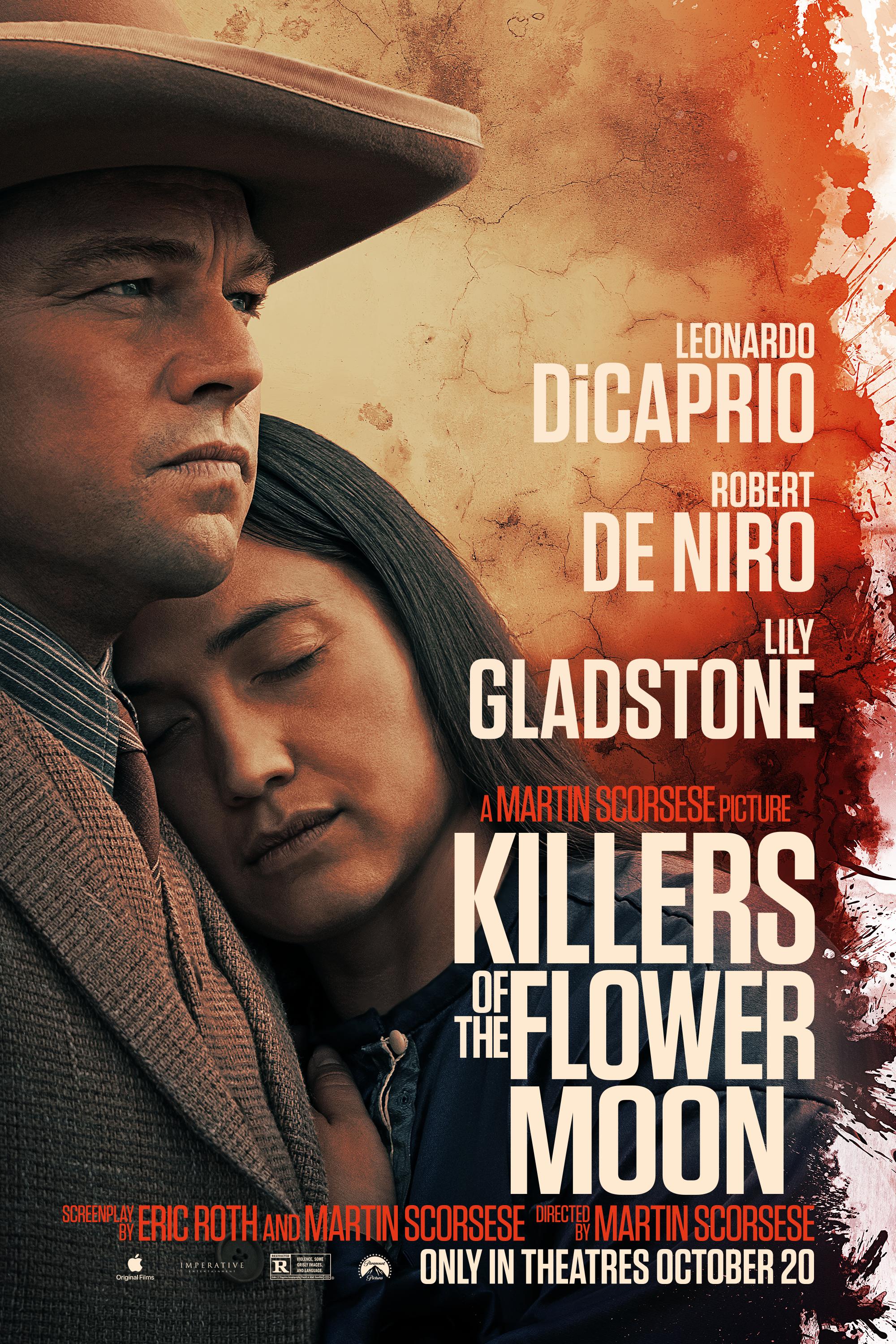
KILLERS OF THE FLOWER MOOON film review

Killers of the tension: an important story in desperate need of a better screenplay and editor. It’s a 3.5hr film that feels every bit of 3.5hrs. I’ve nothing against long run times per se; however, the run time needs to be justified dramatically. But unfortunately, the screenplay mechanics and editing (or lack thereof) hold this otherwise compelling story back from the great potential it demonstrably had. Lacking in any significant tension, this film had me looking at my watch after the first hour and a half. I kept waiting for it to kick into gear, but it never truly managed to amp up the tension. Furthermore, all the individual narrative elements never develop strong connective tissue. Even the performative dimension is good, but there lacks any singular performance that truly stands out. While cinema knows no run time, some stories are best told in 90 or 120mins, and this is definitely one of them.

In the 1920s, members of the Osage Native American tribe of Osage County, Oklahoma, are murdered after oil is found on their land, and the FBI decides to investigate.

One of the most highly anticipated films of the year over-promises and under-delivers. Which is a real shame because it depicts such an important story. While many will fixate on the run time alone, that would be unfair as it’s not the run time that is to blame for the lackluster narrative nature of this film. Rather, it is the screenplay mechanics and lack of precision editing.

As I have written many times previously, most directors are not writers. Are some? Well, sure. But most are not equally gifted in both areas. However, many writer-directors allow their ego to get in the way of excellence in writing because they feel it’s the only way to be a true auteur. Scorsese has nothing to prove to solidify him as an auteur, He is inarguably one of the greatest directors of all time. Scorsese’s Taxi Driver is one of the greatest films of all time and it’s under 120mins (2hrs). However, between The Irishman and now Killers of the Flower Moon, it’s as if he feels compelled to intentionally create films with prodigious run times to separate them from streaming content. Cinema knows no run time. Cinema is an experience, and that experience can be had in 90mins as well as 180mins. Like Nicole Kidman says, cinema is where we come together to experience the same film at the same time on a giant screen. Stories that have both plots and characters that are larger than life or incredibly intimate encounters. But I digress.

When a director is writing the screenplay, or has a significant role in the screenplay, then there lacks adequate checks and balances for screenwriting structure and mechanics. The long and short of it is that the story, ethos and all, may make sense in the director’s mind, but that doesn’t mean that it makes sense for the audience. Whereas when the screenwriter and directors are separate individuals, the screenwriter is able to focus solely on the pages in front of him or her without interference from a director. Killers of the Flower Moon strikes me as the type of story that would’ve benefitted from the director not being involved in the actual process. Because of all the nuance of the story and relationships between characters, perhaps this is a situation in which author David Grann writes the first draft and another more established screenwirter comes in from behind and shapes it into its film form (on page, anyway). We saw this with Jurassic Park, in which Crichton’s original screenplay was too novely and David Koepp was responsible for the final screen version.

Even though the screenplay is partly responsible for the improper pacing and lack of dramatic tension in the film, it shares the blame with the film editing (or dramatic montage). Alfred Hitchcock stated that writers and directors should “start each scene as close to the end of the scene as possible” What this means is that each and every scene should be lean and mean, only leaving room for that which advances either plot or character in a dramatic direction. The editing issue that plagues Killers of the Flower Moon is that scenes were either started too early or weren’t cut off in dramatic time. There is almost too much information in each scene that the lack of meaningful, precise editing acts as an anchor, dragging the film’s pacing. Contrary to popular belief, there is no too fast or too slow when it comes to the cadence of a film; but, there is such a thing as proper pacing. It’s the ideal pacing for the dramatic elements in the story.

Killers of the Flower Moon will make you want to read the book or simply look up information on the murders and investigation thereof. The film looks gorgeous and the performative dimension is solid, but as a total package, the film is underwhelming.
Ryan teaches Film Studies and Screenwriting at the University of Tampa and is a member of the Critics Association of Central Florida and Indie Film Critics of America. If you like this article, check out the others and FOLLOW this blog! Interested in Ryan making a guest appearance on your podcast or contributing to your website? Send him a DM on Twitter. If you’re ever in Tampa or Orlando, feel free to catch a movie with him.
Follow him on Twitter: RLTerry1 and LetterBoxd: RLTerry

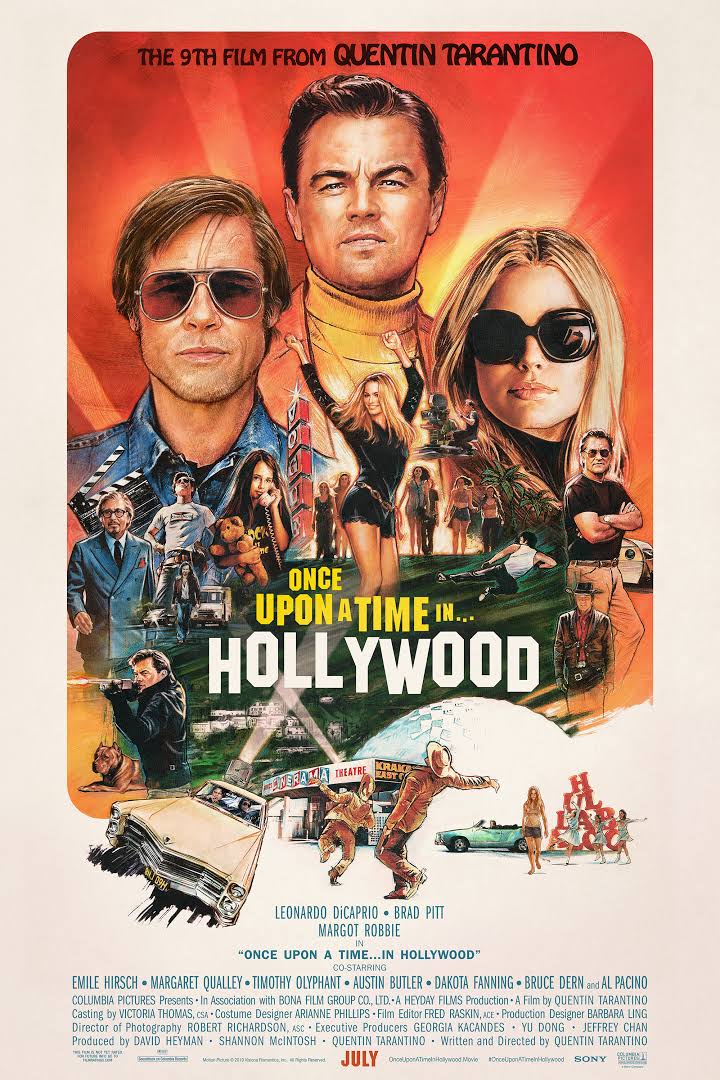
“Once Upon a Time in… Hollywood” Film Review

“The Hollywood that never was, and always will be” in this QT film that subverts expectations and delivers in spades. The ninth film from writer-director Quentin Tarantino is a brilliant historical fiction inspired by real events and people in film/television and Hollywood history. If you’ve been to Disney’s Hollywood Studios, you’ll recognize the opening quote. For the cinephile or film/TV/Hollywood history geek, this film will sweep you up in the story and setting; however, general audiences may find it difficult to connect to the otherwise fantastic story. Thankfully, the performances from the three leads DiCaprio, Pitt, and Robbie and strong supporting cast will keep you entertained for the rather lengthy runtime regardless if historic Hollywood is of interest to you or not. The characters also add a high degree of relatability, which may come of a surprise to audiences. While the film kept me engaged the entire time, I can see where more casual movie fans–even fans of QT–may find the first act sluggish. While the first two third of the film may not seem like a traditional QT film, the third act (specifically the showdown) goes full on Tarantino! If you pay particularly close attention to the view outside of the windshield of Dalton’s car, you may even notice the Alto Nido apartment building, that Joe Gillis lived in, in Sunset Boulevard. Suffice it to say, if you are up on your Hollywood history, you will find lots of Easter Eggs and references to film and television of that post studio system era. Once Upon a Time in… Hollywood represents a brilliantly entertaining homage to what is largely considered the end of the Golden Age in Hollywood.

Quentin Tarantino’s Once Upon a Time in… Hollywood visits 1969 Los Angeles, where everything is changing, as TV star Rick Dalton (Leonardo DiCaprio) and his longtime stunt double Cliff Booth (Brad Pitt) make their way around an industry they hardly recognize anymore. Concurrent to their struggle to find their place in a Hollywood that is changing so rapidly, the film also follows Sharon Tate (Margot Robbie) and Roman Polanski as the fateful night of August 8, 1969 approaches. The ninth film from the writer-director features a large ensemble cast and multiple storylines in a tribute to the final moments of Hollywood’s golden age.

I went into this film with moderately high expectations, which can be dangerous, but the film met and surpassed any preconceived notions that I had. Despite the more than 2.5hr run time, I could have easily watched it for another half hour. Compared to his other eight films, Once Upon a Time in… Hollywood is, what I would consider, to be the most accessible of his films; however, some of the magic of the film will be lost on those whom are not film/TV and Hollywood history geeks. And it’s as if QT knew this, so he wrote two incredibly entertaining fictional characters (Dalton and Booth) in this mostly historically accurate setting. Our third lead is based on the real person Sharon Tate married to then respected director Roman Polanski (Rosemary’s Baby). The three lead performances captivate the audience and keep you along for the ride as the tension increases as we approach August 8, 1969 (the night the Manson cult murdered a pregnant Tate along with four of her friends) on the quit street Cielo Drive.

For the first 2/3 of the film, you may be wondering if it’s even a QT film. And that’s because he subverts his usual approach to plot and character development, gritty violence, and non-linear storytelling is largely absent in the film. Students of QT’s work (even if you aren’t a huge fan despite respecting his cinematic work like myself) will pick up on the QT tropes and moments, but they will likely go missed by general audiences. Interestingly, everything that QT loves about old Hollywood is in this film, but never becomes the focus. Rather the setting, characters, and plot devices work to provide context, effective development of character and plot, and immersing the audience in the changing world that was Hollywood 1969. The historic events of August 8, 1969 (and other times, dates, movies referenced in the film) are an important element in the film to ground this fictional story in history; but it’s the fictional foreground of Rick Dalton and Cliff Booth that is the A-Story that moves the action plot along. Although the film does contain the character of the now infamous Roman Polanski, the focus remains on his wife, the late Sharon Tate; however, QT does an excellent job of separating the man from the art, and the pre-pedo versus post-pedo. Essentially, he is a means to an end. Horror fans will love hearing Rosemary’s Baby referenced and movie musical fans may notice the giant movie poster ad for Funny Girl outside of Columbia Pictures

What makes the characters of Dalton and Booth relatable to audiences is conflict, both internal and external, faced by these two men whom are aging out of and find their career tool bags are increasingly not compatible with the changing landscape of Hollywood at the time. The foreground takes us back to when the American Western genre of Film and TV was on its way out, which leaves Dalton and Booth an icon of the past. Come to think of it, they are experiencing a small degree of what Norma Desmond experienced in Sunset Boulevard. The struggle to find one’s place in the world, when the very foundation upon which you built your life and career is cracking and breaking a part, is something with which we can all identify. You can apply this to career or even romantic relationships (if you’re still single like me), you feel that no matter how hard you try or what you do to change that you cannot realize what you desire. There is a real pain that exists when looking upon a world that doesn’t want what you have to offer anymore, and you can only hang your laurels on the past for so long before it becomes a hindrance to living in the now. Booth represents a person whom experiences prejudice based upon past incidents, and hindered from being able to learn from the past and grow as a person. Both characters use alcohol as a coping mechanism, but we learn that dulling your senses to the past does not allow you to address it, learn from it, and develop a plan of action moving forward. Adapt or get left behind. Both Leo and Brad deliver outstanding performances that should catch the attention of The Academy when it comes time to nominate. There exists two layers to the performances because they are actors playing actors playing characters. Using the American Western as the conduit through which to explore a disappearing past was an excellent choice that also allowed for QT to work with a favorite genre of his. For a retrospective on the Western, check out Classic Movie Musts.

While QT has received negative criticism for his (what some have considered) underuse of Margot Robbie’s Sharon Tate, I don’t find that to be the case. Her character may not have been given a significant amount to do in the film, but she is not the central character, despite being an important part of the overall story. She portrays a real life actress and soon-to-be new mother who’s promising career was cut short by the Manson cult. When she is on screen, she truly lights it up with an infectious energy and delivers an excellent performance/portrayal in those moments. Whereas she may not have been the central character, in the scenes that we do see her, she is given important direction and reminds us that Sharon Tate was more than the late wife of Polanski or a murder victim, but was a person with dreams, friends, and a life outside of her career. For fans of Polanski’s Fearless Vampire Killers, you’ll recognize that it’s the movie that is referenced when we are given the story of how Tate came to leave Jay Sebring to become engaged to Polanski during the filming of that movie in the UK. Her story is the historical background upon which the fictional foreground of Dalton and Booth was built. Furthermore, she represents the optimistic innocence that once was before being cruelly ended. Playing around with the ideas of innocence and corruption is a running secondary theme to the primary one of the past versus present.

If you go into this movie with the expectation that it will be a quintessential QT film from start to finish, then you may be disappointed until the third act. He subverts our expectations by approaching this film in a more “Golden Era” of Hollywood way. He takes the best moves out of his playbook and integrates them into the story. Think of it as a kaleidoscope of the end of the Golden Age of Hollywood and QT’s best hits. While the film does have a slow burn through much of it (no mistaking it, it worked for me), the third act is gripping, suspenseful, and truly pays off the tension that was slowly wound through Acts I and II. Of all his films, this is probably my favorite one for fun factor and nostalgia. It doesn’t ground it self in nostalgia, but it’s a great accessory to the story. Film/TV and Hollywood history geeks will likely love this film while more casual movie fans will enjoy it well enough. It’s a film for film fans, and that’s perfectly fine!

You can catch Ryan most weeks at Studio Movie Grill Tampa, so if you’re in the area, let him know and you can join him at the cinema.

Ryan teaches screenwriting at the University of Tampa. If you like this article, check out the others and FOLLOW this blog! Interested in Ryan making a guest appearance on your podcast or contributing to your website? Send him a DM on Twitter!

Follow him!

Twitter: RLTerry1

Instagram: RL_Terry