“On Cinema and Theme Parks” (part 12 of 12)

My BookThe world of the business of media convergence is a fascinating and rapidly changing world! And, the convergence of cinema and theme parks is a dynamic example of how one form of media can be integrated into another in order to create a new experience for audiences around the world. Media conglomerates with theme park investments are often exploring what to do in order to remain competitive and increase the number of guests through the turnstiles. Sometimes this means using their own IPs to develop new rides or attractions, maybe an entire new park altogether, or perhaps striking a deal with another media company in order to use another’s IP as the source material for new attractions.

The opposite is also true. Media conglomerates with theme park interests may look to their own respective parks for the inspiration for the next movie. This was definitely the case with Disney’s Pirates of the Caribbean and is the case in the film Tomorrowland, in which an entire section of a park is the basis for a movie. It is all storytelling. But the stories being told take different shapes and are told through various means. And, even video game companies are getting in on the action. On May 7, 2015 Universal Parks and Resorts and Nintendo announced a first-ever partnership. Universal Parks and Resorts acquired the theme park rights from Nintendo to include the legacy video game company’s characters and games in new attractions and character meet and greets (BusinessWire, 2015).

At their respective roots, both movies and theme park attractions (and even entire parks themselves) tell stories. The medium through which they tell their stories is very different, but nevertheless helps to support one another. Media conglomerates have demonstrated this concept by taking existing movie/TV IPs and translating them into attractions and taking existing theme park attractions and translating them into movies. At its heart, the purpose of this study is to develop recommendations for media conglomerates when making decisions that are potentially worth millions of dollars, and could be a major success or a big flop.

Despite the more artistic or niche films still being amongst the individual favorites of the participants, the shared favorite movies were high concept and aimed at broad audiences, and typically fell into the science-fiction or fantasy/adventure genres. Specifically, the movie Jurassic Park and the Jurassic Park ride were cited numerous times. If an attraction were too disconnected from the story or plot of the movie, serving as the basis for the ride, then it appears to be received negatively. On the contrary, when a movie-based theme park attraction combines the best of the plot or characters, in a given movie, with a conventionally thrilling ride design, then it is received very well and enjoyed immensely.  Furthermore, the attraction needs to tell a story within the length of the ride from queue to exit. Fluid, coherent stories are driving forces behind the likability of an attraction or movie. Prompting the generation of emotional connections or responses from audiences/guests, in respect to the story of a movie or attraction, is key to creating reflections that will evoke nostalgic memories down the road; and thus, compel the audience member or park guest to experience the movie or ride again—perhaps with friends, family, or their children.

Well-executed themed design to support the story of a theme park attraction based on a movie is just as important as the story or intellectual property themselves respectively.  Story is the plot or sequence of events that take place during the ride experience (again, this is from the queue to the exit). Theme encompasses the building design, audiovisual elements, physical movement, and special effects during the attraction. The goal of an attraction or park area’s theme should be to completely immerse the park guest into the world being used as the basis or inspiration for the ride or section of the park. Everything from the employees to the restaurants to the surrounding buildings needs to work together to create an experiential degree that essentially transports the guest from the real world into the world of the park or ride. When developing themed areas of a park, designers need to be careful not to allow the outside world into what should amount to an escape from reality. Not that iconic brands or companies cannot be integrated into the theming of a park at all; but it needs to be more indirect, thus allowing the theme to continue and the story not be broken by outside invaders, so to speak.

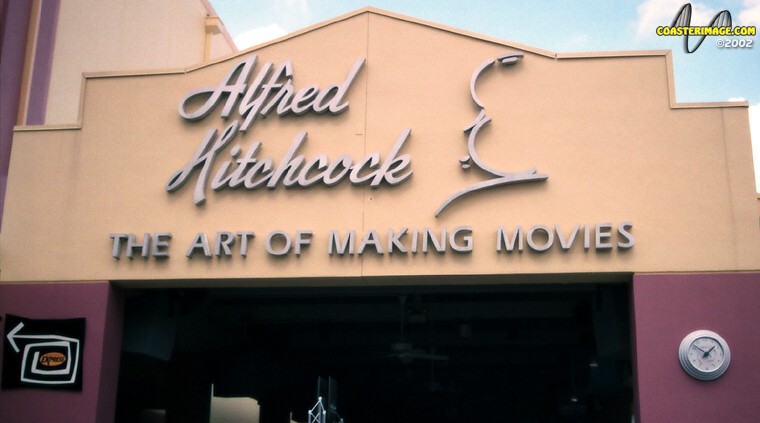
The reason many attractions at movie-based theme parks were originally developed was to take Tom Gunning’s (1986) idea of the cinema of attractions and translate it literally. However, with the increasingly digital climate of movie making, the practical, analog effects and techniques that once made for the basis of attractions, are no longer foundation enough for successful attractions in today’s marketplace of themed entertainment ideas. Simply stated, it just isn’t exciting to watch an editor sit behind a computer creating digital effects. Despite the making of a movie just not being as secret or magical nowadays, it is still important for a movie-based theme park to hold onto its roots and work to creatively develop new ways of exhibiting this art that still mystifies to this day—just in different ways than it used to. For movie-based theme parks that exist on studio lots or house sound stages, it is imperative that studio tours continue and build areas that can be rented out for current productions. Even though many people know how movies are made presently, the art, skill, and magic of how similar effects and shot sequences were accomplished before the aid of computers (at least to the extent they are instrumental today) in classic movies has a place in the modern movie-based theme park. Hitchcock: the Art of Making Movies was cited as an example of this type of offering guests want to see alive in the parks.

The goal of a movie or theme park attraction is to generate some type of pleasurable experience in the movie patron or park guest. For both movies and themed parks, the idea needs to be to craft a story that will stimulate physiological and psychological/emotional responses from the audience/guests. A movie should contain a story or sequence of events that generate fear, affection, anxiousness, or levity in the bodies of the patrons. These responses are very much physiological. In the environment of a theme park attraction based off a given movie, these same physiological responses need to be generated by the use of movement and special or visual effects. When generating these physical responses, the patron or guest will instinctively develop psychological or emotional responses to accompany the complementary physiological response. Even if the physiological strain placed on the bodies is by all accounts a negative one, the park guest will most likely be compelled to experience it again and again because studies have shown an attraction to or affinity for sensations of pleasurable un-pleasures.

The principal idea behind this study is to create a predictable model for producers and designers. And, there has been a prolific amount of information to supply the evidence that creative designers, producers, and project managers need in order to make well-informed decisions in the beginning stages of the themed entertainment or motion picture production process. Developing a model for creative decision-making is not as simple as ‘include these things and your idea will be successful,’ as the creative process can be very subjective. However, with enough supporting evidences, a media conglomerate or other company with theme park investments can make decisions with sufficient empirical evidence pertaining to the projected success of an attraction or theme park. This study has outlined a model that is grounded in scholarly research, anecdotal evidence, and first-person focus groups and interviews.

For the complete study, head over to AMAZON and purchase the book. These 12 sections merely touch on some of the main points from the study but by no means take the place of reading the whole book. Hopefully these sections prompt a desire to experience the book/study in its entirety. It’s written to be enjoyed by anyone who loves movies and theme parks. What good is a study if it’s written of that only academics can understand. I have uncovered fascinating knowledge and insight into the craft of the relationship between cinema and themed entertainment that I want to share with the world.

To return to the beginning of the series, click HERE
 

“On Cinema and Theme Parks” (part 6)

My Book

Successful movie-themed attractions (stage shows or rides) create an atmosphere that is often built upon a foundation consisting of confrontation and direct simulation rather than long, sustained narratives. Whether watching a show on a stage or experiencing a ride-like attraction, the park guest is subjected to a series of physical and/or emotional shocks throughout the abridged narrative. Physical movement is also a strong element in an effective and successful movie-themed attraction design. This creates the illusion that the audience member is not only watching the action or horror take place, but part of the story as well. Implementing the use of special effects such as lighting effect or water also improve the guest experience by bringing the narrative to life.

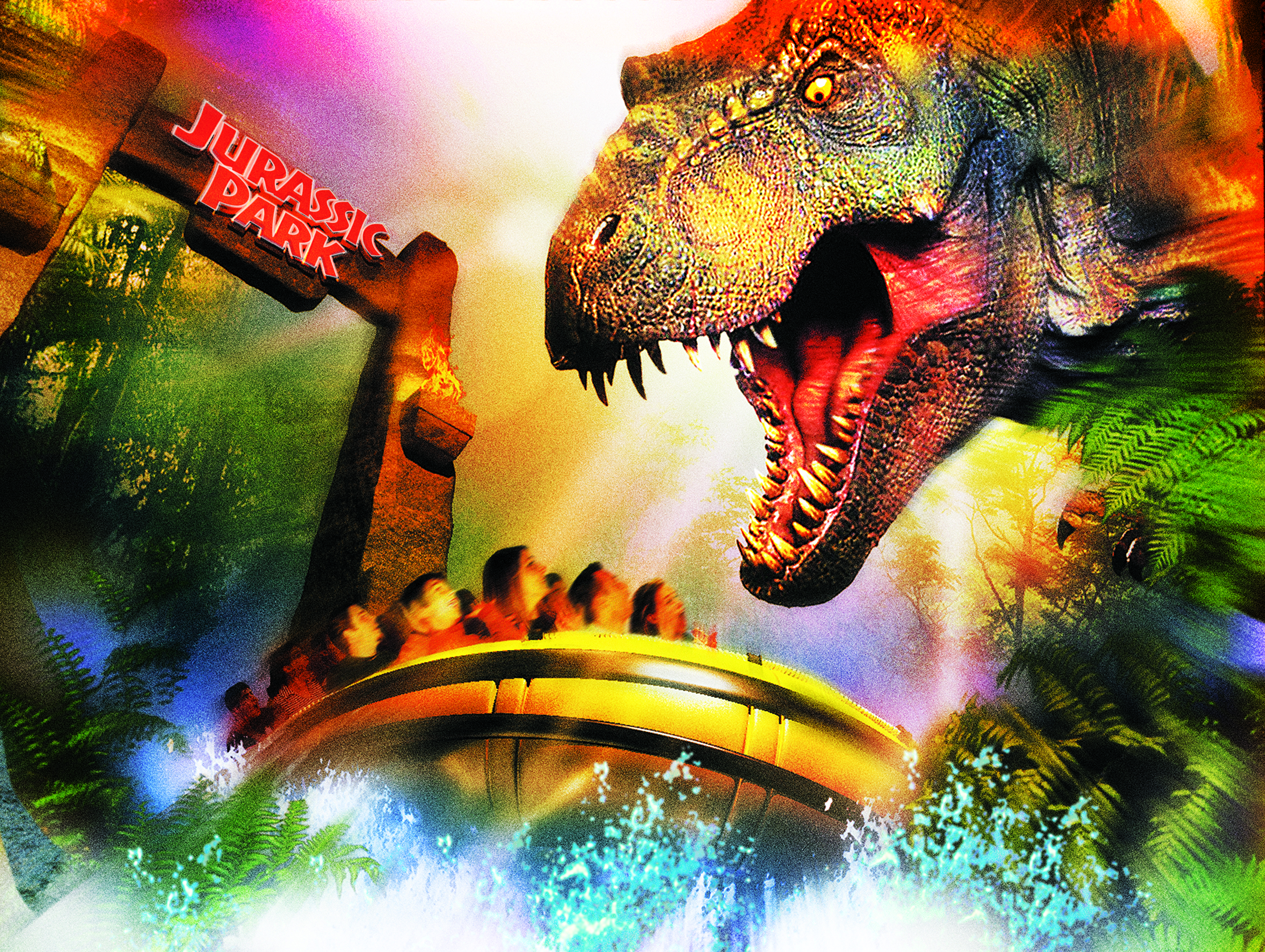
jurassic_park_river_adventureIn the contemporary theme park model, designers seek to create a relationship between the narrative and the audience (or park guest); this is what Geoff King (2000) refers to as “the cinema of attractions.” The park guests want to be transported from a world in which they are spectators to a world in which they are participants in the story. But, themed entertainment has come a long way from its inception into modern society. How the film theme has been fused with theme park attraction design has evolved over the decades to create the convergence and synergy that exists today. This is mostly due to the understanding of spectacle versus narrative. Although these two elements work seamlessly together in a themed attraction, they are not synonymous with one another. An excellent example of a horror/action film that is both spectacle and narrative, and furthermore, is both a film and a ride is Jurassic Park.

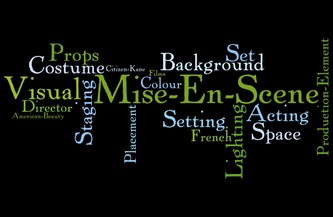
A similar example of the infusion of the aforementioned is Jaws. Just as the use of digital special effects (or visual effects) has evolved in film, the use has also evolved in theme parks. Digital (or visual) effects is a broad term, as it covers a range of possibilities that include computer-based or computer-generated effects (Wood, 2002). The “spectacle” of film and theme park rides possesses the ability to transform the narrative, thus adding an extra dimension to the story progression. However, ultimately within the full-spectrum of the elements that make up a film or ride based on a movie, spectacle is subordinate to narrative. Spectacle is needed to dazzle and simulate, but is essentially lifeless without the narrative. (Wood, 2002). Unlike a narrative, which can have great depth, spectacle “is often understood as a particular kind of extended special dimension…depthless, or as having an excess of surface…more image-full than mise-en-scene (meeze-on-syn) everything that appears before the camera and its arrangement, composition, blocking, and lighting] as it accumulates ever more details” (Wood, 2002, 373).

mise en sceneSpectacle should never be relied upon to carry a narrative, but should be considered a useful tool in enhancing the visceral experience of the narrative. Spectacle possesses the ability to be used to create a dynamic time and space through which the narrative expands and can sometimes be manipulated (Wood, 2002). Digital effects can be used to advance the story or comment on the relationship between characters and their respective environments. In terms of theme park attractions, specifically those based on movies, adding spectacle to the narrative of the ride serves to enhance the overall experience of the park guest. The use of spectacle enables the settings, events, and characters to come to life for the park guests experiencing the live movie-based narrative. Effectively used, the guests should feel as though they get transported from the real world to the world of the movie. Theme parks offer escapes from reality; this is also true of most movies. So, by utilizing the tangible benefits of both narrative and spectacle, the designers are successful in creating the illusion that the guest is either witnessing or part of the story.

University of Central Florida professor Andy Milman (2001) further explores this relationship between cinema and theme parks in his writings in the Journal of Tourism (2001). Exploring the infrastructure of the movies, theme parks, and the convergence of the two is a complex research area that is increasingly becoming more important as the movie studios turn to theme parks for revenue, and the theme parks depend on the movie studios for creative direction and expansive guest experiences. In the article Movie Induced Tourism, authors Roger Riley, Dwayne Baker, and Carlton S. Van Doren (1998) explain that movies provide both the objective and subjective material that capture peoples’ gaze and influence them to travel to the places depicted in movies.  The concept of traveling to locations where movies were made has a direct relationship with the concept of designing theme parks based on movies and showcasing the magic behind the movies (Riley et al, 1998). This concept can be seen in some of the most visited parks in the world. One of the goals of a studio like Warner Bros. is to get the fans of the Harry Potter books and movies to the Wizarding World of Harry Potter at Universal Studios Florida; and, by way of the flip side of the coin, one of the goals of the theme parks (mainly Disney and Universal) is to turn park guests into movie audience patrons (Milman, 2001).

You can always find out what you missed by buying my book on Amazon!

Return to the beginning of this series by clicking PART 1

On Cinema and Theme Parks (part 1)

My BookDo you love learning about the magic of movies and theme parks? So do I! Living in Tampa, I am surrounded by some of the world’s top destination white sand beaches and exciting theme parks just up the road. As a passholder to Disney World, Universal Studios, Busch Gardens, and SeaWorld, I frequent the parks nearly as often as I go the cinema. Having spent a great deal of time working in independent film, working for three years at Disney World, and now as a cinema and theme park critic, I have a great deal of passion for both storytelling mediums. And the amazing thing is that there is such a fantastic and symbiotic relationship between the two. Hence why I spent my Master’s program at the University of South Florida studying the place at which both converge. Specifically, I researched the elements of narrative, spectacle, pleasure, character, setting and more in terms of how they correspond with one another. Whether that is taking a movie and developing it into an attraction or taking an attraction (or entire section of a park) and developing it into a movie. Both are powerful means of conveying a story or message. I delve into what it takes for a movie to be a successful attraction or vice versa.

Although there have been peer-reviewed articles and books written on cinema, there definitely lacked empirical research on the theme park side. Furthermore, most peer-reviewed articles and books are so incredibly boring and pretentious to read. My goal was to break down both and write about them in such a way that it is fun to read about. Movies and theme parks are FUN! So, reading about the relationship between the two should be equally fun and interesting. Starting with the history of how cinema influenced the modern theme park design and finishing with some of what to expect in the future, this book has it all! Although I would prefer that you buy my book (on Amazon), I have selected excerpts from it that I will publish over the next few weeks as I work on my next theme park piece. I hope you enjoy!


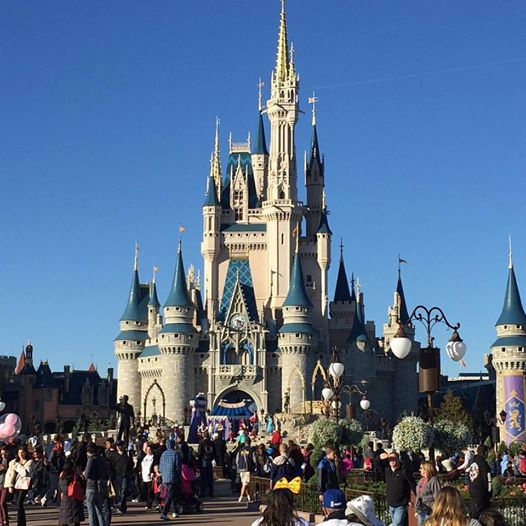
WDW CastleIn today’s world of entertainment, where some media conglomerates own both film studios and theme parks, successful films sometimes bridge these two media to create the basis for new theme park attractions. The following research study seeks to define the elements that a film needs in order to be successfully translated to a live themed entertainment experience, thus eliciting the desired emotional response from the guests; and also the necessary elements that a theme park attraction needs in order to convey both spectacle and narrative regarding the film upon which it is based.  Although there are tools currently available to studio executives and creative staff at entertainment companies, this study will serve as a model using the ideas, theories, supporting evidences, and streamlining them into one study—a consolidation of tools, if you will.

As media companies grow, and both cinema and theme parks adapt to changing needs and desires of movie patrons and park guests, the leadership at these companies needs to have the appropriate information at their fingertips to create effective and memorable stories for the screen and park. This study highlights what the potential park guests or movie patrons are looking for in terms of what drives them to spend money on themed entertainment or the cinema. Condensing this complex set of desires into a simplified answer: in terms of cinema-based attractions, the audience is searching for attractions and rides that immerse themselves into a participatory environment in which they make a difference in the story and encounter the unique characters, settings, and plots from the movie.—they want to be viscerally engaged and transported into a world of fantasy or adventure.

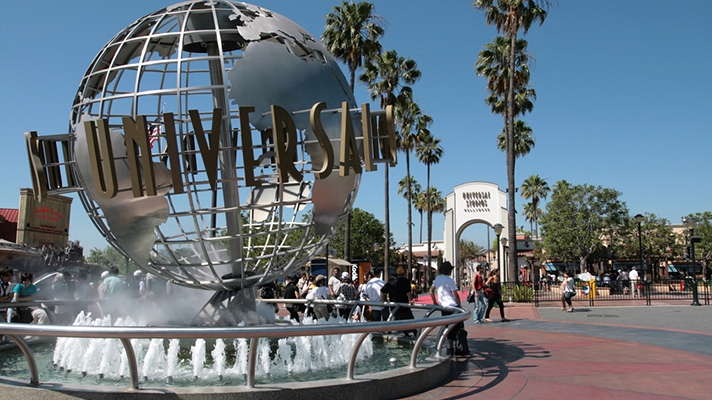
Universal HollywoodEver since the late 19th and early 20th centuries, audiences from around the world have been drawn to the temple of the height of the visual and performing arts, the cinema. In many ways, the early days regarded the cinema as an attraction, an amusement. In fact, many of the first silent films were shown in carnivals. Nickelodeons dotted the landscape in drug stores and clubs. Elaborate and ornate movie palaces housed some of the first big screens, and orchestras played along with the narrative (Gunning, 1986). Over the last century, cinema has gone from existing in sideshows to being a dominant mass communication source that has evolved into the very rollercoaster to which many critics and lay people compare it; and, not only metaphorically.

From starting in carnivals to now being the inspiration for the most visited theme parks in the world, cinema has gone full circle and is now instrumental in an unparalleled synergy with themed entertainment. Over the decades, there has been a strong convergence between cinema and theme parks. Studio executives, filmmakers, and theme park designers are working together in ways that serve to support both the movies and the parks that have rides based on the movies. More than ever, filmmakers and attraction designers need to know what the cinema patron and park guest both want in order to create a synergistic and dynamic entertainment experience based on a single narrative.

Hitchcock AttractionTwo of the greatest forces in media and entertainment are the cinema and theme parks; and for the latter part of the 20th Century and continuing strong into the 21st, the convergence between the cinema and theme park is becoming clear. Additionally, within the last several years, theme park attractions have inspired movies (e.g. Disney’s Pirates of the Caribbean and The Haunted Mansion). The relationship between the movies and theme parks is a strong one, but why is that so? Can one exist without the other? Or, is it a co-dependent relationship that benefits both entities? Perhaps it is all of the above. But, not every successful movie makes an equally successful theme park attraction. Often times, it is the Horror and Action genres that are used as the inspiration for successful attractions (e.g. ET-The Extra-Terrestrial, Jurassic Park, The Bates House and Motel, and Hitchcock: The Art of Making Movies).

As technology advances, the cinema and theme parks have adapted and evolved over the years to include the technology to both impress audiences and save money. Still building off the success of the cinema, theme parks have evolved their rides and attractions to go from the magic behind the movies to immersing the audience or guests into the movie itself. Likewise, studios and production companies are producing movies that act as attractions themselves. But, central to this study are the questions: why is it essential for the cinema to continue this synergy with the theme park industry, and what does it take for a movie to be a successful theme park attraction?

(Continue to Part 2)

Review of “Jurassic World”

JurassicWorldBack with a roar! The Jurassic Park franchise returns from the dead with a vengeance in the newest and highly anticipated installment since the original back in 1993, and certainly since The Lost World in 1997 and Jurassic Park 3 in 2001. Jurassic World will take you back to the island that started it all and deliver the same WOW factor as the original beloved favorite. Return to Isla Nublar to experience the park John Hammond envisioned but could never have dreamed would become a reality. “The park is open!” Enjoy the adventure, pseudo-science, character development, plot, the acting, and the music that you loved about Jurassic Park (1993) in a film that holds true to the very essence of what made the original such a great film but adds in the visual storytelling technology we enjoy today. For lovers of the ride at Universal Studios (FL/CA), you will enjoy experiencing the park in ways you may have only dreamed of, and for lovers of the franchise, despite the poorly produced past sequels (even though they are still fun to watch), prepare for your expectations to be greatly surpassed as you return to your childhood and experience Jurassic World.

Jurassic World takes us back to Isla Nublar off the coast of Costa Rica. Just south of the original park, a new theme park has been opened and is bustling with park guests and dinosaurs alike. The luxury theme park and resort is jointly ran by Claire (Bryce Dallas Howard) and of course the once chapter 11 InGen BioEngineering company founded by John Hammond (the late Richard Attenborough). For the last few years, the guest satisfaction ratings have plateaued at Jurassic World and Claire has worked with InGen’s Dr. Henry Wu (B.D. Wong) to develop a genetically modified hybrid to wow the guests and increase profits. But as Ian Malcolm once so eloquently put it “life will find a way,” the attempts to control the park’s “assets,” will not go as planned. After the newly minted genetically modified hybrid Indominous Rex cleverly escapes the paddock, it is up to Claire and her unconventional Navy veteran turned dinosaur control/safety expert Owen (Chris Pratt) to save Claire’s nephews Zach (Nick Robinson) and Gray (Ty Simpkins) as well as the over 20K park guests from the jaws of history’s top notch predators.

Where to begin? It seems so much easier to write a critique for movies that are just okay or even terrible. When working with such an incredible movie, it’s sometimes difficult to know where to begin and even harder to know when to stop. Going into the movie, I had my reservations-especially after seeing what I thought was a ridiculous scene from the trailer of Owen facing off and talking with the raptors–but I can honestly say that is this movie that I, as well as millions of others in their mid-to-late 20s and early 30s, have been waiting for since we saw the original as kids in theaters. It truly embodies everything that made the original great and capitalizes on it by adding in the digital effects and visual storytelling techniques we enjoy as part of modern cinema. The best movies are those that simultaneously embrace current technologies whilst remaining grounded in the very essence of what a movie should be: exceptional visual storytelling in terms of the art and science of filmmaking. This truly is the sequel we have been waiting for since the helicopter left Nublar 22 years ago.

I was watching Jurassic Park 3 with a friend in order to finish the first three movies prior to seeing Jurassic World last night, and I asked him and myself  “what was it about the first one that makes it such a great film and in the top 20 grossing movies of all time (and that’s even when adjusted for inflation)? We talked a little, and both decided that is was the dynamic plot, clever writing, memorable characters, and that wow factor of seeing dinosaurs like never before on the big screen that made the first movie not just a successful movie but a GREAT movie. That same dynamic plot filled with subplots and subtext, memorable characters, and more is captured by the current installment. Yes, this movie is high concept as summer blockbusters usually are; but just because it’s high concept doesn’t mean that we cannot experience character development, subtext, exceptional writing, and great visual storytelling. From the moment that I heard the all-too-familiar music and returned to Isla Nublar, I knew then that this was going to be one of the most exciting and phenomenal movie-going experiences of my life. And you know what? It was as exciting as seeing the original for the first time. Universal Pictures, Amblin Entertainment, and Legendary Pictures harnessed the power of what made the first movie great and brought a nearly extinct franchise back from the dead.

Just like the characters from Jurassic Park (1993) helped to make the movie what it was, so do the characters of Jurassic World. You have Claire who, much like Hammond, is a dreamer. Although, she is definitely more concerned with money than Hammond ever was. Witness as she goes from a cold shrew business woman to a courageous and loving aunt to her two nephews. Speaking of whom, witness the transition of Zach as the older mean brother who couldn’t be bothered with his sibling to risking his life to save his brother Gray’s. Dr. Henry Wu reprises his role as the genius behind the science that made Jurassic Park and now Jurassic World work. Every movie needs that hero who is unconventional and has subtle sexual tension with the strong female lead, and we get that, in spades, with Owen. There is the chief financier Simon Masrani (Irrfan Khan) who is concurrently overly concerned with making a profit but still genuinely concerned that his park guests are having fun. And finally, we have Lowery (Jake M. Johnson) who sports an original Jurassic Park t-shirt and has rubber dinosaurs on his desk because he loves the original park and is thrilled to work at the new one. Each of the characters has very unique personalities and traits that are meticulously woven into the plot in order to continually advance the story.

I also wanted to touch on the references to the previous films in the franchise. Early on, it was made known that the old Visitors Center would make a cameo appearance, but I did not expect the extent to which the old compound plays an intricate part in Jurassic World‘s diegesis (narrative). Claire is even dressed in all white like Hammond. Not only is the music powerful–almost to the point of tears–and harkens back to the first time you heard it, but the movie helps to make Jurassic Park feel like a real place because of Lowery’s t-shirt he bought off eBay and the banner of “when dinosaurs ruled the earth” now covered in dirt and mold that fell from the ceiling at the close of the first movie. Although not formerly acknowledged, there are many references to not only the first movie but also 2 and 3, and even the Jurassic Park Ride. From lines of dialog to easter egg camera shots and even to the Jurassic Park 1992 Jeep Wrangler, Jurassic World uses material from its storied past to support the current narrative and evoke fond memories. Interestingly, the movie also deals with the element of third party companies grossly sponsoring attractions and exhibits in theme parks. Just like even Disney’s Magic Kingdom is now sporting a Starbucks on Main Street, the same can be seen in many theme parks. Sometimes it seems like theme parks are sacrificing storytelling and creative theming for the almighty dollar. Perhaps this movie shows us what happens when greed overpowers creativity.

I feel that Universal Pictures (a Comcast Company) has been searching for its cash cow franchise like Disney’s Pirates, Avengers, and now Star Wars or like Warner Bros. Harry Potter (even though Universal rakes in the dough from the Wizarding World of Harry Potter at it’s Florida and soon California parks), like MGM’s James Bond, or 20th Century Fox’s Avatar or X-Men, but after the two failed sequels to Jurassic Park, all seemed lost. Until now. This installment in the 22 year-old franchise has been successfully resurrected and could quite possibly be a contender and a worthy opponent in the franchise competition. The way the final shots of the island were in the movie, I have a feeling that this was the official goodbye to this chapter in the Jurassic Park novel and the opening of the floodgates for followups to this movie that will hopefully continue the embrace of the essence of the original whilst continuing to advance the story of what happens when man creates and manipulates dinosaurs.

I don’t know what you have planned this weekend, but you NEED to get to the theatre to see this movie. I am even planning to see it again this weekend myself. But, I need to find an IMAX that is showing it in 2D (yes, that is correct 2D). Prepare to be taken back to your childhood and relive the experience all over again in the newest chapter of Jurassic Park.

As always, if you liked this review, please follow or subscribe or at least share the link on social media.

For my review of Jurassic World: Fallen Kingdom click here.

Ryan is a screenwriting professor at the University of Tampa. If you like this article, check out the others and FOLLOW this blog!

Follow him!

Twitter: RLTerry1

Instagram: RL_Terry

Thrillz (theme parks): Thrillz.co