COMPANION horror movie review

A wild, albeit predictable ride. New Line Cinema’s Companion, written and directed by Drew Hancock, is an entertaining cautionary tale on how ultimate control, ultimately corrupts. Moreover, the film provides a thoughtful critique on the (in this case) deadly consequences of attempting to exert that desire for ultimate control over an individual, thus rendering mute their unique individuality. The film also paints a provocative portrait of the relationship between humanity and artificial intelligence (and androids) by establishing a seemingly controlled environment that then devolves into one of chaos. This progression reflects the overarching theme of attempts at ultimate control by underscoring the illusion of the ability to exert ultimate control over the human spirit, even if that “humanity” is housed within an artificial intelligence. Hancock’s screenplay is lean and mean, and nicely balances the horror elements with both lighthearted and dark comedy. Even though many of the plot beats were predictable, the movie still succeeded in remaining engaging and fun–just goes to show that there is a beauty to genre movies.

A weekend getaway turns bloody and violent when a subservient android that’s built for human companionship goes haywire.

Hancock’s film effectively blends elements of horror and comedy to explore contemporary anxieties surrounding individualism, artificial intelligence, and the ethical implications of control for the purposes of subjugation. Audiences are challenged by the plot and characters to reflect on the moral responsibilities involved in the creation and control of artificial-sentient beings. By prompting the audience to consider the consequences, the film is positing questions concerning the very nature of humanity and the desire and limits of control. Furthermore, the film demonstrates that when given seemingly ultimate control, that primal desires for ultimate control surface, thus reminding us that we have to learn to be generous, kindly, and altruistic because we are naturally born rather selfish and self-centered. Ultimate control, ultimately corrupts. Without reasonable checks and balances, the results of absolute control can be negative and quite possibly even deadly to the human spirit.

As artificial intelligence increases in human-like problem solving and expression, we have to ask ourselves how far will be go to both create and control artificial intelligence as it slowly approaches android-like technology. Will androids be controlled like a typical robot or mindless automaton or will they be granted sentient status like Data on Star Trek: the Next Generation‘s critically acclaimed episode “The Measure of a Man”? Without derailing from my review of Companion too much, I am reminded of this outstanding Trek episode that actually does a much better job of addressing topics of autonomy and control than Hancock’s film. The episode critiques the idea that beings created for a (even at one time, pre-determined) purpose (especially artificial ones) can be controlled or owned. Data’s ability to choose his own destiny is at stake. Captain Picard argues, in the trial that is convened to determine Data’s humanity, that intelligence, self-awareness, and consciousness make someone a sentient individual, not merely their biological nature.

Where I feel that Hancock’s film falls short is in its social commentary is the limitations it places on itself in its expression of the themes with which it underscores the plotting and characters. For the greatest impact, it should have been more consistent in the exploration of ultimate control over a seemingly sentient individual. Instead of crafting a film that could be more broadly applied, Hancock’s story falls into the trap of being too focuses on a overly generalized stereotype of particular individuals versus crafting a narrative that was more broadly concerning itself with depicting robbing sentient beings of their individualistic humanity–their free will. The sharpest criticism is clearly aimed at one particular character (and the demographic they represent). But eventually the idea of control over an individual snares another group. And for a moment, there was hope that Hancock was extending his critique to be more inclusive, but it returns to being focused on the original demographic group. This extension would have been a reminder that anyone can find themselves drawn to how far one can push the limits of control over a lover, friend, or other platonic, professional, or romantic relationship. It’s a trait that runs through everyone, and we have to learn to control our innate selfish and self-centered behaviors with which we are born.

While I have some reservations in the consistency and accuracy of theming in the film, Companion remains a solid horror films that serves as a reminder of the consequences of exerting ultimate control over an individual. The pacing, plotting, character development, and technical elements work together very well to keep the audience entertained on this wild ride.
Ryan is the general manager for 90.7 WKGC Public Media in Panama City and host of the public radio show ReelTalk about all things cinema. Additionally, he is the author of the upcoming film studies book titled Monsters, Madness, and Mayhem: Why People Love Horror. After teaching film studies for over eight years at the University of Tampa, he transitioned from the classroom to public media. He is a member of the Critics Association of Central Florida and Indie Film Critics of America. If you like this article, check out the others and FOLLOW this blog! Follow him on Twitter: RLTerry1 and LetterBoxd: RLTerry
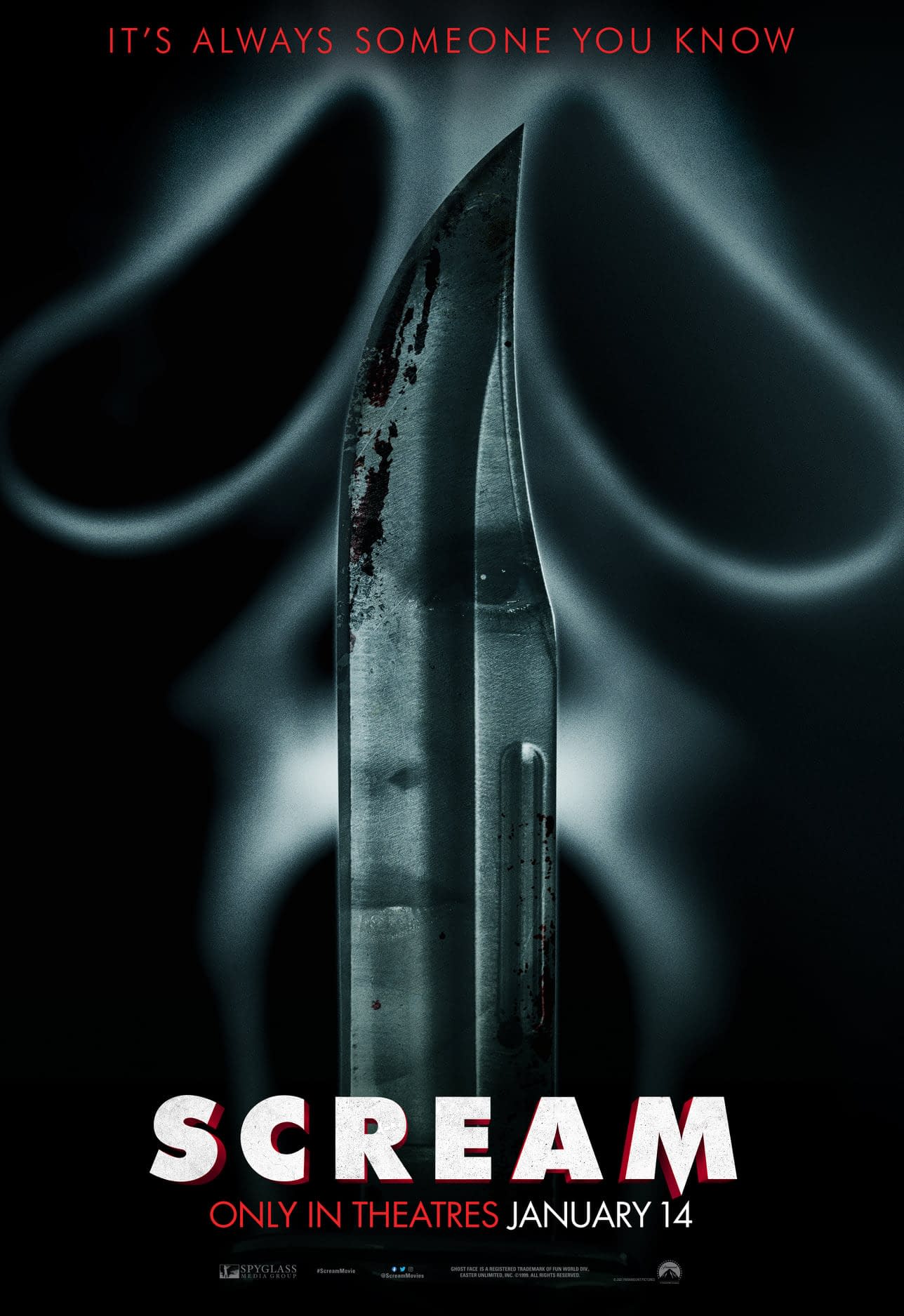
SCREAM (2022) horror movie review

Familiar yet fresh. From the duo that brought you the smash hit Ready or Not comes the next instabment in the beloved SCREAM franchise. It’s been just over twenty-five years since Casey answered that fateful phone call from Ghostface and just over a decade since the late, great Wes Craven gifted us with SCRE4M before his tragic passing. And, now audiences are returning to Woodsboro. In a filmscape overstuffed with pretentious, stylized horror films that often forget that plot and characters are more important than the pretty packaging, comes a fresh interpretation of the classical slasher that is sure to thrill you! While the new SCREAM isn’t without its diegetic flaws (but, to go into that would mean spoilers), it is still entertaining and fun. Clearly, the screenwriters channeled the soul of the original SCREAM, a perfect film in my opinion, but put a relevant spin on it in order to resonate with contemporary audiences. What I can say, without going into spoilers, is that this movie has too many characters; to the point that some of them feel like furniture. Where you may connect quickly with the movie is in subtext of the film, which is grounded in a commentary on the slasher versus elevated horror (a term I absolutely detest, as I’ve previously written) and toxic fandoms versus studio execs green-lighting rebookquels or requel (as the movie states). These are the conversations that fans of horror have all the time, and you will find yourself vicariously engaged in the conversations as the characters are having their debates on screen. After the flop that was Halloween Kills, I was anticipating another vapid, pandering attempt to revive a legendary cinematic property. But, I was pleasantly surprised by how much I enjoyed this movie. We didn’t know we needed another SCREAM movie, but turns out that we did. 

Twenty-five years after a streak of brutal murders shocked the quiet town of Woodsboro, Calif., a new killer dons the Ghostface mask and begins targeting a group of teenagers to resurrect secrets from the town’s deadly past.

Not only are Sidney, Gale, and Dewey back, but you’ll see some other familiar faces too. Here is where we can directly compare Halloween Kills and Scream (2022). Both movies brought back leading and supporting characters (and actors), but Scream succeeds in developing all of them enough for audiences to care about whether they live or die. Now, Scream does suffer from being overstuffed with ancillary characters, to the point that some are one-dimensional; however, the screenwriters do manage to give each some agency–some more than others. Other than rooting for Sidney, Gale, and Dewey to survive the blade of Ghostface, you may be hard-pressed to truly care whether some of the other characters live or die. Fortunately, as little as you may care about a particular character in this movie, you’ll still find yourself caring way more than you did for the cast of Halloween Kills.

The kills are great! And best of all, it doesn’t devolve into a completely unrealistic bloodbath. Yes, it is a little gorier and violent than the original (or even the subsequent previous sequels), but not overly so. This iteration of Ghostface may not have the one-liners of its predecessors, but Ghostface manages to get some zings in there. Unsurprisingly, there are many homages to the original SCREAM, but there are nods to other horror properties as well–the shower scene from Psycho makes a little cameo, and we spend a great deal of time with the Stab movies. Instead of rules to surviving a horror movie, we have rules to surviving a Stab movie or requel. Dylan Minnette’s character’s name is Wes, which is a great touch! In fact, the entire movie is dedicated to the life and legacy of the late, great Wes Craven.

This movie works because it takes itself seriously as a Scream movie (and by extension, the slasher), but allows itself to have fun along the way. Perhaps Generation Z does not appreciate the slasher for the cultural phenomenon that it was, but this movie may just be the thing to get them interested in discovering just how brilliant and fun slashers are. I feel confident that you will enjoy Scream as much as I did! Yes, I have my plotting and diegetic problems with it, but it doesn’t take away from the fun factor. This movie succeeds where Halloween Kills failed–it never forgot its roots in greatness. It remembered its branding, and stayed the course. Even though it may not be quite as good as SCRE4M, and with the original being peerless, this fifth installment justifies its existence and delivers laughs and thrills. Much like with Wes Craven and Kevin Williamson’s incomparable original, this one also knows what it is, and it rocks it!

And here is where you should stop reading unless you don’t mind spoilers. 

Okay, if you’re continuing to read, I will interpret that as consent, and I will talk about elements of the film that involve spoilers. Not because I want to spoil it, but because it’s difficult to talk about the topics I want to address whilst completely avoiding them.

One of the best elements of the original SCREAM is the absolute perfection that the opening excruciating 13-minutes (that’s right 13), which is, in my opinion, the best and most effective opening of a film period. That opening literally does everything an opening should–you know precisely what the stakes are and what the film is about. Anyway. As to whether the opening of Scream (2022) is precisely 13-minutes, I do not know because I was not looking at my watch (but it feels that it could be 13-minutes). But I was eager for the opening for comparative analysis purposes. I wasn’t looking to see if it was as intense or brilliant as the original (because, let’s face it, that’s an overwhelming task), but I was looking to see if we would know everything we need to know and how high the stakes are going to be. Sadly, we learn that Tara (Jenna Ortega) did not die in the opening scene. And it was this poor decision that hung over me for the entire film. Because once we learn that Tara did not die, instantly any of the suspense and high stakes we had were rendered ineffective and futile. Tara should have died because then audiences would have realized that the stakes are high, and that no one is safe from the knife of Ghostface. Suffice it to say, this poor decision did not ruin the movie for me–I still had a lot of fun with it–but the power of the opening was muted and lacked anything memorable.

There are two arguments (or topics) at the center of the new Scream (1) elevated horror versus slashers and (2) toxic fans versus reboots/remakes. What I love about this, is that these two topics are such a part of the #PodernFamily (podcasters) and #FilmTwitter (film pundits and fans on Twitter) pantheon of conversations and arguments on a daily basis, especially when it comes to horror and legacy cinematic properties. Early on, in fact it’s in the opening scene, we are informed of Tara’s taste in horror: she prefers elevated (excuse me while I vomit at the term) horror like The Babadook, Hereditary, and The Witch. She slams slashers like STAB for being schlock devoid. Turns out, she underestimated the power and social commentary of slashers. Perhaps she should’ve spent more time in horror, because then she would’ve learned that horror has always been the most progressive of all the genres–not just in the last decade. Further along in the movie, we witness a debate over fans versus “requels” (wherein a movie is a combination of a reboot and sequel). While I am not a generally fan of rebooting a legacy franchise or tacking on a sequel that we didn’t need cinematically, so much of what is said in the entertaining exchange of the marketplace of ideas is incredibly meta because of how pervasive it is within the film community. And the plot of Scream (2022) plays right into both of the aforementioned commentaries on horror movies.

Of all the kills, my favorite one is right out of Once Upon a Time…in Hollywood. And I’ll leave it at that. 

Ryan teaches American and World Cinema at the University of Tampa. If you like this article, check out the others and FOLLOW this blog! Interested in Ryan making a guest appearance on your podcast or contributing to your website? Send him a DM on Twitter or email him at RLTerry1@gmail.com! If you’re ever in Tampa or Orlando, feel free to catch a movie with him.

Follow him on Twitter: RLTerry1