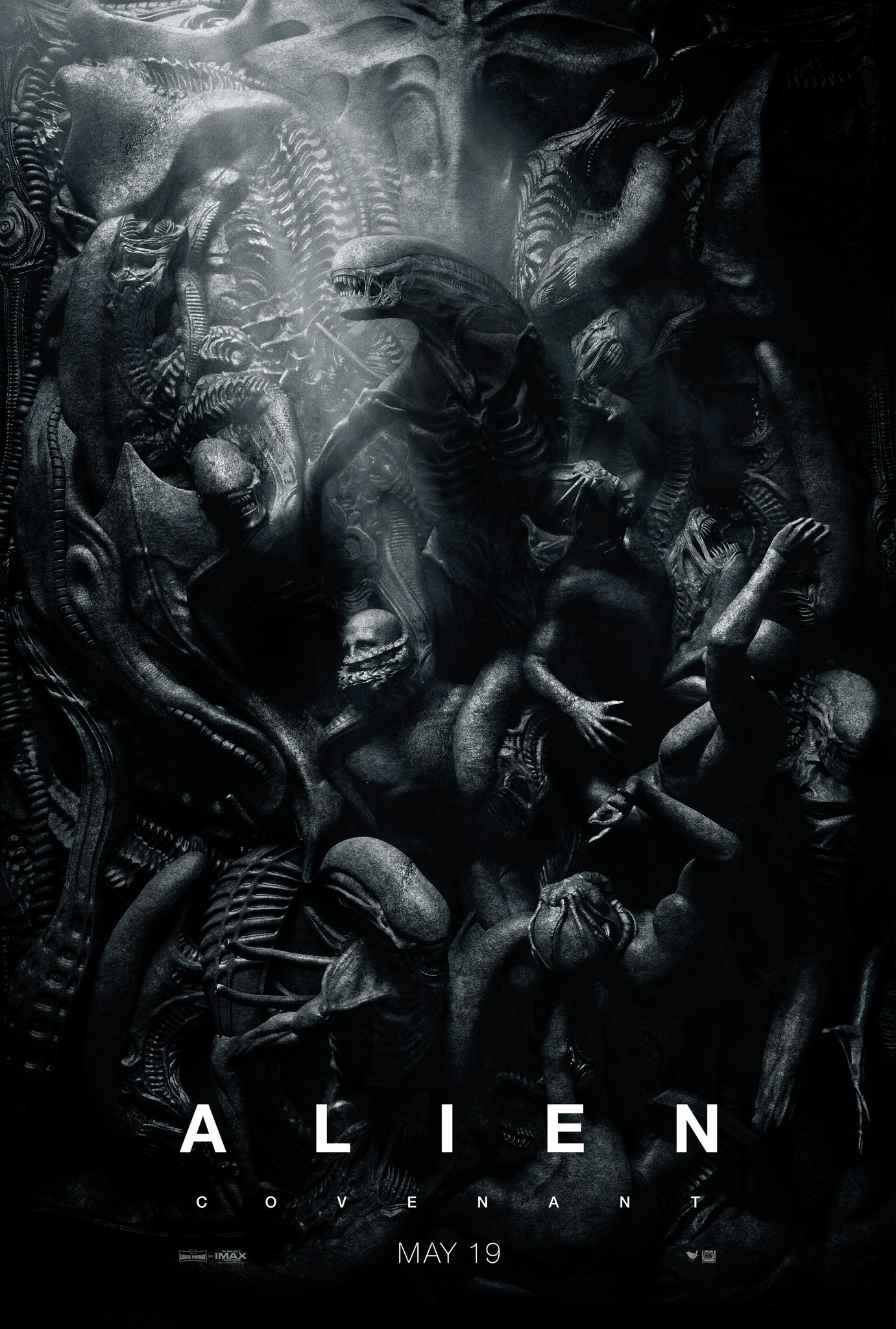
“Alien: Covenant” movie review

Alien: Covenant returns to its roots in horror. In 1979, Ridley Scott convinced audiences around the world that “in space, no one can hear you scream.” And the newest film in the line of prequels leading up to the terrifying events aboard the Nostromo, attempts to make up for the rejection of 2012’s Prometheus as a true prequel to Alien. Fortunately for fans of the franchise, Alien: Covenant is mostly successful at delivering what audiences loved about the original and missed in the subsequent Cameron and Fincher movies–the trademark horror of the xenomorph and facegrabbers. Starting off like Prometheus and finishing more like the original Alien, the newest film in the nearly 40-year-old franchise will have you screaming, cringing, and completely immersed in blood-curdling terror. That is, until you realize that only some questions from Prometheus are answered, and all new questions about events in this movie are generated and left unanswered. That appears to be Ridley Scott’s Achilles heal: always leaving more questions unanswered than providing closure or exposition, thus prohibiting the movie from being as great as it certainly had the potential to be. With one more film between this current installment and 1979’s Alien, perhaps there will be far fewer unanswered questions and provide the history for which fans are looking.

On a colonization mission, the complement of the Covenant is traveling into deep space towards a new planet that earth’s humans hope to make a new home. After encountering some severe spacial turbulence enroute to the destination, the crew of the Covenant intercept a transmission from an uncharted planet that, according to the sensors, appears to be a complete paradise. After some deliberation, it’s decided to head for this new planet. Most of the time, when something is too good to be true, it usually is. Led by the new captain Oram (Crudup) and first officer Daniels (Waterson). After an attack from an alien species, the crew is rescued by David (Fassbender), a synthetic android-like human, who is the only remaining survivor of the Prometheus expedition from some years earlier. Unbeknonst to the crew and scientists of the Covenant, they are about to come face to face with the most terrifying nightmare imaginable–make that–an unimaginable fight for survival when paradise turns to hell.

One of the first technical elements that fans of Alien will notice is the opening title sequence. It is reminiscent of the manner in which the opening credits and title of the original were revealed in the emptiness of space on screen. I appreciated this homage to the original because it set me up to prepare for an Alien movie and not a second Prometheus. Perhaps that does not seem important to non-fans; but to make a long story short, while Scott was in the conceptual phase of a sequel to Prometheus (prequel to Alien), he was told by the studio that audiences didn’t want another Prometheus–they wanted Ridley Scott’s Alien. And now the rest is history. In order to best understand the flaws of Alien: Covenant it’s necessary to understand the similar flaws of Prometheus. One of the many diegetic and technical problems with Prometheus was the fact that there was little direct connection to Alien and it felt like a whole new franchise and not an extension of the original. This lack of connection is best represented by the number of unanswered questions dwarfing the answered ones. Essentially, audiences only learned about David’s origin and, to a lesser extent, why that particular planet. But enough about Prometheus, we are here to talk Alien: Covenant.

Although vastly improved, Covenant also leaves audiences with many unanswered questions; albeit, it is successful at making up for many of the diegetic flaws of the preceding film. To get into the questions would reveal too much about the film and perhaps hint at some spoilers, so I won’t go into specifics. But enough about the flaws of this otherwise exciting and well-produced film–just know that the writing is weak but hopefully will be better in the next installment. The most impressive elements of the movie are related to the cinematography, editing, and visual effects. From the sweeping landscape shots to intimate closeups of the xenomorph and its victims, Covenant is absolutely visually stunning. There is even a mild romantic encounter between David and a member of the Covenant crew that was shot incredibly well and strategically placed in the narrative. Where the story is weak, Scott makes up for in creating an impressive cinematic experience for long-time and new fans alike. There are even shot sequences that are taken directly out of Alien. Often times, I am extremely critical of computer-generated effects and characters versus practical effects and animatronics–and for good reason–nothing can replace the way real light bounces off real objects and is really captured by the glass lenses on a camera. Furthermore, it’s rare that a character react in genuine fear to an object, villain, or murderous alien that is not really present on set. However, the combination of CGI and practical effects in Covenant is breathtaking and convincingly real. You will almost feel the facegrabber latching onto you and the xenomorph’s wet acid-breath on your skin.

Aside from the unanswered questions still residing in the minds of those who have seen the film, Covenant fails to live up to Alien in another rather conspicuous way. For everything that this film did right and make up for (in respect to Prometheus), it lacked any memorable crew members–more specifically–this film differs from Alien by not developing Dani(els) to be the strong female character that she had the potential to be. Dani could have been Covenant‘s answer to Sigourney Weaver’s Ripley in Alien. One of the diegetic elements that is most talked about and is often the topic of horror film humanities classes is the breaking of gender roles and heteronormative expectations by Ripley in Alien. Perhaps that is why Alien is almost avant-garde in the cinematic experience whereas Covenant is impressive but does not typify the art of cinematic storytelling nor contributes to groundbreaking character-types. Beyond strong female lead, the film simply fails to leave the audience with any one memorable character period. No one will be talking about any one particular character years from now. Both the unanswered questions and the lack of memorable significant characters can be traced by to one root cause: flawed writing.

If you loved the original Alien, then you will mostly enjoy Alien: Covenant. The experience is equally terrifying as it is beautiful. Whether you have seen Prometheus or not will not affect your enjoyment factor in this film. If you have seen Prometheus, then I would suggest watching the Ridley Scott short film The Crossing because it ties Prometheus to Alien: Covenant. Think of it as an extended prologue. This short film helps audiences to make the connection between the two films in hopes that it does answer some otherwise unexplained circumstances and events. After watching this film, I have an urge to rewatch the original in order to begin making those direct connections between this one and Alien. With one more film to release to finalize the events between Prometheus and Alien, I am eager to have my remaining questions answered. Bottom line: Alien: Covenant demonstrates Scott’s newfound commitment to return audiences to the space horror that makes the original so iconic.
“LIFE” movie review

Chilling! In space, no one can hear you scream. Although that tagline is associated with Ridley Scott’s groundbreaking space-horror Alien, director Daniel Espinosa’s LIFE delivers an intensely dark thriller that will have you screaming and cringing from the moment life on Mars is discovered. In the same vein as AlienLIFE is a science-fiction horror that may look like Gravity and might even have the strong orchestral sounds of Interstellar, but provides audiences with an entirely different experience. Borrowing from Alien and Gravity, Sony and Columbia Pictures craft a new space-horror narrative that can sufficiently serve as a standalone film–and be great in that–but also has potential for a sequel or two. Interestingly, there are parallels to Ridley Scott’s Alien beyond the premise; LIFE also features the same number of crew members and other more subtle elements. That being said, LIFE is definitely not a knockoff Alien nor is it trying to be Ridley Scott’s critically claimed film as it does not contain the social commentary on gender, sex, and family. However, imitation is the highest form of flattery, and LIFE pays both homage to the film that likely inspired it but delivers a comprehensive science-fiction horror experience that provides ample twists, turns, and even some emotional connection along the way.

A group comprised of engineers and researchers on board the International Space Station (ISS) are on the brink of one of the most important discoveries in human civilization: life on Mars. Rory Adams (Ryan Reynolds), David Jordan (Jake Gyllenhaal), Miranda North (Rebecca Ferguson), Sho Murkami (Hiroyuki Sandana), Hugh Derry (Ariyon Baker), and Ekaterina Golovkina (Olga Dihovichnaya) represent several different counties, all working in cooperation on this groundbreaking mission. After the satellite, carrying the Martian sample, is retrieved from spiraling out of control towards the ISS is secured, the group of astronauts are faced with the crisis and task of retrieving it. After a daring retrieval, what should be a joyous discovery–something out of a scientists dreams–soon becomes a living nightmarish game of hide and seek. When the specimen from Mars begins to grow rapidly and become more and more intelligent, it stops at nothing to continue to feed the alien’s insatiable appetite and its goal to find a new home.

Initial impressions of LIFE leave you with noticing just how much like Alien it feels. It’s been nearly forty years since the Ridley Scott cinematic masterpiece, but in that time, no other science-fiction/horror film has come this close to delivering a similar (note: not as high on the cinematic totem pole as its predecessor) experience to that which first terrified audiences in 1979. One of the primary differences between Alien and LIFE is just how much closer to home this horrifying experience occurs. Whereas with the former, the alien encounter takes place hundreds of lightyears away, the latter’s narrative takes place just outside of our atmosphere on the ISS. Not that LIFE feels more intimate than Alien–it doesn’t–but the proximity of this story might add a little something more to the edge that you’re already sitting on as the horrific events unfold on the space station. Pacing is similar to Alien in that LIFE has a slow burn during the first act. To balance this slow burn or to keep audiences from thinking that it’s taking forever for the movie to really get started, the film begins with the “big event” right at the very beginning. The “big event” being the apprehension of the satellite carrying the Martian specimen. But for all it’s similarities, this movie provides a different experience that can certainly stand on its own. LIFE may have been inspired by Alien, but it is certainly not a ripoff.

I’ve been quite critical of the CGI-effects of films in more recent years, but the brilliance of the alien life form in LIFE is the degree to which it feels organic. In the beginning, the life form is little more than a single-celled organism; however, as the plot thickens, the organism begins to take a more chilling form and shape. Eventually, the alien develops a frightening grin and a mysterious-like form. One of the scariest parts of Ridley Scott’s Alien was the degree to which the Xenomorph feels so real that, even in your seat, you could feel the acidic slime and your body likely felt the excruciating pains of that iconic moment when the alien shoots out of the stomach. Part of that can be attributed to the use of pneumatics, animatronics, miniatures, and other practical effects standards. Yes, the alien life form in LIFE is computer-generated, but it also has a very real nature to it. Instead of focussing on how to make the alien as impressive as possible, it would appear that the special effects artists (whose work can be seen in the Transformers movies) focussed more on the small details that ordinarily give a CGI character away. Just like with the brilliant visual effects work in Ex Machina, the visual effects of the alien are flawless.

There is an inherent level of unpredictability in LIFE even after the unavoidable similarities to AlienLIFE plays around with the final girl trope and the killings have a strategy or method to their madness. Conspicuously missing from the characters of LIFE in a comparison to Alien is a Ripley-like character. Does the film portray strong female characters? Certainly. But LIFE keeps you guessing because the order of the deaths do not follow any predictable pattern. Do not allow yourself to fall into the trap of being predisposed to the order of the killings to be based up on star billing. Speaking of the characters, effectively managing an ensemble cast is always difficult. So often, some characters in the ensemble get lost or do not receive nearly as much development as the more obvious leaders. Not true with LIFE. True that there is not a large degree of character development all the way around, but each of the characters is treated with equal screen time and emphasis. That is, until death occurs. The excellent handling of this ensemble gives LIFE an extra dynamic that lacks in other ensemble cast films, thus helping this science-fiction horror to stand out from others that are similar in premise or plot. This movie has a “life” of its own.

2017 seems to be shaping up to be a year of excellent movies! We are just about to finish the first quarter of the year, and already there have been some great motion pictures. Furthermore, 2017 seems to be the year of the horror film because so many have made the theatrical distribution circuit. For those who love a good science-fiction thriller, you will not be disappointed with LIFE. Albeit the film may not be able to sustain the magic and horror for the entire runtime, it successfully delivers a terrifying experience for most of the film. If you don’t mind some cringeworthy moments and the dark tone of the film, then this is definitely one to see this weekend.

PS. I saw Power Rangers this week as well, and it was a delightful film! Yeah, it’s a little campy, but that’s to be expected. Definitely the best Power Rangers motion picture. All-in-all, it sufficiently pays homage to the 90s show but provides audiences with a new story. Go-go see it too!

Written by R.L. Terry

Edited by J.M. Wead

“Get Out” movie review

getoutThe epitome of the American horror film. Jordan Peele’s Get Out is an outstanding work of horror cinema, in that the American horror film is the best genre for creatively commentating on the various social, economic, and psychological constructs of life in such a way that can be visually thought-provoking. And the best part about this film is Peele does not pull out any of the usual horror tropes or clichés until the showdown. Before you begin to think that Universal Pictures and Blumhouse are pulling a bait-n-switch–selling you a psychological thriller when the film is really a heavy drama–think again. Get Out is every bit a horror film as its more traditional counterparts. In terms of its contribution to the library of horror films, the movie is flawless. From the writing to directing to acting and even the score, editing, and cinematography, Get Out is a film that you should definitely “get out” to watch. With a current 100% on Rotten Tomatoes, this film is certain to grab prolific attention from movie patrons, film studies, and social studies professors alike. It’s a brilliant film to discuss in future American horror film classes. Never before has a film been used in such a creative and visceral way to comment on how one culture appropriates the best of another for purposes of exploitation or simply because it has something that you want, and then attempt to change, assimilate, or remove altogether because that which you want is seen as wasted on the originator. “A mind is a terrible thing to waste.”

Most romantic relationships between two people enter the anxious “meet the parents” stage, and Chris (Daniel Kaluuya) and Rose’s (Allison Williams) 5-month relationship is no different. Rose takes Chris out of the city to visit her parents’ lavish country home along a peaceful lake. Rose’s parents Missy (Catherine Keener) and Dean (Bradley Whitford) are eager to meet their daughter’s boyfriend and welcome them with open arms, hugs, and tea. When her parents begin to be overly accommodating, Chris begins to think that there is a little more than meets the eye at Rose’s parents’ place. Whereas Chris’ first impression of Rose’s family and friends was just their nervous attempt to work through Chris and Rose’s interracial relationship, now he dreads that there is something unsettling going on. After encountering an old acquaintance of his who has changed to be quite peculiar, Chris’ goal is to get himself and his girlfriend to safety. During his investigation into her family and the uncomfortable actions of the hired help, Chris could never have imagined what he comes to find out. Truth can be scarier than fiction.

It is difficult to explore some of the themes and subtext of this film without giving too much away, but I’m going to try my best to analyze what I can without spoiling anything for those who plan to see the movie. The first element I took note of in the film was the choice of music. Not so much a score (although, there is a score to the film), the music selections in the film serve as an allusion to the overall message and theme in the film. For those who know a little something about music history, you may pick up on the strategic selection and placement of the various songs and musical scores used throughout the film. There are moments in which the music does not seem to match up with the mood or tone of the film–at least, at face value. However, as you delve deeper into the film, you will realize that the music fits in all too well with the plot. I’ll give you this: think about the origins of the music in the film when you watch it. Before music, such as jazz and hiphop, became popular amongst a predominantly white society, it originated amongst the black community.

Another aspect of the film that hints at the big reveal in the turning point just before the third act is the physique, athletic talent, and sexual stereotypes of black males. You’ll notice that clues are dropped here and there, albeit subtly, at the relationship between Rose’s family & friends and members of the black community. The worship of Chris’ body by many of Rose’s family friends makes for an incredibly uncomfortable sequence of encounters at the outdoor picnic. The unsettling weird encounters between Chris and all the people he meets at Rose’s family home each work to grow the level of tension and terror in the film–the fear of something dreadful looming on the horizon. Without relying upon a proliferation of jump scares and visceral horror, Peele successfully increases the level of anxiety to terrifying levels in the film. Reminiscent in the ways that Hitchcock or Kubrick may have directed this film–in terms of relying upon the fear of something not visible to the naked eye–Peele incorporates the feeling of uneasiness every moment he can without over saturating the plot. Perfect amount of all the elements that make up the American horror film can be found in this deeply disturbing narrative.

**Spoiler Alert** (you can skip to the last paragraph to avoid it)

In an effort to truly appreciate this brilliance of this film, it is necessary to disclose information that could potentially spoil the big reveal. Early in the film when Chris asked Rose if she ever dated a black guy before, she said that he was her first. This was in preparations for the trip to meet Rose’s parents. While on the tour of the home, Rose’s father mentioned a story of his dad losing in the Berlin Olympics to now famous Jesse Owens and commenting on how a black man beat a white man. Chris finds the commentary a little peculiar. Furthermore, during the first night there, Rose’s mom hypnotizes Chris to quit smoking–this sets up a plot device used later. Just before the third act, as tensions are extremely high (oh but don’t worry, they get higher), Chris stumbles across a box of photos of what look to be Rose and previous people she dated. He was not the first black guy she dated. Piecing together the fact that one of the picnic guests was an acquaintance of his from back in Brooklyn who no longer looked or acted the same way–much more white now–Chris urges Rose to leave with him.

Skipping ahead. Chris finds himself strapped to a chair and watching a video that is clearly meant to brainwash him. Many years ago, Rose’s family discovered a way to neurologically alter individuals to take what they want and leave that which was undesirable: malicious appropriation of bodies in order to serve as a vessel for individuals who saw themselves as elite. This is social commentary on how back males are often exploited for economic gain in areas such as football, basketball, track, and even music and fashion too. So, Peele was using this horror film to comment on how many in the white community have stolen from or appropriated elements from the black community in order to further their own gain or develop ways of entertaining the masses without proper acknowledgement, formal recognition, or even payment. For example, the jazz music at the beginning of the film. That style of music came out of black culture before it was rebranded high class white music for nightclubs, shows, and weddings. Further evidence of this social commentary can be found in other areas of talent that many want to steel for their own and then reprimand the black community or not being ‘more white.’ I could go on and on. Fascinating stuff!

**End Spoiler Info**

If you enjoy psychological thrillers that do not rely upon the usual tropes found in horror films similar to this one–on the surface level anyway–then “get out” to see Get Out this weekend. Although the runtime is a little longer than typical horror films (2hr 10min), the time will fly right by as you are glued to the seat and mesmerized at the combination of horror and deep sociological theming. Thought provoking, this film will prompt hours of discussions between friends and family who choose to go to the film together. As it is a horror film, do not plan to see it alone. Horror is the one genre that is best experienced in a group setting.

Written by R.L. Terry

Edited by J.M. Wead

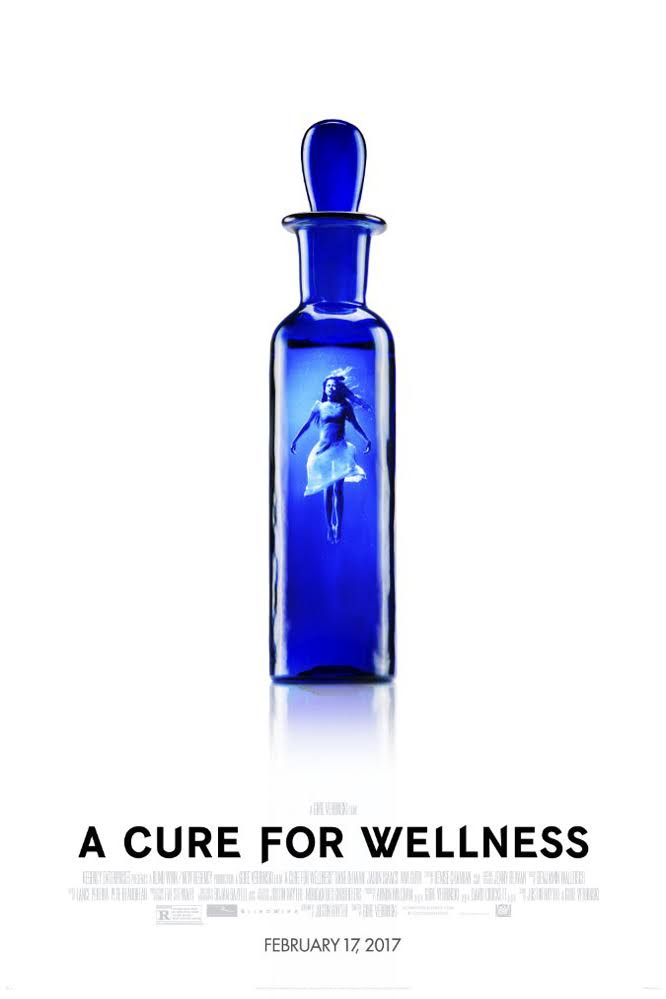
“A Cure for Wellness” movie review

acureforwellnessAn intriguing, provocative psychological thriller that’s an innovative example of neo-noir avant-garde cinema with a touch of mystery. Gore Verbinski’s A Cure for Wellness is a thought-provoking film that hooks you from the very beginning and continues to draw you into the narrative with its labyrinth of subplots and incredibly beautiful cinematography. Although it certainly borrows turning points and plot devices from past films, A Cure for Wellness provides audiences with an experience that is unique and protects the film from being pigeonholed into any one sub-genre of horror or directly compared to other movies that have similar attributes. With impeccable production designs and serene landscapes juxtaposed against cringe-worthy disturbing imagery, Verbinski’s ambitious film is one that cinephiles will appreciate and find enjoyment in discussing the various themes, symbols, and visual storytelling elements that seamlessly work together to create a cinematic experience that stands out against the homogeneous horror/mystery-thriller past films. Justin Haythe’s screenplay sets him up for continued success as he demonstrates, with this film, that he can cross into new genres and hook the audience early on. Despite the occasional slow-burning periods in the narrative, you will not likely feel the nearly 2.5hr runtime.

After he receives a corner office in a high rise building, a stock broker finds himself involved in an investigation that requires the presence of the entire board. Mr. Lockhart (Dane DeHaan) is forced by his fellow directors, on the board, to fly to Switzerland to retrieve the CEO in order to complete a proposed merger to save the company from closure. Little does he know that those who voluntarily check in to the mysterious wellness center seldom desire to leave the prestigious mountaintop retreat-like spa and its famous water. When the CEO of his company refuses to leave the comfort of the retreat, Lockhart decides to wait it out in the village below the hilltop. After a bizarre car accident on his way back into town from the institution, Lockhart finds himself a patient due to his broken leg. Under the guidance of Dr. Volmer (Jason Isaacs), Lockhart experiences all the wellness center has to offer to the patients and guests. However, he cannot help but feel that there is a darkness surrounding the cult-like daily operations at the spa and begins to dig into the history of the prestigious wellness institution. After meeting a rather unusual patient at the institution named Hannah (Mia Goth), Lockhart is determined to unravel the mystery of how so many people, including himself, are diagnosed with the same bizarre ailment that keeps them there for the cure.

Beautiful. The first cinematic element that will jump out at you will be the incredible cinematography and picturesque landscapes of the Swiss Alps. From the moment the film opens, there is a tone that inspires you to look at and listen for details throughout the film. The fact that the teasers and trailers reveal very little about the plot is beneficial to the overall experience of the film. Just when you think you have the plot figured out, you will be thrown for a loop and question what you thought was predictable. In all fairness, I figured out a very important aspect to the plot midway through after a particular line delivered by one of the central characters prompted me to have one of those aha moments. However, I was still continually intrigued by the film’s diegetic delivery and visual storytelling. The fact that I figured some rather crucial information did not detract from the experience. Early on, it is clear that there is something not right with the spa, and gathering information and piecing together the puzzle will draw you in closer to the film. Without giving anything away, there are definitely clues along the way that reveal the dark mystery and history behind the exclusive mountain retreat wellness institution.

Dane DeHaan delivers an excellent performance as Lockhart, and provides the perfect balance of entitled Wall Street prick, detective, and humanitarian on a rescue mission. Jason Isaacs, no stranger to playing a creepy villain, delivers a disturbingly convincing performance as the strange doctor overseeing the almost clandestine treatments for an unknown sickness. Mia Goth’s performance adds a great deal of uneasiness to the film by coming across as innocent, child-like, all the while hiding something creepy and peculiar about her very pretense at the facility. Bojan Bazelli’s cinematography is breathtaking and is successful at completely immersing the audience into the mountain top world of the Swiss Alps. Whether following a train or an extreme close-up of the human eye (a staple in horror films), the visual art he paints with the camera serves to provide solid visual storytelling. Directing such a complex film requires great patience, organization, and effective guidance. Verbinski channels his success with The Ring (2002) by integrating some similar stylistic techniques in A Cure for Wellness. Speaking of the title itself, the irony in the title isn’t realized until the third act; but, delivers an outstanding payoff that will prompt many discussions in a film studies class. Stylistically, the film sits at a crossroads between avant-garde horror and neo-noir with some science-fiction and mystery thrown in for good measure and intrigue.

Despite many reviews slamming the film for a complex system of subplots and not enough traditional terror in the narrative, this film is a fine example of an outstanding vision that is seldom seen on the silver screen due to the fact that it will not likely make a lot of money, but it adds critical value to the art of motion pictures. Instead of creating a film that would have included many of the more typical tropes in this hybrid science-fiction mystery/thriller, Verbinski chooses to meticulously craft art for the screen. For the squeamish, there are definitely some scenes that will churn your stomach and even some disturbing imagery that many will like to unsee. If you enjoy avant-garde cinema or even innovative neo-noir storytelling, then you will likely enjoy this film and appreciate the vision of the director as well as the beautifully complex themes, subplots, and symbolism.

Written by R.L. Terry

Edited by J.M. Wead

“Split” movie review

splitIntensely captivating! M. Night Shyamalan stages a successful return to the horror-thriller genre in the brilliantly intriguing motion picture Split. When Universal Pictures, arguably the king of the American horror film, Blumhouse Productions, and Shyamalan combine their respective visual storytelling skills, the result is a dynamic thriller full of outstanding twists and turns. Shyamalan, long known for surprise or bizarre endings, provides audiences with the biggest surprise of all: he is back, and it’s a completely satisfying cinematic experience! Beginning with 2015’s The Visit, Shyamalan has been working on a comeback; and Split is the final evidence needed to support his successful return to the silver screen. James McAvoy delivers an outstanding performance–or should I say performances–every minute of the film. Although the concept of building a suspense-thriller around a character with dissociative identify disorder (DID), formerly known as multiple personality disorder, is not a new one–after all Norman Bates is the most iconic example. M. Night Shyamalan puts his own spin on the character-type by adding his special blend of what can only be referred to as “shyamalan-ness.” You’ll definitely want to see it again in order to catch everything that you missed the first time.

A film that many psych majors will find fascinating! While the mental divisions of those with dissociative identity disorder have long fascinated and eluded science, it is believed that some can also manifest unique physical attributes for each personality, a cognitive and physiological prism within a single being. Though Kevin (McAvoy) has evidenced 23 personalities to his trusted psychiatrist, Dr. Fletcher (Betty Buckley), there remains one still submerged who is set to materialize and dominate all the others. Compelled to abduct three teenage girls led by the willful, observant Casey (Anya Taylor-Joy), Kevin reaches a war for survival among all of those contained within him – as well as everyone around him – as the walls between his compartments shatter apart. (IMDb).

Just when you think the movie is going one direction, it throws you for an unpredictable loop. Split provides audiences with the same level of captivation as M. Night delivered in Signs or even in The Visit. Very much character-driven, this film could have easily taken a turn for the campy or par-for-the-course approach to a central character with DID; but Shyamalan proves that a familiar premise can be crafted into a whole new experience. After the incredible success of 1999’s The Sixth Sense, audiences everywhere set the bar for Shyamalan quite high–in fact he was prematurely compared to a 21st century Alfred Hitchcock. While it is highly unlikely that any director will reach the iconic status of Hitchcock, Shyamalan was seen as a director who would provide a similar experience to that which earned Hitchcock the moniker the master of suspense. Evidence of his admiration of Hitchcock can be been in the title sequence of Split. It bares a striking resemblance to the opening title sequence from Psycho. 

However, the danger in prematurely setting expectations too high is that you may likely be setting yourself up for disappointment. And that is precisely what happened with Shyamalan. From killer plants to invisible supernatural entities, he began to lose the cache he earned in the early 2000s. M. Night would spend years disappointing audiences to the point that he became a joke–a parody–perfect material for Family Guy. Then just when all hope for Shyamalan to regain the admiration of movie patrons–especially those who enjoy horror/suspense/thrillers–he gives us The Visit in 2015. That film was the glimmer of hope he needed to begin to rebuild his status as a thriller/suspense/horror filmmaker. And with the incredibly satisfying Split, M. Night Shyamalan is BACK!

Films like Psycho and Split only work as well as their respective director and cast–primarily the villain. Obviously, Psycho stands up to the test of time and will forever be a favorite of many cinephiles and a testament to the power of visual storytelling, Split had to be a new experience while still channeling the director that Shyamalan admires and patterns himself after. The success of Split rested upon the performance of McAvoy as Kevin (and the 23 others with a 24th on the horizon). McAvoy’s performance in this film is quite possibly the best of his career. Each identity is clearly seen as individuals. From his facial expressions to his gait to the manner in which he carries himself, every identity is unique in voice and appearance. Even in the middle of a conversation, one identity goes away while another surfaces into “the light.” Although there are only a few identities that have prominence in the diegesis, the others give audiences just enough nuance to register them as having a presence in the subconscious of Kevin.

For all the excellence in cinematic storytelling Split has to offer, there is no denying that it may be controversial in that it uses DID to construct a “beast.” There are already members of the mental-illness community who have expressed disdain for the subject matter and context of the film. However, prematurely dismissing this film as offensive to those suffering from cognitive disorders would be ill-conceived. After screening the film, it is clear that the focus is not on DID itself (or any other cognitive disorder that Kevin may have), nor is Kevin crafted to be an unredeemable monster; but, this film uses DID and the character of Casey (one of the young ladies who is captured at the beginning of the film) as tools through which to explore childhood trauma, abuse, and coping mechanisms. Isn’t that what films do? Push the envelop in an effort to provide a different perspective on an issue, problem, or circumstance? Horror is often concerned with “other” scenes–revealing that which should remain hidden–and Shyamalan does precisely that in Split.

If you enjoy horror, suspense, or thriller films, then you are definitely going to enjoy Split. There is so much to take in, that you may want to watch it again in order to catch everything that you may have missed the first time. Even if you are skeptical or think the content may be offensive to the mental-illness community, you may be surprised that there is a lot that can be gleaned from the narrative. With brilliant performances, excellent writing, and outstanding direction, Split should be on your radar of films to watch this weekend.

Written by R.L. Terry

Edited by J.M. Wead