A sleek and suspenseful espionage thriller. Steven Soderbergh teams up with screenwriter David Koepp to craft a cinematic world of intrigue and deception in Black Bag. The duplicitous nature of the film is witnessed in the gripping marital drama that underscores the covert spy activity. Rooted in themes of trust, betrayal, and the cost of secrecy, this film places audiences deep within the labyrinthine world of British intelligence, where loyalty is as much a weapon as it is a liability.
When his beloved wife, Kathryn, is suspected of betraying the nation, intelligence agent George Woodhouse faces the ultimate test — loyalty to his marriage or his country.
Michael Fassbender and Cate Blanchett lead the charge as George Woodhouse and Kathryn St. Jean, a married couple whose bond is tested when George is tasked with unmasking a mole inside the British National Cyber Security Centre (although not stated, the Centre is reminiscent of MI6). When suspicion falls on Kathryn, the mission becomes personal, forcing the couple into a high-stakes psychological chess match where every move could be their last. David Koepp’s screenplay strikes a deft balance between razor-sharp dialogue and simmering tension, drawing audiences into a narrative that is as much about human connection as it is about spycraft.
Fassbender delivers a layered performance, portraying a man caught between duty and devotion, while Blanchett’s enigmatic presence keeps audiences guessing until the final frame. Their electric chemistry brings an emotional weight to the thriller, grounding the high-stakes espionage with raw, personal stakes.
Adding depth to the intrigue is an exceptional supporting cast, including Naomie Harris as a perceptive psychiatrist and Regé-Jean Page as a brash but brilliant operative. Each performance contributes to the film’s palpable atmosphere of uncertainty, where shifting alliances and hidden motives drive the tension ever higher.
Soderbergh’s signature directorial style is on full display, with dynamic camerawork, crisp editing, and a refined aesthetic that gives Black Bag an effortlessly cool veneer. Complemented by David Holmes’s pulsating, jazz-infused score, the film moves with a rhythmic intensity that keeps the tension taut from start to finish.
David Koepp’s screenplay is a masterclass in taut, intelligent storytelling, seamlessly blending espionage thrills with deeply personal stakes. The interplay between George and Kathryn is laced with suspicion and longing, making every conversation feel like a battle of wits. Koepp’s ability to navigate shifting alliances and hidden motives ensures that no scene feels wasted, keeping audiences engaged in a labyrinth of deception. While the plot’s complexity demands careful attention, the payoff is both satisfying and thematically rich, cementing Black Bag as a sleek and sophisticated entry in the spy thriller genre. My only negative critique of the screenwriting is that Koepp’s screenplay does suffer from some poor pacing in the first act.
While he doesn’t play a prominent role in the film, seeing former Bond Pierce Brosnan return to (what we may as well call) MI6 was a nice treat and nod to his tenure as the definitive fictional British spy.
While some may find the intricate plotting requires a close watch, the payoff is worth the investment. More than just a spy thriller, Black Bag is a stylish, smart, and suspenseful exploration of trust in a world where deception reigns supreme. A must-watch for fans of sophisticated espionage cinema.
Ryan is the general manager for 90.7 WKGC Public Media in Panama City and host of the public radio show ReelTalk about all things cinema. Additionally, he is the author of the upcoming film studies book titled Monsters, Madness, and Mayhem: Why People Love Horror. After teaching film studies for over eight years at the University of Tampa, he transitioned from the classroom to public media. He is a member of the Critics Association of Central Florida and Indie Film Critics of America. If you like this article, check out the others and FOLLOW this blog! Follow him on Twitter: RLTerry1 and LetterBoxd: RLTerry
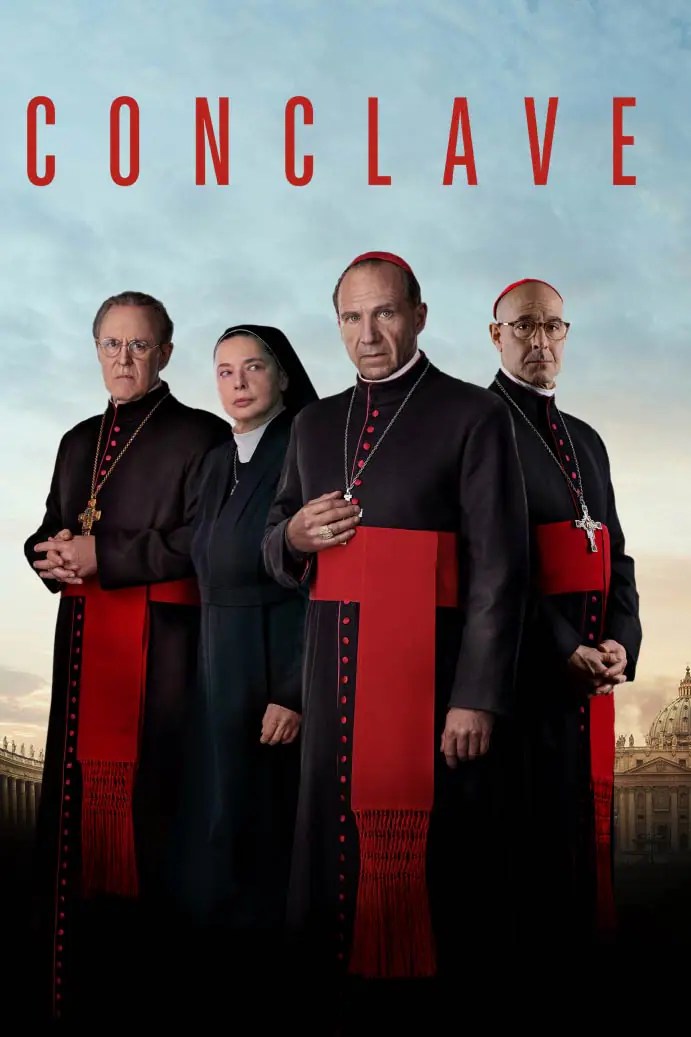
Spellbinding and poignantly reflective! It’s like House of Cards but with Cardinals and Nuns. Truly captivating.
Cardinal Lawrence has one of the world’s most secretive and ancient events, participating in the selection of a new pope. Surrounded by powerful religious leaders in the halls of the Vatican, he soon uncovers a trail of deep secrets that could shake the very foundation of the Roman Catholic Church.
I feel the film strikes a delicate balance between reverence for the subject matter, yet provides us with a subtle critique of its institutional traditions. The story unfolds with deep respect for the gravity of the papal election. However, through its unfolding intrigue, the film also reminds us that faith should ultimately be centered on God rather than on rigid customs or political maneuvering. The narrative underscores how human ambition, secrecy, and tradition can sometimes cloud the true purpose of faith. And the plotting is meticulously structured. Every revelation is carefully placed, each character’s motivations are unraveled with precision, and the pacing ensures that the suspense never overshadows the film’s thoughtful meditation on spirituality and power. I also like how the screenplay both honors faith-based institutional traditions but challenges the audience to reflect on what truly matters in faith.
To me, the cast collectively delivers a compelling performative dimension that drives the captivating nature of this film. Feinnes, Rosselini, Tucci, Lithgow—what a powerhouse. The actors did a brilliant job of drawing audiences into the pomp, circumstance, and almost clandestine nature of the election of the Pope. Feinnes’ performance as Cardinal Lawrence was bold and convicting, yet incredibly nuanced at the same time. The other cast member I want to spotlight is Isabella Rossellini as Sister Agnes. And while the gravitas she brought to every scene, in which she was featured, allowed her to steel the spotlight, there were Amy moments—to my delight—that I could hear Lisle Von Rhouman from Death Becomes Her.
I love how the characters are not merely realistic individuals vying for power within the Vatican but, a closer reading reveals something far more important in these characters: the key characters each represent broader themes of faith, morality, and human ambition. Each character serves as a symbolic force in the intricate balance between divine guidance and earthly maneuvering. Just to name a few: I see Feinnes’ Lawrence as the moral compass, Tucci’c Bellini as the political strategist, Lithgow’s Tremblay as the power seeker, and Rossellini’s Sister Agnes as the voice of reason or conscience. Each character represents different facets of power, faith, and human imperfection within religious institutions. Collectively, the characters offer audiences more than a quasi-political thriller, but a meditation on the true meaning of leadership.
The exquisite costuming and production design truly immerse us into the grandeur and secrecy of the Vatican. The costuming itself was a work of art that demonstrated careful attention to ecclesiastical tradition but also incorporated visual storytelling elements. The choice of fabrics, embroidery, and even the way the robes drape contribute to the film’s overall sense of realism and reverence, and serve as an extension of the setting and the personalities of the characters. As for the production design, every detail, from the richly embroidered vestments to the imposing architecture, reinforces the film’s solemn, high-stakes atmosphere. A key aspect of this visual achievement is the film’s use of Cinecittà Studios in Rome. Founded in 1937, it is one of the largest film studios in the world and has a rich, legendary even place in cinema history. Which I could go into for the rest of out time together. But suffice it to say, it was home to Liz Taylor’s Cleopatra and Isabelle Rossellini’s famous director father filmed at the storied studio. You can visit it, and its theme park today!
I feel the film has a lot to say about a variety of topics. If I was to identify a few, I’d say there are themes and messages concerning faith and politics, which we witness in the actions of the cardinals, while ostensibly seeking to follow God’s will, we are reminded that they are humans influenced by personal beliefs, rivalries, and ambitions. While it’s a group of men in this film, in this situation, we can really extend this idea to any and everyone. I also like how the film explores the immense weight leadership brings with it. Probably what hit me the most was how the film was not so presumptuous as to posit answers or solutions, but rather more concerned about prompting introspection. It respects the sacred traditions of the Church while also questioning the imperfections of any human-led institution—which is all of them. The film suggests that true faith is not found in ceremony or power but in the individual’s relationships with God and his or her fellow man.
I love when a film transcends its premise. While the surface of a film can be intriguing, entertaining, funny, or scary, it’s what lies beneath the surface that offers a timeless cinematic richness. And Conclave is one of those films. It offers us a profound reflection on the world we live in, and the intricate dynamics that shape our daily lives. This film serves as a mirror to the struggles of leadership, morality, and power that permeate every institution—from politics to corporations, from religious organizations to personal relationships.
Ryan is the general manager for 90.7 WKGC Public Media in Panama City and host of the public radio show ReelTalk about all things cinema. Additionally, he is the author of the upcoming film studies book titled Monsters, Madness, and Mayhem: Why People Love Horror. After teaching film studies for over eight years at the University of Tampa, he transitioned from the classroom to public media. He is a member of the Critics Association of Central Florida and Indie Film Critics of America. If you like this article, check out the others and FOLLOW this blog! Follow him on Twitter: RLTerry1 and LetterBoxd: RLTerry
A peerless delight! A throwback motion picture as exquisite as the House of Dior itself! Refreshing, uplifts the human spirit. A film to inspire dreamers and doers. Easily one of the best pictures of the year. Slip into Director Anthony Fabian’s meticulously crafted film that is sure to make a beautiful statement in any cinema! Lesley Manville delivers a command performance as the title character that will tug at your heartstrings. While the setting may be in the pretentious world of haute couture, this adaptation of Paul Gallico’s timeless novel takes audiences on a journey that is just as relatable and relevant as it is whimsical! When so many films depict the fate of the world at stake, preach a woke-filled sermon, or rely on showmanship over substance, Mrs. Harris Goes to Paris is an endearing fairy tale that feels very close to story in which we could find ourselves. Realistic enough wherein we effortlessly buy into the story with just the right about of fantasy that it serves as a much needed cinematic respite from the deluge of larger-than-life movies overcrowding cinemas across the country. Simple, yet complex. It’s a perfect drama that provides audiences with hope and hutzpah.
In 1950s London, a widowed cleaning lady falls madly in love with a couture Dior dress, deciding she must have one of her own. After working to raise the funds to pursue her dream, she embarks on an adventure to Paris that will change not only her own outlook — but the very future of the House of Dior.
Whimsical, yet relatable. Pretentious, yet authentic. That is the magic of Mrs. Harris Goes to Paris. Films depicting central characters setting out to realize a dream are in no short supply; the examples over the nearly 125 year of cinema are seemingly endless. But what makes this film so special is just how within arm’s reach it feels. Our central character of Ada Harris (Manville) is an everyman–one of us–fears, dreams, and all. She comes from a world not unlike the one in which you and I may find ourselves. Grated, we’re not all housekeepers, but we’re either presently or have been the invisible, under-appreciated worker within our respective vocational fields. We know what it’s like to have a dream, and work to make it happen. That’s the key here–work.
From the moment Mrs. Harris lair eyes on the Christian Dior dress in one of her employer’s wardrobes, she knew right then and there that she needed to own a Dior original! Not to impress others, but because it was so beautiful! For some, it’s a designer dress, for others it may be a particular automobile or work of art. We all dream of owning something that has special meaning to us–it makes us feel happy! But the real accomplishment is when it is the result of hard and smart work. Mrs. Harris is a hard, dedicated worker who values the blood, sweat, and tears it takes to provide for oneself or craft something beautiful for the world to see and appreciate. Mrs. Harris also reminds us that it’s okay to want something exquisite or beautiful because of how it makes (or we believe it will make us) feel. Treat yourself! Moreover, Fabian’s film also provides commentary on the dangers of placing one’s identity into material possessions or status symbols. There is a healthy balance, and Mrs. Harris lives that out! She is as beautiful on the inside as she is on the outside.
Lesley Manville’s Mrs. Harris is loved by nearly all whom meet her, because of her genuine spirit of kindness, graciousness, and generosity. Those whom have trouble with Mrs. Harris find her authentic spirit unfitting, disruptive, or something to be taken advantage of. When those with the best of intentions, come to disappoint Mrs. Harris. What I love about Mrs. Harris’ internal and external journeys is that they don’t simply fall into place through some deus ex machina methodology. She’s met with some serious setbacks and heartbreaks along the way. Even when you’re sure it’s gonna work out like it does in the movies, it’s more like one step forward and two steps back. But she doesn’t let that defeat her. Even her great apprehension about leaving her comfort zone, does not stop her. Still, she demonstrates inner-struggles when faced with the comfort of the status quo, or taking a chance on something wonderful!
Even though this movie harkens back to Hollywood’s feel-good movies in a post-WWII world, the characters are not one-dimensional caricatures from a bygone era. Our lead Mrs. Harris, her best friend, and Dior staff all have multiple layers about them…each goes on a journey of self-discovery paired with tangible goals. In others words, in screenwriting terms, each has a well-defined external goal and internal need driving the character. Is every character that well defined? No, but importantly the central and chief supporting ones are. Perhaps you’re a Mrs. Harris, maybe you’re a Natasha (the model), Mrs. Colbert (the legacy employee), or Mr. Fauvel (the accountant), You will likely find yourself as one of the prominent characters in the movie. It’s possible that you may be one of Mrs. Harris’ various employers (which will give you some pause to evaluate how you treat your employees).
Underpinning the A Story, is a story of worker exploitation. Even though the film could have spent a great deal of time on employer-employee relations, the backdrop of workers;’ rights serves as a conduit through which the film is able to comment on how employers should treat employees and even adapt with the changing times. It’s not a heady-handed message, and does come off a little hokey, but it works tonally in this film. There is a documentary by the title Dior and I, and I recommend watching it as a companion piece to this film as it will give you a greater appreciation for Mrs. Harris Goes to Paris. Furthermore, you may want to search for the 1992 adaptation starring Dame Angela Lansbury. Manville’s expression (and Fabian’s expression) of the character and story are not the same as the 1992 film, so you can appreciate both for all they respectively bring to this timeless story.
Between Top Gun: Maverick and Mrs. Harris Goes to Paris, we are seeing the power of timeless stories brought back to the big screen! That’s why these two films work as well as they do: some stories are just that–timeless. Each has a simple plot and complex characters, entertains and inspires. Both of these films uplift the human spirit in ways that seek to bring people together instead of dividing them apart.
Ryan teaches Film Studies and Screenwriting at the University of Tampa. If you like this article, check out the others and FOLLOW this blog! Interested in Ryan making a guest appearance on your podcast or contributing to your website? Send him a DM on Twitter or email him at RLTerry1@gmail.com! If you’re ever in Tampa or Orlando, feel free to catch a movie with him.
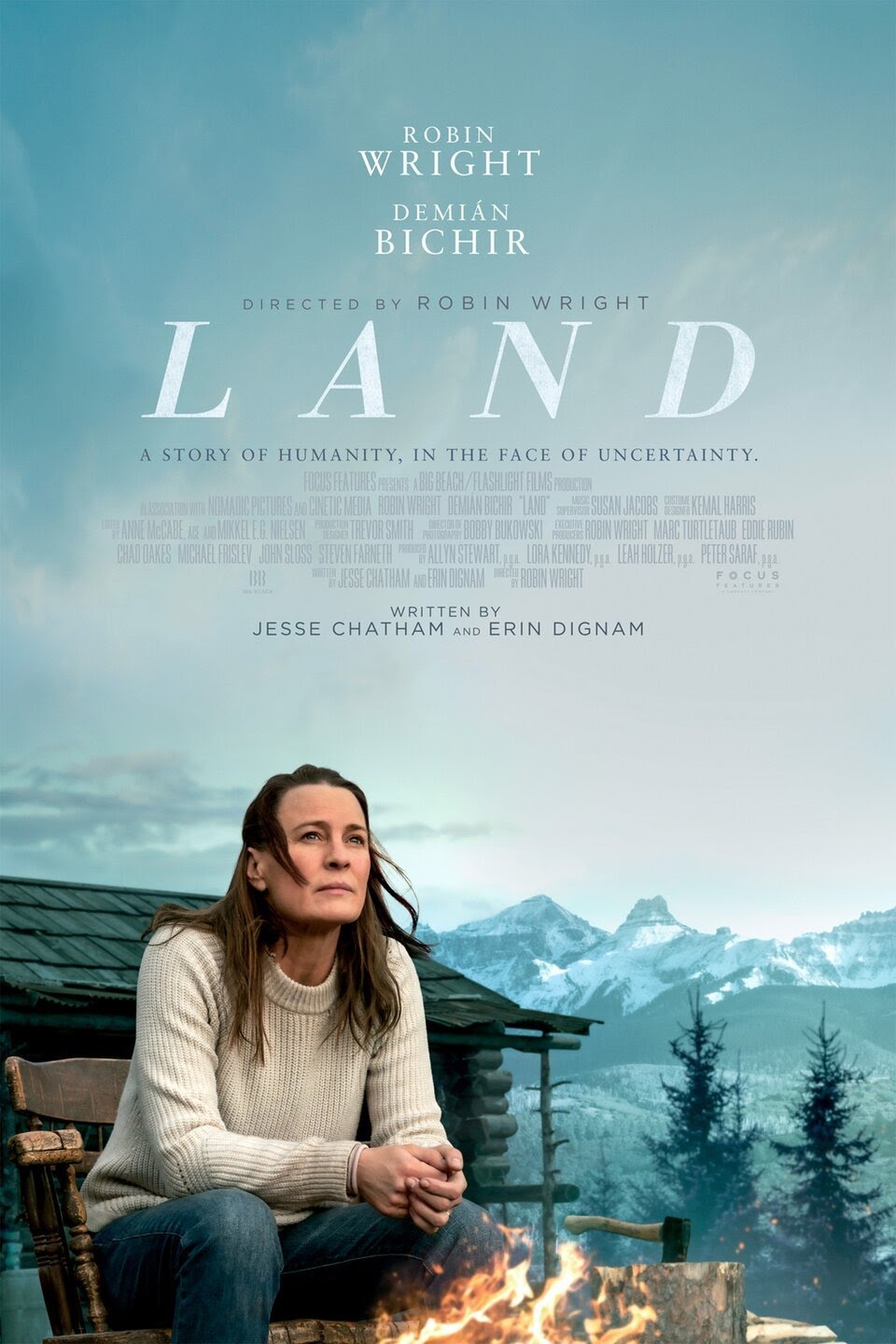
A thoughtful exploration of PTSD, grief, and isolation that takes you on a journey that will ultimately lift your spirits and leave you with hope. Robin Wright’s directorial debut LAND is a breathtaking motion picture best experienced on the BIG SCREEN. And fortunately, it’s currently only available on the big screen. From the sweeping mountain landscapes to intimate character moments, this motion picture is an audacious yet simple story. Wright’s film is a punctilious, existential character study about the importance of connection even when isolation seems to be the only choice to work though (or avoid, as it were) traumatic, debilitating stress. Land an intelligent, emotionally moving work of cinematic art. So often character study films find themselves on the verge, if not intentionally, manipulating the audience; however, this film finds the balance in delivering the thoughtful moments and plot direction. That said, the third act does feel a bit rushed after the methodical first two acts. When actors transition to writer or director, there is historically a tendency to be self-indulgent, sometimes to the point of crafting one’s own Oscar or sizzle reel, in an effort to demonstrate the breadth of talent that they feel their previous directors or producers have hindered them from fully showcasing, but that is not the case with Wright’s LAND. While Wright is demonstrating that she can successfully direct a motion picture, she is making this film for any and everyone who has suffered a great loss or experienced a psychologically damaging trauma. With minimal dialogue, especially in the first act, Wright takes a page out of the Norma Desmond school of filmmaking, and relies upon the power of the eyes and nuance of body language to say everything. “I can say anything with my eyes,” –Norma Desmond (Sunset Boulevard).
When Edee (Robin Wright) cannot find solace in her therapist or sister following a tragedy, she buys an isolated home in the mountain wilderness of Wyoming, and completely disconnects from the outside world. “No phones, no lights, no motorcars, not a single luxury…,” you get the idea. Not fully prepared for the harshness of living on the frontier, she finds herself at the brink of death when a local hunter Miguel (Demian Bichir) and nurse Alawa (Sarah Dawn Pledge) come to her rescue. Although Edee is thankful for saving her life, she is resistent to any further help or company. Through her geographic and social isolation, Edee learns the value of human connection.
At its heart, LAND is a character-driven story about loss and grief so unimaginable that it drives one to the brink of death. And Wright does a brilliant job at visually communicating the immenseness of this pain through the use of placing the central character of Edee against the backdrop of the Rocky Mountain wilderness. When one experiences an intense psychological trauma, it’s almost as if the entire once-familiar landscape has radically changed, and has it in for you. Throughout the introductory scenes and even the first act as a whole, Edee displays great pain. But it’s not big and loud pain; it’s nuanced and understated, but no less powerful and moving, eliciting great empathy from the audience. The screenwriters strategically withhold the details about the trauma that led Edee to make her radical decision to escape to the wilderness to escape the pain of reality. However, we are given little crumbs of exposition through the effective use of brief flashbacks paired with intense plot beats. Through these brief flashbacks, we learn that Edee has a sister named Emma; but we also get glimpses of a man and boy (that we later learn is Edee’s lost husband and son). By the screenwriters keeping these cards close to their chest, the audience keeps the focus on Edee’s present journey, and it has the added benefit of driving up the suspense.
Up to the point of Edee’s near death experience due to hypothermia, the film has an incredibly somber tone with little to no hope in sight. But with the introduction of Miguel and Alawa, the film undergoes a tonal shift. Not only do these good Samaritans save Edee’s life, but Miguel becomes an unexpected companion, teacher, and eventual friend. Apprehensive to the idea of human company, Edee eventually finds value in the survival lessons that Miguel can teach her. Against her initial reaction to this new-found neighbor, she accepts Miguel’s offer but asks that he not tell her anything of the outside world. Edee learned early on that Miguel has his own trauma that he’s working through, and uses hunting and quiet times in the wilderness as his therapy. Watching these two interact with one another, softens the tone of the film even though the specter of Edee’s anger remains active beneath the surface. Still, we can tell that she is consistently processing her experience and reaction thereof as she learns to live off the land. Over the months the Edee is learning from Miguel, we witness that Edee is strong and capable, and isn’t allowing the loss of her family to leave her a victim. Rather than becoming a prisoner of or exploiting her suffering, she uses it as motivation. She turns her immense pain into something proactive and meaningful.
While shooting a film in such a breathtaking setting may provide temptation to capture the majestic beauty of the Wyoming Rockies to the extent that the film merely becomes a series of postcards that happen to contain some plotting and conflict, LAND never shifts focus from our central character. The environment in which she finds herself manifests an extension of the emotional turmoil. Despite the grand beauty of the setting, it never feels entirely safe. Danger looms around every corner, because it was successfully setup right from the very beginning. Much in the same way that the set and production design of a gothic romance or German expressionism film creatively manifest the emotional subtext and tone of the film, the mountainous landscape of LAND very much does the same. When we are internalizing trauma, whether it’s by intentional choice or subconsciously, the image we project may be positive and beautiful, not unlike the mountains that surround Edee’s shack. But that shack represents the turmoil that has taken up residence within our mind.
For all the avant-garde elements of Wright’s LAND, she directed an accessible character-study motion picture that most audiences can appreciate and understand. All the while, Wright doesn’t have to hold our hands along the treacherous pathways. While the plot is simple, this film provides a great opportunity to have conversations about the affects of trauma, especially when it’s unimaginable. Whether you have found yourself in the depths of depression and self-imposed isolation as Edee or not, you will be able to connect to this relatable character because we have all lost someone dear to us (most recently, I lost my grandmother). Perhaps you have chosen a different method for coping with your grief, but this is how Edee chose to deal with hers. It’s a journey to which we can relate, as so often we don’t really know what to do with our anger following tragedy. Sometimes we too may feel that we want to escape from it all, but we eventually learn that we need human connection in order to survive.
This is a motion picture truly best experienced on the BIG SCREEN at THE CINEMA. Cinemas are hard at work to create a safe environment for you. I am a regular at the Universal Cinemark, and have never felt unsafe.
Ryan teaches screenwriting and film studies at the University of Tampa. If you like this article, check out the others and FOLLOW this blog! Interested in Ryan making a guest appearance on your podcast or contributing to your website? Send him a DM on Twitter or email him at RLTerry1@gmail.com! If you’re ever in Tampa or Orlando, feel free to catch a movie with or meet him in the theme parks!
An intriguing story on a timely topic with lots of promise; however, it ultimately leaves little room for redemption. But hey, Mulligan’s performance was truly outstanding! After being away from the cinema for over a month in the wake of my grandmother’s passing just before Christmas, I returned to the Universal Cinemark. Usually, I am on top of new theatrical releases, but I was unable to attend the cinema while out of town. So I am just now getting to Promising Young Woman. As such, I’ve been able to read tweets, read blogs, and listen to reviews of this film. Needless to say, I was expecting one of the best films of 2020; unfortunately, that is not the case. While the film showcases an exceptional performance by Carey Mulligan, and even a solid performance by Bo Burnham, the film fails to follow some basic narrative conventions. There was such a fantastic opportunity to comment on toxic college culture, including the epidemic of higher education covering-up sexual assault, the rationalization of not taking responsibility for one’s actions, and (this is where the film fails its audience) the ability for one to have a redemption arc. Where is the redemption in the film? Nowhere to be found. However, we have an excellent example of what happens when one refuses to forgive. Unforgiveness is like a poison that eats away at the mind and soul. Forgiveness does not equal forgetting nor pretending that everything is okay. For a film that was full of promising teachable moments, it succumbs to the narrative trap of an inability to acknowledge that change is possible. If Scrooge can be redeemed, so can we all.
Synopsis: Nothing in Cassie’s (Carey Mulligan) life is what it appears to be — she’s wickedly smart, tantalizingly cunning, and she’s living a secret double life by night. Now, an unexpected encounter with a former colleague Ryan (Bo Burnham), she sees this as a chance to right the wrongs from the past.
Before I get into the issues I take with the message, plot, and narrative, I want to highlight what the film delivered well. Standing out, is the phenomenal performance by Mulligan. While my personal principle of only watching/reviewing films that have an exclusive theatrical run limit the scope of what I can cover, from the 2020 films that I did see, her performance is certainly a standout from the year. This showcase performance is likely to land her a Best Actress in a Leading Role nomination at the Oscars and Globes. I greatly appreciate how the character of Cassie is both colorful, and glossy one moment, and dark and terrifying the next. Even simultaneously conveying the complexities of a character suffering from a personal hell brought on by unresolved trauma. The other performance of note is Bo Burnham’s as Ryan. While not as notable a performance as Mulligan’s, there is still a lot to be admired in this role, which is largely a departure from the majority of the roles from his past. This film serves as a conduit for him to showcase his acting chops in a more serious role. Even though his performance may not land him on any awards lists, it’s still a performance that will undoubtedly land him future leading roles. And hopefully one of those future roles will give him a more complex character to portray.
Despite my reservations with the plot, I cannot not acknowledge this directorial accomplishment by Emerald Fennell. Clearly, Fennell’s penchant for direction is witnessed in this film. While she has been nominated for her television screenwriting, where she shines in this film is in her role as director. Each scene is directed skillfully, and thoughtfully. Of all the great scenes, the one that stands out the most is the showdown between Cassie and Al Monroe at the bachelor party. Clearly, Fennell understands the power of nuance, and can communicate that throughout the film. Screenplays need writers who care, and films need directors who care. And Fennell inarguably cares about how each scene is executed and the characters therein.
Representation vs reality. There is a grand discussion topic; one that is core to film studies. In fact, just today, I was lecturing to my film studies students at the University of Tampa on representation vs reality. Whether or not the subjects on screen (people, places, things) exist within our reality, they are certainly representative of that which is real. And Fennell certainly leans heavily into representation of her version of reality. Unfortunately, in her warped version of reality, no one is written with an ability to acknowledge or take responsibility for past/current sins and then CHANGE, to experience a redemption arc. Instead, our central character of Cassie is written as a narcissistic, self-righteous young woman that goes through life as judge, jury, and executioner; she is prohibited from changing her worldview; likewise, the character of Ryan is prohibited from changing for the better, and is viewed through the lens of his reckless youth.
Most individuals, male or female, from Cassie’s past, are depicted as exhibiting deplorable behavior. The men of Promising Young Woman are especially depicted as reprehensible people. Even the likable character of Ryan, who is supposed to represent the actual “good guy” is sent to the metaphoric gallows for his past, despite the fact that he had demonstrably changed since college and had healthy, genuine romantic feelings for Cassie. The fact of the matter is, observational and statistical evidence shows that most men are NOT like the ones at the bar or in that video footage of the shameful, contemptible, disgusting sexual assault in college. Yes, some are, and they need to be held accountable for their egregious actions by law enforcement. And the leadership at universities needs to be held accountable for covering up these sexual assault crimes. Where the film excels is confronting both the dean of the college and the lawyer that protected Al Monroe from prosecution; these scenes are particularly powerful and provide commentary on a real problem that needs to be dealt with. Even the showdown between Cassie and Monroe provides thoughtful content to discuss and provide a wakeup call for those that engage in sexually criminal behavior as college students. Furthermore, the film does a brilliant job at exploring just how those that commit “drunken” sexual assault can rationalize why they aren’t actually responsible for their actions. Terrifying, but true.
The films does the characters of Cassie and Ryan a gross disservice. We’ll start with Ryan. While he was certainly complacent in the sexual assault against Nina, and should be confronted, he changed since his college days. He should’ve been given the opportunity to acknowledge his past, and demonstrate how he has experienced a personal redemption arc. That doesn’t mean that there aren’t still consequences, but people CAN change. He could’ve also been an example of the fact that there are actual good guys out there. This would’ve shown Cassie that she cannot assume that all men are despicable, despite the narrative she has experienced; thus acknowledging the error in judgement of her worldview. She isn’t without blemishes on her own record either; therefore, she cannot personally go around condemning all those she deems unworthy of forgiveness. Ryan is a relatable character because he is the most human out of all of them. He isn’t perfect, and he certainly doesn’t pretend to be. He has made mistakes, just like all of us. Granted, his mistake in being complacent during and after the sexual assault he was witness was a terrible one; but he certainly changed in the years following the tragic crime.
And now for Cassie. When we refuse to forgive someone that has wronged us (whether that wrong is mostly harmless or criminally abominable), it’s important to forgive as to not become a prisoner of our mind. Now, forgiveness does NOT mean forgetting, nor does it mean that everything is as it was before. Trust is still broken, lives are still lost, trauma is still experienced. Unforgiveness is like drinking poison; it’s like constructing a personal prison because it’s a toxic mindset that still allows the wrong-doer to have power over the life of the individual that was wronged. To the film’s credit, this toxic behavior is depicted quite well in the character of Cassie, as her refusal to forgive, to release herself from the prison of her mind, ultimately leads to her destruction. Much like the plot does not allow Ryan to be forgiven after his demonstrable change, the film also does a disservice to its central character, because Cassie never changes. There is a glimmer of change, but is quickly shattered. In this film, there were great teachable opportunities (1) to illustrate that there are good guys out there even if their past isn’t spotless (2) that Cassie’s lack of forgiveness is toxic, and prevents her from experiencing a healthy mind and spirit and (3) Ryan could’ve acknowledged and dealt with the idea that complacency contributes to the larger institutional problem of sexual assault in college. This film paints a portrait that change and redemption are impossible concepts.
For all the promise that this film had for a comprehensive approach to teen and college sexual assault, and the cover-up thereof, it fails to provide any avenues for redemption, which hinders the narrative from having the emotional impact it should’ve had. It ultimately falls victim to its own narcissistic self-righteous central character in a revenge plot that leaves no room for redemption. But, this film is a great exercise in the emotional and psychological affects that the lack of forgiveness has upon the mind and soul that ultimately leads to a toxic self-prison.
Ryan teaches screenwriting and film studies at the University of Tampa. If you like this article, check out the others and FOLLOW this blog! Interested in Ryan making a guest appearance on your podcast or contributing to your website? Send him a DM on Twitter or email him at RLTerry1@gmail.com! If you’re ever in Tampa or Orlando, feel free to catch a movie with or meet him in the theme parks!






 R.L. Terry ReelView