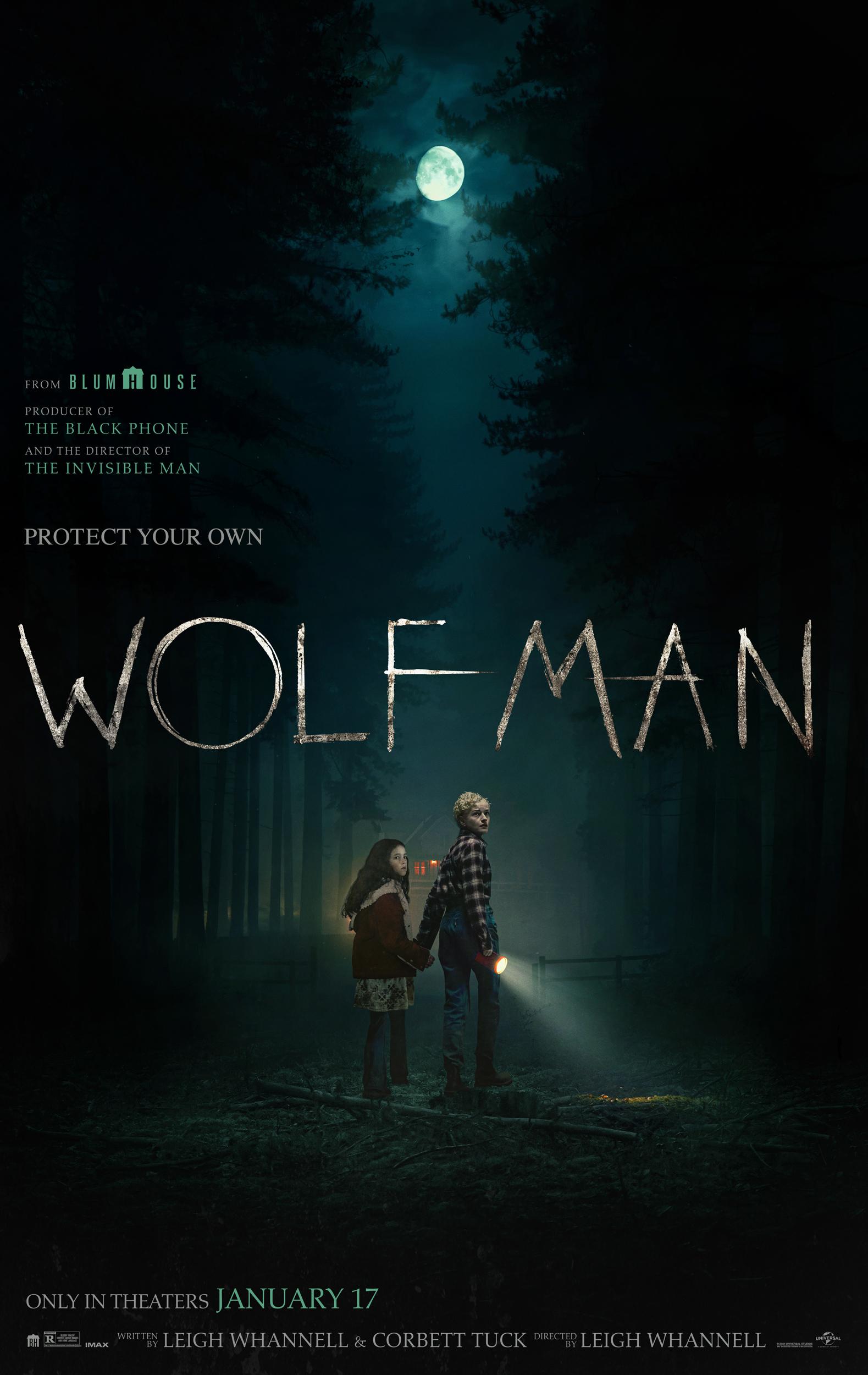
Underwhelming. Leigh Whannell’s second remake of a Universal Monster classic has about the same depth as a puddle of water and keeps your attention about as much. No mistaking it—there are some brilliant ideas all throughout this movie, but the connective tissue is simply non-existent. Clearly this movie is Whannell’s attempt at infusing a thoughtful family drama about generational trauma and broken relationships into the monster movie formula, but the screenwriting fails to support this attempt. Whannell has previously demonstrated that he can successfully remake a classic whilst retaining the soul of the original and adding a layer of modern sensibilities, because that is exactly what he did with the critically acclaimed and box office success of The Invisible Man in 2020. Also, would somebody please send Julia Garner a great screenplay? She is a phenomenal actress; but ever since she finished Ozark, she hasn’t been offered a cinematic vehicle in which she could best shine. She’s still the best choice for a Madonna biopic. But I digress. 2025’s Wolf Man certainly had the potential and pedigree to be an entertaining, thoughtful, and exhilarating horror movie, but the screenwriting simply isn’t there to support it. However, I’m sure it’ll make for a great Halloween Horror Nights house later this year.
Blake and his family are attacked by an unseen animal and, in a desperate escape, barricade themselves inside a farmhouse as the creature prowls the perimeter. As the night stretches on, however, Blake begins to behave strangely, transforming into something unrecognizable that soon jeopardizes his wife and daughter.
Despite Whannell’s ambitious reach, his Wolf Man remake fails to capture the innovation and depth of the original (1941) and the popcorn entertainment of the 2010 remake. While it boasts a rather strong performative dimension and effective moments of terror, the film struggles with strategic plotting, thematic clarity, and consistent execution of film craft. From beginning to end, there are setups without any payoff and many filler scenes that pad an anemic narrative. Moreover, the first and third acts feel truncated in exchange for a protracted second act that lacks any meaningful character or plot development. This is one of those horror movies that has all the bones of a great and entertaining story, but the moments wherein the pot and characters should steep are nearly non-existent. It has all the markings of a first draft screenplay. And with Whannell’s name all over the billing from writer, to director, to producer, this film suffers from what plagues so many film’s these days: lack of accountability. I’ve said it before, most directors are not writers and most writers are not directors. There are of course exceptions, but I’d like to see more writers and directors working together instead of feeling that one has to be both in order to be taken seriously as an auteur.
One easy example to cite (that isn’t a spoiler) is something that happens at the very beginning of the film that spotlights recurring setups with lack of payoffs. As 12 year old Blake is walking with his domineering father through the woods, his father makes a big deal out of some mushrooms in which Blake was interested, noting that many mushrooms are poisonous. The degree to which Blake’s father draws attention to the mushrooms sets up the Chekhov’s Gun storytelling device–or rather–appeared to have set the stage. Nope. Those mushrooms never come back into play for the duration of the movie. Whannell should have either found a way for those mushrooms to payoff in the showdown or should have not drawn acute attention to them at the beginning of the movie. Why am I spotlighting this? Because it’s indicative of the recurring weak screenwriting mechanics that plague this movie.
You may have heard that many critics and fans have negatively criticized the wolf man’s appearance. I may not be able to speak positively of the movie’s story and characters, but I do feel the need to come to the movie’s defense here, because the movie is called Wolf Man, not An American Werewolf in London. Looking back to Lon Chaney Jr.’s iconic Wolf Man (designed by the legendary Jack Pierce), he was designed to be a wolf-like man, not a werewolf in the traditional sense. Thematically, it represented then (and still represents in this latest iteration), the “monster” within each of us that has to be controlled. I respect Whannell’s decision to keep with a variation of Jack Pierce’s original concept of the Wolf Man, and I feel that it works very well for this movie.
An area where this movie shines brightly is in the exquisite sound design. From the immersive sounds of nature in the forest to the changes in Blake’s sense of auditory processing, the sound mixing and design are fantastic. Of all the moments demonstrating strategic and effective sound design, where Whannell’s direction demonstrates the greatest thoughtfulness, is in the moments wherein Blake’s human senses begin to transition to canine senses. Aside from this transition faltering to allowing for room to develop, the idea of dramatizing this for the audience was innovative and paid off dramatically.
Even though I am an advocate for experiencing cinema in the cinema, this is one of those movies for which you should wait to be added to Peacock–which will probably be very soon.

Ryan is the general manager for 90.7 WKGC Public Media in Panama City and host of the public radio show ReelTalk about all things cinema. Additionally, he is the author of the upcoming film studies book titled Monsters, Madness, and Mayhem: Why People Love Horror. After teaching film studies for over eight years at the University of Tampa, he transitioned from the classroom to public media. He is a member of the Critics Association of Central Florida and Indie Film Critics of America. If you like this article, check out the others and FOLLOW this blog! Follow him on Twitter: RLTerry1 and LetterBoxd: RLTerry

 R.L. Terry ReelView