
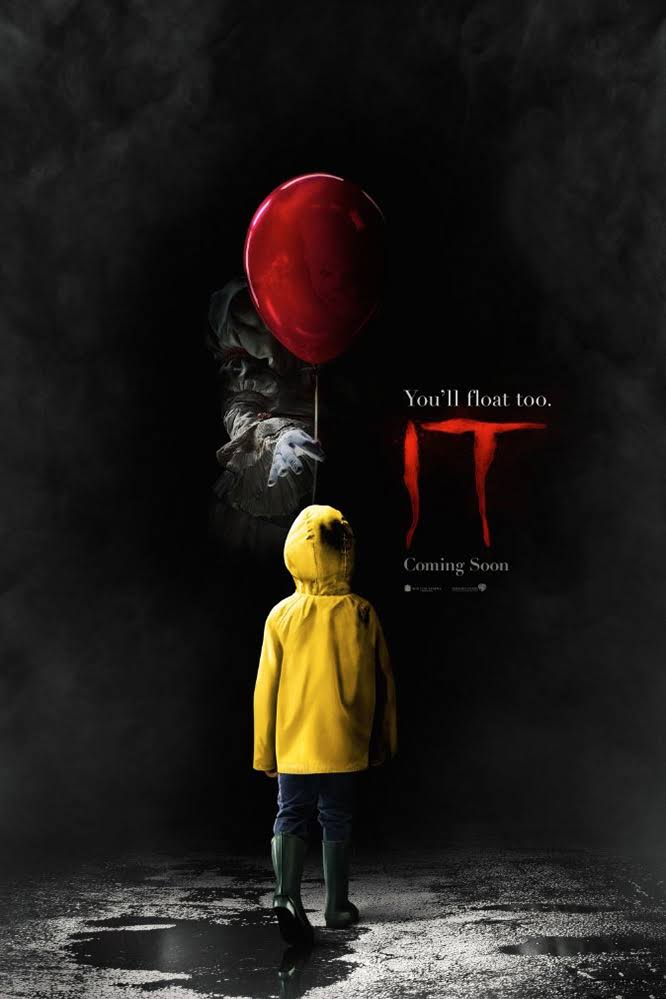
“IT” (2017) film review

IT’s hauntingly fantastic! From the first to the last scene, the Stephen King adaptation directed by Andres Buschietti is nothing less than a horror masterpiece that does both the original novel and the TV mini series (1990) justice. The brilliance behind the adaptation is found in the excellent cast. So organic, so relatable. A common trope in King novels (and by extension the movie adaptation) is the tried and true narrative structure of the “coming of age” story. Although Stand By Me typifies the “coming of age” subgenre, IT may serve as a horror film for shock value on the outside; but beneath the nightmare-inducing exterior, beats the heart of a heavy drama with a great message about growing up, friendship, teamwork, and facing one’s fears. Few horror films reach iconic status, but this one is surely destined to be counted among films like: The Shining, Friday the 13th, Nightmare on Elm Street, Halloween, Texas Chainsaw Massacre and others. For all the previous King adaptations, Buschietti may have directed the best adaption we have ever seen. Kubrick’s The Shining may still win the award for most artistic and cinematic; however, 2017’s IT takes the words from the pages and successfully translates them to the silver screen along with impressive set design, special/practical effects, and a blood curdling score.

Derry, Maine may seem like a picturesque idealistic version of Americana, but it has a problem. Every couple of decades, children and teenagers vanish without a trace. After Georgie disappears while playing with a paper boat in the rain, his brother Billy (Jaeden Lieberher) becomes determined to solve the mystery and find his brother. Met with opposition from his father, Billy teams up with his long-time friends Eddie (Jack Dylan Grazer), Richie (Finn Wolfhard), Stanley (Wyatt Oleff), and new friends Beverly (Sophia Lillis), Mike (Chosen Jacobs), and Ben (Jeremy Ray Taylor) to unravel the mystery surrounding the town of Derry. In their wildest nightmares, no one could have anticipated the evil that lies beneath the streets, in the dank sewers of the Maine hamlet. When faced with what terrifies each of them the most, the group of young people must band together in order to conquer their fears and destroy Pennywise, the evil dancing clown (Bill Skarsgard).

The local movie theatre’s marquee displays Wes Craven’s A Nightmare on Elm Street 5; and the fact it is that particular film serves a more important purpose than simply to establish the period (which it does brilliantly, by the way). That particular movie is quite symbolic, and in many ways, parallels the events that unfold in Derry, Maine. Both Nightmare and IT take place in small towns; and furthermore, the ensemble cast is comprised of young people who must face fears and band together in order to conquer the evil that threatens their very lives. Although this version of Pennywise is a little less playful than the iconic original Tim Curry Pennywise, the dancing killer clown has a very Freddy Kruger quality about him. Many of the qualities that aid in (in my opinion) making Freddy the most terrifying of all the classic slashers and icons, is his playful attitude followed by moving in for the kill in a very showman way. Both Pennywise and Freddy are born out of and prey upon deep childhood fears and quite literally become the manifestation of the evil in the world. As such, there are many reasonable ways for IT: Chapter 1 to spawn several sequels in the same way that A Nightmare on Elm Street did.

As nightmarish as the majority of the movie is, it does struggle here and there to connect all the scenes together whilst maintaining a solid rhythm. The overall sense of dread is carried through for the most part, but there are times that the film fails to increase the level of anxiety which could have been accomplished by spending more time in Derry’s history and the traumas and secrets that were buried over the decades. I would have liked to have seen the sewers that the kids search through be more symbolic of the very plumbing that transports the deep seeded fears that are ignored or flushed away by the people of Derry. IT certainly accomplishes its goal of being a high quality horror film but it falls short of going as deep as it could have. The overall experience of the film rivals that of other great horror films that have gained iconic status. Greatly contributing to this success is the balance between establishing nostalgic connections between it, the original IT, and the audience members, and the excellent 21st century hair-raising effects. The relatable cast seems to have been taken right out of Netflix’ Stranger Things, and will work wonders for attracting a younger audience who may not be familiar with the novel or original mini series.

There are two films in IT: the horror film and dark drama. Both are well executed but have a few flaws in the nearly perfect recipe. It’s both a nostalgic coming-of-age story and a Wes Craven Freddy-like slasher. Having an ability to be a dark drama masquerading around as a horror film will do very nicely at the box office. Perhaps if this film were a little more like Nightmare and we saw a little less of Pennywise, he would be more terrifying. As it stands, the more we see Pennywise, the less scary he becomes. Still, he is pretty terrifying! Buschietti may not wind up with the same cache as Kubrick, Hitchcock, or Craven, but he has emulated much of what the aforementioned masters of suspense, terror, and horror pioneered many years ago.

One thing’s for sure, this is a great way to kick off the Halloween season of films! After a mostly lackluster August, I am glad that the cinema is bustling with great films to see. IT this week, Mother next week, followed by the remake of Flatliners, September is shaping up to be a terrifyingly brilliant month for films. Should you choose to venture to Derry, Maine this weekend, you won’t be disappointed with the remake of a classic. If you really want to have some fun, bring along a friend who has a phobia of clowns.

“The Glass Castle” film review

An organic, unapologetic emotional rollercoaster. Based on the novel by the same name written by Jeannette Walls, The Glass Castle provides audiences with a glimpse into the childhood, young adulthood, and then-present day life of Jeannette Walls. After watching the film and end-credit scenes of the real Jeanette and family, it is clear that the movie is supported by a screenplay that takes its inspiration from the tome-like book. From what I have read, this film successfully adapts the novel to the screen, inclusive of all the intangibles and the unseen or heard elements from the book. Furthermore, this film strikes a fantastic balance between family drama and biographical motion picture. For all that this film has going for it, it falls short of the big-budget tear-jerker that is expected of Destin Daniel Cretton after his hit Short Term 12. However, those who choose to see this gritty slice of life, who have not seen Cretton’s previous works, will likely miss just how safely objective this film is. Although you will likely identify with one or more of the characters, in general, audiences will feel that they are safely watching the events unfold from a removed vantage point. The danger in bringing a story like this one to screen is creating characters that are either too softened compared to the real people or too detestable. Fortunately, Cretton skillfully tells a story that plays as authentic as cinematically possible.

You can choose your friends and lovers, but you cannot choose your family. The Glass Castle is the film adaptation of the memoire authored by Jeannette Walls (the central character). Jeannette and her three siblings must learn to take care of themselves and survive life as their parents are free-spirited responsibility-adverse individuals who inspire and inhibit growth and education. When he was younger, their father generated a great deal of warmth, compassion, individualism, and creativity; but when he turned to drinking more heavily, he allowed them to go without food and watched over them like a warden watches over prisoners. Meanwhile, mom was completely disgusted with the idea of being a domestic so she allowed the children to care for themselves and even prepare her meals. Jeannette and her siblings faced great adversity growing up, but grew to become contributing members of society.

This is one of those films that you go into thinking that a particular actor or character is the main one, but in all reality, it is the antagonist, if you will, that is the main character. Jeannette Walls (Brie Larson) may be the author of the novel and a lead character, but it is actually Rex’s (Woody Harrelson) movie. On one hand, Rex is a brilliant father who is preparing his kids for the harsh realities of life and how to not fall victim to blending in or turning into someone you are not. On the other, he is a belligerent drunk who cares very little for the well-being of his children and even ships them off to live with his aged mother who is a child molester. Through all the struggles and setbacks, Jeannette and her siblings learn resilience and strength to face whatever life throws their way whether that is extreme poverty or molestation.

The Glass Castle relies upon switching between the present story and flashbacks to hone in on the relationship between Jeannette and her father Rex. Often times, flashbacks are used as means to lazily integrate exposition into the film or explain some other dynamic; however, much like the background story in Fried Green Tomatoes is just as interesting as the foreground story, the rotation between Jeannette’s childhood and her adulthood is performs well and creates quite the interesting dichotomy. Both have the central focus of showing the development or lack thereof in Jeannette’s and Rex’s relationship. Not that other relationships take a backseat, but there focus is squarely on Rex and Jennette. There is one particular scene in the film that deserves special attention, and that is the restaurant scene with Jeannette and Rose Many, her mom played by Naomi Watts. The degree to which this scene is pitch-perfect is almost uncanny. The tension, emotion, and cathartic release commands attention.

Ultimately, the strength of this film lies in the writing and lead cast. Only to a minor extent does the screenplay depart from the source material. And in doing so, the film is strengthened. For those who enjoy films in the vein of The Help, you will enjoy this story as well. To keep the film from being too dark, Cretton adds some feel-good moments to the film that do not attempt to sanitize the past but honors the complicated truth in Jeannette’s and Rex’s relationship.

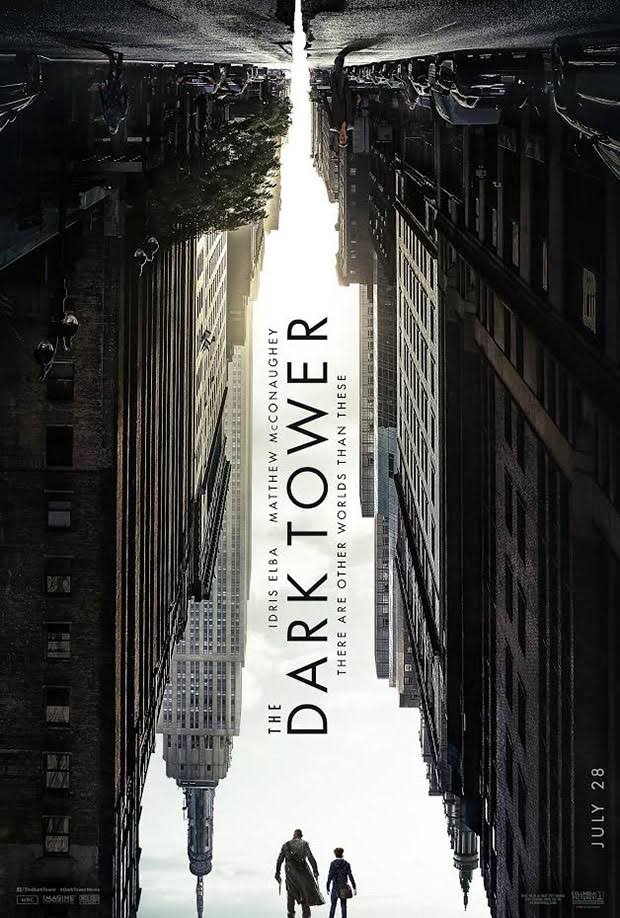
“Dark Tower” movie review

A paint-by-the-numbers “epic” story with a prolific number of Stephen King references. Adapted from the Dark Tower series of novels by Stephen King, Dark Tower introduces movie audiences to one of King’s masterpiece works of literature. Unfortunately, the movie takes place in the middle of the series and fails to leave audiences wanting to see more. For the most part, it offers up little more than an enhanced SyFy Channel original movie or a one-time HBO film. With a powerhouse leading cast consisting of Idris Elba and Matthew McConaughey, it constantly feels that the actors were held back from that which we are normally accustomed. That is, not to say that there aren’t enjoyable parts of the movie–certainly seeing all the King references are fun and it is a great premise. I only wish the story and characters had been allowed to develop over the course of three films. Although there is sufficient evidence to suggest that some movies in the recent past that have been forced into a trilogy instead of a strong, concise single film, this is an example of a one-time film that truly needed the room of three films to develop and emotionally connect with audiences. There is never a dull moment in the film, nor an opportunity to become bored because the film is incredibly rushed and turning points are forced into place.

At the center of the universe stands a massively tall dark tower that keeps the bulk of evil forces at bay. Under attack by Walter (McConaughey), the last gunslinger Rolland (Elba) must destroy Walter and his following before they destroy the dark tower and wreak havoc on Keystone Earth and the other planets in the universe. Harvesting children with “the shine” from earth, to use their minds to destroy the tower, is the method employed by Walter and he has his eyes on a child whose shine is greater than any other. After Jake (Tom Taylor) evades capture by Walter’s henchmen, he finds himself on Mid World where he meets gunslinger Rolland. Under constant siege by Water, Rolland and Jake must make a arduous journey to Walter’s headquarters where he is mounting his attack against the tower. With the fate of the universe at stake, Rolland, Walter, and Jake face-off in an epic battle of good versus evil.

There is not much to dissect here. One thing is for sure–and I have not read the books–BUT, from what I know of the books, fans of the literature will not like the film because it takes what happens over the course of “King” sized novels and condenses it down to little more than a short story turned 2hr film. Not having read the books, I was not set up for disappointment. That being the case, I enjoyed the film for the most part. But it was obvious that it was incredibly rushed and there was little if any development in plot or character. No emotional investment to be found. It’s a shame; the premise of the film is fascinating and I think there is a high degree of probability that I would have enjoyed following the franchise had it been more than one film. The way the movie ends does lend itself to possible sequels, but after the very “television” feel of this one, it is going to have a hard time convincing future audiences to invest time and spend money on it. If anything, this film does prompt me to read the novels upon which it is based. One argument that could be made in the film’s defense is the same one that can be made when looking at many of the films based upon King’s works. His novels are so dense, internally driven, and detailed that is is difficult to successfully translate effectively from page to screen. Obviously, there are exceptions to this trend (i.e. the upcoming IT theatrical release).

If you are a fan of fantasy and adventure films with a hint of science-fiction, then you will likely enjoy this movie. If you love the series of books, I feel fairly confident that you will not like this adaptation. Perhaps this film will inspire a network to spearhead an epic television series. I think that is where this story will be best shown.

Written by R.L. Terry

Edited by J.M. Wead

“Dunkirk” film review

Journalism meets cinematic visual storytelling. Christopher Nolan’s war epic Dunkirk provides audiences with a different kind of war movie experience. Different in that the narrative is nonlinear and highly experimental. From a technical perspective, the film is flawless. The cinematography, sound design, and score all work together to create an immersive experience in which that fourth wall is nearly removed. One of my friends that I saw the film with last night described it as being a fly on the wall within each timeline. With little dialog, the focus is on the various groups of the army, air force, and civilians. The stylistic film reminds me of photo/video journalism. Dunkirk demonstrates that an emotionally satisfying experience can be delivered without conventional storytelling. In many ways Norma Desmond would be proud of Nolan’s film because “[he] didn’t need dialog, [he] had faces.” Dunkirk invites audiences in for a rare glimpse into the reality of war, and the reality of not only the armed forces but the civilian assistance that truly made the difference and just why this particular war story is so remarkable. Be sure to brush up on your knowledge of the events of Dunkirk before watching the film. You’re definitely going to need to have a base of knowledge of the theatre before becoming the proverbial fly on the wall.

Instead of a plot synopsis, here is what Wikipedia has as a summary of the history of Dunkirk Evacuation. This is definitely going to be helpful prior to watching the film.

During the Second World War (1939–1945), in the May 1940 Battle of France, the British Expeditionary Force (BEF) in France aiding the French, was cut off from the rest of the French Army by the German advance. Encircled by the Germans they retreated to the area around the port of Dunkirk. For years, it was assumed that Adolf Hitler ordered the German Army to stop the attack, favouring bombardment by the Luftwaffe. However, according to the Official War Diary of Army Group A, its commander, Generaloberst Gerd von Rundstedt, ordered the halt. Hitler merely validated the order several hours after the fact. This lull in the action gave the British a few days to evacuate by sea and fortify defences. Winston Churchill, the British Prime Minister, ordered any ship or boat available, large or small, to collect the stranded soldiers. 338,226 men (including 123,000 French soldiers) were evacuated – the miracle of Dunkirk, as Churchill called it. It took over 900 vessels to evacuate the Allied forces and although over two-thirds of those rescued embarked via the harbour, almost 100,000 were taken off the beaches. More than 40,000 vehicles as well as massive amounts of other military equipment and supplies were left behind, their value being less than that of trained fighting men. The British evacuation of Dunkirk through the English Channel was codenamed Operation Dynamo. Forty thousand Allied soldiers (some who carried on fighting after the official evacuation) were captured or forced to make their own way home through a variety of routes including via neutral Spain.

If you are approaching Dunkirk from a desire to see a Saving Private Ryan, then you may want to rethink going to see this film. With little convention in the storytelling, this film puts you on the beach, in the air, or on the sea alongside the civilians, pilots, soldiers, and officers. The focus is not on the characters, special effects, or the bloody atrocities of war, but focussed on highlighting a significant event in WWII history that has largely gone unknown except for those in France and the UK. You are very much like a journalist who is capturing the imagery with your camera. It’s a snapshot of war, not necessarily the story of war. War history buffs, this IS a film for you!

“It Comes at Night” movie review

The Doore of Red Death. A24’s highly anticipated horror film It Comes at Night by writer-director Trey Edward Shults looks beautiful and beckons for attention, but fails to live up to the storytelling and payoff of A24’s The Green Room. Another A24 film in the vein of It Comes at Night is 2016’s The Witch, which was ultimately a failed attempt to capture the magic of a horror/mystery film and leave audiences with too many unanswered questions. The only “terrifying ambiguity” (to quote The Huffington Post), in this film, is just how terrifying it is to realize you just dropped money on a film that works better for Netflix, and the ambiguity comes from the plethora of underdeveloped plot elements. Essentially, It Comes at Night reminds me of a bad M. Night Shyamalan film (before he made his outstanding comeback with The Visit and Split) and after the successes of The Sixth Sense and Lady in the Water. Like the aforementioned era of ehh Shyamalan films, the wind up is excellent but the delivery lacks any emotional impact and you’re left with realizing that you never truly cared about any one of the characters. Character development is lacking, and the third act is incredibly weak. However, there is something in particular that I find very interesting; and after reading other reviews, it seems to be something that has escaped most (if not all) the critics at this point. That is the striking similarities between this film and the timeless classic short story The Masque of Red Death by the brilliant Edgar Allan Poe. From the painting on the walls of the house depicting the bubonic plague to the ominous red door, there are quite a few parallels between It Comes at Night and The Masque of Red Death.

Nestled deep in the woods is a secluded boarded up house belonging to a family of three seeking refuge from an unknown threat. Whatever has caused this family to live off the grid and fend for their very survival is tasteless and odorless. Forced to wear gas masks whenever venturing out into the woods and even around their own home, the family is forced to take drastic measures to ensure there ability to avoid coming into direct contact with the disease. With only now way in or out of the house guarded by a red door, the family has stopped at nothing to protect themselves. One night, the family’s house is broken into and they must decide what to do with the man and his family. Having dispensed with courteousness and generosity in order to guard against any and all possible threats, the family must decide whether to listen to the man or kill him right then and there. Their decision will spark a fire that spreads into their deepest fears.

*spoiler alert* But, the analysis is fascinating.

Okay, now I know that the preceding paragraph describes what should be a brilliant horror film, but the problem lies in the greatly flawed poor storytelling, development, and realization. Lack of connection to any one of the characters is also partly responsible for the lackluster experience of watching this horror-thriller with a hint of mystery and dystopia. The only saving grace the film has is the connection to elements of Poe’s Masque of Red Death. For starters, the camera draws the audience’s (and diegetic POV) attention to a painting of a depiction of the bubonic plague (or black death). At first, I was puzzled as to why this painting. Then as I go through the movie, I realize why. Between the constant reference to and runtime spent on talking about and showing the red door, it hit me that this film reimagined Poe’s short story and set it in a dystopian or post-apocalyptic time and place. If you are unfamiliar with The Masque of Red Death, then I encourage you to read it or watch it on YouTube. It is allegory on the inevitability of death no matter how  hard you protect yourself, how much money you have, or how powerful you are. It also contains allusions to the seven deadly sins and the fate of those who party in the wake of mass death among a lower class of people. Although I find the short short to be a stronger narrative than Shults’ variation on this reimagination of the classic tale.

Both the short story and this film contain people hiding out in a fortress. Whereas The Masque of Red Death‘s Prince Prospero is held up ins abbey with his wealthy and noble friends while the red death is killing off the rest of the kingdom, A24’s It Comes at Night features a typical American family living off the land and secured in their rather tutor-looking mountain lodge. Like in Red Death, the family in It Comes receives an uninvited guest one night. Here’s where we see some difference. In Poe’s story, the guest is dressed to attend the masquerade ball and in this film, the guest attempts to break into the home. Although both stories take different approaches to the second act, once thing is in common. And that is the taking in of an outsider. All through the second act, there are hints at something not being right–a constant uneasiness. That apprehension and anxiety regarding the unknown works in the respective stories favors. The emotional impact and psychological payoff differs between the short story and film. Yes, the endings are very similar but feel incredibly different. You’ll just have to read The Masque of Red Death and watch It Comes at Night to know for yourself.

If you’re searching for a thriller to watch this weekend, as it is rain in many parts of the country, then perhaps you should watch Universal Pictures’ The Mummy instead. However, if you are curious about how well It Comes at Night parallels Poe’s short story, this definitely check it out. Not entirely sure why it’s rated R, but in case that’s important to you. To quote Dr. Ian Malcolm, “well, there it is.”