“Overlord” full movie review

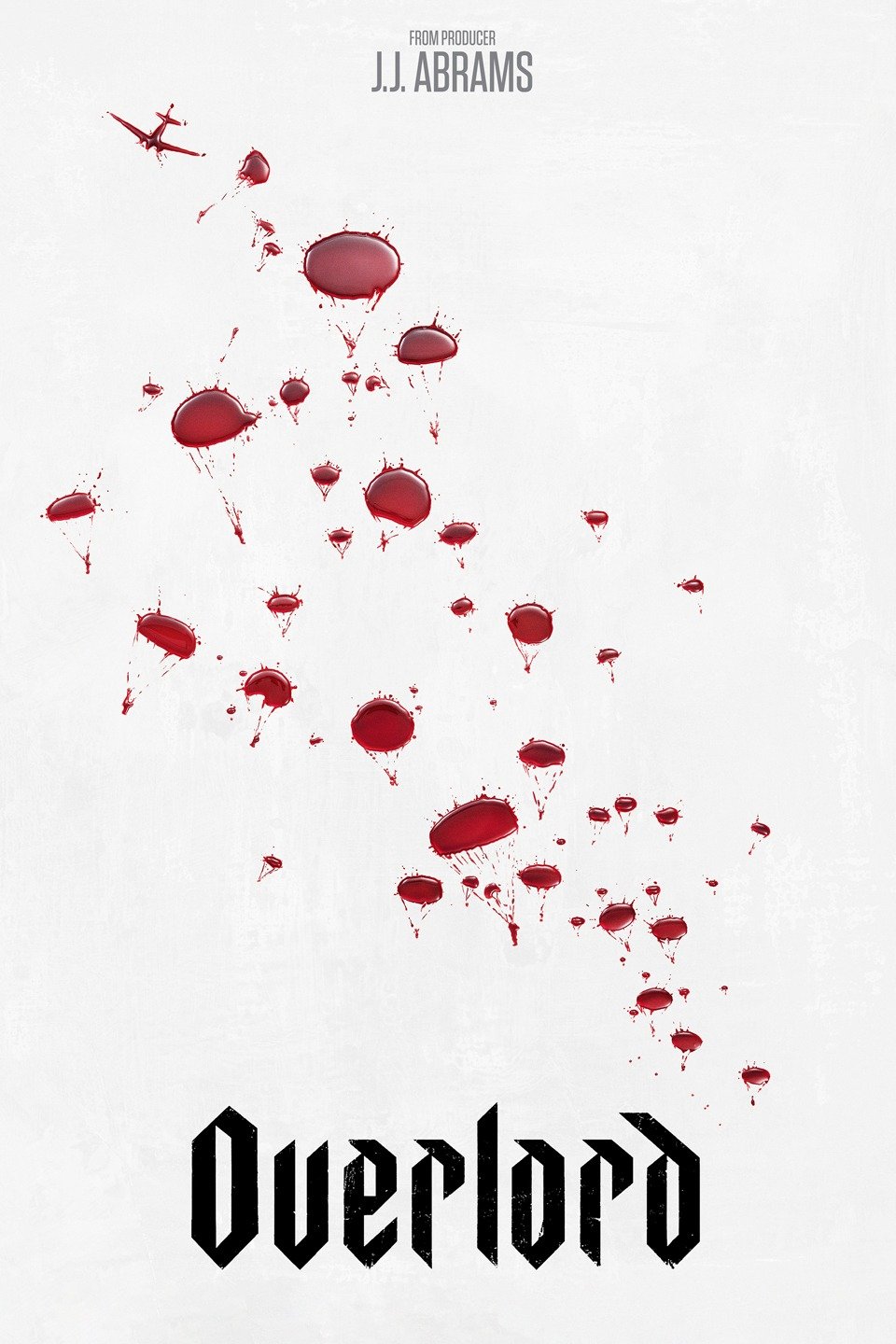
Surprisingly deep! The best kind of bait and switch is when you go in with moderately low expectations and get blown away by how incredibly well an experimental film dances the line between two genres and provides us with rich writing and excellent direction. At the end of the day, it is still a glorified B-movie, but it’s a B-movie that has so many A-list qualities about it. Often when the term experimental is attributed to a film or movie, it is usually because of a particular stylistic choice by the director; however, I chose that description for this movie because it blends the war (WWII) genre with horror and action to create a movie experience that is incredibly thrilling and creepy. Not for the weak stomached, this movie contains quite a lot of war and horror violence, but the gore and violence are never the focus but used to enhance the visceral experience of the movie. The focus of the movie is on the mission of the American soldiers to take out a signaling tower for the Nazi forces, and we never forget that. For all the complexities of the film, the plot is superbly simple and the main characters moderately complex. If there is one singular fault of the movie, it is that the character of opposition (Wafner) is not as interesting as our central character of Boyce. Supporting the lead cast are fantastic side characters who are mostly there for some comedic relief. While the horrors of Nazi medical experimentation led by the sadistic Josef Mengele are still stomach-churning to this day, the end of this movie contains a brilliant payoff that takes what the Nazis may have been doing right before D-Day, and turns it against them. The Nazi’s are defeated by a member of a group that would have been on their extermination list. If you’re thinking that this is going to be another Dead Snow, you would be wrong. Takes what Dead Snow did well and combines it with the best of WWII movies to deliver an exhilarating movie!

Hours before the real life D-Day, a small group of American soldiers survive a airborne battle above France, and must work together, through their differences, to destroy a signaling tower in village near Normandy in order to allow the Allied forces to storm that infamous beach to deliver France from the clutches of Nazi occupation. The US soldiers soon realize that there is more going on than an oppressive Nazi occupation in the village. As the soldiers inch their way toward the former church, now a Nazi camp, they discover that the evil Nazi medical experimentation goes way beyond unethical and even immoral to downright sadistic. In an effort to solidify the Third Reich’s rein over the world, they have developed a serum to make super soldiers that has some horrific side effects. The allied forces must face not only the Nazi forces but the undead as well.

Why does this movie work as well as it does? Easy. The screenplay by Billy Ray and Mark L. Smith and direction by Julius Avery. Ray is known for Captain Philips and The Hunger Games, Smith for The Revenant. Avery is still relatively new to directing feature films, but demonstrates a strong ability to work with a blended genre that provides audiences with an exciting big screen time. With Avery still earning his chops for feature films, the fantastic screenwriting and story serve as a solid foundation upon which the other elements are built. At first glance, this movie seems like one that would essentially one that is just schlocky fun, or perhaps one that tries to take itself seriously but fails miserably in a way that makes it painful to watch, and ultimately forgettable. But to great surprise, the movie not only delivers a thrilling WWII horror movie but one that is produced with dimension, depth, and visual precision. Although not writing or directing, J.J. Abrams penchant for incredible visuals and heart-pumping action is seen throughout the movie.

Before discussing the performances and visuals of the film, I want to focus more on why this film is much deeper than it first appears. On the surface, it is a WWII action horror movie but beneath the surface, the screenwriters confront the audience with concepts and questions that are creatively woven into the high concept plot. Chief among these is found in our central character of Boyce. He’s a young black male fighting alongside these hard-hearted soldiers. While his counterparts are mostly jaded, he maintains a morally sound world view amidst the harsh realities of war. The fact that the film depicts a young black male as the hero during a time in our country that was about to experience great civil rights unrest, is a testament to the creative and effective approach to this story. He plays the role that is often given to a white actor, but I immensely enjoyed the charisma and talent he brought to this role that shows a progressive film. Regarding the rest of the American soldiers, each soldier represents a different kind of character, providing audiences one with whom they may be able to identify.

In addition to the fantastic casting choice in Boyce (Jovan Adepo), the screenwriters also confront the audience with the question of what truly separates us from our enemies when the only means to defeat them is stooping to their level. Including a message such as this one allows us to use the situation as an allegory in our present culture that is growing increasingly divided, and hate seems to abound. Where do you draw the line in the course of war or a philosophical battle? Ostensibly giving the middle finger to the damsel in distress, this film delivers an independent badass heroine in Chloe (Mathilde Ollivier). Such a strong female character in this movie, Chloe refuses to stay in her home and allow the American soldiers to fight for her. And she is so strong that even the most masculine of the soldiers accepts her tenacity and unbreakable spirit. Fortunately, the movie does not turn her into a love interest for the American soldiers. Many of the solders find her attractive, but she is never objectified by the Americans; however, she is objectified by the despicable Nazis. But fortunately for her, the infatuation the Wafner has with her, eventually brings about his demise.

Overlord delivers it’s visual tension brilliantly. And this is in party to the high degree of visual storytelling in this movie. The action sequences and special effects are extremely well produced. Avery’s movie rises above what we generally expect out of high concept action/horror movies to provide audiences with gritty, gnarly special effects and makeup effects. There is a realness to the atrocities of war felt in this movie that can be greatly appreciated. That realness is achieved by a large percentage of practical effects supplemented with digital effects. As I have pointed out before, relying upon mostly CGI robs the audience and the actors of authenticity. CGI cannot completely replicate the way real light bounces off real objects and into the camera. That sound mix, tho! If anything assaults your senses as much, if not more than the gruesome visuals, it is the ridiculous good sound design and mix. Definitely watch this film in IMAX or Dolby Digital (or the equivalent) if it is available in your area.

If you are seeking a horroresque gritty action movie, then this is one that you do not want to miss. It’s got everything you want from a movie that dances the line between horror and action. I cannot think of another horror action movie that does this as well with the exception of James Cameron’s Aliens (though, that one leans more towards action than horror).

Ryan is a screenwriting professor at the University of Tampa. If you like this article, check out the others and FOLLOW this blog!

Follow him!

Twitter: RLTerry1

Instagram: RL_Terry

Thrillz (theme parks): Thrillz.co

“Bohemian Rhapsody” full film review

Ready Freddie? Adapted from the Queen Wikipedia article, comes the anticipated tribute film Bohemian Rhapsody. Mostly directed by Bryan Singer, but after his unexpected departure, directed by Dexter Fletcher, this could be one of the first films to almost not be a film at all, yet produce an Oscar-worthy performance in Malek’s Freddie. It’s a good thing that your favorite Queen songs are sort of in the movie because the screenplay is off key. In short, the problem with this biographical film can be traced back to the weak writing and misguided direction. Anytime a film has to change directors in the middle of production (for whatever the reason), the film has a high chance of suffering in the transfer of power. There are exceptions; for instance, Poltergeist was directed by Tobe Hooper and Spielberg, and became one of the best horror films of all time. On the topic of writing, paraphrasing Hitchcock, a writer (or director) should start the scene as close to the end of the scene as possible in order to streamline the plot and keep the focus on conflict moving the scene forward. Unfortunately, this movie starts each scene as close to the beginning of the scene as possible and cuts it off just before the ending. Whereas the camera lingered in A Star is Born in order to allow the emotion of the scene to sink in, this camera lacks focus and moves around the scene in a way to document what is doing on, not show us the story and subtext. Speaking of subtext, Bohemian Rhapsody is very much a textbook example of “on the nose” storytelling. There is a great lack of subtext anywhere in the film.

A celebration of the timeless music of Queen, this film chronicles the band’s beginnings to the famous Live Aid concert. Following the band from playing in bars to headlining sellout concerts at world-famous venues, this film takes you behind the scenes to watch the development of the band and–also–spending some time with Freddie’s personal life. Witness Freddie Mercury defy what his family wanted for him and what popular culture defined as a lead singer, and become the icon that he is.

Although the film is lacking in almost every area of storytelling, there is one standout element that cannot be ignored, despite the poor writing and direction. And that is Rami Malek’s performance as Freddie Mercury. Now, I am not a huge Queen fan; yes, I know the same handful of Queen songs that most people know and really enjoy listening and rocking out to them. But, I do not know enough about Freddie in order to know how close Malek’s performance was to capturing the real man. Mainly because I was a really young when he passed away. However, even not knowing much about the real Freddie, I can still assess a great performance, and Malek’s impressed me from start to finish. I thoroughly enjoyed watching him! The commitment to his character is incredible. Not only does he resemble Freddie, but at no point did I ever feel that I was watching an actor play Freddie, but it was like watching Freddie himself (what I know about Freddie, anyway). It will be interesting to watch to see whether or not he gets an Actor in a Leading Role nomination even though the rest of the film will not likely show up on the Academy’s radar. Perhaps the film would have been better if it had been a Freddie Mercury biopic instead of covering the band as a whole. But due to Queen having so much control over the story, the focus consistently shifts from Freddie to the band so that there is no true direction for the conflict to go in order to deliver a powerhouse of a film.

The storytelling is so incredibly disconnected that there are moments that do not feel like a movie at all. Other than the recreation of the Live Aid performance (with a crowds of bad CGI and real shots of the same group of spectators over and over), the best scenes in the film are during the intimate moments between Freddie and Mary. These are the only times that I feel that the film is diving deep, and attempting to evoke emotional responses from the audience. Even during some of the moments that should have been the most gut-wrenching and impactful such as Freddie’s coming out or when he finds out that he has AIDS, just play off as surface-level; they fall flat. Never once does this film dive deep into anything. As soon as the story is about to hit a home-run, it bunts the ball. Fasts-forward to first base, if you will. I am also shocked at the lack of music in this movie. With the title being Bohemian Rhapsody and being about Queen, I half expected that moments would feel like a rock concert. By no means, did I want to watch a 2hr music video or vicariously attend a concert, but I had hoped that the music would have been a bigger part of the story. And the title song is not a significant part of the movie. Honestly, a more precise title would have sinply been QueenBohemian Rhapsody is never completely performed in its entirety.

If you don’t like to read Wikipedia articles, but want to learn the same information, then checkout Bohemian Rhapsody this weekend. Or if you are a fan of the entire band–not just Freddie–then this movie is for you. Although you get very few songs performed in their entirety, you will hear Under Pressure, We Will Rock YouWe Are the Champions, and others.

Ryan is a screenwriting professor at the University of Tampa. If you like this article, check out the others and FOLLOW this blog!

Follow him!

Twitter: RLTerry1

Instagram: RL_Terry

Thrillz (theme parks): Thrillz.co
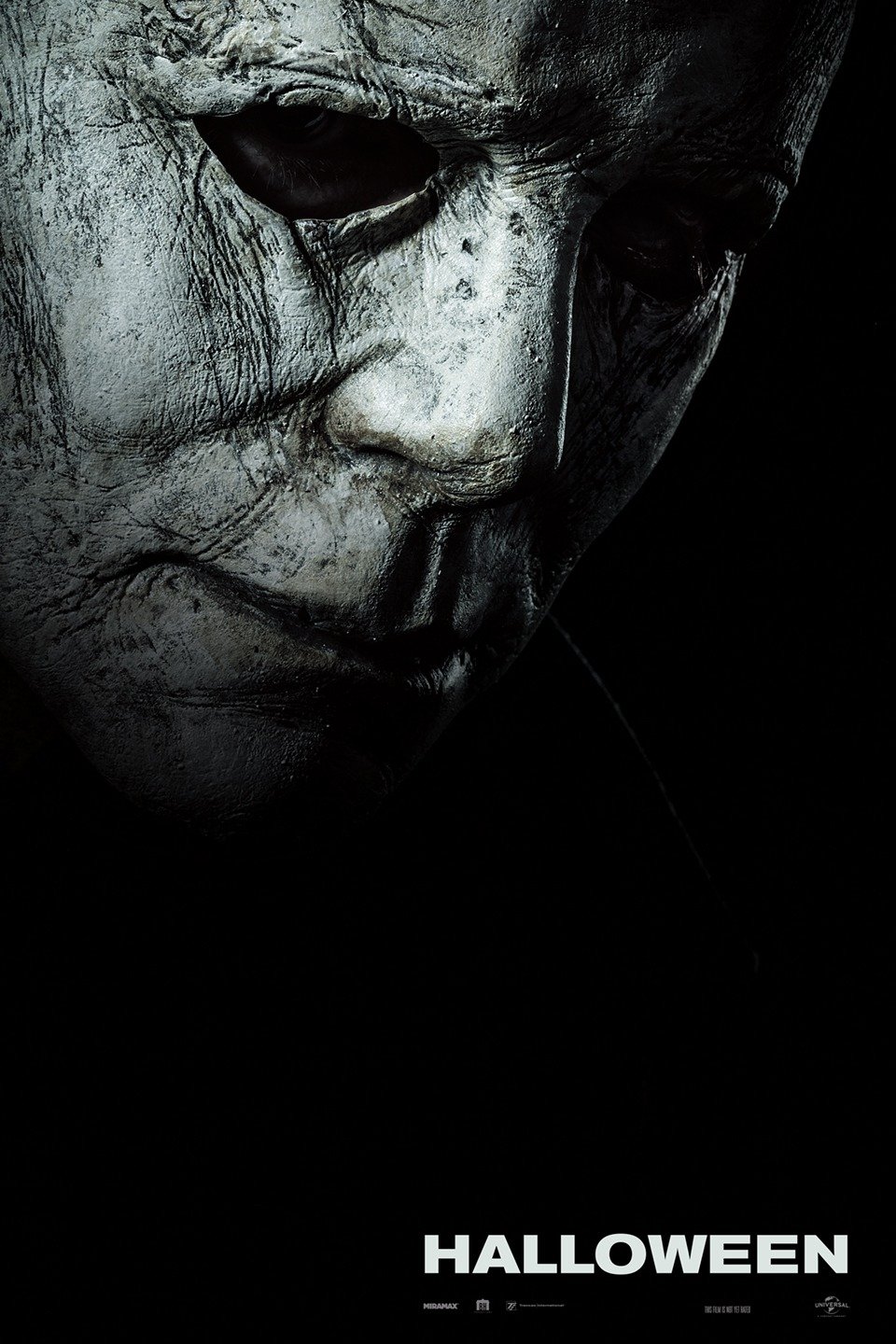
Halloween (2018) Full Horror Film Review

Happy Halloween Michael! David Gordon Green’s Halloween truly is the sequel that we have been waiting for in the Halloween franchise. Green set out to direct a Halloween movie that he desired to work both as an homage to the original whilst crafting an original story that could do more than be a great horror film, but be a great film period. And suffice it to say, he delivered in spades (or knives, as it were haha). Words cannot even begin to capture the energy of the auditorium last night. From screen to entrance Studio Movie Grill Tampa (my regular cinema) was filled with a level of energy that I’ve only ever witnessed at JurassicAvengers, and Star Wars movies. Twitter is all a’buzz this morning with those who saw it at pre-screenings and those of us who saw it at 7 o’clock last night. When I’ve been asked what I think, I am quick to respond that you need to throw out the rule book because Michael is writing this story. From echoes of the original (and some of Halloween 2) it still succeeds in providing longtime fans and those newly discovering the franchise with an original story that will hook you from the very beginning when you realize that all bets are off because no one is safe. It’s thrilling, engaging, and fun. It may lack Dean Cundey’s brilliant cinematography from the original (he was also the cinematographer for Jurassic Park, Carpenter’s The Thing and Back to the Future), but visually the film has those quintessential moments that act as a throwback to Carpenter’s original groundbreaking slasher. From the vintage opening title sequence accompanied by that iconic score to the showdown, Blum House’s Halloween is a brilliant addition to the franchise and is destined to be a future classic.

For my conversation about Halloween with the guys across the pond at the Movie Drone Podcast, be sure to watch for that episode dropping on Sunday wherever you get your pods.

It’s been 40 years to the day that Michael Myers (James Jude Courtney), the boogeyman, committed the infamous Haddonfield Halloween murders and 55 years since Judith Myers was stabbed to death. On Halloween night, Michael escapes from a bus that was transferring him from Smith Grove to a maximum security prison when the transfer goes horribly wrong. News of this escape puts Laurie Strode (Jamie Lee Curtis) on high alert as she knows he is heading for Haddonfield. Only this time, she is ready for him. Laurie is challenged with protecting herself while also protecting her daughter’s family. More than protecting herself and her family, Laurie is out for blood. With it being so long since the infamous murders, the town has largely let its guard down. History has faded into myth. But Laurie knew that Michael would be back one day, and she is fully prepared to face-off with the real-life boogeyman.

From the moment the film cuts to the vintage titles and the smashed jack-o-lantern becoming whole again, after the prologue, I knew that I was in for a real treat. That music is so incredibly iconic; those familiar chords are enough to strike fear in those who listen. Although many in the general audience may overlook the power of an opening title sequence, the typeface, transitions, music, and jack-o-lantern work together in order to communicate to the audience that David Gordon Green recognizes and respects the original and knows that you will love this installment that goes back to what made the first one work so well. It’s as if he is stating to the audience “I’ve heard you and I love the original too.” Instead of falling in line with current trends in horror films, Green is communicating to the audience that he is taking this franchise back to the roots. and back to the roots, he did. For fans of the franchise, you will undoubtedly recognize some easter eggs and other moments in the plot and kills that are nods to the original. Nods with a slight twist. I love the moments that connected me to the original. Same may call it shallow fan service, but I call that branding. Branding is important to a franchise, because those are the moments that are quintessential to the experience. And these moments in the film, that I see as branding, connect us to the original. Holding back on that branding would inhibit the nostalgia from shining briefly here and there. So much of Michael and Laurie’s identities are connected to those branding moments. However, don’t allow the return to channeling what made the first one work so well lead you to believe that you have it all figured out. While the soul of the original is there, the plot is full of twists and turns because just as Laurie was ready for Michael, he was ready for all of us sitting out there in the dark.

Written by Green, Danny McBride, and Jeff Fragley, this installment in the Halloween franchise was written to be a true continuation of the original story, ignoring everything that came after it. On that note, I like Halloween 2 and Halloween H20 but I am also equally pleased that this one essentially takes all the sequels and chalks them up to fan fiction. Could H2 and H20 have been included and the film still play out just as original and powerful? I think so, but at the same time, I did not find myself missing those installments. By placing this story 40 years after the original, it was able to remove all the absurdities of most of the others and start afresh. Missing from many of the other sequels was the playful nature of the original. Horror movies are supposed to be fun! Scary but fun. Even though there is murder and mayhem in a horror movie, that does not mean that it should be without those humorous moments. Fortunately for Green’s Halloween, the screenplay provides us with a simple revenge plot with a fantastically complex cast of principal characters. There is this refreshing exuberance I felt in the experience of this film. It was almost the same feeling that I got when I watched the original Halloween for the first time. The reason horror is used in events like Halloween Horror Nights and Howl-O-Scream is because there is a high level of amusement in it. And the screenplay of this film has perfect levels of horror and humor to keep you hooked and entertained for the whole time. Beyond the excellent direction Green provided, Jamie Lee looks so incredibly satisfying reprising her breakout role, we get a throwback Michael, and more. The key to the success of this film is the solid screenwriting. Moreover, this is not only a fantastic horror movie, it’s a solid film with no clarifier needed.

Before getting into content that requires me to talk spoilers, I want to explore the characters of Michael and Laurie specifically. Entire theses could be written on this subject, but let’s look at some of the main points. You may have asked yourself “what makes Michael tick?” The short answer: we do not know enough about his psychology, sociology, or physiology to know for sure. And that is a good thing! Why? Because if we knew too much about his mind and body, he would cease to be the boogeyman. And being the boogeyman is so important to, not only this franchise, but horror in general. That little bit of mystery and fantasy allow him to remain a monster to be feared and never truly understood. You see what happens to people in the film who seek to understand Michael better–hint–it’s not good. But since we are voyeurs who are obsessed with knowing, here is the long and short of what we know. According to Casandra Dodge (Ph.D. in criminology candidate at the University of South Florida), Michael likely suffers from and displays signs of a combination of antisocial personality disorder, schizophrenia, and obsessive compulsive disorder. We do not know enough to draw these conclusions, but there are signs of a combination of these psycho-social disorders.

Laurie is even more fascinating in this film than she was in the original. In many ways, she takes on some of the characteristics of Dr. Loomis from the first movie. He warned everyone about Michael’s violent behavior and would not be swayed into thinking that he could be rehabilitated. He was ready to kill Michael at every turn. Like Michael likely suffers from OCD, Laurie and Dr. Loomis also show signs of this disorder. Moreover, Laurie also displays signs of being a psychopath herself. Loomis, Laurie, and Michael could all be psychopaths. But contrary to popular belief, very few psychopaths are violent. In fact, careers for people that could be classified as psychopaths include: lawyers, surgeons, law enforcement, professors, artists, and more. Albeit I am overly simplifying, psychopathy means that you are predisposed to thrill-seeking behaviors and tend to be self-centered (among other characteristics). Laurie is less the final girl in this movie than she was in the original because she is very masculine and protective from the very beginning. There is no one defining moment that she sheds her (heteronormatively speaking) feminine self and takes on the traditional role of a man in stories to save the day and ultimately survive the killer. She is out for revenge the whole movie. I also appreciate how her character provides commentary on the realness of PTSD, and and the affects it has upon the whole body. On the note of revenge, the plot of this film aligns more closely with a revenge plot than a morality play. No mistaking it, Laurie Strode is back, and more phenomenal than ever! I love her character.

(spoilers ahead)

Substance and commentary. The original slashers such as HalloweenFriday the 13thA Nightmare on Elm Street, and other horror films (that do not fall into the slasher genre) hold up so incredibly well because there is a high degree of subtext that provides a solid foundation upon which to build the more superficial elements of the plot. At its core, the traditional slasher and is a morality play. And this morality goes beyond have casual sex and die or do drugs and die. But the aforementioned are recurring themes in these films. What I appreciate about the new Halloween is not following that approach–at least, not in the same way. It would be all too easy to pick-out the murders based upon that theoretical framework, and Michael is not about to have that. Characters you think will die do not, and other characters that you may not think will die, wind up another Haddonfield victim. The best example of this abandonment of the more traditional approach to slashers is the first kills. One of the past tropes of horror films is that if you are a kid or gay (or queer) you don’t die. Guess again, the 12yo boy who happens upon Michael’s transport bus who prefers dancing to hunting (tipping the hand to the fact he is likely gay) becomes one of Michael’s first victims. This is an indicator that all bets are off–no one is safe. Furthermore, the babysitter that is killed is someone whom is rather likable. She’s a good babysitter–loves her kid–and even when with her boyfriend comes over to the house, they do not engage in anything beyond “dry humping” and some weed smoking. No sex or hardcore drug usage here. Such a great approach because we like the babysitter; however, she winds up a victim anyhow. And Allison’s (Laurie’s grand-daughter) boyfriend kisses another girl at the school dance, but he does not wind up a victim. Although I would have preferred that he died, I like the fact that the rule book is thrown out.

The film also toys around with the idea of the Final Girl by playing around with the hard definition that we’ve recognized for all these years. And it pays off! Furthermore, we have some excellent commentary on and foreshadowing of the role Allison will play later on in the film. She and her boyfriend go to the high school Halloween dance as Bonnie and Clyde–with a twist! They gender bent the costumes. Showing Allison in the pants, foreshadows that she has that same androgynous image that Laurie had in the first film, tipping the hat that she is our final girl. However, she is not the only final girl. We have final girls in this movie. But this concept runs deeper than just the simple fact that we have a trifecta of female heroines. There is pattern established in the movie that when one faces Michael alone that he cannot be defeated. While the journalists at the beginning may seem like mere plot devices through which Michael gets his mask returned, they are so much more. They start the pattern because by themselves, they cannot defeat Michael, and die. The babysitter couldn’t defeat him alone, and her boyfriend died trying to protect his girlfriend. All of them on their own. Even Laurie, though being a solid match for Michael, cannot defeat him on her own either. It’s only when Laurie teams up with her daughter and grand-daughter that Michael can be taken down. Love this!

We also have some poetic justice kills. Loomis’ protege who seeks to use Michael for his own personal gain in the fields of science and academia. He is so incredibly prideful in the capabilities of his brain that his kill is symbolic that Michael will not be used to further his pretentious intellect. He stomps on his head like a pumpkin and the brain matter explodes like pumpkin seeds n a flash on screen (note: this is the most graphic kill). Likewise, the journalists who were using Michael to further their own careers by attempting to be smarter than Michael and even patronizing, wind up dead with primarily injuries to the head. Incredibly symbolic! Furthermore, there are other kills that serve purposes to comment on behavior and intention as well. In addition to symbolic kills and homages to the original, there is a recurring pumpkin and jack-o-lantern motif in the film. I need to watch again, but I believe we have a jack-o-lantern in nearly every scene like we do in the original. In fact, two of the heads of victims are turned into jack-o-lanterns with a flashlight shining out through the decapitated heads. While much of what I have described sounds grossly violent, there is far more violence off screen than what we actually see. Even the kills that are on the screen do not linger. This is important because lingering violence detracts from the narrative and becomes shallow spectacle. Green has a nice balance between narrative and spectacle. He truly showcases he art of storytelling all through Halloween.

Do yourself a favor and go see this movie! It was everything that I wanted it to be. Not only is it a great horror film, it’s a great film period. From the writing to the direction, production design, music and more. It is destined to be a future horror classic worthy of many rewatches.

Profile_PicRyan teaches screenwriting at the University of Tampa. If you like this article, check out the others and FOLLOW this blog! Interested in Ryan making a guest appearance on your podcast or contributing to your website? Send him a DM on Twitter or email him at RLTerry1@gmail.com! If you’re ever in the Tampa area, feel free to catch a movie with him!

Follow him!

Twitter: RLTerry1

Instagram: RL_Terry

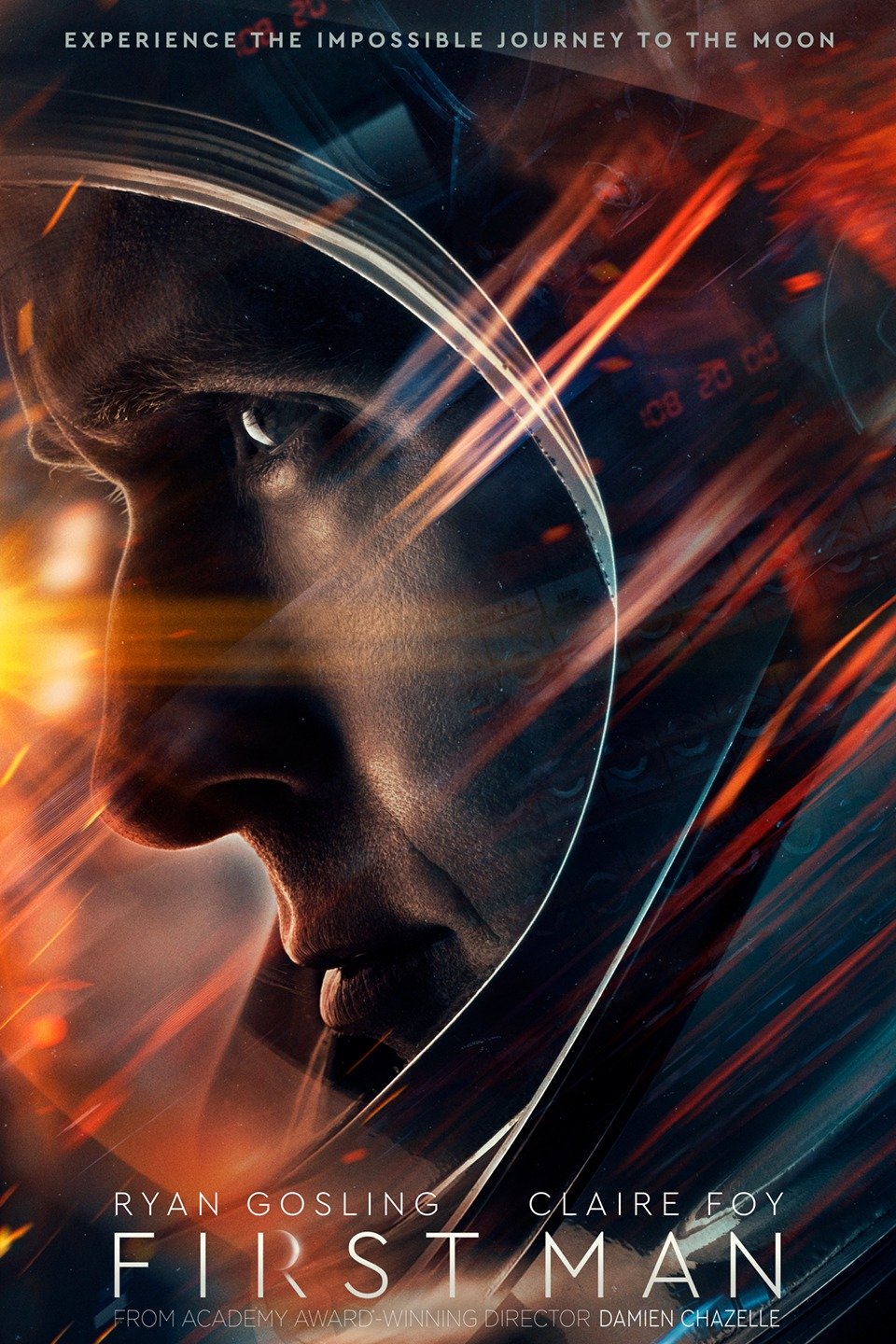
“First Man” full film review

A solidly good film eclipsed by a star that was born last week. While there have been many movies and documentaries about the space race of the mid 20th century, including the amazing Hidden Figures, this is the first film to truly take us behind NASA and into the very home of the American hero astronaut Neil Armstrong. Damien Chazelle’s First Man is not just another film that tells the story of earth to the moon using familiar events, characters, or archival footage, but instead, it takes us behind the headlines to vicariously experience what it was like for Niel and his family on this and other dangerous missions. This is not a film about the US Apollo mission to the moon nor is it about how NASA had to push through major public negative criticism of its money-sucking endeavors; it is about the hero’s journey. And our hero is Neil Armstrong. As I do not want to spend time on that ridiculous flag controversy, I will summarize that element of the film. The flag IS there at the landing site and there are plenty of flags and references to the United Staes in the film–there–moving on. When it comes to a Chazelle film, I expect a strong screenplay to serve as the foundation upon which the visual elements are build. Unfortunately, Chazelle did not write this film and it shows. It suffers from a weak screenplay that has repercussions felt through the movie. Some critics have been writing about the strong emotional tug in the movie, but I did not feel it. I also feel that Gosling was not at the top of his game, compared to past performances. First Man is all around good, and I hope for nominations for it! It’s just not as strong as I had hoped the next Chazelle film would be. Compared to A Star is BornFirst Man is not as strong and I imagine the popularity of this week’s Halloween will also cast a shadow on this riveting story.

Before Neil Armstrong uttered his now famous words when he stepped foot on the moon, he first had get there. But he had to endure a lot more than just training for the Gemini and Apollo missions in order to be the first man on the moon. More than previous films such as The Right Stuff and Apollo 13 also about critical space missions, this one practically places you in the cockpit for a first person journey from earth to the moon. You will be taken back by the sheer number of personal and professional tragedies to befall Armstrong; and furthermore, you’ll feel the vibrations of the rocket, the out of control spinning, and the moments where you are on the cliff facing death. Follow Neil and his family on this turbulent drama that takes the fascination with and mind-blowing nature of the cockpit and turn it into an image and confinement to dread for it feels more like a death trap than the bridge of forging a new frontier.

This is a drama, not an action movie. So if you are searching for a space adventure, then this is not a film for you. But if you want to learn more about the first man on the moon, what he went through personally and professionally and feel what he felt, then this is a film for you. Incredible opening scene! Hitchcock once stated that a writer or director needs to drop the audience into the middle of the action in order to instantly hook them into the story. One of the cardinal rules of screenwriting is to start each scene as close to the end of the scene as possible in order to write leanly and effectively. That is precisely what awaits you at the beginning of First Man. No ramping up to conflict here; you are in the cockpit with Neil Armstrong as he is testing an aircraft when the ship begins to drift closer to space instead of returning to the ground. This opening scene is one of the most incredible ones that I have seen in a long time. Heart pounding. Demonstrating his mastery of visual storytelling, Chazelle crafts an opening scene that thrusts you into a gritty, visceral journey that will leave you breathless. As intense as this scene is, there are man others in the film that will place you at the brink of death and destruction in an effort to puncture a hole into what is possible with the fledgling space program.

On the heels of that incredibly intense scene, Chazelle takes us to a hospital where Neil daughter Karen is undergoing radiation therapy for her tumor. In an attempt to channel Pixar-like storytelling for the opening of a film, we quickly follow the family from the hospital to a funeral for a fellow pilot, at which his daughter is playing, to Neil battling insurance companies and doctors over the phone to an intimate father-daughter moment to lowering Karen’s casket in the ground. As emotional as this opening sequence is, it falls short of where it needed to be in order to truly evoke the strong emotion for which the film was going. Compared to watching A Star is Born the week prior, I was not feeling as strong an emotional connection to these characters to justify how I was supposed to feel after these scenes. Audiences were not given sufficient time to connect with the characters in order to feel the heartache intended to be felt during and after the funeral. It was sad for sure, but not devastating. That being said, it is entirely possible that audience members who have children may have felt the heart-wrenching moment differently because of knowing what it’s like to have a child. It is evident that Chazelle did not write this film because the screenplay is on the weaker side. Now, I am not suggesting the story is weak compared to most films. On the contrary, it is much stronger than many other films; however, compared to what I expect from Chazelle, it is weaker than Whiplash and La La Land.

The screenplay contains three stories. The A story is Neil Armstrong’s personal journey, the B story is Neil’s relationship with his wife Janet (Claire Foy), and the C story is his career at NASA. There is clearly a desperate attempt to link the tragedy of Neil’s daughter to his hell-bent nature to constantly take himself close to death, putting his family and marriage under immense strain. With the tragedy of Karen not sufficiently setup and rushed through, it is hard to connect it to the rest of the movie. The film wants audiences to believe that dangerous missions are Neil’s coping mechanisms to deal with the death of his daughter, but there just isn’t enough evidence in the film support that. I see Chazelle’s desire to link Karen’s death to Neil’s desire to put himself and his family in physiological and emotional harm’s way. In terms of the character development of Neil, the stoic behavior, monosyllabic responses, countless moments of silence, and machismo become repetitive and boring. Although he certainly battles inner demons and real-world obstacles in order to eventually reach the moon, I don’t witness inner character development throughout the screenplay. Neil, at the end of the story, is pretty much the same Neil we meet at the beginning. While we are witness to the strife in his marriage to Janet, that relationship goes no where as well. There is simply no character arc or growth in this film. And that is what hinders this screenplay from being great.

Perhaps the film was built upon a weak screenplay, but there is quite a lot to like about it! Much like Interstellar was showered with nominations and wins in the technical categories, First Man will likely also see nominations for score, sound, editing, cinematography and more. From a technical achievement perspective, this film is incredible to behold. If you have the opportunity to watch the film in IMAX, then that is definitely what you want to do for the full, immersive experience. When you cannot pick out the score, that is often the park of a brilliantly diegetic score that seamlessly integrates into the film. There is a highly emotional component to the score that enhances the screenplay and picks up where the screenplay felt off in order to evoke that emotional response. I absolutely loved the cinematography. Much like the score, the cinematography felt so incredibly natural, so organic. Whether the camera is providing me with a subjective or objective POV, it frames each shot perfectly to communicate the tension and suspense. All around, Chazelle takes all the elements (except the screenplay) of the film and combines them for a solidly good film.

Some quick notes on the performances, I found that Gosling delivered an above average performance. And that’s above average for him, not compared to the litany of other actors. Obviously, compared to other actors, he is at the top of his game. But I feel that he is stronger in La La Land. And the reason for this performance that just didn’t quite hit the mark for me can be traced back to the screenplay. I’ve no doubt that he will be nominated–and he should–but I’ve little confidence that he will win. Claire Foy’s performance of as Janet Armstrong is fantastic! She will most likely also see a nomination for her role as the wife of the first man on the moon. She was incredibly strong, determined, and loyal. She demonstrates a stronger character growth arc than Gosling. The screenplay appears to have developed her character more effectively than his. Compared to the other performances in the film, hers is the most standout.

Definitely see this film. Just because it suffers from a weak screenplay does not mean that it doesn’t have a lot of offer. I greatly appreciate this film for taking us on an intimate journey with the Armstrong family. This is a story that has not been told on screen before and truly shows us the personal and professional links that Neil Armstrong went to in order to stand on the moon and announce to the world “one small step for man, one giant leap for mankind.”

Ryan is a screenwriting professor at the University of Tampa. If you like this article, check out the others and FOLLOW this blog!

Follow him!

Twitter: RLTerry1

Instagram: RL_Terry

Thrillz (theme parks): Thrillz.co

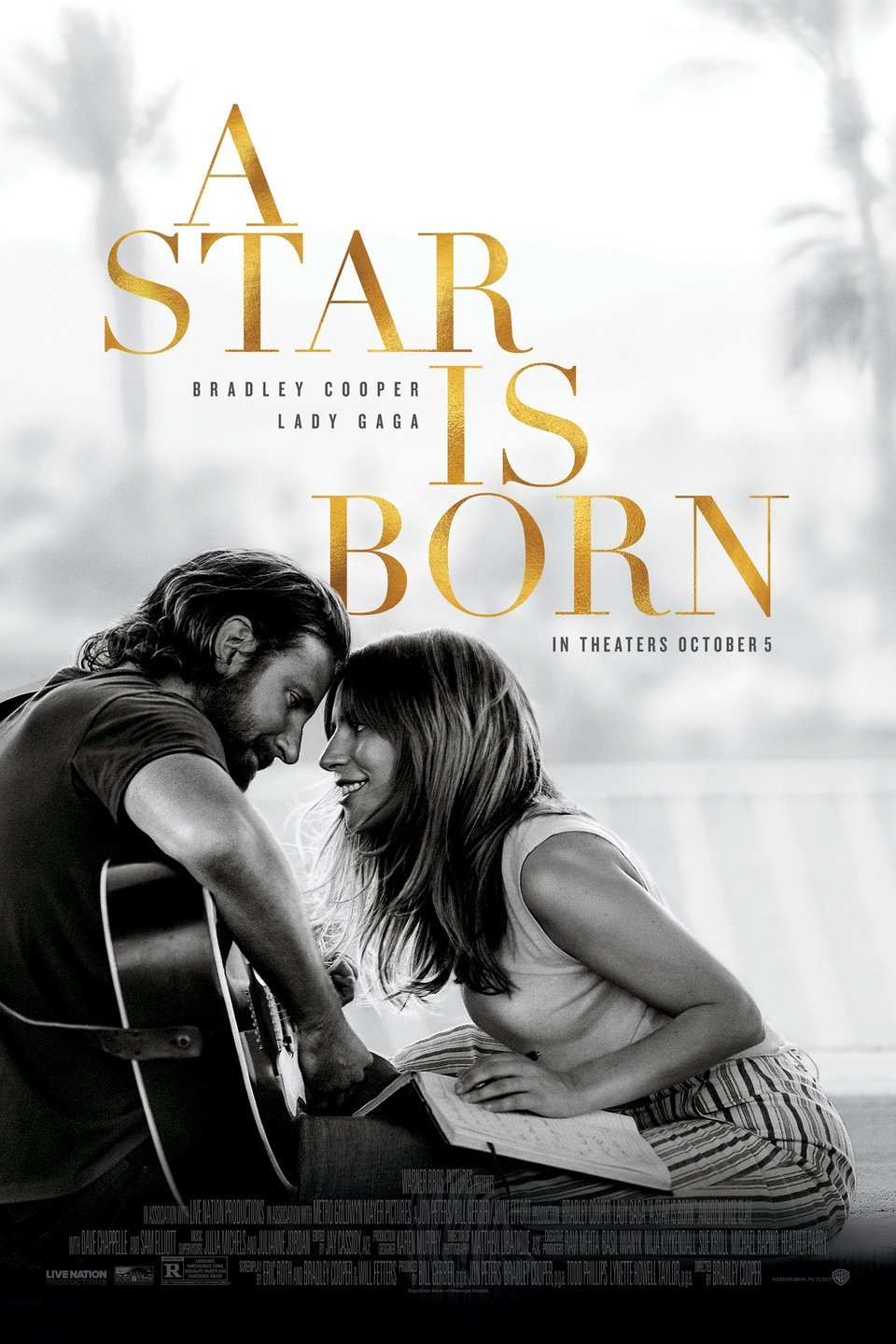
“A Star is Born” (2018) Full Film Review

This “ageless and evergreen” movie musical will move your very soul from “the shallow” to the deep. Bradley Cooper’s A Star is Born is the fourth version of this story, and the strongest of the group. Now, the Streisand version will always have special place in my heart because I’m a lifelong Streisand fan. But other than Streisand herself, the rest of the film is largely forgettable. However, Cooper’s A Star is Born is a mind-blowingly, unapologetic movie musical that delivers a genuine authenticity rarely seen in movie musicals. With all the hype that this film received out of the Venice Film Festival and others during September, there is often the question that IF the film lives up to the hype? The short answer is YES. Fixing some of the plot holes in the Streisand version and providing more comprehensive character development, the screenplay co-written by Cooper harnesses the power of a simple plot with complex characters dealing with the positive and negative affects of stardom on two different people caught in a “bad romance.” With two charismatic performers with outstanding vocals and music plus a gripping story that will have you hooked from the first bar to the last, A Star is Born is an etherial cinematic experience equivalent to that of a shooting star. A star that will shoot its way to the Oscars next year.

Loving the bottle as much as he loves the stage, alt-country rockstar Jackson Maine (Cooper) wonders into a drag bar where he arrives just in time to see the performance of Ally (Gaga). Blown away by her incredible vocals, Maine finds her in the dressing room to introduce himself. Maine is taken back by her street smarts and homespun humility, but sees an undiscovered star. Although Ally has all but given up on her dream, Maine is determined to coax her out onto the stage Determined to provide Ally with the stage she needs to showcase her uncanny ability to create magic with her voice, a magic that has profound, authentic meaning behind it, Maine invites her to join him at a gig. When she refuses the invitation, Maine sends his chauffeur to follow her until she gives in. And gives in, she does. Already smitten with Ally, Maine falls madly in love with her after their voices make incredible music together. Soon, Ally’s career takes off like a shooting star, while Maine deals with his inner demons. Just like careers have ups and downs, so does the relationship between Ally and Jackson Maine.

As a star rises, a comet falls. While the basic plot of this, and the other versions of A Star is Born are similar in nature, this one feels the most cinematic. Cooper’s screenplay takes what the previous versions did well, and then improves where the others did not perform as well. With three previous ones to analyze, Cooper certainly had plenty of source material to pour over. What I appreciate most about this version is the foreshadowing and poetry that provide a rich subtext. One of the most important parts of plot development in a screenplay is the strategic placement and execution of emotional beats. Much in the same way the original songs in the movie drive those emotional beats home, the screenplay follows in suit. Although I will argue that the first half of the movie is stronger than the second half, the story is a powerful one that shies not away from depicting real issues that celebrities, especially in the music industry, face. There is an unapologetic approach to both sides of the stage. The beginning scenes pack a powerful punch. And I was completely sold on Ally’s ability to delicately balance toughness against vulnerability. Jackson Maines character development is gritty and believable. Fortunately, after the 1976 (Streisand) version shifted the focus from Hollywood to the music industry, that shift provided the foundation upon which 2018’s A Star is Born is built. For all this story has going for it, paving the way to a likely Oscar nomination, Cooper is unable to sustain the energy from the first act all the way through the rest of the movie. While the first and third acts are strong (especially the first), the second act lacks the charm and energy of the first but does effectively lead us into the showdown and realization. Whereas the pacing looses footing a little in the middle, there is no mistaking that this is a phenomenal retelling of a classic plot for a new generation, complete with humiliation, redemption, heartbreak, and love.

The cinematography is incredibly strong. While not heavily stylized in a particular manner like other filmmakers, who’s direction is part of that filmmaker’s identity, the cinematography in this film incorporated a variety of approaches from wide shots of real concerts to intimate closeups that work seamlessly together in order to provide the film with an outstanding and comprehensive visual appeal. One of the elements of the cinematography that stood out to me the most was just how natural and relaxed the camera movement felt. There were plenty of moments that I forgot the camera was there because it felt that I was present–in those moments–witnessing the plot unfold. While some directors may have felt the need to approach most of this movie as a music video (instead of a musical), Cooper allows the camera to linger in a moment to drive the emotion of that moment home. During the musical performances, there is certainly a music video feel to it, but it never takes you out of the story, at large. From beginning to end, the cinematography flows naturally across the movie.

Cooper and Lady Gaga’s respective performances are incredible. They will certainly wow you from beginning to end. Not surprising after watching the movie last night, Cooper delivers a command performance that is sure to land him a Best Actor nomination. He looks and sounds like an alt-country rockstar. I had no idea that he could sing! At no point does it ever feel like he’s acting. Such power in subtlety. It’s the little things he does that serves as evidence of his commitment to character and never acting like a Jackson Maine type but legitimately becomes Maine with all his problems with addiction to drugs and alcohol. Because the subject of celebrity addictions leading to untimely deaths has been in the news a lot, this was a great opportunity for Cooper to comment on this issue by depicting how tragic it is, and the affects on others.

Whether you are a fan of Lady Gaga or not, there is no doubt that her acting and vocal performance will leave you speechless. Of course, being speechless never stopped me. Without breaking character or forcing her real-world persona and fandom into the diegesis of the film, there is a nod to her status as a queer icon. One of the early scenes in the film features her at a drag show. This scene fits into the story perfectly, and successfully sets up some of the subtext and commentary later on in the film regarding how the music industry (and Hollywood to an extent) package female performers. The character of Ally allows fans of Gaga to explore a different side to her through most of the film. During the second act, there are moments that remind us of what makes Gaga so popular–very similar to her real-world celebrity self–but these moments never detract from the more organic, intimate ones. Although Ally’s quest for stardom does play out a little cliche as it points us back to the real-world Lady Gaga, Ally’s character finds herself back to her true self at the end of the film. As a side note, I love the nods to the the 1976 one by way of Ally talking about how her nose was considered too big by talent scouts. A brilliant nod to Streisand’s trademark nose.

With a very strong start, mediocre middle, and relatively strong recovery, Bradley Cooper’s A Star is Born is a don’t miss film! If you were worried that the film was not going to live up to the hype of the festivals, no need to worry any longer. From what I have gathered from other critics, members of #FilmTwitter and the #PodernFamily (podcasters), there appears to be an agreement (mostly anyway) that this film is an outstanding work that will be one to watch for this upcoming awards season. Perhaps it won’t be the next Silence of the Lambs and take the Big 5 Oscars, but it will likely still do very well.

Ryan is a screenwriting professor at the University of Tampa. If you like this article, check out the others and FOLLOW this blog!

Follow him!

Twitter: RLTerry1

Instagram: RL_Terry

Thrillz (theme parks): Thrillz.co