“Little Women” (2019) Review

Authentic. If I had to sum up the experience of watching Greta Gerwig’s Little Women, then that’s the one word I would choose. Thankfully, I am not limited to simply one word to describe this brilliant adaptation of Louisa May Alcott’s best-selling, timeless novel. Being out of town visiting family for a couple of weeks, I do not have the same amount of time to watch movies at home or at the theatre, as my family isn’t nearly the film fan as I am. However, when my mom wanted to go to the movies, and asked me if I wanted to see Star Wars (again), I countered her idea with suggesting Little Women. She was utterly delighted to see the movie, and I am so glad that my mom and I got to watch this movie together. Just now, my mom walked through the living room (as my head is buried in my laptop) and exclaimed “I just loved that movie, the story is so familiar yet so fresh.” Sounds like something I would write. To my mom’s point, I feel strongly that the reason she feels that was is because this is modern story of the complex emotions, societal expectations, and ambitions of women masquerading around as a period drama. It feels both “of its time” and “today.” While to the casual observer, this may seem like a story for women, young and older alike, it is a powerful story for anyone that has dreams but feels trapped by whatever societal or familial forces. Little Women is incredibly heartfelt and uplifts the human spirit. Just the gift of the season we needed. There is something for everyone in this movie that remains committed to its literary roots, yet plants itself in a modern garden to be appreciated by and inspire all those whom choose to watch it. Greta Gerwig’s masterful storytelling is evident from beginning to end, and all the performances are excellent. You will undoubtedly fall in love with this story all over again, or will fall in love for the first time.

Following the lives of four sisters, Amy (Florence Pugh), Jo (Saoirse Ronan), Beth (Eliza Scanlen) and Meg (Emma Watson), as they come of age in America in the aftermath of the Civil War. Though all very different from each other, the March sisters stand by each other through difficult and changing times.

While the 1933 version starring Katherine Hepburn has long sense been seen as the gold standard, I will be so bold as to state that this may be regarded as the best adaptation of Alcott’s timeless novel. Ever since I saw Frances Ha, I’ve known that Gerwig is destined for cinematic greatness. Her trademark artistic expression and ability to disarm even the most hardhearted, is witnessed time and time again in this film. Furthermore, Gerwig possesses a unique gift that quickly establishes empathy from the audience and begins to develop a relationship between them and the central character(s) quickly and effectively. For those of you whom are familiar with Gerwig’s semi-autobiographcial debut of Frances Ha, you will undoubtedly pick up on hints of Frances in our central character of Jo March. Although Gerwig has demonstrated an uncanny ability to write and direct, the real power of this film comes form her knowing the novel from cover to cover; the only way to intertwine the original narrative with the journey of the author is to have known everything there was to know, and then some, about Little Women. Gerwig’s creative decision to meld the Jo’s struggles and joys of being our de facto Alcott with the original story allows the film to comfort audiences with the familiar while wowing them with a fresh, modern interpretation of the story.

I love the five primary archetypal characters we have in this film. Jo is the rebellious independent thinker but struggles with loneliness, Meg desires a more traditional life but has a strong will, Amy has a creative spirit but desires to be a kept woman, Beth is empathetic selfless and nurturing, and Laurie is a self-centered bachelor whom lacks direction and focus yet wants to love. These characters provide ample opportunity for the audience to connect with one or more of them. The relatively simple plot of the film paves the way for complex characters and prolific amounts of dramatic conflict. While the main plot is about Jo and her goal of publishing a novel, all the other character have their own respective goals that support the subplot and are the conduit through which the subtext flows. While the characters remark that domestic struggles and joys are not entertaining, the irony is that these are the very things that make for a strong film. Strength of character is witnessed in how a character responds to and is affected by conflict–we love to see the reactions. No two characters respond to the same stimulus in the same way, and they each speak with their own voice. Through these characters, we experience triumphs, struggles, love, and loss. No Mary Sues in this bunch, nothing comes easy for any of them; and they work diligently to achieve what they want, whether that is marriage or a career. Each and every goal is earned, the windup equals the payoff.

Before addressing the technical elements that worked flawlessly, I cannot ignore the one element that did not work for me, at least in the beginning. And even then, I merely got used to it as the film went on. The editing. There are times that I was taken out of the movie by the pacing and structure of the editing choices, but ultimately it did not greatly hinder my experience of watching this future classic. It took several scenes, before I realized that we had more then one concurrent timeline. As a matter of fact, I believe we had three (1) present day (2) seven years earlier and then (3) shortly before present day. I’ve read that there are only two timelines, but I truly feel that I was following three different ones. I wasn’t always sure where I was in the trifecta of timelines. Eventually, I realized that I could follow the color palette, hair styles, and costumes as my timeline token. If we were going to alternate between present day and the past, I would have preferred if Gerwig took a page out of the Fried Green Tomatoes handbook for two concurrent storylines.

Now that’s out of the way, I have to remark on how much I love the cinematography, costuming, and production design. The cinematography works in tandem with the tone of each scene; moreover, there are moments that the cinematography is snug and warm, and other times that it is distant and cold. The emotion of the scenes is communicated lowkey through the camera choices. Period dramas are known for great opportunity for costuming to shine, and this film is no exception. Much like one’s fashion choices, in real life, are often an expression of the soul, so are the costumes of the lead and supporting cast. The costumes are almost characters in and of themselves. We can read some into the personality of the characters by the choice in attire. Along those same lines, the production design is also an extension of these characters. The locations, sets, and set dressing communicate so much about where these characters are mentally and where they want to be. The various production design teams demonstrate a keen eye for even the smallest detail that communicates the right mood, texture, subtext, or atmosphere. Period dramas sometimes struggle with making the locations and settings feel like real places that the audience can smell, feel, and touch; but this isn’t true with this film.

Greta Gerwig’s Little Women is truly a wonderful Christmas gift this season. You will laugh and cry along with these endearing characters in this Civil War era world in which the story unfolds. Gerwig takes the timeless story and brings it into a modern world to entertain and inspire a whole new generation.

Ryan teaches screenwriting at the University of Tampa. If you like this article, check out the others and FOLLOW this blog! Interested in Ryan making a guest appearance on your podcast or contributing to your website? Send him a DM on Twitter or email him at RLTerry1@gmail.com! You can catch Ryan most weeks at Studio Movie Grill Tampa, so if you’re in the area, feel free to catch a movie with him!

Follow him!

Twitter: RLTerry1

Instagram: RL_Terry
“Parasite” art house film review

An international film with domestic relevance. Writer-director Bong Joon-Ho delivers a thought-provoking satire on the widening gap between the haves and have-nots. Winning the coveted Palme d’Or at the Cannes Film Festival, Joon-Ho’s film is perhaps a new interpretation of the Wes Craven cult film The People Under the Stairs with a brilliant message of the lengths one goes to climb out of poverty in a world of massive income and opportunity disparity. For those whom may be worried that you’ll be distracted by the subtitles, you needn’t worry. To be perfectly candid, the visual storytelling and acting is so incredibly good that you won’t need the subtitles to follow the story. You’ve no doubt heard from the various critic circles that this film is a masterpiece, that it’s one of the best films of the year. That hype train is barreling past station after station, will it ever come to a stop? The short answer is not any time soon. But is the hype justified by the cinematic experience? In the opinion of this critic, no. I had incredibly high expectations for this film based upon everything I was hearing and reading, but it just didn’t do it for me. After the brilliant first half of excellently crafted suspense, foreshadowing, and plot setup, the second half loses the intrigue and just takes one convoluted turn after another for the sake of complicating the plot in an effort to make it say more than it actually does. Much of the griping tension is lost by the time the anticlimactic showdown comes to pass. What hampers the execution of the second half is taking too many predictable turns. It’s like a research paper that has a brilliant thesis, background, literature review, and method section, but the results are lacking in advancement. But, what the film lacks in plot execution, it makes up for in lavish visuals and exquisite production design. That house is a character in and of itself! While it may not be the best film of the year, it is one to watch in order to support original, independent stories that are slowly dying because of the increased difficulty to seek funding and theatrical distribution in a world dominated by superheroes, space fantasy, and remakes of animated classics.

Jobless, penniless, and, above all, hopeless, the unmotivated patriarch, Ki-taek, and his equally unambitious family–his supportive wife, Chung-sook; his cynical twenty-something daughter, Ki-jung, and his college-age son, Ki-woo–occupy themselves by working for peanuts in their squalid basement-level apartment. Then, by sheer luck, a lucrative business proposition will pave the way for an insidiously subtle scheme, as Ki-woo summons up the courage to pose as an English tutor for the teenage daughter of the affluent Park family. Now, the stage seems set for an unceasing winner-take-all class war. How does one get rid of a parasite? (IMDb)

Where this film shines brightest is the production design, specifically the house and neighborhood designed and built specifically for the film. Honestly, this is on Kubrick levels of cinematic immersion. From a principle photography point of view, this allows for the structures to (1) be designed to accommodate the action, blocking, and general movements of characters (2) externalize emotion or bring to light a reality that lies beyond our naked eye and (3) allow for efficient camera movement, artistic placement, and simply brings the setting in the screenplay to life to the very last detail. As I watched the film, I wondered where they found the perfect basement apartment and upscale house because the locations fit the characters and narrative perfectly. Then when I learned that both locations (not to mention the Ki’s neighborhood) were custom built, then it make sense how it could have been so perfect. That is commitment to narrative integrity right there! From the architecture to the interior design and furnishings, the art direction of this motion picture is astounding! It certainly stands out against the backdrop of most of the films to have hit theatres this year in terms of its visual appeal, scope, and scale of the story.

You’ll be hard pressed to find another film this year that has the brilliant setup that this one has. From the moment the film opens, you are hooked. All throughout the first act, the conflict that we are going to encounter in the second act is setup and foreshadowed with extreme precision. It doesn’t take long to develop these characters as members of South Korean society that are having a tough time climbing out of poverty; furthermore, the first act paints a portrait of a world that appears to be stacked against them. All that changes when a cousin gets one of them hired as a tutor to a wealthy family. For how the rest of the setup unfolds, you’ll just have to watch the film. I appreciate how this film takes the home invasion plot premise to a new level by subverting what we expect from home invasion or heist films. In addition to developing our ensemble cast of central characters, the first act also successfully provides excellent exposition so that the audience never feels lost in this non-english speaking film. Sometimes American audiences can get lost in international films because of the language and cultural barrier. Fortunately, the language is never an issue in this film and there is virtually  character for everyone in the audience to connect or empathize with. From the opening until about midway through the film, the plot is engaging, suspenseful, and the tension ratchets up greatly.

Unfortunately, most of the tension and suspense begins to decline as we near the anticlimactic showdown of the film. This is where the film lost me. Not lost me in that I couldn’t follow it–quite the contrary–I found the latter half of the film predictable and derivative. Gone is the ingenuity that I loved during the first half. There was such genius in the setup that I expected more out of the conflict and resolution. Don’t get me wrong, the film is still enjoyable and even intriguing at times in the second half, but not nearly to the levels it was during the first act. It’s almost as if Joon-Ho did not imagine the ending before writing the second act. There is stark contrast between the precise focus and direction of the first half and the lack of direction in the second half. There are some moments that I want to highlight from the second act though, that I truly liked. There is a scene in which the Park family boy notices that all the newly hired help smell the same. Of course, his parents dismiss that as childish foolishness, but thanks to dramatic irony, we know that he is close to ruining the entire charade.

More than than the film itself, I am mystified by the intense hype train that continues to zoom through social media, picking up new people at every turn. It’s a good film, but I cannot reconcile the motion picture I saw with the proliferated accolades on social media the the web. You’ll hear that this is “the best film of the year,” but just a couple weeks ago, The Lighthouse was the best film of the year, and before that many claimed that Midsommar was the best film of the year. Seems like we get a best film of the year every few weeks. The danger of dissenting opinions on films like Parasite and The Lighthouse is the critic and cinephile establishments seeking to revoke your membership card because your taste is simply not refined enough to appreciate the artistic masterpiece right in front of you. Of course, it is entirely possible that the film is just not AS outstanding as so many want to claim that it is, but jump on that hype train out of fear of missing out or being seen as an outsider. So to that point, I feel that Parasite is a solid film, even excellent in the first act, but the second and third acts hold the film back from its full potential to truly be a masterpiece of cinematic art.

Ryan teaches screenwriting at the University of Tampa. If you like this article, check out the others and FOLLOW this blog! Interested in Ryan making a guest appearance on your podcast or contributing to your website? Send him a DM on Twitter or email him at RLTerry1@gmail.com! You can catch Ryan most weeks at Studio Movie Grill Tampa, so if you’re in the area, feel free to catch a movie with him!

Follow him!

Twitter: RLTerry1

Instagram: RL_Terry

“Terminator: Dark Fate” action movie review

Linda Hamilton is back! And that’s all you really need to know about Terminator: Dark Fate. Her return highlights what was missing in the sequels that followed the critically acclaimed and immensely popular Terminator 2: Judgement Day that inspired the former attraction T2-3D at Universal Studios Florida. While this action movie clearly seeks to impress you with its phenomenal visual effects, it also goes back to the gritty character driven plot that made the first two Terminator movies works incredibly well and give them that punch that we expect out of these movies. With the return of Hamilton’s Sarah Connor and Arnold, in the role that made him a household name, this movie uses nostalgia–not as a way to live in the past and look back at the good ol’ days–but to move forward. No mistaking it, this movie is filled with adrenaline pumping action from start to finish; but the plot is very much grounded in what made the first two so successful: the characters. Despite having so many futuristic elements, Dark Fate’s storytelling is grounded in a science-fiction that never feels completely out of this world. One might even say that the plot is very much grounded in a plausible reality. When this franchise faced eternal damnation in its own judgement day after several flops, Sarah Connor returns to save the franchise from its own extinction. With Cameron providing a vision for this installment, it is the perfect blend of tentpole plot devices and progressive storytelling. Terminator: Dark Fate erases the previous three movies to fit in nicely after T2:3D.

In Mexico City, a newly modified liquid Terminator — the Rev-9 model — arrives from the future to kill a young factory worker named Dani Ramos. Also sent back in time is Grace, a hybrid cyborg human who must protect Ramos from the seemingly indestructible robotic assassin. But the two women soon find some much-needed help from a pair of unexpected allies — seasoned warrior Sarah Connor and the T-800 Terminator. (IMDb)

It should come of no surprise that the number one reason to watch this movie is for the bold, bad ass return of Linda Hamilton’s Sarah Connor! Her mantra may as well be “have bazooka, will travel.” Even though we witnessed the moment she stepped out of the SUV and onto the highway in the trailer, that moment still packs a punch when you watch it in the movie. Although it’s Davis character of Grace that is sent from the future to protect Dani, it really is Hamilton whom saves this movie and the franchise. Both Davis and Hamilton complement one another very well, each adding that special something that this franchise desperately needed. And that something is great, memorable characters. Not only do we have our two intimidating protectors, we also have a new “Sarah/John Connor” character in Natalia Reyes that will steel your heart. Even though Reyes’ Dani is our central character, it is Hamilton and Davis that have the lion’s share of the screentime. And it’s a good thing to, because it is their chemistry that holds this movie together and grounds it in that same abrasive banter that makes the first two movies so endearing. And yes, Connor has some great one-liners, including the franchise’s best-known line “I’ll be back.” Her entrance will undoubtedly evoke uncontrollable cheering throughout the audience for both her character and the actor herself.

The first two movies had extremely well-developed and executed plots, and then the plots and characters went off the rails. Thankfully, under the guidance of Cameron (whom has a co-writer credit), the plot of Dark Fate goes back to its roots of spending a sufficient amount of time setting up the story that is about to unfold. One of the magical parts of screenwriting is the ability to get away with just about anything–and it be believable–if you set it up early enough in the story. From the moment the movie opens, the central conflict in the plot is already being setup for major deliveries later on in the story. Not only do we hop in the wayback machine to a late 90s Sarah and John Connor, we witness that preventing judgment day did not completely protect the Connors from tragedy. Judgment day appears to be “starting all over” to quote the former T2-3D attraction. Although the overall goal of the plot is to stop Judgment Day from happening in the future, there is a secondary goal for both Connor and Grace. That is to protect Grace because she is the key to stopping the malevolent AI in the future. Not because she is a “Mother Mary” figure (much like Sarah was in the original) whom will give birth to the one who would save the world from the machines, but because Dani is to give birth to her own sense of agency that will cause her to become the leader of the resistance.

The strongest kind of conflict, in a plot, is derived from character relationships. Well developed and setup character conflict provides a near endless supply of drama that will carry the action and subtext of the movie. And the conflict meter reads off the charts between Connor and a particular T-800 (played by the definitive Terminator Schwarzenegger) because of a tragedy that befell Connor in the late 90s. Before you think that this T-800 is still hunting down Terminators from the future, this one can tell you any and everything you need to know about drapery. He’s gone and bought the metaphoric house with a picket fence, got married, and has a kid. Even though he’s demonstrably turned from his CyberDyne ways, Connor has a longtime grudge against this model, and she isn’t afraid to show it–and loudly. While Connor wants to kill him, Dani concludes that she cannot save the world without his help. Watching Connor and Carl (Arnold’s T-800) passionately bicker and verbally fight sounds like it may be there simply for the sake of nostalgia, but it lays the groundwork for how they will be forced to work together during the second and third acts of the movie. It may be grounded in T-1 and T-2, but this conflict moves the story forward. In a sense, these two characters provide the perfect balance between human and machine that was largely missing from the three movies that followed Terminator 2: Judgment Day.

If you’re a fan of the first two Terminators and the former attraction at Universal Studios Florida, then this movie is for you. Yes, it’s also for general audiences, but it’d specifically made for the longtime fans of the franchise that was, up to this point, doomed for extinction. Its got it all: action, a thrilling plot, endearing characters, beautiful visuals, and a memorable score (duh duh duh, duh-duh, duh duh duh, duh-duh). But more than for any other reason, you want to watch this movie to see our combat boot wearing, rock launcher carrying, no nonsense Sarah Connor as can only be played by Linda Hamilton.

Ryan teaches screenwriting at the University of Tampa. If you like this article, check out the others and FOLLOW this blog! Interested in Ryan making a guest appearance on your podcast or contributing to your website? Send him a DM on Twitter or email him at RLTerry1@gmail.com! You can catch Ryan most weeks at Studio Movie Grill Tampa, so if you’re in the area, feel free to catch a movie with him!

Follow him!

Twitter: RLTerry1

Instagram: RL_Terry
“The Addams Family” Animated Movie Review

Not creepy, mysterious, or spooky, but it’s certainly kooky and fun. Duh duh duh dum, snap snap. Just in time for Halloween is The Addams Family! I went into this movie not expecting much. A friend of mine loves all things Addams Family (even his drag persona is Katrina Von Addams), so he wanted to see it together. And to be perfectly honest, I enjoyed the movie. Is it predictable? Yes. Is the screenwriting weak? Yes. But is it a fun way to just kick back with a movie that entertains sufficiently enough? Yes. The voice cast is great and the character designs feel inspired by the earliest drawing in The New Yorker magazine. For me, the characters feel like the Addams Family that we have known for over 75 years. And just like the family themselves, the plot defies all logic. But that doesn’t take away from the good time I had watching it. It provided me with precisely what I needed, about an hour and a half of turning off my brain to have fun with endearing characters that have had a home on the small and big screen alike over the years. During the opening credit sequence, I saw that Bette Midler was in it! I literally yelled Bette Midler in the auditorium because that elated me. No surprise, she plays the role of grandma–a witch. The Divine Miss M returned to her witchy roots. In addition to Midler, you will enjoy the voice talents of Oscar Isaac, Charlize Thereon, Allison Janney, Chloe Grace Moretz, and other familiar names. The theme of the story is acceptance and individuality, which bodes well for this movie. Although we never dive deep into this topic, the B and C stories parallel one another in theme, but approach the topic from different perspectives that touch on immediate family, extended family, and friends/neighbors. Even though the characters are not as dark as I was hoping they’d be, you do get some trademark Addams Family macabre humor at the mansion. While the movie does not open up with the iconic theme song, the end of the movie includes a tribute to the original TV series opening that will leave you with a smile. If you’re searching for a great animated movie, then this is not it; but if you are looking for a fun way to spend 1.5hrs with your kids or friends, then this movie works very well.

Ryan teaches screenwriting at the University of Tampa. If you like this article, check out the others and FOLLOW this blog! Interested in Ryan making a guest appearance on your podcast or contributing to your website? Send him a DM on Twitter or email him at RLTerry1@gmail.com! You can catch Ryan most weeks at Studio Movie Grill Tampa, so if you’re in the area, feel free to catch a movie with him!

Follow him!

Twitter: RLTerry1

Instagram: RL_Terry
“Joker” Film Review

A truly phenomenal motion picture with a tour de force lead performance and relevant social commentary for today’s audience. Warner Bros’ highly anticipated Joker opens everywhere this week. Once again, we get an origin story of Batman’s favorite nemesis. Only this time, it’s told through an extremely heavy film that is less about the violence, that so many seem to be fixated on, and more about the unapologetic character study of someone whom has suffered egregious psychological and physiological trauma at the hands of those whom are supposed to be loving caregivers, friends, or mental health professionals. Prepare yourself to go down the rabbit hole of the mind of a madman in this no holds barred exploration of the far reaching effects of untreated trauma, grief, and schizophrenia. From a critical perspective of analyzing this as a motion picture, I find there is so much to admire! If I was to grade this film on a 1 to 10 scale, it would honestly be 8s, 9s, and 10s across the board. But you know what, if I am to be perfectly candid with my readers, I did not particularly care for the story, lack of likable characters, or even this iteration of The Joker. While I cannot deny the critical achievement of this motion picture (or film), as a movie, I did not care for it. I know some may use the terms film and movie interchangeably, but I often differentiate between them when drawing a distinction between art and entertainment. Some movies are both. For example, since we are in the Batman universe for this one, I will point out that my favorite Batman movie is equal parts film and movie, an “arthouse film masquerading around as a superhero movie,” and that would be Batman Returns. Even after watching Joker, my favorite iteration of the iconic character is still Jack Nicholson’s in Batman (89). That being said, Joaquin Phoenix is acting circles around Jack in this film and blows us away with his spectacular performance as this version of Joker.

Forever alone in a crowd, failed comedian Arthur Fleck (Joaquin Phoenix) seeks connection as he walks the streets of Gotham City. Arthur wears two masks — the one he paints for his day job as a clown, and the guise he projects in a futile attempt to feel like he’s part of the world around him. Isolated, bullied and disregarded by society, Fleck begins a slow descent into madness as he transforms into the criminal mastermind known as the Joker. (IMDb)

This film is extremely heavy. Usually I don’t make it a point to mention that element of a film; but in the case of this one, it is important that you go in knowing what’s in store for you. Joker is both a character study and an exploration of our present day society as viewed through a 1980s lens. It also sets up Batman, but that is only a small part of this film. Prior to reviewing the performance of Phoenix, I feel it’s important for me to mention that I don’t see him as portraying The Joker as much as I do an authentic, genuine, terrifying madman. It’s no surprise to my readers that I prefer the Burtonverse to the Nolanverse when talking Batman, so my Bat-par is set by 89 and Returns. Nicholson is the standard against which I measure up all other iterations of Joker. And suffice it to say, Joaquin Phoenix’ Joker is not Joker. A brilliant performance as a sociopath, a psychopath, or just plain crazed serial killer with a sordid past brought on by unimaginable trauma, YES; but “Joker,” he is not. Joker is not just a madman, he’s an intelligent, calculating, organized crime boss with a penchant for murder and mayhem that is told through exemplary, if not sinister, showmanship! At the end of the day, Joker is an entertainer. We love to watch him on screen, and even root for him sometimes. There is little reason to root for this Joker. He may start out as an underdog who kills two men in defense; but then starting with the third victim, he is just interested in killing, anarchy, and watching the world burn. He lacks what we love about this iconic villain, and for that reason, I do not feel that this he IS Joker.

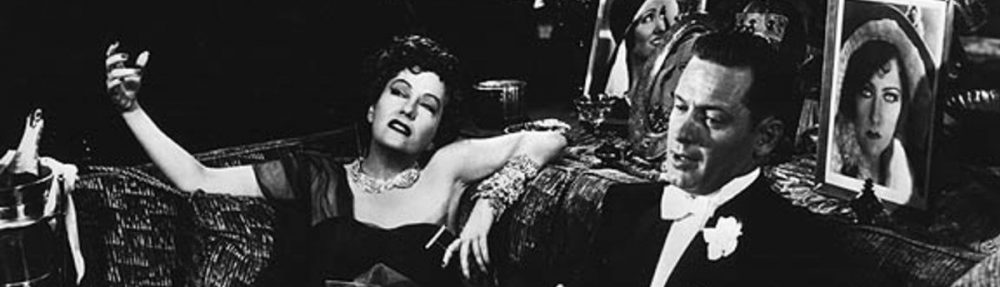
While I may not see Phoenix as portraying The Joker (and this has much more to do with the screenplay than his performance), his performance as this madman is off-the-charts great and could possibly be the best performance delivered by Phoenix ever. There is an unapologetic, candidness about this performance that feels incredibly genuine–no pretense about it. Phoenix is 110% committed to this character and stays true to Arthur Fleck the entire time. He is vulnerable and terrifying all at the same time. When analyzing the performance of Phoenix, I am reminded of Norma Desmond’s lines from Sunset Boulevard when she states “my eyes, I can say anything with my eyes” and “we didn’t need dialogue, we had faces.” Phoenix could have played a mute Arthur Fleck, and we would still have known precisely what he was thinking and more importantly feeling. He embodies the sage screenwriting words of “dramatize, don’t tell.” Phoenix is consistently committed to the character of Arthur Fleck from beginning to end. And I say “Arthur Fleck” because I don’t believe him to be portraying The Joker. In an exchange on Twitter with my friend Jeremiah that I had (as I was writing), I was reminded of what I learned in geometry, “every square is a rectangle, but not every rectangle is a square.” From that we can extrapolate that a theory could be “every Joker is a madman, but not every madman is The Joker.” I’ve seen a lot of great performances over the decades, but I can honestly say that this lead performance by a male actor is among the best I’ve ever witnessed. Perhaps Nicholson is still my favorite Joker, but Phoenix’ Joker is certainly the most realistic portrait of the descent from slightly crazy to utter destructive madness to the point that one laughs as the world implodes around them.

Joker is rich with poignant thought-provoking social commentary on our current state of affairs (albeit exaggerated) as the divide between the rich and poor is growing ever so rapidly. Just as American Psycho used the self-centered, consumer-centric, self-indulgent late 1980s to comment on the late 90s//early 2000s, this film also uses the early 1980s lens to comment on the late 2010s/early 2020s. The choice to use the early 1980s as the setting isn’t only because 80s is popular right now, what with Stranger ThingsAmerican Horror Story 1984IT, and more, it’s because it was a highly transitional time in the country. The 1960s was pretty much peaceful, the 1970s was experimental that turned chaotic, and everything came to a head in the early 80s before the economy turned around and the late 80s ushered in the bountiful, progressive 1990s. So the choice to set this film in the inner city of the early 1980s allows it to comment on similar issues that are plaguing us today. Perhaps not to this extreme, but we encounter conflicts that parallel the ones outlined in the film. Instead of treating mental illness, often our society masks it with medication or hides it from view to deal with it later (only later never comes). The rich just keep getting richer, and the poor just keep getting poorer, all while the rich blame the poor for their circumstances and standby and watch the lower rungs on the ladder just fall off; survival of the fittest, one might say. Self-centeredness runs rampant throughout the streets of Gotham as it does in our own cities and towns today. Everyone is so concerned with themselves that they stop to think about building a community that builds up one another to construct a society that is just as much about the quality of life for its citizens as it is the produces and services it can crank out. How do you view our world? As a factory or as a community?

I wish I had known just how heavy this film was going to be before I watched it, as I was not prepared for how dark it was. There are no moments of levity in this film, which I find to be particularly dangerous for audiences. As a screenwriting lecturer, I remind my students that it’s important to use levity strategically even in dark dramas or horror movies. It serves the purpose of not leaving the audience in a depressed state and allows for the writer to deliver an impactful punch when the audience least expects it. Levity relieves negative stress and resets the emotional barometer. I was feeling so oppressed by the tone of this film that I nearly left the cinema because I couldn’t’ take the darkness anymore. And that says a lot, considering that I watch a lot of dark movies and TV shows. Beyond the absence of levity, there aren’t any likable characters. To put it bluntly, everyone is an asshole. The treatment of everyone’s fellow man is despicable. It’s important for a film to establish one or more characters that the audience can identify with and even root for, but I find that everyone is so unlikable that I cannot connect with any of them. Yes, those whom have experienced trauma will likely identify with Arthur, but even he offers nothing redeeming or endearing. Unfortunately, Joker is a film that I may never watch again, despite praising it for its critical achievement as a motion picture.

If you are searching for a film that offers a prolific amount of content for purposes of a character study or cinematic study, then this is an excellent one to put on your list. Personally, I did not care for the story even though by all measurable accounts it’s a great film. But I suppose sometimes there comes along films that we acknowledge for their artistic and critical achievement but do not necessarily need to see again.

Ryan teaches screenwriting at the University of Tampa. If you like this article, check out the others and FOLLOW this blog! Interested in Ryan making a guest appearance on your podcast or contributing to your website? Send him a DM on Twitter or email him at RLTerry1@gmail.com! You can catch Ryan most weeks at Studio Movie Grill Tampa, so if you’re in the area, feel free to catch a movie with him!

Follow him!

Twitter: RLTerry1

Instagram: RL_Terry