Full disclosure: this movie is in need of higher intelligence.
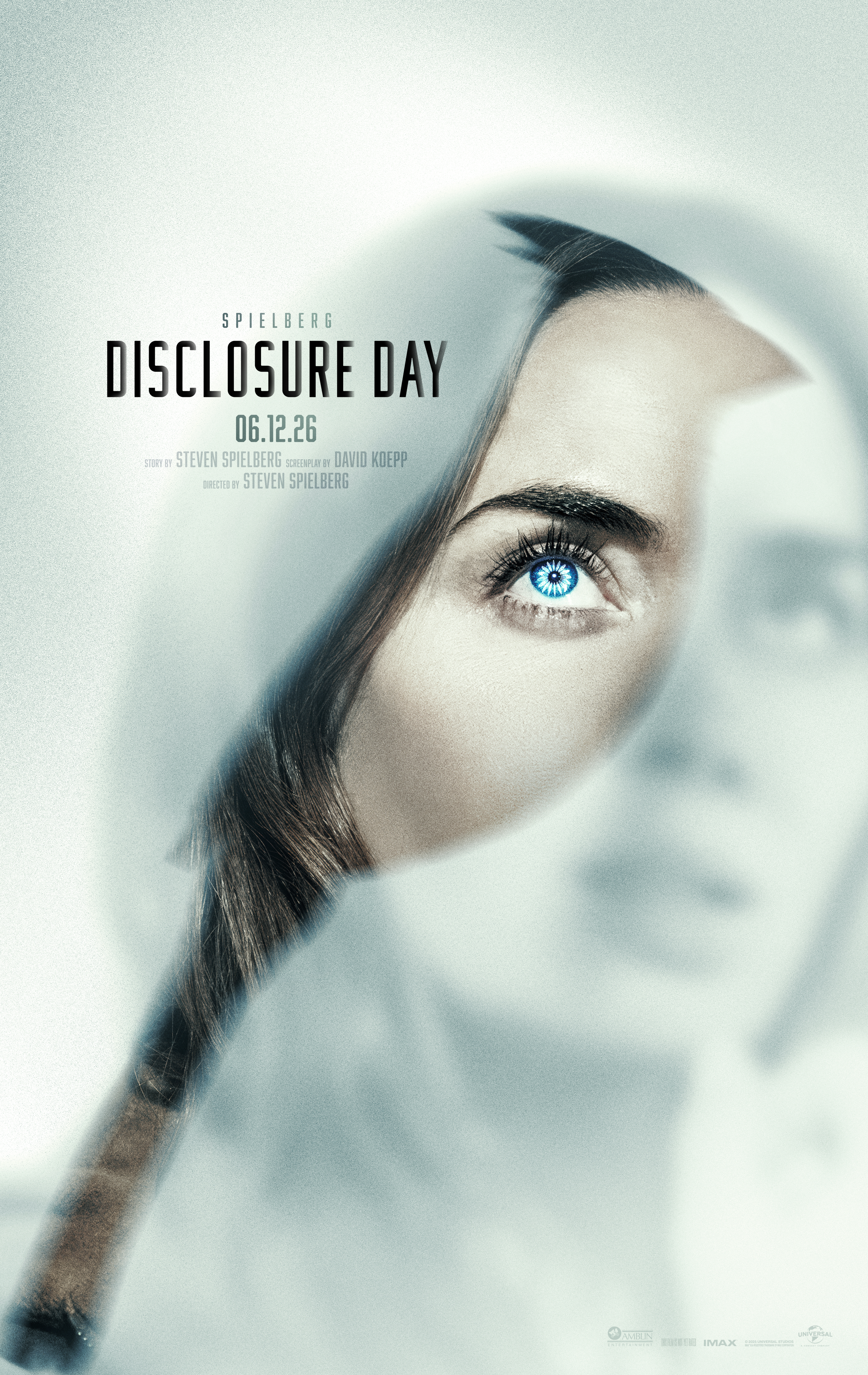
There are few filmmaker collaborations in modern cinema as successful as that of Steven Spielberg and David Koepp. Together, they helped bring audiences some of the most beloved blockbusters of the past three decades, including Jurassic Park. Watching Disclosure Day, however, one cannot help but wonder how much of that film’s enduring magic originated with Michael Crichton’s source material and screenplay draft. Because while Spielberg and Koepp’s latest collaboration contains intriguing ideas, technical proficiency, and occasional flashes of emotional resonance, it ultimately feels less like a finished screenplay and more like a collection of story notes elevated by accomplished filmmaking.
The result is a science-fiction drama that is intermittently engaging but rarely compelling.
About: A meteorologist and a cybersecurity expert find themselves at the center of a movement to expose the government’s cover-up of extraterrestrial secrets.
Movies featuring extraterrestrials have been a staple of cinema for generations. From the cautionary tales and Cold War allegories of the 1950s to the philosophical and emotionally rich science-fiction films that followed, alien stories have repeatedly provided filmmakers with opportunities to explore humanity from an outsider’s perspective. Even television programs such as The Twilight Zone managed to produce dozens of memorable alien stories that balanced suspense, wonder, humor, and moral inquiry in less than thirty minutes. (More on that later).
That is not because the premise lacks potential.
On the contrary, the central concept is fascinating. Spielberg and Koepp introduce numerous provocative ideas, several of which could have sustained an entire film on their own. The problem is that these ideas rarely develop beyond their introduction. Rather than building upon one another, they arrive as individual moments, scenes, and conversations that often feel disconnected from the larger narrative. The film frequently resembles a series of intriguing sequences searching for a story capable of connecting them.
This structural weakness becomes increasingly apparent as the movie progresses. The first act is remarkably protracted, spending an excessive amount of time establishing a premise the audience already understands. By contrast, the second act feels abbreviated, as though key dramatic developments have been compressed in the interest of reaching the finale. The third act, meanwhile, overstays its welcome, stretching material that would have benefited from greater economy and focus.
The irony is that Spielberg eventually finds the emotional center that has defined many of his greatest works.
For a brief period, audiences can glimpse the filmmaker responsible for E.T. the Extra-Terrestrial and Close Encounters of the Third Kind. Human connection begins to emerge. Characters start to feel like people rather than narrative devices. The film develops something resembling a heart.
Unfortunately, it arrives too late.
By the time the emotional foundation finally reveals itself, much of the audience’s investment has already been exhausted by a story that spent too long wandering without clear direction.
Tonally, Disclosure Day suffers from a different but related problem. The film takes itself extraordinarily seriously—so seriously, in fact, that it often resembles a historical biopic or documentary rather than a work of speculative fiction. There is nothing inherently wrong with seriousness. Many great science-fiction films are serious. The issue is that Disclosure Day frequently mistakes solemnity for profundity.
The movie is so determined to be important that it forgets to be imaginative.
This is particularly frustrating because Spielberg has historically excelled at balancing wonder with reflection. Films such as Close Encounters and E.T. understood that mystery and awe are just as important as intellectual inquiry. Here, however, the sense of wonder is surprisingly muted, replaced by a self-importance that often weighs down the narrative.
The film’s treatment of faith and spirituality proves similarly uneven. At times, Spielberg and Koepp offer nuanced and believable portrayals of religious individuals grappling with extraordinary circumstances. One character in particular—a nun whose role I will leave undisclosed—provides some of the film’s most thoughtful and surprising moments. Yet elsewhere, the screenplay appears content to take easy shots at organized religion, resulting in a portrayal that feels inconsistent rather than insightful.
Technically, the film is well crafted. Spielberg remains one of cinema’s most accomplished visual storytellers, and there are moments of undeniable craftsmanship throughout. The exception is the visual effects work surrounding several of the film’s alien creatures, which often possess a strangely artificial, video-game quality that undermines their intended impact.
Still, technical proficiency can only carry a film so far.
After watching Disclosure Day, I found myself reflecting on a rather uncomfortable observation: nearly every alien-themed episode of The Twilight Zone delivered more thoughtful ideas, stronger characters, and more satisfying dramatic construction than what is presented here.
Perhaps the film’s greatest indictment is that it arrives decades after The Twilight Zone already explored many of the same questions more effectively. Rod Serling’s landmark anthology routinely delivered stronger characters, clearer themes, more compelling moral dilemmas, and greater dramatic economy than Disclosure Day manages across its entire runtime. Working within the confines of a twenty-five-minute television episode, The Twilight Zone often challenged audiences to reconsider humanity’s place in the universe while simultaneously telling complete and satisfying stories.
Nearly all the episodes of The Twilight Zone linger in the imagination long after the credits roll. Disclosure Day, by contrast, feels destined to become little more than a temporary water-cooler conversation—an intriguing premise discussed for a few days before fading from memory. The difference is not one of budget, technology, or visual spectacle. It is the difference between a story built around an idea and a story that understands what to do with that idea once it arrives.
Great science fiction requires compelling characters, coherent storytelling, and ideas that evolve beyond their initial presentation. Disclosure Day contains pieces of all three, but never assembles them into a satisfying whole.
If audiences enter the theater hoping for another E.T. or Close Encounters of the Third Kind, they are likely to leave disappointed. While Disclosure Day contains intriguing concepts and occasional flashes of Spielberg’s enduring humanity, it never develops the compelling characters, narrative cohesion, or sense of wonder that made those earlier films endure.
What remains is a technically proficient science-fiction drama built around fascinating questions but surprisingly few satisfying answers. Disclosure Day proves that even legendary filmmakers cannot rely on ideas alone. Great science fiction requires compelling characters, coherent storytelling, and a sense of wonder equal to its ambitions. Despite occasional flashes of Spielberg’s enduring humanity, this is one disclosure that never fully reveals its potential.

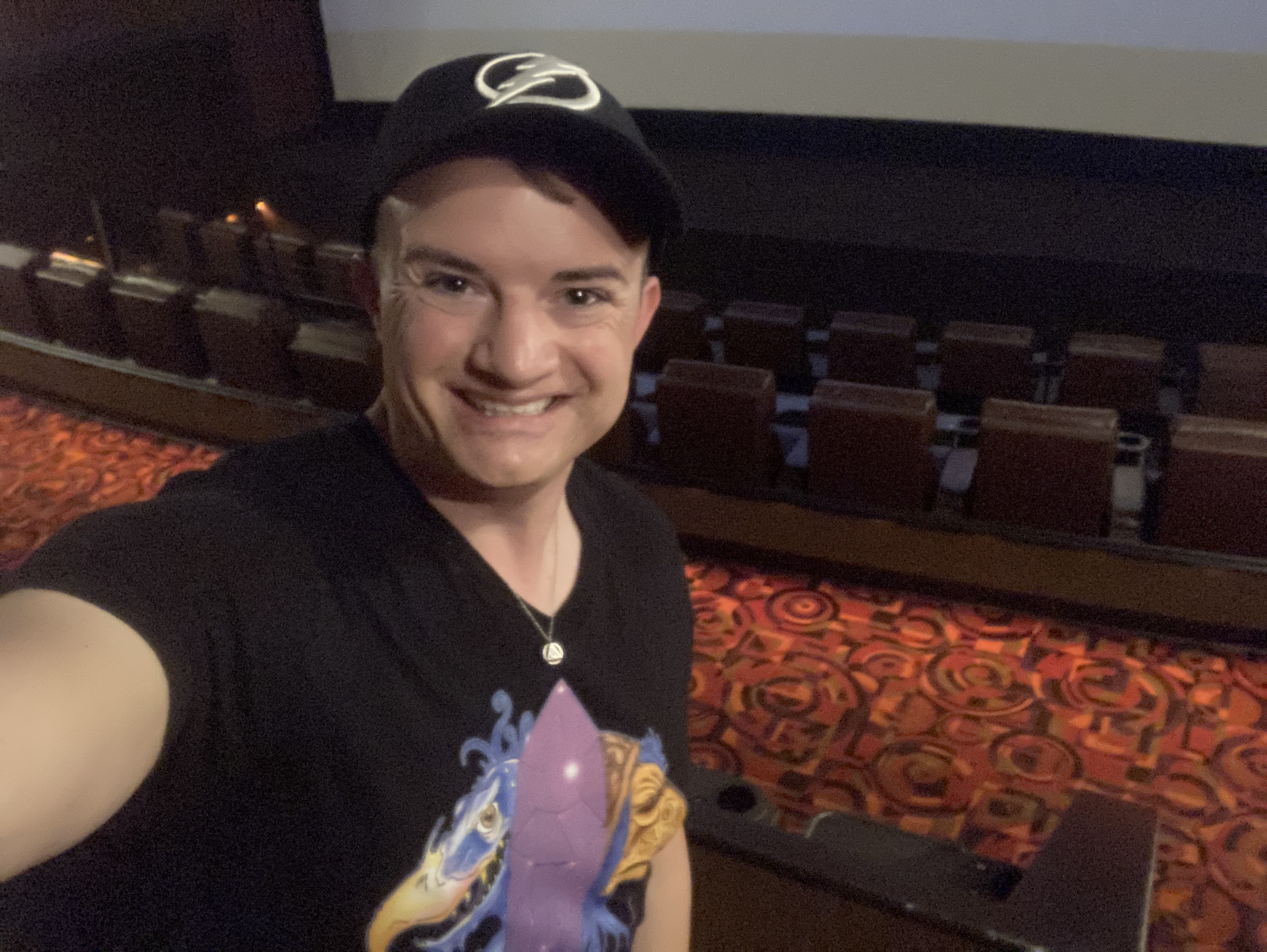
Ryan is the morning host on WLRH Public Radio in Huntsville, AL and host of the show ReelTalk “where you can enjoy the cinematic conversations frame by frame each week.” Additionally, he is the author of the upcoming film studies book titled Monsters, Madness, and Mayhem: Why People Love Horror. After teaching film studies for over eight years at the University of Tampa, he transitioned from the classroom to public media. He is a member of the Critics Association of Central Florida and Indie Film Critics of America. If you like this article, check out the others and FOLLOW this blog! Follow him on Twitter: RLTerry1 and LetterBoxd: RLTerry