SOUND OF FREEDOM movie review

Aleatoric. (Music theory folks will get it). Sound of Freedom is like Taken meets Argo, but the compelling true story ultimately falls slightly flat because of poor pacing. However, the film delivers on both technical merit and casting. While some outlets have described Sound of Freedom as a faith-based film from the same studio that produces the successful television series The Chosen, that is an inaccurate reading at best and an attempt to disparage the film’s quality at worst. Because this movie most definitely delivers on high production value and casting; but unfortunately, the performative dimension and screenplay are underwhelming. Feeling more like a visualization of the Wikipedia entry or Congressional testimony, Sound of Freedom‘s ambition is tapered by screenplay mechanics.

After rescuing a boy from ruthless child traffickers, Tim Ballard (Jim Caviezel), a federal agent, sets out on a dangerous mission to locate and free the boy’s sister, along with other children caught up in the nightmare of sex trafficking. With time running out, he quits his job and journeys deep into the Colombian jungle, putting his life on the line to free her from a fate worse than death.

There is certainly a compelling, gripping, gritty screenplay based on the true story of Tim Ballard’s mission to free children caught up in sex trafficking, but the plotting and pacing of the screenplay hold the film back from achieving the potential is so clearly demonstrates. While the screenwriting lacks finesse, there is no doubt that this film forces the world to face the nightmarish and closeness of the reality of human (specifically, child in this film) slavery and sex trafficking. Most acknowledge the importance of fighting human trafficking, but few realize how close to our own country this subject matter hits.

We often think of human trafficking as something that happens in foreign lands, but most of those that pay for such reprehensible services are operating out of the United States. Sound of Freedom is a grim reminder of the real war that is being waged in which innocent people are bought, sold, and traded as disposable commodities.

Visually, the film looks fantastic! Clearly, there was immense thought placed into the quality of image. Moreover, this same level of thought is witnessed in the settings and even in the casting. This film reminds me of the type of motion picture that we often see from Annapurna productions. In terms of the visual tone, it falls between arthouse and mainstream, which is to the film’s detriment, because had it stuck to either the look/feel of Taken or Argo, then the film would have been more surefooted. On the plus side, though, clearly Angel Studios has show the world that they are capable of releasing high quality motion pictures that can compete with the larger Hollywood studios.

Clocking in at around 2.25 hours, the film’s second act feels incredibly drawn out. I’ve written before about the litmus test I give myself, which evaluates pacing, and to that end, I did look at my watch about 1.5 hours into the film. Structurally, the first and third acts work sufficiently well, but the second act is augmented to needlessly extend the runtime. As this interpretation of the true story has it, there is enough plot for about 1.5-1.75 hours, meaning there is about 30-minutes that could have been cut out to streamline the motion picture.

I mentioned my observation that many outlets and other critics are referring to Sound of Freedom as a faith-based film, and there is little evidence to support that reading since there lacks any type of salvation or proselytizing message in the film. Because I’m sure we can all agree that God’s children are not for sale. If there is a message in the film, that is it. A universal truth that is applicable to and relatable by all.

Ryan teaches Film Studies and Screenwriting at the University of Tampa and is a member of the Critics Association of Central Florida and Indie Film Critics of America. If you like this article, check out the others and FOLLOW this blog! Interested in Ryan making a guest appearance on your podcast or contributing to your website? Send him a DM on Twitter. If you’re ever in Tampa or Orlando, feel free to catch a movie with him.

Follow him on Twitter: RLTerry1 and LetterBoxd: RLTerry

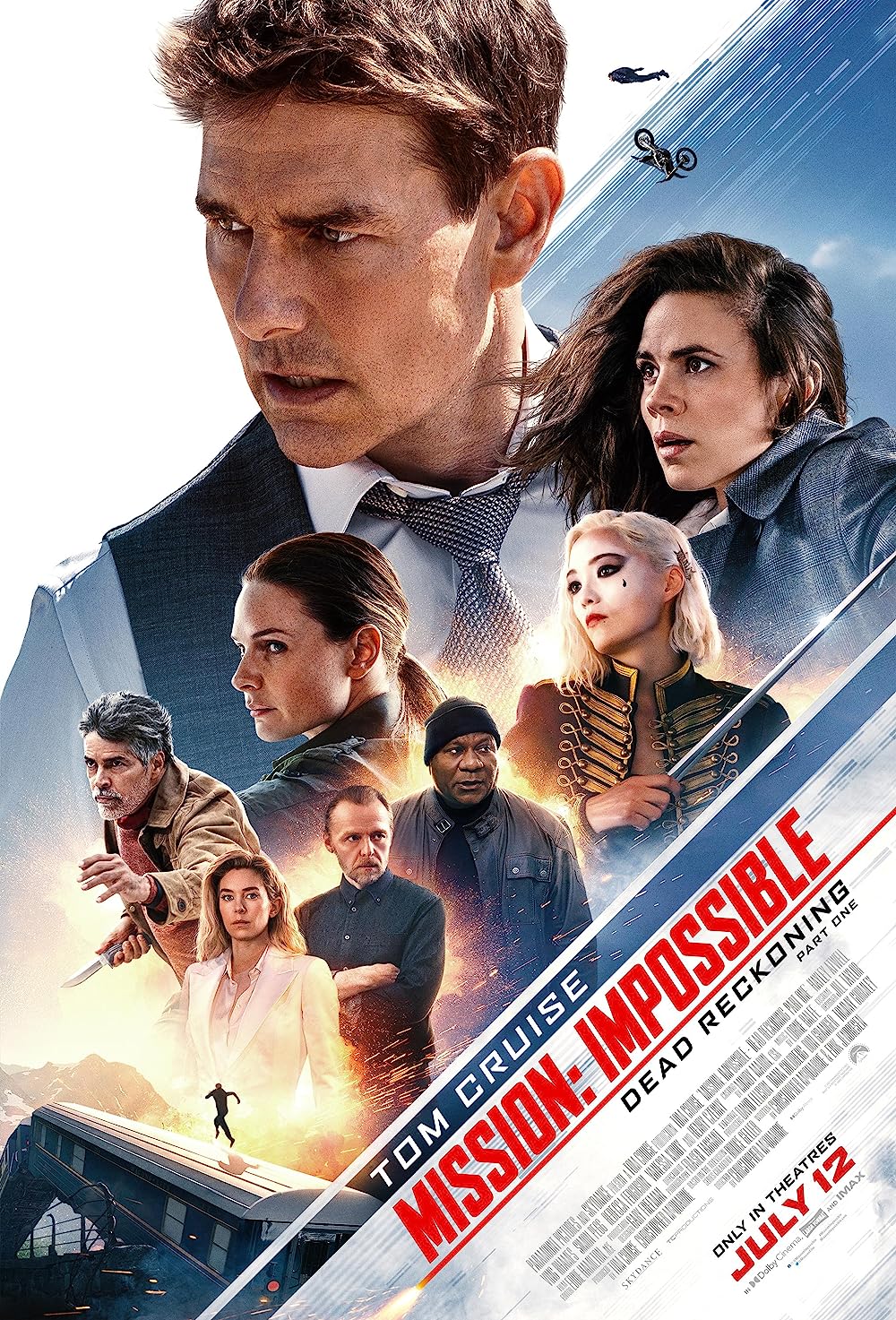
MISSION: IMPOSSIBLE–DEAD RECKONING PART 1 movie review

Exhilarating! Pure, unadulterated cinema! Tom Cruise and the whole Mission Impossible team deliver what is likely the most epic movie of the year!! It’s thrilling, funny, and suspenseful from beginning to explosive ending! Part 1 is both a complete story and sets up Part 2 exceptionally well. If I am to be objective, Mission: Impossible III delivers the best story; however, audiences are still going to love this movie because feels like cinema in every measurable way. Move over James Cameron, Christopher Nolan, and yes even Martin Scorsese, for it is Tom Cruise whom knows how to deliver cinema to audiences.

Ethan Hunt (Cruise) and the IMF team must track down a terrifying new weapon that threatens all of humanity if it falls into the wrong hands. With control of the future and the fate of the world at stake, a deadly race around the globe begins. Confronted by a mysterious, all-powerful enemy, Ethan is forced to consider that nothing can matter more than the mission — not even the lives of those he cares about most.

After the massive success, both critically and financially, of Top Gun: Maverick I was curious to witness whether or not Cruise would pull off another cinematic hit. Suffice it to say, he did just that! The last remaining movie star, in the classical sense, Tom Cruise continues to deliver entertaining and thoughtful cinema. In an era overridden by form over function motion pictures (though, there is certainly a place for those stylistic films), Mission Impossible: Dead Reckoning Part 1 (MI7) proves that cinema is should generally concern itself with both the form and function equally. By sticking to foundational screenwriting conventions, pairing it with sequences that make the most of every square inch of that big silver screen, the entire MI team demonstrate why cinema is not only about the art of the narrative but also in a larger-than-life experience.

The entire auditorium was electric at the screening I attended. I don’t think I felt the level of kinetic energy at the cinema since Top Gun: Maverick. It even surpassed the high-energy of the more recent The Flash. Perhaps it is the combination of classical espionage/action plotting and epic-sized set pieces and locations. While MI7 feels very much contemporary, it also never forgets its roots in both the previous MI movies or in the original TV show. Of course there are those that will overly critique the dialogue, more specifically its lack of subtext, but I argue that it is on brand with and perfectly appropriate for this genre movie. Does that mean writers and directors should simply aim for status quo? No, MI3 proved that MI movies can be exciting and full of heart, complete with characters rich with dimension. But the dialogue should not significantly impact the overall experience of this movie.

Without getting into spoilers, the mission, should you choose to accept it, is to stop the character of opposition from unleashing a destructive artificial intelligence (AI) on the world. Talk about timely social and tech commentary. The film broaches topics such as truth (subjective/interpretive truth) and truth (as in universal truth). By extension, this same idea is carried over into fact vs opinion and predictive decisions (in the vein of Minority Report). In short, the crisis that Ethan is attempting to prevent is one that would completely disrupt, retcon, and violate the very informational fabric of life. Think Skynet. While I wouldn’t characterize MI7 as being inordinately deep or thoughtful, concerning truth and AI, it does posit these questions and subjects, which provides opportunities for more discerning audiences to discuss the advantages and disadvantages of AI. More specifically, the dangers of AI falling into the wrong hands.

The set pieces and locations are cinematic in both scale and scope. From the beginning of the movie on a submarine in the Bearing Sea to the Alpine vistas of Austria, the best way to experience this motion picture is in a premium format at your local cinema. Moreover, the biggest screen with best sound possible will make the car chases and Tom Cruise’s stunts all the more outstanding! Even though we’ve all seen that stunt in which Cruise launches himself off the mountain on a motorcycle in various promotional content for this movie, watching it in the third act of the film was still so incredibly impressive!

While Cruise performing most of his own death-defying stunts is unparalleled and impressive enough, what makes these car chases and stunts even more adrenaline-pumping is the fact so little CGI is used. Tom Cruise is literally launching himself off a mountain, and he (and others) are literally driving cars through the streets of Rome. The lack of overt CGI or relying upon it to take the real danger out of the stunt sequences removes just that–the danger. These stunt sequences are all the more exciting because they are real–there is little to no simulation employed. Not to over simplify, but the dimension of real beats the flat, lifeless CGI sequences every time. Real>artificial.

And that’s precisely what we have here real cinema! On a personal note, I am so incredibly grateful for Tom Cruise keeping cinema alive! He has demonstrated through Maverick and now with MI7 that he understands what it means to craft cinematic stories for the silver screen! Before you @ me, I am fully aware that cinema takes various forms, form intimate character studies to the avant-garde, but the power of a genre movie that follows screenwriting conventions should never be devalued. Genre movies are what helped build cinema, and folkslike Tom Cruise keep them coming to entertain and thrill us.

Ryan teaches Film Studies and Screenwriting at the University of Tampa and is a member of the Critics Association of Central Florida and Indie Film Critics of America. If you like this article, check out the others and FOLLOW this blog! Interested in Ryan making a guest appearance on your podcast or contributing to your website? Send him a DM on Twitter. If you’re ever in Tampa or Orlando, feel free to catch a movie with him.

Follow him on Twitter: RLTerry1 and LetterBoxd: RLTerry

JURASSIC PARK 30TH ANNIVERSARY retrospective analysis

Timeless and terrifying! In honor of Jurassic Park‘s 30th Anniversary, I want to revisit why the film works so incredibly well, and never gets old. Simply stated, it’s the original’s connection to and foundation in horror, which was largely abandoned after the first installment in the decades long franchise.

Just like Dr. Alan Grant states at the beginning of the film, “raptors have far more in common with present day birds than they do with reptiles,” that same analogy can be drawn with the original Jurassic Park and its proximity to horror compared to action-adventure. Borrowing from Dr. Grant, the original Jurassic Park has far more in common with sci-fi/horror than it does with action-adventure, hence why it has held up over the years and continues to be a favorite film for many cinephiles and fans alike.

While all the sequels, including Jurassic World are far more action-adventure than the original, Jurassic Park can be likened to Ridley Scott’s Alien. The latter is a quintessential space sci-fi/horror with action-adventure sequels just like the former. And like Jurassic Park, the original Alien is considered far superior to that of the sequels. But why is this? There are many reasons from script to director to cinematography; but at the end of the day, it’s the fact that both these critically acclaimed and admired films have their respective roots in the American horror film and not action-adventure movies. More so than any other genre, horror is (1) uniquely American and (2) the most time tested, given it can trace its roots back to the 1890s and was perfected by Universal Pictures in the 1920s and 30s.

So what separates Jurassic Park from the sequels? Both have life-threatening dinosaurs, both have action, both have adventure, etc. But, only the original carries with it social commentary, rich subtext, and well-developed themes told through a brilliant combination of horrific frights and believable sciences taking place within a world of fiction grounded in reality. Furthermore, the focus in both Jurassic Park and Alien is largely on the drama between the characters and the oppositional forces in the film. The sequels in both franchises place far less emphasis on well-developed conflict and drama, and instead sacrifice those golden elements of cinematic storytelling for high-concept CGI-filled adventure movies with lots of dinosaurs or aliens. The proliferation of gimmicks and effects is often used to hide a weak story. Fortunately, Jurassic Park provides audiences with a strong plot told through exceptional cinematic storytelling.

Jurassic Park‘s screenplay benefitted from being penned by the award-winning author Michael Crichton who also wrote the novel by the same name. Often times, when the author of the novel also writes the screenplay, the screenplay forms a stronger foundation upon which the technical elements can be build. A more recent example of a brilliant screenplay adaptation of a novel is Gone Girl, the author of the novel was the screenwriter. Although a screenplay is visually driven whereas a novel is internally driven, when a novelist with a penchant for visual storytelling writes the screenplay for the movie adaptation, the screenplay tends to contain better developed characters, strong subtext, effective conflict, and excellent dialogue.

Crichton created incredibly memorable characters who each spoke with their own voice. Casting the right actors to portray the characters is obviously important–and the cast for Jurassic Park is exemplary–but even before the actor steps into the character’s shoes, the character has to be created. Each character in Jurassic Park possesses unique traits, strengths, weaknesses, dialect, and behaviors. Instead of the conflict being arbitrary, the conflict develops through the interpersonal relationships between the characters and the relationship between the characters and the opposition–human and nature.

I was in elementary school when the movie hit theatres in the summer of 1993; and although under 13, my parents allowed me to go see the movie. It was my second PG-13 film, with Batman Returns being the first, and what an experience! Not unlike Dr. Grant’s reaction to his first encounter with a dinosaur in the film, my reaction to Spielberg’s masterpiece was eyes-wide-open, mouth gaping wide, and racing endorphins. And then comes the macabre contrast in Acts II and III. “Ooo, ahh–that’s how it begins, and then there’s running and screaming” (Dr. Ian Malcolm, The Lost World). Aptly stated.

The opening scene hooks the audience with a disaster, but does not reveal much about the dinosaur in the secured transport–brilliant. Because this scene did not show a dinosaur, the audience’s curiosity is pricked which creates an eagerness to see a dinosaur and a degree of nervousness or apprehension accompanying that curiosity. We wanted to see more. If you’re familiar with Hitchcock’s bomb theory, he states “you must never let the bomb go off.” More than simply shock audiences with the death of that employee at the beginning of the movie, this scene serves as information more than a glimpse at that which would be horrific in real life.

This delay of seeing a dinosaur forces the audiences to pay more attention to the characters, dialogue, and conflict than looking for the next dino. Furthermore, the delay in seeing a dinosaur, perfectly setup audiences for the grand reveal on the way from the helipad to the Visitors Center. Interestingly, if you add up all the screen time that dinosaurs receive in the film, you’ll find that they are only on screen for about 20-minutes. Just like Hitchcock transferred the terror from the screen into the minds of the audience after the Psycho “shower scene,” Crichton and Spielberg did the same with Jurassic Park.

It’s the soft introduction to the man-made dinosaurs that makes the horror of the dinosaurs feel so much more intense later on in the film–and make you scream! In terms of the type of science-fiction horror film Jurassic Park could be classified as, it shares many commonalities with man vs nature and man vs technology horror films. Crichton is known for his believable science within his works of fiction. It is obvious that genetics and paleontology were researched enough to use real, hard science to inspire a fictional science that feels just out of reach of the current trends in the science, technology, and engineering fields. Pair that with horror, and you have a solid cinematic film.

The brilliance of horror films is how they can creatively comment on or provide a different perfective on a anthropological or psychological observation; moreover, it can be helpful when exploring philosophical questions. And these topics are visually explored through the movie and externalize the themes. One area that separates popcorn action-adventure movies from horror films is the cultural significance of the subtext and themes. Typically, action adventure movies do not carry with them social commentary nor significantly pull on our emotions and tap into our most primal fears. Jurassic Park contains all of this.

There is something about horror films that beckons the audiences to find enjoyment in, that which in real life, would not be enjoyable—and not only see it once, but repeat it. And furthermore, find the unfamiliar and grotesque fascinating to behold as what should remain hidden comes to light. Certainly the dinosaurs in the movie should have remained “extinct,” but were brought back to life and engaged in violence in which we find enjoyment. 

Some of the themes found in Jurassic Park that are told through the visceral horror and tense dramatic moments are: man vs nature, foolishness and folly, greed, wisdom vs knowledge, man vs technology, and parenting. Why don’t the Jurassic films have the chache that the original does? You try to find to find rich themes such as these in the subsequent films. They don’t exist. Why? Because it is far more difficult to explore what it means to be human and social constructs in a scifi action movie than in scifi horror. An action movie would be ill-equipped to tackle questions of a philosophical nature because the focus is largely on the action itself and not necessarily the characters, and almost never the subtext and theme.

For an action film to delve into that which causes the film to take on an intellectual nature, it would lose the attention of those who simply want a good popcorn movie. Don’t get me wrong, there are excellent action-adventure movies that contribute to the world of cinema in exceptional ways. Indiana Jones Raiders, Doom, and Last Crusade do that. Obviously, the inability to reconcile nature’s resistance to control is one of the most important themes of Jurassic Park.

Dr. Ian Malcolm tells the group that “life finds a way,” and it immediately becomes the film’s mantra (and a quotable line), true in every demonstrable, measurable way; the dinosaurs survive outside their design and engineering, the lost children survive with the help of a kid-averted paleontologist who discovers his parental side, humanity survives despite meddling in the natural order of things by playing God because that’s what we do–we survive. Every character in the film either understands or is reminded of this–some of them, by force when it’s too late–through the course of events.

Jurassic Park uses horror film techniques in a brilliant fashion to force its audience into considering the larger philosophical questions mentioned in the previous paragraph. It reinforces those questions with clever parallels: Dr Grant’s way of paleontology is about to go “extinct” due to the rise of computer technology (the line “don’t you mean extinct” came from a comment behind-the-scenes regarding CGI encroaching upon animatronics, puppetry, and special effects); the power of the natural world is exponentially magnified when the park’s technology failure is combined with a disastrous tropical storm; money causes literally every ill in the film, even when it is being used for supposedly admirable purposes; and “you were so pre-occupied with whether or not you could, you didn’t stop to think if you should.”

The inability to reconcile nature’s resistance to control is one of the most important themes of the film, of course. Ian Malcolm tells the group that “life finds a way,” and it abruptly becomes the tale’s rallying cry, true in every conceivable way; the dinosaurs survive outside their engineering, the lost children survive with the help of a paleontologist who discovers his paternal side, humanity survives despite its meddling because it’s what we do. Every character in the film either understands this, or is made to by the course of events. Interestingly, we are cued into the theme of life finding a way early on in the film, in the idea foreshadowed on the helicopter ride to the park. Remember when Dr. Grant tied the two female ends of the seatbelt together in order to make it function? “Well, there it is.”

Beyond exploring themes, it’s the intent of the film that determines whether is a thriller (suspense) or horror film. The films speak for themselves. If the intent is to horrify, then it’s a horror film; if the intent is to thrill, then it is a thriller. In all fairness, Jurassic Park is borderline; but it’s the level of shock, fear, and dread that may just be enough to tip the scale toward horror instead of thriller, and certainly evidence enough to prove that it is NOT simply a dark action-adventure movie. Much like Stanley Kubrick’s The Shining and Scott’s Alien, Spielberg’s Jurassic Park is also an intellectual film.

Whereas an action-adventure movie would have provided audiences with a few minutes collectively of some surface-level chit-chat above ethics in order to technically give the film a theme, Jurassic Park provides audiences with an entire film about ethics that will have them talking about the various dilemmas and challenges facing the characters throughout the film. It’s brilliant! And quite the rarity these days. The hand of Spielberg’s penchant for horror (Jaws and Poltergeist) is seen in Jurassic Park from requesting that Crichton rewrite the original screenplay to be more cinematic and less internally driven because Spielberg desired to take the novel and adapt it to screen as a Jaws on land. If his intent was to make a sequel to Jaws, then we have to conclude that his intention was to horrify audiences in some measurable amount.

With a film as dynamic as Jurassic Park, it may be nearly impossible to prove that it is a horror film at its roots; but, the body of information provided in this article help to support the thesis that it is a horror film based upon the intention, conflict, themes, and visceral terror. “Well, there is it.”

And don’t miss the Jurassic Park 30th Anniversary celebration going on at Universal Orlando Resort! If you’ve never been to the Jurassic Park area, then you need to!

Ryan teaches Film Studies and Screenwriting at the University of Tampa and is a member of the Critics Association of Central Florida and Indie Film Critics of America. If you like this article, check out the others and FOLLOW this blog! Interested in Ryan making a guest appearance on your podcast or contributing to your website? Send him a DM on Twitter. If you’re ever in Tampa or Orlando, feel free to catch a movie with him.

Follow him on Twitter: RLTerry1 and LetterBoxd: RLTerry
THE LITTLE MERMAID (2023) movie review

written by Dr. Leo Genco

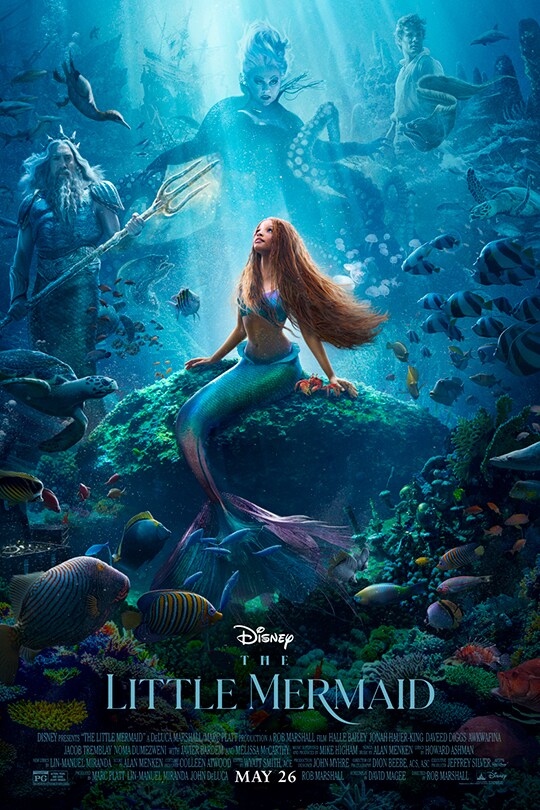
Some treasures are best left under the sea. This familiar Disney formula is only good for one thing: lining the coffers. The Little Mermaid has wonderful, bright, appealing visuals with a few new decent songs, that prove Disney is unable to capture the magic of their 2D animated films. This is unfortunate, because under the sea of this movie is the potential for a great innovative rendition of The Little Mermaid. Why? Well, Disney attempted to provide a newer telling of the original while pandering to the original material. This creates a dichotomy of moral themes in the movie, and it shows. There is a lot to unpack. If you want to skip to what the movie does right, you can skip to the end.

Let’s get the most obvious issues out the way, since they were consistently topics of discussion prior to the film’s release: race, ethnicity, and gender swapping of characters. These changes are typically common to improve diversity, and it can be done. You can look at Nick Fury in the Marvel Comics, or John Stewart as the Green Lantern in the DC Comics. One of the best race change movies is the Preacher’s Wife. The issue with the change here is how the director and writers tried to justify the change. Instead of changing the race of a whole group to maintain consistency, only individuals are changed and are rationalized through a simple bit of dialogue exhibition. Most of the human characters are an eclectic group of non-white ethnicities and races but Prince Eric is still white! The story justifies these differences by changing the location of the kingdom and having the queen adopt Eric into the family. The kingdom is not a port for the mainland but on an island, somewhere in the Americas, and this causes massive changes in the story. The whole scene with the chef and Sebastian was removed. Someone will wonder if the scene was cut because the chef was French. The essence of the original was stripped to justify the demographic changes, which would not be a problem if the movie did not pander to the original material.

The singing varies between songs and actors. The cast of a mix between stage and film actors would do that, but the main problem is how the songs were constructed. For some reason, the director added more characters into the script, but they did not contribute to the songs at all. It is very common in musicals to have the background and side characters sing the chorus and harmony for the lead singer. But this is not true for The Little Mermaid. People are expecting a chorus for Under the Sea and Kiss the Girl. This is not coming from a nostalgia perspective of the original songs. Under the Sea is a song about the sea living as a musical band of species. The dialogue before Kiss the Girl called for the various sounds of nature. For both songs we are expecting a strong sound, especially when the chorus hits. Sadly, both songs are reduced to two or three singers max and are sung as a solo piece for the majority. Overall, songs match the deaf tone of the movie.

While the animation of the under the sea creatures on par with the Lion King (take that as you will), I am not talking about the animals but the human actors who had little to not animated faces throughout their dialogue. Only three characters were animated, Queen Selina, Grimsby, and Ursula. When I say animated, I mean that their facial expression, voice, and body language spoke. Everyone seemed stiff, which is weird because Halle Bailey is a stage actor. You would think Ariel would have the most body expression because she can’t talk for half the movie. Ariel needs to be animated the most. Arial did not seem to be a curious, explorative person, but a blank manikin until a scene which required an over-the-top reaction. Luckily, this was not consistent throughout the movie. As I will mention later, the acting in the new scenes was great.

For some movie goers, background context to main characters is essential. I, on the other hand, prefer context to characters that is required to understand the journey of the main character. This means, that background context should progress information for the main character, not for the audience. The early introduction to multiple character’s background hurt the movie in two ways: (1) these small scenes for a backstory break up the pacing of the storytelling, creating jarring transitions between scenes, and (2) too many themes or messages were introduced into the film too fast. When you introduce a backstory, you need to follow through and close that story, and when you give too much information at once, people tend to forget or care about the small stories. On top of that, the movie told Ursula’s backstory but did not provide a satisfying delivery of her end. Overall, the introduction of the characters with backstory was not the best way to start the movie.

Two things carried the movie for me, the new scenes and songs and the queen and Grimsby. Adding new scenes and songs felt real. The acting in the scenes felt genuine, minus the random dancing scene halfway through the movie. These scenes had fresh magic Disney needed, but again, the director pandered to the original movie, and this created a lot of disconnect. The problem when recreating 2D animation as a real-life movie is the expression that comes from drawn imagery. This is why the drawings of human movement are different from how humans move. It allows the animator to create expressions you are physically unable to express but want to. The new scenes of the movie did not have a previous expectation of certain expressions. I believe this element allowed the actors more freedom to act.

God bless queen! Out of all the characters, the two actors who were able to pull it off throughout the whole movie was the queen and her trusty councilman, Grimsby. They were amazing. They had facial and body expressions. I had chills when the queen was on screen. Grimsby was played perfectly and became that comedy relief when the gender swapped bird, Scuttle, failed. I loved these characters, and I enjoyed every minute of screen time with them. While I would put Ursula in this category, her character was written incorrectly. While she was played very well, her lines were the least to be desired. She was written more as a grown woman who throws temper tantrums like a child than the cunning slimy sea witch, she was in the original 1991 movie. So, the queen and Grimsby saved the movie, at least for me.

Dr. Genco is a guest contributor and fellow university colleague. Follow him on Instagram at Leo.Genco.

GUARDIANS OF THE GALAXY VOL.3 movie review

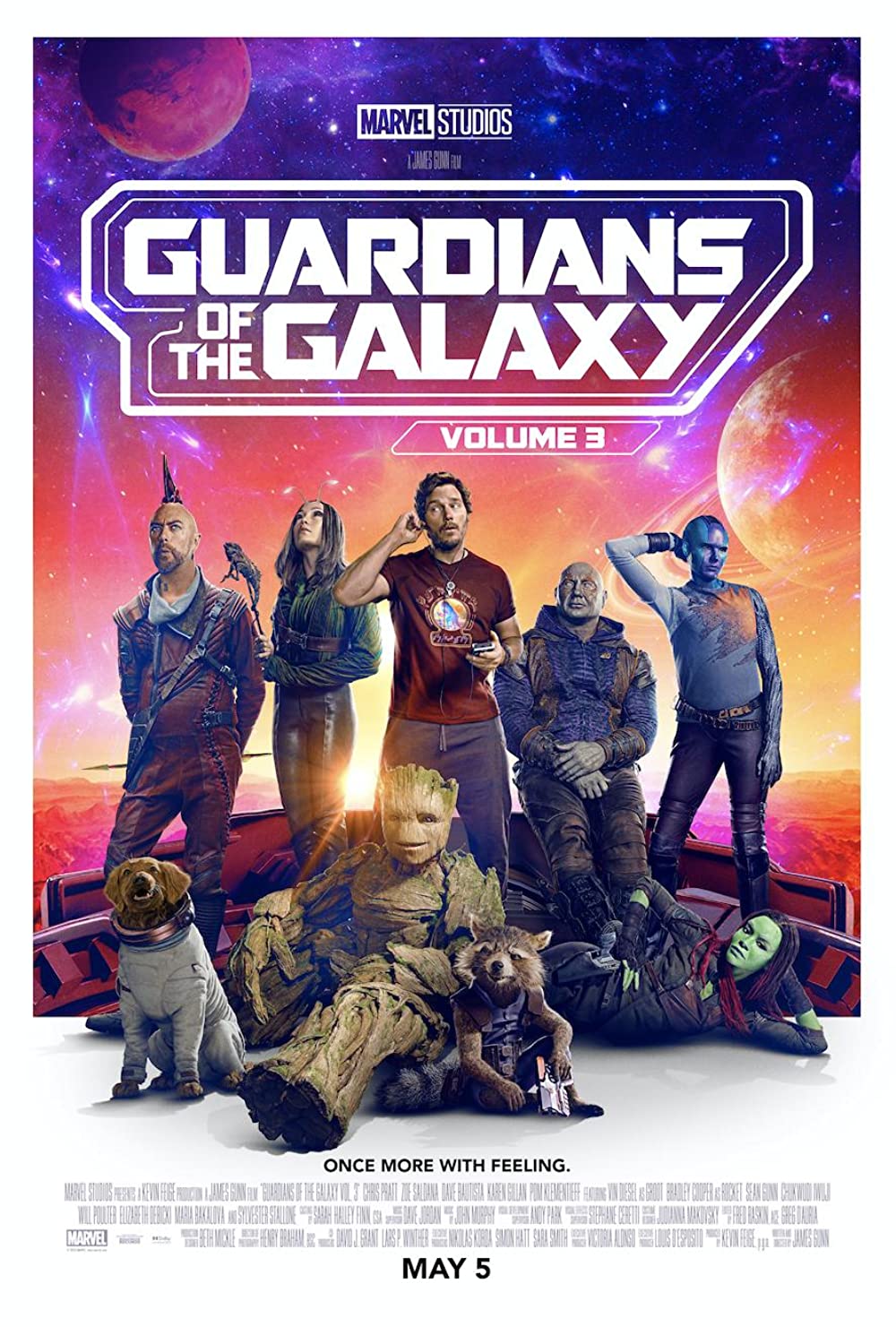
Whoa! That’s a lot of movie, and a lot to unpack. While James Gunn’s MCU swan song Guardians of the Galaxy vol.3 works well as an allegory of the Third Reich, exploring the atrocities of that nightmarish ideology and movement, the superhero movie is greatly lacking in entertainment value.

Still reeling from the loss of Gamora, Peter Quill must rally his team to defend the universe and protect one of their own. If the mission is not completely successful, it could possibly lead to the end of the Guardians as we know them.

The story is emotionally manipulative and many scenes and dialogue are inappropriate for young audiences. (As a reminder, kids are NOT little adults; kids are lacking in critical thinking skills). Furthermore, the movie suffers from squeezing too much plot into a single movie–the film overstays its welcome by about 30–45-minutes.

Clearly, James Gunn loves theses characters, and I can tell that he is a writer that genuinely cares (a trait I spotlight in my screenwriting classes), but I feel he forgot that a large segment of his MCU audience is comprised of kids, whether he accepts or likes that fact or not, and should have considered that dynamic when crafting this story. A storytelling element that is common amongst the MCU, especially within the Guardians of the Galaxy previous two movies, is levity. There is too little levity to counterbalance the dark elements of the movie. As such, the movie is incredibly heavy and sucks all the joy out of going to the cinema to attend a superhero movie. The movie is not completely without redeeming qualities or uplifting moments, but they are vastly outweighed by the somber tone of the movie as a whole.

Even though the film’s incredibly dark visual elements and themes are tastefully handled for older teen and adult audiences, as whole, this MCU installment is not appropriate for kids. If the movie’s marketing made it a point that this Guardians of the Galaxy movie was not for kids, I wouldn’t have a big a problem with content of the movie, but it’s the fact that kids were not dissuaded in any way from attending this, insofar as I am aware. When Deadpool first released, there was an entire tongue in cheek campaign to remind parents and siblings that this Marvel movie was not for kids–tastefully handled. Perhaps the studio dropped the f-bomb and increased the crass language and violence as a means to warm kids up to Deadpool 3, but that is a completely unhealthy approach as is disrespectful of what it means to be a child and young.

Looking to another franchise with which a whole generation of kids grew up, the Harry Potter movies became more mature as the seminole audience grew. Which is important, as life IS complicated and success, grief, loss, death, and disappointment are part of the human experience. However, the movies never became overly violent, increased crass language, or went to too dark a place (without counterbalancing it with levity and more lighthearted moments). Guardians of the Galaxy vol.3 is representative of the direction Marvel and Disney are going, and it’s not good nor healthy. If the MCU wants to create more movies that are adult in nature, then do that–but don’t take what has appealed to kids and decide to increase the more mature content. As I understand it, there is a whole universe of Marvel characters, and I am confident that a sub-franchise can be started that is geared towards mature audiences from the onset. And when kids get older, they can choose to eventually experience the Marvel movies that were, at one time, inappropriate for them.

What I found most fascinating about the movie is the commentary on the Third Reich (and for those that don’t remember, that is the ideology turned movement that was manifested by the Nazi party). Without going into great detail, one of the common practices at Nazi-controlled concentration camps was to further medical science by experimenting on the prisoners. Unfortunately, some of what we know today, some of the advancements that we use for healing today, came out of those nightmarish compounds. The idea was to learn from the experiments in order to increase the life experience of the master race perfect–correct that which was flawed. Moreover, the idea of a master society was carried into the idea of creating a utopia (something the Nazis had in common with the Soviets). But of course, utopia is an impossibility, and the pursuit of it often comes at the cost of life, individuality, and freedom.

The big bad villain in this movie known as the High Evolutionary is representation of and analogous with Hitler. At the core of the High Evolutionary’s goals and ambitions is the same ideology that drove and inspired Hitler. Furthermore, his speeches that feel they could have been written for a modern day Hitler. I appreciate what James Gunn did here, because it is monstrously challenging to craft a story around such heavy subject matter. Analogy and extended metaphor are outstanding tools to use in storytelling to provide commentary on a topic without talking about it. The ideology that inspired Hitler didn’t go away with him and his party, but it’s still out there, and must be kept at bay. Fictional storytelling can be used as a means to explore an observation of reality that may otherwise be uncomfortable.

If only as much thought had been put into the sets and effects of the movie. Like the perennial house guest that has worn out their welcome but continues to return anyway, prolific CGI continues to be employed instead of showcasing the craftsmanship of practical effects, real sets, and models. I’ve said it before, and I will say it again, CGI can never replace the way real light bounces off real objects into the camera lens. When I look at a monstrous creation of CGI, I am never left with the feeling that I witnessed the hand of an artist—brilliant engineer, yes–artist, no. Furthermore, not only is the CGI screaming in your face, but the movie’s music and sound effects mixes are also deafening. The kid seated next to me had his hands over his ears for a good portion of the movie. There is nothing subtle or nuanced about this movie.

Guardians of the Galaxy vol.3 represents James Gunn’s MCU swan song as he is now working on DCEU (or whatever it’s going to be called) movies. And he certainly left an indelible mark upon the MCU because few other directors (if any) could have worked the magic he did with the Guardians, a one-time obscure Marvel comic series. While I have many reservations of taking your kids to see this movie, it is one that should inspire thoughtful conversations about the parallels the villain(s) shares with the Third Reich.

Guardians of the Galaxy review | Guardians of the Galaxy vol.2 review

Ryan teaches Film Studies and Screenwriting at the University of Tampa and is a member of the Critics Association of Central Florida and Indie Film Critics of America. If you like this article, check out the others and FOLLOW this blog! Interested in Ryan making a guest appearance on your podcast or contributing to your website? Send him a DM on Twitter. If you’re ever in Tampa or Orlando, feel free to catch a movie with him.

Follow him on Twitter: RLTerry1 and LetterBoxd: RLTerry