Disney’s “Christopher Robin” full movie review

Silly ol’ movie. Disney’s latest live-action re-imagination of a classic property is Christopher Robin, directed by Marc Forster with a story and screenplay by several writers. And that is likely where the fault lies with a movie that should have been heartwarming and magical. Although the movie has a whimsical fancy about it, and there are moments that will tug at your heartstrings, those moments are very few. It is as if each contributor to the story/screenplay had his or her own idea of how to handle a middle-aged Christopher Robin returning to the Hundred Acre Wood; but instead of selecting one story, one plot, we have bits and pieces of the different takes on how to write a story dealing with a rediscovery of the inner child and realizing that friends and family are more important than work. Plots such as the aforementioned are commonplace, almost cliche. So, it needed a fresh take on it. Needless to say, the movie plays it safe and paints by number. Not to say the film is not without its accolades. The quality of the CGI for Pooh and his fellow Hundred Acre Wood residents is outstanding. There are moments that you forget that they are not actually real. However, I am confused as to why Owl and Rabbit are based on real animals whereas the others are based on stuffed animals–that decision is a little odd. Suffice it to say, the best scenes in the movie are the ones with Pooh, because McGregor’s Christopher Robin ultimately fails to genuinely connect with the audience. Although the past iterations of Winnie-the-Pooh (animated and live action) have more heart than this film, you can still enjoy waxing nostalgic as the film takes you back to the Hundred Acre Wood and displays a little heart despite the cumbersome story.

Faced with having to find 20% in cuts at the Winslow Luggage Company or be forced to lay off a significant number of employees, Christopher Robin (Ewan McGregor) is forcibly asked to work the weekend to prepare for a big presentation Monday morning. Unfortunately, that means he has to send his family away to his boyhood countryside home without him. When his childhood best friend Winnie-the-Pooh pays him a surprise visit in London, Pooh asks that Christopher return to the Hundred Acre Wood in order to help find Tigger, Piglet, Rabbit, Eeyore, Owl, Kanga, and Roo. Resistant at first, Christopher Robin returns to the wood where he spent most of his early childhood. It is in these whimsical woods that he is reminded of the child he once was. But after finding Pooh’s friends, Christopher Robin must return to London for his big meeting. Returning all the help and friendship Christopher Robin showed the Hundred Acre Wood all throughout his childhood, Pooh, Tigger, Eeyore, and Piglet embark on an xpadition to London in order to help Christopher Robin to rediscover the joy of life.

At its core, Winnie-the-Pooh author A.A. Milne would likely approve of the story Forster attempted to tell. Unfortunately, Milne would likely be unhappy with the final product. “Too many hands in the pot will spoil the sauce.” When a film or movie has multiple writers contributing to the story and screenplay (in this case 7), the plot typically suffers from too many ideas and too little direction. Clearly the movie is trying to be a cross between Finding Neverland and Hook. Two excellent models to follow for rediscovering childhood magic, Christopher Robin would have benefited from relying upon one or two writers to extract the best elements of the aforementioned and use them as supporting structure upon which to build the present Winnie-the-Pooh concept. For those of us who are familiar with Winnie-the-Pooh through the years from the books, TV shows, and theme park attractions, the story includes many nods to past stories and contains several Easter eggs. And these will be some of the fondest moments from the film. There is one pounding question left from the film. And that is whether or not Winnie-the-Pooh and his friends are toys that have come to life or actual living creatures that Christopher Robin abandoned, which complicates what it means for Christopher to leave them behind for more than three decades. It also doesn’t help matters any that Christopher comes across as a jerk, and not older equivalent of Toy Story‘s Andy who brought tears to our eyes.

A far riskier plot, but one that allows for more introspect, is the one used in 2017’s Goodbye Christopher Robin. In short, Goodbye Christopher Robin takes audiences on a journey that explores the literary success of author A.A. Milne and the estranged relationship with his son who came to resent the character of Pooh. Emotional depth is missing from Christopher Robin. Much of the mild emotional connection between the audience and the characters feels forced. So, yes there is a bit of a relationship between the audience and the characters but not enough of one that takes you on the journey that this film could have been. Some of this lack of a connection can be explained by spending way too much time in the factory to the point it feels tedious. Imagine if you will, spending most of Mary Poppins at the bank? That is precisely what you have here. Another aspect to the film that takes away from its ability to successfully connect with the audience is the lazy plot device used to get Christopher Robin back to the Hundred Acre Wood. His own daughter and wife couldn’t get him to spend even a day in the countryside, but he quickly decides to return once he encounters Winnie-the-Pooh on a park bench. The story would have been so much more compelling and the childlike wonder could have been increased if Robin’s daughter stumbled across the Hundred Acre Wood to discover her father’s drawings were of real creatures. And together with Pooh’s friends, Robin’s daughter could have been more instrumental in helping her father rediscover the joys of life.

The overall message of this film is to “do nothing.” Although it is explained what that means, it is not terribly constructive. There was such potential here to comment on friendship and family, but the movie barely moves beyond the surface level. Moreover, Christopher Robin struggles to connect the audience to the characters and make Robin a relatable character with whom you can sufficiently empathize. You will definitely enjoy the moments in the movie that feature Robin and Pooh together and nods to the past Pooh stories. And Tigger even sings his song! Whereas I never felt on the verge of tears, I enjoyed the moments that made me smile and giggle. I just wish there were more of those.


“Life of the Party” movie review

Positively uplifting! Melissa McCarthy and Ben Falcone’s comedy Life of the Party releasing everywhere today is a quintessential Mothers Day flick that you can take your mom to and enjoy together this Sunday afternoon. McCarthy shines as the brilliant comic she is in this film. Whereas she is typically the brunt of the jokes in the film’s she and her husband often cowrite together, this film provides McCarthy with a platform to truly showcase her talents as a comedic actor who can not only play the butt of the humor but also the vixen who’s captured the eye of a hot frat guy as she sets out to complete her education. McCarthy’s brand of comedy–that authenticity, candidness, optimism–that we have come to know and love, will have laughing and empathizing throughout the movie.

Although themes such as inspiration, determination, and resilience are not uncommon for a comedy, I appreciate many tropes often associated with fish-out-of-water plots were abandoned for something more unconventional yet infectiously charming. Instead of ultimately changing herself for the world around her or changing the world to fit her, she finds her place in the world and creatively directs it to make room for her. Whatever your age, you will likely find yourself connecting with one or more of the characters in this film as it proves that you are never too old to learn something new or complete that which you chose not to earlier in life. From acoustic guitar tunes to Cyndi Lauper and even a surprise performance by Christina Aguilera, the music will have you dancing in your seat. Watch as nervous, scared girls who are afraid of unknown elements in school, grow to become incredible women who form meaningful relationships and heal from tragedy. Each of the principle cast is unique in some way, and it’s these traits that setup conflict and allow the comedy to flow from the conflict naturally. From McCarthy’s Deanna’s endearing vampire-like roommate who low key longs for a friendship to the girl who is also a non-traditional student because of being in a coma for eight years, the film is filled with a colorful cast of likable characters and of course Deanna’s ex and mistress who we love to hate.

McCarthy is joined by comedienne Maya Rudolph and the pair of them dominate any scene they are in together. It never feels overwhelming because they are both saying precisely what you and I are thinking. The two of them exhibit kind of friendship that perhaps your closest friend and you desire to have. Although there is a mild degree of suspense, the film derives most of its energy from the brilliant cast’s reactions to the varying conflicts throughout the film. As there is not much to analyze in this film, you’ll find this review far shorter than my usual ones. But, I desired to write up a piece on it because it’s been largely panned by most critics. Variety and I seem to be among the few who find so much that’s “right” with this film as opposed to what’s “wrong.” Maybe it’s not terribly deep, but it boasts a simple plot with complex characters that provides McCarthy with an opportunity to show a different side to her trademark comedy. With honors!

#CorksAndCoasters: Full Review of Busch Gardens Tampa Food and Wine Festival

Delightful, delectable, delicious! It’s back, folks! And bigger, better than ever! Though only in its third year, Busch Gardens Tampa’s annual Food and Wine Festival demonstrates measurable growth in excellence in food, wine, brews, and entertainment. The number of kiosks and food and drink selection has increased, and the variety is outstanding. With a wide variety of sweet and savory foods as well as wine and beers from dry to sweet, you are sure to find multiple somethings to satisfy even the most discerning of pallets.

I highly recommend purchasing the punchable lanyard because it will speed up your time at the register and increase the enjoyment level of your experience. There is a sampler lanyard for every budget. Annual Passholders get the 15-item lanyard for the same price as the 12, and that’s what yours truly did. Every item I had last night was delicious! Used 8 of my punches so I can go back another weekend and sample some more. That’s right! If you do not use all your sample punches in one visit, you can bring your lanyard back another time. Pace yourself. There is so much to eat and drink that you’ll not want to overdo it in order to truly allow the unique flavor of every dish and delicacy to dance upon your taste buds.

Strolling along the main festival road in Gwazi Field, you’ll catch enticing aromas from the numerous kiosks aligning the meandering pathway past topiaries and vendors. If you have a question about anything at Food and Wine, incredibly helpful team members are always close by, and are eagerly awaiting to help direct you or offer suggestions to create a memorable experience that will earn your returned business. The printed festival guide makes locating what you want to eat and drink easy! In addition to food and drink listings, there is other helpful entertainment and park information as well. This is my third year at the festival, and I still pick up the guide because I want to make sure that I don’t miss a single opportunity for enjoyment. Since the concert last night was for a group that I am unfamiliar with and was mostly in Spanish (great for Spanish-speaking guests!), I did not take the time to chillax with the live music; however, I headed over to my favorite show at Busch Gardens and favorite theme park show period: Turn It Up: the Hottest Show on Ice.

So, what Food and Wine items did I select last night? I’m happy to share those with you! The first item on my list, which was recommended to me by a helpful team member, was the wine filled chocolate truffles! You heard me right. Two of life’s greatest enjoyments all rolled up into one amazing treat. If you love chocolate and wine like I do, you will not want to pass this item up. Following the chocolate truffles with wine, I went for the beef brisket on a spiced corn waffle with Amerbock BBQ sauce and paired that with Trapiche Oak Cask Malbec. Couldn’t ask for a better pairing of food and wine. I suppose I could’ve had the chocolate truffled filled with wine for dessert, but I just had to get those as soon as I found out about them.

Returning again this year is the wildly popular bison bacon sliders on a toasted brioche bun! Typically served with sriracha ketchup and a pickle, I don’t care for sriracha nor pickles, so the chefs in the food cabin were happy to modify my slider. I paired the slider with an Alexander Valley Merlot. After I finished my delicious bison slider, I headed over to the Moroccan Palace for Turn It Up! After the show, I made my way back over to the festival grounds to tickle my taste buds some more. For my final meal at the festival (for this visit anyway), I selected the Grilled Cheesecake Sandwich with raspberry drizzle and Short Rib and Brie grilled cheese on house-made brioche. Paired this savory and sweet offering with the William Hill Estate pinot noir. Scrumptious! Every item I selected during my first visit to the festival was a sheer pleasure!

I am looking forward to my next visit–I have 7 more punches on my sampler lanyard, after all. But will likely make a few more visits during the nearly two-month run of #CorksAndCoasters. If you are looking for some tips to enhance your experience, the festival is generally less crowded on Sunday than Saturday; however, the concerts can affect this. With the park hours extended until 9pm during the festival, you will have plenty of time for Busch Gardens’ famous coasters.

“It Comes at Night” movie review

The Doore of Red Death. A24’s highly anticipated horror film It Comes at Night by writer-director Trey Edward Shults looks beautiful and beckons for attention, but fails to live up to the storytelling and payoff of A24’s The Green Room. Another A24 film in the vein of It Comes at Night is 2016’s The Witch, which was ultimately a failed attempt to capture the magic of a horror/mystery film and leave audiences with too many unanswered questions. The only “terrifying ambiguity” (to quote The Huffington Post), in this film, is just how terrifying it is to realize you just dropped money on a film that works better for Netflix, and the ambiguity comes from the plethora of underdeveloped plot elements. Essentially, It Comes at Night reminds me of a bad M. Night Shyamalan film (before he made his outstanding comeback with The Visit and Split) and after the successes of The Sixth Sense and Lady in the Water. Like the aforementioned era of ehh Shyamalan films, the wind up is excellent but the delivery lacks any emotional impact and you’re left with realizing that you never truly cared about any one of the characters. Character development is lacking, and the third act is incredibly weak. However, there is something in particular that I find very interesting; and after reading other reviews, it seems to be something that has escaped most (if not all) the critics at this point. That is the striking similarities between this film and the timeless classic short story The Masque of Red Death by the brilliant Edgar Allan Poe. From the painting on the walls of the house depicting the bubonic plague to the ominous red door, there are quite a few parallels between It Comes at Night and The Masque of Red Death.

Nestled deep in the woods is a secluded boarded up house belonging to a family of three seeking refuge from an unknown threat. Whatever has caused this family to live off the grid and fend for their very survival is tasteless and odorless. Forced to wear gas masks whenever venturing out into the woods and even around their own home, the family is forced to take drastic measures to ensure there ability to avoid coming into direct contact with the disease. With only now way in or out of the house guarded by a red door, the family has stopped at nothing to protect themselves. One night, the family’s house is broken into and they must decide what to do with the man and his family. Having dispensed with courteousness and generosity in order to guard against any and all possible threats, the family must decide whether to listen to the man or kill him right then and there. Their decision will spark a fire that spreads into their deepest fears.

*spoiler alert* But, the analysis is fascinating.

Okay, now I know that the preceding paragraph describes what should be a brilliant horror film, but the problem lies in the greatly flawed poor storytelling, development, and realization. Lack of connection to any one of the characters is also partly responsible for the lackluster experience of watching this horror-thriller with a hint of mystery and dystopia. The only saving grace the film has is the connection to elements of Poe’s Masque of Red Death. For starters, the camera draws the audience’s (and diegetic POV) attention to a painting of a depiction of the bubonic plague (or black death). At first, I was puzzled as to why this painting. Then as I go through the movie, I realize why. Between the constant reference to and runtime spent on talking about and showing the red door, it hit me that this film reimagined Poe’s short story and set it in a dystopian or post-apocalyptic time and place. If you are unfamiliar with The Masque of Red Death, then I encourage you to read it or watch it on YouTube. It is allegory on the inevitability of death no matter how  hard you protect yourself, how much money you have, or how powerful you are. It also contains allusions to the seven deadly sins and the fate of those who party in the wake of mass death among a lower class of people. Although I find the short short to be a stronger narrative than Shults’ variation on this reimagination of the classic tale.

Both the short story and this film contain people hiding out in a fortress. Whereas The Masque of Red Death‘s Prince Prospero is held up ins abbey with his wealthy and noble friends while the red death is killing off the rest of the kingdom, A24’s It Comes at Night features a typical American family living off the land and secured in their rather tutor-looking mountain lodge. Like in Red Death, the family in It Comes receives an uninvited guest one night. Here’s where we see some difference. In Poe’s story, the guest is dressed to attend the masquerade ball and in this film, the guest attempts to break into the home. Although both stories take different approaches to the second act, once thing is in common. And that is the taking in of an outsider. All through the second act, there are hints at something not being right–a constant uneasiness. That apprehension and anxiety regarding the unknown works in the respective stories favors. The emotional impact and psychological payoff differs between the short story and film. Yes, the endings are very similar but feel incredibly different. You’ll just have to read The Masque of Red Death and watch It Comes at Night to know for yourself.

If you’re searching for a thriller to watch this weekend, as it is rain in many parts of the country, then perhaps you should watch Universal Pictures’ The Mummy instead. However, if you are curious about how well It Comes at Night parallels Poe’s short story, this definitely check it out. Not entirely sure why it’s rated R, but in case that’s important to you. To quote Dr. Ian Malcolm, “well, there it is.”

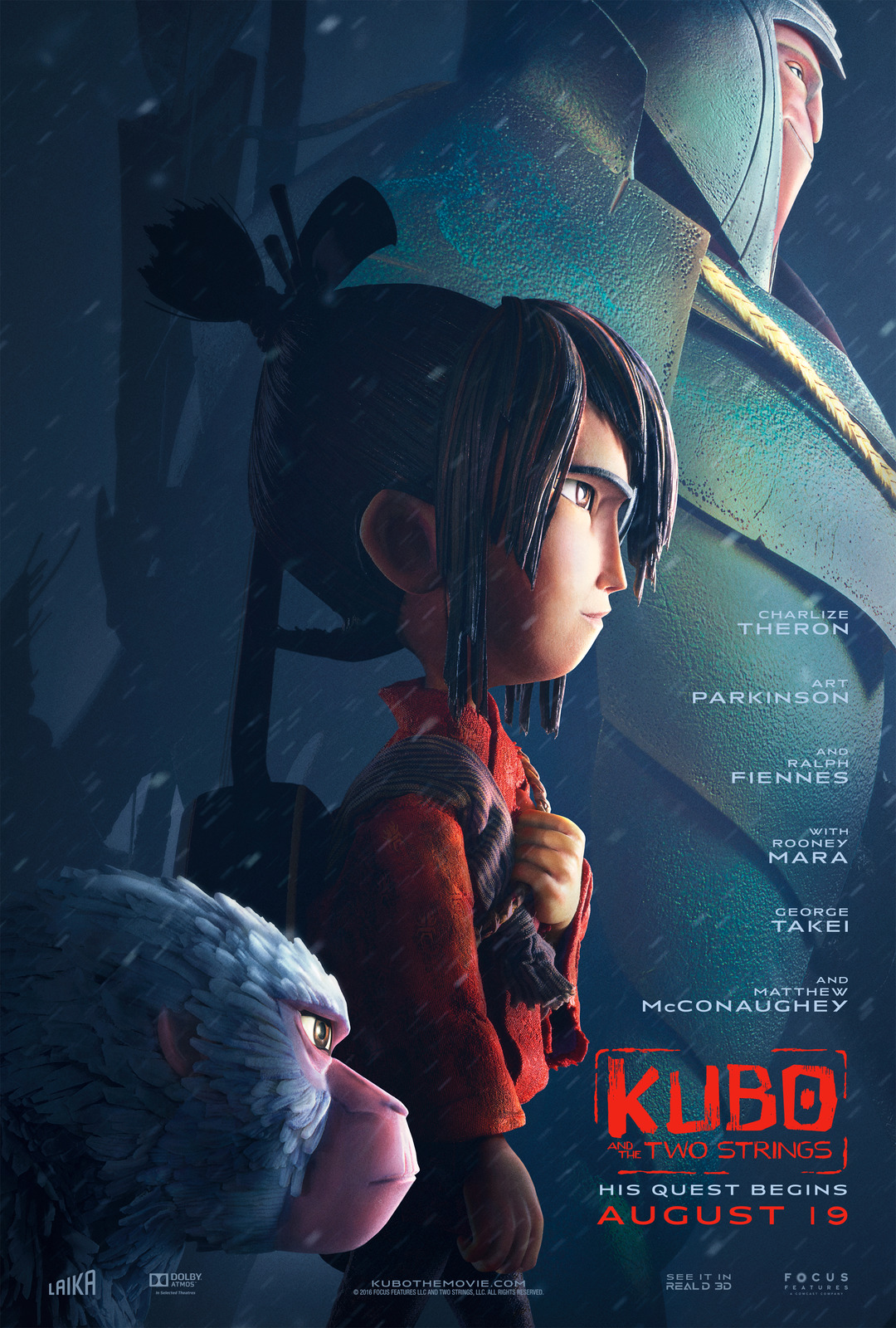
“Kubo and the Two Strings” movie review

kuboAbsolutely beautiful! A dazzling display of the best that cinema can be! Laika and Focus Features’ Kubo and the Two Strings is truly a testament to the art of motion pictures! Brilliantly animated in an eye-catching stylistic way, this film provides audiences with a simple and intimate journey through a dynamically epic world of adventure, laughter, and tears. Directed by Travis Knight, from the opening to the final fade to black, Kubo is arguably the best animated feature length film to hit theaters in a long time. It contains the incredible storytelling that few films, live-action or animated, strive for but often fail to accomplish. Rarely, do audiences witness a perfect film, but this one comes very close to being perfectly written, directed, acted, shot, edited, and produced. With an A-list of vocal talent behind the characters in this immaculately animated world, Kubo will surely impress all those who watch this fantastical story. In some ways, I could argue that this film displays signs of being self-aware. Self-aware in that this simple but effective visual story is all about the very concept of storytelling. Cecil B. DeMille said, “the greatest art is the art of storytelling;” and this film proves that, in a world of high concept blockbusters that are produced to simply generate revenue at the sacrifice of storytelling, there are films with beautiful imagery, writing, and even a great message that hold true to the very idea what launched more than 100 years of cinema.

Following a daring escape from an unknown enemy across a treacherous ocean of tsunami sized waves, a young women survives a nearly fatal crash and washes upon the shore of a beach in the shadow of an imposing mountain with her infant. Many years later, Kubo (Art Parkinson) has grown up to be a young man with a passion for storytelling that he learned from his mother. Never having fully recovered from the accident, so many years ago, Kubo has the responsibility to take care of his mother. Harnessing his talent for magical origami, a stringed instrument, and storytelling, Kubo makes a little money each day for him and his mother. Little did Kubo know that his mother’s warning to not stay outside of their home after dark was for good reason. Soon, Kubo will find himself on an epic journey to unlock a secret legacy that he could have only dreamed of. Along his journey, he meets up with a monkey (Charlize Theron) and a man-beetle (Matthew McConaughey) who protect and teach him along the way. Don’t blink, even for one second, because you may very well miss something of grave importance.

The first thing you will observe in this movie is the exquisite and stylistic combination of two different animation methods. Claymation, which most are familiar with, and the lesser used papermation. Although typically used by themselves to tell an animated story, the brilliant combination of both methods to concurrently tell this epic story will leave a lasting impression upon you. There is a beauty in this film unmatched by any other in recent times. In many ways, the visual appeal of this movie reminds me of the early Walt Disney and Pixar animated films. Audiences can easily witness the absolute passion in every movement, detail, and landscape. I was completely sucked into Kobo’s fantastic world of Japanese influence. In addition to outstanding technical achievements in animation, lighting, and cinematography, Kubo is a film that is equally outstanding in its ability to tell a simple but inspirational story. It is the epitome of an ideal relationship between artists and engineers. This film successfully combines an artisan handcrafted charm with the precision of sophisticated visual storytelling technologies in a dazzling display of cinematic art that will surely be cherished for a lifetime.

Simple. The plot is so simple but yet very much profound. While so many studios are cranking out franchises, adaptations, complex plots, and young adult dramas, the Laika production company chose a different route. It chose a route that proves that the mastery of visual storytelling that showcases the art of cinema is still alive. In a world of the business of moviemaking, Kubo returns us to the art of filmmaking. Not confined to art house theaters in Greenwich Village or West Hollywood, this film is evidence that truly artistic masterpieces are still desired by the American audience. “The art of making art, is putting it together” (Sunday in the Park with George). Knowing that just the leaf ship sequence at the turning point between the first and second acts took 19 months to create, design, and produce, it is clearly apparent that a tremendous amount of time, love, and energy went into every frame of this stunning movie. As someone who has a passion for the very concept of storytelling, this film brought tears to my eyes because of the sheer beauty of the film and the experience of watching it on the big screen. Although it is an endearing film filled with love and adventure, it is also quite scary during some of the intense conflict between Kubo and those who wish to do him harm. From Kobo’s magical origami birds and samurai warrior to the playful banter between Monkey and Beetle, I was awestruck at the brilliance of the film in both writing and visuals.

I highly recommend this film for those who have not seen it yet. I only wish I had made it to the movie before last night. After hearing what others have said and written about this movie, I have come to the same conclusion that many have voiced: this film is exceptional by any known measurable means of evaluating a film. If any animated film this year is destined for an Oscar nomination or win, this one is it.

Ryan teaches screenwriting at the University of Tampa. If you like this article, check out the others and FOLLOW this blog! Interested in Ryan making a guest appearance on your podcast or contributing to your website? Send him a DM on Twitter or email him at RLTerry1@gmail.com! You can catch Ryan most weeks at Studio Movie Grill Tampa, so if you’re in the area, feel free to catch a movie with him!

Follow him!

Twitter: RLTerry1

Instagram: RL_Terry