
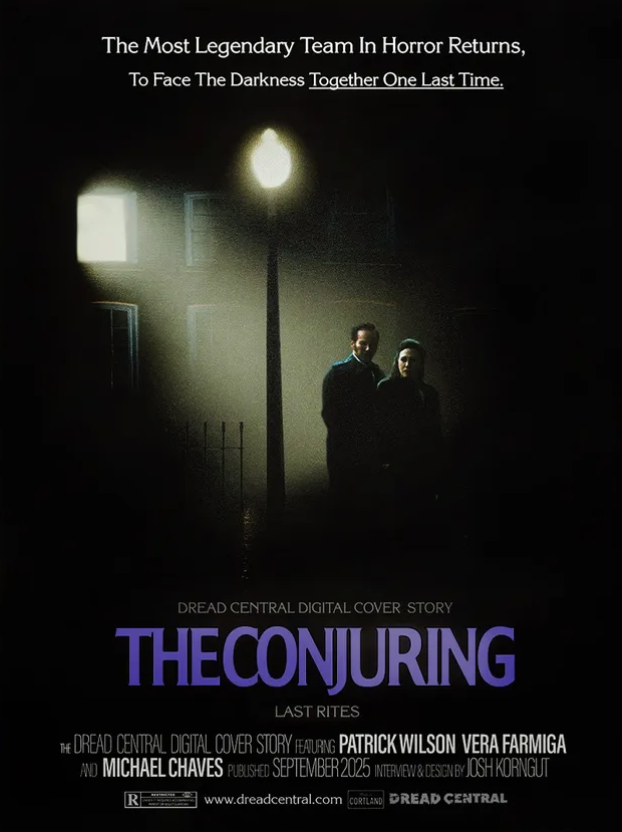
THE CONJURING: LAST RITES horror film review

The screenplay should be exercised of the demons plaguing the narrative. While The Conjuring: Last Rites offers initial intrigue and a moderately compelling performative dimension, what substance the story had was undercut by a proliferation of monstrous encounters.

In 1986, paranormal investigators Ed and Lorraine Warren travel to Pennsylvania to vanquish a demon from a family’s home. This case would prove to be their last.

At its outset, the film suggests a promising return to the roots of this dozen-year-old horror franchise that began in 2013, hinting at a chilling and intimate confrontation with the supernatural. The mood is suitably dark, and the premise—while familiar—has just enough mystery to draw the viewer in for what would appear to be tapping into its desire to be in the same vein as The Exorcist. For a time, it even teases the prospect of a measured, atmospheric entry into the Warrens’ saga. Unfortunately, the promise of the first act quickly gives way to a chaotic barrage of hollow frights and set-piece monsters that smother any narrative tension the film might have cultivated.

The greatest asset in the film is, without question, the lead casting of (returning) Patrick Wilson and Vera Farmiga and the addition of Mia Tomlinson as daughter Judy Warren and Ben Hardy as her fiancé Tony. Farmiga and Wilson remain the heart of the franchise–they are the soul reason this franchise continued for as long as it did. Their impeccable chemistry continues to play a vital role in lending credibility and weight to this story and the others in the franchise that would otherwise struggles to stay grounded. Combining Farmiga and Wilson with Tomlinson and Hardy, their collective performances carry an emotional authenticity that suggests a deeper, more resonant film lurking beneath the surface–too bad it was largely kept beneath the surface of the picture. Additionally, the supporting players, too, offer moderately compelling turns, doing what they can with material that rarely allows for nuance.

Where Last Rites falters most egregiously is in its writing—particularly in the second and third acts. What begins with threads of intrigue quickly unravels into a tangle of formulaic plot beats, ill-defined stakes, and a near-total abandonment of narrative discipline. The dialogue oscillates between expositional over-explaining and perfunctory banter, never achieving the kind of earnestness that made earlier entries memorable. By the climax, the story feels more like a theme park attraction than a descent into the occult. (Speaking of which, The Conjuring-verse would make for a fantastic Halloween Horror Nights House if an agreement between New Line Cinema and Universal Parks and Resorts could ever be reached).

Equally troubling is the film’s shallow and often misguided treatment of spiritual warfare. While The Conjuring-verse has historically dabbled in theological and metaphysical ideas, this installment offers only a cursory exploration—at times bordering on ignorance. Themes of faith, redemption, and evil are reduced to ornamental set dressing rather than being woven meaningfully into the narrative. Fundamental tenets of spiritual warfare are neglected: Scripture teaches that “demons tremble at His name” and that they cannot force a person, calling on the Lord, to take their own life or that of another—tempt, yes; coerce, no. This misunderstanding undercuts the stakes, turning spiritual conflict into spectacle rather than a profound struggle. Even William Friedkin’s The Exorcist handled these dimensions with reverence and gravity, whereas here they are clumsily exploited for empty shocks.

From a film craft perspective, the overreliance on CGI monsters is perhaps the final nail in the coffin for this horror franchise and universe. Where practical effects could have imbued the film with texture, tangibility, and dread, we are instead subjected to a parade of vapid, weightless apparitions. Without giving way to spoilers too much, there is a scene in which Lorraine is staring in to a sink that overflows with blood–CGI blood. If Kubrick could pull off the bloody elevator scene in The Shining then this movie could have used practical effects for this scene. I am not suggesting that practical effects alone would have “saved” the soul of this movies, but an increase in the degree to which practical and mechanical effects were integrated into the narrative certainly would’ve helped the movie feel more tangible. The jump scares—frequent and rarely earned—feel like mechanical interruptions rather than organic outgrowths of fear. It is horror by checklist, and it shows. By the time we arrive at the third act, nearly every scene or sequence has a series of jump scares that are predictable at best and lazy at worst. More character-driven moments and dramatic conflict would’ve been a great tool for emotional resets and plot/character development.

In the end, The Conjuring: Last Rites is neither the triumphant sendoff nor the atmospheric chiller it aspires to be. It is a film at war with its own instincts: part haunted house, part monster mash, and ultimately, part missed opportunity. All that said, it’s not a bad movie–it’s better than many of the other installments. But a franchise that needed to end with an Annabelle: Creation would up ending with an Annabelle.
Ryan is the general manager for 90.7 WKGC Public Media in Panama City and host of the public radio show ReelTalk “where you can join the cinematic conversations frame by frame each week.” Additionally, he is the author of the upcoming film studies book titled Monsters, Madness, and Mayhem: Why People Love Horror. After teaching film studies for over eight years at the University of Tampa, he transitioned from the classroom to public media. He is a member of the Critics Association of Central Florida and Indie Film Critics of America. If you like this article, check out the others and FOLLOW this blog! Follow him on Twitter: RLTerry1 and LetterBoxd: RLTerry
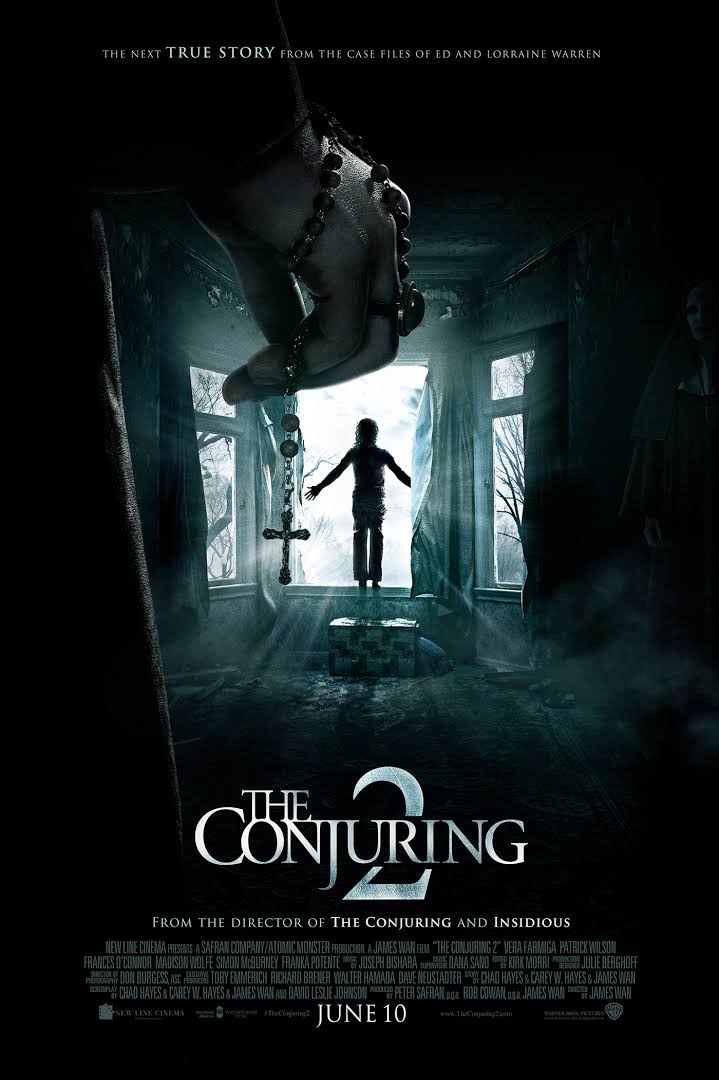
“The Conjuring 2” movie review

Conjuring2Outstanding horror film! Director James Wan has once again provided audiences with a brilliant work of the macabre and supernatural. From the writing to the directing to the acting and cinematography, Conjuring 2 is on par with, if not better than the first. Sometimes the best stories are true ones. And, although elements of the story have to be fictionalized in order to construct a cinematic narrative, grounding the Conjuring movies in the real work of Ed and Lorraine Warren (Patrick Wilson, Vera Farmiga) infuses a dynamic emotional response that directly impacts the increased frightening nature of these films. One of the observations that I appreciate most about, not only this but the predecessor, is not relying upon the jump-scare to curdle the blood. Are jump scares part of the movie? Well, of course! What fun would a horror film be without the entire theatre gasping for breath, jumping, or screaming together??? But Wan goes beyond the jump scare and channels his inner Hitchcock to build suspense and intrigue. The horror film is best appreciated in a group setting. It is a genre that specifically engages the audience on a visceral level. Wan is truly a master at his craft; and I love witnessing how he continues to prove his ability to develop creative horror films.

Ed and Lorraine Warren are back; and have been called upon, by the Catholic church, to investigate the, what’s been dubbed as the “Amityville” of London. Following a self-imposed sabbatical after the investigation of the infamous Amityville haunting on Long Island, Ed and Lorraine fly to London’s Enfield neighborhood to evaluate a reported haunting and possession. Struggling single mother of four Peggy Hodgson hopes that Ed and Lorraine will be able to drive the evil out of her home, and more specifically her youngest daughter Judy. In an effort to discover the truth behind the well-documented alleged demonic haunting and possession, Ed and Lorraine find that they have also become a target. Facing their most challenging case, Ed and Lorraine are determined to help the Hodgson family and drive the evil from the house.

Following the increasing trend for a film, including but not limited to horror, to begin with an elaborate prologue, Conjuring 2 starts with a fantastic moving shot of the famous eyelet windows of the 112 Ocean Avenue house in Amityville. Often filmed from the outside, this shot sequence takes place inside the attic. A much more intimate feel, this was an excellent choice for establishing the case that launched Ed and Lorraine Warren into the public eye. There have been numerous movies and documentaries based on the arguably most infamous haunting in the United States, so it was not necessary for Wan to spend too much time on it. It is, however, a very important scene because the plot/case of Conjuring 2 is directly related to the experience that the Warrens went through during the Lutz investigation. Beyond the establishing a connection between the Amityville and Enfield cases, beginning with the Warrens in the middle of the 112 Ocean Avenue investigation allows for Wan to visually show how and why the Warrens would seek a self-imposed sabbatical from supernatural and demonic investigations. Moreover, this sequence of events that provides copious amounts of plot development material are also instrumental in significant contributions to character development. Although this prologue lasts less than ten minutes, it contains prolific information vital to the plot of Conjuring 2.

It should not be of surprise that Wan uses the camera very strategically to tell this visually driven story. From the rule of thirds to lighting to creative use of angles and movement, the camera is instrumental in setting the macabre mood of the film. One of the visual storytelling elements that Hitchcock was most known for, especially in Psycho, is using the camera’s placement and angle to foreshadow something or someone. Wan takes a page from the Hitchcock handbook and utilizes the camera movement in such a way that you are predisposed to feeling certain that something or someone is about to appear or emerge from the shadows but your game is thrown off when that doesn’t happen–but then totally happens when you least expect it! Throughout the diegesis, you will encounter moment when the characters are faced with inner demons that parallel or symbolize the actual evil entities in the film. Having this subplot concurrent to the foreground aids in creating and maintaining an emotional connection to the characters. Shocking the audience both emotionally and physically. By eliciting dynamic and comprehensive responses to the horror on screen, the film becomes an immersive experience–that is the brilliance behind this dark and sinister tale.

Beyond the exceptional direction by Wan, part of what makes the Conjuring franchise so successful is the exquisite casting. Patrick Wilson (Insidious) and Vera Farmiga (Bates Motel) are perfectly cast in these films. From what I have read about the real Ed and Lorraine Warren, Wilson and Farmiga respectively stay true to the real-life people they are portraying while adding in the necessary acting skills necessary to increase the impact and believability of the film. The quality of the acting that Wilson and Farmiga bring to the film is outstanding. Sometimes, a horror film can have an compelling plot but the actors are so uninteresting that it prohibits the story from making the impression that it should. Wilson and Farming make the characters of Ed and Lorraine Warren interesting to watch and add a performance quality to the film that keeps your attention the whole time. The degree to which they add a sincere care for the victims of hauntings to their respective characters is refreshing and will stay with yowling after the movie closes. As the Warrens are reoccurring characters in the Conjuring franchise, it is vitally important that they are as interesting to watch as the plot itself since their cases are the inspiration for the whole franchise, at least put to this point.

If there is one negative element in the film, it is the weak showdown. Not weak in that it was anticlimactic or uninteresting, but that it felt a little rushed. At 2hrs and 15mins, the film is longer than the average horror film, so it was not necessary to rush the climax of the film. It certainly does not mitigate the experience of the movie, but I feel that it could have been a little more intense. That being said, if you are looking for an excellent movie to kickoff your weekend, then this one is it! At last check, it out-performed both Now You See Me 2 (which should’ve been entitled Now You Don’t) and Warcraft. Even if you have not seen the first Conjuring, you will still enjoy this installment. However, seeing the first one will help you to better understand the Warrens and their unconventional line of work. Can’t wait to see where James Wan and the Warrens take us next!