THE NAKED GUN (2025) movie mini review

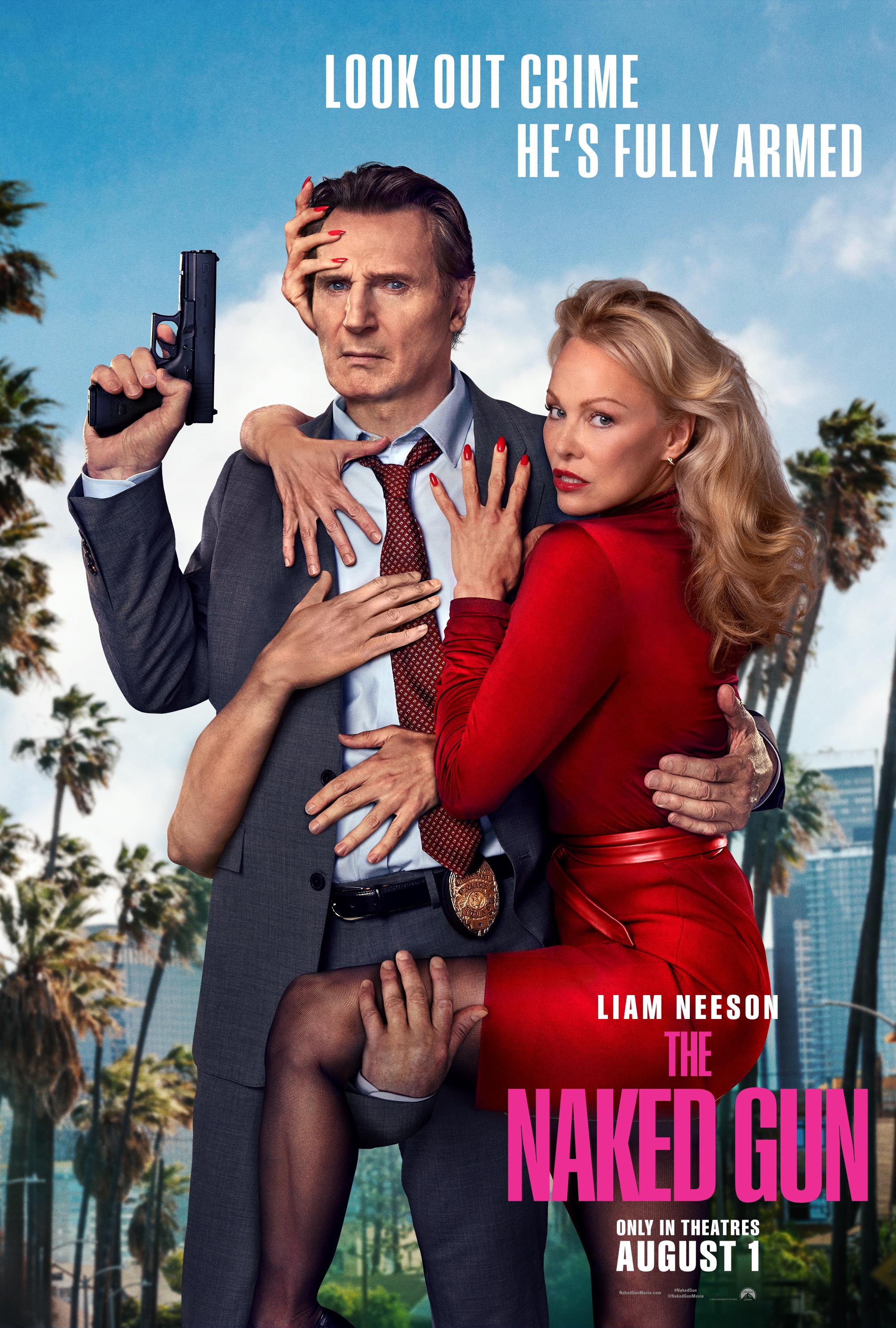
Best comedy since SPY! The Naked Gun (2025) is a spectacular noir/detective-comedy that has it all: smart screenplay, sensational cast, and it clocks-in at just under 1.5hrs. This reboot/reimagining of the beloved classic tiptoes along a treacherous tightrope: how to honor a slapstick legacy while avoiding the hollow echo chamber of recycled gags. Remarkably, thanks to a razor-sharp script, a fully committed cast, and a surprisingly fresh narrative, it pulls it off with chutzpah and precision. Directed by Akiva Schaffer, The Naked Gun is a masterclass in tonal balance, threading the needle between absurdity and plot progression, all while leaving room for character beats that land harder than a collapsing filing cabinet. Every setup pays off, every non sequitur doubles as a stealth punchline, and, most critically, the story and characters matter.

At the center of the madness is Liam Neeson, weaponizing his deadpan gravitas in a way that would make Leslie Nielsen nod in approval from the great beyond. As Frank Drebin Jr., he’s not playing his father’s shadow—he’s illuminating a new one. His comedic chops are precision-engineered. Neeson doesn’t mug for the camera or chase punchlines; he commits, deadpanning his way through verbal landmines, visual gags, and escalating mayhem with the kind of straight-faced sincerity that made Leslie Nielsen legendary. The secret ingredient to his delivery? His restraint. Marrying glamour and goofiness is Pamela Anderson, fresh off her outstanding performance in The Last Showgirl. Her tone, cool gaze, and knowing glances lend a classic noir energy to the role, but it’s her self-awareness and comic precision that elevate the performance. She glides through scenes with old-Hollywood poise in the vein of Lauren Macall, only to puncture the atmosphere with a well-timed double entendre or whip-smart aside.

In a cinematic landscape where many reboots are content to wink at the audience and roll credits, The Naked Gun dares to be funny—consistently, inventively, and unapologetically so. It doesn’t just recapture the soul of the original; it gives it a new pair of shoes and sends it running headfirst into traffic. And you’ll be laughing all the way.

Ryan is the general manager for 90.7 WKGC Public Media in Panama City and host of the public radio show ReelTalk “where you can join the cinematic conversations frame by frame each week.” Additionally, he is the author of the upcoming film studies book titled Monsters, Madness, and Mayhem: Why People Love Horror. After teaching film studies for over eight years at the University of Tampa, he transitioned from the classroom to public media. He is a member of the Critics Association of Central Florida and Indie Film Critics of America. If you like this article, check out the others and FOLLOW this blog! Follow him on Twitter: RLTerry1 and LetterBoxd: RLTerry
THE FALL GUY action movie review

Explosive fun! Universal Pictures The Fall Guy is one wild ride that connects with audiences! The thoughtful blend of self-referential humor and over-the-top, if not cheesy, action sequences work in tandem to entertain and thrill audiences. At the heart of this movie is a throwback-style romcom that is destined to warm even the most cynical of hearts. Moreover, this action-picked motion picture serves to spotlight the unsung heroes of many movies, the stunt performers, without whom we would not have the high stakes, death defying action sequences that we have today. And not just today, stunt performers have played a significant role in filmmaking since the beginning. The Fall Guy is a lively movie that whisks you off for the ride of your life that stumbles a little along the way, but sticks the landing.

After leaving the business one year earlier, battle-scarred stuntman Colt Seavers springs back into action when the star of a big studio movie suddenly disappears. As the mystery surrounding the missing actor deepens, Colt soon finds himself ensnared in a sinister plot that pushes him to the edge of a fall more dangerous than any stunt.

Such a crowd-pleasing cinematic spectacle! The summer blockbuster season is off to a strong start with this bombastic movie. Since I rarely watch trailers, I was unsure of what to expect, but I had a delightful time with this movie. The humor is mostly character-driven, but there are slapstick moments and almost camp-levels of action sequences that also serve as fuel for laughter. It’s a fun, popcorn flick that makes you laugh and smile all while being enthralled by the high-octane action. Some action movies that are devoid of humor or a romantic subplot can feel exhausting or shallow. Not the case with this one! This is both due to the strong writing and performative dimension.

More than an action/romcom, it also serves as a backstage movie, because of being set on a film set. And even more specifically, the technical achievement by camera operators, special effects technicians, and stunt performers. The movie spotlights the real danger that stunt performers face on set and the innate risks that come with this under-appreciated line of work. There is a human dimension to stunt work that so often goes overlooked, and The Fall Guy demonstrates the intrinsic value of stunt work and the real people that push their bodies to the limit to achieve action with dimension instead of simulated action in a computer.

The characters and the performances thereof elevate the entertainment value of the movie. Which is an important element because the screenplay does falter here and there from poor pacing. Some scenes are a little longer than they need to be while others are perhaps a little shorter than what they ought to be, which impacts the effectiveness of the exposition. But where the screenplay struggled, the cast makes up for the shortcomings! That’s not to say it’s a poorly written movie; quite the contrary, it’s mostly solidly written, just stumbles here and there. Emily Blunt and Ryan Gosling demonstrate excellent chemistry, and their relationship mountains and valleys feel genuine. They both share fantastic comedic and dramatic timing that crafts characters with dimension.

There is one particular line, that many may interpret as a throwaway or lacking in significant value, that I feel compelled to highlight. A character at a club states something to the effect of “movies try to be real, whilst cartoons know they aren’t real.” And the character prefers cartoons for that reason. This line was smartly written and delivers a important if not self-referential (or meta) message. Very little about The Fall Guy is supposed to feel real; it’s supposed to look like a fantasy set in the real world. What the movie is, is naturalistic. Everything happening in this film feels at home within the world of the movie. And yes, many, if not most, contemporary movies try so hard to not look fake or unbelievable. When movies should feel comfortable to take us to unbelievable heights to thrill us with entertaining, heart-warming, or scary stories. Being realistic is vastly overrated. There is a time and a place for it, but movies like The Fall Guy remind us of the value of a good story, regardless if it feels realistic in the real world.

Ryan teaches Film Studies and Screenwriting at the University of Tampa and is a member of the Critics Association of Central Florida and Indie Film Critics of America. If you like this article, check out the others and FOLLOW this blog! Interested in Ryan making a guest appearance on your podcast or contributing to your website? Send him a DM on Twitter. If you’re ever in Tampa or Orlando, feel free to catch a movie with him.

Follow him on Twitter: RLTerry1 and LetterBoxd: RLTerry

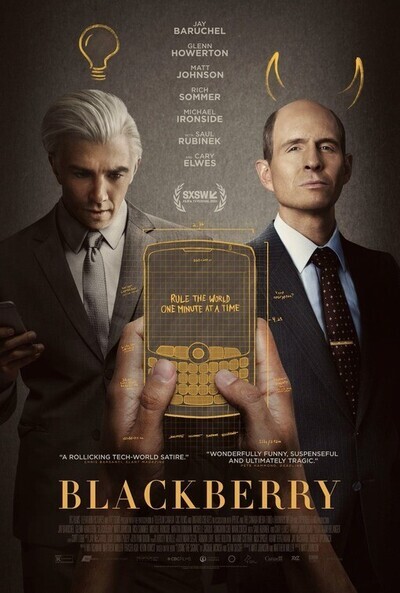
BLACKBERRY film review

Positively kinetic! This wildly entertaining biographical drama just clicks on so many levels! From beginning to end, the film commands your attention as it delivers razor sharp dialogue and outstanding performances. Whether you are a former CrackBerry addict like myself (2007–2011) or are fascinated by how the world’s first smartphone came to be, there is something for everyone in this film.

BlackBerry explores the incredible growth and tragic collapse of the world’s first smartphone and how it smashed huge enterprises before surrendering to Silicon Valley’s fiercely competitive companies.

Destined to be a film shown in business and technology classes, this cautionary tale is a brilliant depiction of what happens when you give into the system you so desperately tried to avoid or the dangers of extreme naivety and stubbornness. Moreover, the characters are both repulsive and sympathetic. You will both empathize with their plight and shake your had at the obvious missteps that would eventually lead Research In Motion, which rocketed to the top of the tech food chain, to its cataclysmic downfall. It’s in the vein of Wolf of Wall Street and The Big Short.

There is a Greek tragic or mythological quality about this film as it reminds me of the story of how Icarus flew too close to the sun and had his wings clipped. BlackBerry was king of the smartphone world for however brief a time, but its impact upon the industry will be felt in perpetuity. But this movie isn’t about the history of smartphones per se or even the company Research in Motion itself, but rather three human stories of the men whom founded, developed, and (two of which) eventually crashed the company. So, it’s a very human story.

There are three different personalities at play in the film, each represented by one of the key figures int he meteoric rise and cataclysmic fall of BlackBerry/Research in Motion. Jim Balsillie (played by Glenn Howerton) represents insatiable greed and control, Mike Lazaridis (played by Jay Baruchel represents insecurity and naivety, and Doug Fregin (played by Matthew Johnson) represents childlike pride and blind belief. Each one of these men, especially the former two, played significant roles in the rise and fall of Research in Motion. Each one demonstrated a tragic flaw that was instrumental in the eventual demise of the tech giant. Greed, naivety, and pride greatly limit resiliency, adaptability, and teachability. And it’s the refusal to apply common sense and adapt that sent BlackBerry to the exit for Defunctland.

Everything works so demonstrably well in this film! The directing, screenwriting, and performative elements are all working at peak efficiency and at incredible precision. However, even efficiency can have a downside; and in this film, the third act’s pacing isn’t quite on par with the first two. Often times in films, it’s the first or second acts that suffer from poor pacing, setup, or development; but in BlackBerry, it’s the third act. That said, it’s still mostly written and directed well, but the third act is wherein we do find flaws in the story delivery.

From the three central characters to the chief supporting players, the performances are outstanding! Supported with razor sharp dialogue that snaps, crackles, and pops, all the actors will entertain you from beginning to end! It’s one of few films this year that feels quotable and earns multiple rewatches. Perhaps the performances border on caricatures or exaggerated versions of the real people, but they are appropriate for the over-the-top nature of the film. BlackBerry was, at a time, a larger than life company, ran by larger-than-life people, so the performative dimension should be just as over-the-top, which it was, and in all the best ways possible.

One might be tempted to refer to this movie as a depiction of the word’s most famous losers that quite literally paved the way for iPhone, Galaxy, Pixel, and more. Believe it or not, if it wasn’t for Research In Motion/BlackBerry chartering new territories and pioneering new communications technologies and formulas for data/voice coverage, we may not have iPhone or Galaxy today. BlackBerry simultaneously created a new communications device and completely re-imagined how cell service works on principle. The characters are fascinating and the story mesmerizing. Easily one of the year’s best films!

Ryan teaches Film Studies and Screenwriting at the University of Tampa and is a member of the Critics Association of Central Florida and Indie Film Critics of America. If you like this article, check out the others and FOLLOW this blog! Interested in Ryan making a guest appearance on your podcast or contributing to your website? Send him a DM on Twitter. If you’re ever in Tampa or Orlando, feel free to catch a movie with him.

Follow him on Twitter: RLTerry1 and LetterBoxd: RLTerry
NO HARD FEELINGS movie review

A clever inversion of The Taming of the Shrew that delivers some laughs and heart, but is ultimately a mediocre comedy. If you were to take 10 Things I Hate About You, Never Been Kissed, and Shakespeare’s Taming of the Shrew, invert the plot, then you’d have No Hard Feelings.

On the brink of losing her childhood home, a desperate woman (Lawrence) agrees to date a wealthy couple’s introverted and awkward 19-year-old son (Feldman) before he leaves for college.

The outside/action story is well-written, but the subplots are left to aimless wander throughout the movie. The central plot is well-structured, and the audience will be hooked, but the screenplay introduces ancillary characters and subplots that do nothing to advance the story in substance or form. Disappointingly, there is one particular subplot in the life of Maddie that is introduced but never truly revisited or resolved. Moreover, this event afforded the movie to provide thoughtful social commentary on how harboring unforgiveness is like drinking poison hoping that it hurts the other person, but fails to explore this timeless life lesson and theme. Likewise, there is a subplot introduced in the life of Percy that is expressed through an ancillary character, but it feels incredibly out of place and forced.

Another prominent theme and subplot in the movie is the idea of gentrification or being metaphorically and literally pushed out of your home because it’s been deemed highly desirable by the elite. We revisit this subplot throughout the movie, but it’s never truly explored. Such a fantastic opportunity to comment on resilience and serve as a cautionary tale of what happens when neighborhoods are wiped off the map, but it only serves as a shallow plot device.

What the movie lacks in thoughtful social commentary in the subplots and themes, it makes up for in the excellent chemistry between Jennifer Lawrence (Maddie) and Andrew Feldman (Percy). The strength of this subversive romcom can be found in the vulnerability and rawness of the central characters of Maddie and Percy; moreover, both Lawrence and Feldman bring an infectious, entertaining energy to their respective characters caught up in one of Shakespeare’s more endearing and thought-provoking plots. While the movie won’t likely find itself one that will be revisited for years to come, it is sufficiently funny and heartfelt for a weekend afternoon at the cinema or for an evening at home.

If you want to laugh, this movie will do the trick! Clearly the lead characters are having fun with their respective roles, and that enthusiasm is felt by the audience.

Ryan teaches Film Studies and Screenwriting at the University of Tampa and is a member of the Critics Association of Central Florida and Indie Film Critics of America. If you like this article, check out the others and FOLLOW this blog! Interested in Ryan making a guest appearance on your podcast or contributing to your website? Send him a DM on Twitter. If you’re ever in Tampa or Orlando, feel free to catch a movie with him.

Follow him on Twitter: RLTerry1 and LetterBoxd: RLTerry
RENFIELD horror comedy review

Fangtastic! John Wick meets Van Helsing meets Warm Bodies in this imaginary adaptation of the Dracula mythos inspired by the original Universal Monster classic. While that may sound like the most unusual combination of movies, it works surprisingly well in Renfield from the birthplace of the American horror film.

Renfield, the tortured aide to his narcissistic boss, Dracula, is forced to procure his master’s prey and do his every bidding. However, after centuries of servitude, he’s ready to see if there’s a life outside the shadow of the Prince of Darkness.

Just like Dracula and Renfield, in the original Dracula, metaphorically exist in two realms simultaneously, this movie also exists in two realms: horror and comedy. And these two genres are both satisfied in the characterization and conflicts of this highly entertaining movie. Suffice it to say, it’s a really good movie–shocking–I know.

After the questionable trailers (which I try to avoid as much as possible; a practice of mine since marketing companies don’t usually know when to hold the cards back), I went into this movie with tempered expectations at best. Moreover, I honestly went in with low expectations for what I thought was going to be a ‘we set out to make a movie that is so bad that it’s good.’ The problem with that is that a filmmaker cannot intentionally create a so bad it’s good movie. It’s lightning in a bottle when it happens because the intention was to create a good movie, that just happened to turn out (to usually be) campy.

Spiritual sequels often struggle to find that place wherein the legacy film and new, reimagined approach intersect in ways that don’t rewrite or retcon the past yet provide a new experience. There have been countless official and unofficial adaptations of Bram Stoker’s Dracula, not to mention, hundreds of vampire movies that are directly inspired by the Dracula mythos. Therein lies the challenge: how to craft something new from that which is proliferated. Renfield works because the writers selected a character that factors significantly into the original material, yet has never been truly explored as a character following the events of Dracula.

Oh yeah, the recreations of the original Dracula, complete with (what looks to be) non-CGI gothic sets and lighting, made for a fantastic way to open the film.

Nicolas Cage, Nicholas Hoult, and Awkwafina were excellent casting choices, especially Cage’s Dracula, whom resembles Bela Lugosi even more than Walter Matthou’s in Ed Wood. Cage and Hoult demonstrate fantastic chemistry, and they scenes are among the best in the film. Hoult and Awkwafina may not have the chemistry that he has with Cage, but they still manage to play off one another well enough. Hoult not only looks like our original Renfield, but he finds an exemplary balance between tragedy and comedy. This film certainly provides him with a vessel to showcase his outstanding acting chops. Awkwafina brings a subdued version of her comedic brand, and it works great! Often times, her characters have annoyed me because they are often obnoxious, but not this time.

The violence is amped up to the nth degree! And it is wildly campy! I was reminded of the level of laughable violence and gore in Tucker and Dale vs Evil! While it could have been so easy for the violence and gore to be tasteless and gratuitous, it never crosses that line. Why? Because it is on a comic levels that is designed to elicit laugher instead of wincing, visceral, uncomfortable pain. Every sequence with kills is going for a laugh and not a scare or provocation. And the kills are wonderfully creative and on-brand for the tone of the film.

Renfield successfully connects the original film to this new adaptation in ways that pay respectful homage to the original but craft new expressions that are sure to please audiences. Perhaps the original isn’t a prerequisite for this one, BUT you will have far greater appreciation for the flashbacks and references to the original. If you’re a horror fan, particularly of the original Universal Monsters, then you definitely don’t want to miss Renfield!

Ryan teaches Film Studies and Screenwriting at the University of Tampa and is a member of the Critics Association of Central Florida and Indie Film Critics of America. If you like this article, check out the others and FOLLOW this blog! Interested in Ryan making a guest appearance on your podcast or contributing to your website? Send him a DM on Twitter. If you’re ever in Tampa or Orlando, feel free to catch a movie with him.

Follow him on Twitter: RLTerry1 and LetterBoxd: RLTerry