
“Blade Runner 2049” film review

Just as mesmerizing as the original! Denis Villeneuve’s Blade Runner 2049 is nothing short of a future classic that demonstrably possesses the soul of the original and pairs it with a new plot brought to life by a fantastic cast. Every minute is filled with beautiful cinematography that is perfect in every way and a haunting score that penetrates down to the bone. At its core, Blade Runner 2049 wrestles with this one central question: what does it mean to be human? A question that can spawn hours of debates or an exquisite nearly three-hour motion picture. Considering that Ridley Scott has not delivered the same quality for which he provided precise and poignant direction, it was a solid decision to attach Villeneuve as the director. This sequel 35 years in the making may not have had the classic Ridley Scott at the helm, but Villeneuve channels his inner Scott to provide audiences with the same profound cinematic experience today as Scott did when Blade Runner first released. From the color palette to the lighting to the sound design, this motion picture is one that typifies the power of the art of motion pictures and one that will surely be regarded as iconic as the years more along, very much in the same way that the original has been regarded over time.

Officer K (Ryan Gosling) is tracking down the remaining legacy Replicant models created by the infamous Tyrell Corporation, and his latest mission takes him to an obscure farm in the middle of dessert California. After retiring the replicant at the farm, K uncovers what will become a metaphor for Pandora’s Box, as it opens a mystery that law enforcement and the Wallace Corp. seek to solve. The secret contained within the box is one that could potentially plunge all “humanity” into complete chaos, not there there isn’t enough of that already for those left on earth. K’s journey takes him from the gritty, grimy streets of Greater Los Angeles to the dust bowl that was once Fabulous Las Vegas. There, he meets former Blade Runner Deckard  (Harrison Ford) who has been hiding from law enforcement and the Wallace Corporation for three decades. Together, they must work to locate the miracle that no one ever could have thought would happen–or could happen.

Despite not pulling the numbers that Blade Runner 2049 was forecasted to bring in over its October opening weekend, the film did what fans wanted–it kept the very essence of the original movie alive and well. For all the artificial intelligence in the film, there is nothing artificial about this long-awaited and highly anticipated sequel to the Ridley Scott classic. The reason for not pulling the numbers that it was predicted to do can likely be attributed to the tone of the film and the stylistic filmmaking approach that borders on neo-noir meets the avant-garde. Although not completely necessary, it is incredibly helpful to have seen the first film. And seeing the first film gives an appreciation for the sequel that cannot be experiences without having knowledge of the first. The slow-pace and dark atmosphere may be some of the reasons why more people did not wish out to see it as the weekend moved along. Looking at the two films side by side, this film is a direct extension of the original so the authenticity of this universe and story is genuine and almost visceral. For those who prefer more dialog or higher concept plots, the film may not strike the same level of enthusiasm because of the heavy visuals and dark themes in addition to the profound questions. This combination is not one that will attract the general populous in doves; however, this film IS what it needed to be. Sometimes a long-awaited sequel has to be made to remain true to its soul because that is what the fans want to see, and it’s the true fans who continue to visit the cinema year after year. Blade Runner 2049 may not win over new fans, but it keeps the diehard ones happy.

At the heart of Villeneuve’s cinematic masterpiece are existential questions that drive the plot forward. A plot driven by such questions told through a sedated pace is one that is not as easy to digest as one that is more superficial and more rapidly paced. Still, these questions are profound and cause one to think hard about what it means to be human. What sets this film apart from other science-fiction rapid fire blockbusters is the commitment to visual storytelling and the art of creating a motion picture. Blade Runner 2049 mirrors its predecessor and remains true to the experience of the first. Cinephiles will especially appreciate this film for it harkens back to a time when German expressionism was at the foundation of the set design and lighting. There are many exaggerated and elongated shapes that exist in a world of harsh shadows and dimly lit alleys throughout the film. Although the look of the future world in the original was one that audiences may not have believed would come true or could come true is seen differently by today’s audience that can easily see just how accurate the world of the Blade Runner movies actually is–the mediation of society today seems to be not that far off from this not-so-distant future.

Cinematographer Roger Deakins captures a wold through the lens that seems to go on forever in a world of greys and beiges. The only color to be found is in the prolific advertising on the sides of buildings. Deakins further extends the artistic approach to the cinematography by paying homage to Stanley Kubrick’s The Shining in a shot that was actually added to one of the more recent recuts of Scott’s Blade Runner. That score, though. The sound design and score are an audible extension of the visual landscape. Composers Benjamin Wallfisch and Hans Zimmer have created one of the most haunting scores to ever be heard in the cinema. The combination of ghostly groans and blood curdling howls echo the very look and feel of the landscape. I’ve rarely encountered such an immersive sound design and score in a film. Just as the world on screen is an uneasy place to live and one that contains faint images of the grandeur of a world that once was, the score accompanying this motion picture places you in the midst of this post-apocaltyic world that most natural-born humans have left.

Definitely a film that I want to watch for a second time in order to appreciate this film, boasting with artistic achievement, even more than I already do. Although most of the themes and subtext are centered in and around “what it means to be human,” there is a real message regarding the importance of bees. An important visual statement in the film because the populations of bees, the most prolific pollinators, are dwindling. Not for the casual movie-goer, this film is for those who want to experience a sequel in the vein of the original that shows the artistic side of the creation of motion pictures.
“LIFE” movie review

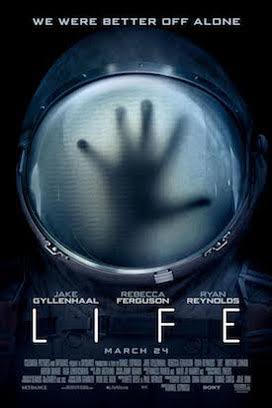
Chilling! In space, no one can hear you scream. Although that tagline is associated with Ridley Scott’s groundbreaking space-horror Alien, director Daniel Espinosa’s LIFE delivers an intensely dark thriller that will have you screaming and cringing from the moment life on Mars is discovered. In the same vein as AlienLIFE is a science-fiction horror that may look like Gravity and might even have the strong orchestral sounds of Interstellar, but provides audiences with an entirely different experience. Borrowing from Alien and Gravity, Sony and Columbia Pictures craft a new space-horror narrative that can sufficiently serve as a standalone film–and be great in that–but also has potential for a sequel or two. Interestingly, there are parallels to Ridley Scott’s Alien beyond the premise; LIFE also features the same number of crew members and other more subtle elements. That being said, LIFE is definitely not a knockoff Alien nor is it trying to be Ridley Scott’s critically claimed film as it does not contain the social commentary on gender, sex, and family. However, imitation is the highest form of flattery, and LIFE pays both homage to the film that likely inspired it but delivers a comprehensive science-fiction horror experience that provides ample twists, turns, and even some emotional connection along the way.

A group comprised of engineers and researchers on board the International Space Station (ISS) are on the brink of one of the most important discoveries in human civilization: life on Mars. Rory Adams (Ryan Reynolds), David Jordan (Jake Gyllenhaal), Miranda North (Rebecca Ferguson), Sho Murkami (Hiroyuki Sandana), Hugh Derry (Ariyon Baker), and Ekaterina Golovkina (Olga Dihovichnaya) represent several different counties, all working in cooperation on this groundbreaking mission. After the satellite, carrying the Martian sample, is retrieved from spiraling out of control towards the ISS is secured, the group of astronauts are faced with the crisis and task of retrieving it. After a daring retrieval, what should be a joyous discovery–something out of a scientists dreams–soon becomes a living nightmarish game of hide and seek. When the specimen from Mars begins to grow rapidly and become more and more intelligent, it stops at nothing to continue to feed the alien’s insatiable appetite and its goal to find a new home.

Initial impressions of LIFE leave you with noticing just how much like Alien it feels. It’s been nearly forty years since the Ridley Scott cinematic masterpiece, but in that time, no other science-fiction/horror film has come this close to delivering a similar (note: not as high on the cinematic totem pole as its predecessor) experience to that which first terrified audiences in 1979. One of the primary differences between Alien and LIFE is just how much closer to home this horrifying experience occurs. Whereas with the former, the alien encounter takes place hundreds of lightyears away, the latter’s narrative takes place just outside of our atmosphere on the ISS. Not that LIFE feels more intimate than Alien–it doesn’t–but the proximity of this story might add a little something more to the edge that you’re already sitting on as the horrific events unfold on the space station. Pacing is similar to Alien in that LIFE has a slow burn during the first act. To balance this slow burn or to keep audiences from thinking that it’s taking forever for the movie to really get started, the film begins with the “big event” right at the very beginning. The “big event” being the apprehension of the satellite carrying the Martian specimen. But for all it’s similarities, this movie provides a different experience that can certainly stand on its own. LIFE may have been inspired by Alien, but it is certainly not a ripoff.

I’ve been quite critical of the CGI-effects of films in more recent years, but the brilliance of the alien life form in LIFE is the degree to which it feels organic. In the beginning, the life form is little more than a single-celled organism; however, as the plot thickens, the organism begins to take a more chilling form and shape. Eventually, the alien develops a frightening grin and a mysterious-like form. One of the scariest parts of Ridley Scott’s Alien was the degree to which the Xenomorph feels so real that, even in your seat, you could feel the acidic slime and your body likely felt the excruciating pains of that iconic moment when the alien shoots out of the stomach. Part of that can be attributed to the use of pneumatics, animatronics, miniatures, and other practical effects standards. Yes, the alien life form in LIFE is computer-generated, but it also has a very real nature to it. Instead of focussing on how to make the alien as impressive as possible, it would appear that the special effects artists (whose work can be seen in the Transformers movies) focussed more on the small details that ordinarily give a CGI character away. Just like with the brilliant visual effects work in Ex Machina, the visual effects of the alien are flawless.

There is an inherent level of unpredictability in LIFE even after the unavoidable similarities to AlienLIFE plays around with the final girl trope and the killings have a strategy or method to their madness. Conspicuously missing from the characters of LIFE in a comparison to Alien is a Ripley-like character. Does the film portray strong female characters? Certainly. But LIFE keeps you guessing because the order of the deaths do not follow any predictable pattern. Do not allow yourself to fall into the trap of being predisposed to the order of the killings to be based up on star billing. Speaking of the characters, effectively managing an ensemble cast is always difficult. So often, some characters in the ensemble get lost or do not receive nearly as much development as the more obvious leaders. Not true with LIFE. True that there is not a large degree of character development all the way around, but each of the characters is treated with equal screen time and emphasis. That is, until death occurs. The excellent handling of this ensemble gives LIFE an extra dynamic that lacks in other ensemble cast films, thus helping this science-fiction horror to stand out from others that are similar in premise or plot. This movie has a “life” of its own.

2017 seems to be shaping up to be a year of excellent movies! We are just about to finish the first quarter of the year, and already there have been some great motion pictures. Furthermore, 2017 seems to be the year of the horror film because so many have made the theatrical distribution circuit. For those who love a good science-fiction thriller, you will not be disappointed with LIFE. Albeit the film may not be able to sustain the magic and horror for the entire runtime, it successfully delivers a terrifying experience for most of the film. If you don’t mind some cringeworthy moments and the dark tone of the film, then this is definitely one to see this weekend.

PS. I saw Power Rangers this week as well, and it was a delightful film! Yeah, it’s a little campy, but that’s to be expected. Definitely the best Power Rangers motion picture. All-in-all, it sufficiently pays homage to the 90s show but provides audiences with a new story. Go-go see it too!

Written by R.L. Terry

Edited by J.M. Wead

“Passengers” movie review

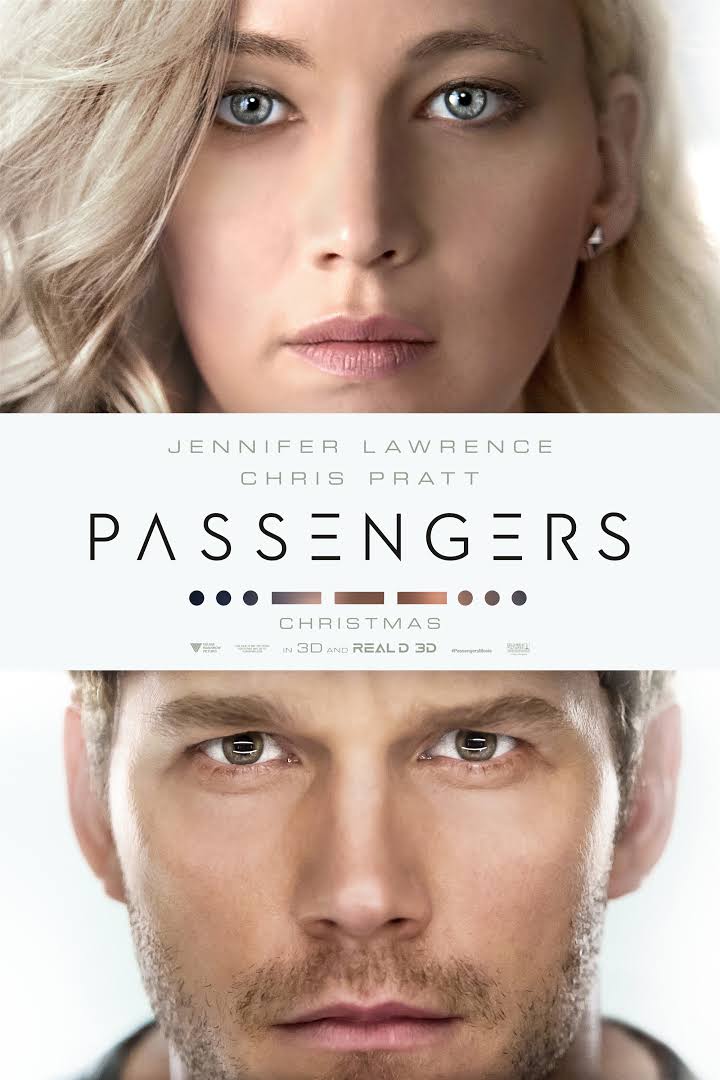
passengersAn intriguing journey with lots of potential but ultimately fails to pull into the space dock. The highly anticipated visually stunning science-fiction film starring Jennifer Lawrence and Chris Pratt proves one thing: Pratt and Lawrence have excellent on screen chemistry and play off each other very well. With films like this one, it’s hard to know where the fault lies. Typically, a film with such potential and a powerful cast is weakened by either the writing or directing. Since the director principally works with the cast, it can be concluded that the writing lacked the drive that this film needed. On a more positive note, this film depicts deep space travel how it could likely be in the not-so-distant future. From the centrifugal force created by the rotating space craft to simulate how artificial gravity could be generated to the onboard technology to the sickbay, this film does a fantastic job of providing audiences with a science-fiction that is almost tangible. Having such a limited cast in one location can spell disaster for cinematic storytelling; but, the film is quite interesting to watch and sufficiently keeps the audience’s attention. Furthermore, the audience mostly connects with Aurora (Lawrence) and Jim (Pratt) well enough. But, the film fails to truly provide audiences with a new adventure because it amounts to a glorified Castaway set in the Disney Springs of shopping malls in outer space–just completely empty of scooters, strollers, and other park guests. Lack of surprise pretty well sums it up.

Welcome aboard The Avalon on the Homestead Company’s routine transport to Homestead II, a new earth colony. All is going well until two passengers find themselves awakened from suspended animation about 90 years too early during a cascade of ship wide malfunctions. Faced with living the rest of their respective lives on board and only the company of an AI bartender (Michael Sheen), Jim and Aurora must cope with the challenges of living together in a world that is merely 1000 meters from stem to stern. When the ship begins to increasingly malfunction and life support at risk, Jim and Aurora much solve the mystery of what originally caused the problem that began the cascade. Just as the ship is keeping a secret, there are other dark secrets on board the ship as well. Meeting with psychological, emotional, and engineering challenges, Jim and Aurora have 5000 other passengers and crew to save while maintaining their own sanity and psycho-social health.

As the movie faded to black, I began discussing it with the friends who accompanied me to the cinema last night. And we shared a mutual reaction of hmm, not exactly sure what this was or how to read it but it had some interesting components. And that pretty well covers it. The film will likely keep you entertained but with few surprises, it lacks anything to make it memorable in a positive way. Forgettable is what this movie will become in the no-so-distant future. Essentially, Passengers is what you would get if Gravity and Titanic were to have a baby. Star-crossed lovers on a ship that is self-destructing in the vacuum of space. One of the most intriguing components in the plot of the film is also highly disturbing. While love and infatuation causes many to go to great lengths in order to see desire become reality, it is a double-edged sword that can cause one to behave selfishly if not displaying signs of sociopathy. While Pratt’s performance is what is to be expected from one of the most bankable actors in Hollywood who is equally a dedicated family man, his performance is never quite on par with his Castaway counterpart. However, Lawrence delivers an intense performance as she plays off Pratt,the bartender, and The Avalon itself.

The cinematography and editing are excellent. In fact, the technical elements of the film are impressive! Not quite as groundbreaking as Gravity or Interstellar but still outstanding. There is one scene in particular that still has me puzzled as to how it was able to be achieved so flawlessly. The set design, albeit spartan, is beautifully sleek and functional. As film is a visually driven medium of storytelling, the camera often pulls in close to characters to establish intimacy but juxtaposes that against pulling back to reveal the oppressive loneliness of being alone on a massive ship in space. For a brief moment, I experienced the dread that is created in Kubrick’s The Shining when Jim meets Arthur the bartender. Interestingly, the music (composed by Thomas Newman), camera direction, dialog, blocking, an set design all work together seamlessly to establish that unparalleled sense of dread, loneliness, and self-destructive despair that are so iconic to The Shining. Unfortunately, that powerful sense of dread is lost in weak writing. Had the film embraced the potential to channel The Shining, it may have played out more memorably. But, this is a love story so the horror plot devices that could have helped the film were not integrated into the plot. Although there are may significant contributors to a film’s success, the success of a film often relies upon the direction, writing, and cast. As briefly mentioned in my opening paragraph, the director (Morten Tyldum) of a film principally works with the cast and is responsible for blocking, delivery of dialog, and perception; so, it is likely the screenplay by Jon Spaihts that is responsible for the weak story. A director and cast can work hard to makeup for a weak screenplay, but in this case, the lack of developed story showed through.

Despite sharing the screen with Aurora, this truly is Jim’s movie and others simply happen to appear in it when necessary. As a side note, I could easily see how this film could be translated into a stage production. Perhaps on stage, the story could evolve to leave more of an impact on the audience.

“Risen” movie review

RisenThe Gospel–detective movie style! For more than 100 years, stories of Jesus have been the topic of movies. Many early works of cinema featured not only Jesus, but Moses, Sampson, David, etc, but this film is quite different in that it carries a much lighter tone than most faith-based productions. Sticking to the basics of what is known from the Bible and other Jewish and Roman historical accounts of the event, Risen lacks the pious and pretentious nature many of the films in this same sub-genre contain. Not quite cinematic per se or traditionally action-packed, the film has relatively slow pacing but keeps it interesting by supplying well-developed characters and simply the thrill of the original man-hunt. Although the message of the Gospel is clearly stated and shown in the movie, it does not come off as proselytizing. In many ways, the central character is an everyman because it is fairly easy to place yourself in his shoes–or sandals in this case–and imagine what it must have been like to have been in charge of guarding Christ’s tomb and then having to answer for the disappearance. One thing puzzles me; and that is Columbia Pictures’ timing of this release. Honestly, it makes more sense to have released it the weekend prior to Easter. Anyway, I digress.

Risen is about the most famous and controversial man-hunt in the history of the world–and no, I’m talking Jimmy Hoffa–but for the Jesus of Nazareth. You may have heard the Gospel before, but not like this. Follow Roman tribune Clavius (Joseph Fiennes) as he is personally commissioned by Pontius Pilate (Peter Firth) to supervise the burial and subsequent Roman guard of the famed tomb. Assisted by Lucius (Tom Felton), Clavius closely manages the burial of Jesus’ body and instructs the guards to keep watch to make sure the body is not stolen so Jesus’ disciples can claim resurrection. As we know from history, the tomb is discovered to have been blown open and thus begins Rome’s search for the body of Jesus in order to snuff out any uprising or violent radical upheaval. Clovis’ search for the body of the proclaimed messiah will force him to question his own beliefs as he encounters appearances and fervent faith that we cannot reconcile against the world he knows.

A history and mystery in one! From either objective or subjective points of view, this is my pick for the best “Jesus” film ever. And yes, I am including the box office smash Passion of the Christ in that assessment. But what makes this particular movie more receptive and less controversial and other faith-based films in the past? Answer: lack of pretense. Whether talking God’s Not Dead or Passion of the Christ, both films do not attempt to appeal to a broad audience. They play on the court with the rest of the faith-based movies both good and bad. Risen plays to the audience differently because it concentrates on developing the realistic historic characters by pairing what is known by way of Biblical or Jewish/Roman historic texts with logical conclusions or using context clues to fill in the gaps. The writers did an excellent job in developing the character of Clavius as someone with whom many in the audience could identify because whether believers int he resurrection or not, we have all questioned our various and respective beliefs at one point or another and often look for answers very much in the same way a detective solves a mystery.

Unlike other films where the focus is either directly or indirectly on Jesus, the focus of this film is primarily on the delicate political landscape between the Jews and Romans and of course our protagonist Clavius. However, this film uses the indirect approach to discover why Jesus’ was so special to his followers (and it still to this day). This indirect approach is far more effective for speeding the Gospel message than typical “Christian” films. Although this film is clearly about the mystery surrounding the resurrection of Jesus in the background, the foreground is a personal journey thus making it more of a historic film than a “Christian” one, so to speak. Therefore, most anyone who enjoys Roman or Jewish history will find something of interest in this film. The relationship between the Romans and Jewish leadership is handled very well. It shows the game the Romans had to play with the Jews in order to keep peace in Jerusalem–especially because Caesar is arriving soon and Pilate needs to show him that he has the Jews under control.

The person of Jesus is also handled better than any other film I have seen. He comes off as an average Joe–that is, an average Joe who can heal lepers. But, he connects well with the audience and is very much down to earth in his appearance and mannerisms. Sometimes it’s hard to understand why his disciples then and followers to this day would choose to follow such a man, but this film makes it clear why. He embodies love. On a lighter note, I’ve always found it funny that in most historic/Biblical films, such as this one, most of the characters speak with a British or transatlantic accent. Pretty sure that was not the case back then. But, at the same time, it does not hinder the story in any way. Although the film is a little slow and the pacing isn’t always executed well, over all, it keeps in line with the traditional three-act plot structure and sufficiently supplies the audience with the proper turning points. Risen also handles character development very well. I really appreciate the development of not only Clavius but also Pilate and Lucius as well. To an extent, we also see some development in some of Jesus’ disciples as well. At the end of the movie, the characters in the story felt like real people, and that is a remarkable achievement in this movie.

Ordinarily, we don’t see movies like this until Easter time. Even though we are a month out from it, I feel that if you enjoy Biblical or simply historic movies that are down-to-earth, written, acted, and developed well that you will enjoy this movie. Traditionally, I am not a fan of most faith-base movies because they are cheesy, pious, over the top, or just executed poorly; however, I very much enjoyed this film and hope you do too.

“The 5th Wave” movie review

FifthWaveAnother cliche wave of ‘only attractive young people can save the world because they are special’ movies. Really??? Do we really need another one of these films with an overly used and tired plot? I suppose so–or at least that is what Sony Pictures is hoping for. Once again, the world is at the brink of destruction by an alien race that has taken over most adults. It is up to a small band of rebel young people to save the world by overcoming the impossible. Only this time, the dialog and plot are so incredibly blasé that you may likely find yourself often glancing at your watch to see when this painful movie will be over. Can we survive the fifth wave??? That question is all too apropos. From the unimpressive digital effects to the crazy quilt consisting of pieces and patches from every other  YA fantasy action thriller, hopefully this movie signifies the last wave of boring and predictable franchises that try to compete with The Hunger Games but fail miserably.

I normally summarize the plot here, but I am pretty well sure that you already know all that you need to know, given the repetition of such films in this sub-genre of young adult movies.

If you simply enjoy mild, mindless, cliche young adult (trying so hard to appeal to teens and adults) entertainment, then this film is for you. On the other hand, if you are tired of this same vapid plot that we have been accosted with for the last several years, then this is not the way to spend the weekend. Haha. I wanted to see The Boy instead last night; but unfortunately, it was not getting a Thursday night release. I think distribution companies and theatre chains should have released it instead last night, and saved this travesty for today.