HOW TO TRAIN YOUR DRAGON (2025) movie review

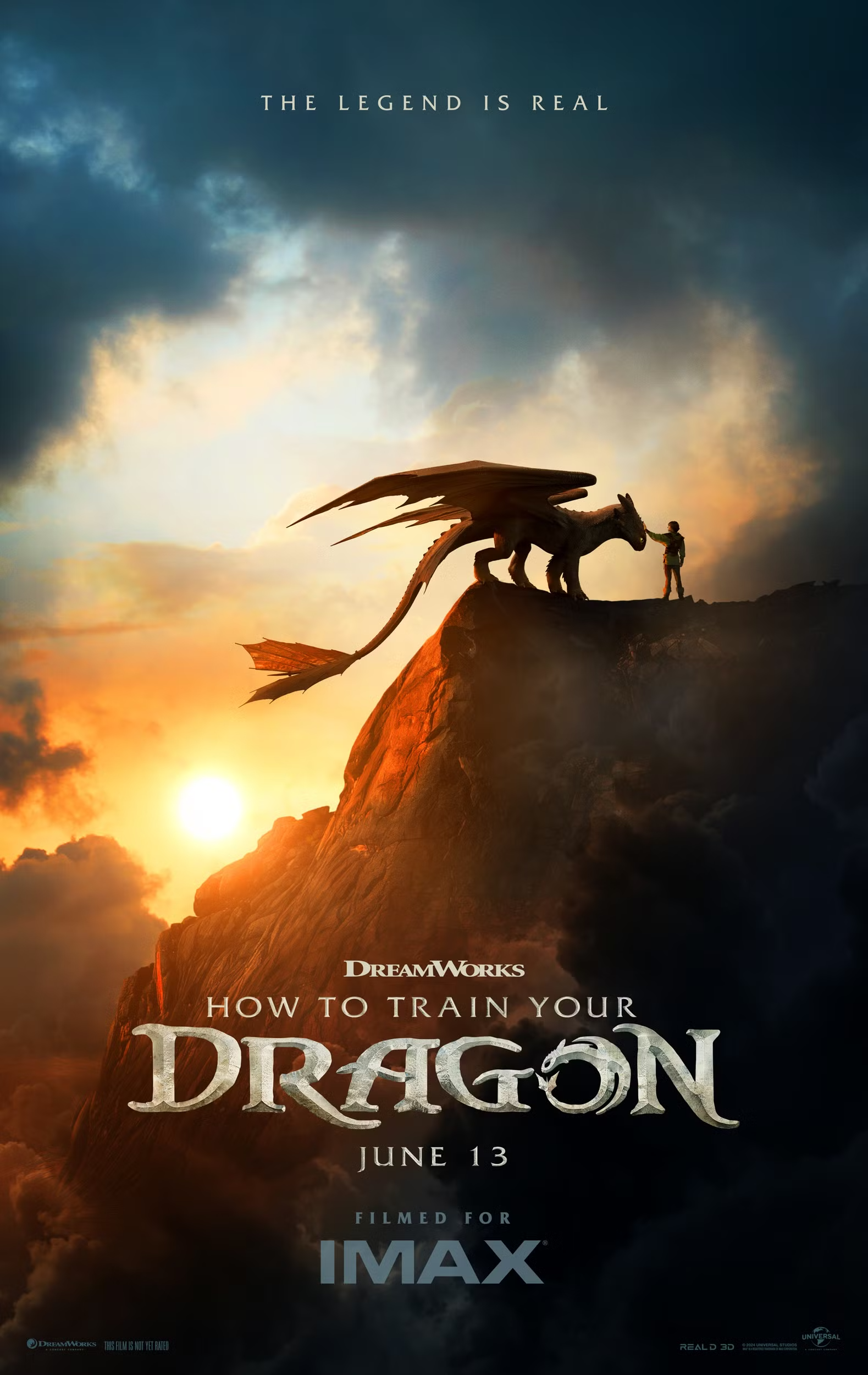
Timeless. Universal and DreamWorks’ live-action remake of the Academy Award-nominated How to Train Your Dragon (2010) proves that some stories continue to resonate through the ages. Of course, “ages” in this context is only fifteen years. Returning to helm this project, HTTYD veteran writer-director Dean DeBlois crafts a fantasy world that’s incredibly tangible–even the dragons. His combination of puppetry, practical effects, and CGI give the dragons and the land of Berk a naturalism that feels connected to the world on screen. While this live-action remake plays it very close to the original, in terms of scenes and sequences, the heartfelt story will still capture your imagination and serve as a fantastic film for Father’s Day this weekend.

On the rugged isle of Berk, a Viking boy named Hiccup defies centuries of tradition by befriending a dragon named Toothless. However, when an ancient threat emerges that endangers both species, Hiccup’s friendship with Toothless becomes the key to forging a new future. Together, they must navigate the delicate path toward peace, soaring beyond the boundaries of their worlds and redefining what it means to be a hero and a leader.

While it would be easy to chalk 2025’s HTTYD up to an exercise in business theory, given that much of the movie is shot-for-shot of the original, it would be disservice to the audience experience for those that may be seeing this story on the big screen for the first time. Because anyone under the age of 18 (if not 21) either wasn’t yet born or doesn’t remember watching it in the cinema in 2010. And this is a BIG SCREEN movie. If fact, I’d argue that watching HTTYD in a premium format at your local cinema is the best way to return to Berk, particularly if you did see the original animated film in cinemas (as did I). I’ve read reviews that fill the spectrum from “lifeless and lazy” to “better than the original;” neither extreme reaction or interpretation is entirely accurate, in my opinion. Given that much of the story is the same, all the way down to shots, scenes, dialogue, and sequences, I’m choosing to review the film as if watching it for the first time, as many will be watching it for the first time on the big screen.

Since the story is largely unchanged from the original, I don’t want to spend a significant amount of time on it; however, there are themes that leapt off the screen this time even more than when I first saw the original. Perhaps its’ because a lot has happened in our country and around the world in the last fifteen years.

In true allegorical fashion, HTTYD crafts a parable of prejudice and reconciliation that resonates with our contemporary sociocultural landscape. Through its depiction of dragons as misunderstood creatures feared and vilified by Viking society, the film speaks directly to the way some cultures and communities are often dehumanized by dominant cultures. Initially framed as mindless beasts bent on destruction, dragons embody the constructed image of “the other”—not inherently evil, but made threatening through narratives rooted in ignorance and fear.

Through Hiccups’s hero journey, our own fears and prejudices are challenges. His character arc hinges on that pivotal moment with Toothless when he is about to kill him. Not only does Toothless challenge Hiccups’s prevailing ideology, but reframes his worldview of dragons and the people of Berk entirely. “I looked at him, and I saw myself,” he says, distilling the film’s core thesis: true empathy begins when we stop projecting monstrosity onto others and instead recognize shared sentience. In contrast, his father Chief Stoick represents the institutional stronghold of fear and tradition. His transformation from dragon-slayer to dragon-defender is a microcosm of generational reckoning—a character arc that underscores how systemic prejudice can begin to unravel when met with vulnerability and truth.

Thematically, the film’s narrative expands beyond simplistic binaries of good and evil to explore the broader existential anxieties that provoke violence and division. In doing so, HTTYD transcends fantasy and enters the realm of social commentary. It reminds us that the instinct to “other” those who are different is not innate but learned—and, crucially, unlearnable. At a time marked by cultural polarization and survivalist rhetoric, the film dares to imagine a world in which peace is possible—but only if we choose empathy over fear.

Writer-director DeBlois crafts a Berk that feels like a real place, perhaps a place from our own world history. Instead of layer upon layer and scene upon scene of blue and green screens, DeBlois opts to eschew the sterile sterility of digital backlots in exchange for a fantastical world grounded in the tactile weight of reality. Rather than relying on synthetic blue-screen environments, the production team committed to crafting full-scale Viking arenas, longhouses, and coastal villages—sets brimming with texture, history, and atmospheric weight. Filmed on location in Northern Ireland, the practical environments not only enhance the visual authenticity but immerse the audience in a world that feels as lived-in as it is mythic. These tangible structures blend seamlessly with the region’s craggy terrain, lending the film a geographic and cultural specificity that deepens the narrative.

Likewise, the film’s flight sequences are not mere visual spectacle—they are balletic displays of aerodynamic realism. Thanks to a synergy between practical rigging and digital enhancement, the VFX team captures the exhilarating sweep and dive of dragon flight with a physicality rarely achieved in CGI-heavy cinema. Specialized camera systems were deployed to trace every soar and swoop with kinetic precision, preserving the wonder and danger of airborne movement. The result is not just believable—it’s breathtaking. This nuanced and layered approach to the fusion of practical and CGI effects was also in part what made the dragons feel incredibly real. Dragon puppets were used to inform the CGI timing, lighting, and choreography. Later, CG animators seamlessly replaced the physical heads with digital models, preserving actors’ eye-lines and interactions. Mason Thames is rarely acting opposite a tennis ball on a boom pole; his Hiccup is interacting with a dragon set piece that is fully articulate.

Whether the original breathtaking animated film is one that you’ve seen a dozen times or you’ve never seen the original, the live-action remake of the critically acclaimed HTTYD is worth your time at the cinema. Furthermore, this film would make for an outstanding diversion for dads and their kids over this Father’s Day weekend, regardless of ages. Some stories, characters, and themes are timeless, and can still speak to us years later.
Ryan is the general manager for 90.7 WKGC Public Media in Panama City and host of the public radio show ReelTalk “where you can join the cinematic conversations frame by frame each week.” Additionally, he is the author of the upcoming film studies book titled Monsters, Madness, and Mayhem: Why People Love Horror. After teaching film studies for over eight years at the University of Tampa, he transitioned from the classroom to public media. He is a member of the Critics Association of Central Florida and Indie Film Critics of America. If you like this article, check out the others and FOLLOW this blog! Follow him on Twitter: RLTerry1 and LetterBoxd: RLTerry
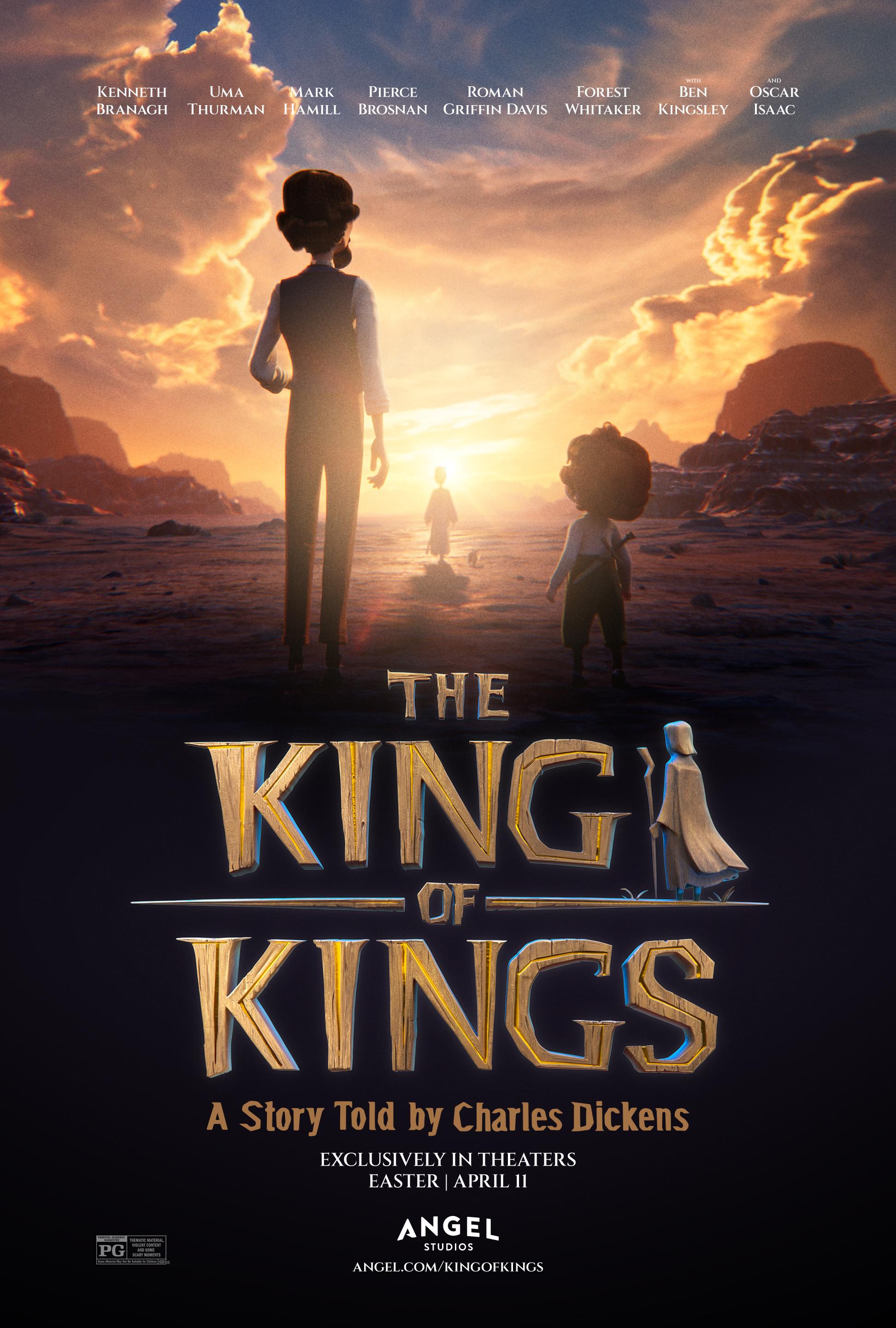
THE KING OF KINGS animated film review

Surprisingly good! Masterful storytelling, stunning hand-drawn sequences, and emotional depth are at the heart of King of Kings. Delivering a rich tapestry of contemporary CGI-derived imagery fused with hand-drawn animation, the visual storytelling creates a distinctive style that feels both modern and timeless. King of Kings is a star-studded animated feature that follows Charles Dickens as he regales his son with the “greatest story ever told.” The scale and scope of this story is not typically one that can effectively fit into a runtime of just over an hour and a half; but in the vein of the critically acclaimed Prince of Egypt, the film’s narrative is lean yet never sacrifices diegetic nuance or quality. The impact of the film is aided by a stellar voice cast and characters that are relatable, vulnerable, and ultimately human. This compelling feature film brings history to life for audiences in one of the strongest and most engaging cinematic adaptations of the gospel.

Renowned writer Charles Dickens shares the story of Jesus Christ with his son, Walter. As his father narrates the stirring tale, Walter becomes captivated with the events of Jesus’ life.

King of Kings strikes a tone and pacing that defied any expectations I had for this film. From beginning to end, the film remains engaging. The film’s opening sequences establish the setting and stakes with efficiency, drawing viewers into its world without overwhelming exposition. The narrative unfolds at a steady rhythm, alternating between introspective character moments and energetic action sequences. The excellence in screenwriting and direction is witnessed in the effective oscillation between the serious or reverent and brief moments of levity or comedy. By punctuating scenes and sequences with humorous emotional resets allows for emotional beats to resonate whilst keeping the momentum alive. Despite the film’s epic scope, the story never lingers too long in one place. Key moments in the gospel story are given the space they need to land with full impact, without feeling rushed or drawn out. The climax builds with a gripping intensity even though the story and history are well-known. The film’s showdown culminated in a resolution that is both satisfying and emotionally powerful.

Among the cinematic elements that surprised me the most when I watched this film was the star-studded cast that includes Kenneth Branagh, Uma Thurman, Oscar Isaac, Ben Kingsley, Mark Hamill, and James Bond himself Pierce Brosnan. Additionally, the film’s original song is recorded by Broadway royalty Kristen Chenoweth. The compelling performative dimension elevates the film beyond its breathtaking animation. Each actor brings a distinct energy to their respective role, seamlessly blending emotion, gravitas, and authenticity to create a truly immersive cinematic experience. Whether delivered by a leading or supporting actor, each line of dialogue is delivered with conviction, making even the quietest moments resonate with emotional power. The collective efforts by the cast and director breathe a discernible heart and soul into the film.

There are many layers to the visual storytelling in King of Kings. Ostensibly, we have a story within a story because the film opens with Charles Dickens delivering a dramatic reading of his titular novella A Christmas Carol, later he tells his son the story of Jesus from birth to resurrection. Within this story, there are sequences that dramatically depict the exodus and Adam and Eve’s expulsion from the Garden of Eden. Each layer of the film as a whole are delivered with their own distinctive aesthetic. And within this aesthetic, the characters feel like an extension of their respective worlds rather than merely an extension of the artists drawing and programming the movie. The character animations are fluid and expressive, capturing subtle facial movements and gestures that bring an incredible level of realism to the performances. Battle sequences explode with kinetic energy, yet remain clear and visually stunning, avoiding the chaotic clutter that plagues many action-heavy animated films. The combination of motion-capture technology with traditional animation techniques results in characters that move with breathtaking realism while retaining an artistic, almost mythic quality.

Just in time for Easter, King of Kings reminds us that we, in the words of Chenoweth’s song, want to “live like that.” In a world that often feels so cynical and self-centered, comes an adaptation that challenges us to examine our lives and grow in how we impact the community and world around us. Jesus challenged the pious, bureaucratic leaders that built religious empires and He also made a difference in the lives of the discarded and ignored individuals in His community. Whether you go into this film a Believer or not or whether you emerge a Believer or not, there is little doubt that the actions of Jesus will challenge you to be a better person to friends, neighbors, colleagues, and members of your community.

Ryan is the general manager for 90.7 WKGC Public Media in Panama City and host of the public radio show ReelTalk about all things cinema. Additionally, he is the author of the upcoming film studies book titled Monsters, Madness, and Mayhem: Why People Love Horror. After teaching film studies for over eight years at the University of Tampa, he transitioned from the classroom to public media. He is a member of the Critics Association of Central Florida and Indie Film Critics of America. If you like this article, check out the others and FOLLOW this blog! Follow him on Twitter: RLTerry1 and LetterBoxd: RLTerry
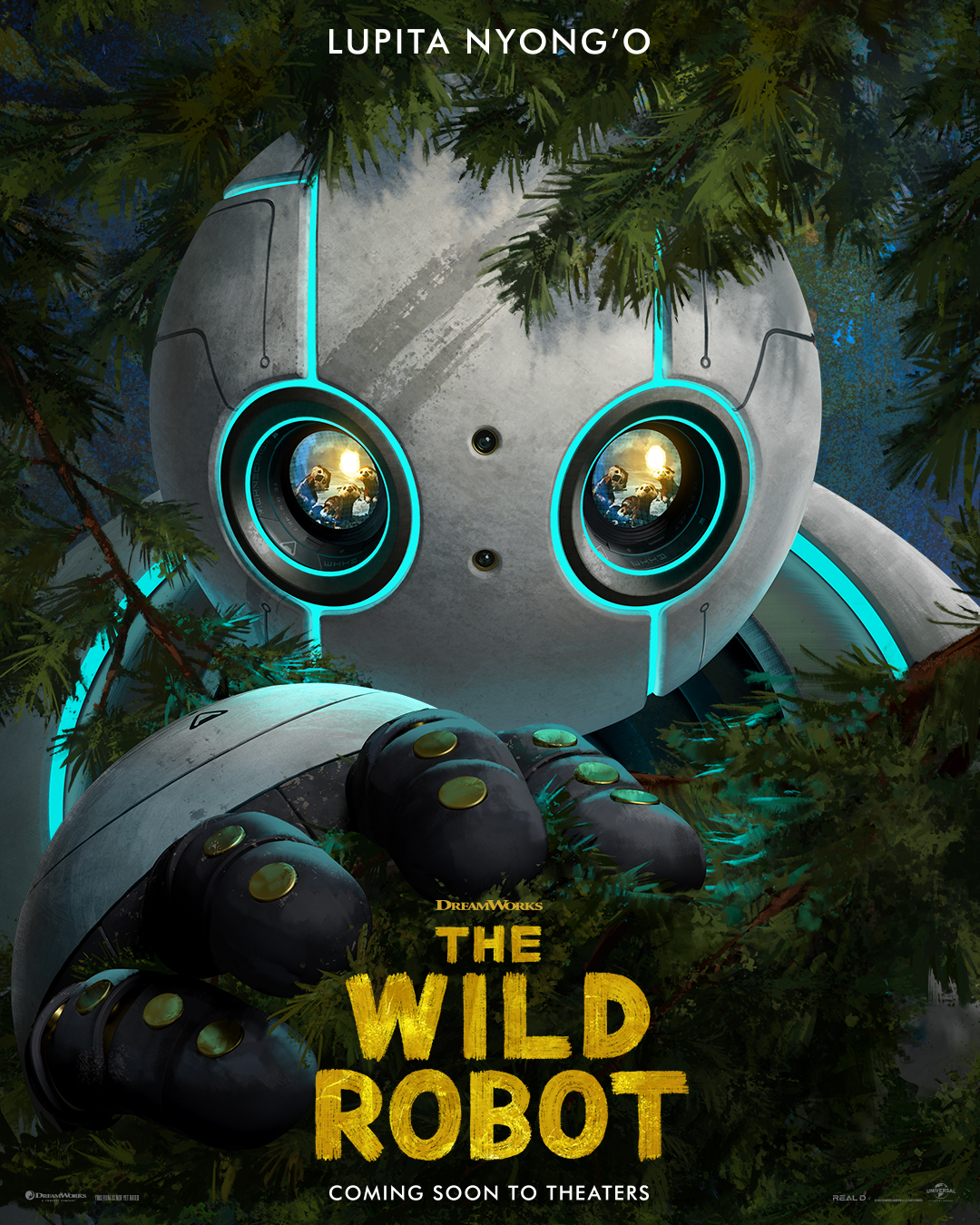
THE WILD ROBOT movie review

Wildly heartfelt and uplifting! Universal and DreamWorks Animation’s The Wild Robot is among the best films of the year, period. Director Chris Sanders delivers a truly compelling and smartly written fish-out-of-water story about found family and being more than the sum of our parts–or programming. Easily on track to make my Top 10 Films of the Year list. Based on the book by the same name, DreamWorks Animation hits a homerun with this outstanding animated motion picture that will challenge you, thrill you, and tug at your heartstrings.

Shipwrecked on a deserted island, a robot named Roz must learn to adapt to its new surroundings. Building relationships with the native animals, Roz soon develops a parental bond with an orphaned gosling.

I’ll admit it up front, I cried. It really is such a beautiful animated motion picture that likely rocketed its way into my best films of the year list. Not since The Iron Giant have we had an animated motion picture with such gravitas. While I still feel that 2016’s Kubo and the Two Strings remains the best animated motion picture in the last ten years, I must say that The Wild Robot is solidly my No.2 pick. The strength of this picture is in the compelling story, relatable characters, and efficient plotting (sometimes a little too efficient). My only real negative criticism of the film is the pacing in the first act; while refreshingly lean, some scenes and sequences needed a little more room to develop and breathe. Even though The Wild Robot shares little in common with The Iron Giant‘s plot, it shares Iron Giant‘s heart and soul.

Fish-out-of-water premises have been a staple of cinema for nearly as long as films have been around. So the real challenge for writers and directors is to find original ways of expressing these foundational ideas. And what is precisely what we have in this film. There are actually three fish-out-of-water narratives within the film, and the film is better for them because each of these layers adds personal and interpersonal complexities to character relationships with the world in which they finds themselves and amongst each other. The films provides thoughtful commentary on what it is like to both be in a world that is unfamiliar and have unfamiliar tasks thrust upon oneself.

Furthermore, this film depicts the importance of adapting to one’s environment and overcoming obstacles, even those that are innate. I also appreciate what the film has to say about self-determination and taking personal responsibility for one’s circumstances and one’s mistakes. Fish-out-of-water stories are some of the most relatable, because we have all been placed in an unfamiliar environment, and know how that can feel. It’s a terrifying prospect to be dropped into a world that is alien to us, and the film does not shy away from the challenges, joys, and even the tragedies that can befall us.

Another narrative area of strength in the film is challenging us not to quickly pass judgment on that fish-out-of-water when they find themselves in your world. Or to presume that one’s past behavior is always an indication of how that person (or animal, as it were) will always behave. Yes, past behavior can indicate predisposition to moral and ethical aberrations, but that does not mean that redemption is not to be considered a possibility. I love how the film paints a portrait that we can change, if we have the will and support to do so. It rarely comes naturally, we have to work at it. We have to work at overcoming natural behaviors that may not be constructive and ultimately selfish. We are more than the sum of our parts–or our programming.

To a lesser extent, there is come social commentary on the relationships between the work place and the employee and even cultures that decry the individual in exchange for group think. Without getting into spoilers, the film depicts imagery of how some, if not many, companies treat and feel about their employees. How a company does not view the employee as an individual; rather, as a means to an end, just another cog in the machine that will be disciplined for any individuality or unique expression. But not before the company assimilates the knowledge of that employee, particularly those that do think outside the box. Difference will not be tolerated. That is the feeling of many companies and even governmental systems. The film challenges these ideas by showing cooperation between diverse groups, even groups that are naturally enemies. Furthermore, the film demonstrates how differences can be overcome or even set to the side in order to serve, protect, and survive.

Lastly I’d be remiss not to touch on the global idea of the film, which is the concept of found family. Throughout the entire film there are images of the important role one’s found family fills in life. Found family is that family-like unit that may not be blood-related, but very much fill the same role as a more traditional family in one’s life. It’s a group of friends that have a relationship that goes beyond typical friendship, and includes family-like dynamics. Sometimes these are formed because someone feels rejected or neglected by their real family, and find family with a close group of friends. Other times, and I’d venture say most of the time, a found family can be formed out of the significant distance between you and your family of origin. So when in a new place because of school, work, or even military transfer, it’s important to form a strong bond with friends (or a friend’s family) to fill that important role even when separated from one’s family of origin. We are creatures that have an innate need for connection and companionship.

I cannot recommend The Wild Robot enough! Don’t miss seeing this incredible animated motion picture on the big screen.

Ryan teaches Film Studies and Screenwriting at the University of Tampa and is a member of the Critics Association of Central Florida and Indie Film Critics of America. If you like this article, check out the others and FOLLOW this blog! Interested in Ryan making a guest appearance on your podcast or contributing to your website? Send him a DM on Twitter. If you’re ever in Tampa or Orlando, feel free to catch a movie with him.

Follow him on Twitter: RLTerry1 and LetterBoxd: RLTerry

INSIDE OUT 2 movie review

An entertaining and thoughtful exploration of the complexities of the human condition. And one of the best hockey movies ever! Disney-Pixar’s Inside Out 2, the highly anticipated followup to 2015’s Inside Out, builds upon the original to deliver a far better movie! At best, I find the original mediocre, so I was not anticipating to like the sequel. I was wrong. I had such a great time with this movie because it’s full of many laugh out loud moments. And not just that. But this movie delivers much stronger plotting and character development compared to the first movie and that which has been released by Disney/Pixar in the last several years. I find myself sending most of what Disney releases to the penalty box anymore these days, but not so with Inside Out 2. Perhaps this movie demonstrates a return to simple plots with complex characters that strike the right balance between humor and insight. Much better than its predecessor, this movie truly personifies the emotional complexities we develop as we get older. While our central character of Riley may be a 13 year-old girl, the lessons we learn from the movie are relevant for teens and adults alike. Between the thoughtfulness of storytelling the moments of hilarity, and the commentary on human emotion, this is a fantastic movie.

Joy, Sadness, Anger, Fear and Disgust have been running a successful operation by all accounts. However, when Anxiety shows up, they aren’t sure how to feel. Meanwhile, Riley is faed with the challenges of transitioning to high school and the desire to secure a place on the hockey team.

Inside Out 2 excels where Inside Out failed to deliver. Everything that transpires in this movie feels authentic, feels like an organic cause and effect sequence of events. Whereas in the first movie, clearly there was an overt attempt to elicit emotionally manipulative responses from the audience. The challenges Riles faces when learning her closest friends are going to a different high school and the desire to (1) land a spot on the high school hockey team and (2) build relationships that she can lean on when entering the world of high school, all feel close enough to reality to be believable yet there is still a whimsy about them. Where many movies fail these days is in proper plotting and pacing. Inside Out 2 satisfies both, and does so very well. We have a clearly defined central character with a clearly defined external goal motived by a clearly defined internal need, both of which are met with a character(s) of opposition. Yes, there is an emotional journey, which we have in the first one, but this one defines a measurable, external goal that Riley will either achieve or fail to achieve, thus raising the stakes.

One of the biggest changes between the first movie and this one is the degree to which humor is integrated into the story to balance out the more emotionally challenging moments. In fact, there are truly some laugh out loud comedic bits that I think adults will find even funnier than kids and teens. I won’t reveal any of those to you because I want you to experience them for yourselves, but there is a recurring gag that delivers every time. And the honesty about the emotions we all have and when they develop is also responsible for some of the humor. There is a refreshing candor about the expression and personification of emotions in the movie that makes the movie accessible for anyone, no matter where they are on their emotional journey.

This film also reminds us of the complexities of the human condition. There are so many areas of life that are not clear cut, black and white, right and wrong, and as such, these grey areas make life challenging. While the movie may not formalize this concept, as it is designed to be most accessible by kids and teens, one of the theses in the film posits that as we grow up, our ability to discern and reason are increasingly important as there are times we are faced with decisions that demonstrate no clear right or wrong direction, but both will have their own respective sets of consequences, both good and bad. The journey on which Riley and her emotions find themselves teaches them that both positive and negative experiences, successes and failures, and that which we regret are all needed to form our personality and value system.

Inside Out 2 is entertaining and thoughtful! Should you choose to watch it, I’m confident that you will find it as enjoyable as did I.

Ryan teaches Film Studies and Screenwriting at the University of Tampa and is a member of the Critics Association of Central Florida and Indie Film Critics of America. If you like this article, check out the others and FOLLOW this blog! Interested in Ryan making a guest appearance on your podcast or contributing to your website? Send him a DM on Twitter. If you’re ever in Tampa or Orlando, feel free to catch a movie with him.

Follow him on Twitter: RLTerry1 and LetterBoxd: RLTerry

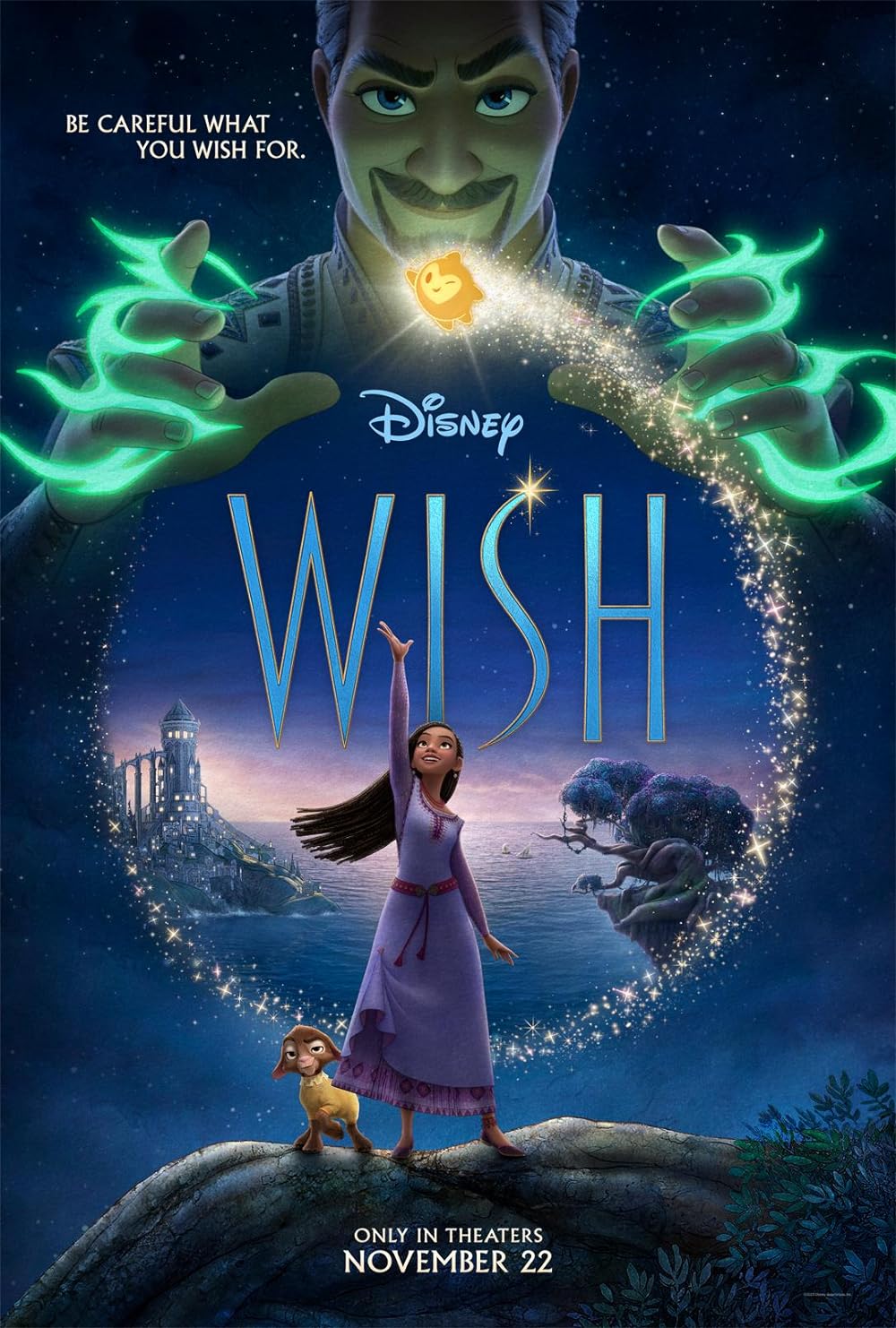
Disney’s WISH movie review

Disney should’ve wished upon a star for a better screenplay. But hey, at least we have an actual villain again! Wish attempts to be a return to the classic Disney animated feature form, but it fails to recapture the magic. Still, there are glimpses of that former Disney magic that are encouraging, and perhaps it’s a sign of what is to come in the next few years. And I am talking about the hand-drawn inspired matte-like backgrounds. Unfortunately, the CG cast and foreground elements detract from the magic of that classic Disney animation. Suffice it to say, the dichotomy of animation styles is distracting. Wish doesn’t have so much a story idea problem as it does a plotting and story execution problem, which plagues this movie. Moreover, what the movie lacks in thoughtful plotting, it strives to make up for in the musical numbers–forgettable as they may be. Most likely, the movie won’t be remembered for its story per se, but rather for the setups for future animated classic remakes as Wish is the origin story for the Disney wishing star. To that end, there are a couple of hidden Mickeys and moderately subtle nods to other Disney characters; and these nods are tastefully handled until they are not–and incredibly overt to the point of being obnoxious.

Young Asha makes a wish so powerful that it’s answered by a cosmic force, a little ball of boundless energy called Star. With Star’s help, Asha must save her kingdom from King Magnifico and prove that when the will of one courageous human connects with the magic of the stars, wondrous things can happen.

Even though I have many reservations in the execution of this movie, I admire it for the originality in creating an origin story for THE Disney wishing star, which we first witness in Disney’s Pinocchio. And the rest is history. This same star guides Peter Pan to Never Never Land, Cinderella wishes upon it, and so many more characters. To the screenwriters’ credit, the idea for Wish is a refreshing turn from the direction Disney movies (live action and animated) have been going for years now. All the building blocks for a great story and plot are there, but it’s as if the builders of the story didn’t follow the architect’s plans as closely as they should have. Suffice it to say: great idea, poorly executed. The result is rushed character and plot development.

Something that Wish does mostly well: it represents the return of the classically-inspired Disney villain. And while Magnifico can’t hold a candle to Ursula, Maleficent, the Horned King, or even Yzma (my personal favorite Disney villain), he does fill the vacancy that has been present since after The Princess and the Frog (2009) and Tangled (2010). For thirteen years, we’ve needed a villain, and Magnifico has shown us why. Nevermind that he isn’t nearly as memorable as the aforementioned villains, but he demonstrates why it’s important for a movie to have a villain. Yes, I am aware that (1) it’s more accurately described as a character of opposition and (2) the villain needn’t be the bad guy. But, I digress.

We love villains that we love to hate, or villains that are the flip side of the coin to our central character. In fact the best villains have many of the same attributes as our hero, and maybe even some of the same goals, but their methods of achieving these warped goals are twisted. At its most basic level, a well-written movie has a central character, that central character has an external goal motivated by an internal need, and there is a character standing between the central character and his or her goal.

The plotting may be weak, but the subtext and theming are quite strong! The movie provides commentary on ideas such as socialism, censorship, and authoritarianism. Unfortunately, I cannot get into all the supporting material without venturing into spoiler territory, but I want to spotlight the commentary, because it works well. The movie clearly demonstrates that the censorship of ideas can lead to a loss of uniqueness and individuality. And even the ability to learn and grow as unique individuals. This parallels the tyrannical banning of books in our public schools being experienced by some states in our country, including the one from which I write this review. One thing that the history of the world has taught us is that anytime mass censorship (often government or other large institution-based) is exerted upon a people, the society becomes a prison for those that live in it. They, in essence, become entrapped in Plato’s Cave allegory.

It’s difficult to get into all the details of how the movie provides a negative critique on socialism, but this theme can be read in the dark side of lofty promises of government-provided housing, occupational, food, and other resources. For there is a cost–and a great one at that. In the movie, this cost is expressed through wishes and Magnifico’s reign over the Kingdom of Rosas. Even though all the characters were enjoying the freely available resources of Rosas, in the end, they realize that nanny-like state took away individualism and freedom of choice. In a movie landscape that is ever-so-more-regularly advocating the advantages of socialism, this movie is a testament to “be care what you wish for” because everything in life does come at a cost. For the Kingdom of Rosas, it was wishes, for you, it maybe something entirely different but no less important to your individuality and freedom of choice.

Lastly, I want to touch on the magic of those hand-drawn-inspired backgrounds. There are so many scenes in which the background looks straight-up like a matte painting, and I love it! I wish the entire movie looked hand-drawn; it wouldn’t fix the story execution or screenwriting issues, but it would have given the movie a more magical, almost tangible quality. Hand-drawn animation (and I will include stop-motion animation in this critique) has real dimension. With stop-motion animation, the dimension is in the objects and the lighting thereof; with hand-drawn animation, the magic is in the imperfections and motion.

Specifically looking at Golden Age through The Black Cauldron, the hand-drawn animation had literal depth because of Walt’s patented multiplane camera. Artists would draw onto glass panes, layer and space them, and the camera would shoot the linear image, giving the two-dimensional image depth of field. The hand-drawn-inspired backgrounds of Wish are encouraging because this may be a sign of what is to come for Disney animation. Unfortunately, the magic gets lost in this movie because of the distracting dichotomy of animation styles. It’s removes the characters from the background, from the world in which they live, and you never quite buy these characters are part of the setting.

Perhaps Wish suffers from story execution problems, but there is hope that Disney animation may be making a turn for the better.

Ryan teaches Film Studies and Screenwriting at the University of Tampa and is a member of the Critics Association of Central Florida and Indie Film Critics of America. If you like this article, check out the others and FOLLOW this blog! Interested in Ryan making a guest appearance on your podcast or contributing to your website? Send him a DM on Twitter. If you’re ever in Tampa or Orlando, feel free to catch a movie with him.

Follow him on Twitter: RLTerry1 and LetterBoxd: RLTerry