Peering Through the Hole into “Bates Motel”

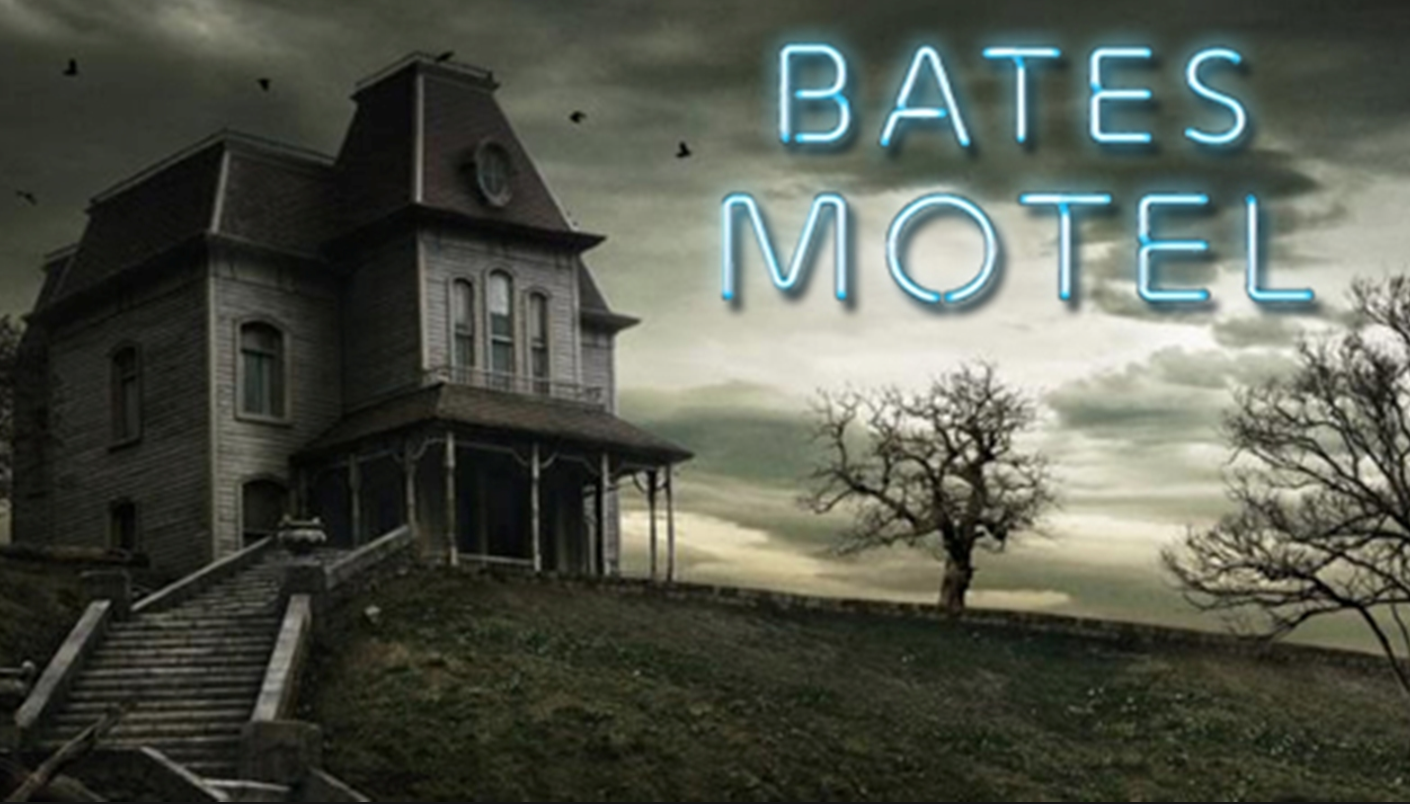
BatesMotelTVPremiering in 2013, the longest running scripted drama in the history of the Arts and Entertainment (A&E) channel is Universal Television’s Bates Motel starring Freddie Highmore, Vera Farmiga, Max Thieriot, Nestor Carbonell, and Olivia Cooke. Based on the iconic film Psycho (1960), directed by the master of suspense Alfred Hitchcock with story by Robert Bloch, Bates Motel takes us back to Norman’s early days when he was just a teenager–who was anything but normal. If you have kept up with the series, it is at a huge turning point in the character development of Norman and it just keeps getting better and better. Often shows as dark and heavy as Bates Motel do not have staying power or begin to wane after 2-3 seasons. Not this one. Just like Hitchcock’s masterpiece Psycho continues to impress, terrify, and influence even today’s suspense/horror movies, Bates Motel provides audiences with a glimpse into how Norman came to be while concurrently focussing on others who are directly and indirectly connected to the development of the most infamous psychopath in all cinema history. From visual and verbal nods even in today’s horror films to inspiring theme park attractions to television shows, the drama at Bates Motel continues to beckon audiences and intrigue those who find the characters fascinating.
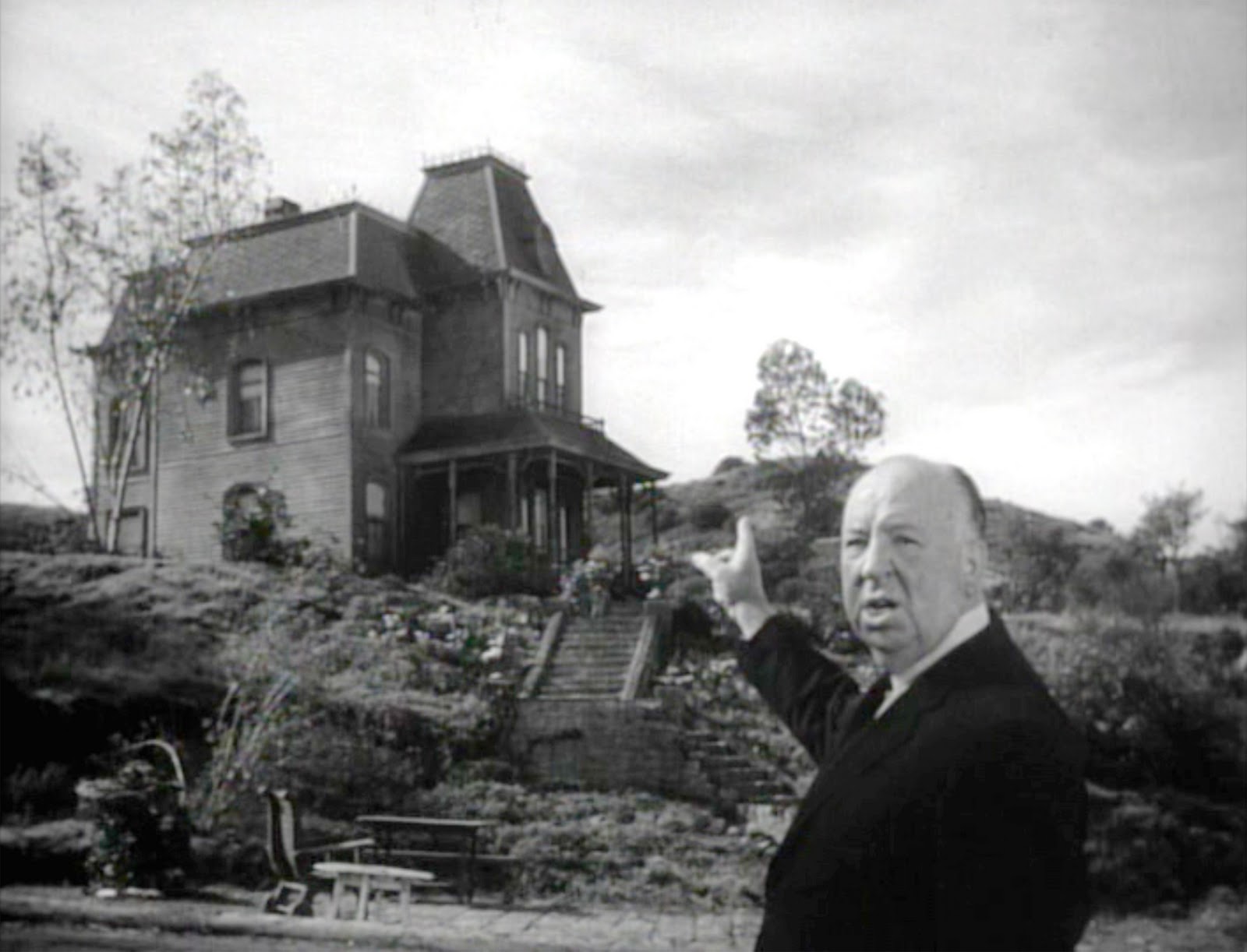
Hitch_HouseSadly, executive producer Carlton Cuse confirmed that the show’s next season is slated to be the last, and will adapt the events of the series’ namesake. Although I wish the show could go on, it is clear that we are approaching the events that started it all. That being said, this upcoming season is sure to be exciting as we get to witness the gap between where we are and where Marion Crane checks into the infamous motel begin to narrow and close. Whether we are going to end the series at the point Marion walks in or recreate the diegesis from Hitchcock’s film leaves to be seen. One of the reasons that a series like this one can even be produced is that it has prolific material from which to pull and interpret–the fact that the character of Norman Bates has been studied for years, much in the same way the film itself has been explored–provides writers and producers ample opportunity for inspiration.
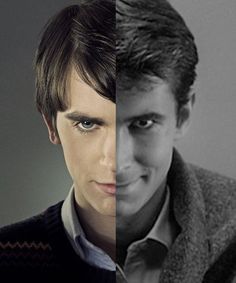
Norman and NormanSince we are given little information about Norman in the movie–note: that does nothing to mitigate the experience or effectiveness of the plot–his childhood to adolescent years and transition into adulthood is open for interpretation. For many years, film scholars like myself and others have often hypothesized what psychological and emotional experiences plagued Norman and affected his development. It would be all too easy and even a copout to state that he simply suffers a psychological disorder that was present when he was born. What I appreciate about the show’s portrayal of Norman is taking the cognitive and emotional atypical condition he was likely born with and throwing other experiences into the mix. It’s nature v nurture on a whole new level. Through the storytelling of Bates Motel, we have witnessed how his upbringing has had a profound impact on his development into the single most famous psychopath in cinema and now television history.

Emma_DylanThe show is not limited to the development and history of Norman, but also includes influential people in his life. Of course there’s Mother (Norma), but we also have grown to love his estranged brother Dylan, close friend Emma, and frienemy Sheriff Romero. Obviously Norman is obviously interesting to watch, but the writers and producers of the show make sure that each of the principle and reoccurring characters are fascinating as well. Dylan represents the only male figure in Norman’s life who consistently tries to help him, even though Norman often cannot see the love in his brother’s actions. Much like Norman, Dylan has also encountered much negativity and abandonment issues as a kid. Unlike Norman though, he found ways to deal with it and build a life for himself. In recent times, Norman keeps pushing the one positive male role model in his life away to further isolate himself. His close friend and coworker Emma is a very interesting female figure in his life. Unlike Mother or other females we have encountered over the series, he loves Emma and has done nothing to bring about permanent harm to her–at least so far. Emma is the only person who really gets to see the Norman hidden behind all his bizarre actions and obsession with Mother. Like Norman and Dylan, Emma had her own struggles with cystic fibrosis. Each of the characters is dealing with their own respective psychological or physical problems.
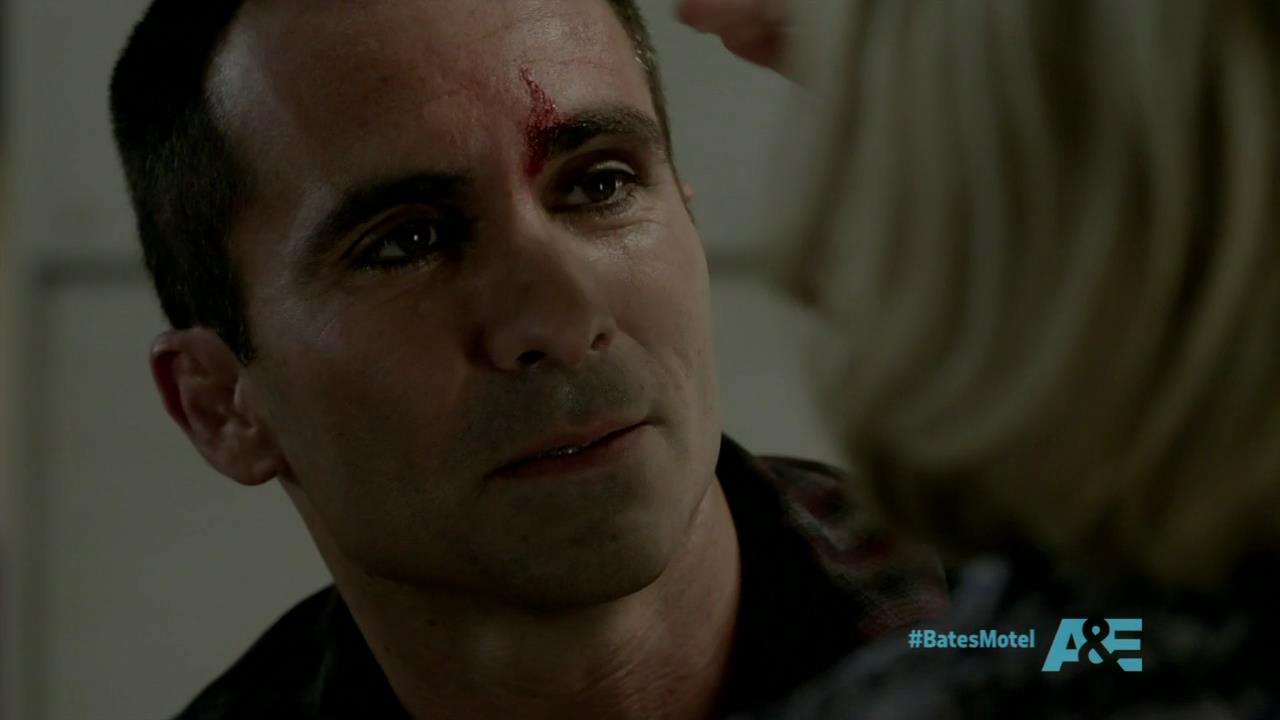
Romero_AlexLastly, prior to analyzing Norma, Sheriff Romero has played a key role in the life of Norman. Like Dylan he too is a consistent male figure in his life, but Norman has grown to resent Romero for his relationship with Norma. Romero has worked through his involvement in the drug trade and has grown as a result of it. Again, we have an individual with their own personal conflicts amidst the consistent conflict of Norman. The only other character, besides Dylan, who really knows what Norman is capable of. Romero is constantly trying to protect Norma from what he dreads Norman is truly capable of.
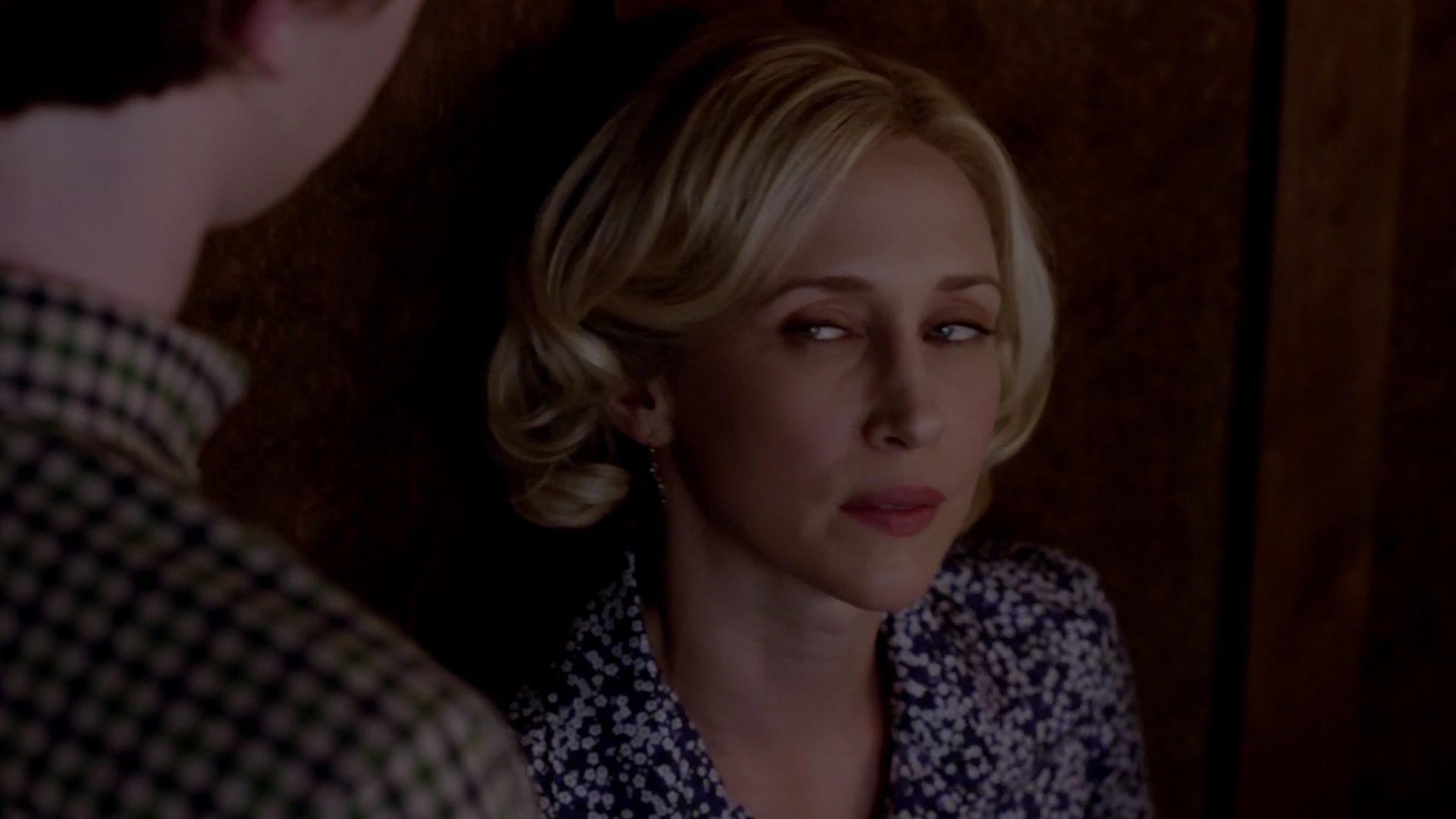
NormaBates1“Mother, what have you done?!?” Norma Bates is probably the most fascinating character after Norman. She is the closest to him and has been directly and indirectly responsible for his atypical development from his time as a child into an adult. Although she all but denies Norman’s psycho-social and emotional problems, she truly does recognize they exist. Unfortunately, she is so incredibly attached to him, having been abused and abandoned herself in the past, that she cannot truly provide the help he needs. Fortunately, she finally got him the help he needed–and should’ve received years prior–at the Pine View facility as we have seen in this season. It’s too little help too late. For the longest time, she felt that mother knew best and that no one could help Norman the way she could. Oh the irony. The attachment she was so fond of is regrettably the very thing that would bring about her undoing. Despite her best intentions, she really was the most instrumental in creating a monster. Her fits of rage and jealousy transferred into the mind of Norman and intensified the predisposition to sociopathic behaviors already present. Had she taken him to get help as a child, it is entirely possible that he may not have turned out to be the “psycho” after all. But, mother will always be with Norman; and no woman is allowed to take the place of her in his life.
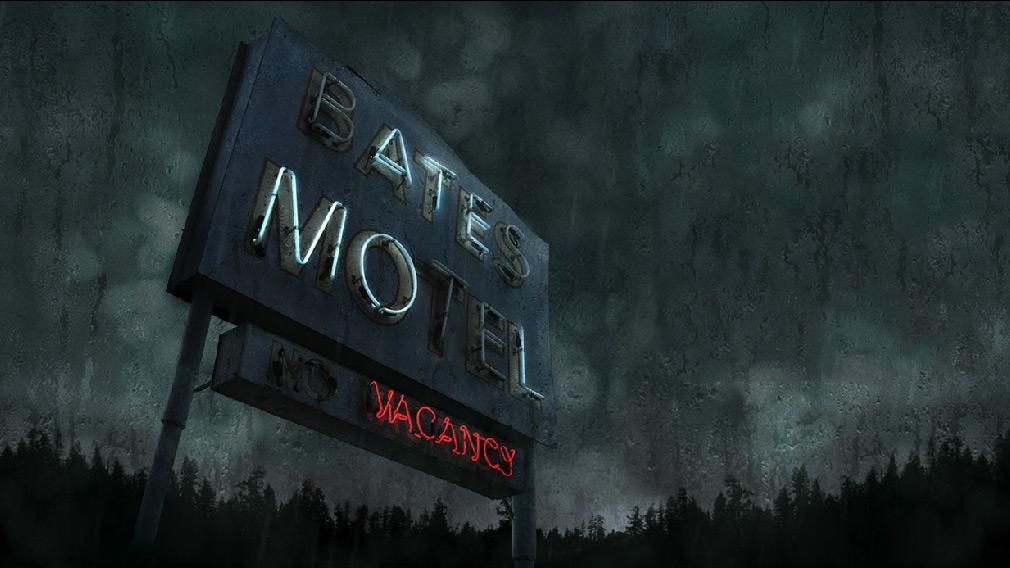
bates_motelWell, here we are! At the crossroads between seasons four and five. This upcoming season is sure to terrify and excite as we buildup to the single most famous scene in all of cinema history. The reason the shower scene is the single most famous scene can be recognized by analyzing the length, actions, and sounds included in those few seconds. You can learn more about that scene by reading my article The “Attraction” of  Horror: a “Psycho”analysis. After more than 50 years, the Bates Motel and Norman still haunt our dreams and provide direction and inspiration for today’s cinematic storytellers. An interesting thought on the direction of these immortal characters and setting is the potential for a live theatrical production. There is certainly enough dialog driven material that Psycho and Bates Motel can easily be translated into a live theatre experience. It takes rich material to be able to be so versatile. Here’s to the final season of A&E and Universal Television’s five year homage to the infamous and macabre happenings at the Bates Motel. Thank you Hitchcock for truly being the master of suspense.
The “Attraction” of Horror: a ‘Psycho’analysis (part 2 of 2)

UnivHollywood_BatesMotelSuccessful movie-themed attractions (stage shows or rides) create an atmosphere that is often built upon a foundation consisting of confrontation and direct simulation rather than long, sustained narratives (King, 2000). This is true of the horror film as well. Horror is a genre nearly as old as cinema itself. The horror film, according to Linda Williams, contains three basic elements: narrative, character, and setting. These same elements can be found in movie-themed attractions at theme parks (2000).

Regarding Psycho in particular, the setting consists of very liminal* spaces such as the opening hotel, the Bates house, and bathroom. This same idea can be applied to a theme park attraction because the park guests are often corralled into smaller, intimate places that serve to advance the next element. Narrative is the foundation that both themed attractions and movies are built upon. The narrative, or diegesis, is the story. Diegetically, horror films contain a story that is segmented into the following sequence: order–>disorder–>order. Increasingly, the modern horror film is often left in disorder, or an order that is dissimilar from the original (2000). Movie-themed attractions usually introduce the park guests to a short-form story based on the original, and the ride is the vehicle that takes the guests through the story that can consist of threats and chases, followed by triumphs. In regards to the character element, the characters are those who are the instruments through which the plot is advanced. Normally, characters are people or animals, but can also be inanimate objects of significance (Williams, 2000). The park guests usually encounter characters from the source material along the journey of the ride.

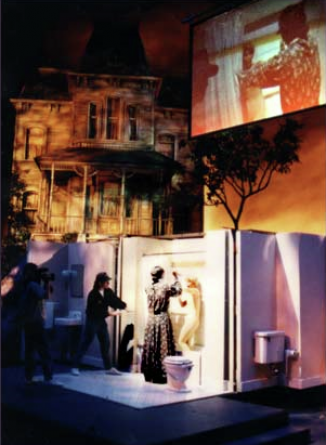
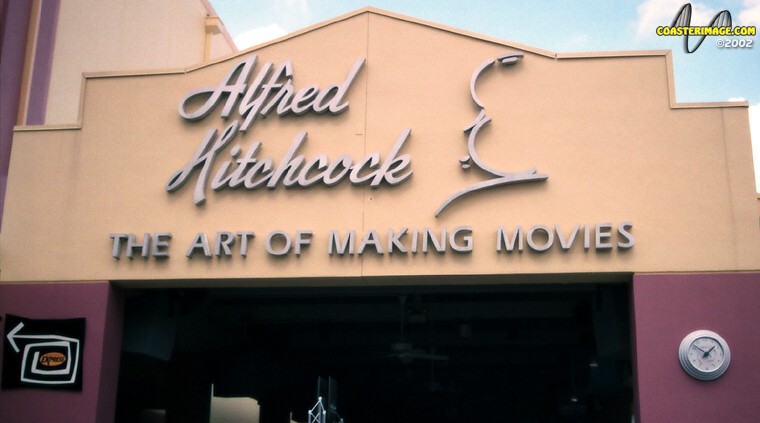
HitchcockBirds“Alfred Hitchcock: the Art of Making Movies” (Universal Studios Florida) was divided up into four distinct parts, with the famous shower scene being the central focus (ThePsychoMovies.com, 2014). Just like a horror movie is divided up into parts, or has a cinematic structure, so too did the Hitchcock attraction. Hitchcock: The Art of Making Movies was divided up into the following areas: preshow, 3D theatre, Psycho stage, and interactive area. There are may parallels between the famous shower scene and the live attraction. In the movie, the sequence leading up to the shower scene is very much a preshow in the same way the attraction contains a preshow area. The preshow in the movie is when Norman is gazing through the peephole into the room of Marion as she undresses. Just like Norman is visually gathering information about Marion, the park guests in the preshow area gather information about Hitchcock’s career. The preshow is the area that preps the audience for what they are too experience. By using the same principles of creating suspense that Hitchcock used, the preshow area reveals just enough to elicit feelings of anticipation and anxiousness.

Next, the park guests sit through clips of 3D versions of Dial M for Murder and The Birds. This preps the mind for experiencing the horror in the next room. Likewise, between the time Norman looked upon Marion through the peephole and puts on the wig and dress, he sits in the kitchen and presumably debates with mother on what to do. Following that scene, we return to the bathroom and enter the shower with Marion. After the 3D movie, the park guests enter the Hitchcock Stage and look upon recreations of the motel, shower, and house.

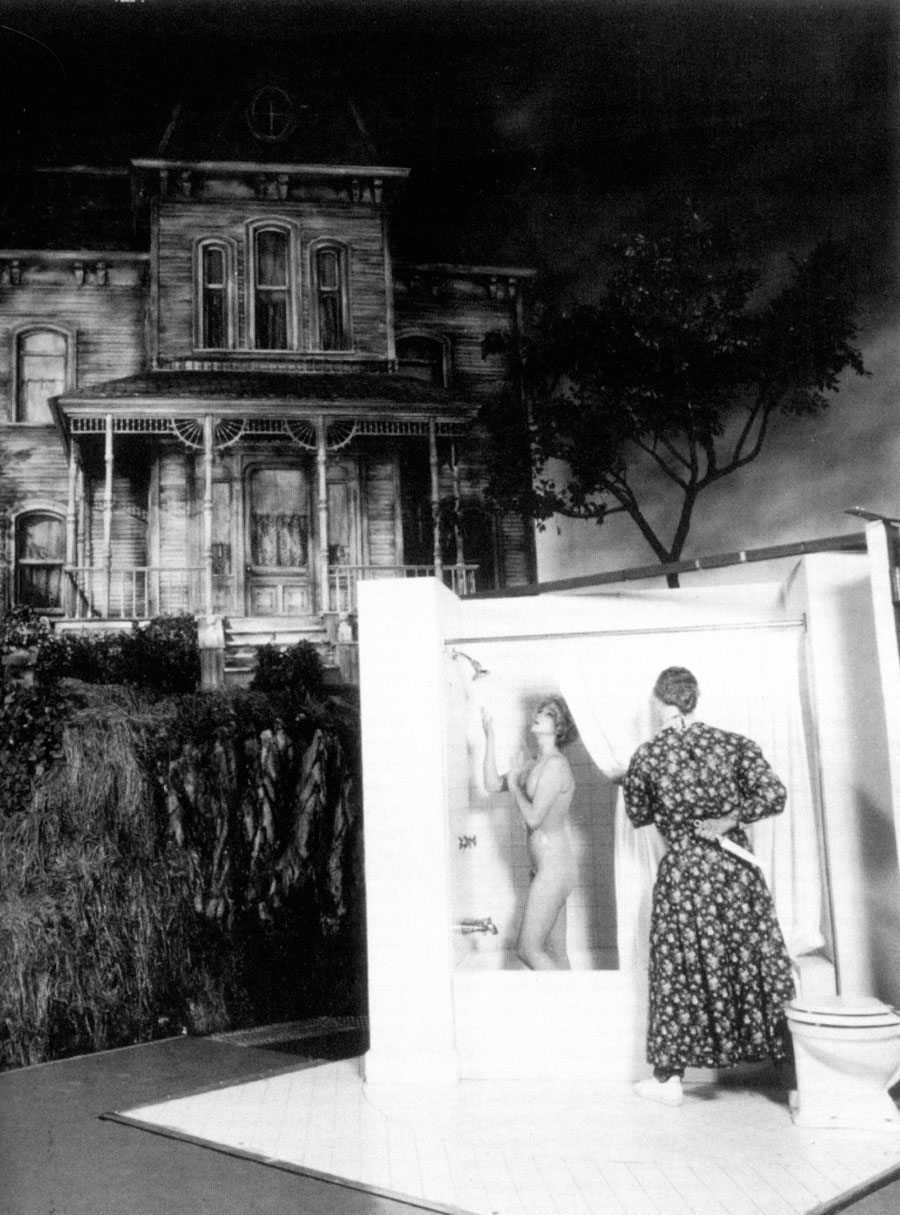
The main show at the attraction is the Hitchcock Stage where the infamous shower scene is reenacted before a live audience. In addition to the Bates House and Motel, there is a recreation of the tub/shower used by Hitchcock to film the scene. At this point in the movie, Marion is thoroughly enjoying her shower, and the audience gets both objective and subjective camera shots from inside and outside the shower. All of a sudden a shadowy figure approaches the opaque shower curtain and throws it open, wielding a knife. The sinister figure stabs Marion repeatedly and through more than fifty cuts (editing cuts), the scene is played before the people in the dark. Likewise, this same scene is brought to life for the studio audience at Hitchcock: The Art of Making Movies. Through mechanical engineering and film production techniques, the cast of the show reveals how the master of suspense filmed this iconic scene.

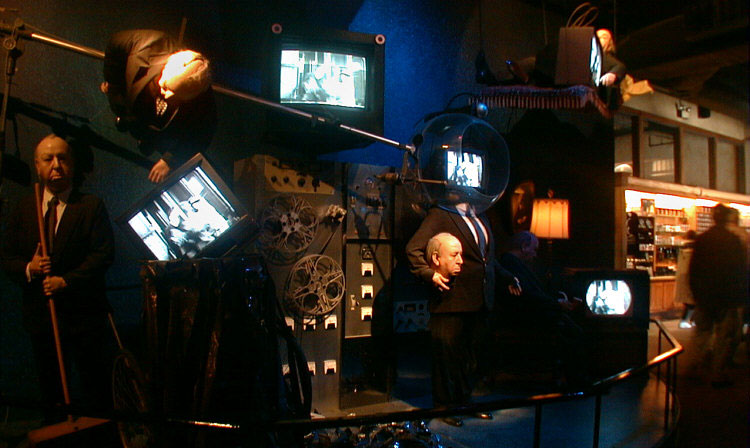
HitchcockAttractionFinalRoomFollowing the show on the Hitchcock Stage, the park guests walk into a museum-like interactive room revealing many of Hitchcock’s secrets and techniques in some of his most notable films. It parallels the end of Psycho when the psychiatrist is analyzing Norman and explaining how and why he did what he did. Just like Norman is the master of slasher films, so is Hitchcock the master of the art of suspense and horror cinema. A close reading of these areas reveals that they each take an element of the setting, narrative, or characters and use the tool of spectacle to bring them to life for the live audience. The preshow area acts as the prime for the horror/suspense pump that is gearing up. Watching the 3D scenes from The Birds and Dial M for Murder serves to generate feelings of ensuing chaos and acts as the big event that causes something to go wrong in the otherwise narrative that is in order (remember: orderdisorderorder). Following the 3D Theatre, is the central Psycho stage that takes any order and casts it to the wind and enables the horror of the shower scene to come to life for the naked eyes of the audience.

Hitchcock AttractionThis was a main attraction at the theme park until its dismantlement in 2002 to make way for the Shrek: 4D experience. From the aforementioned explanation by one of the producers of the attraction, the audience was completely immersed in the magic of bringing a Hitchcock thriller to life, and got to witness the most famous single scene in all of cinema history. This was all done with practical effects, just as Hitchcock would have done it. But, with the advent of computer generated imagery and incredibly accurate and time efficient non-linear video editing, most of the effects can be generated in other ways. Although it remained one of the most popular attractions at the theme park until its closure, Universal saw the future of attractions and decided to do away with nostalgia and pave the way for digital simulated attractions (Singer, 2013).

Click HERE for Part 1

*(adjective) 1. of or relating to a transitional or initial stage of a process; 2. occupying a position at, or on both sides of, a boundary or threshold

The “Attraction” of Horror: a ‘Psycho’analysis (part 1 of 2)

HitchcockAttractionJust as audiences are fascinated by horror movies and seek to watch that which would be repulsive in real-life, they are equally fascinated in immersing themselves into the experience by way of a theme park attraction. This phenomenon is not limited to horror movies, because rides like Jurassic Park the Ride (Jurassic Park River Adventure in Florida), Revenge of the Mummy, and Pirates of the Caribbean beckon millions of guests a year. In addition to attractions based on the movies, movie studio executives and theme park engineers created attractions that embody what Carl Leammle first envisioned, by taking the audience behind the magic of the movies. This is the case with the (now closed) Backlot Tour at Disney’s Hollywood Studios and Hitchcock: The Art of Making Movies at Universal Studios Florida (Murdy, 2002). The relationship between the cinema and theme parks is a strong one and creates an energetic synergy that entertains millions of people each year by eliciting laugher, screams, tears, and smiles.

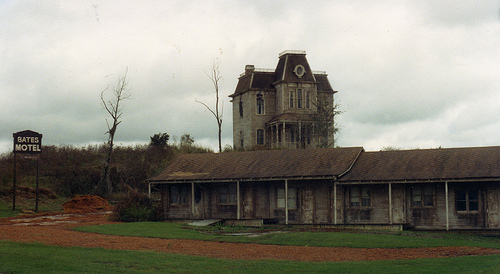
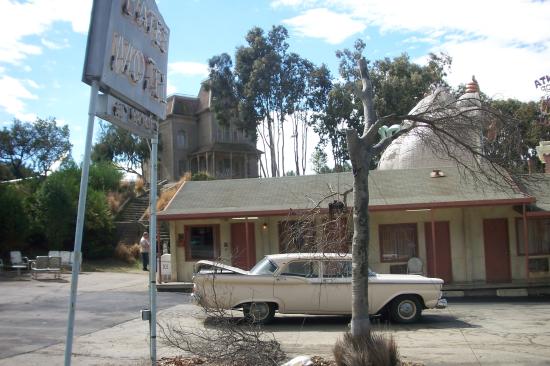
BatesMotelFloridaThe most admired and revered part on the famous studio tour at Universal Studios Hollywood is the Bates House and Motel. As the tram passes the iconic motel and house that set the bar against which all other slasher films would be judged, an actor portraying Norman Bates charges toward the tram wielding the famous butcher’s knife (Murdy, 2002). Even though the audience knows this is a tour behind the scenes of the most utilized backlot and studio in the world (Milman, 2001), there is something uniquely special about this chance encounter on the tour. And, that something is what the designers of the guest experience on the studio tour use to bring about the successful convergence combining both the original movie and the live experience. In order to successfully complete the transposition from the movie to the live experience, the attraction designers tapped into the uncanny or unheimlich (Freud, 1919) of Psycho and utilized the elements of terror and shock to facilitate the aura of horror that exists just by looking upon the timeless motel and house.

Psycho_SoundstageCentral to Psycho and the single most famous scene in cinema history (Cosgrove, 2013) is the groundbreaking shower scene. And, it is the highlighted element at the former Universal Studios Florida attraction Hitchcock: The Art of Making Movies. One of the opening day attractions located in the former Production Central area of the park (Singer, 2013), this attraction took park guests into the world of suspense and horror as meticulously crafted and defined by Alfred Hitchcock (ThePsychoMovies.com). Although it was replaced with a less critically important and pivotal movie themed attraction in 2002 (mostly to attract younger audiences), it is an excellent example of the fusion of horror cinema and themed entertainment attractions. In addition to the Art of Making Movies attraction, there was a recreation of the infamous motel and house in the park built for the filming of Psycho IV: The Beginning in 1989-90 (MovieMassacre.com, 2014). For those who have seen Psycho, the very sight of the motel and house is enough to strike fear into the mind and bloodstream. It is representative of the very best that horror cinema is able to offer society. In no attraction, based off a work of horror, is there a better example of the very essence of horror films than in the synergistic experience of beholding the four-fold elemental process of the Hitchcock: The Art of Making Movies attraction (Singer, 2013).

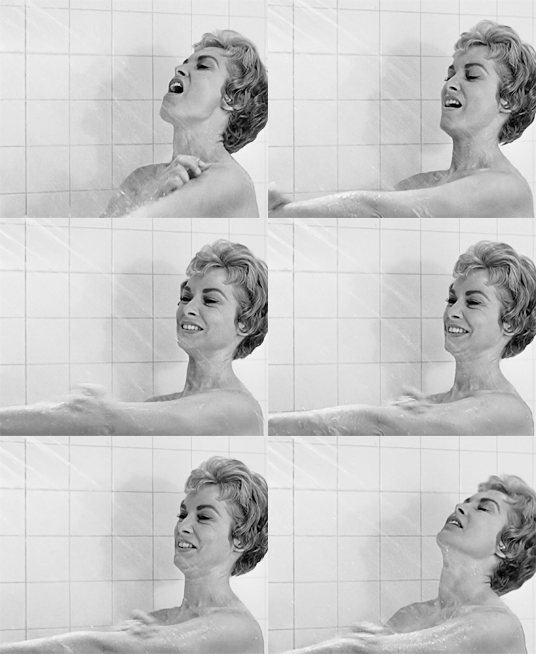
PsychoShowerClensePrior to ‘psycho’analyzing  the attraction of horror, it is imperative to understand why the shower scene is the single most famous scene in all cinema. The shower scene is a roller-coaster of emotions; and, in many ways, this scene in and of itself follows the basic structure of a story (introduction, rising action, climax, falling action, and denouement). The scene begins with Marion closing the shower curtain as we get a closeup shot of her face as the shower turns on.  Given this closeup, the facial expressions are easily denoted on her face. The flows of emotions on her face resemble the face of someone who is being cleansed from or baptized for their transgressions. This emotional transition is made more clear when comparing this scene to the earlier one with Marion and Norman in the office when she suddenly feels as if she “stepped into a private trap” and wants to see if she “can step back out of it” (Psycho, 1960). In addition to the metaphoric sin cleansing affect of the shower, Marion is also physically and emotionally exposed and vulnerable. And, what about that showerhead? Throughout the movie, there are eyes on Marion (real estate buyer, boss, police officer, mother’s eye, etc…). The frequent cuts to the showerhead essentially imply the showerhead as yet another eye watching Marion. Furthermore, the frequent cuts to the showerhead also help to create the sensation that something is not right.

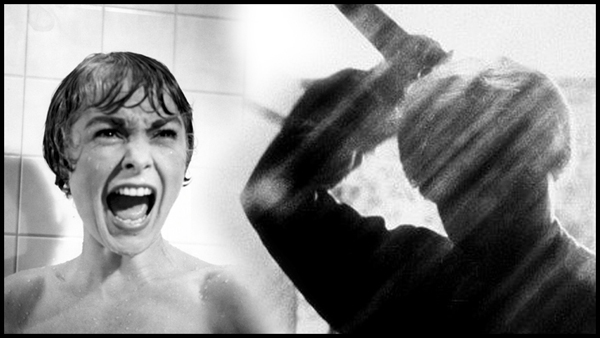
Following the symbolic cleansing in the shower, the audience witnesses the shadowy figure emerging from the bathroom door and walking up to the infamous shower. Due to Hitchcock’s use of the cinematic rule of thirds, we are already expecting the entrance of someone before the door ever opens. Through the eyes of the camera, we see Marion’s private space is violated by this shadowy figure. The camera slowly zooms in to the figure through the opaque curtain until the moment when the shadow throws open the curtain and there is a closeup of Marion’s face exhibiting total terror as the knife is raised against her.

PsychoShowerScreamImmediately after the shots of Marion’s iconic scream and the knife, the speed of the cuts increases exponentially. Aside from having to creatively cut the film in such a way that neither Marion’s naked body nor a knife officially penetrating her body is seen, the speed was necessary to enhance the disorientation and violence of the relatively short montage. Through both objective and subjective shots, we are both mother and Marion within hundredths of seconds of one another. The precise cuts in the film give the illusion that Marion is being stabbed multiples times; however, there is only one shot that captures the knife barely penetrating Marion’s vulnerable and exposed flesh. The terrifying key to this scene is the fact that very little violence is actually seen; most of what is shock-inducing is what is not seen and implied through the artful use of music, cuts, and angles. Hitchcock once said, “there’s nothing more frightening than an unopened door.” This implies that there is a greater fear of what in unseen than that which is visible in the diegesis on the screen.

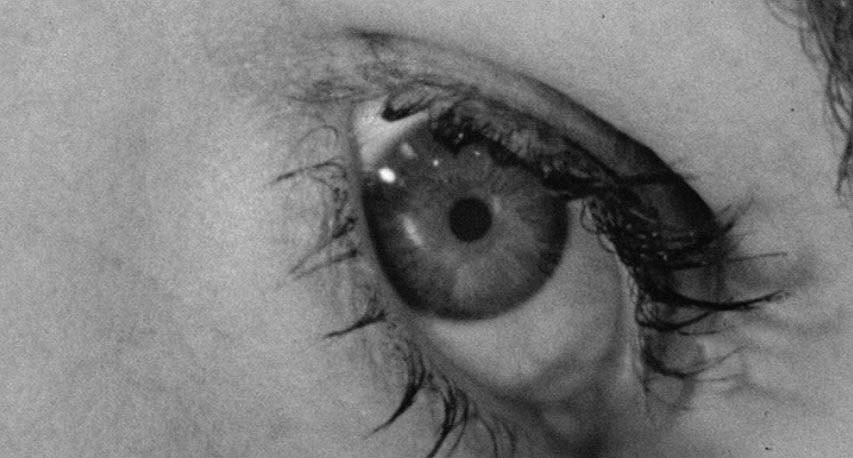
MarionCraneEyeIt is nearly impossible to closely read this scene without acknowledging the most famous orchestral screeches in cinema history. Those famous screeches greatly enhance the disorientation and terror of the scene. Coming out of nowhere, the terrifying sounds from the orchestra create the sound design for the knife penetrating Marion and slashing her to death. One could cut to black and allow the music to be heard throughout this iconic scene, and the audience would still feel anxious, macabre feelings and shock. Interestingly, this same action would also reveal how short the shower scene really is. Regarding the sound design, there is much more of the water heard than the sounds of murder. Following the murder, the score greatly slows down and deepens. This musical movement allows the audience to reflect upon what has just occurred and begin to contemplate the various consequences of mother’s actions.  Lastly, the camera slowly spirals out from Marion’s eyes symbolizing that everything Marion planned has just gone down the drain through this seemingly random act of violence, and then there is a cut to the drain of the bathtub itself cementing this metaphoric notion. Keeping with the reoccurring theme of eyes, this also reinforces the fact that the eye is the window to the soul and someone is always watching.

CONTINUED NEXT WEEK. Check back next Monday 🙂

BatesMotelAETVDon’t forget to watch Bates Motel on A&E tonight! It’s the season finale and it’s going to be intense!

“On Cinema and Theme Parks” (part 12 of 12)

My BookThe world of the business of media convergence is a fascinating and rapidly changing world! And, the convergence of cinema and theme parks is a dynamic example of how one form of media can be integrated into another in order to create a new experience for audiences around the world. Media conglomerates with theme park investments are often exploring what to do in order to remain competitive and increase the number of guests through the turnstiles. Sometimes this means using their own IPs to develop new rides or attractions, maybe an entire new park altogether, or perhaps striking a deal with another media company in order to use another’s IP as the source material for new attractions.

The opposite is also true. Media conglomerates with theme park interests may look to their own respective parks for the inspiration for the next movie. This was definitely the case with Disney’s Pirates of the Caribbean and is the case in the film Tomorrowland, in which an entire section of a park is the basis for a movie. It is all storytelling. But the stories being told take different shapes and are told through various means. And, even video game companies are getting in on the action. On May 7, 2015 Universal Parks and Resorts and Nintendo announced a first-ever partnership. Universal Parks and Resorts acquired the theme park rights from Nintendo to include the legacy video game company’s characters and games in new attractions and character meet and greets (BusinessWire, 2015).

At their respective roots, both movies and theme park attractions (and even entire parks themselves) tell stories. The medium through which they tell their stories is very different, but nevertheless helps to support one another. Media conglomerates have demonstrated this concept by taking existing movie/TV IPs and translating them into attractions and taking existing theme park attractions and translating them into movies. At its heart, the purpose of this study is to develop recommendations for media conglomerates when making decisions that are potentially worth millions of dollars, and could be a major success or a big flop.

Despite the more artistic or niche films still being amongst the individual favorites of the participants, the shared favorite movies were high concept and aimed at broad audiences, and typically fell into the science-fiction or fantasy/adventure genres. Specifically, the movie Jurassic Park and the Jurassic Park ride were cited numerous times. If an attraction were too disconnected from the story or plot of the movie, serving as the basis for the ride, then it appears to be received negatively. On the contrary, when a movie-based theme park attraction combines the best of the plot or characters, in a given movie, with a conventionally thrilling ride design, then it is received very well and enjoyed immensely.  Furthermore, the attraction needs to tell a story within the length of the ride from queue to exit. Fluid, coherent stories are driving forces behind the likability of an attraction or movie. Prompting the generation of emotional connections or responses from audiences/guests, in respect to the story of a movie or attraction, is key to creating reflections that will evoke nostalgic memories down the road; and thus, compel the audience member or park guest to experience the movie or ride again—perhaps with friends, family, or their children.

Well-executed themed design to support the story of a theme park attraction based on a movie is just as important as the story or intellectual property themselves respectively.  Story is the plot or sequence of events that take place during the ride experience (again, this is from the queue to the exit). Theme encompasses the building design, audiovisual elements, physical movement, and special effects during the attraction. The goal of an attraction or park area’s theme should be to completely immerse the park guest into the world being used as the basis or inspiration for the ride or section of the park. Everything from the employees to the restaurants to the surrounding buildings needs to work together to create an experiential degree that essentially transports the guest from the real world into the world of the park or ride. When developing themed areas of a park, designers need to be careful not to allow the outside world into what should amount to an escape from reality. Not that iconic brands or companies cannot be integrated into the theming of a park at all; but it needs to be more indirect, thus allowing the theme to continue and the story not be broken by outside invaders, so to speak.

The reason many attractions at movie-based theme parks were originally developed was to take Tom Gunning’s (1986) idea of the cinema of attractions and translate it literally. However, with the increasingly digital climate of movie making, the practical, analog effects and techniques that once made for the basis of attractions, are no longer foundation enough for successful attractions in today’s marketplace of themed entertainment ideas. Simply stated, it just isn’t exciting to watch an editor sit behind a computer creating digital effects. Despite the making of a movie just not being as secret or magical nowadays, it is still important for a movie-based theme park to hold onto its roots and work to creatively develop new ways of exhibiting this art that still mystifies to this day—just in different ways than it used to. For movie-based theme parks that exist on studio lots or house sound stages, it is imperative that studio tours continue and build areas that can be rented out for current productions. Even though many people know how movies are made presently, the art, skill, and magic of how similar effects and shot sequences were accomplished before the aid of computers (at least to the extent they are instrumental today) in classic movies has a place in the modern movie-based theme park. Hitchcock: the Art of Making Movies was cited as an example of this type of offering guests want to see alive in the parks.

The goal of a movie or theme park attraction is to generate some type of pleasurable experience in the movie patron or park guest. For both movies and themed parks, the idea needs to be to craft a story that will stimulate physiological and psychological/emotional responses from the audience/guests. A movie should contain a story or sequence of events that generate fear, affection, anxiousness, or levity in the bodies of the patrons. These responses are very much physiological. In the environment of a theme park attraction based off a given movie, these same physiological responses need to be generated by the use of movement and special or visual effects. When generating these physical responses, the patron or guest will instinctively develop psychological or emotional responses to accompany the complementary physiological response. Even if the physiological strain placed on the bodies is by all accounts a negative one, the park guest will most likely be compelled to experience it again and again because studies have shown an attraction to or affinity for sensations of pleasurable un-pleasures.

The principal idea behind this study is to create a predictable model for producers and designers. And, there has been a prolific amount of information to supply the evidence that creative designers, producers, and project managers need in order to make well-informed decisions in the beginning stages of the themed entertainment or motion picture production process. Developing a model for creative decision-making is not as simple as ‘include these things and your idea will be successful,’ as the creative process can be very subjective. However, with enough supporting evidences, a media conglomerate or other company with theme park investments can make decisions with sufficient empirical evidence pertaining to the projected success of an attraction or theme park. This study has outlined a model that is grounded in scholarly research, anecdotal evidence, and first-person focus groups and interviews.

For the complete study, head over to AMAZON and purchase the book. These 12 sections merely touch on some of the main points from the study but by no means take the place of reading the whole book. Hopefully these sections prompt a desire to experience the book/study in its entirety. It’s written to be enjoyed by anyone who loves movies and theme parks. What good is a study if it’s written of that only academics can understand. I have uncovered fascinating knowledge and insight into the craft of the relationship between cinema and themed entertainment that I want to share with the world.

To return to the beginning of the series, click HERE


“On Cinema and Theme Parks” (part 5)

My Book

Over the decades, there has been a strong convergence between cinema and theme parks. Studio executives, filmmakers, and theme park designers are working together in ways that serve to support both the movies and the parks that have rides based on the movies. Historically, the beginning of the convergence of cinema and theme parks became apparent in the late 1970s. Following the decline and eventual fall of the original Hollywood studio system in the 1960s, there are some areas that have changed in the production of films (and other entertainment media). According to Allen Scott of UCLA in the writings of Dr. Ralph Casady (1957), some of the changes and transitions dating back to the 1970s are: (1)The penetration of digital technology into all stages of motion picture production (2)The intensified geographic decentralization of production in the greater LA area (3)The proliferation of new markets based on the cross-promotion of intellectual property rights (4)The increased penetration into themed entertainment and video gaming and (5)The merging of, or buying out of major studios by giant multinational media conglomerates (2001). Along with anti-trust government regulation as a result of the Paramount Decision* and the reluctance of big banks to continue to finance motion pictures, film studios were forced to seek new revenues from other sources.

Inside the show building from the former Hitchcock: the Art of Making Movies attraction at Universal Studios Florida.

Inside the show building from the former Hitchcock: the Art of Making Movies attraction at Universal Studios Florida.

More than ever, filmmakers and attraction designers need to know what the cinema patron and park guest both want in order to create a synergistic and dynamic entertainment experience based on a single narrative. The idea is to generate a similar or complementary emotional response during the themed attraction to that experienced by the movie patron during the respective movie. According to researchers Enrique Bigne, Louisa Audreu, and Juergen Gnoth (2004) of Tourism Management, visitor emotions, in a theme park environment, influence satisfaction and behavioral intentions; and, emotions consist of two independent dimensions: pleasure and arousal (2004).  Theme parks are a form of leisure activity because they provide an opportunity for entertainment during an individual’s discretionary time (Milman, 1991). More specifically, movie-based theme parks provide live themed entertainment experiences that immerse the individual into the world of filmmaking or into the narrative itself. As media conglomerates continue to grow and acquire theme park properties (either through the development of new or re-envisioning of old ones) and intellectual property licenses, the popularity of movie-based theme parks will likely continue to grow.

(Check out what you missed by buying my book on Amazon)

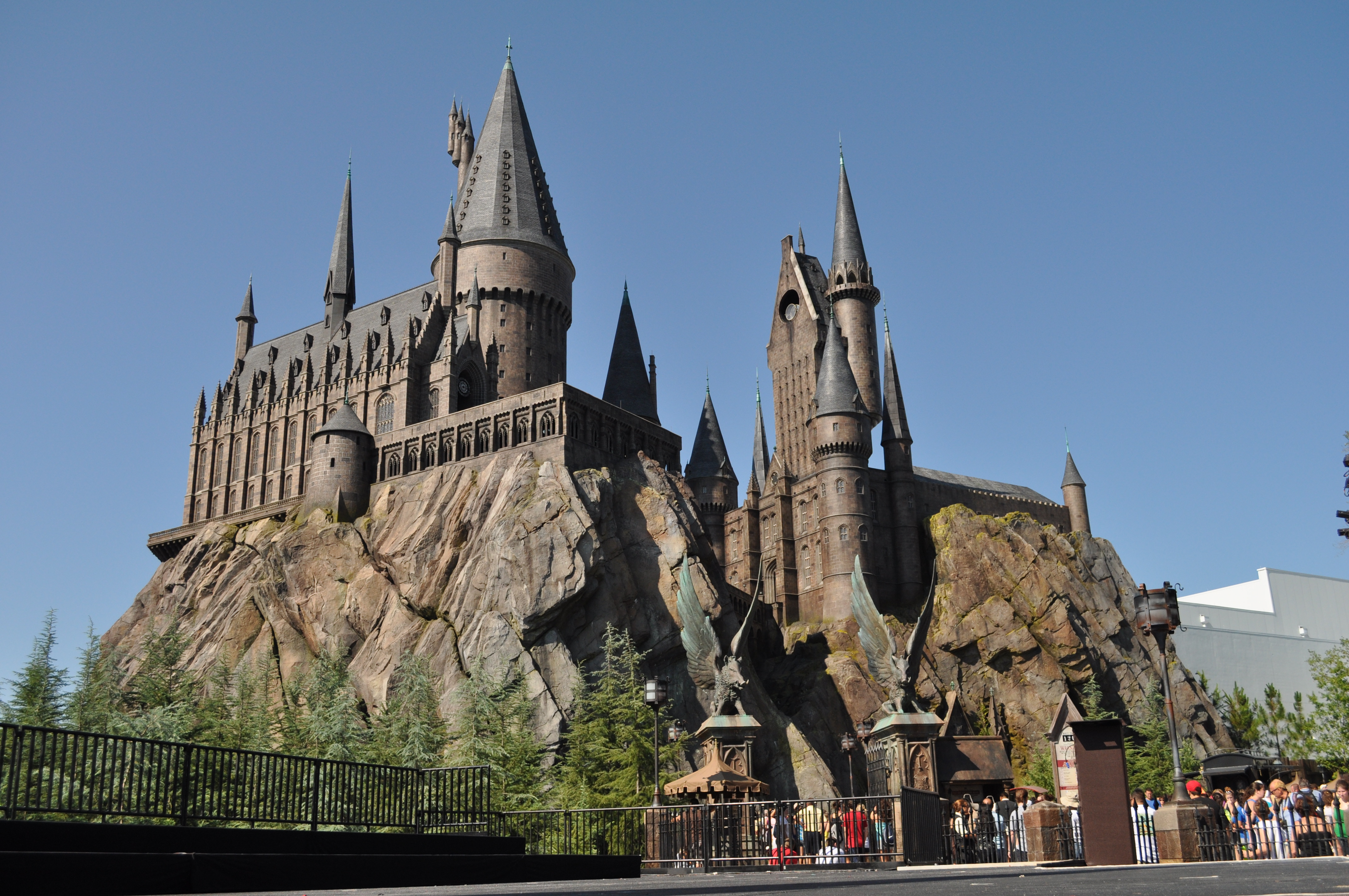
Harry Potter and the Forbidden Journey at Universal's Islands of Adventure

Harry Potter and the Forbidden Journey at Universal’s Islands of Adventure

The creators of theme park attractions from movies have to keep in mind two areas to communicate through the attraction: (1) selecting elements from the setting, characters, and narrative to translate; (2) Translating the aforementioned elements in a manner which can be communicated in a physical, tangible, multisensory way. Theme parks have traditionally used two models for cinema-based attractions. Examples of these models can be found at the Universal Studios Florida park (Failes, 2014). One model is the behind the scenes of movie-making and the other model is the ‘ride the movie’ concept (“ride the movies” is the original slogan for Universal Studios Parks). The former is traditionally more of a stage show that takes the park guests on a journey through the production process of a movie (i.e. Earthquake: Ride it Out or Hitchcock: The Art of Making Movies). The latter is usually a more conventional amusement ride that involves moving vehicles through the world and characters of the movie, often facing some sort of challenge within the narrative (i.e. Harry Potter: The Forbidden Journey and StarTours: The Adventure Continues). In recent years, there has been a move from the “behind the scenes” rides/shows to more participatory rides, placing the park guest into the narrative as a de facto character from the movie.

* U.S. V. PARAMOUNT PICTURES, INC., 334 U.S. 131 (1948) The US Government forced the eight major/minor studio players to end the practice of block booking (meaning, films would now be sold on an individual basis), divest themselves of their respective theatre chains (sell them off), and modify the practice of long-term employee contracts (though, this would continue until the 1960s). This marked the beginning of the end of the Studio System, AKA Hollywood’s decentralization.

For previous articles this series, click here: