“Won’t You Be My Neighbor?” Documentary Film Review

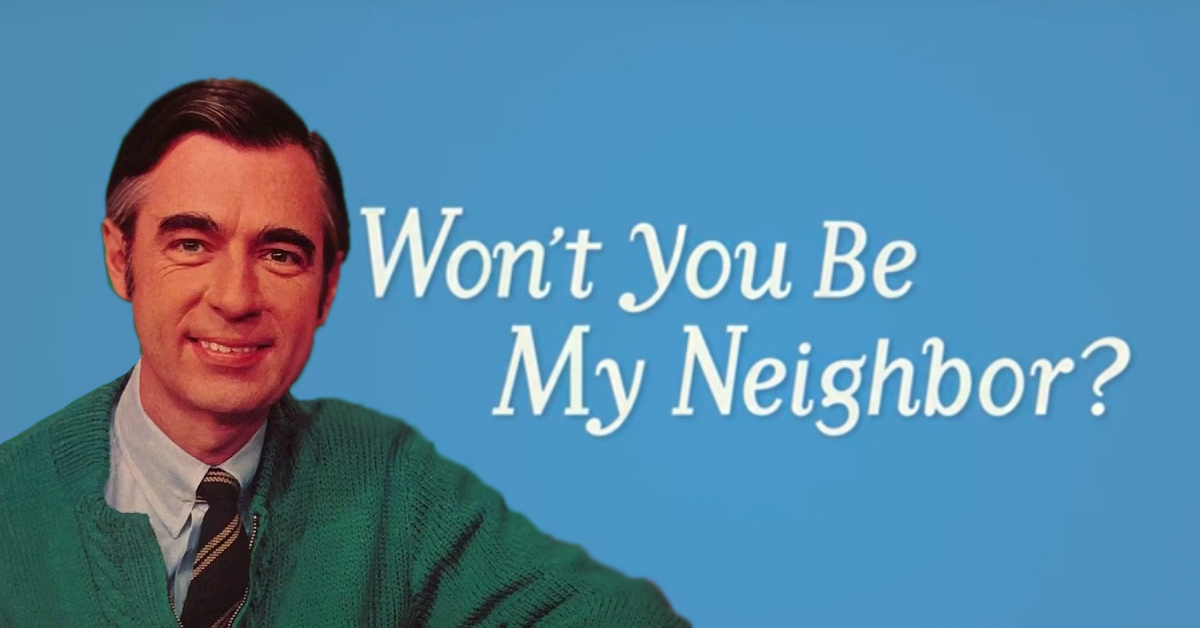
Timely. We need Mister Rogers now more than ever, for we live in dark times. In our world of division, hate, intolerance, and self-centeredness, Won’t You Be My Neighbor?, by Academy Award for Best Feature Documentary winner Morgan Neville, is a brilliant, intelligent documentary. This film takes us beyond the zip-up cardigans of public television hero Fred Rogers and reminds us that we should shift focus from what divides us to loving others just the way they are and loving ourselves because we need and deserve love, compassion, and acceptance. He truly was the neighbor on and off screen that you and I wish we had next door to us. More than a mere television show for children, Mister Rogers Neighborhood ran deep–deeper than you realized growing up. Mr. Rogers tackled incredibly tough topics in simple, creative ways in order to educate children (and their parents) to exhibit love, kindness, acceptance, understanding, and safety awareness in the world. To make the world a better place, to be a positive influence, and more. Whether in front of the camera or behind the scenes, Fred Rogers’ life mission was to utilize the power of television to teach us how to be the best neighbor we possibly could be to the world. Discussing and depicting complex subjects for a children’s program like prejudice, racism, ethics, and learning to love and accept someone just the way he or she is, this thought-provoking public television program cuts through the pretense of this world and aims directly for your heart. “One of the greatest gifts you can give anybody is your honest self” (Fred Rogers).

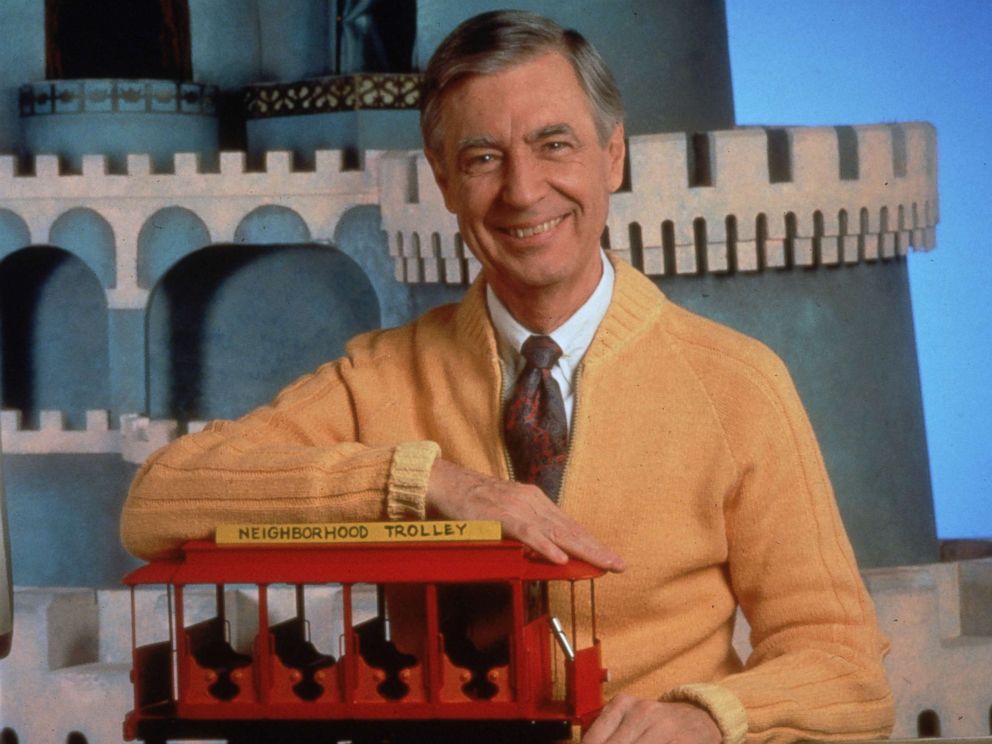
From February 1968 to August 2001 and nearly 1000 episodes, we were invited into the living room of children’s television icon Fred Rogers. He took us on adventures into the world to learn how things are made, taught us about kindness, love, cooperation, and punctuated each episode with a trip to the Neighborhood of Make-Believe to creatively drive home the message of theme of the day. Even if we haven’t seen an episode since we were kids, I imagine that most of us can still hum the theme song and maybe even sing some of the lyrics. His simple daily routine of putting on his zip-up cardigan and switching out his shoes made such an impression on the words that his cardigan hands in the Smithsonian Institute. Few television personalities have left such a great impression as Fred Rogers. His positive influence on and off camera affected the lives of so many people from the very young to the more established in life. The documentary Won’t You Be My Neighbor? chronicles the life and times of Fred Rogers during his timeless show. While you may think he was out of touch with realist–especially the reality we live in today–this documentary proves that he was well-aware of what was going on in the world and knew he had to educate, protect, and inspire children to overcome struggle and grief. Often he’d end the show with statements such as “you make the world a special place by just you being you.” The authentic decency demonstrated by Fed Rogers is so incredibly rare these days, and it’s that rare glimpse of hope that moves those who watch this documentary.
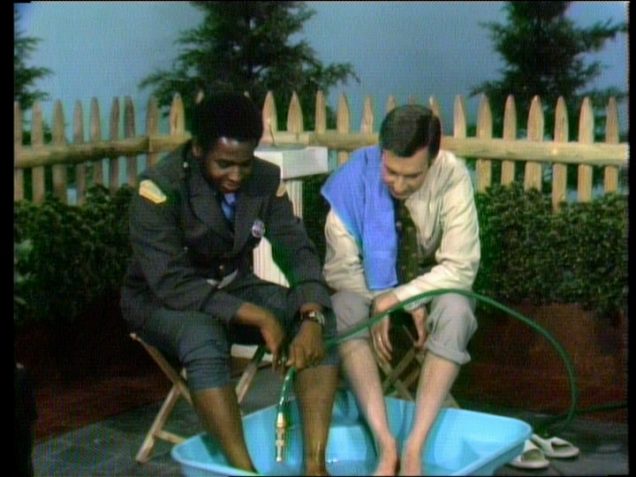
One of the most subversive moments of the documentary is when we watch part of an episode from the first season depicting King Friday the XIII building a wall to keep undesirables out. Now where have we heard that before??? Resisting the malevolent actions of the monarch, the neighborhood of Make-Believe inundates the king with messages of peace, tolerance, acceptance, and kindness. These messages inspire the king to tear down his wall to include everyone in the neighborhood. Certain so-called leaders in our states, country, and world should probably brush up on their Mister Rogers and follow King Friday’s example. Mister Rogers sentiments were not shared by many Americans during this time of civil rights unrest, but the beauty of his show was demonstrating positive progressive ideas that confronted prejudice and hate. Moments like these served as beacon of hope that the children would grow up to be loving, caring adults who desired to cooperate to build a better world. Moreover, Fred Rogers features a similar analogy later on in the series when he invites Officer Clemmons to share a foot pool with him in order to cool off in the hot weather. Perhaps this doesn’t sound radical now, but this was at a time that white Americans bucked against sharing public pools with individuals of color. Even Clemmons’ role as an officer of the law was subversive. He was hesitant at first to play the role because cops were the scariest people in his neighborhood, but he realized the importance of “children of color having a positive role model who looked like them” in the role of one who upholds the law.

The documentary also puts to rest those myths of Mister Rogers involvement in the US Military. Although we wore his zip-up cardigan regularly, it was not to cover up tattoos he got while service in the Department of Defense–he never served in the US military–but he DID serve his country for 31 years through his public television show. You spend quite a bit of time learning about the strong faith of Fred Rogers, and how it was truly the foundation upon which his show was developed. An ordained Presbyterian minister, Rogers was all set to enter seminary before he had the idea to produce his famous show. Many of the individuals interviewed during the documentary stated that even though Rogers never identified himself as a Christian, his faith and theology can be felt in his show through the lessons, games, examples, and stories. The guests from Yo Yo Ma to the show’s prop master testify to Mister Rogers’ progressive, inclusive view of Christianity that was overflowing with love and tolerance. He was proud of his faith, and often credited his Christian faith as the inspiration for the scripts he wrote for the show and the songs he composed. His beliefs were found in everything he did on and off screen. Another reverend friend of Rogers stated proudly that Rogers’ ministry through the show touched more lives and made more difference than a traditional evangelist could ever hope to do. Just goes to show it’s not how you identify yourself, but how you live your life and effect others that makes the biggest difference in the world.
Love is at the root of everything. He was doing something profound, deep, doing something that worked on multiple levels at the same time. Racism and prejudice weren’t the only weighty issues Rogers so creatively helped children work through and understand, but he also commented on other tough subjects difficult to discuss in a children’s program in a way that drives points home through kindness. Assassination, death, war, divorce, and diversity were subject matters on the show. The groundbreaking character of Officer Clemmons represented a positive role model in the law enforcement community. He was also the first recurring African-American role on a children’s program. Clemmons often commented on how incredibly encouraging Rogers was. Especially when Clemmons came out as a gay male. At first, Rogers was not sure what to do because of sponsors and even personal convictions and it took a while to talk to Clemmons about this aspect of his personal life and how it effected the show; but Clemmons stated that Rogers was extremely supportive and loved him just the way he was. Although not explicitly stated on the show, Mister Rogers–indirectly anyway–talked about accepting those who love differently than you–love is love as the popular hashtag goes. He often made it a point on the show to be proud of who you are and just the way you are. This was his way of discussing a subject that is still divisive today. But Mister Rogers was demonstrating how friends, family, and neighbors should treat one another before it became more commonplace to discuss.

When PBS was facing the loss of the $20mil funding from the US Government, Rogers testified before Senator Pastore the importance of public television. More than merely testify, he stated the lyrics to a song he wrote for the show. You can watch the testimony by clicking here. Words cannot truly capture the power of his testimony so give it a watch when you have some time. When Pastore demanded that no one else testifying read their statements, Rogers kindly put his “philosophical statement that would take 10mins to read” aside and simply spoke to the senator. He testified to his passion for educating children and contributing to healthy development and that the money spent on educational programming should be thought of as more important than violent “animated bombardment.” Understanding the inner needs of children should be at the forefront of television programming. Fred described his show to the senator as “an expression of care every day to every child to help [them] realize they [they] are unique…you’ve made this day a special day by just you being you.” The testimony is a powerful one that earned the funding for educational programming that was nearly lost.

Do yourself a favor and watch this documentary. Hopefully, it is playing at a theatre near you. Whether you grew up with the show or not, whether you can recall the last time you saw an episode or thought of Fred Rogers, this is a powerful film that is sure to inspire you. You will be changed as a result of this intelligent portrait of a man who left a timeless impression on the lives of millions by just being himself and providing an expression of care to all those who watched.
Jurassic Park at Universal Parks: A Retrospective

It’s been 25 years since Dr. John Hammond so confidently and proudly stated “Welcome to Jurassic Park.” And in 1996 in California and 1999 in Florida, Universal Studios welcomed the world to visit John Hammond’s resort destination park. With the 25th anniversary of Jurassic Park today, I thought it would be fun to take a look at the real Jurassic Park that you can visit as part of your epic adventure at Universal Studios Hollywood (USH) and Islands of Adventure (IoA) in Orlando. As you have heard, the original Jurassic Park the Ride is closing in September in Hollywood to make way for a Jurassic World themed attraction and the one in Orlando will likely be rethemed as well (but we don’t have a date for that closure yet). Although there have been changes to Jurassic Park at IoA over the years, it has largely remained the same as is the case with the location in Hollywood. I was fortunate enough to get to preview IoA before it opened in the Spring of 1999, so I’ve been able to watch as it’s evolved over the years. And I was able to visit the USH location for the first time in 2012. Hoping to make it back before JP the Ride closes in Sept.

I can distinctly remember making my way through the IoA Port of Entry down to the lagoon. And there it was. The Jurassic Park Visitors Center across the water proudly standing to welcome you to an island “65 million years in the making.” After spending time with the whimsical characters of the world of Dr. Seuss and exploring the ruins of left behind on the Lost Continent including an AOL Internet Kiosk (no, really, that was a thing), we approached the trademark gateway to Jurassic Park complete with fire and that timeless trumpet fanfare from the Jurassic Park Main Theme written by John Williams. You felt instantly transported to that island off the coast of Costa Rica that Hammond “leased from the government to set up a kind of biological preserve–really spectacular–spared no expense.” And the attractions really did and still do “drive kids out of their minds.” My parents, sister, and I were completely awestruck at just how real everything felt. It was one of our favorite movies, as a family, and to experience the real thing (figuratively anyway), was an incredible feeling. The most noticeable difference between Jurassic Park at USH and IoA is size. Although the Jurassic Park area at USH was the original, it is mostly the ride itself and new Raptor Encounter whereas Jurassic Park is an entire land at IoA boasting more offerings. But there is a magic at USH that doesn’t exist at IoA. When at USH, you feel more of a connection to the film itself because you are mere steps from the sound stages where it came to life.

Before the photo stops were automated, there were Jurassic Park photogs to take your pictures at vignettes from Jurassic Park and The Lost World. So many park vehicles along the park’s pathways. You had the original Jungle Explorer, gas Jeep Wrangler, and customized Mercedes-Benz M320. A side note: I’m such a fan of the franchise that I owned a Ford Explorer and ML320. We never really spend anytime in the park aside from the basic tour, but I imagine the park must’ve looked similar to what we experiences walking through the jungle. Just like in the movie, our first stop was the Visitors Center (“Discovery” Center). So incredibly similar to the one from the film! It was nearly uncanny. Instead of walking into it from the main pathway, my family and I walked down to the lagoon so we could enter in from the front just like in the film. Ascending the stairs, the imposing structure was soon directly in front of us, with only a door left to be opened. Even the entry doors were nearly identical to the ones in the film. Since my parents knew how much I loved the movie, they opened the doors and I walked in!

Everything was there, the murals, giant T-Rex and Brachiosaurus skeletons, staircase, and more. So many educational exhibits around the perimeter of the main gallery. You could watch baby dinosaurs hatch, build your own dino with DNA, climb inside a dinosaur to look out of its eyes, and so much more. Even Mr. DNA was featured at one of the exhibits. The interior reminded me a little of Innoventions at Epcot, in that there were educational exhibits based on various parts of the movie. Not on this trip, but later after I moved to the area and became a passholder. I had the opportunity to adopt a baby raptor from the Visitors Center and I named it Barbra as I’m a fan of Streisand! Back to my first experience. It was lunchtime so we walked up the staircase rounding the trademark skeletons in the center of the gallery and dined at Burger Digs (at lease I think it was called Burger Digs back then–that is a little foggy at this point). On the upper level, I love coming across nods to the film in the paintings, wall art, and murals. Wish the dining room resembled the one from the movie a little more, bur I can understand how that could be problematic logistically with it being a quick service restaurant. Fortunately, there are lots of tables inside and out! Personally, I enjoy dining al fresco.

After we finished our dino-sized burgers at the restaurant, we exited and continued to stroll around the park. To our left was a big fossil of a triceratops at the entrance to the (former) Triceratops Encounter! Located where the Raptor Encounter is today, was an attraction that left a talking impression on me and my family. Unfortunately, the attraction did not last long but the memories are still there. I can still remember meandering the long pathway along the electric fence through the jungle. Through open gates and past open of the gas Jeeps. At the end of the pathway was an unassuming shed. But the magic happened on the inside! On the inside of that shed was a life-sized triceratops who was going into labor. For real! Or for all intents and purposes, real. Remember that scene from the movie where the park gusts stumble upon the sick Tric? That same feeling you got when you saw that majestic creature on screen? You got that same feeling at this attraction. It was so incredibly real–even to the touch. You even got to see the baby! The technology reminded me of how the dinosaur must’ve been built for the movie. I imagine the complex technology is what lead to the closure of the attraction. Once it broke, perhaps it was just not cost effective to repair (i.e. Disco Yeti at Expedition Everest at Animal Kingdom).

From a triceratops encounter to a river adventure, we made our way to the flagship attraction. The Jurassic Park River Adventure. Based on the Jurassic Park the Ride at USH, this attraction began with inspiration from the novel more so than the film. In the novel (and in the Jurassic Park video game in the 90s), there was an entire sequence of events and on the river. So instead of a replica of the basic tour, Spielberg desired to immerse the park guests into the river adventure from the novel because it’s something he wanted in the movie, but just didn’t work out that way. The queue for the attraction takes you through a series of switchbacks with models of the island and other information along the way. Overhead are park broadcasters who inform you about dinosaurs you will see. Just as if you are in THE Jurassic Park about to take a tour. It feels as if you are actually there. Even the park employees are in Jurassic Park uniforms. Eventually you make your way down to the river and board your raft boat.

For the most part, the attractions at USH and IoA are largely the same. There is a notable exception though. The original attraction in USH includes the wrecked Jungle Explorer falling over the retaining wall and crashing below–a crash with a big splash! Otherwise, the ride path is the same. Other minor differences exist as in the placement of dinosaurs in the lagoon and in the command center. Just like in the movie, your river tour is narrated! I remember floating along the river in the boat for the very first time. Amazed at everything! One of the most memorable parts is the beginning as the narrator welcomes you to Jurassic Park as the big gates open to reveal all the dinosaurs in the lagoon! With the growing trend of simulated reality, this attraction is still a testament to physical movement through an attraction that you can “see, feel, and touch.” You cannot replace the way real light bounces off real objects and into the human eye. Same can be said the filmmaking. That’s one of the things that I still love about the attraction–is the commitment to truly immersing you into the world of Jurassic Park without use of screens, glasses, or some other type of VR. As a kid, I almost thought the dinosaurs were real–like I was a guest at Jurassic Park taking the tour.

Everything seems to be going according to John Hammond’s plan until the raft is knocked off course–heading for the Raptor containment unit and command center/genetics lab. Something is definitely not right, as evident from the crashed watercraft and compys fighting over a JP uniform with the nametag Mickey on it. Love that touch! The first time we went underneath the raptor transport contained I remember screaming as it came crashing overhead. Nothing beats the first time on Jurassic Park River Adventure or Ride! I wish there was a little more to the command center/genetics lab than there is, but it’s still a lot of fun to go through. The first time has surprises around every corner. As soon as you go inside, you know that you’re about to be in trouble. As a kid, this moment was so incredibly tense. Especially coming face to face with velociraptors and dilophosaurus attacking your raft as it ascends to the top of the lab. I remember heading the iconic stomps of T-Rex and the tears through the walls. One of the scariest moments going up the ramp was the electric fence with the raptor lunging out of it. And just when you think it’s all over, you encounter a fog, and in that thick fog is THE dino herself T-Rex. Before the park operations eased up on the movement and fog, I distinctly recall the mouth of T-Rex coming into close proximity with the raft just before the steep plunge into the watery depths below. What a fall! Definitely steeper than Splash Mountain and Dudly Do Right Falls. Just as the characters in the movie narrowly evade being eaten by the dinosaurs, we too narrowly escape the jaws of T-Rex. When we exited through the gift shop, I recall looking at all the merchandise that you can actually find in the film. During the scene when Hammond and Ellie are debating about control and illusion. Some of that merchandise can still be found today in the shop, but most of it has sense been replaced by Jurassic World merch.

What wonderful memories have been had at Jurassic Park at Universal Parks! I am glad that I have been able to experience both parks but most of my memories are at the IoA location. Although parts of me will be sad to see the Jurassic Park branding and attractions change to Jurassic World, it’s all part of the evolutionary process a theme park goes through. I have hope that there will always be some uniquely Jurassic Park moments or locations because “life cannot be contained…does not adhere to park schedules…life finds a way.”

Checkout the linked videos to both the attractions at USH and IoA

A24’s “Hereditary” (2018) horror film review

Arthouse meets mainstream in this outstanding horror film! This terrifyingly good nightmare will haunt you long after you leave the theatre. After all the hype A24’s latest generated out of the Overlook Film Festival, many were wondering if it could live up to the accolades. Suffice it to say, it did all that and more. It’s been characterized by many as The Exorcist for a new generation, and rightly so. In fact, elements of the plot, setting, and characters can be likened to not only The Exorcist, but The Shining and The Witch as well. When you have a film that’s being compared to two of the pioneering films in supernatural horror and a popular modern one, then you know the film is exceptional. Relying chiefly upon an overwhelming sense of dread from the onset and intense emotional agony, Hereditary will assault your mind and eyes with that which cannot be unseen or unfelt. Wrier-director Ari Aster’s thrilling masterpiece will likely join the canon along side other great horror films as it is one that pushes the boundaries of what a horror film can do. Unsettling beyond measure, this is the type of film that leaves a lasting impression upon the minds and eyes of the audience. Furthermore, the danger of describing this film in too much detail can mitigate the phenomenal experience that should be this film. Not for the faint of heart, I suggest taking someone along with you to watch this amazing horror film unless you want to brave the disturbing narrative alone.

Following the death of not so beloved Ellen Leigh, her daughter Annie Graham’s family begins to uncover cryptic secrets of a bizarre and terrifying nature. Annie’s ancestry contains generations of psycho-social disorders that begin to point to a sinister family heritage. When a tragic death befalls the Graham family, the beautiful mountain home turns into a house of nightmares. The deeper Annie goes into the grim history of her family, the more she unravels a sinister secret that will test the limits of human psychology and just how far one will go to protect loved ones while remaining sane. When the search for answers peals back the vein between the physical and supernatural worlds, Annie learns that her family’s inherited an insidious fate of the darkest of natures.

Hereditary delivers a new kind of horror, or should I say a classical approach to the post-modern horror experience. Classical in the sense that it relies upon the auteurist craft of visual storytelling, complex characters, and an overwhelming sense of dread brought on my the score and cinematography to assault your mind, ears, and eyes instead of simply terrifying the eyes. Instead of including cheap jump scares, prolific gore, blood soaked murders, or terrifying images, Hereditary transfers the horror from the screen into the minds of the audience. When a horror film gets into the mind of the audience, that is truly where the horror lies. What isn’t said, heard, or seen is far more powerful than what can be seen with the naked eye. Clearly the suspenseful nature of the film is taken out of the Hitchcock playbook while the horror craft is inspired by the Kubrick (The Shining) and Friedkin (The Exorcist) approaches. Audience are kept on edge and pleasurably uncomfortable  (Carol Clover’s pleasurable unpleasure theory) by sequences of events that cannot be completely discerned as being real or figments of the Graham family imagination, given the heritage of mental illness. You will be terrified by, not only the uncanny events and sinister secrets of the film, but the dark family psychodrama with characters suffering from internal torment.

Toni Collette’s captivating, terrifying performance as Annie Graham is one that screams Oscar contender. We will be hard-pressed to encounter another more compelling and gritty performance the rest of the year. Although horror has always been popular and bankable, it has largely been passed over by The Academy until recent years with major wins by Get OutThe Shape of Water, and even Ex Machina’s visual effects. The genre that can trace its cinematic roots back to the dawn of indie and commercial motion pictures is finally being embraced at the Academy and Golden Globe awards. There are no shortage of reasons why critics and fans are praising everything about Hereditary. What’s there not to like??? There is little doubt that Collette’s portrayal of a tortured daughter and reluctant mother will be the most most exceptional performances of a female actor this year. Whether talking horror or other genres, the role of Annie Graham will go down in the record books as one of the most gut-wrenching characters of contemporary cinema. Her command performance is spellbinding as you get forcibly sucked into this twisted world of a family-heirloom evil that is showered by outstanding remarks by critics and fans across the spectrum. With landmark wins for the horror genre for actor, actress, picture, and more, it’s entirely possible that we got a look at one of the films that will earn many nominations and even some wins at the next award season.

It’s important to note that this isn’t simply a “scary movie.” Scary horror is simple to achieve; sheer terror, nightmare-inducing horror is difficult to create. The former is mostly concerned with the moment; include a jump scare, some violent gore, or a creepy figure. Whereas with the latter, the writer/director is pre-occupied with creating a simple plot, complex characters, and an atmosphere filled with dread to successfully carry the film from beginning to end. Hereditary is frightening on every level. To Hereditary’s credit, it delivers what audiences want plus subverting the expectations of the genre to generate true primal fear in the experience of this horror masterpiece. It’s far too easy for for a writer/director of a horror film to give audiences what they want to see. The danger in that approach is delivering a film that only has temporary value. Like getting a sugar-rush for energy versus proper nutrition. The effects of the “scare” provide nothing after the shallow energy has been used. Shallow versus depth. On the opposite end of the spectrum. a horror film that is too deep often fails to deliver what general audiences want to see and only cinephiles, like yours truly, find appreciation in the story. Hereditary contains the kind of masterfully crafted visceral imagery, emotional agony, and psychological trauma that creates a powerful, penetrating horrific experience that will give this film an evergreen life.

Not for the timid, this film will test the limits of your imagination and ability to sleep without fear of nightmares. Brilliantly frightening, this motion picture harnesses the power of how to effectively impact the mind and body of the audience. From moments of sheer terror to tormented souls caught in a dark family psychodrama, throw in a healthy dose of ominous evil and you have a don’t-miss cinematic experience. Exceptional characters, plot, a nightmarish score and more, give this film reachability and material to discuss in future film studies classes.

Blumhouse’s “Upgrade” movie review

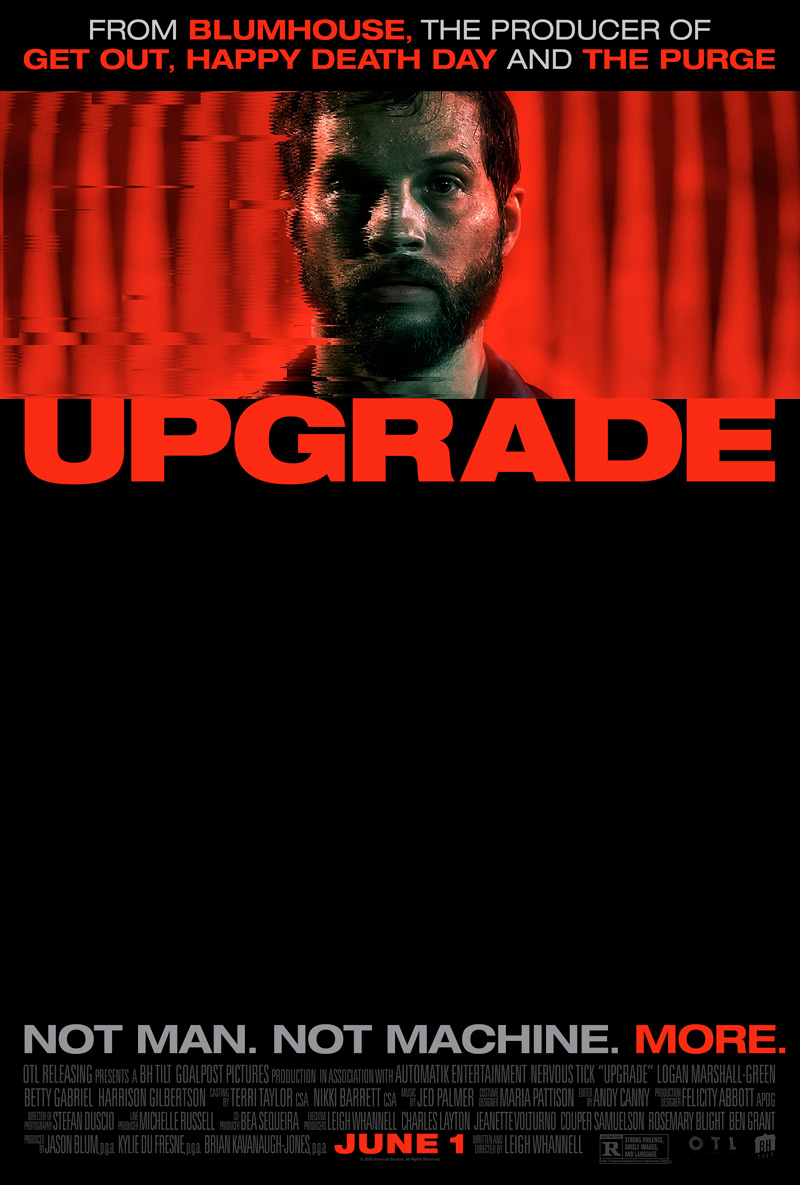
Black Mirror on crack. That is precisely what Blumhouse’s Upgrade can be likened to. Outstanding commentary on the convergence of humanity and technology that provides many thought-provoking moments. Best known for its horror, this action thriller from Blumhouse will have you on the edge of your seat the entire time. Rooted in classic science-fiction, this thriller will also deliver a healthy dose of dark comedy, heart-pounding action, and acutely shockingly violent scenes. Writer-director Leigh Whannel crafts a brilliant motion picture that is one part vigilante Robocop and another part Dr. Frankenstein’s Monster. On the surface, Whannel’s thriller comes across as a B-movie done well, but it contains prolific content that will likely inspire conversations about the relationship between humanity and technology. Perhaps it was not the intention of Whannel (co-creator of Insidious and Saw) to write a motion picture steeped with commentary on the human condition and a harbinger against allowing technology to fuse with our minds and bodies, but there is certainly material here to discuss those deeper topics. Bumhouse’s Upgrade is certainly a big screen experience, so catch it while it is there!

Set in the not-so-distant future, cars drive themselves, pizzas can be printed at home, and Alexa is built into your house. After dropping off a completely rebuilt 1980s Firebird Trans-Am at a client’s hosue, Grey Trace (Logan Marshall-Green) is left a quadriplegic following a brutal car accident and mugging that also leaves his wife dead. While recovering in the hospital, Grey is approached by a major tech company owner about an experimental surgery that is theorized to enable Grey to regain his motor skills. It worked! Only now, Grey’s realized that he has cat-like agility and reflexes as well as increased strength. With his newfound abilities, Grey seeks to assassinate those he blames for his wife’s death.

Better have an iron stomach in order to watch this thriller, because Whannel prefers shocking moments in abundance. Whereas this film is certainly not a horror–as the intent of the film is NOT to horrify audiences–it certainly contains elements borrowed from horror films in order in increase the level of threat. A director friend of mine from Germany characterized the film has having tones of a John Carpenter movie combined with Drive by Nicholas Winding Refn. Though set in a possible near-future, the cinematography, score, and lighting are quintessential 1980s. No surprise as 80s is en vogue in our movies and TV shows. Grey’s “everyman” character archetype enables audiences to identify with him quickly, thus root for him as he takes the law into his own hands to avenge the brutal death of his beloved wife. It’s the simple revenge plot that enables Whannel to build a complex character delivering dark humor and visceral violence.

Definitely an entertaining science-fiction thriller! If you enjoy TV shows like Netflix’ Black Mirror and movies like DriveHalloween, Frankenstein, and Robocop, then you’ll certainly like Blumhouse’s Upgrade.

Sinister Summer: “A Nightmare on Elm Street” (1984) Retrospective Review

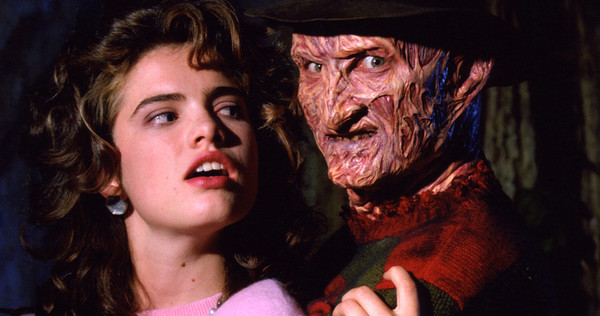
Summertime often means sleep away camps, beach trips, road trips, and more. So many horror films take place during the summer and others serve as material for ghost stories around a campfire. This summer, I thought I would have a shortrun series on some of my favorite horror films that I’ve titled Sinister Summer. With the Friday the 13th next month falling on the precise day that the original Friday the 13th movie takes place and it being Jason Voorhees’ birthday, I first thought I would take a look at the original movie. But then I figured, why not do a retrospective on other horror films during June, July, and August? First up on the Sinister Summer series is my favorite slasher series A Nightmare on Elm Street featuring my favorite horror icon Freddy Krueger. Unlike with other slasher icons who hide behind masks and never speak, I consider Freddy to be the most terrifying because he can talk to his victims and attack you in your sleep–a time in which you are most vulnerable. Moreover, dreams are a private time and he invades that sacred scape. Furthermore, we don’t pay much attention to the actor behind other icons such as Jason, Leatherface, and Michael but actor Robert Englund is synonymous with Freddy because we get to appreciate the actor’s performance, charisma, and enthusiasm. Let’s get started.

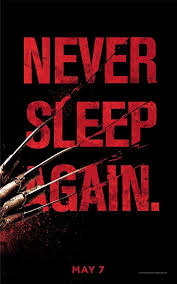
1, 2 Freddy’s coming for you; 3, 4 better lock your door, 5, 6 grab your crucifix, 7, 8 gonna stay up late, 9, 10 never sleep again. If that jingle still sends chills down your spine, you’re not alone. Writer-director Wes Craven’s nightmare on screen has been terrifying audiences for more than 30yrs and has even had a crossover with Jason Voorhees. Beyond the silver screen, the Nightmare on Elm Street (NoES) franchise has been featured at Universal Studios Halloween Horror Nights, interactive media (video games), and Robert Englund reprised his most famous role in the Halloween episode of The Goldbergs [in October 2018]. Inspired by a series of articles in the LA Times; three small articles about men from Southeast Asia, who were from immigrant families, who died in the middle of nightmares—and the paper never correlated them, never said, ‘Hey, we’ve had another story like this.” From that short series of articles came the franchise that we know and love today. But there is so much more to NoES than the fact it was inspired by truly unexplained deaths during nightmares. I’ve written before that the horror genre is the best genre for creatively exploring the human condition, questioning standards and observations, providing different perspectives on sociologically, exploring psychology, heteronormativity, and more, often in terrifying ways to get you to think, and NoES certainly gives us lots of material to talk about. At its core, NoES provides ample opportunity to discuss the distinction between dreams and real life, manifesting in the actions of the teens in the film; furthermore, the events of the film transgress the boundary between imagination and reality that provocatively toy with the audience’s perceptions of the real and imagined. It’s like an episode of The Twilight Zone on crack.

On the surface, it appears that the only motivation of Freddy’s kills and trauma-inducing actions is revenge–plain and simple. After all, he was burned alive by the parents of the Elm Street teens. And so he takes his revenge out on the teens and occasionally their parents. Albeit revenge is a classic motivator, it lacks substance; however, there is much more to Freddy and the NoES series than revenge. What truly separates classic Freddy from new (remake) Freddy and from Michael and Jason is his sick commitment to showmanship. It’s just about the kills, it’s about putting on a show for his own amusement. Almost exclusively attacking teenagers, Freddy’s attacks on the mind and body can be interpreted as being symbolic of the various and often traumatic experiences encountered by young people. Our central character Nancy is the straight-laced strong-willed teenager that experiences social and sexual anxiety around her peers and parents. Clearly she is someone who has had a strong relationship with her parents–especially her father–but that relationship has become strained due to her parents becoming increasingly disconnected from her through abuse of alcohol, pills, or simply not being present. One could go so far as to assess that the parents serve as opposition to the goal of defeating Freddy and survival.

Way before the proliferation of YA movies today and unlike typical slasher films, Craven makes it a point to place the power of survival into the hands of the teenagers. He then transfers the importance of physiological control to psychological control over the unconscious mind and that which induces fear. The ability to defeat Freddy lies within the mind of Nancy. And of course, Dream Warriors places that power into multiple minds. Originally Wes Craven wanted Nancy’s entire experience to be one big nightmare but New Line Cinema wanted a darker, more macabre ending in order to pave the way for sequels because that is there the money is. Just like John Carpenter desired for Halloween to be ONE film, Craven originally desired for NoES to be one and done. Fortunately for us, both have become hugely successful franchises. However, many agree that the originals (or even extended to the first 2-3 films) are the timeless ones.

Freudian imagery and analogies are in no short supply in NoES. Even more so than in other horror films where sexual content is common, the manner in which it is used in NoES is symbolic of Freudian themes that are manifested in the manner by which Freddy stalks, toys with, and kills his prey. For the most part, the Freudian imagery is shown through a sexual context in threatening and mysterious ways that play with the teens’ perceptions of their reality versus a nightmarish imagination. Each sexual image or action is representative of some type of trauma to the body that is connected to the mind and thus becomes part of the subconscious that impacts thoughts and actions.

The various scenes that take place within the dreams of the teenagers quite possibly represent Craven’s own nightmares or perhaps even your own. Just like you might talk to a therapist about a recurring dream or nightmare in order to interpret the imagery and meaning, Craven may be working through his own dreams on the screen. The dreams and Freudian symbolism are what separate NoES from the likes of Halloween. Strip away the dreams, and you have a slasher who kills teenagers. These dreams give NoES depth, and this dimension is what beckons us to face the uncanny and pleasurable unpleasures of this film. Importantly, cinephiles and horror enthusiasts should note that the dreams never end. Evidence of this occurs at the end of the film. In terms of Freudian terminology, there is sufficient evidence in the film to suggest that Freddy represents the id (the part of the mind in which innate instinctive impulses and primary processes are manifest). He acts impulsively, killing those who are connected to the ones who burned him alive in that boiler room after discovering he was a child killer (although the original script refers to him as a child molester). He feeds off fear and comes to life in dreams, full of revenge. Clearly audiences are witnessing a battle between the id, ego, and superego throughout the events of the movie. Unfortunately, there is no real winner in this battle of the mind and body. But there is a winner in the actor Robert Englund. Arguably, he is the biggest single horror genre star since Vincent Price.

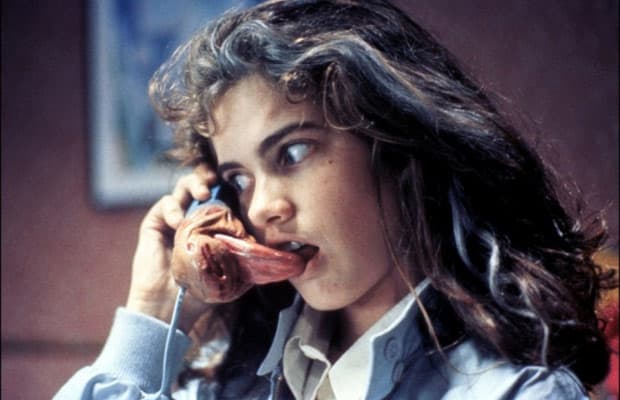
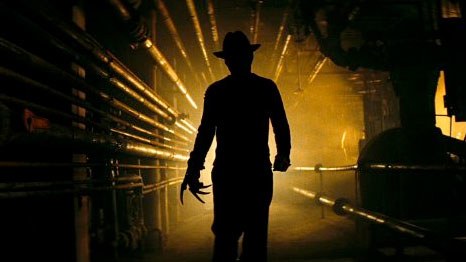
Let’s not forget the comedic components of NoES. Beyond the dreams and thematic depth that sets this film apart from Halloween and Friday the 13th, is the dark comedy. Part of Freddy’s dark comedic charm is the fact that he can talk and toy with his victims in ways that Jason, Leatherface, and Michael cannot. For one simple reason, Freddy is not hidden behind a mask. Freddy has a sense of humor. Strange as it may seem for a slasher, he often integrates humor into his dialogue and actions. This is what makes him fun to watch. The original NoES could be read as the parents being the villains and Freddy being an anti-hero. For all the reasons to be terrified of Freddy, he comes off as a little goofy. As if he just grabbed the first hat, shirt, and pants he saw walking though a rummage sale. His taunting of Tina in the opening scene of the film comes off as taunting, not horrifying. It’s like he’s a cat, toying with his victims because it is way more fun than going in for an immediate kill. Another favorite comedic moment in the movie is when the long, disgusting tongue comes out of the phone when Nancy is talking on it, and Freddy says “I’m your boyfriend now.”

Variety ran a great article on this very subject. Here is what columnist Jason Zinoman stated, “[Freddy] has a weakness for catchphrases (“better not dream and drive”), dopey word play (“feeling tongue tied?,” he asks a victim tied to a bed by tongues) and a predilection for a certain word that makes him sound like a catty teenage girl (“Bon appetit, bitch”; “Welcome to prime time, bitch,” etc). But there’s no denying the star of so many nightmares knows how to deliver a line. He sells his stale material with an admirable professionalism—he’s the Jay Leno of serial killers.”

Looking back at A Nightmare on Elm Street and the legacy it inspired, it is clear that this film and franchise has so much to offer those of us who have been watching for years and those who are beginning to explore the fascinating genre of horror. NoES has it all. Comedy, visceral horror, commentary on the human condition, explorations of the subconscious, and more. It’s this delicate balance of all these elements that bolsters the plot and characters, gives us a horror film of substance. A film that is more than cheap thrills and chills.

Ryan teaches screenwriting at the University of Tampa. If you like this article, please subscribe! Follow Ryan on Twitter @RLTerry1 and Instagram @RL_Terry for more on movies, theme parks, and entertainment news.