“No Escape” movie review

NoEscapeLook for an escape–from this movie. The Weinstein company’s No Escape is an over-the-top, absurd, and confused movie. Often times I can find something positive to say about even the worst of films, but this one IS the exception. Rumor has it that this movie was almost nixed from a theatrical release, and I can easily understand why that is. This film has no idea what it is, and tries to fit the tropes of multiple genres. Because of the state of confusion that this movie is in, the plot lacks adequate structure and the pacing is ridiculous. Is it supposed to be funny when people die??? Is it propaganda on not doing business in Asia??? Why are the events in the opening of the movie never explained??? I could go on and on. From the casting to the writing and direction, this film took events that actually happen in that part of the world, and treated them with irreverence and disrespect. Simply stated, don’t get trapped into watching this movie from which there is no escape.

No Escape is about a family that relocates to Southeast Asia for a a bright new future. Jack Dwyer (Owen Wilson) and his wife Annie (Lake Bell) travel with their kids to the other side of the world in order for Jack to take a new job as an engineer with a water treatment company in (most likely) Cambodia. Upon arrival at the airport, they meet frequent British visitor Hammond (Pierce Brosnan) who offers them a ride to the hotel that both are staying in. The morning after Jack’s arrival, he finds himself in the middle of a civil war-like battle in the streets. Unbeknownst to Jack and his family, he and his coworkers are the target along with other Westerners. Virtually trapped in the small Cambodian town, Jack and his family, with help from Hammond, must escape to safety. Only, around every corner there are rebels who will stop at nothing until they see blood flowing from those they see as a threat to their way of life.

As I mentioned in my opening paragraph, there is quite literally nothing positive I can say about this movie. Interestingly, it starts out with an intense scene that sparks excitement and suspense. So, I can understand how this film even got the green light. It did what all screenplays should do–capture the attention by showing something big/important within the first 3-5 pages. I suppose, that is kind of positive. But, had the producers just read the next several pages, they would have realized that this is a travesty of an idea for a film. And casting Wilson in the lead did not help the film’s case any. Unlike the performances in True Story delivered by James Franco and Jonah Hill, that proved these icons of comedy can play serious roles, Wilson just proves that he needs to be confined to comedies, satires, rom-coms, and parodies. The casting choice for Brosnan as the eccentric British traveler was acceptable, but his character also suffers from poor writing and direction.

It is unclear what the message is supposed to be. On one hand, it can be read as a ‘don’t travel to Southeast Asia if you are a Westerner’ but it can also be read as a ‘the West needs to stop exploiting the East.’ Unfortunately, the message/subtext is opaque at best. Instead of treating the plot of this movie with the reverence it deserved, due to civil wars like the one depicted in the movie happen in that part of the world on a fairly regular basis, the movie plays it too close to a satire or dark comedy. It never quite crosses the threshold into blatant comedy, but it gets pretty close. There were numerous times that the audience laughed at the deaths of people. And understandably so, because the scenes, actions, and dialog were choreographed in such a way that they begged for chuckles and giggles from the audience. My roommate, who is originally from that part of the world, was made very uncomfortable by the movie due to the lack of respect for what real people face everyday in some parts of the world.

There is a great lack of explanation for most of the scenes and motives in the movie. The events in the opening of the movie are never re-visited, despite the scene that follows states “17 Hours Earlier.” So, I am unsure what the significance was in the slaughter at the beginning of the movie. Furthermore, the entire reason for the revolt against Jack’s company and other Westerners is vaguely explained in some rushed exposition by Hammond. Even after his hurried explanation as to the source of the resentment that sparked violence, Hammond fails to actually explain in such a way that even Jack completely understands. It is like the explanation for the violence was an after thought–just stick it in there somewhere. If the intent of the movie was to highlight the fact that Westerners have been known to exploit the resources and workforce of the East, it should have been done in such a way that the movie did not make a mockery of itself.

Perhaps after this early release, Weinstein will decide to pull this movie from cinemas. I mean, Sony did that with The Interview, even though that movie was fun and entertaining and should have been shown. Much like the Taken movies could be subtitled “don’t leave America,” this movie could easily be subtitled “don’t do business in or visit Southeast Asia.”

“Beaches” Throwback Thursday Movie Review

BeachesThe ebb and flow of a lifelong oil and water unchecked friendship. Touchstone Pictures’ Beaches is the timeless modern classic that is the bittersweet story of the friendship between the most unlikely of friends. Much like Universal Pictures’ Fried Green TomatoesBeaches tells two stories: the present day one concurrent with dozens of flashbacks that show the evolution of the friendship between Broadway actress turned pop-star C.C. Bloom (Bette Midler) and wealthy old money Californian Hillary Whitney (Barbara Hershey). Unlike the former, the latter does not play the flashback card as artistically and cinematically as well. Despite the fact that I, along with hundreds of thousands of fans, adore this film immensely, as a film critic, I cannot ignore the blatant misuse and misplacement of the flashback. However, this movie is special in that it can make even those of us who have seen it dozens of times cry every time. I think this is because that the friendship, that is displayed through the narrative, is one that many of us wish we had. Interestingly, this quintessential late 1980s movie is closely aligned with the plots of 1940s friendship sagas complete with feuds, tearful reunions, and fatal illnesses.

Beaches takes us on a journey from the Boardwalk of Atlantic City to the rocky shoreline and beaches of the San Francisco area. Follow unlikely friends Hillary Whitney (Hershey) and C.C. Bloom (Midler) through the mountains and valleys in their lifelong cross-country relationship. Hillary is a girl of impeccable breeding from a wealthy San Francisco family and C.C., an aspiring Broadway child star from the Bronx. After a chance meeting under the Boardwalk, Hillary and C.C. quickly form a lasting friendship built over the course of hundreds of letters back and forth over the years. With both women being strong-willed and stubborn, it is of no surprise that their friendship is one of jealously, competition, and resentment–however–they are always there for each other. As adults, they spend time traveling from coast to coast and despite the valleys, they always return to the mountain peak.

Due to the very lifelong-friendship movie cliches in the narrative, the audience is usually way ahead of the characters on the screen. Despite this utterly predictable plot, the audience is sucked in at the same time because of the personalities of the characters and the magic that both Midler and Hershey bring to their respective roles. The movie is pretty well straight forward and seldom deviates from what is typically expected of melodramas. It is up to Midler and Hershey to hold the attention of the audience, much like actors on a stage, because the writing and directing is very par for the course. I would venture to say that if the two lead actresses were replaced by any two other performers, that the movie would most likely not have the high place amongst modern American dramas that it does in the library of American cinema.

The Divine Miss. M’s musical talent is definitely showcased quite well in the movie, and is one reason the movie has stood the test of time that it has. For the last nearly three decades, scores of best friends have cried together while painting each other’s toe nails and drank lots of wine while watching this go-to film. Although bordering on unrealistic expectations of a lifelong friendship, the movie successfully shows us how even the best of friends can argue, fight, and still return to each other in times of need. There is something to be said about a friendship that can stand the trials and tribulations that this one does. Although Beaches lacks the spontaneity of real life, and is nearly completely constructed out of other movies, it has and will continue to be one of those films that epitomizes the idea of devoted friends and dedication to a relationship. And, who doesn’t love “The Wind Beneath My Wings”???

“True Story” movie review

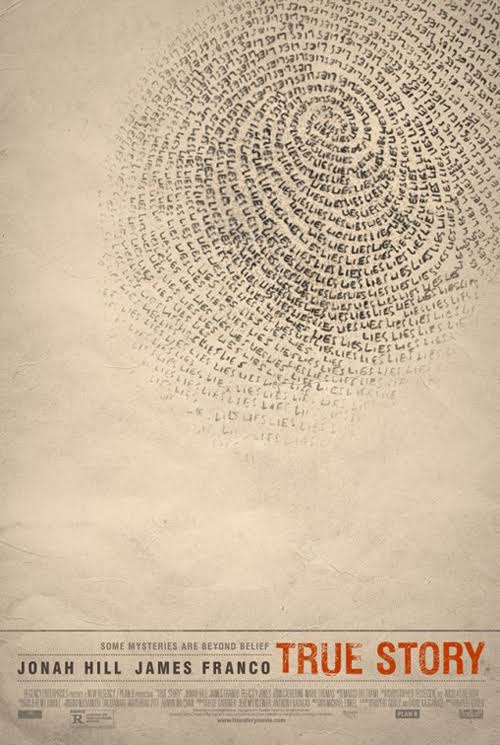
True StoryDoes everyone deserve to have their story told? Fox Searchlight Pictures’ True Story starring Jonah Hill and James Franco is the type of mystery/drama cinematic work that sucks you in from the opening scene. It’s like a good mystery novel that you can’t put down. This movie slipped past a large portion of patrons of the temple of moving pictures and critics, including yours truly. At the recommendation of a friend of mine, I watched it and found it to be an exemplary movie that combines the best of a gripping mystery and pairs it with pedigreed acting and direction. It was also surprising to see both Hill and Franco in serious roles–very much a juxtaposition to the roles each respectively find themselves in. Director Rupert Goold provides us with an outstanding movie that intrigues and entertains. The cool color pallet and cinematography resemble a David Fincher style of direction. For journalists, authors, or even university researchers, this movie adds a self-reflivity element to the plot steeped in the idea of telling a story.

After years of having stories grace the covers of notionally syndicated magazines and news papers, award-winning New York Times journalist Mike Finkel (Hill) winds up disgraced after publishing a story that was was unethical in its presentation. Following his relation to Montanna, Finkel is presented with a high-profile case of Christian Longo (Franco), a man accused of murdering his entire family. Skeptical at first, Finkel is soon confronted with a multifaceted story that screams to be published. The more Finkel delves into the mind and history of Longo, the more he is intrigued by the events and actions that led Longo to be accused of the horrendous crime. Striking up a deal to teach Longo how to be a writer, Finkel takes the opportunity to write a best-selling novel in order to get back into the gam; only, he may have encountered more than meets the eye, and wrestles with the question: how to tell a true story? Sometimes a “true” story contains far more than could have ever been anticipated.

Gotcha! Like an excellent mystery/drama should, True Story contains a fantastic “gotcha” moment during the third act. Beyond the mystery at hand, there is a manipulation of facts and emotions that will catch you off guard and cause you to question and analyze the story in such a way that you did not see coming. I don’t know about you, but when I watched it, I felt the movie had a fair amount of a Hitchcockian feel about it. Just when you think you have it figured out, then you have to rethink your entire perception of past events and plot devices. You will likely ask yourself, ‘what is the true story being told here?’ This dynamic plot is three fold. You have the story of the alleged murders, the story Finkel is writing about Longo, and the movie itself which captures the over-arching story of the relationship between Finkel and Longo. This is a true story based on the true story which is based on another story. At each turn, you are sucked in deeper and deeper until you are not sure who is deceiving whom.
The cinematography and direction are both outstanding. Couple those elements with the excellent acting and writing, and you have a fantastic mystery/drama that continues to entice you as you watch it. A very positive note on the plot of this movie is the commitment to visual storytelling. From the moment the movie opens, the audience is shown the director’s commitment to using the magic of moving pictures to tell this story. So often with mysteries, it is necessary for the characters to engage in prolific exposition in order to help the detectives/journalists or even you as the audience member to piece together the puzzle. Fortunately, Goold and Finkel (as we wrote the story based on his encounters with Longo) all the characters to evolve naturally and dialog with one another in such a way that they enhance the plot and not speak their way through it.

If you enjoy murder-mysteries or investigative journalism, then this is definitely a movie for you. Despite the fact this movie flew under the radar, it is a wonderful example of how a true story can be more interesting and gripping than the best work of fiction. If for no other reason, you should watch this movie in order to see a different side to Jonah Hill and James Franco as they demonstrate their ability to reach beyond the comedies and satires they are so often associated with.

“The Gift” movie review

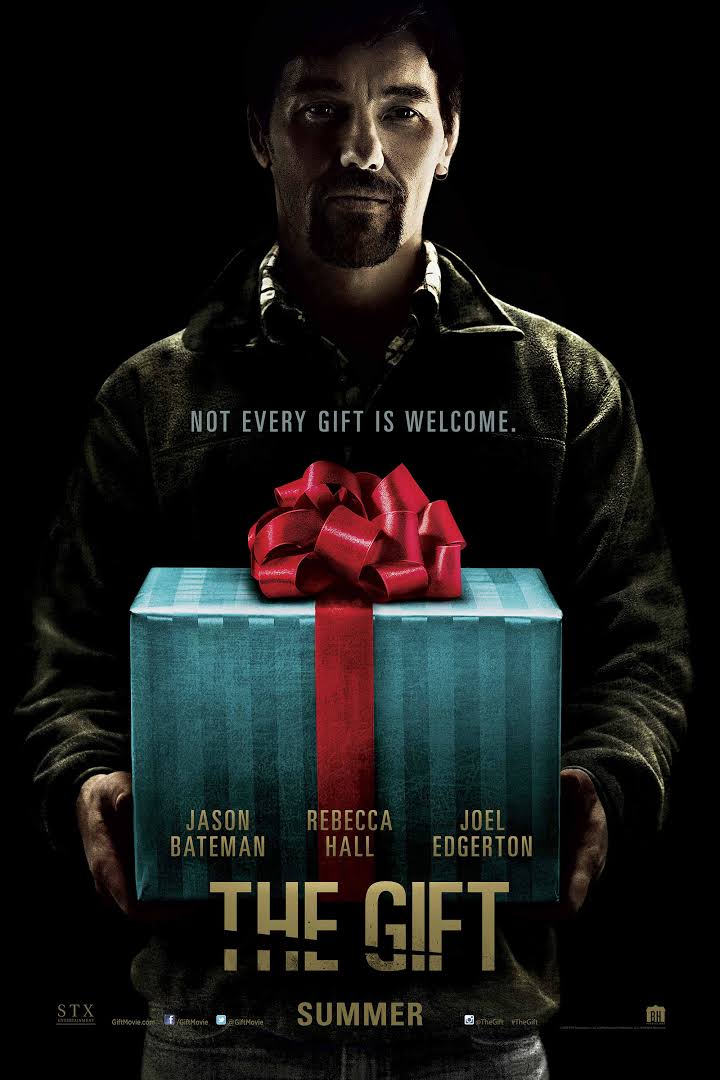
TheGiftWho knew a slow-burning plot could be well-paced at the same time. The Gift is the latest movie released by Blumhouse and performed quite well over the opening weekend. Although billed as a suspense/thriller/stalker movie, it plays as a dark drama with a few intense jump scares. Unlike many movies in this sub-genre of horror, this one is surprisingly well-directed and written. In fact, there was only one exchange of dialog that I felt was extremely OTN (“on the nose,” meaning stating the obvious). Structurally, the plot is solid and leaves very little time for the audience to grow restless. Another interesting component to the movie is being predisposed early-on to side with and feel particular ways about the respective characters; but then after some big reveals, you begin to question your allegiance and favoritism. Perhaps you may find yourself rooting for whom you first admonished. There is much that is left up to interpretation, but not in a way that leaves you feeling negatively about unanswered questions. It’s one of those horror movies that encourages you to think differently about situations and characters.

The Gift is about Simon (Jason Bateman) and Robyn (Rebecca Hall) who move to LA for Simon’s new job. Relocating from Chicago, Simon and Robyn are excited to buy their new mid-century house and develop a life in a new city (which is actually childhood home of Simon). During an ordinary shopping excursion to a homewares store, the couple runs into a former high school classmate of Simon’s named Gordo (Joel Edgerton). After several conversations and a dinner invitation, Simon begins to suspect that there is something not quite right with Gordo and tells Gordo never to visit them again. Despite the harsh treatment from Simon, Gordo leaves gifts for the couple on their front porch, only some gifts should remain wrapped.

Other than a couple jump scares and eerie music, the movie is more of a mystery/drama than a thriller. It lacks that visceral thrill that curdles the blood throughout the movie. But despite that, it’s incredibly well paced and written. The excellent direction did not go without notice. Often times, movies that feature the director in a principle acting roll suffer because it is very difficult for a director to focus on orchestrating the storytelling and acting at the same time. Joel Edgerton is nearly unique in his demonstrable ability to successfully tell a visual story and deliver excelling acting. My only negative critique to the writing and the directing is the blatant absence of a climax/showdown. I was expecting something big to happen toward the end of the movie, in which the culmination of all the reveals and investigations come to fruition; but I was disappointed and felt unsatisfied with the resolution. Even though this is a different take on the whole stalker concept, I feel that the plot should have included a showdown in order to add a definitive thrilling element to the story.

Sometimes I think I know how a movie is going to play out; and often times, through my research and productions of my own, feel confident in my ability to read a movie through the trailer and the advertising. Not the case with this one. Honestly, I was expecting another Lifetime movie trying to make it big in the cinema (much in the vein of January’s Boy Next Door); however, I was pleasantly surprised and mostly happy with how this one played out and how well it was directed. It definitely leaves you to interpret actions, in the movie, for yourself and it also contains some very cool symbolism and subtext.

“Mission: Impossible–Rogue Nation” movie review

MI5Mission: Resurgent. The fifth installment in the Mission: Impossible franchise is surprisingly good. Ordinarily, this far into a franchise, the stories and plots can begin to suffer; but, Paramount Pictures continues the TV series turned cinema powerhouse with great promise for a continued successful run. I don’t think the Mission: Impossible library will ever have quite the allure that James Bond has, but it fairs better than the Bourne franchise. All three definitely perform well, but Mission: Impossible is unique in that Tom Cruise truly sells the movie. Unlike in Hollywood’s Golden Age (~1920s-50s) when particular actors were truly regarded as stars and would essentially sell the movie to audiences and investors, most of today’s movies are not built on the backs of particular fixtures in the star system. There are a few exceptions out there, but Tom Cruise is definitely an actor that is as close to an old-fashioned movie star as we can see and have in contemporary cinema. If you’re looking for a great popcorn movie that you can just chill-ax at, then checkout the latest movie in this unkillable franchise.

With the IMF now disbanded and Ethan Hunt (Tom Cruise) out in the cold, a new threat — called the Syndicate — soon emerges. The Syndicate is a network of highly skilled operatives who are dedicated to establishing a new world order via an escalating series of terrorist attacks. Faced with what may be the most impossible mission yet, Ethan gathers his team and joins forces with Ilsa Faust (Rebecca Ferguson), a disavowed British agent who may or may not be a member of this deadly rogue nation. (IMDb, 2015).

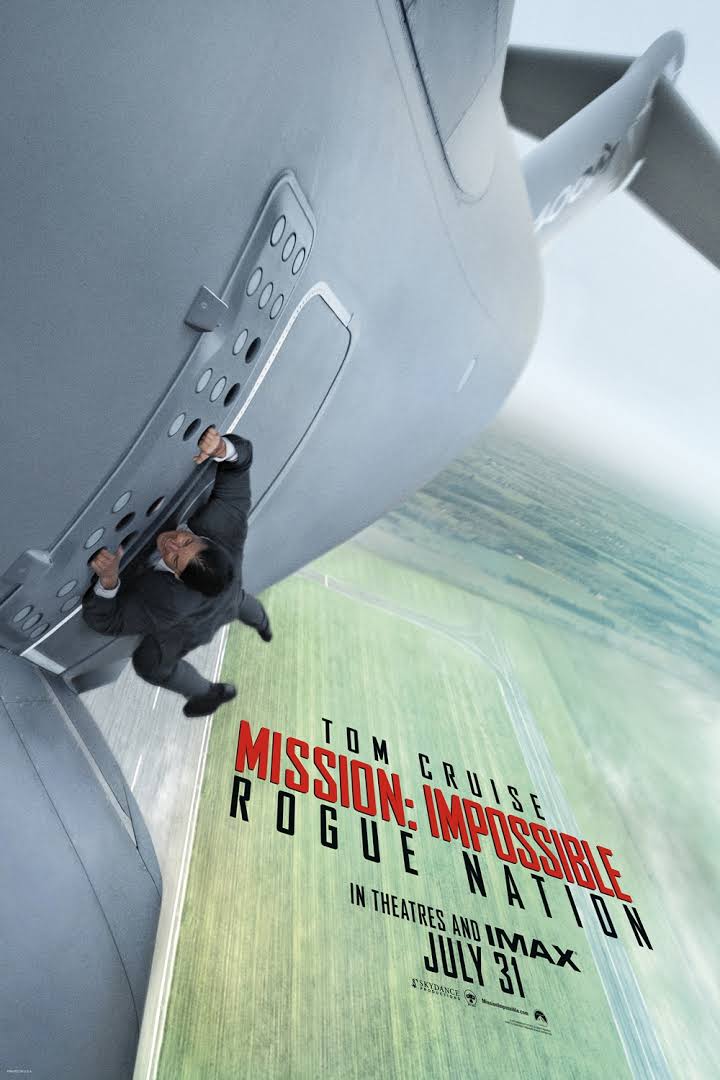
Due of the very nature of these movies, I don’t feel it necessary to pick apart the plot because it is purposely high concept and requires the audience to engage in a momentary suspension of disbelief in order to enjoy the action and adventure. That being said, the movie is pretty solidly acted, written, shot, and directed. I was a little disappointed in that the most impressive sequence of events, involving the plane taking off with Ethan hanging on for dear life, is right at the beginning of the film and everything else pales in comparison. It follows a fairly standard order of tropes common to high concept espionage-action-adventure films. Despite the very contemporary nature of this espionage movie, there is a classic feel that is successfully woven throughout the narrative.