Delivers on atmosphere and tension, but the characters are largely one-dimensional. The solid lead and chief supporting cast do their best to convince audiences there is more here than what you actually get. Who’s even the audience for this???
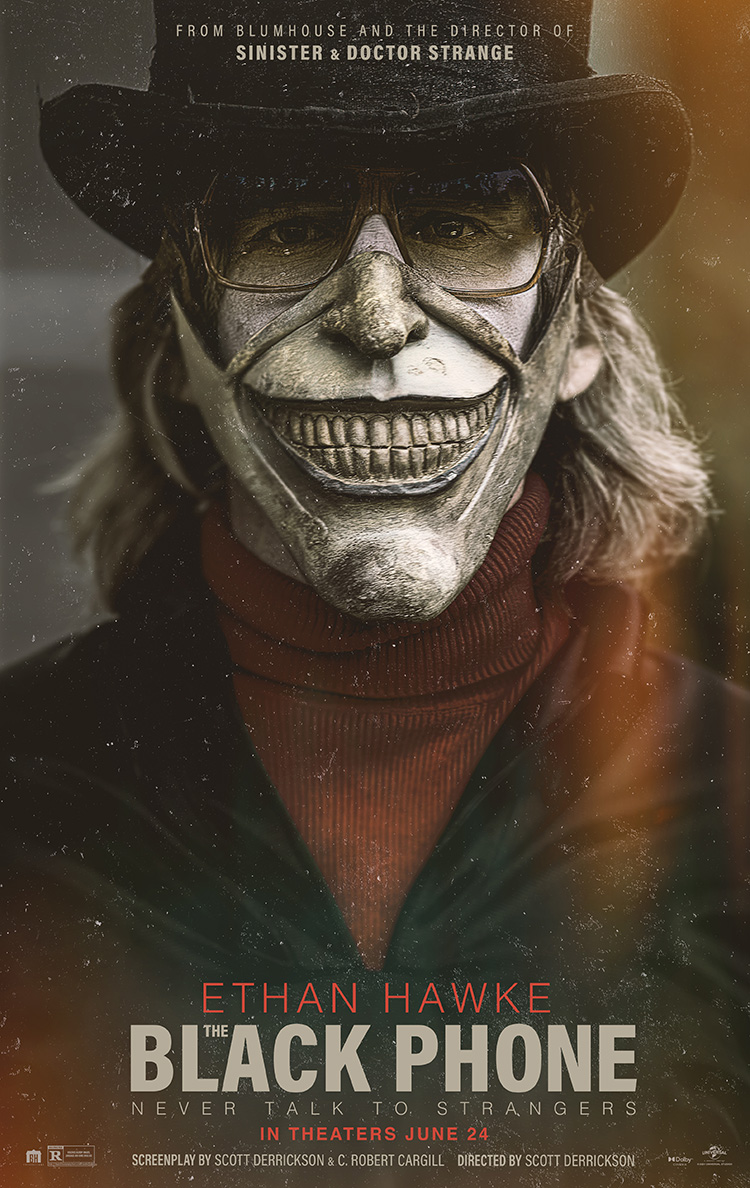
Blumhouse sets out to terrify audiences with their summer horror offering; and while it has some fantastic moments of tension and an ominous atmosphere, it fails to deliver on both plot and character. In a manner of speaking, writer-director Scott Derrickson, took a page out of the typical A24 handbook, and place far more emphasis on aesthetics than story.
Finney Shaw is a shy but clever 13-year-old boy who’s being held in a soundproof basement by a sadistic, masked killer. When a disconnected phone on the wall starts to ring, he soon discovers that he can hear the voices of the murderer’s previous victims — and they are dead set on making sure that what happened to them doesn’t happen to Finney.
On one hand, this movie would’ve been more enjoyable had it really leaned into the camp factor that is present, but because of the subject matter, an intentional camp approach would have been even more tasteless than this movie already is. What camp would’ve afforded is overcoming plotting problems. After all, we don’t watch campy horror movies for the brilliant plotting. But when you take, what should’ve been camp, and make it something to be taken more thoughtfully or seriously, then it suffers from identity crisis and is relegated to something to perhaps ben seen once, then forgotten shortly thereafter.
Our lead cast struggles to connect with audiences because of how unrelatable they are. Films such as Stand By Me work across ages because of how relatable the boys are. Moreover, the dialogue for the all the characters is lazy and base; nothing about the way these kids speak or act feels even remotely believable. Furthermore, the central conflict of kidnapping goes to incredibly dark, cringeworthy places that are borderline inappropriate for the age group of our lead cast. While the subject matter of the film is for 17+, in my opinion, the characters do not connect with that audience.
The release time of this movie is bothersome as well, because it was Father’s Day on Sunday, yet we have two sinister examples of adult men whom each have respective father issues. Tasteless. In an era in which it is increasingly important to showcase healthy father-child relationships, this film seeks to undermine any efforts to shift the predominant and unhealthy narrative spun over the last couple of decades. There are far more great men and fathers out there than abhorrent ones. Let’s write those stories. For more on the toxic ways of how men are portrayed in TV and film, checkout my article The Man Vanishes.
Ryan teaches Film Studies and Screenwriting at the University of Tampa. If you like this article, check out the others and FOLLOW this blog! Interested in Ryan making a guest appearance on your podcast or contributing to your website? Send him a DM on Twitter or email him at RLTerry1@gmail.com! If you’re ever in Tampa or Orlando, feel free to catch a movie with him.
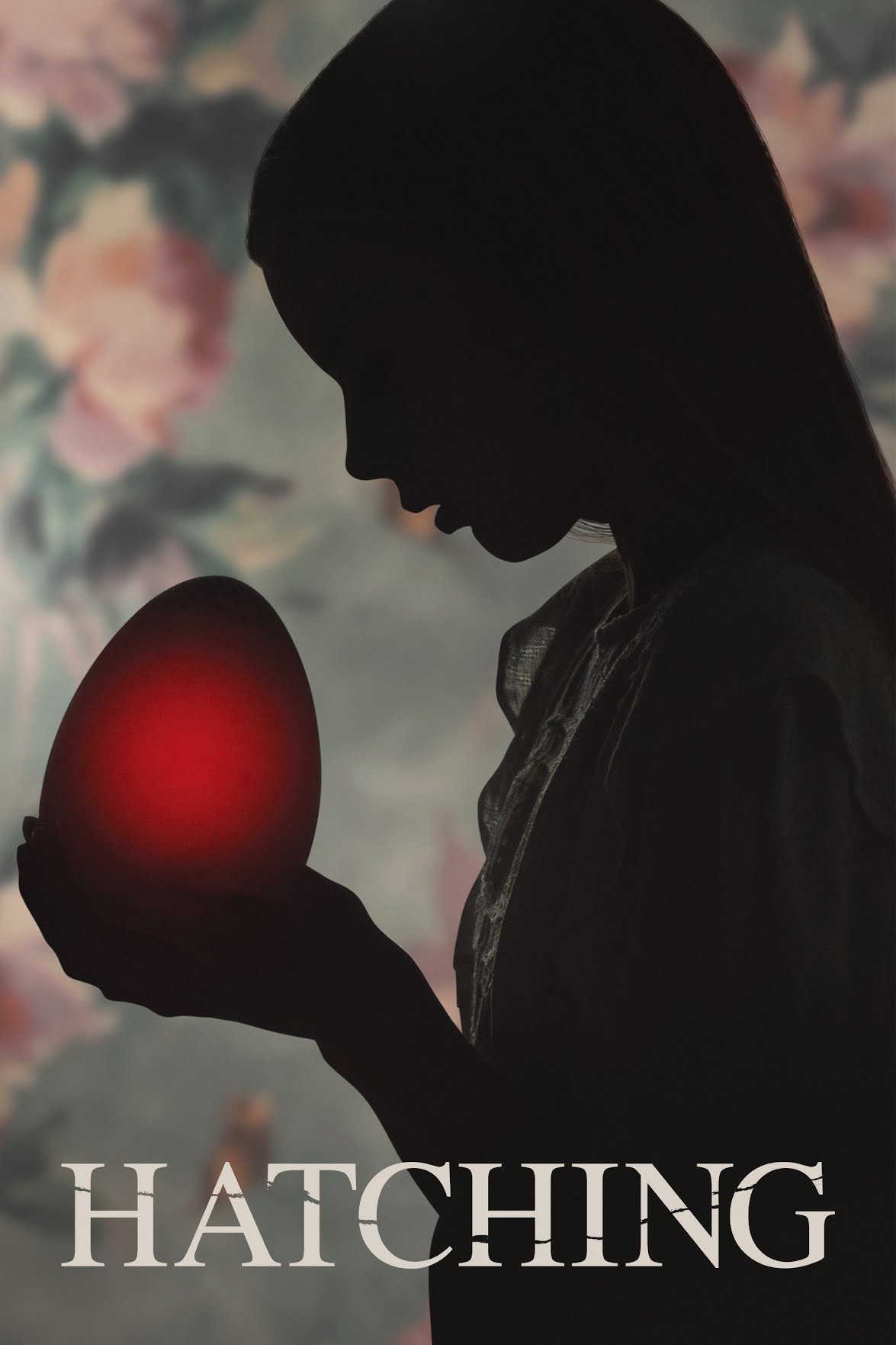
A provocative exploration of the deadly consequences of image obsession and the dangers of forcing others to meet your expectations–hatching them in your own image. Director Hanna Bergholm delivers more than a spine-chilling social commentary on the dark side of social media influencers, Bergholm delivers an inventive cinematic exercise that shines in both form and function. Terrifying puppetry is back! Most of the buzz going into this film was on the use of practical puppetry for the bird-like creature, and that buzz is well-earned! Not since Jim Henson’s The Dark Crystal have we witnessed such nightmarishly beautiful puppetry on the silver screen. Upon the first appearance of the the avian creature, is was clear that Bergholm took inspiration from Henson’s Skeksis in all the best ways possible. More than a showcase of practical effects, this film delivers a relatable coming-of-age story, thematically rich, and will have you engaging in internal monologues on topics such as adolescent anxieties, social media influencers, and the obsession with image.
Tinja is a 12-year-old gymnast who’s desperate to please her image-obsessed mother. After finding a wounded bird in the woods, she brings its strange egg home, nestles it in her bed and nurtures it until it hatches. The creature that emerges soon becomes her closest friend and a living nightmare, plunging Tinja into a twisted reality that her mom refuses to see.
So often, when the topic of the dark side of social media is explored, it’s explored through the mind and eyes of kids and young adults; however, Hatching subverts our expectations by exploring this subject from the perspective of Tinja’s mother. Tinja’s mother is obsessed with what her followers think of her and her family, and this obsession manifests itself in the form of her social media persona and living out her athletic dreams (as a former figure skater who met with an accident that permanently injured and scarred her leg) through her daughter’s gymnastic aspirations. She pushes TInja, not to be the best she can be, but to be the best she (her mother) wants Tinja to be; it’s to glorify mother not daughter. In essence, Mother is attempting to hatch Tinja in her own image, but it goes horribly wrong. Tinja struggles to meet her mother’s expectations for her life, and this anxiety is manifested in the hatching of the avian creature. it isn’t long before Tinja realizes that she has hatched a monster. I love how fantastically ominous the mise-en-scene is!
The special effects and makeup teams should be particularly proud of their accomplishment. In an age where a bird-like monster would have been CGI, this team remained committed to practical effects. And it’s those effects to give the monster incredible dimension–cant’ replace the way real light bounces off real objects and into the camera lens. In the performative dimension of the film, the whole cast demonstrates excellent chemistry and the fake smiles add immensely to the inauthentic uneasiness of the characters. Bergholm successfully build the tension throughout the film, earning every emotional release! Unlike the prolific number of arthouse horror films that forget that the film needs to tell a good story expressed in addition to being visually impressive (a’chem A24 and Neon), this arthouse horror film looks great and delivers a thoughtful story expressed through well-structured plotting. It is both accessible by general horror audiences, but provides the more complex subjects for those that want to to the yolk of the matter.
Ryan teaches Film Studies and Digital Citizenship at the University of Tampa. If you like this article, check out the others and FOLLOW this blog! Interested in Ryan making a guest appearance on your podcast or contributing to your website? Send him a DM on Twitter or email him at RLTerry1@gmail.com! If you’re ever in Tampa or Orlando, feel free to catch a movie with him.
A throwback to classic Universal Monster and Hammer Horror! After it was received positively at Sundance, The Cursed received a theatrical release. I was first cued into this film after seeing many positive comments on Film Twitter, so naturally, I had to check it out! From it’s foreboding atmosphere to its less is more approach with the werewolf-like creatures and the creepy orchestral score, fans of classic supernatural monster horror will undoubtedly find immense enjoyment in this film. Director Sean Ellis pulls out all the in camera stops in order to craft an incredibly haunting, intense film that is sure to become one of the best horror films of 2022, if not amongst the best in the last few years. Although the creatures are seldom seen on screen (excellent move), when the audience does see them, it sends chills down the spine. While the film is not frocked with violence, in terms of qualtity, it’s rather subdued, when Ellis delivers a kill or wound, he deliver acutely in spades–blink and you’ll miss some of them. That’s the beauty in this film, it does not rely upon violence to carry the film; rather, it relies upon characters and the thoughtful plot. In terms of the screenwriting, I did find the beginning of the first act to suffer structurally (and I attribute this to what I interpret as Ellis’ intentional decision to communicate to the audience that this is a thoughtful horror film). But after the rocky start, the film finally lays into what it does well–thrill through moving the horror from the screen into the mind of the audience. Aesthetically, the film will remind you of Barry Lyndon meets The Wolfman meetsBurnt Offerings. For fellow sedentary adrenaline junkies (the psychological description for horror fans), The Cursed will satisfy everything we want out of a werewolf film.
In 19th-century France, a man arrives in a remote country village to investigate an attack by a wild animal. However, he soon discovers a much deeper and sinister force that has the manor and the townspeople in its grip.
A central theme in this horror film is taken directly out of the very roots of German and American Horror films: the fear of the other. By extension, some may closely read the film as a social commentary on colonialism (an exploration of postcolonial theory). The theme of fear of the other is coupled with the corruptive nature of greed and classism. Together, these themes give The Cursed a substantive nature that makes this film rewatchable. Without getting into spoiler territory, there is one sequence that I want to highlight, that is one static shot; however, it’s takes an emotional toll on our minds as we watch atrocities unfold from afar.
WWI serves as diegetic bookends; however, it isn’t until midway through the film that the opening is connected to the rest of the story, and ultimately doesn’t carry significance until the end when the connection is made. It’s more clever than substantive.
The plotting of the film is straight forward: there is a mythological beast that needs to be killed; however, what makes this werewolf film stand out compared to most others over the decades is how it plays around with werewolf mythology. And this film accomplishes that by getting creative with what we are accustomed to seeing in cinema. Through these strategic decisions, the monster movie feels fresh yet familiar. You may find a little zombie mythology thrown into the mix too. Ellis is clearly a gifted horror filmmaker who knows how to craft original interpretations of classic material without it feeling like a remake or rehash of that which was before. Furthermore, he shows the ability to integrate social commentary into the film without it coming across as a condescending sermon.
If you’re a horror fan, do yourself a favor and watch The Cursed! Perhaps you will leave the cinema wondering if there is something horrible lurking out there in the dark, in those liminal spaces just beyond our line of site; and the terrifying unknown is going to take its sweet time in hunting you down for the kill.
Ryan teaches Film Studies and Digital Citizenship at the University of Tampa. If you like this article, check out the others and FOLLOW this blog! Interested in Ryan making a guest appearance on your podcast or contributing to your website? Send him a DM on Twitter or email him at RLTerry1@gmail.com! If you’re ever in Tampa or Orlando, feel free to catch a movie with him.
Familiar yet fresh. From the duo that brought you the smash hit Ready or Not comes the next instabment in the beloved SCREAM franchise. It’s been just over twenty-five years since Casey answered that fateful phone call from Ghostface and just over a decade since the late, great Wes Craven gifted us with SCRE4M before his tragic passing. And, now audiences are returning to Woodsboro. In a filmscape overstuffed with pretentious, stylized horror films that often forget that plot and characters are more important than the pretty packaging, comes a fresh interpretation of the classical slasher that is sure to thrill you! While the new SCREAM isn’t without its diegetic flaws (but, to go into that would mean spoilers), it is still entertaining and fun. Clearly, the screenwriters channeled the soul of the original SCREAM, a perfect film in my opinion, but put a relevant spin on it in order to resonate with contemporary audiences. What I can say, without going into spoilers, is that this movie has too many characters; to the point that some of them feel like furniture. Where you may connect quickly with the movie is in subtext of the film, which is grounded in a commentary on the slasher versus elevated horror (a term I absolutely detest, as I’ve previously written) and toxic fandoms versus studio execs green-lighting rebookquels or requel (as the movie states). These are the conversations that fans of horror have all the time, and you will find yourself vicariously engaged in the conversations as the characters are having their debates on screen. After the flop that was Halloween Kills, I was anticipating another vapid, pandering attempt to revive a legendary cinematic property. But, I was pleasantly surprised by how much I enjoyed this movie. We didn’t know we needed another SCREAM movie, but turns out that we did.
Twenty-five years after a streak of brutal murders shocked the quiet town of Woodsboro, Calif., a new killer dons the Ghostface mask and begins targeting a group of teenagers to resurrect secrets from the town’s deadly past.
Not only are Sidney, Gale, and Dewey back, but you’ll see some other familiar faces too. Here is where we can directly compare Halloween Kills and Scream (2022). Both movies brought back leading and supporting characters (and actors), but Scream succeeds in developing all of them enough for audiences to care about whether they live or die. Now, Scream does suffer from being overstuffed with ancillary characters, to the point that some are one-dimensional; however, the screenwriters do manage to give each some agency–some more than others. Other than rooting for Sidney, Gale, and Dewey to survive the blade of Ghostface, you may be hard-pressed to truly care whether some of the other characters live or die. Fortunately, as little as you may care about a particular character in this movie, you’ll still find yourself caring way more than you did for the cast of Halloween Kills.
The kills are great! And best of all, it doesn’t devolve into a completely unrealistic bloodbath. Yes, it is a little gorier and violent than the original (or even the subsequent previous sequels), but not overly so. This iteration of Ghostface may not have the one-liners of its predecessors, but Ghostface manages to get some zings in there. Unsurprisingly, there are many homages to the original SCREAM, but there are nods to other horror properties as well–the shower scene from Psycho makes a little cameo, and we spend a great deal of time with the Stab movies. Instead of rules to surviving a horror movie, we have rules to surviving a Stab movie or requel. Dylan Minnette’s character’s name is Wes, which is a great touch! In fact, the entire movie is dedicated to the life and legacy of the late, great Wes Craven.
This movie works because it takes itself seriously as a Scream movie (and by extension, the slasher), but allows itself to have fun along the way. Perhaps Generation Z does not appreciate the slasher for the cultural phenomenon that it was, but this movie may just be the thing to get them interested in discovering just how brilliant and fun slashers are. I feel confident that you will enjoy Scream as much as I did! Yes, I have my plotting and diegetic problems with it, but it doesn’t take away from the fun factor. This movie succeeds where Halloween Kills failed–it never forgot its roots in greatness. It remembered its branding, and stayed the course. Even though it may not be quite as good as SCRE4M, and with the original being peerless, this fifth installment justifies its existence and delivers laughs and thrills. Much like with Wes Craven and Kevin Williamson’s incomparable original, this one also knows what it is, and it rocks it!
And here is where you should stop reading unless you don’t mind spoilers.
Okay, if you’re continuing to read, I will interpret that as consent, and I will talk about elements of the film that involve spoilers. Not because I want to spoil it, but because it’s difficult to talk about the topics I want to address whilst completely avoiding them.
One of the best elements of the original SCREAM is the absolute perfection that the opening excruciating 13-minutes (that’s right 13), which is, in my opinion, the best and most effective opening of a film period. That opening literally does everything an opening should–you know precisely what the stakes are and what the film is about. Anyway. As to whether the opening of Scream (2022) is precisely 13-minutes, I do not know because I was not looking at my watch (but it feels that it could be 13-minutes). But I was eager for the opening for comparative analysis purposes. I wasn’t looking to see if it was as intense or brilliant as the original (because, let’s face it, that’s an overwhelming task), but I was looking to see if we would know everything we need to know and how high the stakes are going to be. Sadly, we learn that Tara (Jenna Ortega) did not die in the opening scene. And it was this poor decision that hung over me for the entire film. Because once we learn that Tara did not die, instantly any of the suspense and high stakes we had were rendered ineffective and futile. Tara should have died because then audiences would have realized that the stakes are high, and that no one is safe from the knife of Ghostface. Suffice it to say, this poor decision did not ruin the movie for me–I still had a lot of fun with it–but the power of the opening was muted and lacked anything memorable.
There are two arguments (or topics) at the center of the new Scream (1) elevated horror versus slashers and (2) toxic fans versus reboots/remakes. What I love about this, is that these two topics are such a part of the #PodernFamily (podcasters) and #FilmTwitter (film pundits and fans on Twitter) pantheon of conversations and arguments on a daily basis, especially when it comes to horror and legacy cinematic properties. Early on, in fact it’s in the opening scene, we are informed of Tara’s taste in horror: she prefers elevated (excuse me while I vomit at the term) horror like The Babadook, Hereditary, and The Witch. She slams slashers like STAB for being schlock devoid. Turns out, she underestimated the power and social commentary of slashers. Perhaps she should’ve spent more time in horror, because then she would’ve learned that horror has always been the most progressive of all the genres–not just in the last decade. Further along in the movie, we witness a debate over fans versus “requels” (wherein a movie is a combination of a reboot and sequel). While I am not a generally fan of rebooting a legacy franchise or tacking on a sequel that we didn’t need cinematically, so much of what is said in the entertaining exchange of the marketplace of ideas is incredibly meta because of how pervasive it is within the film community. And the plot of Scream (2022) plays right into both of the aforementioned commentaries on horror movies.
Of all the kills, my favorite one is right out of Once Upon a Time…in Hollywood. And I’ll leave it at that.
Ryan teaches American and World Cinema at the University of Tampa. If you like this article, check out the others and FOLLOW this blog! Interested in Ryan making a guest appearance on your podcast or contributing to your website? Send him a DM on Twitter or email him at RLTerry1@gmail.com! If you’re ever in Tampa or Orlando, feel free to catch a movie with him.
A phantasmagorical cautionary tale on the cruel predictability of the human condition that’s told through a beautifully orchestrated symphony of exploitation, deception, and just desserts, wrapped in a delicious neo-noir film. In the second big screen adaptation on the 1946 novel by William Lindsay Gresham, del Toro certainly applies his particular cinema stylo to Nightmare Alley, yet delivers a motion picture that stays true to its roots in film noir. Gresham’s book and Edmund Goulding’s critically acclaimed 1947 adaptation are the perfect source material for del Toro’s penchant for dark fantasies. But what this film allows for del Toro to do, that he hasn’t done before, is direct a neo-noir, complete with all the tropes and stylistic conventions. And he’s recently announced that there is a grayscale version of the film, which I will want to check out soon. Del Toro’s update to the dark dale explores characters that are impacted by vicious business practices built around exploitation and deception. Audiences will simultaneously find the story and performances, by the lead and supporting cast, both alluring and repulsive.
In 1940s New York, down-on-his-luck Stanton Carlisle (Bradley Cooper) endears himself to a clairvoyant and her mentalist husband at a traveling carnival. Using newly acquired knowledge, Carlisle crafts a golden ticket to success by swindling the elite and wealthy. Hoping for a big score, he soon hatches a scheme to con a dangerous tycoon with help from the mysterious psychiatrist Lilith (Cate Blanchette) who might be his most formidable opponent yet.
Much like we witness sleight of hand in the carnival acts managed by Willem DaFoe’s carnival barker character, del Toro himself is a master magician. Teaching film history as part of my cinema studies classes reminds me every semester of how the world thought of film as the work of a magician, and I love just how many layers of magic we have within this marvelous motion picture. Just as various characters are playing on the predictability and fears of the audiences within the film, del Toro is toying around with our perceptions of what is really going on. The art of misdirection and illusion is alive and well in Nightmare Alley. Unlike most of del Toro’s previous films such as Pan’s Labyrinth and The Shape of Water, there is neither a monster, in the conventional sense, nor mystical or supernatural dimension in this film other than the magic and mentalism of the metaphoric monsters in the film.
Taking place in the early 20th century at the time when carnival sideshows, with their seemingly endless variety of oddities (still a fun attraction at modern day fairs and carnivals), dotted the rural landscapes, this film is populated with characters that have in one way or another experienced some form of trauma that has prompted them to find solace or absolution in their (exploitive) work as a sideshow performer. And our central character of Stanton (Bradley Cooper) is of no exception. Following the dumping of a dead body and setting a house in an idyllic setting ablaze, Stanton joins a seedy carnival. Although we are never given explicit details as to why he did what he did, it works perfectly because we don’t always need to know what a character’s motivation is. This unknown makes them more terrifying and unpredictable.
From what I have read, there are a few changes from the book that del Toro made in this adaptation, and for all the better! One of these changes is not spending too much time on Stan’s backstory. We learn and see just enough to keep his history ominous–he keeps this film lean. Far too often, nowadays, writers and directors feel compelled to psychoanalyze and delve into all the reasons for immoral or unethical behavior, and somehow try to rationalize and explain. This explanation removes a significant degree of threat. All we need to know is that a trauma affected Stanton to the degree that he killed the source of the trauma in order to start a new life. And the same could be said for other characters and their respectful traumas. But for all their baggage, this ragtag group of sideshow acts forms a close-knit community.
Without getting into specifics, the story follows the character (negative) growth arc model, which is very much in line with many film noir motion pictures. Furthermore, del Toro includes the iconic femme fatale (in the form of Blanchette’s character) and a villainous mob-like boss that is not to be trifled with. Nightmare Alley embodies a cynical soul, which is often a characteristic of film noir. This cynical nature demonstrates two or more opposing forces that are opposite sides of the same coin, both equally corrupt. As Stan is refining his skill and showmanship for what would become his high society headlining mentalist act, he receives a dire warning not to do the “spook” show because it leads to a dark path, a path on which the actor starts to believe his or her own lies.
Through lead characters Stan and Lilith, we witness two strong-willed, cunning individuals that are equally master manipulators. There are few things more dangerous than a con-artist who believes their own spiel, and del Toro takes that dynamic to its inevitable conclusion. While the level of violence and gore in this film are rather subdued compared to his other work, when the gore hits, it HITS! There is one scene in particular that is reminiscent of the Pale Man scene in Pan’s Labyrinth. When you hits all the tropes necessary for a neo-noir, you can then bend the conventions a little in order to maintain your authorship of cinema. For fans of Sunset Boulevard (my pick for greatest film of all time), you will also love the rich character-driven conflict.
The film can be read as a cautionary tale on various systemic societal constructs and practices that prey on the most vulnerable. And many that ascribe to applied postmodernist worldviews, will find this resonating in the film. However, it can also be read through the lens that individuals may find themselves ripe for the picking to be a carnival’s next “geek” by intentionally making decisions that lead them to the carnival barker’s office. When you are in this weakened state, there are systems that will swallow you whole. So, I feel that it’s the opposite: a cautionary tale on what happens when we lead a humanist or nihilistic life; furthermore, this film is a fantastic metaphor on reaping what you sow. If you sow deception, eventually you will reap deception by (1) being deceived by someone or (2) maybe even deceiving YOURself by beginning to believe your own lies. The systems are a symptom of the broken world in which we live, a broken world whose source is, at the end of the day, a heart problem.
Ryan teaches American and World Cinema at the University of Tampa. If you like this article, check out the others and FOLLOW this blog! Interested in Ryan making a guest appearance on your podcast or contributing to your website? Send him a DM on Twitter or email him at RLTerry1@gmail.com! If you’re ever in Tampa or Orlando, feel free to catch a movie with him.