“On Cinema and Theme Parks” (part 6)

My Book

Successful movie-themed attractions (stage shows or rides) create an atmosphere that is often built upon a foundation consisting of confrontation and direct simulation rather than long, sustained narratives. Whether watching a show on a stage or experiencing a ride-like attraction, the park guest is subjected to a series of physical and/or emotional shocks throughout the abridged narrative. Physical movement is also a strong element in an effective and successful movie-themed attraction design. This creates the illusion that the audience member is not only watching the action or horror take place, but part of the story as well. Implementing the use of special effects such as lighting effect or water also improve the guest experience by bringing the narrative to life.
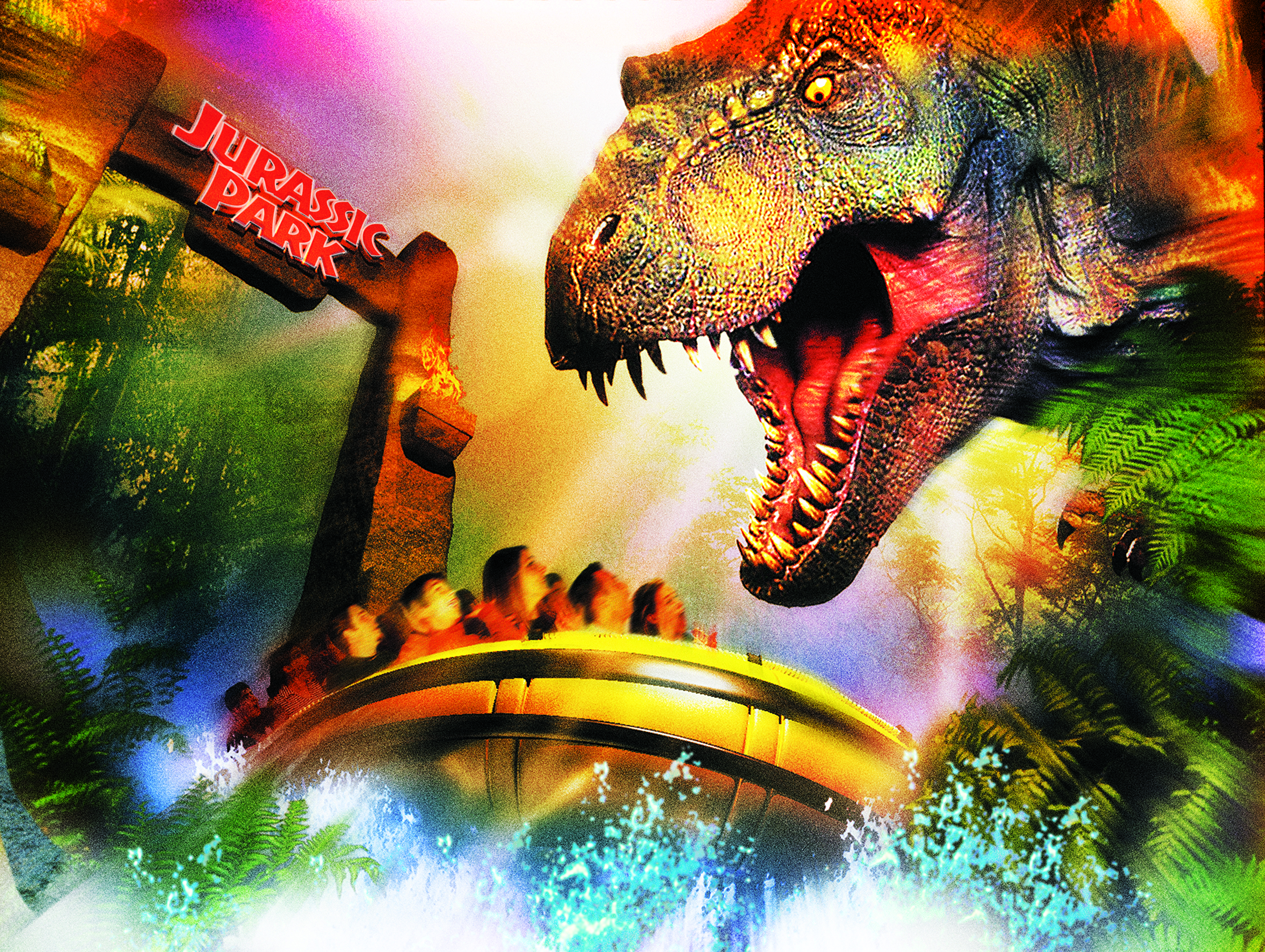
jurassic_park_river_adventureIn the contemporary theme park model, designers seek to create a relationship between the narrative and the audience (or park guest); this is what Geoff King (2000) refers to as “the cinema of attractions.” The park guests want to be transported from a world in which they are spectators to a world in which they are participants in the story. But, themed entertainment has come a long way from its inception into modern society. How the film theme has been fused with theme park attraction design has evolved over the decades to create the convergence and synergy that exists today. This is mostly due to the understanding of spectacle versus narrative. Although these two elements work seamlessly together in a themed attraction, they are not synonymous with one another. An excellent example of a horror/action film that is both spectacle and narrative, and furthermore, is both a film and a ride is Jurassic Park.

A similar example of the infusion of the aforementioned is Jaws. Just as the use of digital special effects (or visual effects) has evolved in film, the use has also evolved in theme parks. Digital (or visual) effects is a broad term, as it covers a range of possibilities that include computer-based or computer-generated effects (Wood, 2002). The “spectacle” of film and theme park rides possesses the ability to transform the narrative, thus adding an extra dimension to the story progression. However, ultimately within the full-spectrum of the elements that make up a film or ride based on a movie, spectacle is subordinate to narrative. Spectacle is needed to dazzle and simulate, but is essentially lifeless without the narrative. (Wood, 2002). Unlike a narrative, which can have great depth, spectacle “is often understood as a particular kind of extended special dimension…depthless, or as having an excess of surface…more image-full than mise-en-scene (meeze-on-syn) everything that appears before the camera and its arrangement, composition, blocking, and lighting] as it accumulates ever more details” (Wood, 2002, 373).
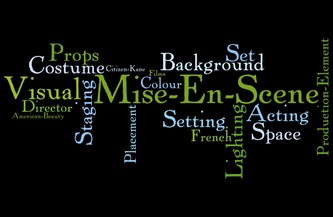
mise en sceneSpectacle should never be relied upon to carry a narrative, but should be considered a useful tool in enhancing the visceral experience of the narrative. Spectacle possesses the ability to be used to create a dynamic time and space through which the narrative expands and can sometimes be manipulated (Wood, 2002). Digital effects can be used to advance the story or comment on the relationship between characters and their respective environments. In terms of theme park attractions, specifically those based on movies, adding spectacle to the narrative of the ride serves to enhance the overall experience of the park guest. The use of spectacle enables the settings, events, and characters to come to life for the park guests experiencing the live movie-based narrative. Effectively used, the guests should feel as though they get transported from the real world to the world of the movie. Theme parks offer escapes from reality; this is also true of most movies. So, by utilizing the tangible benefits of both narrative and spectacle, the designers are successful in creating the illusion that the guest is either witnessing or part of the story.

University of Central Florida professor Andy Milman (2001) further explores this relationship between cinema and theme parks in his writings in the Journal of Tourism (2001). Exploring the infrastructure of the movies, theme parks, and the convergence of the two is a complex research area that is increasingly becoming more important as the movie studios turn to theme parks for revenue, and the theme parks depend on the movie studios for creative direction and expansive guest experiences. In the article Movie Induced Tourism, authors Roger Riley, Dwayne Baker, and Carlton S. Van Doren (1998) explain that movies provide both the objective and subjective material that capture peoples’ gaze and influence them to travel to the places depicted in movies.  The concept of traveling to locations where movies were made has a direct relationship with the concept of designing theme parks based on movies and showcasing the magic behind the movies (Riley et al, 1998). This concept can be seen in some of the most visited parks in the world. One of the goals of a studio like Warner Bros. is to get the fans of the Harry Potter books and movies to the Wizarding World of Harry Potter at Universal Studios Florida; and, by way of the flip side of the coin, one of the goals of the theme parks (mainly Disney and Universal) is to turn park guests into movie audience patrons (Milman, 2001).

You can always find out what you missed by buying my book on Amazon!

Return to the beginning of this series by clicking PART 1

“Batman v Superman” movie review

BMvSMBetter brush up on your comics before watching this movie. If DC set out to produce a movie that was completely different than the Marvel movies, then they succeeded. Batman v Superman leaves you feeling like you are watching a sequel without an original movie. And no, Man of Steel does not sufficiently set up this “sequel.” Imagine if you will, opening a book and starting to read. You are a few pages in, and you realize that there are situations, characters, settings that are unfamiliar or seem out of step. Oh, duh, you started on chapter two by mistake. Just as you flip back to find chapter one, you discover that the pages are missing. DC’s attempt to setup an entire comic universe (Justice League), in one movie, failed miserably. However, you will be hard pressed to find another superhero action movie that is more cinematic than this one. The sound and visual effects blew my mind–exponentially more impressive than anything that Marvel (Disney or Fox) has produced; but that’s Zack Snyder for you. Unfortunately, the man should have assisted a director in crafting a visual story, not attempted to tell it himself. If DC was fighting a losing battle up a hill, now it is fighting that same battle up a mountainside.

Look! Up in the sky. It’s a bird, it’s a plane, it’s a box-office bomb. Two years following the epic battle between Superman (Henry Cavill) and Zod, Metropolis is still recovering from the mass devastation. Affected by this infamous battle, crime-fighting billionaire Bruce Wayne (Ben Affleck) is fully convinced that Superman is a threat to humanity and must be contained or destroyed. Although he is not as young as he used to be, Affleck once again dawns the Batman uniform and sets out on his personal vendetta against the god-like Kryptonian. Feeling the growing threat of Batman, Superman will stop at nothing to defeat Batman and save the city. In an effort to save their respective cities from destruction, Batman and Superman vow to kill one another. While each superhero has it in for the other, Lex Luther (Jesse Eisenberg) is cooking up something in his research park that can defeat gods and titans. It’s a good thing that Metropolis and Gotham are closer together than Tampa and St. Petersburg are (LOL).

Film is a visual storytelling medium, but storytelling nevertheless. The only other more visual medium, one could argue, is comics. And, you better have studied your Justice League universe comics before buying your ticket to this attempt at a Springtime/Easter blockbuster. But unfortunately, that’s all that this movie has going for it–its unparalleled use of phenomenal visual and sound effects to create a fantastically stimulating experience. One problem: where’s the story??? I thought that this was (to borrow from Star Wars: the Force Awakens) “supposed to make things right“? Ironic how Easter is a holiday and season which represents rebirth; and as hard as DC Comics and Zack Snyder tried to rebirth this struggling universe, it still remains in the ground. All the water and fertilizer in the world could not help this Easter lily, for the farmer forgot to plant the bulb. There is little to no exposition in the entire movie. If you are unfamiliar with the story from the comics, you will most certainly feel dazed and confused. DC really needed this movie to tell an excellent story in order to continue to compete with the Marvel movies that are coming from Disney and Fox. After this travesty, there is almost no competition any longer. One can only hope that the next installment fixes things. But, it’s highly unlikely at this point.

Sometimes poor writing can be covered and masked by flashy graphics and stunning cinematography, other times, it can be assisted by an excellent cast. Well, fail once again. The casting only aided in highlighting the fallacies in the plot structure and nearly non-existent, poorly setup story. Before I negatively criticize the majority of the cast, I need to point out what worked for the film in terms of cast. Although I have been informed that he did not portray the Lex Luther from the comics, I firmly hold to that Jesse Eisenberg played the Lex Luther that this film needed and benefitted from. The quirky, psychopathy, childlike, socially awkward, intellectual Lex Luther works for this universe. He was probably my favorite part of the whole movie. He was quite the juxtaposition to other villains that have been in Marvel and DC movies–a refreshing new take. Amy Adams also plays a great Lois Lane. Since I am not familiar with the comics, I am not going to try to compare and contrast her portrayal to that of past Lois Lanes or the ones from the comics. Still, Adams brought about a fantastic charm to the character and she fit in well with Henry Cavill’s Superman.

Sadly, the rest of the principle cast was terrible. Since when did Alfred (Jeremy Irons) become nearly Bruce’s age??? Maybe he is ten years his senior, but that’s pushing it. Alfred is supposed to be a lovable and endearing old man, and Batman’s Jiminy Cricket, so to speak. Neither does Irons fit the age nor the personality traits of Alfred. I sure missed Michael Caine and Michael Gough’s Alfreds. There was a lot of concern when Affleck was chosen to become the caped crusader; and as it turns out, these concerns were valid. He has demonstrated that he cannot fill the cape in the manner in which Michael Keaton and Christian Bale were so successfully able to do. It’s entirely possible that Holly Hunter’s Senator Finch and Gal Gadot’s Wonder Woman/Diana Prince could have been the much-needed support that the film lacked, but their respective characters were severely under-developed. Also, not so much cast as he is character but where did the Kryptonian deformed creature come from??? I think the film tried to explain, but again, it failed. Who cares, though? He made the climax shocking and exciting. A solid match for Superman.

If you want to have your eyes and ears stimulated beyond what you have likely experienced in superhero action movies in the past, then this is the movie for you. Just don’t expect much beyond the mesmerizing surface. Already having a 33% on Rotten Tomatoes, most likely the grade will continue to drop. That being said, I DO believe that if you are a follower of the comics and know your stuff, then you will most likely thoroughly enjoy this film. I warn you; be prepared to be your group’s personal Wikipedia after the movie.

“On Cinema and Theme Parks” (part 5)

My Book

Over the decades, there has been a strong convergence between cinema and theme parks. Studio executives, filmmakers, and theme park designers are working together in ways that serve to support both the movies and the parks that have rides based on the movies. Historically, the beginning of the convergence of cinema and theme parks became apparent in the late 1970s. Following the decline and eventual fall of the original Hollywood studio system in the 1960s, there are some areas that have changed in the production of films (and other entertainment media). According to Allen Scott of UCLA in the writings of Dr. Ralph Casady (1957), some of the changes and transitions dating back to the 1970s are: (1)The penetration of digital technology into all stages of motion picture production (2)The intensified geographic decentralization of production in the greater LA area (3)The proliferation of new markets based on the cross-promotion of intellectual property rights (4)The increased penetration into themed entertainment and video gaming and (5)The merging of, or buying out of major studios by giant multinational media conglomerates (2001). Along with anti-trust government regulation as a result of the Paramount Decision* and the reluctance of big banks to continue to finance motion pictures, film studios were forced to seek new revenues from other sources.

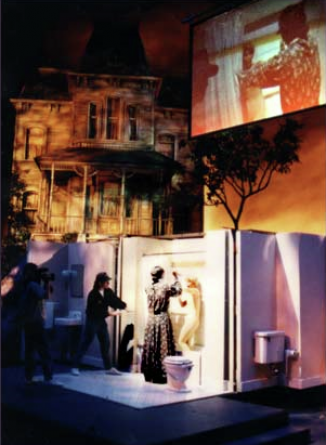
Inside the show building from the former Hitchcock: the Art of Making Movies attraction at Universal Studios Florida.

Inside the show building from the former Hitchcock: the Art of Making Movies attraction at Universal Studios Florida.

More than ever, filmmakers and attraction designers need to know what the cinema patron and park guest both want in order to create a synergistic and dynamic entertainment experience based on a single narrative. The idea is to generate a similar or complementary emotional response during the themed attraction to that experienced by the movie patron during the respective movie. According to researchers Enrique Bigne, Louisa Audreu, and Juergen Gnoth (2004) of Tourism Management, visitor emotions, in a theme park environment, influence satisfaction and behavioral intentions; and, emotions consist of two independent dimensions: pleasure and arousal (2004).  Theme parks are a form of leisure activity because they provide an opportunity for entertainment during an individual’s discretionary time (Milman, 1991). More specifically, movie-based theme parks provide live themed entertainment experiences that immerse the individual into the world of filmmaking or into the narrative itself. As media conglomerates continue to grow and acquire theme park properties (either through the development of new or re-envisioning of old ones) and intellectual property licenses, the popularity of movie-based theme parks will likely continue to grow.

(Check out what you missed by buying my book on Amazon)

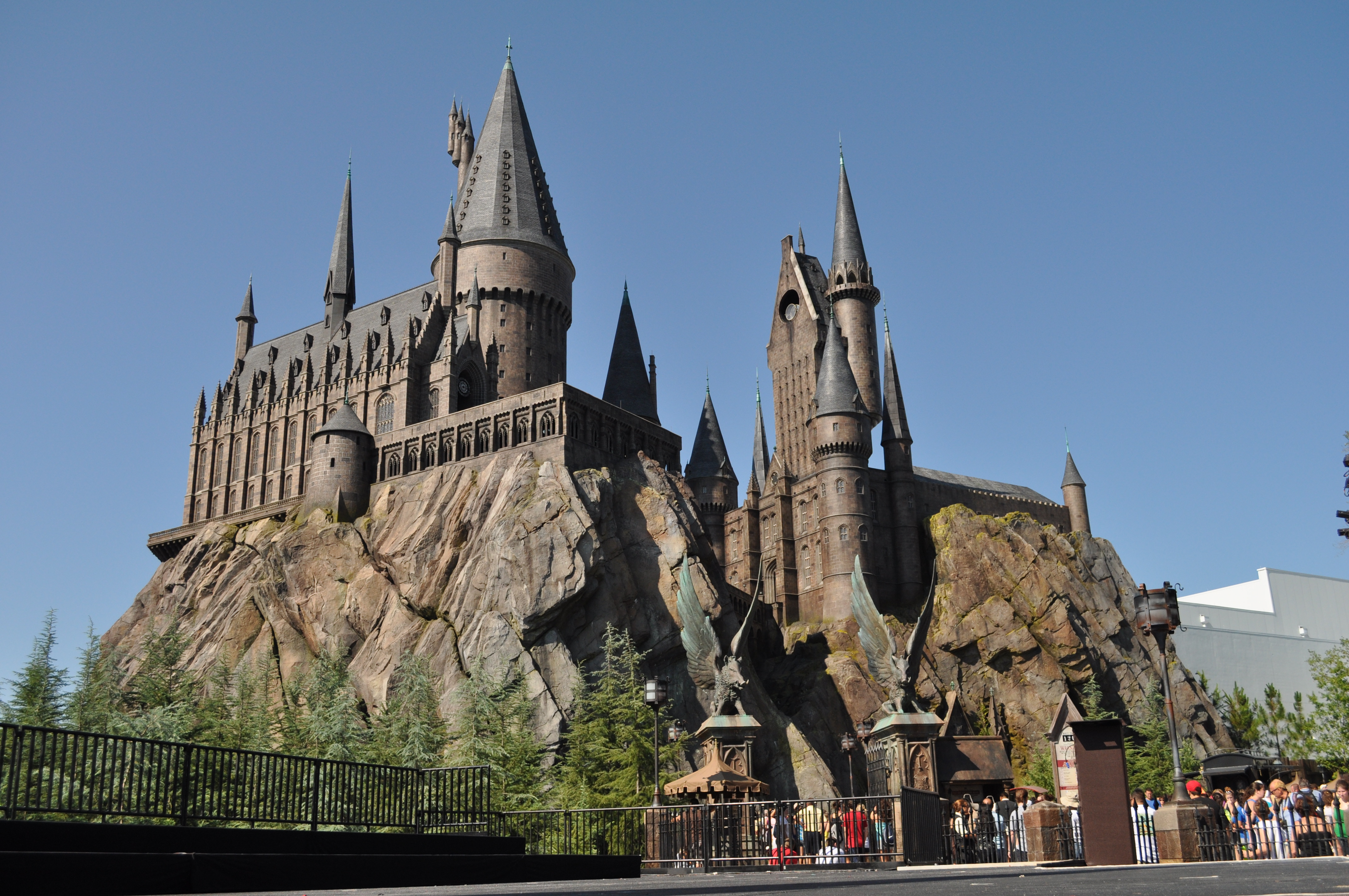
Harry Potter and the Forbidden Journey at Universal's Islands of Adventure

Harry Potter and the Forbidden Journey at Universal’s Islands of Adventure

The creators of theme park attractions from movies have to keep in mind two areas to communicate through the attraction: (1) selecting elements from the setting, characters, and narrative to translate; (2) Translating the aforementioned elements in a manner which can be communicated in a physical, tangible, multisensory way. Theme parks have traditionally used two models for cinema-based attractions. Examples of these models can be found at the Universal Studios Florida park (Failes, 2014). One model is the behind the scenes of movie-making and the other model is the ‘ride the movie’ concept (“ride the movies” is the original slogan for Universal Studios Parks). The former is traditionally more of a stage show that takes the park guests on a journey through the production process of a movie (i.e. Earthquake: Ride it Out or Hitchcock: The Art of Making Movies). The latter is usually a more conventional amusement ride that involves moving vehicles through the world and characters of the movie, often facing some sort of challenge within the narrative (i.e. Harry Potter: The Forbidden Journey and StarTours: The Adventure Continues). In recent years, there has been a move from the “behind the scenes” rides/shows to more participatory rides, placing the park guest into the narrative as a de facto character from the movie.

* U.S. V. PARAMOUNT PICTURES, INC., 334 U.S. 131 (1948) The US Government forced the eight major/minor studio players to end the practice of block booking (meaning, films would now be sold on an individual basis), divest themselves of their respective theatre chains (sell them off), and modify the practice of long-term employee contracts (though, this would continue until the 1960s). This marked the beginning of the end of the Studio System, AKA Hollywood’s decentralization.

For previous articles this series, click here:

“The Divergent Series: Allegiant part 1” movie review

AllegiantPossibly a strong finish for the Divergent Games! Of course, we won’t know just how well it finishes until the second part. Surprisingly, The Divergent Series: Allegiant part 1 provides fans with a good start to a well-executed conclusion. After the weak sequel, it was quite unexpected that the series would begin to complete this YA series on such a high note. Unlike the disappointing conclusion of The Hunger GamesAllegiant brings back your favorite characters you love and love to hate in a very satisfying ending in the dystopian adventure to rescue a people from themselves. At the end of the day, the Divergent series will never be as successful or generate the same fandom as The Hunger Games; but simply comparing the last two films in both franchises, this is clearly the superior finish (or should be). Although Roth’s socio-political themes and subtext were fairly clear, all be it still weak, in the first two films, the message is a little vague and incoherent in Allegiant. Two YA franchises down and one to go. We will just have to see what lies in store for the Maze Runner series. Just like the Divergent series has a week middle, hopefully the weak sequel in The Maze Runner will pave the way for a strong conclusion as well. One thing is for sure, Allegiant contains far more action than the previous films which almost makes the weak and still completely explained plot worth the approximate 2-hour run time.

The first part of the final chapter in the Divergent Series takes us beyond the wall into a desolate wasteland. Follow Beatrice/Tris (Shailene Woodley), Four (Theo James), Caleb (Ansel Elgort), Peter (Miles Teller), and Christina (Zoe Kravitz) as they embark on a journey to seek help from the outside in order to stop the civil war in dystopian Chicago (or modern day Detroit). With newly asserted leader of the faction less system Evelyn (Naomi Watts) and Amity turned Allegiant leader Johanna (Octavia Spencer) at odds with one another, war is brewing in the streets and all hell is about to break loose. Barely escaping Evelyn’s security team, Tris and her band are rescued by a team from an organization of pure bloods who oversees the “Chicago Experiment.” This group of researchers and scientists led by David (Jeff Daniels) recruits Tris and her team to develop a plan to save Chicago, or so they think. When Four discovers what is really going on, he must convince Tris and the rest of her band of rebels to make right what is going incredibly wrong.

For me, and I am sure other critics, analyzing this particular series, The Hunger Games, and Maze Runner gets boring. Because, for the most part, they all have the same plot, same fallacies, and similar subtext. They are all extremely socio-political methods to spread the message that only teenagers are special and are capable of saving the world from corrupt adults. Although these movies are aimed at Generation Z (anyone born after 1995), they still attract attention from Y/Millennials (~1982-1994) and Generation Xers (~1965-1981). That is important because Generation Z does not have the spending power that generations X and Y do. In order to maximize the income potential of the films, the studios have to appeal to Generation Zers in such a way that it will also bring their Millennial friends and potentially Generation X parents. Since schools are constantly preaching the message that teenagers are the future, they are special, and uncontaminated by the greed of the world, it makes sense to create films based on books that carry that theme. The negative side effect to this approach is creating a generation(s) that automatically distrust adults and their respective decisions regarding the environment, politics, and society. Just as Allegiant depicts what happens when there is such great division among a people who view the approach to peace so very differently will devolve into a war-like state, it’s entirely possible that reinforcing this division between Generation Z and X/Y could symbolically arrive at the same precipice.

The production value and design in Allegiant definitely outshines the prior two installments. That is important due to the fact that Roth’s political subtext definitely becomes a little muddled in this last chapter. Although there is definitely way too much cheesy CGI, it is far less than the previous film. And other than some of the outlandish technology used in the story, for the most part, the defense, security, and surveillance technology used by the various characters makes sense and is perfectly believable in their universe. There is even a real reference to 21st century earth’s scientists experimenting with the human genome. That helps to create a sense of futuristic realism in the Divergent universe. One of the biggest problems I have with the plot is the still unexplained history of how exactly the Chicago experiment began. Perhaps the director and writers did not feel it was necessary to provide a clear history through character exposition, but I am still a little confused as to how the Pure Bloods and Damaged became so incredibly separate. Another thing, if there are thousands (if not millions) of Pure Bloods in existence, then why use the Chicago Experiment as a method to see if a Pure Blood can be born out of all of it??? I guess that is why it’s not worth overly analyzing films such as this one.

For what it’s worth, Allegiant is an exciting start to the last chapter in the Divergent Series! Far more entertaining than the last one. If you were disappointed by Mockingjay Part 2 than rest assured that you will definitely enjoy the conclusion of this franchise. Not a bad way to spend your Spring Break or an afternoon over the weekend. But, I wouldn’t bother seeing this film in IMAX or 3D. However, I can see some benefit to the experience of this film by watching it in a D-Box auditorium.

“On Cinema and Theme Parks” part 4

My Book

Continued from Part 3

One medium being the extension of, or exhibiting a direct connection to, another medium is not a new concept. In fact, this concept of media convergence has been around for as long as multiple mediums have existed. In order to better understand the convergence or synergy that exists between cinema, in particular horror film, and theme parks, it is crucial to understand how we arrived at this point. One thing that film and themed entertainment both have in common is that each tells a story—in a different manner. But, the narrative is often quite similar. Prior to theme parks and cinema (film), there were plays, novels, and oral stories/traditions. The novel is an extension of the oral story, the play is an extension of the novel, cinema is an extension of the play, and the theme park is an extension of cinema. According to Dr. Henry Jenkins, “there has been an alarming concentration of the ownership of mainstream commercial media, with a small handful of multinational media conglomerates dominating all sectors of the entertainment industry” (2004, p1). This is clearly seen in the acquisition, exhibition, and development of theme park attractions based upon movies and, to a lesser extent, television shows.

The first cinemas were setup more like attractions than actual theatres. Perhaps more than coincidentally, theatres began springing up at the same time Coney Island opened its turnstiles around the beginning of the twentieth century; and at this time, cinema itself was still very much viewed as an attraction (Gunning, 1986). According to Tom Gunning (1986), “it was precisely the exhibitionist quality of turn-of-the-century popular art that made it attractive to the avant-garde” (1986, p66). So this concept of the convergence of cinema and theme park (or attraction) is one that dates all the way back to the early 1900s. Since some of the earliest films were of a surreal or horror nature, it is of no surprise that horror played a large role in the development of the cinema attraction. Much in the same way that early cinema was essentially a variety show, in essence, lacked a continuous diegesis, or narrative, the convergence of cinema and theme parks offers a variety of cinema-based attractions that are, indirectly at best, connected to each other. However, instead of the film, itself, being the attraction, cinema-based theme parks and attractions use the narrative provided by a work of cinema and uses elements of that film that can be translated into a real-world experience.

But as with any media convergence, there are also pitfalls to such a synergy between two powerful media. In order to best understand the pitfalls and promises in such a meeting, it is imperative to discuss convergence of two media in and of itself. Understanding the concept of convergence will better prepare filmmakers and themed entertainment designers to select the best elements of films to translate into themed attractions based on movies, in particular horror or action. According to the leader of research into the area of media convergence Henry Jenkins (2004), “media convergence is more than simply a technological shift. Convergence alters the relationship between existing technologies, industries, markets, genres, and audiences. Convergence refers to a process, but not an endpoint” (P1). Over the years, the relationship between cinema and theme parks has shifted. Before, cinema was the attraction; and now, the attraction is infused with cinema. And the handful of multinational media conglomerates own both methods of the exhibition of creativity. With the exception of the Walt Disney Company, many of the other media conglomerates have prominent interests in theme parks and film and television studios; and some also have interests in Broadway productions (i.e. Universal Studios’ Wicked and Sony Pictures’ Spider-Man).

Crossing over into new arenas of revenue requires access to vast media libraries, and that is what many of media conglomerates have at their disposal. This ability to converge areas of media interest in order to generate more revenue is something that contrasts with old Hollywood. Jenkins (2004) remarks that “old Hollywood focused on cinema, [and] the new media conglomerates have controlling interests across the entire entertainment industry” (P34). This convergence greatly influences the way society consumes media and entertainment (everything from movies to theme parks to music to toys and games). More than a cross-promotion of entertainment and media products, the convergence of cinema and theme parks is “a reconfiguration of media power and a reshaping of media aesthetics and economics” (Jenkins, 2004, P35). This reconfiguration comes in many shapes and forms. And, the horror film has found a place within the new configuration of entertainment media synergy. Specifically, the horror film has been used instrumentally in this reconfiguration; evidence of this can be seen in the prolific number of television shows (most popularly zombie shows), movies, and horror/Halloween themed events at theme parks (e.g. Busch Gardens’ Howl-O-Scream and Universal Studios’ Halloween Horror Nights). In these events, horror films provide a vast heritage from which theme parks can draw characters and plots to create temporary attractions to generate more income for the media company. Looking at many of the opening day attractions at movie-based theme parks, horror films were the first films to be translated into themed entertainment.

Part 1

Part 2

Part 3