Nope, no plotting here. With a sensory explosion of stunning shot composition, outstanding sound design, and unnerving score–combine those with a refreshingly original expression of the classic monster movie–and you should have a great horror film, right? That was almost the case here, had it not been for the meandering narrative and thoughtless plotting. Brilliant idea, but poorly mapped out. There is so much to like about NOPE, but the full potential of this beautifully looking film is ultimately held back by screenwriting mechanics. Peele’s NOPE feels like a combination of The Birds,Close Encounters of the Third Kind, and Signs. Unfortunately, it lacks the structure and substance of any of those. Clearly, Peele had a wonderfully original idea for his latest feature film, but his idea fails to deliver narratively. The plotting is all over the place; there are scenes that simply do not pay off dramatically. Individually, each scene is meticulously crafted, but many are not connected methodically to the rest of the film. What we have here is a film, that clearly demonstrates a love for horror cinema and film history, that pushes experiential boundaries, but the plotting leaves much to be desired. Moreover, there is a disconnect between the performative element of the mise-en-scene and characterization. Fantastic performances; but the characters, as they are written, are not very well developed. The pretense of the film is one exuding cinematic gravitas, but the pretense is the equivalent of a beautiful house with a shaky foundation and infrastructure.
To go into why this film’s plotting does not work would be incredibly spoilerific, so I cannot go into many details. All throughout the film, I thought to myself “I can tell that this is supposed to mean something, perhaps subvert something, but those idea are not being communicated effectively.” What this film will likely become is one of those that a pretentious cinephile or armchair critic will respond to those that express difficulty in following the plot with “it’s not for everyone” or “you just don’t get it.” Whenever I hear those remarks in defense of films that objectively fail to deliver narratively (plot+story), it makes me want to vomit. They are copouts for explaining away why a film doesn’t have to follow established storytelling conventions; furthermore, the “you just didn’t get it” is a tool for the cinephile to establish intellectual superiority over the individual rightly questioning the screenwriting of a film.
Caretakers at a California horse ranch encounter a mysterious force that affects human and animal behavior.
Where the film excels is in the very concept of the film itself and the technical achievement! Upon watching it, I was reminded of great films such as The Birds, Signs, and Close Encounters of the Third Kind. Moreover, I was also reminded of the sci-fi/horror movies of the 1940s and 50s. Because I was reminded of those, that demonstrates Peele’s love for classic horror cinema! And I applaud him for attempting to craft something for modern audiences that feels familiar yet fresh. To the best of my knowledge, there has yet to be a film (classic or more contemporary) that expresses the alien plot in the manner that Peele does. Where the films to which he’s harkening surpass NOPE is in the plotting. Original ideas are very much needed in 21st century cinema, but these ideas need to be paired with coherent plots.
Peele’s eye for shot composition is exceptional. He knows precisely how to frame and shoot a scene dramatically, even when the shot is largely static. What makes his shot compositions work so well is that the shot is a direct extension of the emotion of the scene. The camera isn’t merely documenting the course of events, but is ostensibly an active participant in how the scene unfolds.
The brilliant sound design and unnerving score work in tandem to draw the audience into the film, especially when watching the film in Dolby Cinema (which is what I did). No sound effect or bar of score is wasted. Every sound, every note is intentionally selected as an extension of the action or emotion of a scene. Although a film should not rely upon a great score to carry the story, sound and music are two very important tools in a filmmakers tool belt to increase the sensory stimulation of the film.
Peele is such a gifted director, but I hope he chooses to work with other screenwriters in the future to take his original ideas and map them out methodically and chronologically (whether linear or nonlinear) more soundly. We need refreshing ideas such as his, but we also need them executed in more conventional ways. Have the thoughtful subplot and subtextual theming that will inspire discourses, but make the outside/action plot more accessible because it’s the vessel through which the subplot and theming is communicated.
Ryan teaches Film Studies and Screenwriting at the University of Tampa. If you like this article, check out the others and FOLLOW this blog! Interested in Ryan making a guest appearance on your podcast or contributing to your website? Send him a DM on Twitter or email him at RLTerry1@gmail.com! If you’re ever in Tampa or Orlando, feel free to catch a movie with him.
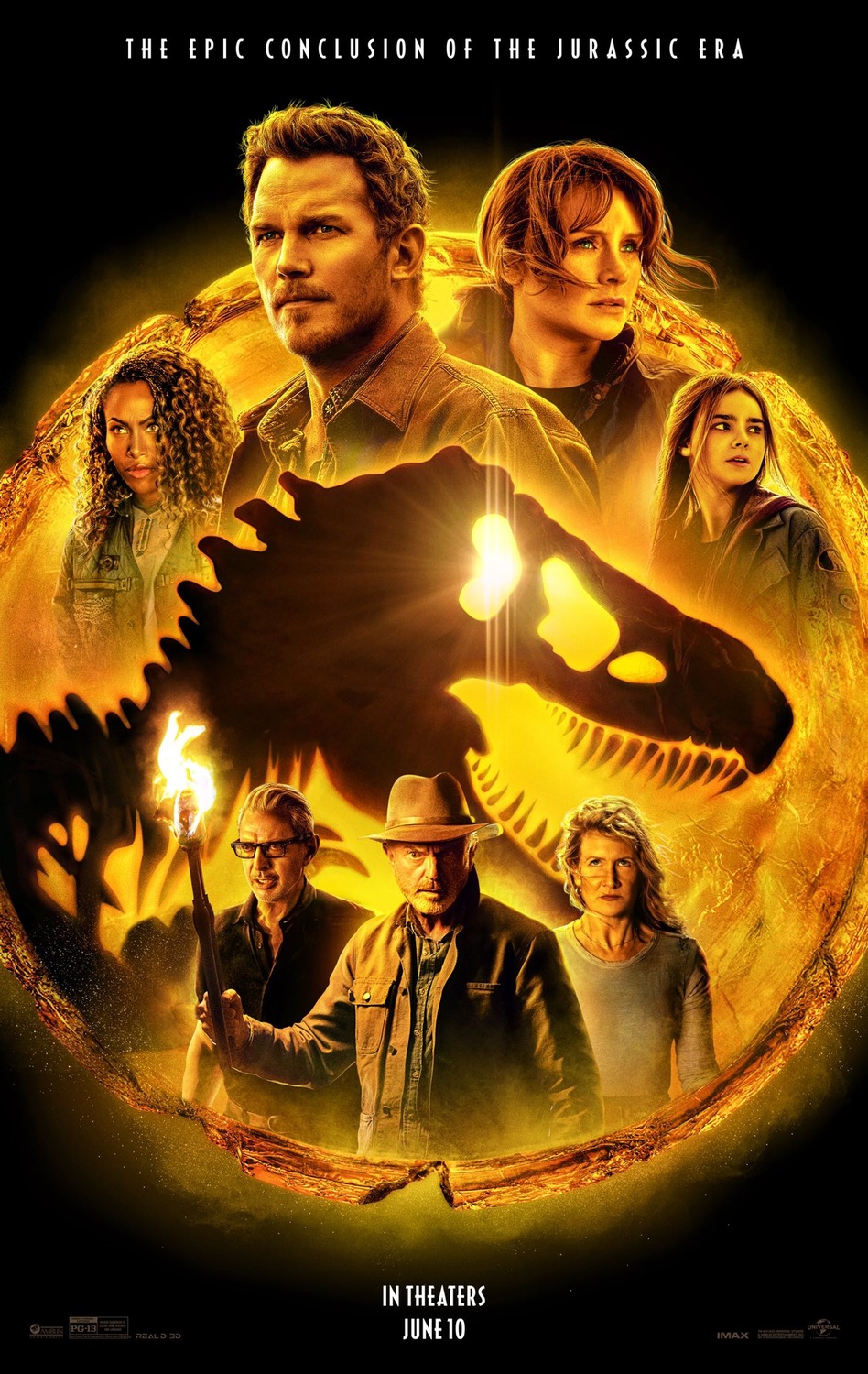
Some stories are best left extinct. Looks like we need to implement the lysine contingency with this one. Don’t bring anything back that you cannot control. Jurassic World Dominion represents the final nail in the coffin of this once best picture quality motion picture property. It’s as if the writers never watched the original Jurassic Park nor read Crichton’s masterful novels Jurassic Park or The Lost World; simply watched highlight reels and read Sparknotes. After the disappointing Fallen Kingdom, I was hoping the writers and producers would take that as a cue to return to the legacy franchise’s roots. Instead, this bloated, glorified B-movie (and that’s being generous) delivers an abysmal story, a convoluted web of competing plots, and wasted characters, all underscored by a CGI crapfest of dinosaurs (or, it could be the inverse). Extinct is the magic that made the original one of the most beloved motion pictures of all time. Furthermore, this movie is perpetually in the third act, leaving little room for setup and development. With so much brilliant material from which to pull in the original film and two novels, how on earth did we get the preposterous slapdash story (rather, collection of stories) that we did??? It truly pains me to have to write about the franchise this way, as Jurassic Park is my No.1 favorite film of all time. I think I’ll cleanse my cinematic palate and rewatch Maverick for a third time or watch Jurassic Park at home. Even the first Jurassic World is far more enjoyable than Dominion.
The future of mankind hangs in the balance as humans and dinosaurs coexist following the destruction of Isla Nublar, another Biosyn/InGen dark secret is revealed, giant locusts pose an eminent threat to agriculture, and Owen and Claire embark on a dangerous rescue mission. (Yeah, all of that is in the movie).
There is soooo much going on, here. Clearly, Trevorrow, Emily Carmichael, and Derek Connolly struggled on any singular outside-action story, and made the unfortunate decision to just go with all of their ideas, everywhere, all at once. And when that didn’t work (surprised, as they may have been), they knew they had to get the Jurassic Trinity back (Dern, Neill, and Goldblum) in order to try to make something of this diegetic mess that was probably greenlit while drunk. Seeing the original cast all together is one of the few highlights from the movie, but I wish they had been given more agency and depth. Moreover, character development is a struggle all the way around.
While one may attempt to argue that all art is completely subjective–I assure you that is not the case. Yes, there is subjectivity in art, but there are also accepted best practices and conventions that are time-tested and should be adhered to in order to tell a thoughtful story with logical plotting (unless you know how to break them, and this movie did not). Jurassic World Dominion is objectively found wanting. Not even so bad, it’s good, just bad. Cheesy B-movies with dinosaurs from the first half of the 20th century are more coherent.
When I watch movies like this (like this, meaning movies that really should be taken seriously out of respect for the source material and predecessors), I wonder how on earth could a team of writers forget the screenwriting fundamental convention and best practice of simple plot, complex characters. Instead, in Jurassic World Dominion, we get simple characters, complex plots. The inverse of what works dietetically and cinematically. The outside-action story (supported by strategic and coherent plotting) should be easy to follow; however, the emotional/cerebral subplots and character development add the thoughtful complexities that provide depth for cinema. While none of the Dominion stories Trevorrow attempted to bring to to the silver screen are compelling in any way (and contradict past precedent plotting or themes set in the franchise), any two of them would have made for a better main and subplot than any combination of all 4+ of them.
The fan service is both prolific and incredibly forced. Is there anything wrong with strategically placed fan service–those moments or references that only legacy fans will appreciate? No, definitely not. Is there anything wrong with fan service that isn’t emotionally earned in the present movie? Yes, definitely yes! From beginning to end, the fan service is everywhere, and very few of those moments pay off dramatically or emotionally. Perhaps if Maverick had come out first, then Trevorrow’s team would have observed how to integrate nostalgia and throwbacks perfectly. Nostalgic gestures like most of the ones in this movie are empty–devoid of any substance. There is one moment, in particular, that is so unlikely (the logic escapes me) to have happened that it’s practically impossible; however, it’s written into the movie in an attempt to forcibly craft some poetic justice.
If you’ve readthe novels Jurassic Park or The Lost World, then you’ll remember how significant the character of Lewis Dodgson is. And, I did appreciate how Trevorrow brought Dodgson and Biosyn back because the roles they play in the novels, especially The Lost World, are incredibly signifiant to the plot. No spoilers, but Dodgson is way more than the guy that paid off Nedry to steal the embryos and giving rise to the GIF and callback “Dodgson, Dodgson, we’ve got Dodgson, here!” I just wish Trevorrow and his team took more inspiration from the novels than a singular character and company. Honestly, The Lost World novel could have been adapted to fill the role as the tertiary movie in the Jurassic World trilogy, considering very little of the plot in the novel was used in the movie adaptation.
Thematically and subtextually, Dominion experiences great trouble. The themes are both counterintuitive to itself and the preceding five films. Much of the subtext defies all known logic, both logic in terms of real-life ecology and how the science of the films was presented in the past. Instead of using the world of the films to write the next and final chapter in the Jurassic era, Trevorrow forces his ecological and anthropological opinions on the plot and characters. Nothing wrong with a writer-director doing that, but it has to be setup diegetically in order to have the payoff the writer-director desires. Otherwise, it sticks out like a puzzle piece that doesn’t quite fit the rest of the puzzle. Nothing in science supports predators and prey or two competing carnivores peacefully coexisting in some sort of ecological utopia; it’s illogical.
To end on a positive note, and aside from the return of the original cast, there is only one part (well, it’s really two scenes) that put a big smile on my face. And it’s the return of the Dilophosaurus!! And considering she makes an appearance in the trailer, this is not a spoiler. It’s only taken since 1993 to give Dilophosaurus some (non-holographic) screen time! I’m glad it wasn’t turned into a main dinosaur in this movie; how she was reintroduced and used was just right, and has a great payoff.
If you love the original Jurassic Park and first 2/3 of The Lost World, then you’re probably going into this one with the wrong mindset. If you go in with a desire to be entertained by a glorified popcorn B-movie, then you’ll likely have more fun than I did. Perhaps I went in with the wrong mindset, thinking that it was going to fix whatFallen Kingdom failed to do. Do yourself a favor, and watch it in IMAX, Dolby, or other premium format because it is a visual spectacle that is in perpetual third act gear the whole time.
Ryan teaches Film Studies and Screenwriting at the University of Tampa. If you like this article, check out the others and FOLLOW this blog! Interested in Ryan making a guest appearance on your podcast or contributing to your website? Send him a DM on Twitter or email him at RLTerry1@gmail.com! If you’re ever in Tampa or Orlando, feel free to catch a movie with him.
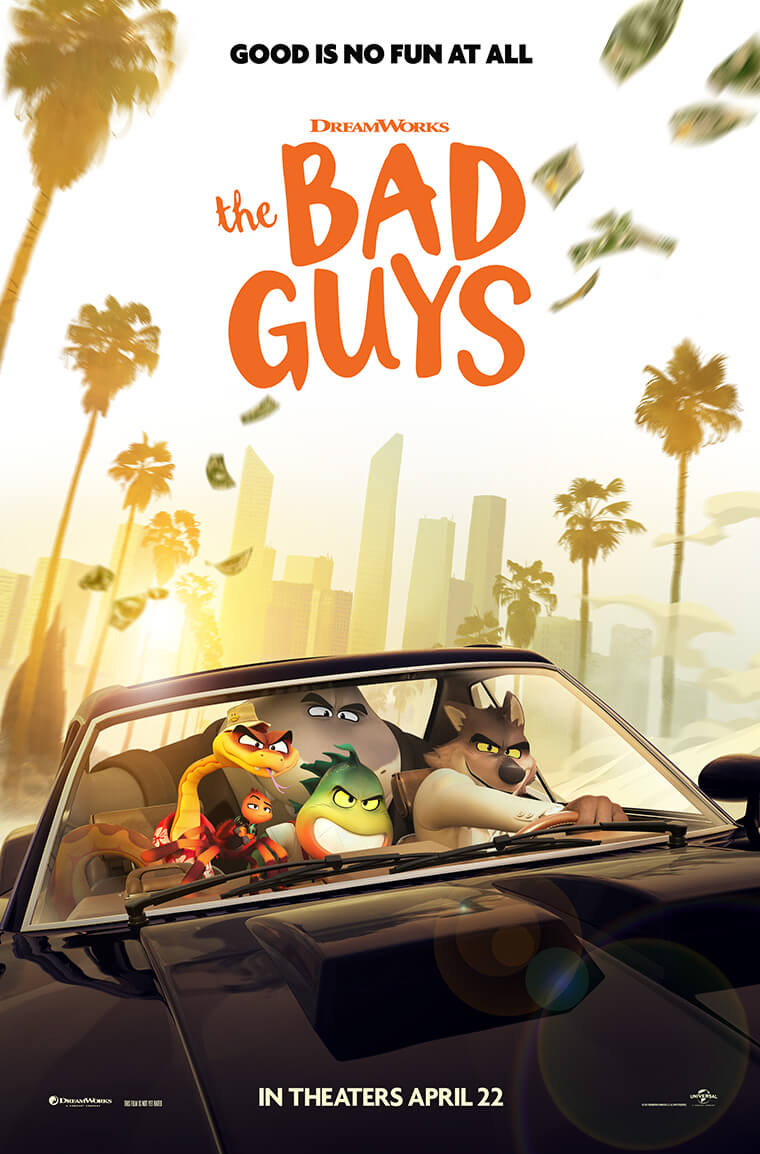
Highly entertaining with heart! Disney-Pixar, eat your heart out! Whether you’re typically interested in animated films or not, you don’t want to miss Universal-DreamWorks’ The Bad Guys opening this week only in cinemas. Prepare yourself for a refreshing, high octane Oceans 11 meets Zootopia heist comedy for the whole family. Honestly, this is the best animated film that I have seen in a long time. The Bad Guys delivers audiences a simple, lean plot with complex central characters that will completely delight you from beginning to end with its innate ability to find the humor in the smallest details. While the film borrows from Oceans 11 and Zootopia, it is crafted in an almost Tarantinofor kids storytelling method. This atypical approach to animated film storytelling (popularized by Into the SpiderVerse), has opened the floodgates for subverting our expectations for styles we have long -since associated with animated films. Furthermore, films such as the remake of The Lion King have inspired CGI artists to go for more of a photorealistic aesthetic. What The Bad Guys does is paint a 2D world with some 3D enhancements, which demonstrates more of an affinity for stylization over realism–great! Too many animated motion pictures lean into realism therefore negating the magic of animation. In my opinion, if the animation is going to be so incredibly realistic-looking, then just make a live action picture. The advantage of the stylized approach is that there is very clearly a design to each and every frame. Perhaps it lacks the cinema stylo of hand-drawn frames, but it certainly delivers more style than anything released by Disney-Pixar in recent years. On a scale of Kubo and the Two Strings (the best animated film in the last decade) to The Lion King, I’d say The Bad Guys is much closer to a Kubo. With witty comedy and adrenaline-pumping action, you don’t want to miss seeing this film on the BIG SCREEN.
After a lifetime of legendary heists, notorious criminals Mr. Wolf, Mr. Snake, Mr. Piranha, Mr. Shark and Ms. Tarantula are finally caught. To avoid a prison sentence, the animal outlaws must pull off their most challenging con yet — becoming model citizens. Under the tutelage of their mentor, Professor Marmalade, the dubious gang sets out to fool the world that they’re turning good.
What a(n animated) picture. Seriously. It’s been a long time since I enjoyed an animated motion picture this much. Over the last decade, only Kubo, How to Train Your Dragon 2, and Onward stand out to me. As I was exiting the auditorium following the screening, I talked with the general audience members that were in attendance, and nearly every one with whom I spoke said variations of the same things: entertaining, fun, and thrilling. During the screening, I heard many kids (and their families) laughing along with the characters. Although it is clearly aimed at kids, there are comedic moments for adults too. What we have here is a good story! Remembering my Sunset Boulevard…
Joe Gillis: “-Ah…one of those message kids. Just a story won’t do…”
Betty Schaefer: “I just think a picture should say a little something.”
I reference this exchange between the struggling screenwriter and the aspiring reader turned screenwriter because too many animated films (mostly from Disney/Pixar) suffocate their stories under oppressive, cynical social commentary; so much so, that the story suffers because the focus is on the sermon instead of the characters. You will find the absence of overt social commentary in The Bad Guys refreshing! Does that mean there is no depth or thoughtful elements? No. But the message of the film is that we are all capable of a redemption arc. Granted, it’s not as strong a redemption message as we have in A Christmas Carol, but for a kid’s movie, they will undoubtedly pickup on it.
The screenplay is well structured and paced. While the bones of the screenplay are rather paint by numbers, the the superstructure is creative and stylish! Furthermore, in a film that looks to be one that will throw a joke a minute at you, it holds back the cards, delivering the humorous dialogue and site gags in a method that allows them room to breath. The laughs are setup, reinforced, then twisted thoughtfully.
All around, this is a solid animated feature that should be on your watch list while it’s in cinemas.
Ryan teaches Film Studies and Digital Citizenship at the University of Tampa. If you like this article, check out the others and FOLLOW this blog! Interested in Ryan making a guest appearance on your podcast or contributing to your website? Send him a DM on Twitter or email him at RLTerry1@gmail.com! If you’re ever in Tampa or Orlando, feel free to catch a movie with him.
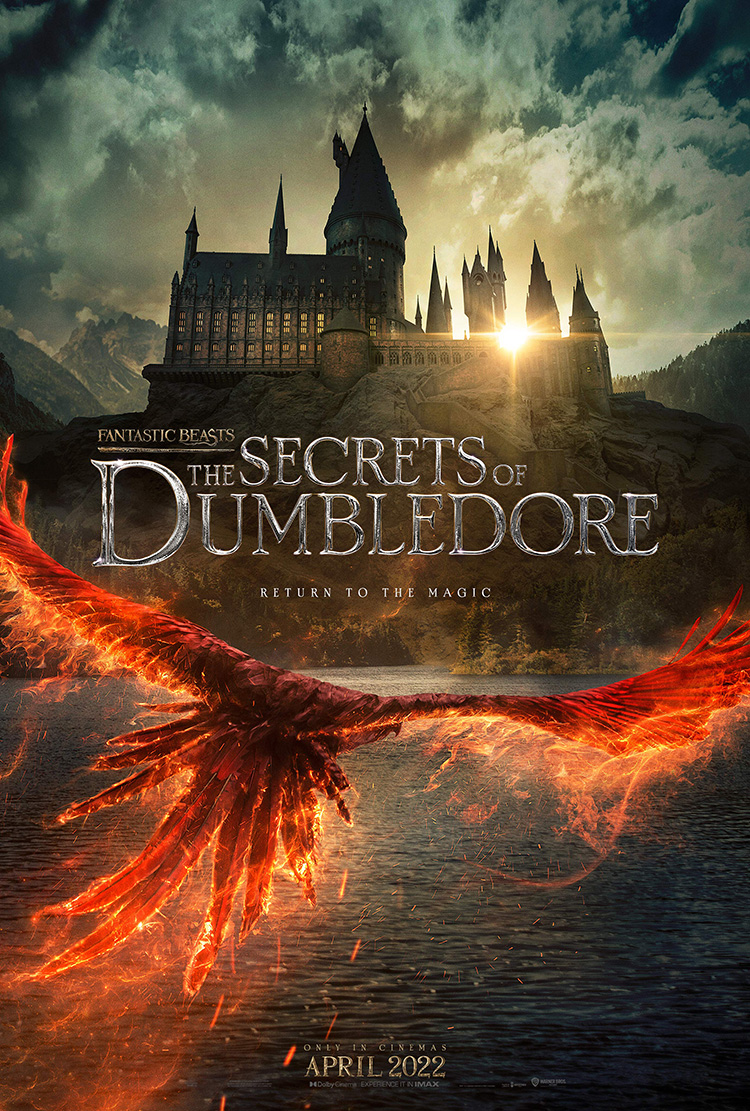
The magic is back! Fantastic Beasts: The Secrets of Dumbledore represents a return to form for the Harry Potter spinoff series. After the disappointing Crimes of Grindelwald, veteran HP director David Yates crafts a fantastical movie that is sure to entertain Wizarding World fans. While the title suggests that there are many secrets the Dumbledore is hiding, the title is misleading because no one is keeping secrets in the movie. For those that were hoping for a character-study movie on Dumbledore and his relationship with Grindelwald, you won’t find much exploration here (as they discuss the fallout of their relationship in the opening scene). Most of the focus of the movie is on the action plot moreso than the character-driven elements, with the exception of Jacob Kowalski. It’s Kowalski’s story and love for Queenie that will dominate the emotional subplot. And for good reason: Kowalski is the best written character in the spinoff series. If you’re searching for something deeper, you can read an exploration of different images of relationships throughout the movie, but to be honest, that would be a little too generous. Suffice it to say, the movie may be largely one-dimensional, but that singular dimension is enough to meet most of the expectations of a fantasy movie. More so than the first two movies in this series, this one feels the most connected to the original Harry Potter movies. In that, there was an opportunity to spend an inordinate amount of time waxing nostalgic; but instead, there was just enough of a glimpse into familiar locations to remind us that the Fantastic Beasts takes places in the Wizarding World.
Professor Albus Dumbledore knows the powerful, dark wizard Gellert Grindelwald is moving to seize control of the wizarding world. Unable to stop him alone, he entrusts magizoologist Newt Scamander to lead an intrepid team of wizards and witches. They soon encounter an array of old and new beasts as they clash with Grindelwald’s growing legion of followers.
Okay, we need to address the elephant in the room: Mads Mikkelsen replacing Johnny Depp as Grindelwald. Between the controversy associated with the court battles and sexual battery charges against Depp by ex-wife Amber Heard and J.K. Rowling’s social media accusations of transphobia, this movie has undeniable baggage. And I am not here to discuss either topic, but we cannot address this movie without acknowledging that these high profile situations have certainly had an impact on the advertising and experience of the movie for many people. Beyond being cognizant that Mikkelsen replaced Depp because of Depp’s legal problems, neither pieces of baggage affected my reception of the movie. Still, audiences are given a different Grindelwald than was witnessed in the Crimes of Grindelwald. In contrast to Depp’s Grindelwald, Mikkensen’s is more dynamic and dark, two qualities that are fitting of the character. Had Depp reprised his role as Dumbledore, it’s entirely possible that we would’ve got Jack Sparrow as Grindelwald. Mikkelsen’s Grindelwald is terrifying at times–not so much because of the horrendous things he does–but because of that plus the fact he is reminiscent of a Machiavellian dictator in the vein of some real-world examples throughout history and even today.
Thematically, The Secrets of Dumbledore is about a topic(s) that should feel incredibly relevant: change and progress. The Ministry of Magic is at a crossroads, and so are Dumbledore, Kowalski, Grindelwald, and others. Too many characters, really. Some streamlining of characters would’ve been nice. Anyway. Furthermore, there are ancillary ideas of healing, learning from mistakes, and how to be a good citizen (or lack thereof) in the Wizarding World. Individually, all these ideas work well in the Harry Potter universe, but collectively these themes and ideas work to make the movie feel overstuffed. Clearly, Rowling knows complex plotting, but it feels as though she was so preoccupied with the desire to intentionally create a complex plot that her characters and story suffered. Don’t get me wrong, the movie is enjoyable! But it is more likely to encourage you to rewatch the Harry Potter movies than it is to become overly emotionally invested in Fantastic Beasts.
Is the magic there? Yes. Is it closer to form than the last one? Yes. Is there untapped potential in this movie? Yes. If you’re a fan of the Wizarding World, then you will likely find this movie entertaining! But if you’re hoping for the endearing nature of the original series, then you may be disappointed.
Ryan teaches Film Studies and Digital Citizenship at the University of Tampa. If you like this article, check out the others and FOLLOW this blog! Interested in Ryan making a guest appearance on your podcast or contributing to your website? Send him a DM on Twitter or email him at RLTerry1@gmail.com! If you’re ever in Tampa or Orlando, feel free to catch a movie with him.
Sweet on the outside, sour on the inside. Avisually impressive attempt to provide a thoughtful exploration on duality and identity, is overshadowed by heavy-handed ideology. Nia DaCosta delivers audiences a spiritual sequel to the cult horror film Candyman (1992) that is grounded in much of the lore of the original, yet forges a new frontier that simultaneously serves as a vehicle for horror legend Tony Todd to pass the hook onto Yahya Abdul-Mateen II. DaCosta is joined by writer-producer Jordan Peele and screenwriter Win Rosenfeld to “tell everyone” who dares to look in a mirror and call out his name five times. Admit it, even in our most rational state, we are still a little apprehensive to stare at our reflection and call out Candyman, Candyman, Candyman, Candyman, Candym–. That’s the power of horror films! These fictional stories on screen have their mystical ways of affecting the collective conscious in such a manner that we change or question our behavior. Another great example of this effect is the iconic highway scene in Final Destination 2. And challenging audiences was certainly what the three screenwriters had in mind when writing the story for Candyman (2021). Unfortunately, the agenda-driven message steels the focus away from the stunning visuals, and ultimately fails to effectively paint a portrait of reality that invites all to engage in the important conversations the film is trying to have, instead, alienating audience members that don’t share the filmmakers’ opinions. Suffice it to say, this film is Peele for the course.
In present day, a decade after the last of the Cabrini towers were torn down, rising star artist Anthony (Abdul-Mateen II) and his partner move into a loft in the now gentrified Cabrini. A chance encounter with an old-timer exposes Anthony to the true story behind Candyman (Todd). Anxious to use these macabre details in his studio as fresh grist for paintings, he unknowingly opens a door to a complex past that unravels his own sanity and unleashes a terrifying wave of violence. (IMDb)
If you’ve never seen the original Candyman, don’t worry. While having seen the original will certainly help audiences to appreciate world-building and backstory elements, there is enough context given to help those that may be unfamiliar. Following the screening I attended, I heard individuals negatively critique the retconning of plot elements in the original; truth is, the parts of the original that were reimagined to fit the backstory of 2021’s Candyman were thoughtfully adapted.
While I have my reservations with the film, I would be remiss to not highlight the excellent direction, cinematography, editing, costuming, production design, and even the performances! Visually, the movie is stunning! All the mise-en-scene elements work together to create a BIG SCREEN experience. And talk about outstanding performances. Back in the heyday of the slashers (late 70s through the 90s), we did not expect to be impressed by the performances of the cast. And while there are notable exceptions of horror films WITH brilliant performances, usually it’s not expected. Over the last 7–10 years, horror films have been stepping up their performance game. The lead and most of the supporting cast will all captivate you. Unfortunately, there are useless characters like Brianna’s (Anthony’s girlfriend’s) brother and his boyfriend. Having no real affect on the plot, this interracial gay couple was little more than a token that could be removed from the movie, and the movie still play out the same way. However, if it weren’t for these two characters, the movie would be lacking ANY humor. So I suppose that was their purpose, to add humor.
There are so many beautifully crafted shots and shot sequences in this film. From juxtapositions of the old meeting with the new to geometric shapes and lines, there are many excellent compositions. The production and set design and lighting, of this film, are used in similar ways that the designs in expressionism are used. Expressionism uses the design of buildings, costumes, lighting, and camera angles to externalize emotions, psycho-social states of being, and ideas. And with expressionism being part of the formula of horror (expressionism+surrealism+Poe+Freud), it makes sense how and why there would be this care shown in the mise-en-scene.
All the backstory elements are communicated through the brilliant use of shadow puppets. The shadow puppet sequences are perhaps my favorite recurring diegetic device used in the film. Not only do these shadow puppets provide exposition, they also move the plot forward in action and subtext.
The idea of shadow puppets as a storytelling device is best explored in Plato’s Cave. French film theorist Jean-Louis Baudry likened the movie theatre to Plato’s famous allegory Plato’s Cave found in Plato’s Republic. But since we’re not all film or philosophy theorists, here is a quick explanation of Plato’s Cave:
The allegory states that there exists prisoners chained together in a cave. Behind the prisoners is a fire, and between the fire and the prisoners are people carrying puppets or other objects. This casts a shadow on the other side of the wall. The prisoners watch these shadows, believing them to be real. Essentially, what Plato is exploring is the concept of “belief vs knowledge.” The prisoners (or audience) in this analogy believe the images on the wall as reality; when in actuality, it is only the puppeteers version of reality. The analogy goes on further to describe a prisoner breaking free and venturing from the cave out into the real world. Two things happen (1) the newly freed prisoner completely rejects the imagery in the cave and returns to warn the prisoners of their one-dimensional view of reality, and risk being killed for a radical view, or (2) the freed prisoner fears or cannot reconcile actual reality and retreats back into the cave, where there is comfort in the surroundings, to warn the prisoners not to leave. Therefore, this highlights how a lack of knowledge leads to blind belief.
Despite being centuries old, the allegory is appropriate for filmmaking. After all, the audience watches images on a screen. We’re meant to believe it to be real, but we know it’s false. Only when we step out of the theater back into reality can we take what we’ve learned in the cinema and apply it to our lives. In a literal sense, a movie is just a series of images. But digging deeper, they present unique ideas and themes that we can take with us into the real world. Numerous movies utilize this concept in their plots and themes. You have probably seen films where a character believes one reality and then becomes exposed to another, greater reality and is never the same. In the case of 2021’s Candyman, DaCosta, Peele, and Rosenfeld have metaphorically trapped the audience in an ideological cave to present their versions of our reality that exists outside the cinema’s doors.
The movie has some great kills! But it highlights a moral problem plaguing this movie. From the art gallery to the critic to the girls at the prep school, the only victims, to meet their gruesome demise ON screen, are white characters. While there are a couple of off-screen deaths of black characters, the only ones in the visible mise-en-scene to meet with Candyman’s iconic hook are white. Had this movie been directed and/or written by a white writer-director and only killed and disparaged black characters, there would already be a #cancel campaign on Twitter. In my five years as a film professor and seven years as an active critic, I cannot ever recall a horror movie (in particular, a slasher movie) that ONLY killed black characters and disparaged the black community in virtually every scene from the opening to the closing. So if that would not be tolerated by the public–and for good reason, a movie released like that in 2021 (or ever) would be in incredibly poor, despicable, disrespectful taste–then the inverse should not be acceptable here.
I get what DaCosta, Peele, and Rosenfeld are trying to do with this horror movie. From the time of Cabinet of Dr. Caligari and Nosferatu, horror has been used to comment on societal observations to either warn of an impending dangerous ideology, to provide allegorical material that can be used as a framework to better understand marginalized groups, or even to challenge systems or institutions. Which is why horror is often far more truthful than a straight drama. Of course, one can make the argument that this is a fictional film in a fictional Chicago, which is not untrue; however, the problem therein is that little (if anything) in this fictional Chicago sets it apart from the real world, except for the supernatural character of Candyman, because these filmmakers have a point to make. But the problem here is that the very people that these writers want to challenge are the very people that are being unfairly represented in the movie. How is any of that constructive to the conversations of race relations and policing??? Short answer: it’s not.
The symbolism I did appreciate in the film are the moments that we explore the duality in ourselves and our environments. This is represented through literal and metaphoric reflection. Mirrors (or reflections) are regularly used to communicate duality. One of the best examples in recent years, in how mirrors are an effective cinematic device, is the mirror scene in I, Tonya. Just before her final competition in the film, as Tonya is applying her high contrast makeup, we witness in the mirror the internal struggle. On the outside, she is this accomplished figure skater (probably the best athlete the sport has ever seen) but on the inside she is tormented by her mother, her abusive marriage, and what she did or didn’t know about the incident. Likewise, in Candyman we explore the history and identity of Anthony and his neighborhood. Anthony has a secret in his past that has been painted over, that is trying to resurface, and his neighborhood of Cabrini Green has a sordid history that it has tried to cover and hide behind a fresh coat of paint. History is always there. It cannot be erased. And if it’s not dealt with, it can become a specter and haunt you and your environment. The mirrors and other reflective surfaces of Candyman are brilliantly used to communicate this idea of duality.
It is clear that DaCosta is a gifted director, but I hope that she works with different writers in the future that can find that balance of commenting on or raising awareness of something important, but also finding the ways to bring everyone to the table for a thoughtful discussion. The power of cinema, and in particular horror films, is that it can bring diverse groups of people together from all walks of life to both be entertained and challenged through screams, jumps, and laughter.
Ryan teaches American and World Cinema at the University of Tampa. If you like this article, check out the others and FOLLOW this blog! Interested in Ryan making a guest appearance on your podcast or contributing to your website? Send him a DM on Twitter or email him at RLTerry1@gmail.com! If you’re ever in Tampa or Orlando, feel free to catch a movie with or meet him in the theme parks!