“A Dog’s Purpose” movie review

adogspurposeYou’re going to need tissues! Ever wonder what your dog was thinking? You’ll find out in Universal, Amblin Entertainment, and Walden Media’s glorified Hallmark movie that follows the soul of a loving dog. As such, A Dog’s Purpose is one of those films that is so simple yet emotionally touching. Based on the novel written by W. Bruce Cameron, this movie will tug at even the toughest of hearts. Although the film does not follow a traditional diegetic arc, three-act structure, and is filled with constant verbal exposition in the form of a voiceover, it is still enjoyable and works as a great date movie. No critical thinking required. Still, the author’s tagline “a novel for humans” can be seen in the social commentary on primarily human relationship dynamics followed by the relationship between a pet and his or her owner. Filled with moments of laughter and tears, A Dog’s Purpose is a film that everyone who either has or has ever had a dog should see. If you’re a cat person like me, then there isn’t much here for you–sorry. However, I was moved to tears during a scene in which the focus was on a human romantic relationship getting rekindled. You will never look at your dog the same way again and will likely go home and hug him or her just as a friend of mine did after she screened the film with me.

A Dog’s Purpose is about a dog who discovers the purpose for his existence as he is reincarnated into different dogs over the course of his life. Finding himself part of different families–or as he likes to refer to them–as packs, Bailey does his best to affect humans by influencing their respective needs to laugh and love.

Despite the rather two dimensional nature of A Dog’s Purpose, there is a deeper theme within the mostly shallow story if you examine the film closely enough. Not shallow in that there lacks emotional appeal or enjoyment, but shallow in that there is very little that is complex and dynamic in the narrative. Although Bailey spends most of his on screen life with Ethan (K.J. Apa), Bailey’s soul finds itself in other dogs who are part of their own respective family. Doing a close reading of the film reveals that each family unit represents a different kind of relationship dynamic or lack thereof. I won’t spoil it by describing each type of relationship, but knowing that there is social commentary on human and pet relationships could likely increase the appeal and enjoyment of the film for those who prefer movies with a more cerebral plot. Interestingly, the movie includes families/human relationships that represent a good cross-section of the types of relationship dynamics that exist in our lives.

For those who typically enjoy Hallmark movies, then you’ll definitely enjoy this one. Last January we had glorified Lifetime movies and this year it must be Hallmark’s turn. As I have not read the novel, I cannot comment on differences between the book and the film adaptation.

Written by R.L. Terry

Edited by J.M. Wead

“A Monster Calls” movie review

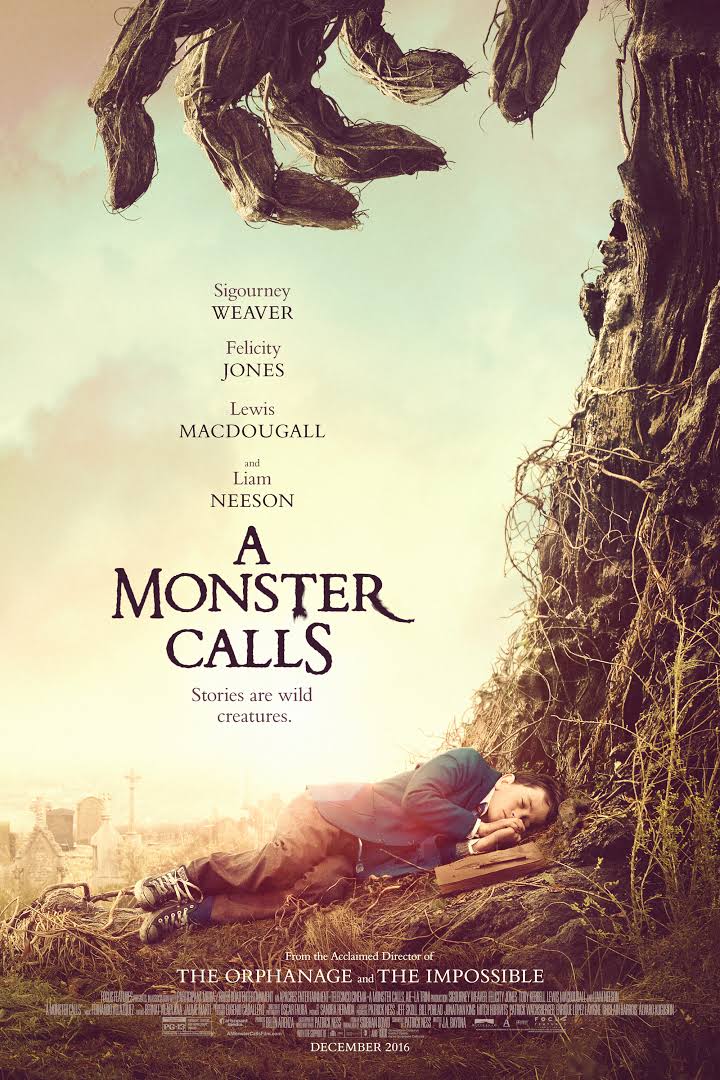
monstercallsA breathtakingly beautiful and dynamic film that typifies the art of visual storytelling in the gothic style. Focus Features’ A Monster Calls directed by J.A. Bayona is nothing short of a Terms of Endearment, in theme anyway, for a new generation. You are certain to laugh and cry your way through the film. Based upon the novel by the same name, written by Patrick Ness and illustrated by Jim Kay and conceptualized Siobhan Dowd, Bayona’s adaptation of the novel plays out to be a deep, rich story that will touch the hearts and minds of each and everyone in the audience. For anyone going through the stages of grief, this film will especially ring true and perhaps bring about comfort. Although the protagonist Connor, played by Lewis MacDougal, is twelve years old, this dark melodrama with a plot revolving around terminal illness is not typically something that will appeal to kids of Connor’s age. Despite the fantasy elements and the young protagonist, A Monster Calls is more suited for older teens and adults; however, by the same token, the movie isn’t entirely going to initially appeal to adults since the protagonist is quite young. I screened the movie last night in an auditorium filled with patrons of all ages and there was not one dry eye in the audience. Looking at the film from the outside and analyzing the plot and cast, it would appear that it may not attract droves of people because of the gothic fantasy nature, typically aimed at kids and young teens, with content and theming best suited for older audiences; however, the film truly transcends age barriers and stereotypes to touch those who are young or young at heart.

While most twelve year old boys are busy with school and learning to develop socially or even romantically, or just simply playing video games and having Stephen King type adventures, Connor (MacDougal) is dealing with far more than a kid should every have to deal with. Connor’s mother (Felicity Jones) is very ill and Connor is forced to grow in many ways kids should not quite quickly to take care of her. Not entirely going through this terminal illness alone, Connor has a grandmother (Sigourney Weaver) who looks in on him and his mother–a grandmother with whom he shares little in common. With Connor’s father settling down in Los Angeles, Connor feels very much alone while dealing with his mother’s illness. Expressing his emotions and thoughts through water color and sketch artwork, Connor uses his penchant for beautiful art as a form of therapy. Just when all seems lost, an unexpected ally in the form of a rather gothic tree-like monster (Liam Neeson) appears in his window one night. Apprehensive at first, Connor befriends the monster who guides him on a journey of courage, truth, and faith that combine in a powerful fusion of imagination and reality.

This is certainly a year for fantastic monsters and fantasy, isn’t it? However, A Monster Calls is definitely not your typical fantasy. It deals with deep emotions, dark themes, and material usually better suited for adults. Why then choose such a young protagonist? Perhaps the author Patrick Ness wanted to reach those kids who are going through tough times and who are dealing with situation that most kids won’t face until they are much older. Some kids are just forced to grow up more quickly than others. It’s important that cinema and literature not forget them because words on pages or moving pictures may be the only source of comfort, escape, or allegory. Director J.A. Bayona appears to have successfully translated the novel to screen–from what I know. Interesting that the movie opens with the narrator describing Connor as being too old to be a kid but to young to be an adult. By extension, that is precisely where this movie fits in. It’s too “old” to be a kid’s movie but too “young” to be an adult movie. And that’s okay. Growing up is hard, and when faced with a family member or close friend with a terminal illness, life is exponentially more difficult emotionally and even psychically. Unconventional as it may seem, this film is powerful and transcends the age spectrum to provide a strong emotional journey that audiences can appreciate and from which people may receive comfort. If for no other reason, having a kid starring in a melodrama brings audiences of all ages together–many who may be going through something similar as the child, parent, spouse, or lover of someone who is terminally ill. It’s okay to grieve and let go.

From the opening credits alone, I was confident that this was going to be a visually stunning movie. The water color animation and brushstrokes are reminiscent of the story of the three brothers in Harry Potter. Absolutely beautiful. Much in the same way Kubo and the Two Strings was an innovative animated film, A Monster Calls also contains unconventional and innovative methods of telling its story. Similar to how the animated story of the three brothers in Harry Potter was integrated into the diegesis of a live action movie, so it is with this film. The more I thought about the technical and emotional elements of A Monster Calls, it is clear that it’s truly a dynamic means of cinematic art. Dynamic in that there are three different types of storytelling methods used diegetically each highlighting a different form of art: (1) motion pictures (2) visual art (3) oral storytelling. It’s been said that the novel is an extension of oral storytelling, the play an extension of the novel, and motion pictures an extension of the play. At the root of all those methods of communicating through art is the very concept of storytelling. And A Monster Calls has the art of storytelling in spades. There are so many levels to the diegesis in this film; much like an onion or matryoshka doll, this film has a message of how to deal with grief at its core but there are many different routes to get to that central theme. Each layer teaches Connor and the audience something different and valuable. The cinematic storytelling elements of direction, cinematography, editing, and score are all equally beautiful.

Structurally, A Monster Calls is an intimate story reinforced and surrounded by artistic German expressionism calling attention to its own artifice. From the exterior shots to interior rooms, the various sets appear to be meticulously constructed on a stage and the wardrobe much like perfect costumes. The art tells the story effectively with little exposition required. Fernando Velazquez’ score is so incredibly moving that you may find yourself listening to the score as it too truly assist in the overarching means of telling this story. The design of the monster is brilliant and ominous all at the same time. Almost animatronic in nature, the tree plays out like there is a puppeteer on the inside articulating the movements. The monster feels just as much like an actor as the actors playing the human characters. Liam Neeson was a perfect choice to cast as the tree’s voice. His deep bass is comforting, warm, and wise-sounding. But just who is the tree (in the story)? Although we are never told whose spirit inhabits the tree that has seen thousands of years go by, there are a couple of hints as to who it might be if you pay close enough attention to subtleties in the film. At the end of the day, whether it’s the spirit of someone or the personified life of the tree itself, it is of little consequence to the movie. Still, its definitely fun and interesting to talk about as my friend and I did after the film.

If you enjoy movies such as The Iron GiantThe Giving Tree, or Terms of Endearment, then you will immensely enjoy this film. Presently in advanced screenings and limited releases, you may need to wait a few weeks before it is at a theatre near you. Although slated for a January wide-release, it may make its way through many markets before then. Originally set for an October release, it makes since to have held it until Oscar season since this is one of those films that could grab the attention of the academy. Definitely bring your tissues.
“The Girl on the Train” movie review

girlonthetrainA tastes great, less filling, David Fincher-esque flick. DreamWorks Pictures and Reliance Entertainment’s The Girl on the Train directed by Tate Taylor and starring Emily Blunt is the much anticipated film adaptation of the best-selling novel of the same name written by Paula Hawkins. With a slow windup and quick delivery, the suspense thriller plays off as a knockoff combination of Alfred Hitchcock’s Rear Window, Fincher’s Gone Girl, and George Cukor’s Gaslight. Despite the wild success of the novel, this film adaptation appears to have jumped the tracks. In fact, fans of the novel may find that this translation from page to screen is a bumpy ride. The film is not without its high points; the plot is certainly intriguing and Blunt’s portrayal of the protagonist is excellent; however, her outstanding performance is simply not enough to carry the weight of an otherwise flawed film. The film fails to truly create that sense of dread and heighten the anxiety levels of the audience. There were many missed opportunities to tighten up the writing during the windup and spend more time on a successful nail-biting punch during the third act. It’s one of those films that feels like Act I is 2/3 of the movie with Acts II/III being 1/6 each. Lots of verbal exposition when exposition through showing would have been more effective. Don’t get me wrong; it was a fun suspense thriller and the plot twist and turning point from Act II to III was quite the shocker; but, the film just never seemed to move beyond the surface level.

Rachel Watson (Emily Blunt) is not adapting to life as a divorcee very well. She has a pronounced drinking problem and cannot seem to hold a job. Rides the train into New York City from the countryside everyday, passing her old neighborhood. Starring into not only her old house but the house of a couple she feels are the embodiment of love, Rachel develops an unhealthy obsession with the characters that appear outside of the window as sh narrates their lives. When she learns that the young woman who lives in the house two doors up from where she used to live, has gone missing, she place herself in the midst of the investigation. Not having dealt with her own sordid past, Rachel begins to obsess over the mystery because of the empathy she feels for the missing girl. Once the authorities feel that Rachel has crossed the line too many times, they begin to look her direction. Determined to solve the case of the missing girl, Rachel must put together puzzle pieces that she never thought she would have to face again.

If I had to sum up the film adaption of The Girl on the Train, I would concisely put it this way: under-developed. From the locations themselves to the writing (screenplay) to the plot and characters, this mystery-thriller-suspense movie fails to impact the audience and truly elicit a strong emotional response. Tapping into emotions and affecting anxiety levels is paramount for suspense-thrillers. After such a long, drawn-out wind up and the rushed showdown, this film does not live up to the hype that the novel generated. Having not read the novel, I cannot comment on differences or even how the movie could have been done better; but screenwriter Erin Cressida Wilson could have done a better of job of creative a cinematic story fit for the silver screen. The flaws of the film so not stop with the writing, but director Tate Taylor’s vision, for the best-seller, should be checked because it appears as though he may need glasses. If it was not for Blunt’s commitment to the character of Rachel, the film would have had very little entertainment value. This is one of those films that was saved by attaching excellent talent.

This film falls into the same sub-genre as Gone Girl. But, what made Gone Girl so successful was the exceptional direction from David Fincher and simply the fact that author Gillian Flynn also wrote the screenplay. If an author can be trained to write the screenplay of the film adaption of their literary work, then that is always the best approach because they know the characters and plot better than anyone. Fincher also includes many WTF moments and treats the camera more than lens through which to witness a visual story but creates magic that takes the audience out of the threats and transports them into the movie. The Girl on the Train has a great premise and intriguing plot. The foundation IS there for a great movie adaptation. The writing not only doesn’t do the book justice, from what I have read, but fails to create a cinematic experience as well.

Other than Rachel, the rest of the cheaters are two-dimensional. We are given just enough information to make them mildly interesting, but the character development just isn’t there. Much like the detective in Gone Girl was as interesting to follow as the main cast, Detective Riley should have been just as well developed for this film. Rachel’s ex-husband, his wife, their nanny, and the nanny’s husband have the makings of a cast of characters filled with lies, deceit, betrayal, dark secrets, and intrigue (and to some extent, that comes across in the movie); however, all those elements are touched on but never truly fleshed out. Do those elements have a place in the plot of the film? Yes. But, do they play a dynamic a role as they could have? Not particularly. Most everything in the film is very surface level. All the makings are there for a film that could be nearly as thrilling as Gone Girl, but it’s all superficial. When location scouting for a film that relies upon houses, transportation, and proximity that are intricate to the plot, it is important to treat them AS cast. The two main houses and the train in this movie almost feel like they were selected out of convenience. Nothing about the locations or train grabbed me or generated a significant emotional response. However, I liked the proximity of the train to the houses and how the lake is on one side and the neighborhood on the other.

If you’re looking for a fun suspense-thriller to watch this weekend, then this one may fit the bill. But, you won’t get nearly the ‘train’ ride that you experienced in Gone Girl. Emily Bunt demonstrates a dynamic acting prowess compared to other characters that she has brought to life. Whether you choose to watch this film in a local cinema near you or wait for it to be on iTunes, Google Play, Amazon Prime, or HBO, the experience will be the same. At the end of the day, it’s a good movie but a poor film.

“Don’t Breathe” movie review

DontBreatheDon’t visit Detroit. Don’t Breathe is a brilliant horror film that will keep your adrenaline pumping and keep you guessing from the beginning of Act II to the final cut to black. Crossing into different sub-genres of horror, this movie will capture your attention every moment and catch you off guard every chance it gets. Although there is no scientific evidence for the collective belief that when one sense is removed that the others take over, it does make for a fantastic plot device that will greatly heighten your own senses while watching this efficiently ruthless movie. This is definitely a horror film to experience on the big screen–don’t wait for Prime, Play, RedBox, or HBONow. The most terrifying element of this movie is the feeling of being trapped in the dark. Just as the characters are experiencing the labyrinth that is the home of the intended robbery victim, you will also feel helpless as the terror unfolds in front of your eyes and you have nowhere to hide. Going into this film, you may think it simply a new twist on the home invasion sub-genre of horror, but you will soon find out that there is so much more to this movie than meets the eye. While some films–horror or not–are often guilty of wasting time, especially in the first acts respectively, Sony-Screen Gems’ Don’t Breath is a cinematic claustrophobic rollercoaster that includes one terrifying turn after another. In other news, if you’re looking to buy a house, this film includes some great shots of your next neighborhood in Detroit.

With all their friends gone, three young people are desperately trying to leave the city they once called home. Turning to petty theft and larceny, Money (Daniel Zovatto), Rocky (Jane Levy), and Alex (Dylan Minnette) receive a tip from a local crime boss that there is a house with enough money to get them all out the city. After learning that the home is inhabited by a blind old man (Stephen Lang), the small band of thieves conclude that this will be an easy gig. With the aid of security codes and keys from Alex’s father’s security business, who manages the few inhabited homes in Detroit, Alex, Money, and Rocky plan the heist. After the robbery goes 180 degrees in the opposite direction, this supposedly easy target now has them trapped. And a terrifying realization will have them holding their breath as to not get caught or worse. Two parts home invasion, one part heist, and three parts horror, this terrifying movie will have you on the edge of your seat.

For the sake of not giving anything away in the movie, I am going to keep this review on the shorter side. Sometimes the best horror movies are those that have a very simple premise. And this is definitely one of those. The heist genre is one of the oldest in the cinematic handbook. After all The Great Train Robbery (1903) was the first American film to pioneer composite editing, on-location shooting, and dynamic camera movement. Although not the very first motion picture, it is among the first and considered by many to be the first commercially successful motion picture. Early on in the dawn of commercial cinema, horror was quite prominent, thanks to Carl Laemmle who founded Universal Pictures. Don’t Breathe includes elements from many different films in the official sub-genres of horror; but to explore each of those would give away some terrifyingly morbid plot twists in the movie. The point is, this film borrows from both horror and non-horror films that helped to forge the foundation of commercially successful cinema. It’s of no surprise, after watching it, that is will likely do very well this weekend. Given that it has an August release date, I was concerned that–as good as it looked in the trailers–that it would not play out very well because the best horror films, this time of year, are released in latter September and October to make way for Halloween! But, I was totally wrong; I thoroughly enjoyed the experience. Speaking of Halloween, this movie would make an absolutely perfect addition to Universal’s Halloween Horror Nights next year if they can secure the rights from Sony Pictures.

Regarding the location of the film, this is just the latest in horror films (as well as other genres) to use the motor city as the backdrop for a violent story. As a producer, myself, I realize that part of the draw to that location is the simple fact that it is incredibly cheap to shoot there. The other part is that it effortlessly sets up a feeling of uneasiness from an aerial shot of the city or suburbs. Not entirely sure that having horror films and other violent movies set in your city, now in ruins, will do much for inspiring entrepreneurs or other professionals to relocate; but it does showcase the city as a welcoming place for filmmakers who seek to pursue their respective dreams of success at visual storytelling. Ghost towns have often been used in westerns, horror, and treasure hunt movies; and without having to go to a foreign country, there really is a perfect modern ghost town right here in the US. Whether it needs to serve as a location that symbolizes greatness in ruins or to instantly prompt apprehension or unbalance, it is a diverse landscape upon which to build a story.

Just when you think the film is over, it will throw you for a loop! Looking for a fantastic film to watch on a date or with your friends this weekend, then I highly recommend Don’t Breathe. It’s the perfect film to usher in this most macabre time of year. Not defaulting to gore and jump scares, this movie is a beautifully and meticulously crafted work of cinema that will genuinely cause your blood to race and keep your senses on edge.

“The Secret Life of Pets” movie review

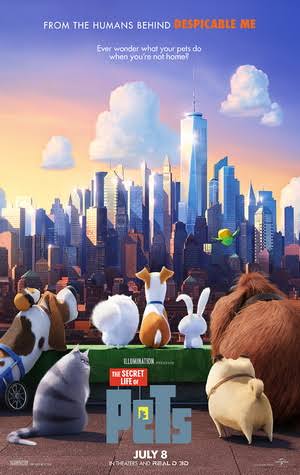
SecretLifePetsWhen well-developed setups lead to brilliantly executed gags, throw in some adorable house pets and endearing street animals and you get Universal Pictures and Illumination Entertainment’s answer to what toys do when the owners aren’t around, The Secret Life of Pets. More precisely, this movie could be described as Toy Story meets Oliver and Company meets Homeward Bound. Backed by an exquisitely talented cast of voice actors and excellent writing, The Secret Life of Pets could be what ushers Illumination Entertainment (an NBCU company) into the ring with Disney-Pixar. Prior to this movie, Illumination/Universal certainly created some fantastic animated films including The LoraxDespicable Me, and others; but this film is the first to really be on par with the Disney-Pixar quality that many of us have come to love and expect. Fast-paced and comedically timed very well, this movie is sure to entertain and warm the hearts of anyone who sits down to watch it. Is it quite as endearing as Toy Story? Not exactly; but it is very close and serves as evidence that we should come to expect this quality and higher of animation from Universal/Illumination. Although the movie is marketed to kids and teenagers, there is certainly enough comedic subtext, easter eggs, and nods to films that adults will greatly appreciate as well. One of my personal favorites is in the Millions short film before the feature. One of the minions is wearing a hat that states “let it grow” while he’s cutting the grass.

When Max (Louis C.K.), a spoiled terrier living in a New York City apartment building with a beautiful view meets his new roommate, his perfect world is rocked. New roommate Duke (Eric Stonestreet), a giant rambunctious dog, mixes as well with Max as oil does with water. They are complete opposites in nearly every way. Max soon gets the idea to set Duke up for failure by sabotaging the house. Unfortunately that idea backfires and just serves to stoke the fire of animosity. After a prank in the park takes a turn for the worst, both Max and Duke are lost in the seedy underbelly of New York City. One step forward and two steps back is exactly the pace of the journey home for both canines. Following a run-in with a street gang led by the ferocious but cute bunny Snowball (Kevin Hart), Max and Duke find themselves in Brooklyn after escaping the hoard of animals bent on their destruction. Along the journey home, Max and Duke are forced to work together and support one another in order to have any hope of returning to their comfy apartment.

The Secret Life of Pets‘ success is in-part due to the successful setup and payoff of gags. This can be a dangerous platform on which to build an animated comedy because there is a high risk of the narrative primarily resting upon the gags instead of the gags enhancing the diegesis. Fortunately for audiences, this film successfully pairs a well-developed and paced narrative that will keep your attention and deliver laughs for the entire runtime. Sometimes comedies, whether animated or live action, can spend too much time in the development of gags rather than on the visual storytelling. For instance, some movies write the gags first and then try to integrate a story that attempts to tie all of them together. What I appreciate about The Secret Life of Pets is the strong story inclusive of sight gags and double entendre humor to satisfy a diverse audience from different backgrounds and ages. In addition to the writing, the vocal talents are also instrumental in the success of this animated feature. Leading the “pack” are of course comedians Louis C.K. and Kevin Hart, but the entire cast is perfectly pairs with his or her animated persona. For the cat lovers out there (and yes, I am one of them), there are deftly come good comedic jabs at dogs. But the dogs also get in some good ones on the cats. Haha.

The setting of the movie is New York City, or an idealistic surreal New York City slightly augmented to fit the pacing, genre, and feeling of the film. I’d like to know what job Katie has to be able to live by herself in an apartment with such a beautiful view. But I suppose it’s just as well that we don’t since the focus is on the dogs. On the view from the apartment, though. Much like the view from Frasier’s upscale urban trend-setting apartment in Seattle faced a view of the Seattle skyline that doesn’t actually exist, unless you are looking at downtown from the surrounding mountains and hills, I am not entirely sure the view from Katie’s Manhattan apartment exists either. The view of the city seen from Frasier’s apartment was selected in order for the Space Needle to have a prominent placement in the skyline. In the same vein, I believe that the unrealistic view from Katie’s apartment was selected in order for the Freedom Tower to have a strong presence. I know, I am analyzing an element that doesn’t really have an affect upon the film; but since the film is actually very well done, I thought it would be fun to look at the setting of the movie.

Although I can almost guarantee you that his film won’t see an Oscar nom in the animated feature category, much less a win, since the Academy believes that only Pixar can create Oscar-worthy animated films, I find The Secret Life of Pets to be a fantastic animated feature filled with action, adventure, comedy, and some touching moments as well. All around, it is enjoyable for the whole family and will cause many owners to wonder what their pet does while he or she is away at work. One of my favorite parts of the movie is the musical sequence at the sausage factory. So much symbolism to discuss. Haha. So, yes. This movie even includes a musical number worthy of–I am sure–many memes to come over the next few months.