
 Just as audiences are fascinated by horror movies and seek to watch that which would be repulsive in real-life, they are equally fascinated in immersing themselves into the experience by way of a theme park attraction. This phenomenon is not limited to horror movies, because rides like Jurassic Park the Ride (Jurassic Park River Adventure in Florida), Revenge of the Mummy, and Pirates of the Caribbean beckon millions of guests a year. In addition to attractions based on the movies, movie studio executives and theme park engineers created attractions that embody what Carl Leammle first envisioned, by taking the audience behind the magic of the movies. This is the case with the (now closed) Backlot Tour at Disney’s Hollywood Studios and Hitchcock: The Art of Making Movies at Universal Studios Florida (Murdy, 2002). The relationship between the cinema and theme parks is a strong one and creates an energetic synergy that entertains millions of people each year by eliciting laugher, screams, tears, and smiles.
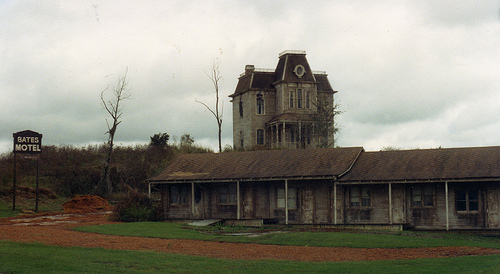 The most admired and revered part on the famous studio tour at Universal Studios Hollywood is the Bates House and Motel. As the tram passes the iconic motel and house that set the bar against which all other slasher films would be judged, an actor portraying Norman Bates charges toward the tram wielding the famous butcher’s knife (Murdy, 2002). Even though the audience knows this is a tour behind the scenes of the most utilized backlot and studio in the world (Milman, 2001), there is something uniquely special about this chance encounter on the tour. And, that something is what the designers of the guest experience on the studio tour use to bring about the successful convergence combining both the original movie and the live experience. In order to successfully complete the transposition from the movie to the live experience, the attraction designers tapped into the uncanny or unheimlich (Freud, 1919) of Psycho and utilized the elements of terror and shock to facilitate the aura of horror that exists just by looking upon the timeless motel and house.
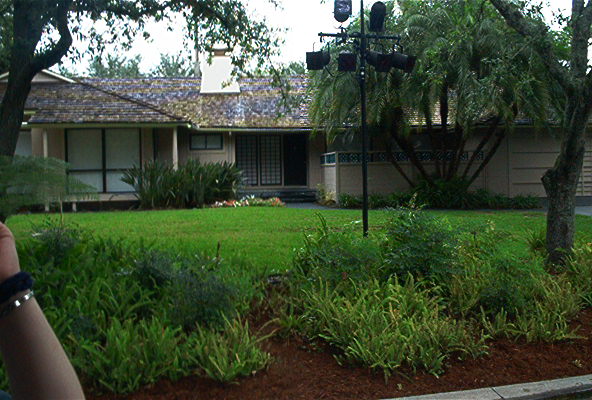
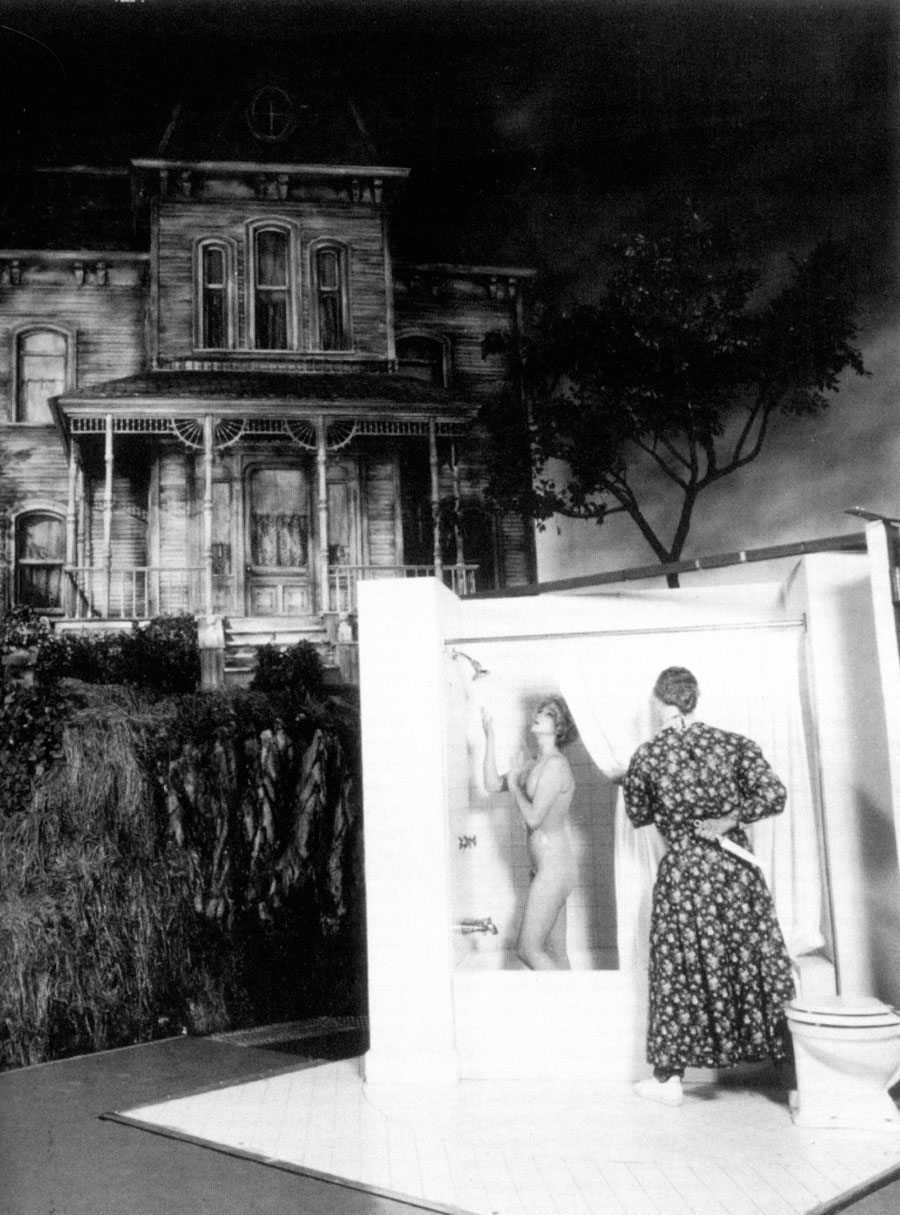 Central to Psycho and the single most famous scene in cinema history (Cosgrove, 2013) is the groundbreaking shower scene. And, it is the highlighted element at the former Universal Studios Florida attraction Hitchcock: The Art of Making Movies. One of the opening day attractions located in the former Production Central area of the park (Singer, 2013), this attraction took park guests into the world of suspense and horror as meticulously crafted and defined by Alfred Hitchcock (ThePsychoMovies.com). Although it was replaced with a less critically important and pivotal movie themed attraction in 2002 (mostly to attract younger audiences), it is an excellent example of the fusion of horror cinema and themed entertainment attractions. In addition to the Art of Making Movies attraction, there was a recreation of the infamous motel and house in the park built for the filming of Psycho IV: The Beginning in 1989-90 (MovieMassacre.com, 2014). For those who have seen Psycho, the very sight of the motel and house is enough to strike fear into the mind and bloodstream. It is representative of the very best that horror cinema is able to offer society. In no attraction, based off a work of horror, is there a better example of the very essence of horror films than in the synergistic experience of beholding the four-fold elemental process of the Hitchcock: The Art of Making Movies attraction (Singer, 2013).
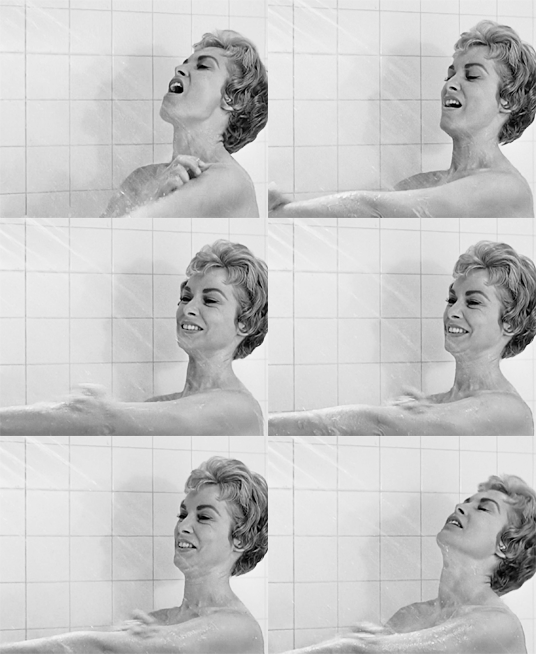 Prior to ‘psycho’analyzing the attraction of horror, it is imperative to understand why the shower scene is the single most famous scene in all cinema. The shower scene is a roller-coaster of emotions; and, in many ways, this scene in and of itself follows the basic structure of a story (introduction, rising action, climax, falling action, and denouement). The scene begins with Marion closing the shower curtain as we get a closeup shot of her face as the shower turns on. Given this closeup, the facial expressions are easily denoted on her face. The flows of emotions on her face resemble the face of someone who is being cleansed from or baptized for their transgressions. This emotional transition is made more clear when comparing this scene to the earlier one with Marion and Norman in the office when she suddenly feels as if she “stepped into a private trap” and wants to see if she “can step back out of it” (Psycho, 1960). In addition to the metaphoric sin cleansing affect of the shower, Marion is also physically and emotionally exposed and vulnerable. And, what about that showerhead? Throughout the movie, there are eyes on Marion (real estate buyer, boss, police officer, mother’s eye, etc…). The frequent cuts to the showerhead essentially imply the showerhead as yet another eye watching Marion. Furthermore, the frequent cuts to the showerhead also help to create the sensation that something is not right.
Following the symbolic cleansing in the shower, the audience witnesses the shadowy figure emerging from the bathroom door and walking up to the infamous shower. Due to Hitchcock’s use of the cinematic rule of thirds, we are already expecting the entrance of someone before the door ever opens. Through the eyes of the camera, we see Marion’s private space is violated by this shadowy figure. The camera slowly zooms in to the figure through the opaque curtain until the moment when the shadow throws open the curtain and there is a closeup of Marion’s face exhibiting total terror as the knife is raised against her.
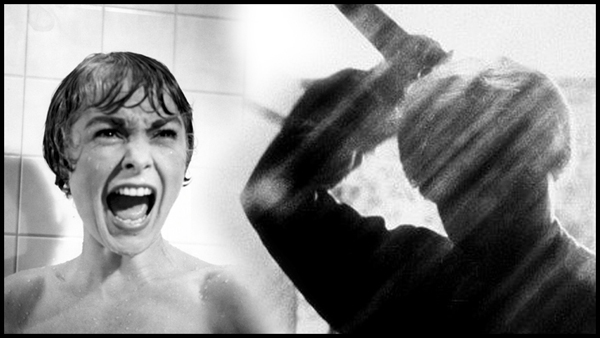 Immediately after the shots of Marion’s iconic scream and the knife, the speed of the cuts increases exponentially. Aside from having to creatively cut the film in such a way that neither Marion’s naked body nor a knife officially penetrating her body is seen, the speed was necessary to enhance the disorientation and violence of the relatively short montage. Through both objective and subjective shots, we are both mother and Marion within hundredths of seconds of one another. The precise cuts in the film give the illusion that Marion is being stabbed multiples times; however, there is only one shot that captures the knife barely penetrating Marion’s vulnerable and exposed flesh. The terrifying key to this scene is the fact that very little violence is actually seen; most of what is shock-inducing is what is not seen and implied through the artful use of music, cuts, and angles. Hitchcock once said, “there’s nothing more frightening than an unopened door.” This implies that there is a greater fear of what in unseen than that which is visible in the diegesis on the screen.
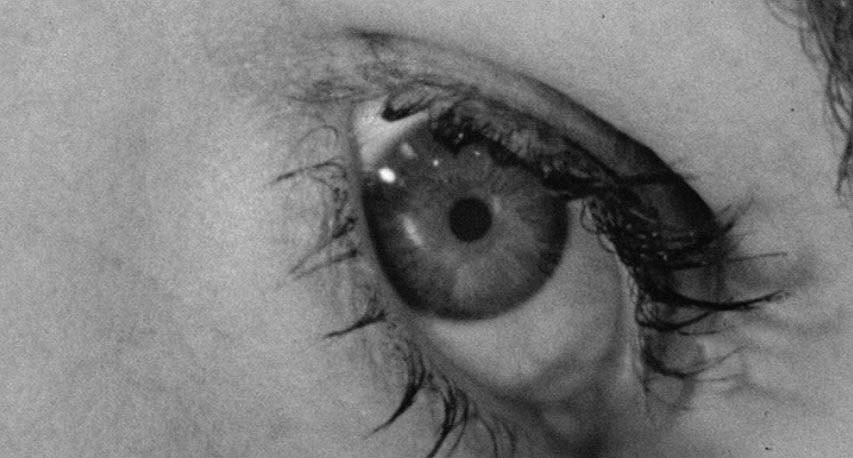 It is nearly impossible to closely read this scene without acknowledging the most famous orchestral screeches in cinema history. Those famous screeches greatly enhance the disorientation and terror of the scene. Coming out of nowhere, the terrifying sounds from the orchestra create the sound design for the knife penetrating Marion and slashing her to death. One could cut to black and allow the music to be heard throughout this iconic scene, and the audience would still feel anxious, macabre feelings and shock. Interestingly, this same action would also reveal how short the shower scene really is. Regarding the sound design, there is much more of the water heard than the sounds of murder. Following the murder, the score greatly slows down and deepens. This musical movement allows the audience to reflect upon what has just occurred and begin to contemplate the various consequences of mother’s actions. Lastly, the camera slowly spirals out from Marion’s eyes symbolizing that everything Marion planned has just gone down the drain through this seemingly random act of violence, and then there is a cut to the drain of the bathtub itself cementing this metaphoric notion. Keeping with the reoccurring theme of eyes, this also reinforces the fact that the eye is the window to the soul and someone is always watching.
CONTINUED NEXT WEEK. Check back next Monday 🙂
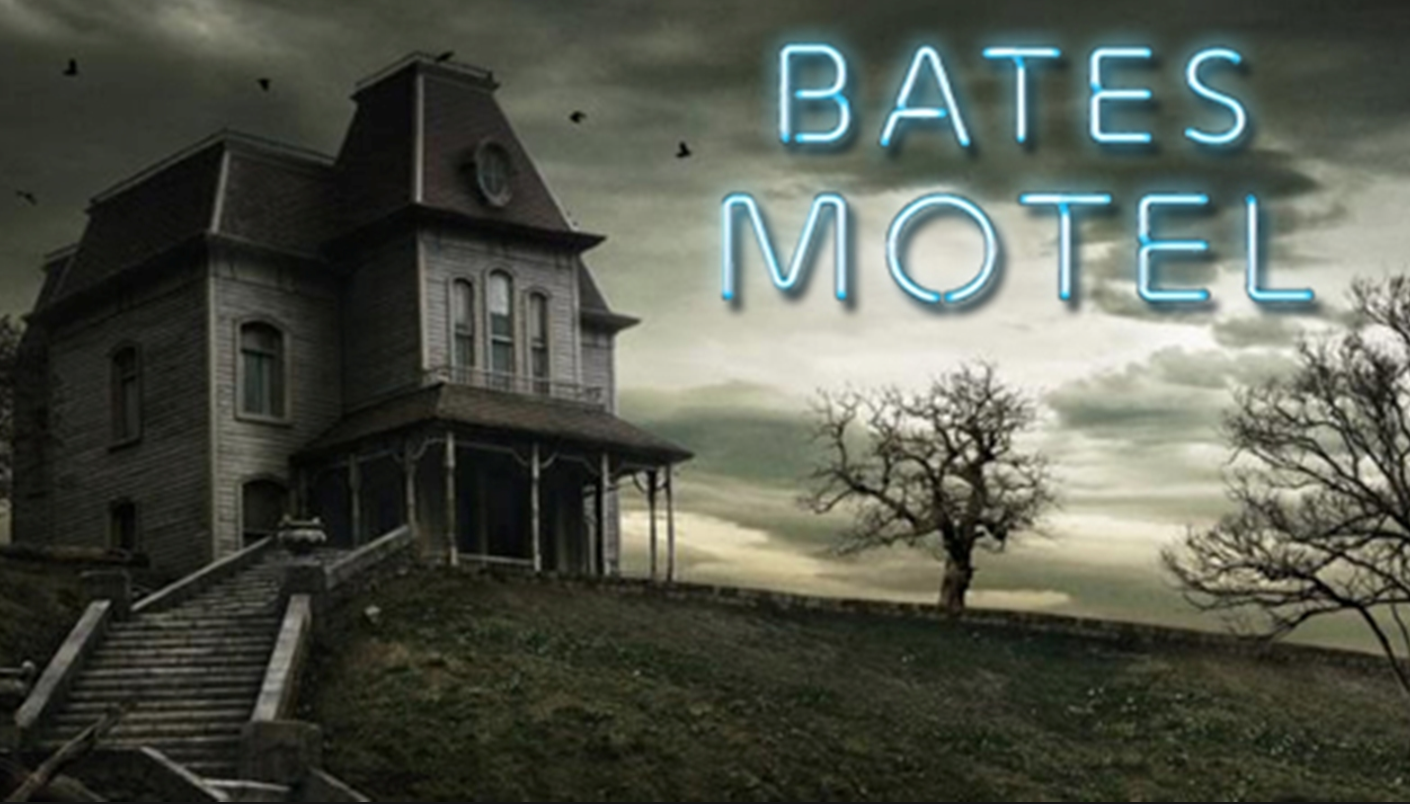 Don’t forget to watch Bates Motel on A&E tonight! It’s the season finale and it’s going to be intense!

 R.L. Terry ReelView