Holiday Magic at SeaWorld’s Christmas Celebration and Busch Gardens’ Christmas Town

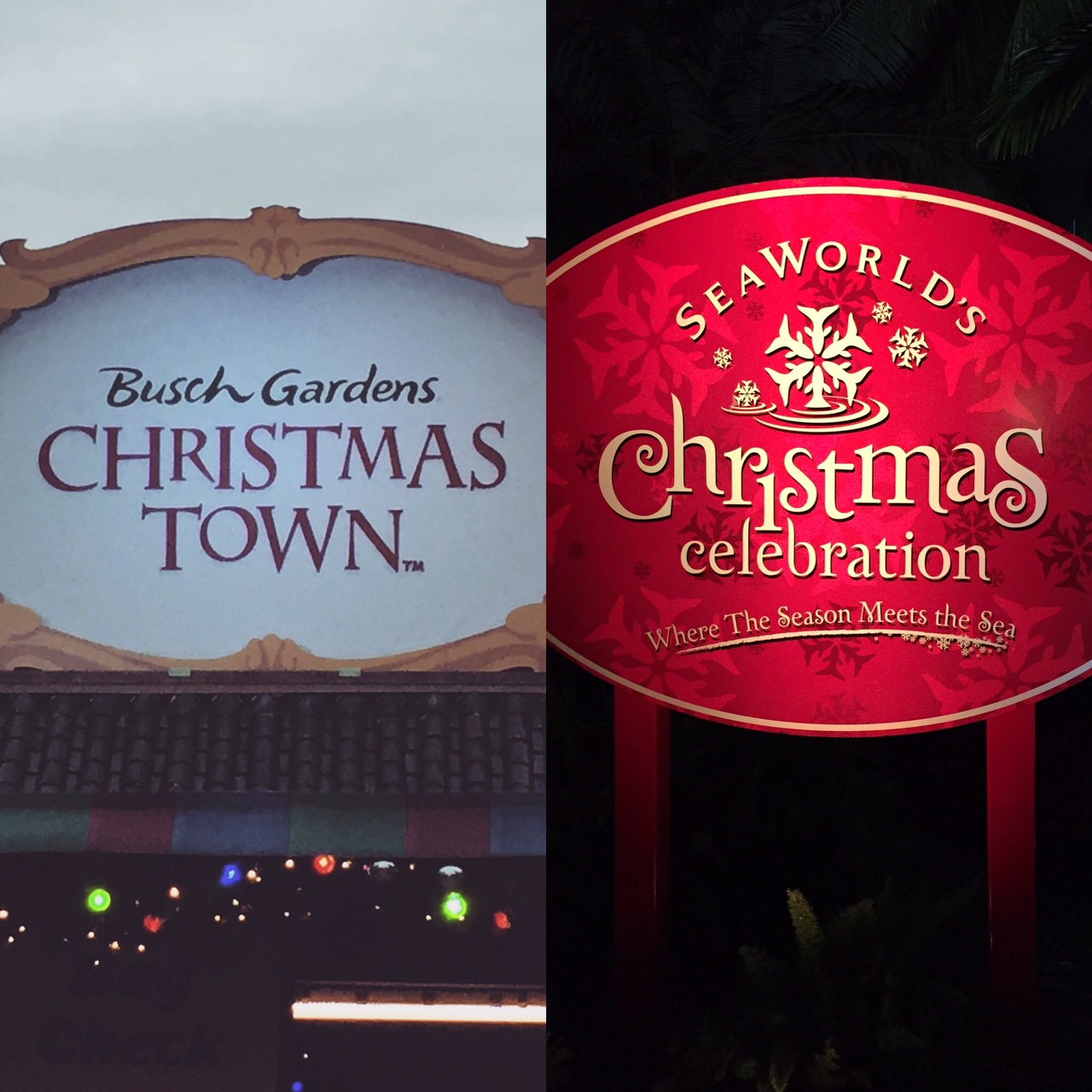
img_8142Central Florida is definitely not short on places to spend the holidays! From the theme parks to the zoos, aquarium, and large resorts, there is something for everyone. Last weekend, I experienced Christmas Town at Busch Gardens Tampa Bay and Christmas Celebration at SeaWorld Orlando. Both events feature Rudolph and his friends as well as Santa and his elves; however, the parks differ in the shows and other offerings. So, even though you can meet Rudolph and Santa at both parks, you will find that both are well worth a visit and will both contribute uniquely to your Christmastime celebrations! Since SeaWorld Orlando and Busch Gardens Tampa Bay are only one hour from each other, they both essentially pull on the majority of the same local population. Therefore, as similar as many of the experiences are, the offerings have to be different enough in order to convince locals to visit both. Having experienced them within the same weekend, I’ve been able to analyze the similarities and differences while both are fresh in my mind. If I had to sum up the experience at both Christmas Celebration and Christmas Town respectively, the one word that best encapsulates the overarching theme is nostalgia. From the Rudolph the Red Nosed Reindeer characters to the music, shows, and lights throughout the parks, the individual elements are combined to showcase a more traditional Christmas blend of carols, [Florida] snow, light-covered buildings, nativities, and live shows…For the full article CLICK HERE!

Such a variety! I think that is what I like best about how Busch Gardens and SeaWorld created this year’s Christmas limited engagement events. Whereas Disney’s Mickey’s Very Merry Christmas Party is a pricey hard ticketed event, SeaWorld, Busch Gardens, and even Universal’s holiday celebrations are included with with either your annual pass or day-ticket. That in and of itself, makes the SeaWorld and Busch Gardens events that much more fun! Why? Because it is quite difficult to fit everything in one night. Although the Christmas Celebration and Christmas Town events ARE included with your annual pass or day admission, the majority of the magic does not begin until the latter part of the afternoon. Unlike during Howl-O-Scream when Busch is opened until 12-1am, it closes at 9-10 during Christmas Town. SeaWorld keeps similar operating hours at Christmas to that of the Spooktacular. With the relatively abbreviated Christmas hours (as compared to Halloween), you may find yourself planning a return trip to the parks respectively or contemplating an annual pass. Since I go to the parks regularly, I have efficient time management down to a science and even I cannot get it all in. Even as I write this, there are some offerings I was unable to experience at both parks this past weekend. So, I am definitely going back! If you are only planning one trip to one or both, get there early and do your best to plan out the order in which you and your friends/family are going to experience everything.

Christmas Town at Busch Gardens is an annual event that has been going on since 2012. For the first two years it was a separately (hard) ticketed event but since 2014 has been included with day admission and annual passes. Since the event went from hard ticketed to complementary, there has been a mitigation in specialty offerings; however, the event is still full of holiday cheer and a great assortment of character meet and greets and limited engagement shows. There are so many wonderful photo opportunities throughout the park with beautiful and fun backdrops. The entire park is open with a few exceptions, meaning that you can ride all your favorite rides at night! For those who are familiar with the late Pinky [the dancing flamingo], there is a tribute to her near the front entrance with lots of pink Christmas lights. If you enjoy hearing traditional Christmas hymns, then be sure to stop by Christmas From the Heart in the old Madagascar stage. It’s a classy show with small band, and a moderately sized chorus. Perhaps you prefer traditional and contemporary pop hits! Then, stop by the Christmas Celebration show in the Pantopia Theatre. With a wide range of hits featuring some of your favorite singalong tunes and of course Santa himself, this show is incredibly fun and festive. The cast and crew at the Moroccan Theatre put a Christmas spin on the daily iceskating show that is certainly not to be missed. Don’t forget to stop by the Crown Colony restaurant across from Cheetah Hunt to watch thousands of dancing lights move to the beats of Trans-Siberian and Mannheim Steamroller. Think of it as Osborne Lights lite. An incredible assortment of shows that feature lots of different kinds of music and acts with the central theme of Christmas. I love the variety of shows because they do not feel like something that you can get everyday. Feels truly like a special seasonal event.

Headlining Christmas Town (and Christmas Celebration) this year is Rudolph and his friends from the Rankin-Bass holiday classic. Even before meeting the characters, the queue is filled with little vignettes from the movie–great for photo opportunities. You get to meet Yukon Cornelius, Bumble, Clarice, and Rudolph! There are also some wonderful plushies (I bought one) and ornaments to choose from in the gift shoppe. A staple at Christmas Town is Santa’a House sponsored by Coca-Cola. Appropriate because the whole idea of the red jolly Santa we all know and love comes from a Coca-Cola ad campaign. Even before meeting the big man himself, you get to spend time with elves and Mrs. Claus. One elf in particular–Curley–she was incredibly friendly and created a warm inviting atmosphere from the time she opened the door! It’s more than a meet and greet, there is an entire show element to the Santa experience. Lastly, no review of Christmas Town would be complete without mentioning the Singalong Train! Boarding at the North Pole station outside of Santa’s house, park guests can ride the train (normally used for the safari) and ride around signing Christmas carols and songs with one another. Takes the idea Christmas caroling to the next level! The singalong train is always my favorite activity at Christmas Town.

Just a hop, skip, and a jump away from Busch Gardens is SeaWorld’s Christmas Celebration. At Christmas Celebration you’ll find Rudolph and his friends as well as Santa Claus but there is so much more that is truly different from Christmas Town. SeaWorld transforms their seasonay operating Ports of Call into a Christmas Village! From a miniature train sets to live acts, the Christmas Village is incredibly festive and fun! Be sure to get some hot cocoa. So many wonderful places to take selfies and group photos. I love all the lights! Speaking of lights, you will definitely be able to watch the Sea of Trees light up and dance to some of your favorite Christmas songs. You can either catch the show shoreside or take a stroll along the boardwalk across the lagoon. Over one million lights! Much like Busch Gardens, SeaWorld also has some stunning seasonal show offerings to delight everyone young and old. Although not part of daily operations, SeaWorld also has an iceskating show at Christmastime. Winder Wonderland on Ice is a terrific show featuring talented figure skaters moving to many different carols and songs. Preceding the show is SeaWorld’s answer to Straight No Chaser. The male quarter entertains the audience for about 20mins with excellent harmony and jokes. If you’re lucky, you’ll time it just right to watch the Sea of Trees while you are waiting on the ice show to begin. Although I miss The Polar Express overlay on the Arctic Adventure, there are still many other rides available when you want a break from shows and character meet and greets.

Both the Clyde & Seamore and Shamu shows receive holiday overlays during Christmas Celebration. Since I did not experience the Christmas Miracle show at Shamu Stadium, I am unable to comment on that, but the Clyde and Seamore show’s Countdown to Christmas was fantastic! Even on a regular park ops day, it is one of my favorite shows at SeaWorld. Clyde and Seamore are back and funnier than ever in this holly jolly holiday show. Countdown to Christmas is about Clyde and Seamore’s goal to meet several requirements so Santa can visit! The most popular Christmas show a SeaWorld is not Clyde & Seamore nor Shamu, but O Wonderous Night located in the Nautilus Theatre. Not your typical nativity story, O Wonderous Night centers around the animals located in the stable where Mary and Joseph took baby Jesus more than two thousands years ago. We get to here the nativity story from the perspective of the animals who each played a special part in that wonderous night. If you plan to watch that show, you need to know that it is important to queue up at least an hour before showtime. It consistently fills up prior to curtain. Although Busch Gardens also has a Christmas Village in Gwazi Field, the village at SeaWorld seems to have more to offer.

Well, there ya have it! Two phenomenal ways to spend the holidays with your friends and family. Or, be like me and experience it Han style–solo. Although you might think that it isn’t as much fun on your own, you can still have a blast celebrating Christmas at SeaWorld Parks and Entertainment this holiday season. Lots of opportunities to sing, dance, and even meet some favorite characters along the way. Especially for those who enjoy a more traditional Christmas, these parks are the place to be. I guarantee that it will feel Christmassy from the time that you enter the park. It is so important that the parks make seasonal events feel special and unlike what you can typically get as part of daily/regular operations, and Busch Gardens and SeaWorld know how to create that holiday magic to warm your heart.
 

Busch Gardens Tampa Bay “Howl-O-Scream Evil Encore” Review

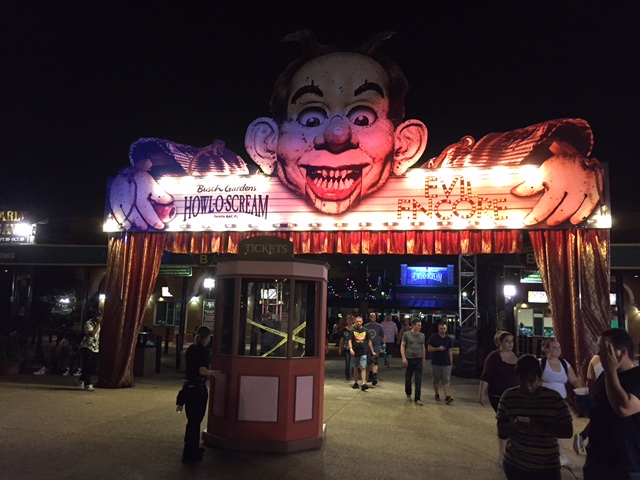
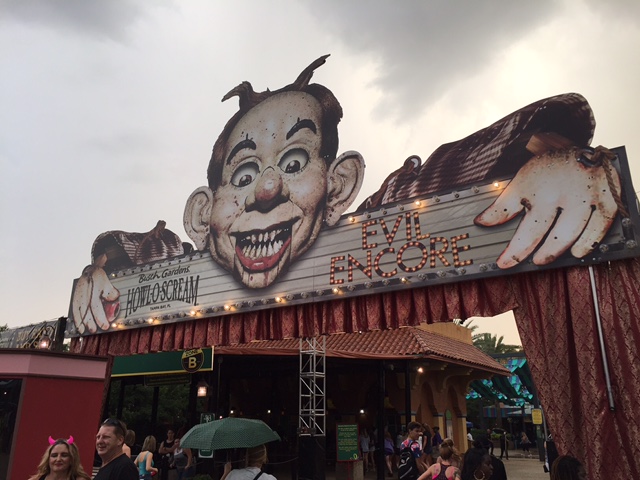
img_6708A frightfully fun experience where all areas of the park are fair game for a scare. It’s that time of year again. Time to place yourself in terrifying situations, and ‘live’ to be scared to ‘death.’ Instead of running away from that which would ordinarily repulse ourselves, we pay money for the experience of nightmare-generating haunted houses and scare zones. In Central Florida, we are definitely not short on Halloween events. All the theme parks, also zoos, aquariums, and even museums hold special Halloween parties or events. The four most popular events are arguably Universal’s Halloween Horror Nights (HHN), Busch Gardens’ Howl-O-Scream (HOS), Disney’s Mickey’s Not So Scary Halloween Party, and SeaWorld’s Spook-tacular. Of those, HHN and HOS are the most popular for a conventional “scary” Halloween experience. Although I have not been to HHN yet, I did attend HOS over the weekend, and would like to share my thoughts with you. The aim of this analysis is not to determine which is better: HOS or HHN, because they are totally difference experiences; but the idea is to reflect upon the event and provide you with a look into “Evil Encore.”

For the latest news and information on theme parks, dining, and more, visit Thrillz.co!

img_6724The best part about HOS is the simple fact that every park guest, provided they arrive at or close to the opening time, has sufficient time to experience the 8 houses and Fiends show, plus the scare zones and photo-ops. You might even get a chance to ride some of the best roller coasters that Central Florida has to offer at night, including Busch Gardens newest coaster Cobras Curse. For most of the guests (who are generally locals from Tampa Bay, Sarasota, Gainesville, or Orlando), the main focus of the event and time is on the haunted houses. Although my friends and I got caught in the rain at the start of HOS, we were able to experience nearly everything! Unfortunately, I did not get to experience Zombie Containment Unit because the house was down for technical difficulties (but I did experience it last year). After reports of low crowds on Friday night, I was anticipating the event being slow and not crowded–I was wrong. Comparing Saturday night to past years, there definitely seemed to be more people than in the past. Still, the longest queue (wait/line) was for Zombie Containment Unit at 60mins; most of the other houses were 45mins or less. All of the rides also had low wait times under 30mins (except Cobra at 60mins).

Before breaking down the houses for you, I would like to provide further analysis of the event experience itself. There is no argument that HHN boasts a far higher production value than HOS. However, does that mean that HOS is less fun or less scary? Definitely not. In fact, over the years, I have come to the conclusion that HOS is scarier than HHN. Why is that? Supporting evidence of this anecdotal observation and opinion can be seen in the actual scare factor. I mentioned in my opening paragraph that the whole park is fair game. What I mean by that is the park is crawling with solitary roaming scare-actors and hoards of the undead. My favorite atmospheric jump scares is–what I call the–bush people. You never know when one of this camouflaged creatures of the night will jump up from the darkness and scare the s#!t right out of you! My friend Dani is practically never scared, but the bush people get her every time. I cannot take complete credit for the observation about the whole park being fair game; my friend Derek made that remark when we were reflecting upon our experience in the short car ride back home. It’s never a dull moment at HOS with my friend Brittany (who provided the tickets for our admission). She is so much fun o go with because of how intensely she gets scared and screams! Take my advice, find yourself a Brittany and attend a halloween event near you.

puppetmasterAlthough HOS does not have HHN’s production design quality, it does transform the whole park. The theming of the houses extends beyond the queue. Most of the queues themselves help to set the mood of the house. This idea is reinforced by themed scare-actors roaming the queue to keep everyone moving forward. Simply stated, since HOS cannot complete with HHN on IP and production design, it CAN compete with the scare factor; and time and time again, I am always more scared at HOS versus HHN. I am puzzled by one thing, and I cannot think of an explanation. If you’ve seen the Hulu ad or even billboard around Orlando and Tampa, there is a puppet master in a creepy circus or freakshow tent or workshop. Puppets are incredibly creepy and always make for an excellent horror plot device. I was really hoping to see a Puppet Master house or even puppets making a prominent showing at HOS. Unfortunately, there is not one puppet to be found and you’ll not find that puppet master from the Hulu ad either. Not entirely sure why Busch Gardens advertised puppets but failed to deliver any. Feels a little like a bait and switch. Other than being disappointed from the lack of evil puppets (I know it wasn’t supposed to be connected directly to the movie Puppet Master, but that movie terrified me as a kid and I was looking forward to reliving that frightening experience), I was delightfully impressed at the number of scares and increase in the production design and quality of the houses. This event is definitely showing signs of growth in terms of guest attendance and creative design.

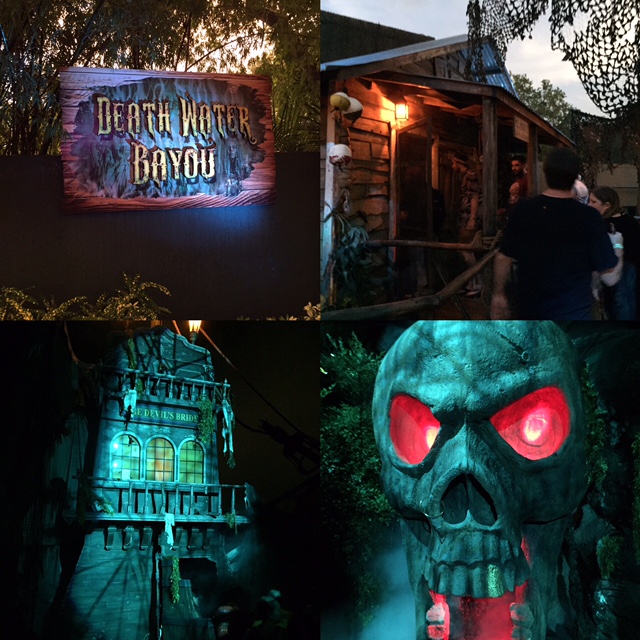
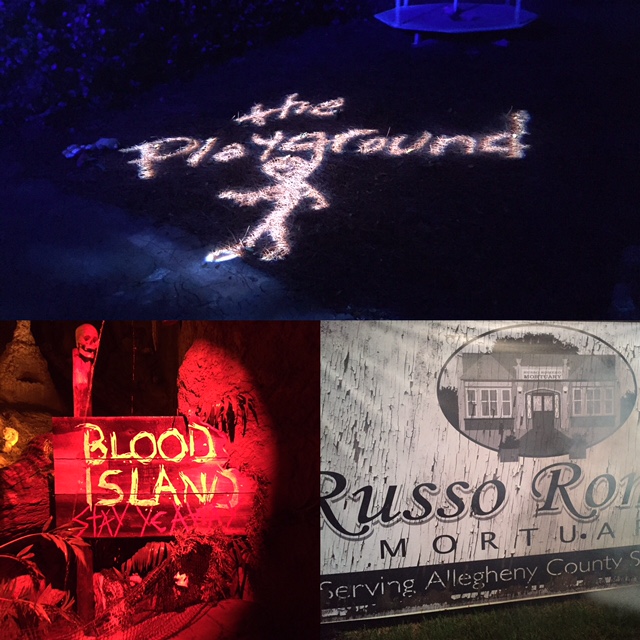
img_6722The house closest to the entrance is Death Water Bayou. Upon entering this house, you are instantly transported from Tampa to the bayous of southern Louisiana. Setting the mood of the house and creeping you out from the very beginning is a voodoo priestess. Throughout the house, you will encounter much of what you expect, and even some unexpected deathly surprises. The quality of the design of the house is fantastic! I love the feeling of going in and outside of buildings. I have never traversed a swamp before, but I imagine that walking through a really creepy swamp in southern Louisiana would feel very similarly. Following a mostly safe return to Tampa, my friends and I headed for Zombie Containment Unit. Finding the wait to be more than an hour, we decided to head for one of this year’s new houses Black Spot. On the way to Black Spot we walked through a disturbing playground featuring some of the props from the former Dead Fall house. I recognized the merry-go-round and tea party and more. While we were walking though the scare zone, one of the scare-actors followed Brittany and Dani very closely. It was all Brittany could do to ignore his ominous presence. Black Spot was incredibly well done. It is located where Dead Fall used to be (former Tidal Wave). From the pirates to the sirens, the scare-actors truly brought the world of curses, pirates, and adventure to life–or death rather. The queue leading up to the main entrance was filled with props, scare-actors, and structures to effectively transport you to some remote deserted island somewhere in the caribbean.

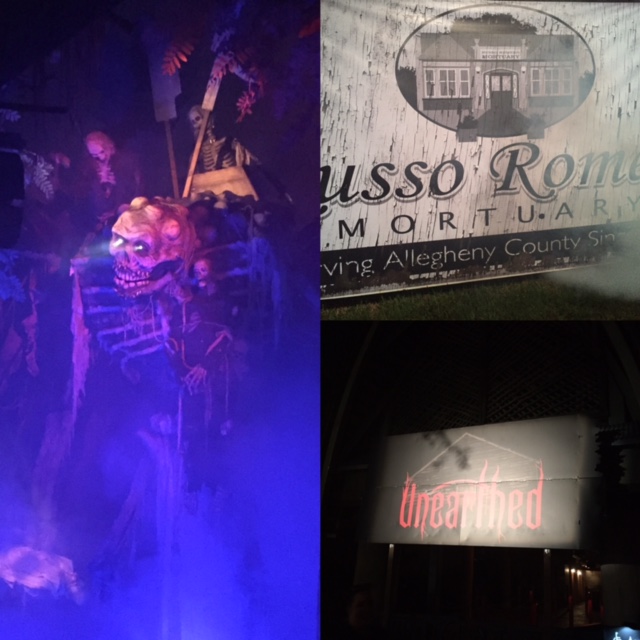
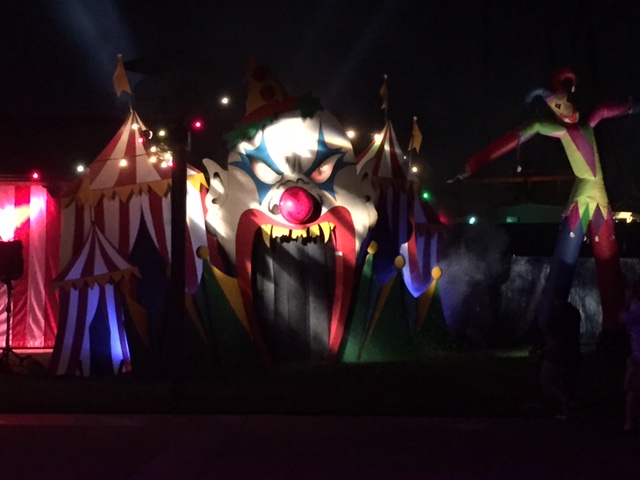
img_6801The next stop on our terrifying journey was to visit some dearly departed loved ones at the Zombie Mortuary. This house has been around for a few years, and has pretty well remained the same. You make your way slowly through the scariest mortuary you’re ever been in. From the dead rising out of coffins to those trying to escape the flames of being cremated alive, this house is sure to please the zombie fans out there. Making a ‘return’ this year, is last year’s new house Unearthed. Largely unchanged, this house increased the production design and added more effects. Most notably is the incredibly amazing even tree animatronic in the queue just before entering the house. Derek, who is typically all about HHN, was extremely impressed. Moreover, we were all mesmerized by the sinister tree and the twisted, mangled branches that have destruction emanating from the few leaves left on the ancient bark. I was glad to see that the horned women was nowhere to be found. She did not really fit the theming last year either. Although Unearthed did not impress me last year, I very much enjoyed the experience this season. No Halloween event would be complete without a trip through the “greatest show on earth.” What is img_6729creepier than a sinister clown or circus? Not very much, especially if you are already terrified of friendly clowns. Circus of Superstition returns with the most macabre sights and sounds of the big top. With available “3D” glasses (more like augmented-ish reality), the colors and lights of the circus will be intensified. From breaking mirrors to walking under ladders, you are certainly going to test your luck in this house.

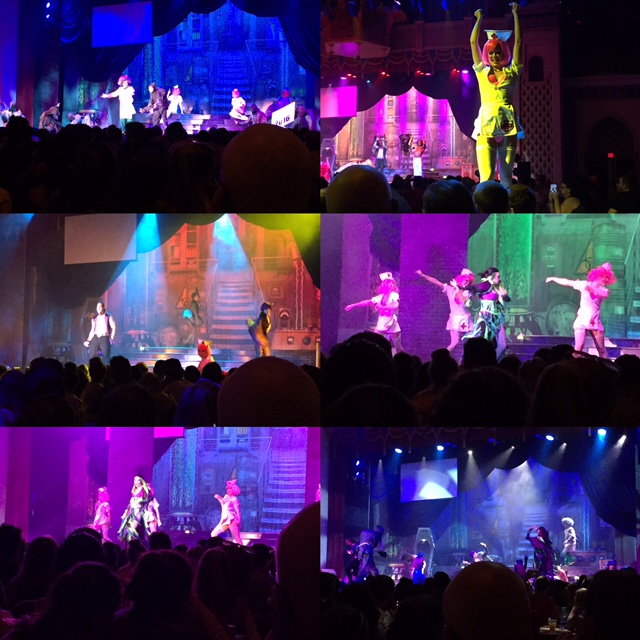
img_6752One of my person favorite parts of HHN and HOS are the live shows! These shows are always a fun way to break up the frights. Some of the best horror films have a splash of comedy in them, and the Halloween events are no different. HHN has Bill and Ted’s Excellent Halloween Adventure and HOS has FiendsFiends is a Halloween themed show featuring hot shirtless guys, sexy female nurses, and the headlining antics of Dr. Freakenstein and his trusty sidekick Igor. Like with other parodies and satire out there, this one was quite political. The best part of any presidential election is the amount of material available to comedy writers and comedians. Between the sketches, there are dance numbers usually featuring whatever the most popular songs from vocal artists or bands are that year. Like clockwork, Fiends always ends with the cult classic Time Warp from Rocky Horror Picture Show. If you are one of those parents who brings their kid to HOS, I highly advise not to bring them to the show. The material int eh show is definitely PG13, if not for mature audiences. This year’s Fiends was completely irreverent and pandered to college students, just as it should! If you do not laugh during this show, then I feel sorry for you, haha. Since this is a presidential election year, I would have liked to have seen more parody and satire directly related to Clinton and Trump, but perhaps Busch Gardens didn’t want to push the envelop too far.

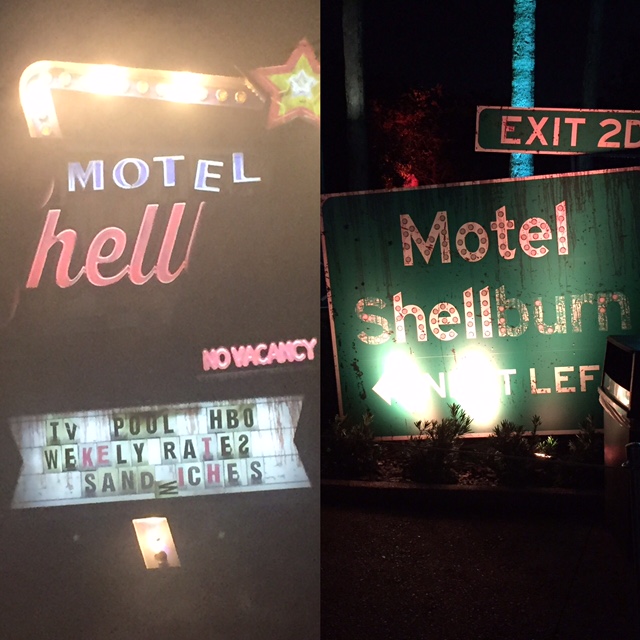
img_6759Last but not least, we checked into Motel Hell. Not to be confused by the 1980s movie by the same name, Busch Gardens’ Motel Hell is probably the best designed HOS house to date. It was arguably an HHN quality house and boasted so many scares! The best part: creepy old time 1940s scratchy music from a record player. I really felt like I was visiting an old rundown motel in some jerkwater town that fell to the wayside when the interstate or expressway can through. It was a motel frozen in time. Even the entrance to the motel looked like something right out of a movie. From the lobby to guest rooms to the pool, this is one motel that you will not find anywhere on TripAdvisor. For most of the houses, when you look above you, you see rafters or even the roof of the sound stage or tent; no so with Motel Hell. Although there are places where you look up and the illusion is broken, there were rooms in the motel that had a ceiling. This ceiling creates an instant claustrophobic feeling that does nothing but intensifies the scares.

Running on select nights from now until the end of October, Busch Gardens Howl-O-Scream is not to be missed if you are looking for a fun time of scares and laughs.

img_6760

Theme Parks’ Newest Attraction: Pokemon GO!

Screen Shot 2016-08-01 at 9.14.37 AM“Gotta Catch ‘Em All,” and catching’em in the theme parks adds a whole new level of fun! In many ways, as the record breaking app from Niantic continues to develop and attract new players, an unofficial attraction is being added to many theme parks, if not all of them at this point. In Florida, the park that has taken the lead in attracting Pokémon trainers is Busch Gardens Tampa Bay. But catching common and rare Pokémon is not limited to Busch Gardens, but SeaWorldDisney, and Universal are also hotbeds of PokéHunting! Although catching Pokémon is possible in all the Theme Parks, to the best of my knowledge, Busch Gardens Tampa Bay launched continual lurethons in July and August to capitalize on the summer crowds. A lure is an item earned or purchased in the game that can be placed at a PokéStop to draw Pokémon to that area for 30 mins and a PokéStop is a landmark or location that offers you items like Pokéballs and potions when you are in close range of said stop. These lurethons are also highly effective for luring in locals after work during the week and on weekends. As I have been catching Pokémon in the parks over the last couple of weeks, I have made some anecdotal observations that I’d like to share. The most important one being, better invest in a portable charger!

Safety Note: Please remember to always look where you’re walking, do not trespass, cut lines or run. There’s tons of Pokémon out there!

If you have been to the theme parks, whether in Florida, California, or pretty much anywhere for the matter, you have likely noticed many park guests with their respective faces glued to their phones–more than usual that is. Or, you may have been behind someone briskly walking and then all of a sudden slows down, if not stops. Most likely, those park guests are playing Pokémon GO. Perhaps YOU are that park guest–I know I am. Haha. One of the first observations I’ve made as I have played in the parks is the social element. There is already a social element to the game in general, but it appears to be amplified in the parks. While walking around the parks, it was not uncommon for other Pokémon GO players to ask me what team I was on (Mystic, btw) or what I was trying to catch. A security guard at Hollywood Studios asked me how many Pokéballs I had lost while catching three Pokémon near his post. We then proceeded to talk Pokémon for several minutes. I greatly appreciate this new dynamic to the theme park experience. As I seem to be perpetually caught in the single life (ugh), I normally go to the parks alone. Knowing that this app provides a great platform for starting conversations with others who may be by themselves or with other Pokémon Trainers is really encouraging! Perhaps you and your friends love to take over gyms together. If gym battling is of great importance to you, then you will find some great gyms in the parks, especially if you’re looking for level 3+.

From the social to the experiential, this app has you covered while enjoying the parks! Although Florida is nicknamed the sunshine state, summer thunderstorms are no stranger to the typical afternoon. For parks like Busch Gardens and SeaWorld that have many outdoor attractions, the lightning can greatly hinder ride operations. Last week on a PokéHunt at Busch Gardens Tampa Bay, a message over the loudspeakers stated something to the effect of “outdoor attractions are temporarily closed due to inclement weather.” Under normal circumstances, I may have been disappointed that I couldn’t ride Cobra’s Curse, Montu, and more, but I was having so much fun catching Pokémon that I didn’t think twice about the coasters being closed. Many times when an announcement like that one is made, it is not uncommon to hear park guests complaining. Despite the closures, I did not hear nearly as many guests complaining about not being able to experience the coasters. Could that be because many of the guests, like me, were also playing Pokémon GO? Perhaps; although, without asking a significant number of guests, there is no way of knowing for sure. Pokémon GO is not unlike other scavenger hunts in the parks. Notably, Disney’s Sorcerers game is a prime example of an interactive scavenger hunt. It is entirely possible that there could be exclusive Pokémon primarily found in the parks if this trend continues. Playing games to pass the time in queue or walking between attractions is definitely not a new concept, but Pokémon GO provides park guests with a game that helps pass the time, provides opportunities to interact with other guests, contains many challenging and strategic elements, and will keep you entertained even when attractions are closed.

There have been many articles written previously on the health benefits of playing Pokémon GO, so I don’t feel the need to explore the required increased physical activity–required, that is, if you want to enjoy all the benefits of the game–that is associated with the app. However, I think it’s important to look at the physical activity element as it relates to playing in the theme parks. It can be quite physically, emotionally, and psychologically draining to walk from attraction to attraction in the summer heat. Fortunately, it appears as though playing Pokémon GO distracts one from negative thoughts or feelings during the endless walking. Now, walking between attractions or around the park, in general, is part of the fun! Racking up kilometers in the parks is a great way to hatch eggs. If you are unfamiliar with the game, one element of it is walking a certain number of kilometers (1.54mi/1K) to hatch the respective egg in the incubator. There are different distances (2km/5km/10km), and the longer the distance the more rare the Pokémon generally. I found myself taking the long way around a park or between attractions just to increase the number of kilometers walked.

Instead of taking away from the park experience, it appears as though playing Pokémon GO adds to the enjoyment of the parks. This is definitely true for those of us who frequent the parks weekly. Playing in the parks on a regular basis may generate a feeling of the theme park feeling like one’s backyard or neighborhood playground. And like with your childhood back yard or neighborhood playground, it forced you to use your imagination to create new adventures for you and your friends. It’s not that the neighborhood park was boring; it’s just that it was a regular part of your life. Being a theme park regular is not unlike the aforementioned. I have thoroughly enjoyed this new experiential element to my time in the parks. It’s like a whole new experience! In addition to enjoying my favorite rides, I can continually enjoy catching Pokémon and spinning the wheel at PokéStops. Oh yeah, there are SO MANY PokéStops in the parks. You may even find yourself having to empty your backpack because it becomes full. Although there have been some concerns about park guests finding themselves venturing into backstage areas, this does not appear to be a common occurrence. I am looking forward to witnessing how this game continues to affect theme park operations, offerings, and special events. Perhaps exclusive Pokémon will be added to the parks or special Disney Pokémon. With Universal acquiring the theme park rights to Nintendo in 2015, it is entirely possible that Pokémon GO may have a strong presence in the Nintendo themed areas even though Nintendo itself does not reserve the theme park rights to Pokémon GO. While Nintendo does own the rights to the regular Pokemon games, Nintendo currently has nothing to do with Pokémon GO; it’s strictly Niantic and The Pokémon Company. If you do not live close to the parks, I definitely want to encourage you not to be glued to the game when you have the opportunity to go; you may miss incredible sights, sounds, and time with family and friends. Playing Pokémon GO in the parks should add to the experience, not take away from valuable time with others. I’m always looking for folks with whom to catch Pokémon, so if you are ever in the Tampa or Orlando area, hit me up!

Find a rare Pokémon in a cool spot!? Tag @ThrillzCo or #Thrillz in your post to have a chance to win a Pokémon GO team decal for FREE! *Contest ends August 20, 2016. Many will play, not all will win.

Thank you Derek Rosenberg from Unmasked On Air for contributing to this article! If you enjoy video games, comic books, and movies, visit their website by clicking the link below.

https://www.youtube.com/channel/UCcjqKl_VAhsYj2uqbupAfQA


On Cinema and Theme Parks (part 2)

My Book

(Continued from Part 1)

Understanding the synergy or convergence that exists between the cinema and theme parks requires looking to the history of the relationship between the two entertainment giants. Before Disney’s Hollywood Studios (formerly Disney-MGM Studios), Universal Studios Florida, and more than 40 years before Disneyland was opened, the founder of Universal Studios (studio) German immigrant Carl Laemmle, opened his 250-acre-movie-making ranch, just north of Los Angeles, to the public for a mere $0.25 (Murdy, 2002). More than side income for the trailblazing studio, most well-known for its pioneering of the horror film, the original studio tour began on the outdoor backlot in March 1915. Laemmle desired to immerse the “people out there in the dark,” as famously referred to by Norma Desmond in the timeless classic Sunset Boulevard, into the magic behind the screen (Sunset Blvd, 1950).

Interestingly, according to famed psychiatrist Sigmund Freud, horror is often concerned with revealing “other” scenes to the audience (Freud, 1919). And, keeping with this theoretical approach to horror cinema, Laemmle opened this “other” scene to the guests of Universal Studios Hollywood.  But more than horror, Laemmle also brought the studio guests face-to-face with western action/drama (Murdy, 2002). From early in the 20th century, the concept of cinema and theme park convergence was born. The happy marriage, however, was not to last very long. Upon the introduction of cinema sound, Laemmle was forced to close the studio “park” to the not-so-quiet guests in order to facilitate appropriate recording sound for the motion pictures (Murdy, 2002). The Universal Studios tour would remain closed to the general public for over 30 years. But, in 1961, the studio would once again open its gates to a new generation of movie lovers (Murdy, 2002). Between 1961 and 1964, Universal outsourced the famed tram tour to the Gray Line bus company.  Following a feasibility study, conducted by researcher Buzz Price, the same man who helped determine the locations for Disneyland and Walt Disney World, Universal decided to start its own tram tour of its facilities, and Universal Studios Hollywood opened in July 1964 (Murdy, 2002).

Following the ending of the Studio System, the now bankrupt motion picture studios had been purchased by various conglomerates looking for new sources of income (Riley, 1998). One of the sources of income that studios began investing into was the concept of movie-based theme parks. With the opening of Walter Elias Disney’s Disneyland in 1955, Universal Studios made the decision to incorporate stand-alone attractions into its newly reopened studio tour (Davis, 1996). Both Disneyland and the future Universal Studios used their intellectual property (IP) as the basis for creating theme park rides, shows, and attractions. Although movie studios as a “park” began with Laemmle, in its current incarnation, the convergence of cinema and theme park began with Disneyland, and later was perfected by Walt Disney World and Universal Studios Florida. Since the movie studios already had dedicated movie-going audiences, it made sense to capitalize on the idea of incorporating the concepts from the movies into attractions that the general public could enjoy and be immersed in (Davis, 1996). This action both acts as advertising for the respective studios and generates income for the movies and park improvements.

In today’s entertainment marketplace, media conglomerates are restructuring themselves to be as large a player in entertainment and media as possible with the ability to integrate various products and services into multiple areas of exhibition (Taubman, 1970).  This is easily witnessed in how the Walt Disney Company, Sony, and Comcast companies are setup. Walt Disney Company has significant investments in: motion pictures (i.e. Disney, Buena Vista, Touchstone), theme parks, TV (i.e. ABC, Disney Channel), leisure/tourism, radio, video games, stores, and record labels). Sony has investments in consumer/commercial electronics, computers, video game systems, motion pictures (i.e. Sony, Columbia, Tristar), television (CBS), record label, recording studios, radio, and stores. And, much in the same way, Comcast has investments in motion pictures (i.e. Universal Pictures, DreamWorks-SKG), theme parks, resorts, television (i.e. NBC, Golf, SyFy), video games, radio, record labels, and recording studios.

Whereas the fall of the original studio system set the precedent for media companies not to own or operate all the elements of media creation from conception to employment to production to the distribution, also known as vertical integration, companies are now embracing the idea of horizontal integration. Horizontal integration allows a media company to push or market its products or services through various media channels. And, this is a perfect example of why media conglomerates own and operate theme parks. This is a common practice by Disney and Universal in their respective parks and resorts. Disney can release a movie, base an attraction off that movie, use that movie as the basis for a video game, and even include costume characters in the parks and on the cruise ships. In the same vein, Universal can take one of its movie properties and integrate the characters and story into a theme park experience, use the concept for a video game, and maybe even develop a TV series as a spinoff of the movie. This type of integration allows the companies to effectively customize glorified marketing campaigns for their brand. Having a given branding on various commercial outlets allows a company to maximize its exposure to general audiences/customers (Taubman, 1970). As companies acquire more intellectual properties, media outlets, and commercial infrastructure, they are able to actively change entertainment offerings over the years; and this is definitely the case with the theme parks owned by media conglomerates that also have movie studio interests.

Continue to Part 3

On Cinema and Theme Parks (part 1)

My BookDo you love learning about the magic of movies and theme parks? So do I! Living in Tampa, I am surrounded by some of the world’s top destination white sand beaches and exciting theme parks just up the road. As a passholder to Disney World, Universal Studios, Busch Gardens, and SeaWorld, I frequent the parks nearly as often as I go the cinema. Having spent a great deal of time working in independent film, working for three years at Disney World, and now as a cinema and theme park critic, I have a great deal of passion for both storytelling mediums. And the amazing thing is that there is such a fantastic and symbiotic relationship between the two. Hence why I spent my Master’s program at the University of South Florida studying the place at which both converge. Specifically, I researched the elements of narrative, spectacle, pleasure, character, setting and more in terms of how they correspond with one another. Whether that is taking a movie and developing it into an attraction or taking an attraction (or entire section of a park) and developing it into a movie. Both are powerful means of conveying a story or message. I delve into what it takes for a movie to be a successful attraction or vice versa.

Although there have been peer-reviewed articles and books written on cinema, there definitely lacked empirical research on the theme park side. Furthermore, most peer-reviewed articles and books are so incredibly boring and pretentious to read. My goal was to break down both and write about them in such a way that it is fun to read about. Movies and theme parks are FUN! So, reading about the relationship between the two should be equally fun and interesting. Starting with the history of how cinema influenced the modern theme park design and finishing with some of what to expect in the future, this book has it all! Although I would prefer that you buy my book (on Amazon), I have selected excerpts from it that I will publish over the next few weeks as I work on my next theme park piece. I hope you enjoy!


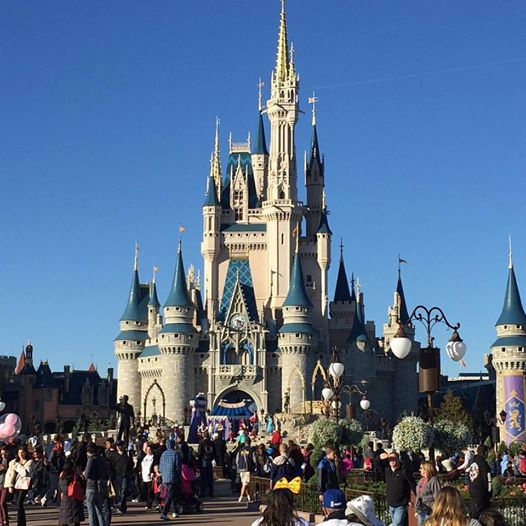
WDW CastleIn today’s world of entertainment, where some media conglomerates own both film studios and theme parks, successful films sometimes bridge these two media to create the basis for new theme park attractions. The following research study seeks to define the elements that a film needs in order to be successfully translated to a live themed entertainment experience, thus eliciting the desired emotional response from the guests; and also the necessary elements that a theme park attraction needs in order to convey both spectacle and narrative regarding the film upon which it is based.  Although there are tools currently available to studio executives and creative staff at entertainment companies, this study will serve as a model using the ideas, theories, supporting evidences, and streamlining them into one study—a consolidation of tools, if you will.

As media companies grow, and both cinema and theme parks adapt to changing needs and desires of movie patrons and park guests, the leadership at these companies needs to have the appropriate information at their fingertips to create effective and memorable stories for the screen and park. This study highlights what the potential park guests or movie patrons are looking for in terms of what drives them to spend money on themed entertainment or the cinema. Condensing this complex set of desires into a simplified answer: in terms of cinema-based attractions, the audience is searching for attractions and rides that immerse themselves into a participatory environment in which they make a difference in the story and encounter the unique characters, settings, and plots from the movie.—they want to be viscerally engaged and transported into a world of fantasy or adventure.

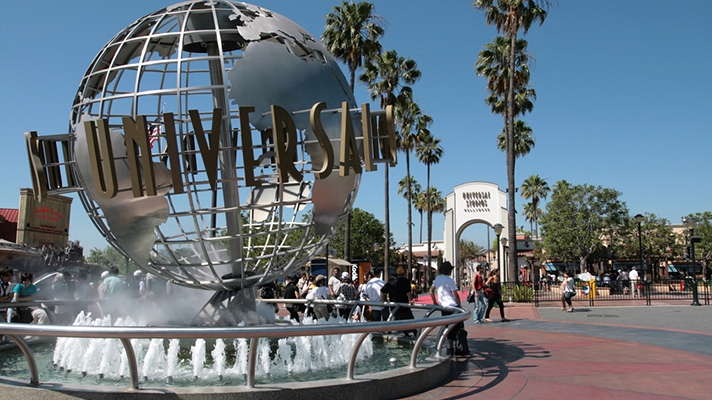
Universal HollywoodEver since the late 19th and early 20th centuries, audiences from around the world have been drawn to the temple of the height of the visual and performing arts, the cinema. In many ways, the early days regarded the cinema as an attraction, an amusement. In fact, many of the first silent films were shown in carnivals. Nickelodeons dotted the landscape in drug stores and clubs. Elaborate and ornate movie palaces housed some of the first big screens, and orchestras played along with the narrative (Gunning, 1986). Over the last century, cinema has gone from existing in sideshows to being a dominant mass communication source that has evolved into the very rollercoaster to which many critics and lay people compare it; and, not only metaphorically.

From starting in carnivals to now being the inspiration for the most visited theme parks in the world, cinema has gone full circle and is now instrumental in an unparalleled synergy with themed entertainment. Over the decades, there has been a strong convergence between cinema and theme parks. Studio executives, filmmakers, and theme park designers are working together in ways that serve to support both the movies and the parks that have rides based on the movies. More than ever, filmmakers and attraction designers need to know what the cinema patron and park guest both want in order to create a synergistic and dynamic entertainment experience based on a single narrative.

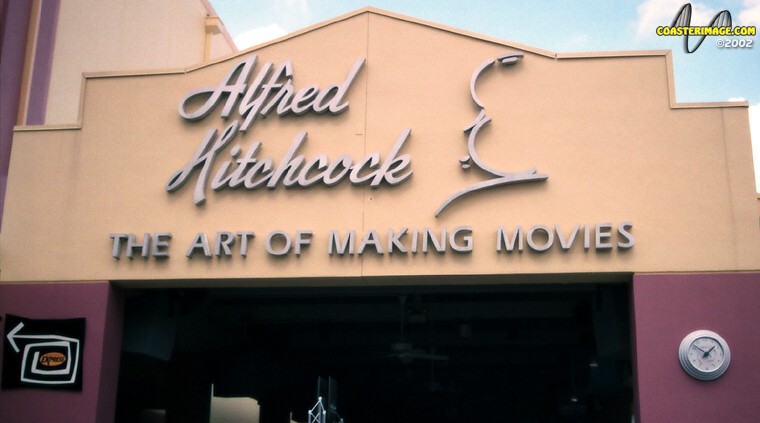
Hitchcock AttractionTwo of the greatest forces in media and entertainment are the cinema and theme parks; and for the latter part of the 20th Century and continuing strong into the 21st, the convergence between the cinema and theme park is becoming clear. Additionally, within the last several years, theme park attractions have inspired movies (e.g. Disney’s Pirates of the Caribbean and The Haunted Mansion). The relationship between the movies and theme parks is a strong one, but why is that so? Can one exist without the other? Or, is it a co-dependent relationship that benefits both entities? Perhaps it is all of the above. But, not every successful movie makes an equally successful theme park attraction. Often times, it is the Horror and Action genres that are used as the inspiration for successful attractions (e.g. ET-The Extra-Terrestrial, Jurassic Park, The Bates House and Motel, and Hitchcock: The Art of Making Movies).

As technology advances, the cinema and theme parks have adapted and evolved over the years to include the technology to both impress audiences and save money. Still building off the success of the cinema, theme parks have evolved their rides and attractions to go from the magic behind the movies to immersing the audience or guests into the movie itself. Likewise, studios and production companies are producing movies that act as attractions themselves. But, central to this study are the questions: why is it essential for the cinema to continue this synergy with the theme park industry, and what does it take for a movie to be a successful theme park attraction?

(Continue to Part 2)