“Passengers” movie review

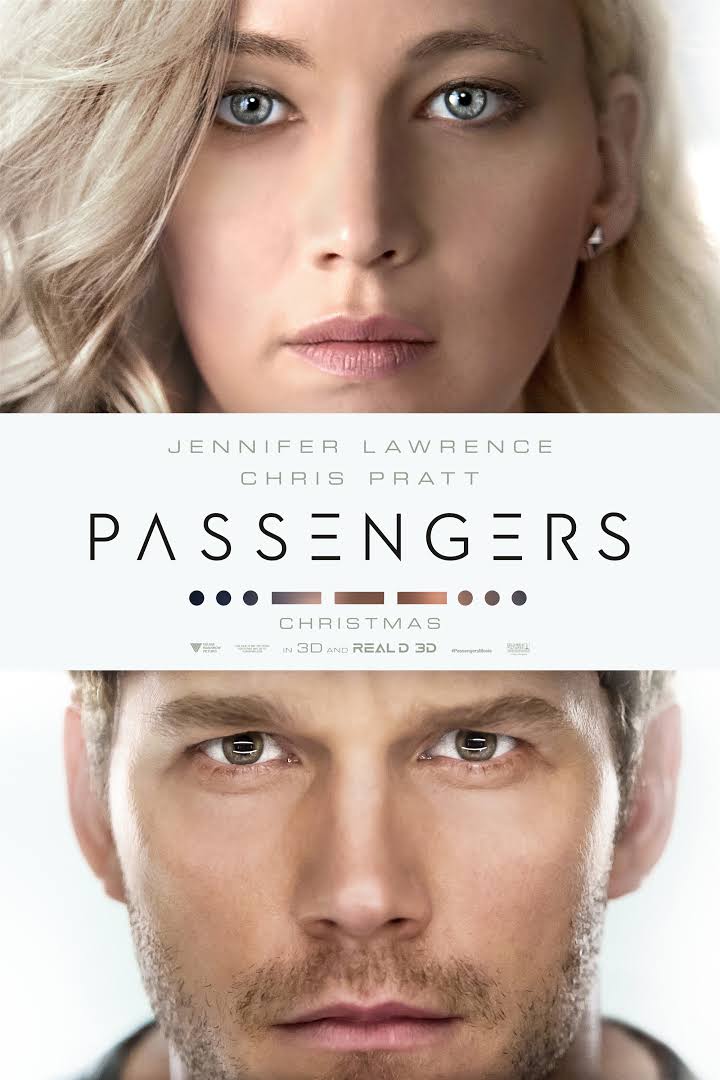
passengersAn intriguing journey with lots of potential but ultimately fails to pull into the space dock. The highly anticipated visually stunning science-fiction film starring Jennifer Lawrence and Chris Pratt proves one thing: Pratt and Lawrence have excellent on screen chemistry and play off each other very well. With films like this one, it’s hard to know where the fault lies. Typically, a film with such potential and a powerful cast is weakened by either the writing or directing. Since the director principally works with the cast, it can be concluded that the writing lacked the drive that this film needed. On a more positive note, this film depicts deep space travel how it could likely be in the not-so-distant future. From the centrifugal force created by the rotating space craft to simulate how artificial gravity could be generated to the onboard technology to the sickbay, this film does a fantastic job of providing audiences with a science-fiction that is almost tangible. Having such a limited cast in one location can spell disaster for cinematic storytelling; but, the film is quite interesting to watch and sufficiently keeps the audience’s attention. Furthermore, the audience mostly connects with Aurora (Lawrence) and Jim (Pratt) well enough. But, the film fails to truly provide audiences with a new adventure because it amounts to a glorified Castaway set in the Disney Springs of shopping malls in outer space–just completely empty of scooters, strollers, and other park guests. Lack of surprise pretty well sums it up.

Welcome aboard The Avalon on the Homestead Company’s routine transport to Homestead II, a new earth colony. All is going well until two passengers find themselves awakened from suspended animation about 90 years too early during a cascade of ship wide malfunctions. Faced with living the rest of their respective lives on board and only the company of an AI bartender (Michael Sheen), Jim and Aurora must cope with the challenges of living together in a world that is merely 1000 meters from stem to stern. When the ship begins to increasingly malfunction and life support at risk, Jim and Aurora much solve the mystery of what originally caused the problem that began the cascade. Just as the ship is keeping a secret, there are other dark secrets on board the ship as well. Meeting with psychological, emotional, and engineering challenges, Jim and Aurora have 5000 other passengers and crew to save while maintaining their own sanity and psycho-social health.

As the movie faded to black, I began discussing it with the friends who accompanied me to the cinema last night. And we shared a mutual reaction of hmm, not exactly sure what this was or how to read it but it had some interesting components. And that pretty well covers it. The film will likely keep you entertained but with few surprises, it lacks anything to make it memorable in a positive way. Forgettable is what this movie will become in the no-so-distant future. Essentially, Passengers is what you would get if Gravity and Titanic were to have a baby. Star-crossed lovers on a ship that is self-destructing in the vacuum of space. One of the most intriguing components in the plot of the film is also highly disturbing. While love and infatuation causes many to go to great lengths in order to see desire become reality, it is a double-edged sword that can cause one to behave selfishly if not displaying signs of sociopathy. While Pratt’s performance is what is to be expected from one of the most bankable actors in Hollywood who is equally a dedicated family man, his performance is never quite on par with his Castaway counterpart. However, Lawrence delivers an intense performance as she plays off Pratt,the bartender, and The Avalon itself.

The cinematography and editing are excellent. In fact, the technical elements of the film are impressive! Not quite as groundbreaking as Gravity or Interstellar but still outstanding. There is one scene in particular that still has me puzzled as to how it was able to be achieved so flawlessly. The set design, albeit spartan, is beautifully sleek and functional. As film is a visually driven medium of storytelling, the camera often pulls in close to characters to establish intimacy but juxtaposes that against pulling back to reveal the oppressive loneliness of being alone on a massive ship in space. For a brief moment, I experienced the dread that is created in Kubrick’s The Shining when Jim meets Arthur the bartender. Interestingly, the music (composed by Thomas Newman), camera direction, dialog, blocking, an set design all work together seamlessly to establish that unparalleled sense of dread, loneliness, and self-destructive despair that are so iconic to The Shining. Unfortunately, that powerful sense of dread is lost in weak writing. Had the film embraced the potential to channel The Shining, it may have played out more memorably. But, this is a love story so the horror plot devices that could have helped the film were not integrated into the plot. Although there are may significant contributors to a film’s success, the success of a film often relies upon the direction, writing, and cast. As briefly mentioned in my opening paragraph, the director (Morten Tyldum) of a film principally works with the cast and is responsible for blocking, delivery of dialog, and perception; so, it is likely the screenplay by Jon Spaihts that is responsible for the weak story. A director and cast can work hard to makeup for a weak screenplay, but in this case, the lack of developed story showed through.

Despite sharing the screen with Aurora, this truly is Jim’s movie and others simply happen to appear in it when necessary. As a side note, I could easily see how this film could be translated into a stage production. Perhaps on stage, the story could evolve to leave more of an impact on the audience.

“Star Trek: Beyond” movie review

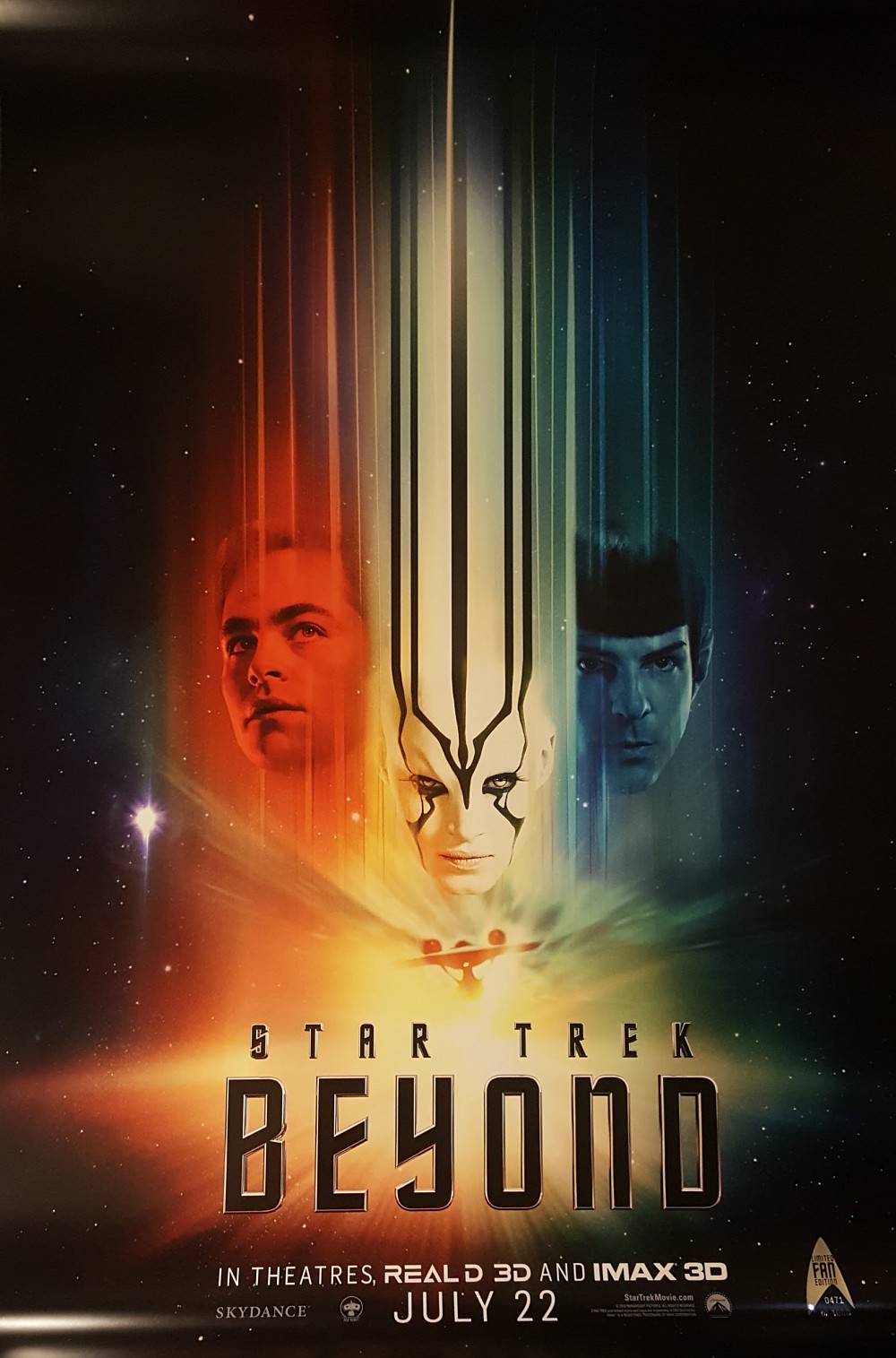
StarTrekBeyondOld school charm paired with impeccable visual storytelling! From Paramount Pictures and Bad Robot, Producer J.J. Abrams once again returns audiences to the world of Captain Kirk aboard the U.S.S. Starship Enterprise (NCC-1701) in a film that encompasses much of what was loved about the original series/movies, and combines that soul with the film production technology of today. Despite the subdued anthropological subtext, which is one of the primary differences between the Star Trek and Star Wars universes respectively, this story will definitely keep you entertained with brilliant writing and a nostalgic feel. For long-time fans of the franchise that’s been around since the 1960s, you will find that Abrams handles the settings and characters with care and respect. The third film in this reboot series, Star Trek: Beyond is one roller coaster of a ride that boasts a narrative pace that moves at warp speed. If there is one fallacy in the storytelling of this installment, in the Abrams reboot of the Gene Roddenberry classic, it is the lack of social commentary on the human condition that has been at the core of Star Trek since its creation. With a fantastic cast, incredibly strategic direction, and beautiful cinematography and visual effects, Star Trek: Beyond will whisk the audience away to the final frontier and “boldly go where no one has gone before.”

Following an encounter with an alien species at the York Town space station and colony, Captain Kirk (Chris Pine) is requested by Starfleet leadership to investigate the causes of distress in order to render help. With the possibility of accepting a Vice Admiral commission from Starfleet, Kirk sees this as his potentially final mission aboard the Enterprise. Concurrently, Mr. Spock (Zachary Quinto) is also at a crossroads in his life when he receives word that Ambassador Spock has passed away, as he contemplates picking up where Ambassador Spock left off. Gathering the crew together for what may be the final mission of Kirk and Spock, the Enterprise sets out to uncharted deep space to evaluate the problems and bring about peace. Unknown to the Enterprise crew, they are about to encounter their darkest times yet and a villain named Krall (Idris Elba) who seeks an artifact in the possession of Kirk and has a mission to destroy the Federation and bring about his own version of peace–called chaos.

As a long-time Star Trek fan myself (TNG & Voyager), one of the very first elements I picked up on at the beginning of this installment was the trademark bridge sound effects from the original Star Trek TV series. Employing a little suspension of disbelief, what with all the flat panels and touch screen displays and all, the bridge of the NCC-1701 Enterprise still boasts the old soul of the bridge that started a universe of adventures that continue to this day. Fortunately, visionary producer J.J. Abrams, director Justin Lin, and writers Simon Pegg & Doug Jung craft a story that mostly takes what made the franchise so endearing and channel it into an exciting story for audiences today. From the characters to the dialog, and from the interpersonal interactions to the settings, this Star Trek movie effectively leads the reboot of the franchise in the right direction. Having just watched Abrams’ Star Wars: the Force Awakens back in December, I was very curious as to how similar Beyond would look and feel as compared to the aforementioned. Forced to decline the director’s chair for Star Trek: Beyond, Abrams turned the reigns over to Lin while still serving as the creative producer. Directing Star Wars and producing Star Trek could have left audiences with similar cinematic experiences; however, both movies are vastly different but provide fans with excellent additions to the respective universes.

Prior to screening the movie, I was very skeptical going into it since the various trailers for the film were disappointing–looked like the film was going to be cheesy. To my surprise, the film was definitely not hokey and played out exceptionally well. Compared to the previous two films, I definitely like this one much more. That is mostly attributed to the fact that Beyond felt like a Star Trek movie. The previous two installments felt like a Star Trek movie taking place inside a Star Wars-esque universe. Hopefully, this film will redirect the reboot of the motion pictures in a direction more closely aligned with the original series and movies. With Star Wars and Star Trek trying to find their respective places in today’s culture of media, entertainment, and gaming, it is important for both series to be distinctly different from one another. Now, I don’t mean different stories or characters–obviously, that’s a given by default–but I mean the feel of the stories needs to be unique. Star Wars is an action-adventure mostly concerned with good v evil and Star Trek is science-fiction that concerns itself, traditionally anyway, with the human condition. Both take place in the future, but are different experiences. There is demonstrable evidence in Star Trek: Beyond that the franchise is seeking to stay true to its roots in anthropology and psychology; whereas Star Wars: the Force Awakens is staying true to its roots in futuristic good v evil in a galaxy far, far away.

From a technical perspective, the film is flawless; however, it would have been nice to have seen more practical effects and miniatures more so than digital effects, albeit, the effects were impressive. I appreciated the focus on the interpersonal relationships between the characters, and how it upstaged the actual conflict. Yes, the conflict in the story is important and is what drives the action, but it’s the characters themselves that are the most important element in the narrative. Does this film shift the dominant focus off Star Wars and onto Star Trek? Not particularly. But does this movie pave the way for the Star Trek movies to be on par with the Star Wars movies? I believe that we could begin to witness that trend. Star Wars has the massive advantage of being owned by the Walt Disney Company; and therefore, TWDC is integrating that IP into the parks, cruise line, and merchandise. That is HUGE. Unfortunately, Star Trek does not benefit from being owned by a distribution company and legacy studio with theme park investments in the United States, anyway. Paramount did have amusement park investments, but sold them off to Cedar Fair many years ago. Perhaps the interest in the Star Trek movies and upcoming TV series in 2017 will generate a desire for this IP to become part of a themed entertainment property as well.

With so many choices this weekend for movies it is hard to decide what to see! I am looking forward to watching Lights Out now that I have watched Star Trek: Beyond. Whether you are a fan of the original series or movies OR you are a new fan to the Star Trek universe, I feel confident that you will find much to enjoy in this newest installment in the Abrams reboot. Hopefully the film will perform well over the weekend and begin to generate an interest in the upcoming TV series as well.

“Blade Runner” (1982) movie review

BadeRunnerStill a visionary masterpiece? On the rare occasion that I do not feel compelled to see one of the weekly new releases, I enjoy taking my Thursday night and watching an older movie that would be fun to review. As it turns out, it dawned on me that I had never seen Ridley Scott’s Neo-Noir Blade Runner despite the fact that it it a critically acclaimed film and highly regarded by many of my contemporaries. I have found that sometimes you have seen clips, heard people reference it, and simply hear the title so much that you think you have seen it. Then you realize that you’re familiar with the ideas, concept, or story but not the movie itself. So, I decided to watch it for Throwback Thursday and review it today. Unfortunately, I have been struggling with connecting with the film as so many other filmmakers and film lovers have. When watching a movie from 30+ years ago, I do my best to place myself in the shoes of the audience then. But, I am having difficulty this time. As a peer-reviewed cinema researcher, I believe that no matter how old a film is that it should still be relevant and impact audiences many decades down the road. Truthfully, I am not entirely seeing why it is such a regarded film still to this day. However, it is definitely an artistic masterpiece due to the technical elements of the production. So in many ways, yes, it still IS an iconic visionary masterpiece; but, fails to connect or resonate with audiences today.

Travel to a dystopian Los Angeles in the year 2020, or present day Detroit; take your pick. Many have fled the city for colonies on other planets or to the far north of the city to escape the rampant chaos. In the early to mid 2010s, Tyrell Corporation invented Replicants (or human-like androids) to carry out menial tasks and hard labor in a modern slavery fashion. Each unit was programmed to last for a specific amount of time (4yrs +/-). When a small band of Replicants decided that they wanted to take their lives into their own hands, they return to earth from the planet they were slaving way on and are determined to force Tyrell Corp to fix them. These Replicants led by Roy (Rutger Hauer) will stop at nothing. Over the years, when the Replicants began to pose a threat to humanity, special operations forces known as Blade Runners were trained to “retire” the androids. Former Blade Runner Rick Deckard (Harrison Ford) has been reactivated and forced to retire the small band of Replicants that pose a threat in the already dystopian Los Angeles. Follow Deckard as he conducts an investigation and is fearful of his own life as he attempts to track down and “retire” the remaining Replicants before they achieve long-lasting life. All seems pretty routine until he encounters a special Replicant named Rachael (Sean Young) at Tyrell Corp.

It doesn’t take long to understand that this film is a neo-noir detective movie that takes place in a dystopian future. Neo-noir is regarded as a film noir style movie produced after the classic film noir period (which was relatively short (~1940s-50s). This genre [although, technically, there is sufficient evidence to suggest that film noir is more of a style not a true genre] follows many of the same tropes and elements found in film noir (think Billy Wilder’s Sunset Blvd, Double Indemnity, classic detective movies, or Orson Welles). Often, the protagonist is a solitary individual who finds him or herself in over his or her head who faces or exhibits perpetual pessimism, fatality, or menace in a plot consisting of cynical attitudes and sexual motivations. From a technical perspective, film noir (or neo-noir) is stylistically dark, high contrast, low key lighting, contains strategic shadows, and shots filled with symbolism and dichotomy. The plots are usually slow burning and contain social commentary or a self-reflexive narrative. Once analyzing this movie as a neo-noir, it becomes more fascinating but still lacks that timelessness that can be found in some of the examples mentioned earlier in this paragraph. As a artistic film, I am impressed with the vision of Ridley Scott. As a classically-regarded and praised film, I am not very impressed. Although, I find that it is an excellent example of how many in the early 1980s viewed the future and that is is a fantastic example of neo-noir style filmmaking.

One of the biggest problems I had with the film is the fact that I had trouble loving the protagonist or hating the antagonist, or feeling sympathy for either of the aforementioned. In screenwriting, it is imperative that the audience make a firm connection with either the protagonist or the antagonist. Note: the antagonist in a film/neo-noir is not always the “bad guy.” Whereas even Gloria Swanson’s Norma Desmond in Sunset Blvd made a strong connection with the audience in that we feel great sympathy for her plight, yet she is the antagonist in the story–or many agree as such. Harrison Ford’s Deckard in Blade Runner never quite garnered strong support from me in the same way his nemesis Roy failed to elicit disdain. Both Deckard and Roy are fairly static characters–meaning they lack dynamic development. There is, however, an indirect glimmer of character development in Roy at the very end that plays significantly into the plot for a brief but strategic moment. As regularly reoccurring throughout the narrative the character of Rachael is, she can almost be removed from the film and change little in the overarching story. For the most part, she simply exists and pays into Deckard’s motivation, but mildly so. She neither causes him to view Replicants differently or becomes his sole goal. It is clear from early on in the plot that Deckard already had reservations in retiring Replicants. Rachael simply amplifies or intensifies the feelings that were already brewing.

Looking back at movies from the mid to late 20th century that take place in the early to mid 21st century can be quite entertaining. Sometimes the future portrayed in the film, in one form or another, has actually come to pass. Although, other times, the future is incredibly inaccurate. The dystopian Los Angeles in Blade Runner is definitely the latter. Yes, there are themes of unchecked immigration, authoritarian power, and capitalism that can be read as not so different from today; but, for all intents and purposes, the future is much more grim in the movie than in today’s reality. Perhaps that’s why it can be difficult to connect with this movie. It takes place in a “future” that never happened, and probably won’t happen in the now near future. I think that’s the danger when writing or directing a movie set in a future that relies heavily upon technology directly related to the plot. Some movies can pull it off. Take Back to the Future for instance. It works because the technology in the culture of the future isn’t significantly integrated into the essence of the plot or are solely responsible for some dystopian world. The futuristic technology merely exists and helps to move the plot along. In Blade Runner, the whole reason for the plot is because futuristic technology in our present day has turned on its creators and became the catalyst for a world drowning in chaos.

If you have never seen Ridley Scott’s Blade Runner, I definitely encourage you to do so, especially if you enjoy film or neo-noir movies. It provides us with a glimpse into how the world viewed a possible future in the early 1980s; and prompts us to think about life and how we might behave if we knew that we only had a few years to live. Survival of the fittest maybe? Or, fight or flight? If I was a psychologist, I think that this would be fascinating to analyze from a psycho-social perspective. At the end of the day, the film was quite the visionary masterpiece for its day and still remains a favorite of many filmmakers, scholars, and just film lovers alike.

*This review is in reference to the original theatrical release

“The Martian” movie review

TheMartianHouston, we have a problem…with Ridley Scott’s directing. Despite the fact that his is an extremely well-known name among directors and both “Alien” and “Gladiator” are critically acclaimed films, Scott just keeps proving over and over again that he can create a very visual movie with a star-studded cast; but, his films over the last decade have just not held up to the hype behind his name or the caliber of director he used to be. The Martian is a prime example of when junior executives at motion picture studios decide that a given plot/sub-genre is popular and keep cranking them out. The problem is, by the time the studios pick up on what the public wants, when the next copycat film gets released, often times the public is tired of that kind of movie. This makes the third epic space movie in three years. Pretty sure both Matt Damon and Jessica Chastain just used their same costumes from Interstellar. One thing’s for sure, if NASA was looking for a film to showcase their brand in an indirect effort to increase funding and rally support for the essentially mission-less organization, this may not have been the best one. In many ways, it just showcased their bureaucracy and inefficiency. Perhaps, space travel should be mostly conducted by private organizations with some infrastructural support on the federal level.

The Martian is about rescuing Mark Watney (Damon) a stranded astronaut-botonist on Mars after a research expedition was abruptly cut short due to an unforeseen storm. The Mars research team, led by Commander Lewis (Chastain), heads back to earth on not knowing that the comrade they thought dead was now completely abandoned on the red planet. Following some minor self-surgery, Watney realizes that he will have to learn to survive on Mars until he can be rescued by growing his own food and repairing the communication technologies in order to make contact with NASA. After NASA discovers the Watney is alive and in reasonably good condition, they must mount an effort to deliver supplies and get him home. Following some failed attempts, NASA eventually teams up with the most unlikely of players in the space game as a collaborative effort to work together for the greater good.

Now I know what you may be saying, ‘this guy doesn’t like most high concept, popular movies.’ That is definitely not the case at all. However, I feel that high concept films often suffer from under-developed plots and poorly executed directing. Just because you have a handful of hits such as AlienBlade Runner, and Gladiator, doesn’t mean that you should be given a pass for all subsequent films. That’s what I and other critics have noticed with his theatrical releases over the last decade. I just don’t think movie-going audiences needed another space movie after Gravity and Interstellar. Certainly not a film about a rescue mission or one with two of the same actors in similar roles from last year. The Martian is definitely beautifully shot, and that is of no surprise, since Scott’s films are often filled with stunning cinematography and production design. If only the actors were just as exemplary in their respective roles. Most of the more prominent roles were just under-developed. Don’t highlight a particular character if there is no real reason for the special attention.

Although you may be thinking that I didn’t like this movie at all, you would be mistaken to rush to that conclusion. In fact, there are definitely a few reasons why I liked certain elements of the film. I thoroughly enjoyed the commitment to real science in this science-fiction story. That was my biggest negative criticism of the plot of Interstellar. In the plot of the aforementioned, we were asked to constantly engage in the suspension of disbelief and blindly accept scientific information that was never explained or even made logical sense within the world of the film. Fortunately, The Martian played out as a believable film that is taking place not that far into our future. Throughout the film, the science is explained in carefully crafted exposition that is seamlessly integrated into the plot. Never does it feel that we are to blindly accept some science or logic just for the sake of moving the plot along. The believability of the plot and production design is what helps this film succeed as a good example of a science-fiction theatrical release.

As we gear up for Oscar season, I hope that this isn’t what we are to expect: movies that have many great elements paired with poor direction overall. If for no other reason, The Martian shows us how we could colonize Mars and travel back and forth. Although his performance wasn’t stellar, Damon pretty much holds the audience’s attention through the use of comedic relief during some of the most stressful times in the movie. For the aeronautical and and jet propulsion communities, this is a good example of research and development in the area of space exploration.

“Ex Machina” Movie Review

Ex_MachinaA thought provoking science-fiction film. Universal Pictures and Film 4’s Ex Machina is a brilliant work of fantasy/science-fiction. From the time the movie begins to the time the credits roll, your mind will have a heightened sense of anticipation of what is about to happen next. This is one of those movies that will eventually find its way into film appreciation classes in order to dissect the many themes, both direct and indirect, implied and inferred, woven meticulously throughout the narrative. Over the years, there have been numerous other artificial intelligence (AI) movies, but this one is likely the best example and best produced movie in this sub-genre of science-fiction and fantasy. Maybe it’s because the dawn of AI is most likely upon us? Or, just because for once, a more serious and more realistic approach to tackling this fascinating subject is being showcased in theatres. From the writing, to the directing, to the cinematography, to the acting, Ex Machina is definitely a film to catch if you are a fan of science-fiction films that have real sociological themes and comment on the age-old quandary: man vs machine.

Ex Machina is about a young programmer/coder named Caleb (Domhall Gleeson) who works for the very “Google-like” company called BlueBook. Upon winning a contest to meet with the reclusive founder of BlueBook, Caleb is whisked away by helicopter to the beautiful mountain residence of founder Nathan (Oscar Isaac). Shortly after his arrival, Caleb learns that Isaac used the contest as a rouse in order to select a candidate for the Turing Test (an AI evaluation test, so to speak, to determine if an AI actually has human-like intelligence and reasoning). Caleb is astounded to come face-to-face with the world’s first true AI (Ava, played by Alicia Vikander) in the form of a beautiful woman who is precisely his type. After a few days of testing, it becomes clear to Caleb that there is something more than meets the eye; something darker underscores the bizarre testing in the remote mountain retreat.

Director Alex Garland, best known for 28 Days Later and Sunshine, demonstrates his writing-directing prowess in this beautiful, cutting edge movie. Although it is ordinarily fairly easy to become bored watching three principle and one supporting characters for nearly two hours, Garland uses his gift to orchestrate this film in such a way that each scene is fresh and clearly advances the plot. This film is one of the best examples of a well-developed plot that is constantly reinforced, checked, and advanced throughout the narrative. His handiwork is also seen in the character development, expressions on, and blocking of the actors. Like building a model, Garland provides solid plot structure upon which the more superficial elements are laid. Beyond the high concept plot, there are brilliant themes and provocative subtext that will aid in the overall performance of the film, and give film scholars, writers, and the scientific community something to toss around in spirited debates. Aside from the running theme of man vs machine, there are also themes of whether or not a machine is “born” hetero or homosexual, much in the same way that very debate is discussed in regards to humans. A quick note regarding the exquisite production design, it is simple yet absolutely perfect for the movie. I really enjoyed the straight lines and sharp angles, very Frank Lloyd Wright.

If you know anything about literature or screenwriting, you are most likely familiar with the term or plot device known as deus ex machina (latin for “god from the machine”). The textbook definition is something to the effect of a plot device whereby seemingly unsolvable dilemmas are suddenly and abruptly resolved by the unexpected intervention of a new character, event, or object; this often occurs when the writer has painted him/herself into a corner. Knowing this, analyzing the title is quite interesting. Essentially the title means “from the machine.” After watching the movie, I am unsure as to what is coming ‘from the machine,’ unless you count the emergence of human-like intelligence. Otherwise, it really isn’t explained–the significance of the title–beyond the fact the movie centers in and around the testing of an AI machine. It’s entirely possible that the title was selected simply because it sounds cool, fits easily on a marquee, and does point to the plot. Exploring the significance of titles and title sequences can often unlock hidden meanings in the film. On a side note, next time you watch Ridley Scott’s Alien, really pay attention to the opening title/credit sequence.

At the center of the movie is the Turing Test. Nathan tasks Caleb with the responsibility of objectively and subjectively analyzing and evaluating Ava to see whether or not she possesses human reasoning, problem solving, dialoging, and cognitive processing. His goal is to determine if Ava is essentially human. The following analysis does contain some information that may spoil the movie for some–fair warning–if you need to, please skip to the last paragraph. Following a sequence of events, Caleb devises a plan to escape with Ava after she professes feelings for him and he falls in love with her. Although at first in disbelief regarding her humanness, he believes she has the capacity to love and process cognitively equal to and perhaps superior to flesh-and-bone humans. Like any good antagonist, Nathan discovers the plan by way of a hidden camera; and instead of eliminating Caleb, explains that Ava is actually screwing with his mind–pretending to love him. He doesn’t believe Nathan, and continues with his plan that was already hatched, unbeknownst to Nathan. After a struggle, Ava is set free and winds up killing Nathan. Despite the professed feelings for Caleb, Ava leaves him locked away in a room with no means of escape. She boards the helicopter and heads off to the world of humans with no one to blow her cover or enslave her.

This is where the plot does leave room for question. Although the ambiguity of the reasoning behind Ava’s decisions involving murder and entrapment may have been intentional, the driving force behind the decisions to murder Nathan and leave Caleb trapped in the house, left to die should have been made clearer. But on the other hand, the ambiguity is perfect material for debating what may have been going through her “mind.” The reasoning for her murder of Nathan is fairly clear. He caused both mental and physical abuse, oppressed her, leaving her locked in a glass room like a lab rat. He stood in her way between slavery and freedom, and she needed him eliminated. Here’s where it gets tricky: why leave Caleb to die in the house when she professed her love? I think it’s because she was way more human than either Nathan or Caleb could have dreamt. She pretended to love Caleb. If pretending to have feelings for someone in order to use them to your benefit isn’t as human as it gets, I don’t know what is. Even though we never get a definitive answer in the diegesis of the movie, the audience is previed to that information.

Another interesting possible theme to discuss is Ava’s first encounter with another AI. There is a shot sequence between Ava and another female Asian AI immediately following her emergence from her glass cage. In the manner in which this encounter is shot, it could be read as lesbian undertones. No explicit romance is witnessed, but there are subtleties that Ava may be sexually attracted to the beautiful Asian female AI. Is it possible that something switched on inside her when she encountered another female for the first time? Perhaps innate repressed feelings were ignited, despite what Isaac said he programmed her to be? Maybe feelings that weren’t there for Caleb were made more intense by the other “female” in the house? This gets back to the argument if a human or machine is programmed from day one to be hetero or homosexual. These are questions best left up to those who want to speculate the inner-workings of Ava’s psychology and chemistry. But, nevertheless, are fun to talk about. Most likely, she was just plotting with the other AI, against Nathan and Caleb; but I feel there is a slight possibility of the former.

Ex Machina represents some of the best that the science-fiction/fantasy movies have to offer. It contains social commentary, science, and excellent subtext. While many science-fiction films suffer from adequate and well-crafted plot development, this one is a shining example of how beautifully produced a science-fiction/fantasy film can be. What makes this movie an excellent one to watch is the ability to intrigue the audience with both a scientific element and one that taps at your psyche and prompts you to think about the positive and negative consequences of developing a human-like AI. If you haven’t seen the movie yet, definitely plan to catch it in theatres.

Ryan is a screenwriting professor at the University of Tampa and works in creative services in live themed entertainment. If you like this article, check out the others and FOLLOW this blog!

Follow him!

Twitter: RLTerry1

Instagram: RL_Terry

Thrillz (theme parks): Thrillz.co