“Mamma Mia! Here We Go Again” movie musical review

You won’t be able to resist the singing and laughter! A major summer box office win for Universal Pictures! Ten years ago, I loved Mamma Mia! and now I equally enjoyed the sequel that seemingly came out of nowhere. I danced, I jived, I had the time of my life, and you will too! The entire original cast is back, and not only them, but select supporting and atmospheric characters as well. Mostly filled with new additions to the Mamma Mia! musical soundtrack, you still get the crowd favorites, those showstopping numbers Dancing QueenSuper Trouper, and of course Mamma Mia. Selections from other songs from the original motion picture (and ABBA Gold album) also make appearances. In our world that seems to be filled with so much negativity, hate, and sadness, a movie like this is needed to lift the human spirit, let go of all your cares, and give yourself over to the timeless music of ABBA and the hilarious antics of Mamma Mia: Here We Go Again. Just like I will be the first to tell you that if you’re searching for the most fun show on Broadway, to select Mamma Mia!, the same rings true for the sequel to the original adaptation. It is so much fun! It might be kitschy fun, but immensely entertaining and very well produced. While some movies and movie musicals comment on society or deal with hard topics, this is a refreshing film that reminds us that it is okay to attend the cinema for no holds barred fun in order to uplift the human spirit.

It’s been ten years since Sophie (Amanda Seyfried) threw her wedding to find her dad, and she is working diligently to remodel and reopen her mother’s hotel. Sadly, Donna (Meryl Streep) has passed away and left the responsibility of running the hotel to her daughter. In order to do her mom proud, Sophie is putting the finishing touches on the grand opening party when she receives some troubling news and a storm wreaks havoc on the hotel. Channeling inspiration from her mother, Sophie reflects on all the stories her mother told her about how she met her dads and came to the island. We get to spend a significant amount of time with young Donna (Lily James) as she makes her way in this world. From graduation to making a home out of the farmhouse and falling for Harry, Bill, and Sam along the way. Sophie learn how her life parallels her mom’s in so many ways. Reuniting with Rosie (Julie Walters) and Tanya (Christine Baranski), she moves forward with determination to see her mother’s dream all the way through. Just when she’s had enough surprises in her life, Sophie finally comes face to face with her estranged grandmother Ruby (Cher).

There is beauty in simplicity. Mamma Mia: Here We Go Again delivers an amazingly fun movie musical built upon a simple plot with iconic songs. It’s a juke box musical. While it may lack the depth, introspect, or critical value of other movie musicals, it possess a power to make an emotional connection that doesn’t hit you hard or seek to change your worldview on an issue, but instead uses the power of song and dance to make you smile. Genuinely smile. The kind of infectious smile and laughter that fills the auditorium at the movie theatre. Sometimes filmmakers are so concerned with upholding the art of cinema, packing in powerful messages, or visualizing deep themes that the desire to entertain for fun gets forgotten. Not only is this the most fun at the movies you will have this summer, but it’s a movie that is solidly produced. It has a command cast featuring performances by Meryl Street and Cher and a lovable cast of familiar and new characters. Whereas the original movie relies mostly on top tier ABBA songs that are generally known to fans and public, this movie employs mostly second and third tier ABBA songs. Fortunately, these lesser known songs will soon find their way into karaoke libraries and mix tape play lists on Spotify and AmazonMusic.

Do yourself a favor and head to the movies this weekend to smile, laugh, and sing along with Mamma Mia: Here We go Again! I enjoyed it so much, that I could definitely watch it again myself. But tomorrow night I need to watch Universal Pictures’ other release this week Unfriended: Dark Web (coincidentally, another sequel that came out of nowhere).

Sinister Summer: Friday the 13th Retrospective Review

Ch ch ch, ah ah ah. The sleepaway summer camp experience was forever changed in the summer of 1980 when a slasher slaughtered a bunch of horny teenagers along the shores of Crystal Lake. Spanning more than three decades and a dozen feature films (too bad it’s not a baker’s dozen, wink), the Friday the 13th franchise made us never look at a hockey mask in the same way after Part 3. This iconic franchise has also found its way back into the headlines with the legal battle over the rights to the Friday the 13th name between the original screenwriter Victor Miller and producer/director Sean S. Cunningham. I recently ran a Twitter poll to determine which is the crowd favorite in the series, and the majority of respondents voted for the original movie, followed by Jason Lives. Like the majority of the 80 respondents in the poll, the original is also my favorite, although it is not a “Jason” movie per se. Releasing in 1980, Friday the 13th helped shape the modern slasher along side Texas Chainsaw Massacre and HalloweenA Nightmare on Elm Street would arrive in 1984. With his trademark hockey mask and machete, very few have lived to tell the tale of their encounter with one of the most terrifying slashers to ever appear on the silver screen. His body count is in the triple digits! From screen to screen, Jason has gone from the cineplex to your TV and computer by way of interactive media. Unlike the campy-ness of Freddy or more focussed kills of Michael, Jason is by far the scariest of his iconic counterparts. My friend Dani is a diehard Jason girl, while I am Freddy and our friend Derek is Leatherface. Let’s take a stab at exploring why this franchise continues to be a favorite!

Variety! That is what you get with Jason as opposed to Michael. Although Leatherface and Michael began the teen slasher genre, it was Jason who revolutionized it by his variety of gruesome methods of killing his victims. Whereas Freddy, much like a cat, loves to toy with his victims before going in for the final kill, Jason is a death machine who wastes no time in taking out all those who stand in his way. Motivated by his death brought about by teenage lifeguards making love while he drown in the murky waters of Crystal Lake, Jason typically murders those who are engaging in promiscuous activities. Sometimes, he will throw you for a loop by taking out someone in a wheelchair or another passerby. He is relentless. And before universe crossovers were commonplace between franchises, Freddy vs Jason got together for a terrifyingly good time in 2003, and then again at Halloween Horror Nights in 2016. While installments 2–12 feature the mask-wearing (burlap sack followed by goalie mask) machete yielding hulking man, the first film features Mrs. Pamela Voorhees (Jason’s mom) as the killer. It’s because of this that the original film feels much different than the others. But it certainly inspired the rest of the franchise. Think of the first one as Hitchcock’s Psycho in reverse,  precisely how Norman thought it was happening. A killer mother who’s overprotective of her son. Although it’s not a “Jason” movie, it did lay the groundwork for the rest of the series and the ending of the film provides the haunting moment that gave birth to the lore and legend of Jason that would carry through the remainder of the films.

Keeping the identity of the killer a secret, until the very end of the film, sets this movie apart from its predecessors Halloween, Texas Chainsaw Massacre, and Jaws. Furthermore, Friday the 13th adds more gore, kills, and gruesome makeup effects that look cheesy today but were quite shocking, back in ’80, to up the ante against the competition. The news of the gruesome effects was so intriguing that horror fans turned out in masses to see the film. By all accounts the characters are not terribly memorable–we certainly don’t have a Laurie Strode–and the killer’s identity isn’t revealed long enough to truly form an opinion; but it’s that jump scare/twist at the end that gave birth to a mammoth of a franchise that has lasted for over thirty years on big and little screens alike.

The perspective of the killer. One of the most memorable elements from the original Friday the 13th is being in the shoes of our mysterious killer. Unlike other slashers that preceded, the identity is kept secret as I mention in the previous paragraph. But it’s HOW this is accomplished that still fascinates horror fans today. We are the killer, or at least, we see through the eyes of the slasher. By Miller writing this element into the screenplay, we are forced to see things from the killer’s perspective in order to relate to and empathize with the killer. Brilliant, really. Although we sometimes assume an objective position just before or during a kill, we spend enough time as the killer’s eyes that we begin to identify with the killer. Not only can we identify with the killer, but because the main characters are teenagers, and slasher horror films are particularly of interest to teens, teenagers can easily relate to the characters in the movie. Essentially, we have a perfect combination of relatability in this film. Audience members are forced, at times, to view characters and events from the killer’s perspective but many in the audience can and will concurrently identify with the main characters. A great way to scare the audience is to place them in a situation that is close enough to reality that the prospect of something similar happening is terrifying.

First appearing in Part II but not fully taking his iconic form until Part III, Jason Voorhees has endured as one of the most recognizable horror villains who still terrifies people today. Furthermore, he has evolved to represent various thematic symbols that provide ample opportunity for analyses and close readings. While Freddy’s motivation is clear–revenge, plain and simple but still solid–Jason’s motivation(s) is a bit more complex. His mother’s motivation is clear; much like Freddy, her motivation is revenge against the camp and those who represent the horny teenagers who allowed her son Jason to drown while “getting it on,” so to speak. Jason, on the other hand, demonstrates motivations that must reach beyond classic revenge. For starters, we cannot ignore his physiological deformities that undoubtedly affected his emotional and psychological health, predisposing him to atypical or abnormal behavior prior to his untimely drowning. Judging from the misty flashbacks in the original Friday the 13th while Mrs. Voorhees is delivering rushed exposition, we can gather from Jason’s shadowed body that he is likely afflicted with hydrocephalus, a condition that traps excess fluid in the cranial cavity that compresses the brain causing a significant loss of neural activity (essentially, born with brain damage). Beyond the internal problems from hydrocephalus, this abnormally developed cranium often causes the eyes to be widely spaced and the subject typically has an enlarged skull.

Now that we have established his cognitive and physiological disabilities, we can explore just how the aforementioned plus the persistent taunting, teasing, and physical abuse from the other campers in 1957 all formed the perfect storm to motivate Jason to be the unstoppable slasher we know today. If we follow the lore of the later films, we are prevued to Jason being forcibly thrown into the lake where he eventually drown while the camp counselors were engaging in the horizontal mamba. There is sufficient evidence from the cannon of Jason films that he likely suffers from schizophrenia. As many of us are aware, this emotionally and cognitively debilitating disease causes sufferers to hallucinate imagery and voices that are controlling their mind. Jason’s ability to communicate with his mother and Mrs. Voorhees’ ability to communicate with her son, is also evidence that the schizophrenia was passed from mother to son. In real life, this disease can be hereditary. So, it is not a far reaching plausible idea to hypothesize that Mrs. Voorhees passed her schizophrenia on to Jason. But unlike mother, Jason suffered from additional disabilities that increased the intensity of the cognitive disease.

Formerly known as multiple personality syndrome, dissociative identity disorder (DID) is another affliction that Jason demonstrates through his abnormal behavior. DID is a severe psychological disorder that fragments an individual’s personality into two or more distinct personalities (or identities) coexisting, switching from one to another. Think of it as two or more people inhabiting the same body. Although one can be predisposed to DID, as Jason likely was, this disorder is often brought on by repetitive childhood trauma (which Jason experienced). Perhaps sometimes “a cigar may only be a cigar” but in this case, a mask is more than a mask. The trademark hockey goalie mask! What is it? It’s a mechanism or tool that enables Jason to disconnect himself from the murders he commits. By wearing the mask, he figuratively dissociates himself from the gruesome murders. The wearing of the mask is a direct result of DID because the mind processes the mask as conduit through which to engage in abnormal behavior because the abnormal behavior cannot be reconciled against the true self. In a sense, the mask allows for active cognitive dissonance because the behavior is opposite of how the brain wants to process information or experiences. This dissociation with the violent behaviors, enables Jason to continue on his murderous campaigns without his conscience ever prompting him to question his choices. Without the mask, he is vulnerable and may even question what he is doing; but with the mask, he is a killing machine.

The setting of Friday the 13th is also something of note. Much like Hitchcock did with the privacy of one’s bathroom in Psycho, Miller set the events of the original at a summer camp in order to shock the mind because it’s an innocent place that is about to play host to something traumatic and uncanny. Kids and teenagers attend sleepaway summer camps every year. They are traditionally seen as places where you form platonic or romantic relationships with your fellow campers or counselors. They are places of innocence that get a violent treatment in this film. Unlike Psycho where we are not prevued to the violent past of the iconic location and thus proceed through the story with our guard down, we are immediately introduced to Camp Crystal Lake’s violent past between the opening scene and the townsfolk. So, we are primed to expect something macabre at the camp. This does one very important thing. The camp immediately possesses an eerie feel, a feeling of dread of what is about to happen. The once popular summer camp falls prey to something sinister that makes the grounds incredibly creepy. Loss of innocence can be read as a theme throughout the films because we have an innocent camp that is plunged into violence, camp counselors losing their virginity, or campers engaging in dangerous behaviors. When innocence is lost, that’s when the violence begins.

Violence and gore are commonplace today (perhaps to the detriment of horror films as it has become cliche), but back in 1980, most audiences were not expecting to see closeups of murderous acts, even after Halloween and Texas Chainsaw Massacre. Despite the cheesy nature of the practical effects with blood bags and prosthetics, the violence in Friday the 13th was unexpected. In many ways, this film revolutionized the genre. But the F13 franchise didn’t start out with overstuffing itself with gore. The body count in the original is the least of the series, but it is certainly the favorite in the series by a moderately wide margin, according to my personal poll and other polls online. Therefore, we have to draw the conclusion that it’s not Jason’s kills or the gore that prompt audiences to like one over the other. If seeing Jason kill people was what audiences were looking for, then the original would not be the favorite. Now, don’t get me wrong, Jason has some pretty awesome kills and he’s fun to watch; however, don’t assume that it’s the kills or violence themselves that make a horror movie a favorite. Interestingly, the original is quite tame compared to the rest, but it’s still regarded as the crowd favorite.

If you follow the horror community on the Twittersphere or Blogosphere or even just caught the story in the news, you’ve likely heard of the fight over the rights to the Friday the 13th name between the original writer Victor Miller and Sean S. Cunningham. As to not complicate this story with the details, the long and short of it is the copyright on the Friday the 13th title is expiring soon, and according to “Mickey’s Law” (an unofficial name for what I am about to describe because it was started by the Walt Disney Company in order to continually retain the rights to Mickey), it is time for the rights to be renegotiated or the name and original plot fall into the public domain. That’s right. This iconic name Friday the 13th is on the verge of belonging to the public. Miller urges that he has the rights to the name because the title along with the story was his original concept. Cunningham argues that Miller’s screenplay was work-for-hire. Under work-for-hire, Cunningham retains the rights and is able to make decisions with it. This is a classic IP lawsuit. But one that has major implications. Essentially, Miller wants to be (and in my opinion, rightly so) compensated for using the names Friday the 13th and Jason in future films and interactive media. While he does not have the rights to Jason’s trademark look, he could own the name itself. This legal battle surfaced after the launch of the recent Friday the 13th video game, and caused the next installment in the long-running franchise to be put on hold. The decision will likely boil down to whether Miller was hired to write the original screenplay or he developed it himself then sold/optioned it to Cunningham.

It’s been 38 years since we were first introduced to Camp Crystal Lake, and the horror landscape was forever changed. Mrs. Voorhees and Jason have been terrifying audiences since before I was born, and will continue to cause you or your kids to think twice about going to summer camp. I think summer camp was made more fun because there is a little piece of you that thinks Jason could be lurking outside your cabin. I don’t always ch, ch, ch but when I do, I always ah, ah, ah.

Happy Friday the 13th!

Ryan is a screenwriting professor at the University of Tampa and works in creative services in live themed entertainment. If you like this article, check out the others and FOLLOW this blog!

Follow him!

Twitter: RLTerry1

Instagram: RL_Terry

Thrillz (theme parks): Thrillz.co

Marvel “Ant-Man and The Wasp” movie review

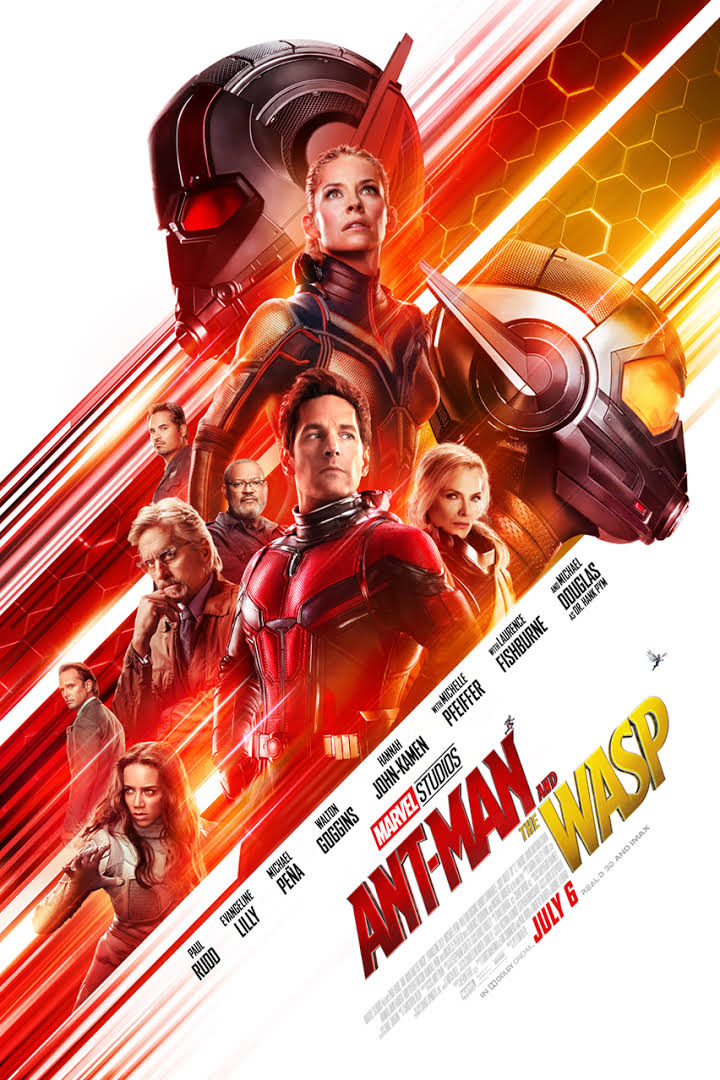
fANTastic! Although this installment may lack the grandeur of many of the Marvel Studios films, including the recent Avengers: Infinity War, director Peyton Reed delivers a fun, heartfelt, action-packed movie in the Ant-Man series that is sure to be a crowd pleaser. As someone who doesn’t typically fawn over superhero movies, with some exceptions like Batman Returns, I went into this movie with moderate expectations at best. Needless-to-day, my expectations were exceeded and I had a great time. Perhaps the story is rather shallow and even paint-by-the-numbers, but the straight-forward story is made fun and exciting by the incredible cast. This installment in the MCU is also marked by the significance of the captivating Michelle Pfeiffer’s return to the superhero genre. It’s been more than 26yrs since she wowed audiences with her roll as the definitive Cat Woman, and she still packs a punch during her short time on screen in Ant-Man and The Wasp. Is this a movie that requires a close reading or in-depth analysis? Certainly not. But, there is a running theme of change/size that is both literal and metaphoric. This may not be the at the top of your MCU favorites, but I can honestly state that you will not feel as if your time is wasted if you choose to take the quantum leap into this micro superhero movie.

After the events in Germany, Scott Lang (Paul Rudd) is under house arrest. Dealing with the consequences of being both a superhero and a father, Lang is challenged to still be a loving father to Cassie while figuring out how to continue his role as Ant-Man. Compounding the demands of being a father and superhero, Lang is also working diligently from home to build his security company in order to be the provider he wants for his daughter. Just when he has his routine down, and is getting close to being released from house arrest, he is kidnapped by Hope van Dyne (Evangeline Lilly) and Dr. Hank Pym (Michael Douglas) to help with a mission to rescue Janet van Dyne (Michelle Pfeiffer) from the quantum realm, a result of disarming a nuclear bomb many years prior. The search and rescue operation is thwarted by a ruthless southern businessman and a mysterious new ghost-like adversary. Under the ever-oppressing constraint of time and place, Ant-Man and The Wasp must cooperate in order to protect the quantum technology from falling into the wrong hands that could prohibit Dr. Pym from rescuing his wife.

While the movie, by in large, is pretty basic (solid, but basic), there is a great example of Hitchcock’s MacGuffin! If you’re unaware, a MacGuffin is the object that drives the plot forward, begins the domino effect, but ultimately does little more than trigger the plot. The definitive example of this is the money Marion Crane steals from the real estate office that sends her on the journey that lands her at the Bates Motel in Psycho. Not nearly as macabre, the MacGuffin in Ant-Man and The Wasp is the size-shifting office building of Dr. Hank Pym. Sometimes it was as large as a city block, and other times it was the size of a roller suitcase. In fact, if it isn’t already, I imagine that we will soon see this AS luggage that can be purchased at a Disney Park near you. The theme of size is demonstrated through small objects that become large and large objects that become small. Furthermore, this idea of playing around with size can also be witnessed figuratively through egos. Some egos are inflated–large–and need to shrink down to size or others are barely there and need to grow in order to not be overrun or overlooked. This theme is also displayed in how small people or objects can rise to the occasion, become a metaphoric giant in order to stop those who pose as obstacles to the goal. It is well-known that ants can carry several times their body weight, and we see characters in this film shouldering more than their fair share, but still manage to overcome any resistance or hurdles to accomplishing the mission.

Be sure to state for the mid-credits scene because it will answer the question that has been on your mind, “where was Ant-Man during Infinity War”? There is also a post-credit scene that is cute but won’t provide any further insight into the next Ant-Man or Avengers movie. With the return of Michelle Pfeiffer to the superhero genre, I am excited to see how the MCU will integrate her into the narrative because she possesses a powerful screen presence that should not be under-utilized. Unfortunately, this could mean that we may not get to see her reprise her role as Cat Woman in a future DCEU film, but her beauty and charisma will certainly add a touch of class and strength to the MCU.

While most MCU movies are suitable for all audiences, there is some content in the dialogue that may not be appropriate for those under 13. So parents and siblings, just be aware of this before taking children to this film. It’s not nearly as adult as Deadpool but it leans more toward a teen and adult film more than kids.

“Jurassic World Fallen Kingdom” movie review

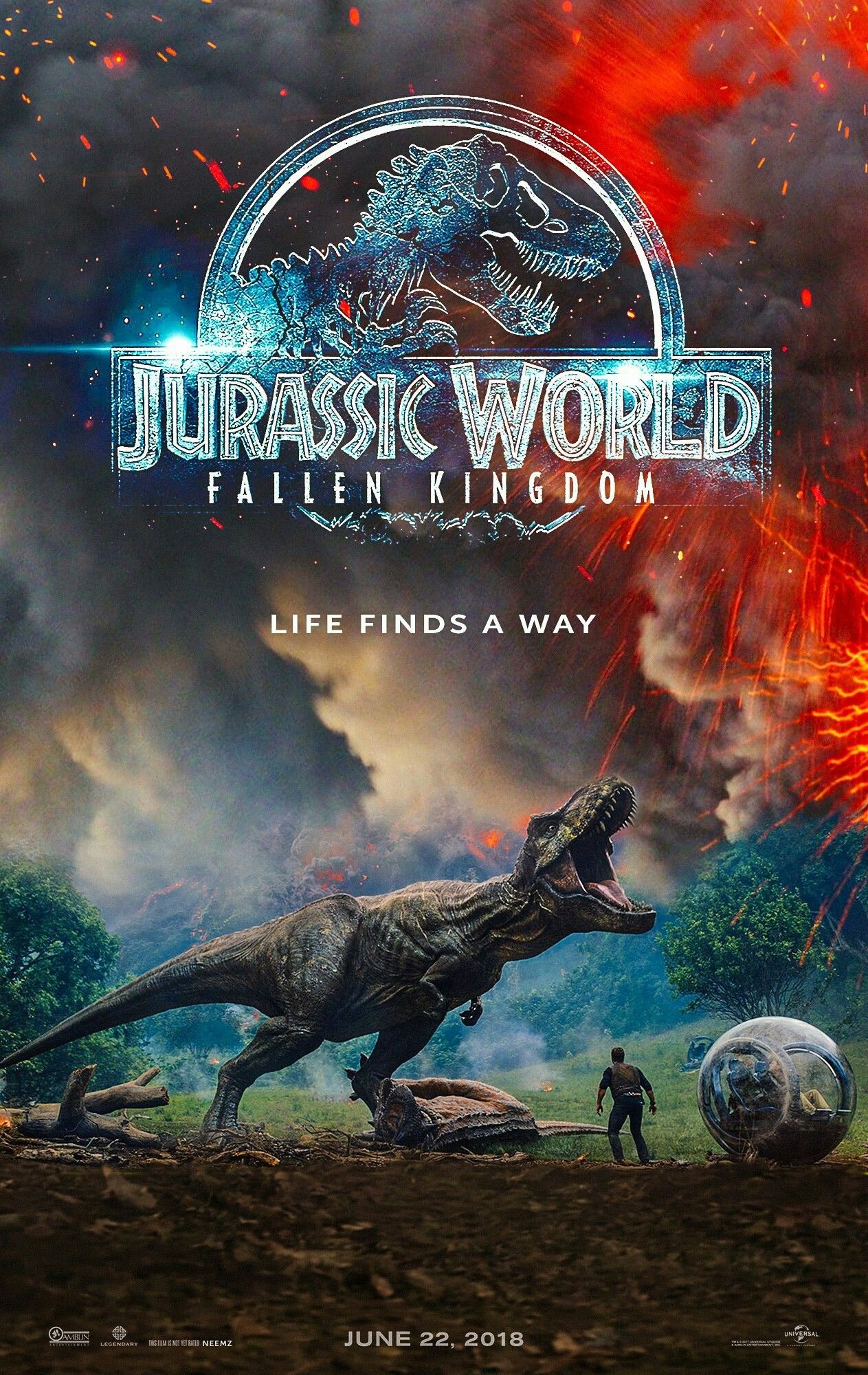
“Your (executives) were so pre-occupied with whether or not could, they didn’t stop to think if they should.” Ironic, isn’t it. A haunting but accurate assessment by Dr. Ian Malcolm. Let me say first, Jurassic Park is my favorite movie of all time, followed closely by Sunset Boulevard and Psycho, so it’s difficult to separate fanboy me from critic me. However, I shall do my best to keep my personal bias in check. As a longtime fan of the franchise that captured my imagination as a kid and with the original filled with depth, irony, tragedy, and more, I was excited as I sat down in the theatre last night to watch Jurassic World Fallen Kingdom (JWFK). And suffice it to say, my friends and I enjoyed our time and felt entertained; however, it’s simply not a great movie. And it pains me to write those words. At the end of the day, the movie suffers from a poorly written screenplay. Some may even describe the screenplay as a generic, vapid paint-by-the-numbers summer popcorn crunching blockbuster movie. The movie is not without its thrills, but I wish more attention was paid to the plot. Director J.A. Bayona takes suspension of disbelief to far reaching levels. The life of this franchise is in the balance; how I hope it finds a way to overcome the weak sequels since the strong original in 1993 that still holds up (and I’m not talking about the technology). Reasons for why it holds up could be entire articles in and of themselves (a lot has to do with the screenplay), but we are here to talk about JWFK.

Three years after the destruction of the Jurassic World theme park, Owen Grady and Claire Dearing return to the island of Isla Nublar to save the remaining dinosaurs from a volcano that’s about to erupt. When the search and transport operation meets with capitalistic opposition, the mission takes them to an underground arms market, they must stop the demented auction from placing humanity it mortal danger. During their covert operation, they encounter terrifying new breeds of gigantic dinosaurs, while uncovering a conspiracy that threatens the entire planet.

Unlike the soft opening of Jurassic World, the sequel begins with an opening scene similar to the tone of the opening of Jurassic Park. Encouraging, right? It’s dark, filled with tension, and ends with a kill. All this, and it doesn’t feel overstuffed with dinosaurs. Like a screenplay should, it hooks the audience without lots of gimmicks. The focus is on the drama, and not simply “look what we can do with dinos.” After this scene, I was looking forward to the rest of the movie. And even in the senate hearing with Dr. Ian Malcolm, this could’ve been used as a great setup for a dynamic ethics debate but it was not followed through. Like other ideas of Colin Trevorrow’s, many turning points, characters, and events are introduced but not developed. These elements often play off as mere plot devices to hurriedly cause something to be able to happen without having to truly develop it. Every character is flat. No dimension to anyone or anything, really. I cannot help but take note of the many opportunities that Trevorrow had to truly craft a cinematic story, and ostensibly ignored it. In an effort to help the vapid screenplay, J.A. Bayona attempted to add dimension to the flat plot but only so much can be done to fix a flawed story.

Examples of characters as mere plot devises are systems analyst Franklin and paleo-veterinarian Zia. Both were setup to be developed further beyond their main skill, but were abandoned. They exist only so two important actions can happen, but that is the extent of their respective development. Such wonderful opportunities to include strong characters, buy they are left as flat as the plot, lacking in any subplot or goals of their own. There is also a fantastic opportunity to provide some exposition on the days before John Hammond’s innovative theme park resort destination. We meet his former partner Benjamin Lockwood, and he explains how the first DNA was extracted in a state of the art lab in the basement of his mansion. There is also a nostalgic shot of a model of the original park’s Visitors Center, complete with Jungle Explorers and the famous gate. Although we have lost Sir Richard Attenborough, there is certainly ways of crafting a flashback to the first time DNA was extracted or even just a few moments of exposition through dialogue to learn about the early days and ultimately why Hammond and Lockwood split. We are given a reason that likely led to the split, but I imagine there was more to it, including the direction to go with the dinosaurs. Again, this is another example of exposition and dimension lost. Could’ve been used as character building and development time.

On the topic of nostalgia, there is plenty of fan service in the movie. Lockwood delivers a line taken directly from Hammond at the end of Lost World and we get to revisit the site of the Jungle Explorer that T-Rex pushed over the retaining wall in the original. There are other moments as well that remind me of the raptor kitchen and more. Furthermore, there are moments in the movie that act as a mirror to the original. Instead of seeking to lock the dinosaurs up, the goal is to free them. But I won’t get into details.

Whatever Universal and Amblin are doing presently, they need to stop and throw out the playbook from Jurassic Park III, Jurassic World, and now JWFK. I liked Jurassic World well enough but I thought the next installment was going to be more gripping, thrilling, exciting, but it went out with a whimper. I was cautiously optimistic when I heard it was going to be darker, closer to the horror that was the original 1993 blockbuster, but it wasn’t terrifying at all. And what parts were creepy, were already shown in the trailer (but that’s the marketing company’s fault, not the director or writer). Crichton is likely rolling over in his grave right about now, rest his soul. The next writer in the Jurassic franchise needs to be someone who understands what it takes to create a great story that CAN sell tickets and reach blockbuster status while holding up years down the road. Take the iconic Tim Burton Batman and Batman Returns, for examples. The reason why these, especially Returns, hold up so well is because Returns is a classic Tim Burton film that happens to have Batman characters, whereas the original is a Batman movie directed by Burton. So, the third installment in the Jurassic franchise needs to attach a writer and/or director who can write/direct a science-fiction horror movie that happens to have dinosaurs and legacy Jurassic Park characters.

While many critics are calling for this franchise to go extinct, this film scholar believes strongly that it can be saved. Much like Claire and Owen are determined to save the cloned dinos from a second extinction, Universal and Amblin need to go back to the beginning and study WHY the first one worked well. The short answer is the screenplay, followed by casting, and lastly the directing. An approach could be to write the screenplay without dinosaurs; write a solid, compelling narrative. Make sure there is a clearly defined goal with clearly defined opposition to the goal, simple plot, and complex characters. Then find places to add in the dinosaurs as anti-heroes. It’s far more effective to retroactively add dinos in and modify the screenplay than write it with a focus on seeing dinosaurs and write a story around them. The former is narrative-heavy with supporting, terrifying action sequences whereas the latter is spectacle heavy with a one-dimensional narrative. Subtext, subplot, and theme need to be infused back into the Jurassic franchise.

At the end of the day, I enjoyed myself. I did not feel as if my time was wasted. You know what, I had fun. And for that, I appreciate the movie. It may not have truly memorable characters or scenes, but it was a fun watch. If more fans speak up, perhaps the next film will go back to its DNA and deliver a sequel that would make the original proud.

For my review of Jurassic World click here.

Ryan is a screenwriting professor at the University of Tampa. If you like this article, check out the others and FOLLOW this blog!

Follow him!

Twitter: RLTerry1

Instagram: RL_Terry

Thrillz (theme parks): Thrillz.co

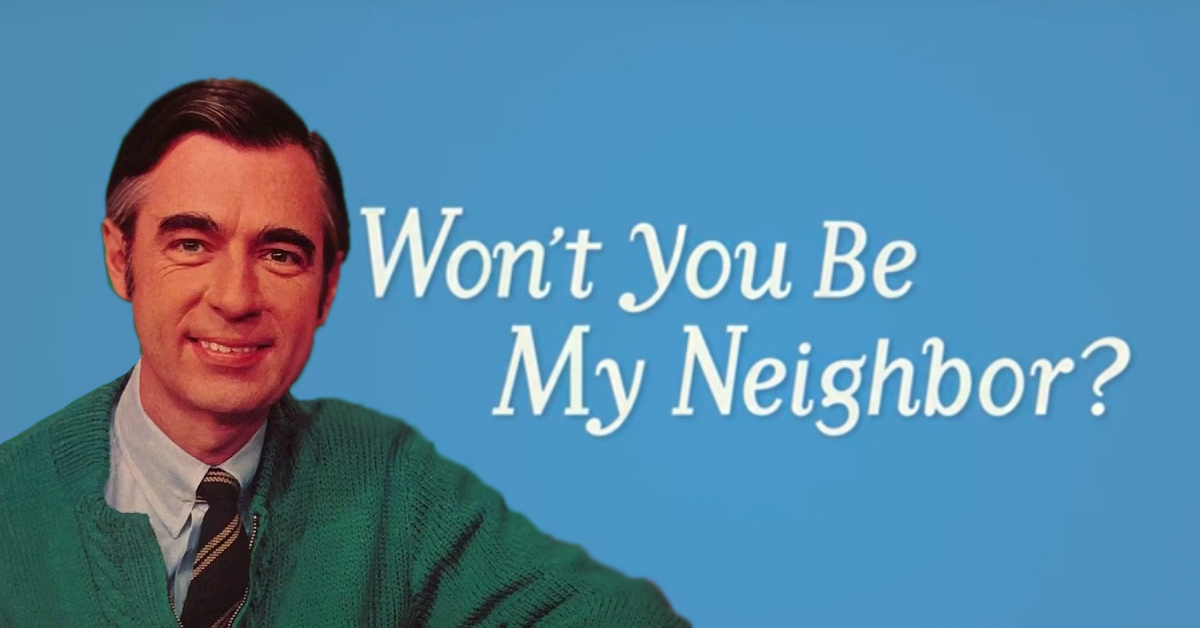
“Won’t You Be My Neighbor?” Documentary Film Review

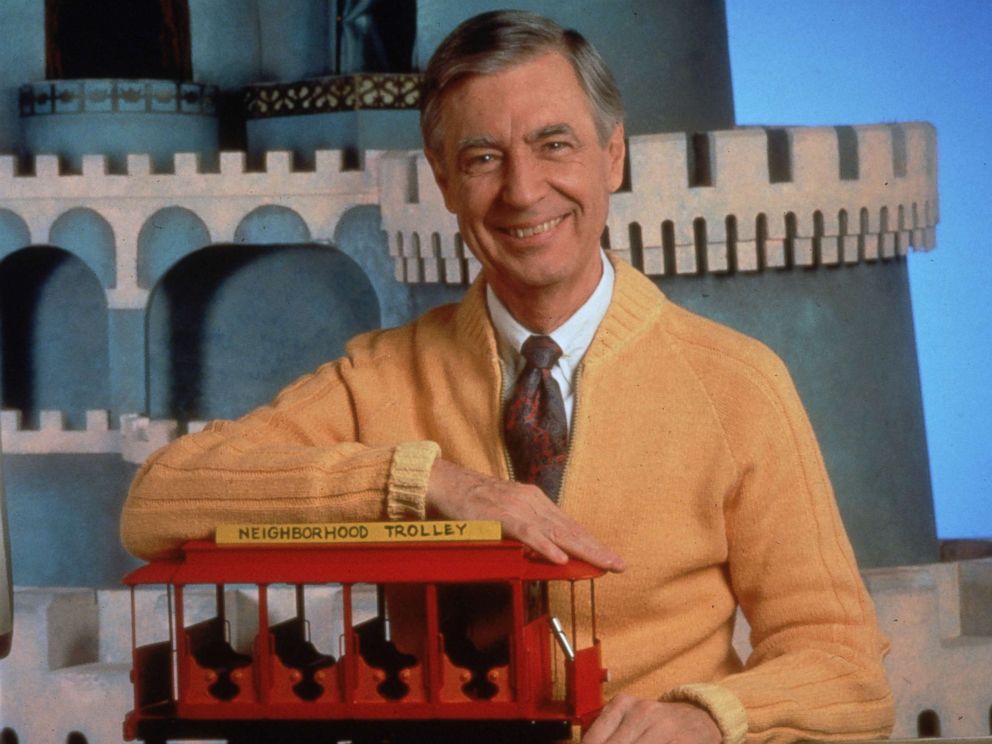
Timely. We need Mister Rogers now more than ever, for we live in dark times. In our world of division, hate, intolerance, and self-centeredness, Won’t You Be My Neighbor?, by Academy Award for Best Feature Documentary winner Morgan Neville, is a brilliant, intelligent documentary. This film takes us beyond the zip-up cardigans of public television hero Fred Rogers and reminds us that we should shift focus from what divides us to loving others just the way they are and loving ourselves because we need and deserve love, compassion, and acceptance. He truly was the neighbor on and off screen that you and I wish we had next door to us. More than a mere television show for children, Mister Rogers Neighborhood ran deep–deeper than you realized growing up. Mr. Rogers tackled incredibly tough topics in simple, creative ways in order to educate children (and their parents) to exhibit love, kindness, acceptance, understanding, and safety awareness in the world. To make the world a better place, to be a positive influence, and more. Whether in front of the camera or behind the scenes, Fred Rogers’ life mission was to utilize the power of television to teach us how to be the best neighbor we possibly could be to the world. Discussing and depicting complex subjects for a children’s program like prejudice, racism, ethics, and learning to love and accept someone just the way he or she is, this thought-provoking public television program cuts through the pretense of this world and aims directly for your heart. “One of the greatest gifts you can give anybody is your honest self” (Fred Rogers).

From February 1968 to August 2001 and nearly 1000 episodes, we were invited into the living room of children’s television icon Fred Rogers. He took us on adventures into the world to learn how things are made, taught us about kindness, love, cooperation, and punctuated each episode with a trip to the Neighborhood of Make-Believe to creatively drive home the message of theme of the day. Even if we haven’t seen an episode since we were kids, I imagine that most of us can still hum the theme song and maybe even sing some of the lyrics. His simple daily routine of putting on his zip-up cardigan and switching out his shoes made such an impression on the words that his cardigan hands in the Smithsonian Institute. Few television personalities have left such a great impression as Fred Rogers. His positive influence on and off camera affected the lives of so many people from the very young to the more established in life. The documentary Won’t You Be My Neighbor? chronicles the life and times of Fred Rogers during his timeless show. While you may think he was out of touch with realist–especially the reality we live in today–this documentary proves that he was well-aware of what was going on in the world and knew he had to educate, protect, and inspire children to overcome struggle and grief. Often he’d end the show with statements such as “you make the world a special place by just you being you.” The authentic decency demonstrated by Fed Rogers is so incredibly rare these days, and it’s that rare glimpse of hope that moves those who watch this documentary.

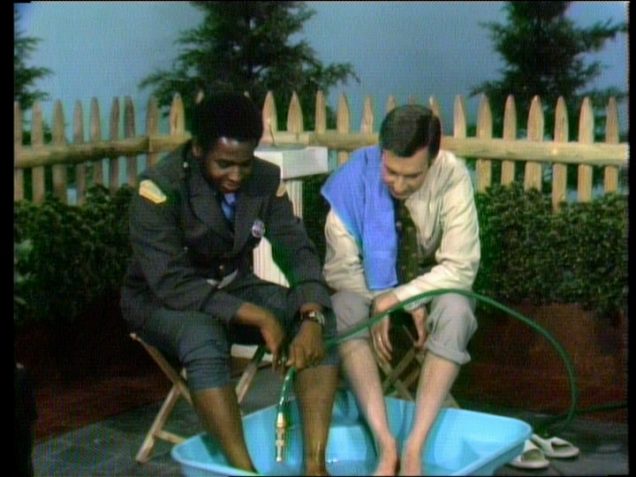
One of the most subversive moments of the documentary is when we watch part of an episode from the first season depicting King Friday the XIII building a wall to keep undesirables out. Now where have we heard that before??? Resisting the malevolent actions of the monarch, the neighborhood of Make-Believe inundates the king with messages of peace, tolerance, acceptance, and kindness. These messages inspire the king to tear down his wall to include everyone in the neighborhood. Certain so-called leaders in our states, country, and world should probably brush up on their Mister Rogers and follow King Friday’s example. Mister Rogers sentiments were not shared by many Americans during this time of civil rights unrest, but the beauty of his show was demonstrating positive progressive ideas that confronted prejudice and hate. Moments like these served as beacon of hope that the children would grow up to be loving, caring adults who desired to cooperate to build a better world. Moreover, Fred Rogers features a similar analogy later on in the series when he invites Officer Clemmons to share a foot pool with him in order to cool off in the hot weather. Perhaps this doesn’t sound radical now, but this was at a time that white Americans bucked against sharing public pools with individuals of color. Even Clemmons’ role as an officer of the law was subversive. He was hesitant at first to play the role because cops were the scariest people in his neighborhood, but he realized the importance of “children of color having a positive role model who looked like them” in the role of one who upholds the law.

The documentary also puts to rest those myths of Mister Rogers involvement in the US Military. Although we wore his zip-up cardigan regularly, it was not to cover up tattoos he got while service in the Department of Defense–he never served in the US military–but he DID serve his country for 31 years through his public television show. You spend quite a bit of time learning about the strong faith of Fred Rogers, and how it was truly the foundation upon which his show was developed. An ordained Presbyterian minister, Rogers was all set to enter seminary before he had the idea to produce his famous show. Many of the individuals interviewed during the documentary stated that even though Rogers never identified himself as a Christian, his faith and theology can be felt in his show through the lessons, games, examples, and stories. The guests from Yo Yo Ma to the show’s prop master testify to Mister Rogers’ progressive, inclusive view of Christianity that was overflowing with love and tolerance. He was proud of his faith, and often credited his Christian faith as the inspiration for the scripts he wrote for the show and the songs he composed. His beliefs were found in everything he did on and off screen. Another reverend friend of Rogers stated proudly that Rogers’ ministry through the show touched more lives and made more difference than a traditional evangelist could ever hope to do. Just goes to show it’s not how you identify yourself, but how you live your life and effect others that makes the biggest difference in the world.

Love is at the root of everything. He was doing something profound, deep, doing something that worked on multiple levels at the same time. Racism and prejudice weren’t the only weighty issues Rogers so creatively helped children work through and understand, but he also commented on other tough subjects difficult to discuss in a children’s program in a way that drives points home through kindness. Assassination, death, war, divorce, and diversity were subject matters on the show. The groundbreaking character of Officer Clemmons represented a positive role model in the law enforcement community. He was also the first recurring African-American role on a children’s program. Clemmons often commented on how incredibly encouraging Rogers was. Especially when Clemmons came out as a gay male. At first, Rogers was not sure what to do because of sponsors and even personal convictions and it took a while to talk to Clemmons about this aspect of his personal life and how it effected the show; but Clemmons stated that Rogers was extremely supportive and loved him just the way he was. Although not explicitly stated on the show, Mister Rogers–indirectly anyway–talked about accepting those who love differently than you–love is love as the popular hashtag goes. He often made it a point on the show to be proud of who you are and just the way you are. This was his way of discussing a subject that is still divisive today. But Mister Rogers was demonstrating how friends, family, and neighbors should treat one another before it became more commonplace to discuss.

When PBS was facing the loss of the $20mil funding from the US Government, Rogers testified before Senator Pastore the importance of public television. More than merely testify, he stated the lyrics to a song he wrote for the show. You can watch the testimony by clicking here. Words cannot truly capture the power of his testimony so give it a watch when you have some time. When Pastore demanded that no one else testifying read their statements, Rogers kindly put his “philosophical statement that would take 10mins to read” aside and simply spoke to the senator. He testified to his passion for educating children and contributing to healthy development and that the money spent on educational programming should be thought of as more important than violent “animated bombardment.” Understanding the inner needs of children should be at the forefront of television programming. Fred described his show to the senator as “an expression of care every day to every child to help [them] realize they [they] are unique…you’ve made this day a special day by just you being you.” The testimony is a powerful one that earned the funding for educational programming that was nearly lost.

Do yourself a favor and watch this documentary. Hopefully, it is playing at a theatre near you. Whether you grew up with the show or not, whether you can recall the last time you saw an episode or thought of Fred Rogers, this is a powerful film that is sure to inspire you. You will be changed as a result of this intelligent portrait of a man who left a timeless impression on the lives of millions by just being himself and providing an expression of care to all those who watched.