DON’T WORRY DARLING film review

Don’t worry about seeing this. Olivia Wilde’s Don’t Worry Darling works best when viewed as an exercise in the boundaries of the filmmaking apparatus; unfortunately it shows little concern for the art of plotting, and is overstuffed with metaphors and analogies that ultimately struggle to tell a compelling story. Clearly it’s striving to be a Stepford Wives, but lacks the nuance of what makes the original (and the remake to an extent) excellent films with a degree of horror-adjacency. Don’t Worry Darling is certainly unsettling and delivers an overwhelming sense of dread despite the idyllic atmosphere, but the writing is not up to the degree of excellency as are the visual elements of the film. Wilde certainly has a keen eye for shot composition and knows the capabilities of editing; but for all its trappings, the film will leave audiences wondering what they watched and why should they care.

Don’t Worry Darling is a 2022 American psychological thriller film directed by Olivia Wilde from a screenplay by Katie Silberman, based on a story by Carey Van Dyke, Shane Van Dyke, and Silberman. The film stars Florence Pugh, Harry Styles, Wilde, Gemma Chan, KiKi Layne, Nick Kroll, and Chris Pine.

From a design perspective, the film is stunning! I absolutely loved everything about the romanticized 1960s aesthetic from the women’s fashion to the colors to the music, houses, and cars. Unfortunately, the brilliantly crafted set and production design are not enough to makeup for the lethargic pacing and poor plotting. It takes more than an hour before anything of measurable consequence significantly affects the story. Although the pacing quickens in the latter part of the second act and through the third, the showdown is riddled with convenient–nearly deus ex machina, plot devices–and simply unbelievable character actions that aren’t properly setup.

The performative element of the mise-en-scene is demonstrably lackluster as well. While Florence Pugh delivers a solid, believable performance, Harry Styles is acting to the back of the room and Chris Pine is clearly phoning-in his performance. With his background as a music entertainer, perhaps Styles is better suited for the Broadway stage than he is the silver screen. The film contains some interesting montage, but many of the stylistic editing choices do not pay off dramatically and I’m left to interpret them as an exercise in film assembly. But, the scenes right out of Footlight Parade were a nice touch.

Don’t Worry Darling is another example of a film wherein a writer-director may have benefitted from taking their idea and giving it to a different screenwriter in order to develop into a motion picture that not only has an outstanding look, but thoughtful storytelling as well. Wilde certainly has a message that she is communicating to audiences, but it’s more of a message better suited for the era depicted in the film than in the era in which we live. Often times, what audiences desire is a good story with a great outside-action plot. And if a writer and/or director can add depth of theme through subplots and subtext, then that’s how you create something more thoughtful–not making the message the A-story.

Ryan teaches Film Studies and Screenwriting at the University of Tampa and is a member of the Critics Association of Central Florida. If you like this article, check out the others and FOLLOW this blog! Interested in Ryan making a guest appearance on your podcast or contributing to your website? Send him a DM on Twitter. If you’re ever in Tampa or Orlando, feel free to catch a movie with him.

Follow him on Twitter: RLTerry1
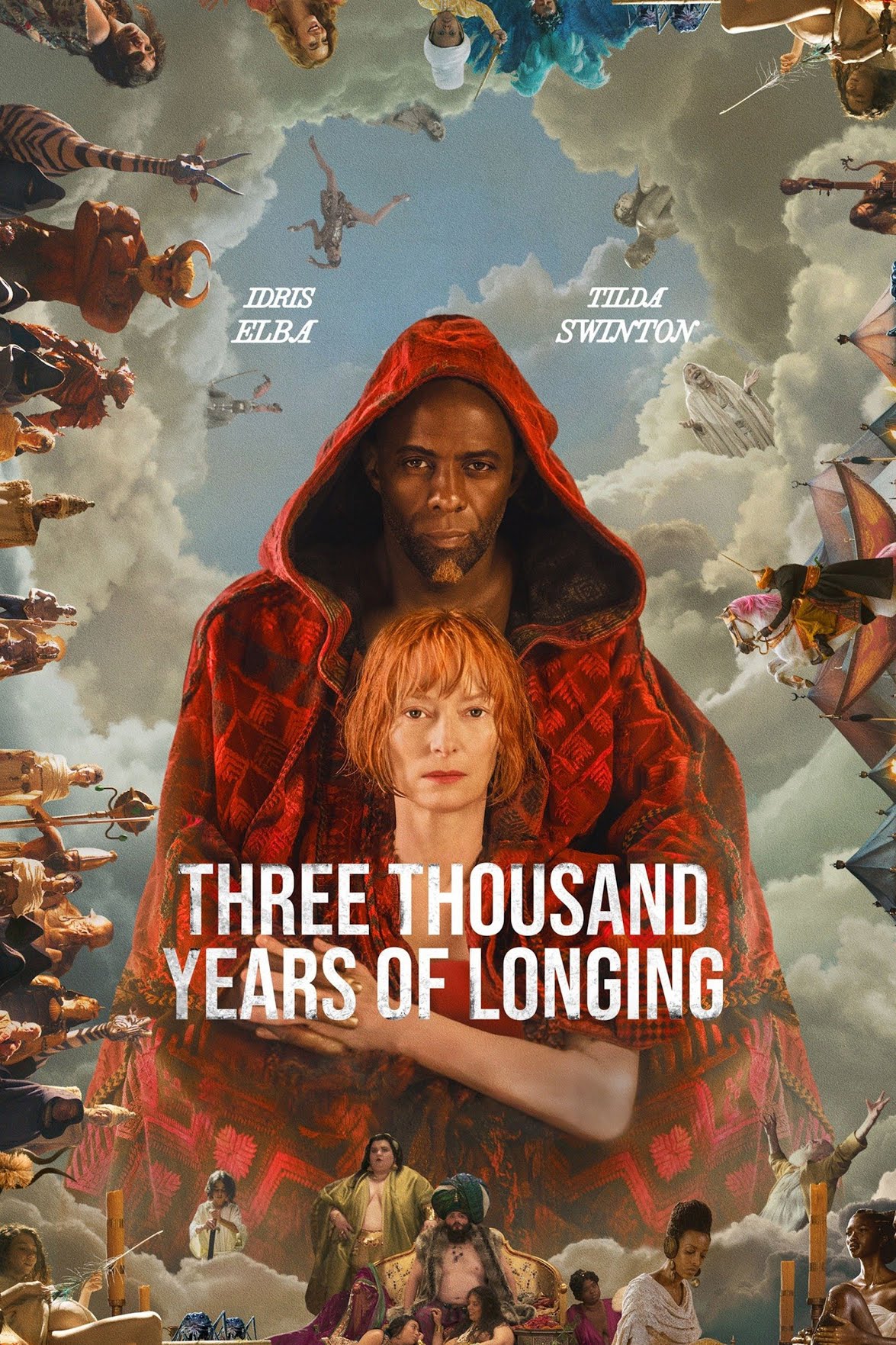
THREE THOUSAND YEARS OF LONGING mini review

More like an hour and forty-five minutes of boredom. In a gorgeous-looking film all about the very concept of storytelling, ironically, this film struggles to tell a good story. With so much promise, and a fresh expression of the legendary tales of djinn (genies), this movie should have been able to deliver a fantastical story. Unfortunately, it suffers from poorly organized and structured plotting. A story is there, but there is lacking a map to navigate from beginning to end. Swinton and Elba demonstrate excellent on-screen chemistry; I’d really like to see them star in a future film together. Three Thousand Years of Longing starts with an intriguing first act, but the second and third acts are sloppily executed. The inverse approach to the Tales of Arabian Nights is not enough to generate substantive interest in the fates of the characters. Again, the setup is interesting. Ostensibly, Elba’s djinn takes on the role of Scheherazade, and regales Swinton’s narratology (the study of story) professor of his 3000 years as a djinn, and the trauma therein. There simply isn’t enough character development for the film to serve as a character study nor is there enough plot to serve as a commentary on the mountains and valleys of love. That’s not to say there isn’t any magic in the film; the cinematography, editing, and visual effects are incredibly impressive!

Ryan teaches Film Studies and Screenwriting at the University of Tampa. If you like this article, check out the others and FOLLOW this blog! Interested in Ryan making a guest appearance on your podcast or contributing to your website? Send him a DM on Twitter! If you’re ever in Tampa or Orlando, feel free to catch a movie with him.

Follow him on Twitter: RLTerry1
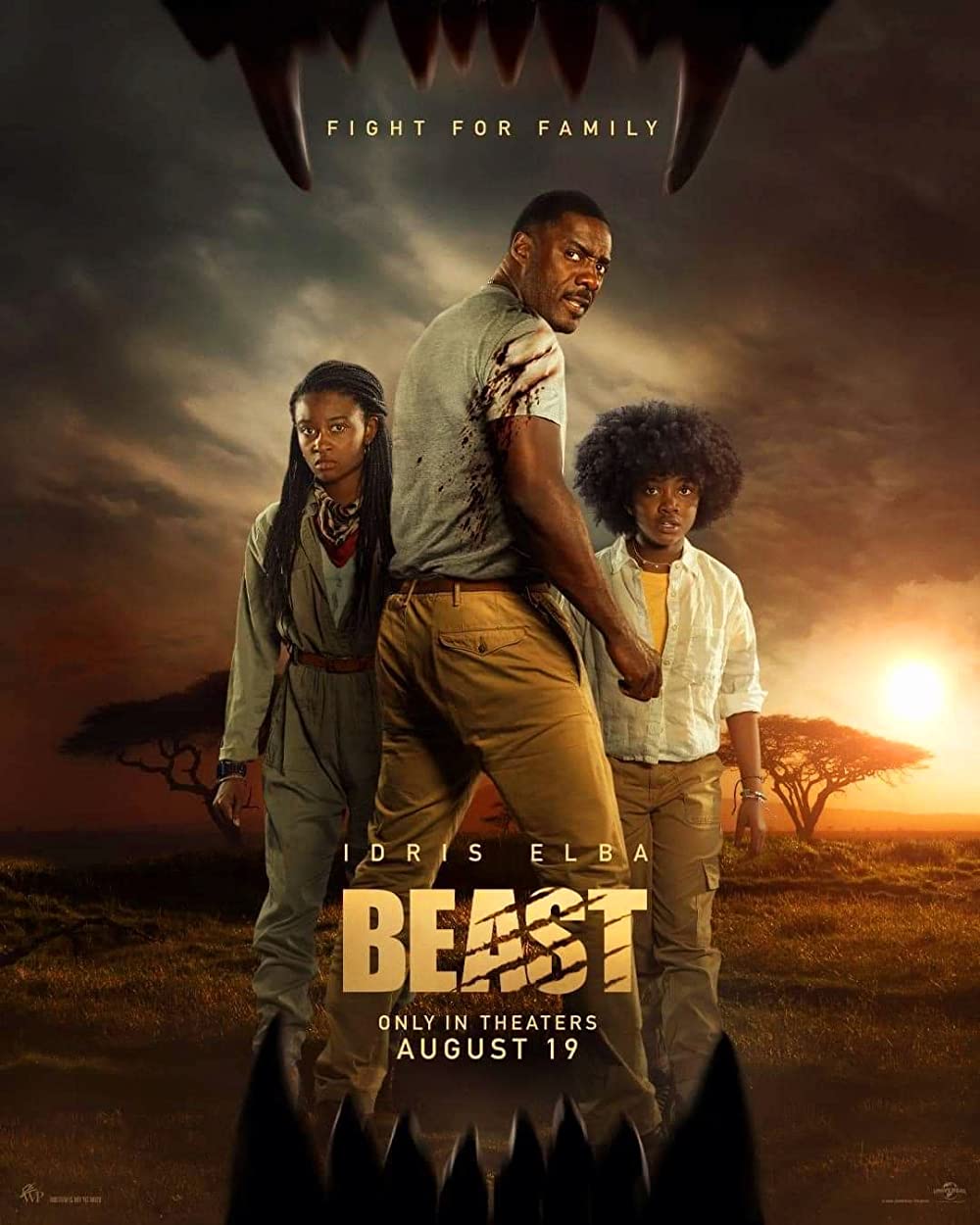
BEAST movie review

A roaring good time–the one time you’ll watch it. BEAST is a fantastically fun popcorn movie that will leave you on the edge of your seat, even though it’s moderately predictable. The script is lean and mean, and doesn’t overstay its welcome. At an hour and a half, Beast delivers what it promises: Idris Elba facing off against a man-eating monstrous lion! Where the movie underperforms is in the one-dimensional dialogue, leaving little to no room for subtext. But, the way I see it, we don’t enjoy these glorified B-movies for razor sharp dialogue, but rather for the engaging escapism they provide.

Recently widowed Dr. Nate Daniels and his two teenage daughters travel to a South African game reserve managed by Martin Battles, an old family friend and wildlife biologist. However, what begins as a journey of healing soon turns into a fearsome fight for survival when a lion, a survivor of bloodthirsty poachers, begins stalking them.

Underscoring the main action plot of survival against the t-rex-like lion, is a heartwarming story of the father’s (Elba) redemption with his estranged daughters in the wake of his ex-wife’s death. It’s incredibly refreshing to watch a movie in which the men are not stupid (in fact, no one is stupid in this movie) and the father is responsible and loving. Perhaps Universal should have used this movie as its Father’s Day weekend release instead of Black Phone.

On an almost meta level, this movie shares some elements with Jurassic Park, which is expressed through one of the daughters wearing a Jurassic Park tank-top. Some might find this lazy, but I feel it works well because it does foreshadow the thrilling and terrifying adventure that will soon befall our small central cast. It’s also fun to think of one of the greatest movies of all time in the real world of the movie, which helps to prime the audience that what you’re about to watch could happen in the real world. Yes, the lions are CG; but I gotta say, they looked pretty good. Certainly better than the CG animals in The Lion King. In no small part is the suspension of disbelief possible with the CG in this movie due to the fact that most of the screentime features our human characters. There is an attempt at a conservation message, but it ultimately falls flat; however, there is a theme of supporting and appreciating that which deviates from your plans or passions, and it is tied up nicely with a bow in the end.

The responses of the audience at the screening were mixed. Some thought it was a lot of fun, while others were rooting for the lion. Perhaps my experience is characterized by knowing when a popcorn movie is to simply be appreciated for its ability to keep us entertained for the duration of the picture. Interestingly, the movie Crawl was released in August of 2019, and it was received far more favorably. Which is puzzling, because I would say that both of these movies have a lot in common.

Ryan teaches Film Studies and Screenwriting at the University of Tampa. If you like this article, check out the others and FOLLOW this blog! Interested in Ryan making a guest appearance on your podcast or contributing to your website? Send him a DM on Twitter! If you’re ever in Tampa or Orlando, feel free to catch a movie with him.

Follow him on Twitter: RLTerry1
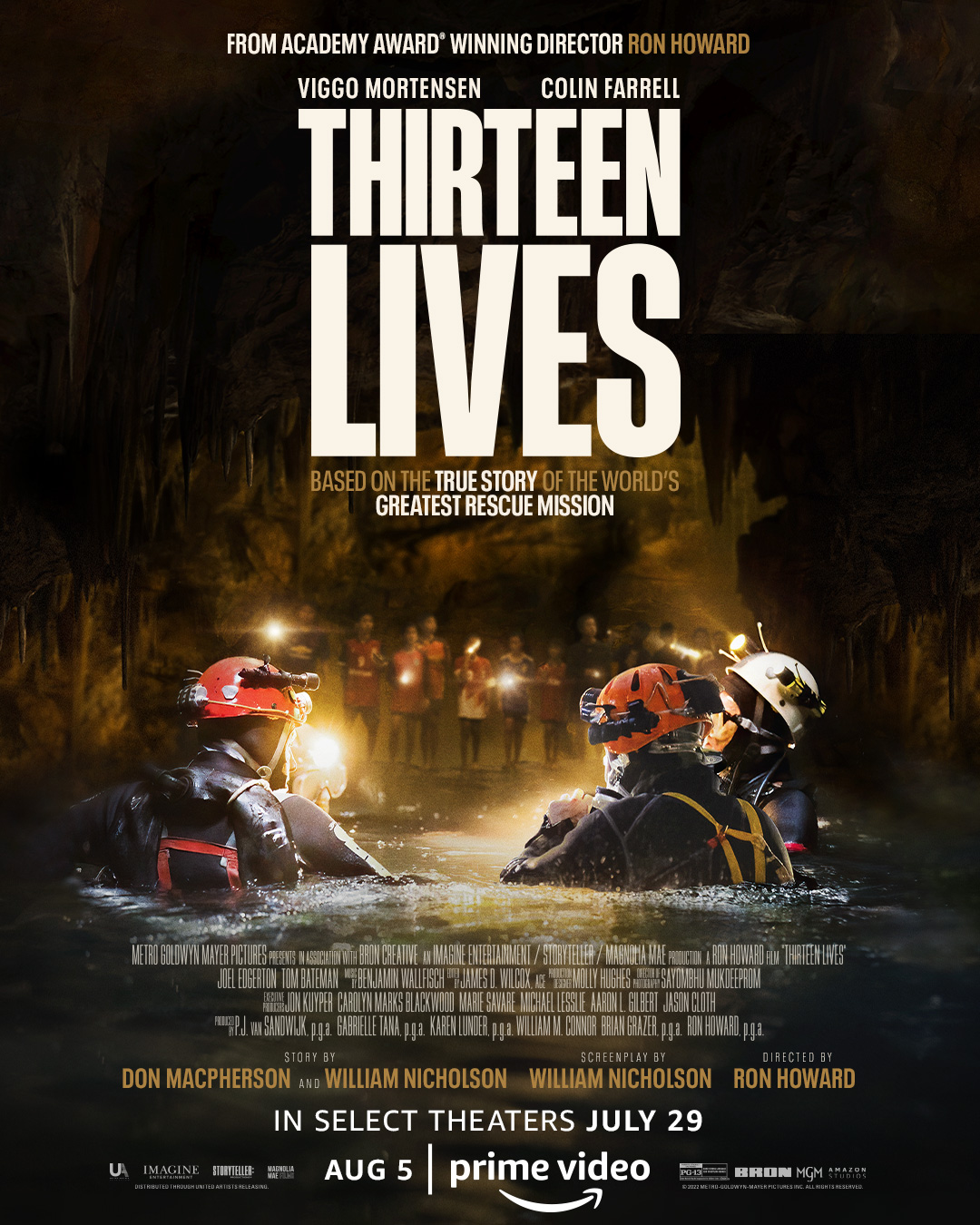
THIRTEEN LIVES docudrama mini review

Interesting. Ron Howard’s big screen adaptation of the true story of the daring rescue of the Thai youth football (soccer) team from the flooded cave is faithful to the wikipedia page, but with an impressive addition of underwater cinematography. Thirteen Lives chronicles the seemingly impossible rescue that captured the attention of the entire world in summer 2018. While Howard’s docudrama is well-made all the way around, what audiences will find most fascinating is the mechanics of the rescue. It took thousands of volunteers in the labyrinth of caves, mountain peaks, and basecamps to bring all the boys and their coach to safety. Although none of the performances particularly stand out, the film delivers solid casting. Thirteen Lives is a different kind of “based on the true story” film, because it does not have particularly strong plotting to map-out the narrative. On one hand, it is a simple plot rescue the boys, but the film ultimately plays as a blow by blow description of what happened. Upon viewing the film, I thought to myself, why not just make a documentary instead; and then it occurred to me, that there would have been little to no footage of the inside of the caves. Therefore, docudrama was the way to go. There really isn’t much in the way of connective tissue between plot points; events just happen. That’s not to say that what we are watching isn’t terrifying in places–it certainly is–especially if you have kids; but at the same time, it doesn’t feel like a cinematic story in the conventional sense. Even though we all know how the true story ends, the film focuses on the steps that were taken in order to rescue the youth soccer team. Is it good? Well, it’s not bad. It just kind of is. Often we see based on a true story films that take so much dramatic license that it’s no longer a faithful big or small screen adaptation; sometimes, character or situational nuances or motivations are lost in translation. Thirteen Lives is so incredibly focuses on a dutiful adaptation, that it sometimes forgets that it’s also supposed to be finding the narrative amongst the facts. I wouldn’t wait to see this on the small screen, catch it during its limited theatrical run because the visuals are impressive.

Ryan teaches Film Studies and Screenwriting at the University of Tampa. If you like this article, check out the others and FOLLOW this blog! Interested in Ryan making a guest appearance on your podcast or contributing to your website? Send him a DM on Twitter or email him at RLTerry1@gmail.com! If you’re ever in Tampa or Orlando, feel free to catch a movie with him.

Follow him on Twitter: RLTerry1

NOPE horror film review

Nope, no plotting here. With a sensory explosion of stunning shot composition, outstanding sound design, and unnerving score–combine those with a refreshingly original expression of the classic monster movie–and you should have a great horror film, right? That was almost the case here, had it not been for the meandering narrative and thoughtless plotting. Brilliant idea, but poorly mapped out. There is so much to like about NOPE, but the full potential of this beautifully looking film is ultimately held back by screenwriting mechanics. Peele’s NOPE feels like a combination of The Birds, Close Encounters of the Third Kind, and Signs. Unfortunately, it lacks the structure and substance of any of those. Clearly, Peele had a wonderfully original idea for his latest feature film, but his idea fails to deliver narratively. The plotting is all over the place; there are scenes that simply do not pay off dramatically. Individually, each scene is meticulously crafted, but many are not connected methodically to the rest of the film. What we have here is a film, that clearly demonstrates a love for horror cinema and film history, that pushes experiential boundaries, but the plotting leaves much to be desired. Moreover, there is a disconnect between the performative element of the mise-en-scene and characterization. Fantastic performances; but the characters, as they are written, are not very well developed. The pretense of the film is one exuding cinematic gravitas, but the pretense is the equivalent of a beautiful house with a shaky foundation and infrastructure.

To go into why this film’s plotting does not work would be incredibly spoilerific, so I cannot go into many details. All throughout the film, I thought to myself “I can tell that this is supposed to mean something, perhaps subvert something, but those idea are not being communicated effectively.” What this film will likely become is one of those that a pretentious cinephile or armchair critic will respond to those that express difficulty in following the plot with “it’s not for everyone” or “you just don’t get it.” Whenever I hear those remarks in defense of films that objectively fail to deliver narratively (plot+story), it makes me want to vomit. They are copouts for explaining away why a film doesn’t have to follow established storytelling conventions; furthermore, the “you just didn’t get it” is a tool for the cinephile to establish intellectual superiority over the individual rightly questioning the screenwriting of a film.

Caretakers at a California horse ranch encounter a mysterious force that affects human and animal behavior.

Where the film excels is in the very concept of the film itself and the technical achievement! Upon watching it, I was reminded of great films such as The Birds, Signs, and Close Encounters of the Third Kind. Moreover, I was also reminded of the sci-fi/horror movies of the 1940s and 50s. Because I was reminded of those, that demonstrates Peele’s love for classic horror cinema! And I applaud him for attempting to craft something for modern audiences that feels familiar yet fresh. To the best of my knowledge, there has yet to be a film (classic or more contemporary) that expresses the alien plot in the manner that Peele does. Where the films to which he’s harkening surpass NOPE is in the plotting. Original ideas are very much needed in 21st century cinema, but these ideas need to be paired with coherent plots.

Peele’s eye for shot composition is exceptional. He knows precisely how to frame and shoot a scene dramatically, even when the shot is largely static. What makes his shot compositions work so well is that the shot is a direct extension of the emotion of the scene. The camera isn’t merely documenting the course of events, but is ostensibly an active participant in how the scene unfolds.

The brilliant sound design and unnerving score work in tandem to draw the audience into the film, especially when watching the film in Dolby Cinema (which is what I did). No sound effect or bar of score is wasted. Every sound, every note is intentionally selected as an extension of the action or emotion of a scene. Although a film should not rely upon a great score to carry the story, sound and music are two very important tools in a filmmakers tool belt to increase the sensory stimulation of the film.

Peele is such a gifted director, but I hope he chooses to work with other screenwriters in the future to take his original ideas and map them out methodically and chronologically (whether linear or nonlinear) more soundly. We need refreshing ideas such as his, but we also need them executed in more conventional ways. Have the thoughtful subplot and subtextual theming that will inspire discourses, but make the outside/action plot more accessible because it’s the vessel through which the subplot and theming is communicated.

Ryan teaches Film Studies and Screenwriting at the University of Tampa. If you like this article, check out the others and FOLLOW this blog! Interested in Ryan making a guest appearance on your podcast or contributing to your website? Send him a DM on Twitter or email him at RLTerry1@gmail.com! If you’re ever in Tampa or Orlando, feel free to catch a movie with him.

Follow him on Twitter: RLTerry1