WOLF MAN (2025) horror movie review

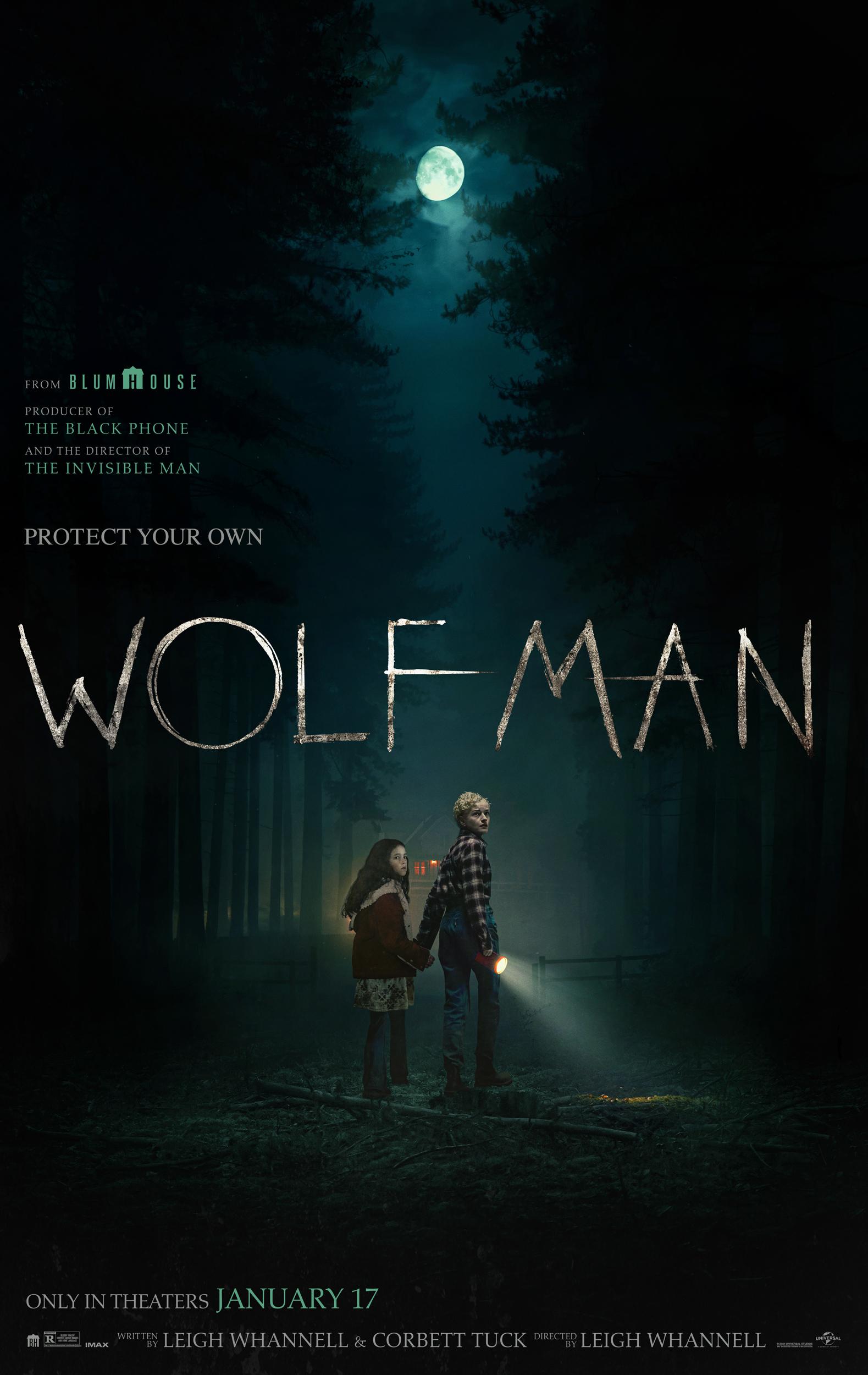
Underwhelming. Leigh Whannell’s second remake of a Universal Monster classic has about the same depth as a puddle of water and keeps your attention about as much. No mistaking it—there are some brilliant ideas all throughout this movie, but the connective tissue is simply non-existent. Clearly this movie is Whannell’s attempt at infusing a thoughtful family drama about generational trauma and broken relationships into the monster movie formula, but the screenwriting fails to support this attempt. Whannell has previously demonstrated that he can successfully remake a classic whilst retaining the soul of the original and adding a layer of modern sensibilities, because that is exactly what he did with the critically acclaimed and box office success of The Invisible Man in 2020. Also, would somebody please send Julia Garner a great screenplay? She is a phenomenal actress; but ever since she finished Ozark, she hasn’t been offered a cinematic vehicle in which she could best shine. She’s still the best choice for a Madonna biopic. But I digress. 2025’s Wolf Man certainly had the potential and pedigree to be an entertaining, thoughtful, and exhilarating horror movie, but the screenwriting simply isn’t there to support it. However, I’m sure it’ll make for a great Halloween Horror Nights house later this year.

Blake and his family are attacked by an unseen animal and, in a desperate escape, barricade themselves inside a farmhouse as the creature prowls the perimeter. As the night stretches on, however, Blake begins to behave strangely, transforming into something unrecognizable that soon jeopardizes his wife and daughter.

Despite Whannell’s ambitious reach, his Wolf Man remake fails to capture the innovation and depth of the original (1941) and the popcorn entertainment of the 2010 remake. While it boasts a rather strong performative dimension and effective moments of terror, the film struggles with strategic plotting, thematic clarity, and consistent execution of film craft. From beginning to end, there are setups without any payoff and many filler scenes that pad an anemic narrative. Moreover, the first and third acts feel truncated in exchange for a protracted second act that lacks any meaningful character or plot development. This is one of those horror movies that has all the bones of a great and entertaining story, but the moments wherein the pot and characters should steep are nearly non-existent. It has all the markings of a first draft screenplay. And with Whannell’s name all over the billing from writer, to director, to producer, this film suffers from what plagues so many film’s these days: lack of accountability. I’ve said it before, most directors are not writers and most writers are not directors. There are of course exceptions, but I’d like to see more writers and directors working together instead of feeling that one has to be both in order to be taken seriously as an auteur.

One easy example to cite (that isn’t a spoiler) is something that happens at the very beginning of the film that spotlights recurring setups with lack of payoffs. As 12 year old Blake is walking with his domineering father through the woods, his father makes a big deal out of some mushrooms in which Blake was interested, noting that many mushrooms are poisonous. The degree to which Blake’s father draws attention to the mushrooms sets up the Chekhov’s Gun storytelling device–or rather–appeared to have set the stage. Nope. Those mushrooms never come back into play for the duration of the movie. Whannell should have either found a way for those mushrooms to payoff in the showdown or should have not drawn acute attention to them at the beginning of the movie. Why am I spotlighting this? Because it’s indicative of the recurring weak screenwriting mechanics that plague this movie.

You may have heard that many critics and fans have negatively criticized the wolf man’s appearance. I may not be able to speak positively of the movie’s story and characters, but I do feel the need to come to the movie’s defense here, because the movie is called Wolf Man, not An American Werewolf in London. Looking back to Lon Chaney Jr.’s iconic Wolf Man (designed by the legendary Jack Pierce), he was designed to be a wolf-like man, not a werewolf in the traditional sense. Thematically, it represented then (and still represents in this latest iteration), the “monster” within each of us that has to be controlled. I respect Whannell’s decision to keep with a variation of Jack Pierce’s original concept of the Wolf Man, and I feel that it works very well for this movie.

An area where this movie shines brightly is in the exquisite sound design. From the immersive sounds of nature in the forest to the changes in Blake’s sense of auditory processing, the sound mixing and design are fantastic. Of all the moments demonstrating strategic and effective sound design, where Whannell’s direction demonstrates the greatest thoughtfulness, is in the moments wherein Blake’s human senses begin to transition to canine senses. Aside from this transition faltering to allowing for room to develop, the idea of dramatizing this for the audience was innovative and paid off dramatically.

Even though I am an advocate for experiencing cinema in the cinema, this is one of those movies for which you should wait to be added to Peacock–which will probably be very soon.
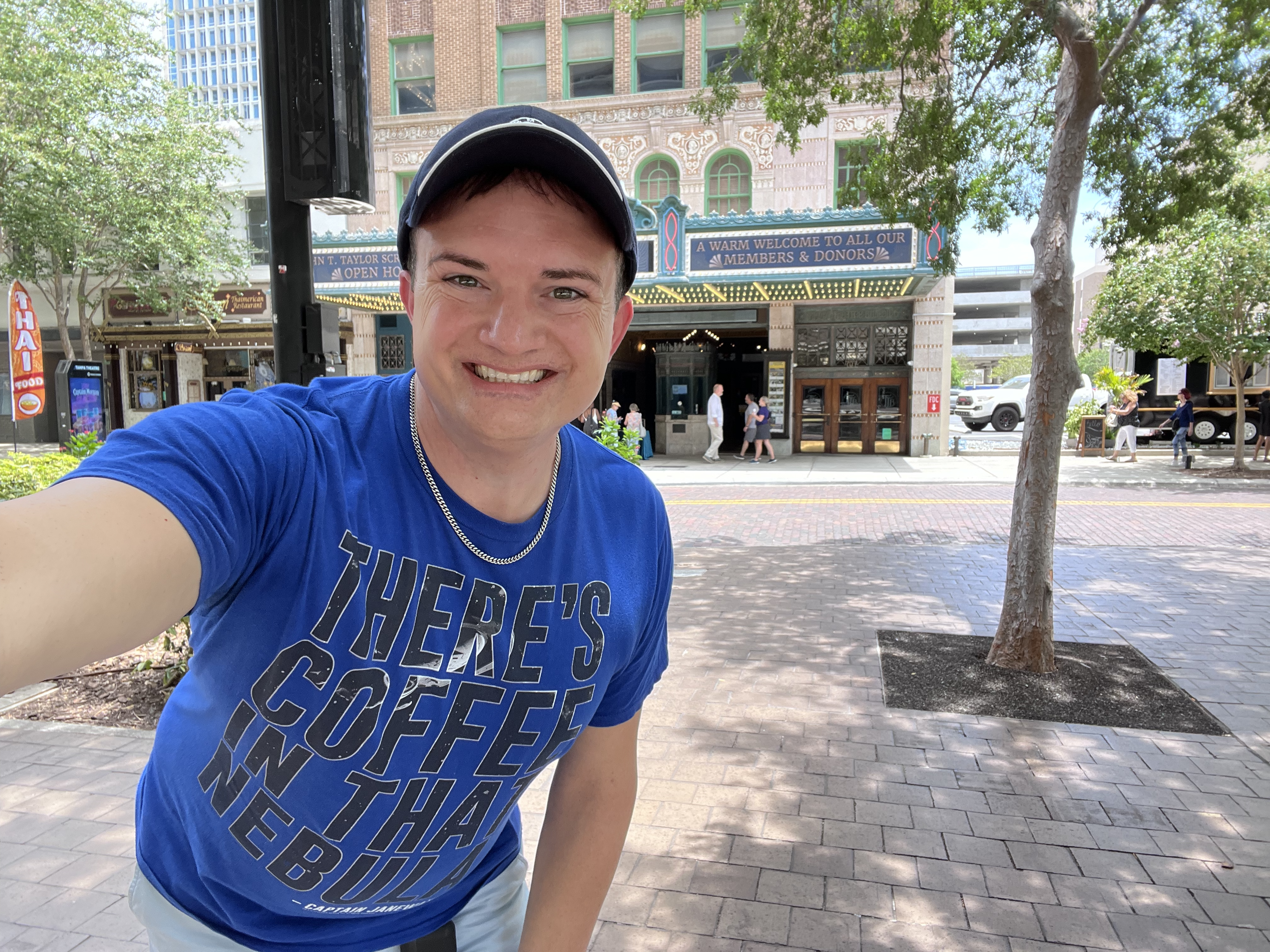
Ryan is the general manager for 90.7 WKGC Public Media in Panama City and host of the public radio show ReelTalk about all things cinema. Additionally, he is the author of the upcoming film studies book titled Monsters, Madness, and Mayhem: Why People Love Horror. After teaching film studies for over eight years at the University of Tampa, he transitioned from the classroom to public media. He is a member of the Critics Association of Central Florida and Indie Film Critics of America. If you like this article, check out the others and FOLLOW this blog! Follow him on Twitter: RLTerry1 and LetterBoxd: RLTerry
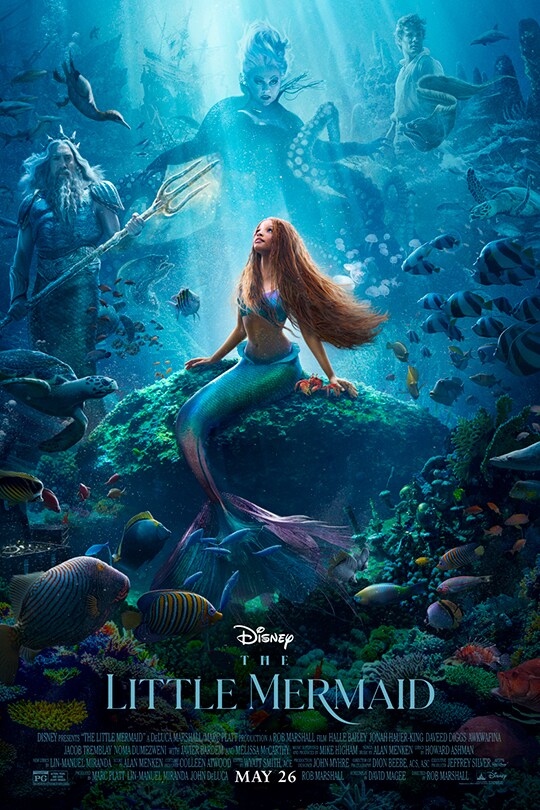
THE LITTLE MERMAID (2023) movie review

written by Dr. Leo Genco

Some treasures are best left under the sea. This familiar Disney formula is only good for one thing: lining the coffers. The Little Mermaid has wonderful, bright, appealing visuals with a few new decent songs, that prove Disney is unable to capture the magic of their 2D animated films. This is unfortunate, because under the sea of this movie is the potential for a great innovative rendition of The Little Mermaid. Why? Well, Disney attempted to provide a newer telling of the original while pandering to the original material. This creates a dichotomy of moral themes in the movie, and it shows. There is a lot to unpack. If you want to skip to what the movie does right, you can skip to the end.

Let’s get the most obvious issues out the way, since they were consistently topics of discussion prior to the film’s release: race, ethnicity, and gender swapping of characters. These changes are typically common to improve diversity, and it can be done. You can look at Nick Fury in the Marvel Comics, or John Stewart as the Green Lantern in the DC Comics. One of the best race change movies is the Preacher’s Wife. The issue with the change here is how the director and writers tried to justify the change. Instead of changing the race of a whole group to maintain consistency, only individuals are changed and are rationalized through a simple bit of dialogue exhibition. Most of the human characters are an eclectic group of non-white ethnicities and races but Prince Eric is still white! The story justifies these differences by changing the location of the kingdom and having the queen adopt Eric into the family. The kingdom is not a port for the mainland but on an island, somewhere in the Americas, and this causes massive changes in the story. The whole scene with the chef and Sebastian was removed. Someone will wonder if the scene was cut because the chef was French. The essence of the original was stripped to justify the demographic changes, which would not be a problem if the movie did not pander to the original material.

The singing varies between songs and actors. The cast of a mix between stage and film actors would do that, but the main problem is how the songs were constructed. For some reason, the director added more characters into the script, but they did not contribute to the songs at all. It is very common in musicals to have the background and side characters sing the chorus and harmony for the lead singer. But this is not true for The Little Mermaid. People are expecting a chorus for Under the Sea and Kiss the Girl. This is not coming from a nostalgia perspective of the original songs. Under the Sea is a song about the sea living as a musical band of species. The dialogue before Kiss the Girl called for the various sounds of nature. For both songs we are expecting a strong sound, especially when the chorus hits. Sadly, both songs are reduced to two or three singers max and are sung as a solo piece for the majority. Overall, songs match the deaf tone of the movie.

While the animation of the under the sea creatures on par with the Lion King (take that as you will), I am not talking about the animals but the human actors who had little to not animated faces throughout their dialogue. Only three characters were animated, Queen Selina, Grimsby, and Ursula. When I say animated, I mean that their facial expression, voice, and body language spoke. Everyone seemed stiff, which is weird because Halle Bailey is a stage actor. You would think Ariel would have the most body expression because she can’t talk for half the movie. Ariel needs to be animated the most. Arial did not seem to be a curious, explorative person, but a blank manikin until a scene which required an over-the-top reaction. Luckily, this was not consistent throughout the movie. As I will mention later, the acting in the new scenes was great.

For some movie goers, background context to main characters is essential. I, on the other hand, prefer context to characters that is required to understand the journey of the main character. This means, that background context should progress information for the main character, not for the audience. The early introduction to multiple character’s background hurt the movie in two ways: (1) these small scenes for a backstory break up the pacing of the storytelling, creating jarring transitions between scenes, and (2) too many themes or messages were introduced into the film too fast. When you introduce a backstory, you need to follow through and close that story, and when you give too much information at once, people tend to forget or care about the small stories. On top of that, the movie told Ursula’s backstory but did not provide a satisfying delivery of her end. Overall, the introduction of the characters with backstory was not the best way to start the movie.

Two things carried the movie for me, the new scenes and songs and the queen and Grimsby. Adding new scenes and songs felt real. The acting in the scenes felt genuine, minus the random dancing scene halfway through the movie. These scenes had fresh magic Disney needed, but again, the director pandered to the original movie, and this created a lot of disconnect. The problem when recreating 2D animation as a real-life movie is the expression that comes from drawn imagery. This is why the drawings of human movement are different from how humans move. It allows the animator to create expressions you are physically unable to express but want to. The new scenes of the movie did not have a previous expectation of certain expressions. I believe this element allowed the actors more freedom to act.

God bless queen! Out of all the characters, the two actors who were able to pull it off throughout the whole movie was the queen and her trusty councilman, Grimsby. They were amazing. They had facial and body expressions. I had chills when the queen was on screen. Grimsby was played perfectly and became that comedy relief when the gender swapped bird, Scuttle, failed. I loved these characters, and I enjoyed every minute of screen time with them. While I would put Ursula in this category, her character was written incorrectly. While she was played very well, her lines were the least to be desired. She was written more as a grown woman who throws temper tantrums like a child than the cunning slimy sea witch, she was in the original 1991 movie. So, the queen and Grimsby saved the movie, at least for me.

Dr. Genco is a guest contributor and fellow university colleague. Follow him on Instagram at Leo.Genco.

“The Invisible Man” Horror Film Review

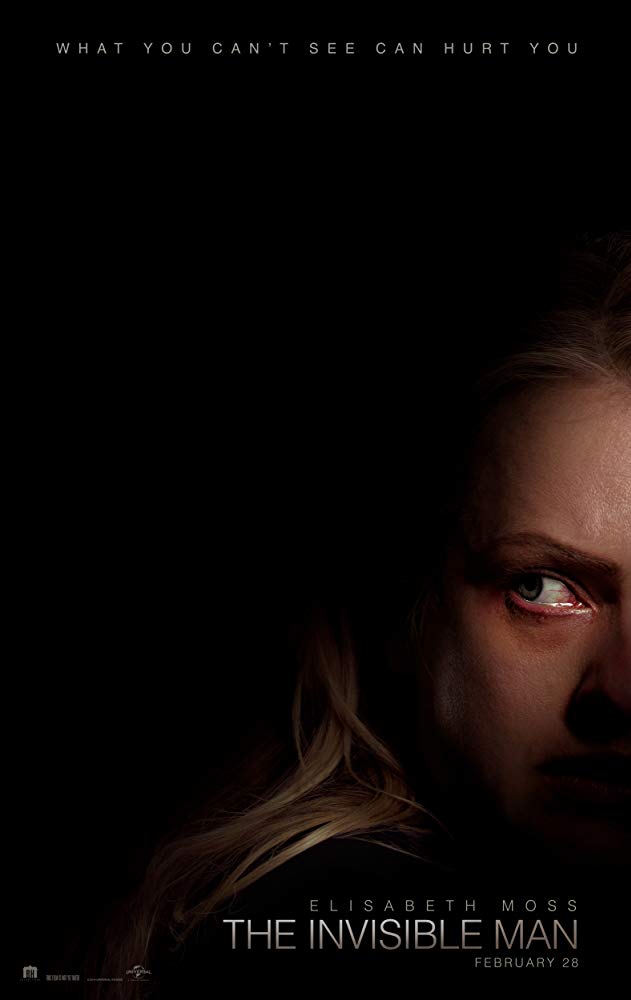
You won’t believe your eyes! Finally, a remake of a classic horror film that has the soul of the original yet feels completely fresh. Just when the Universal Monsters were about to be sealed in their coffins and sarcophaguses for all eternity, following the abysmal Mummy remake in 2016, writer-director Leigh Whannell delivers an excellent horror film that proves to us that a remake of a classic film can work! While the Invisible Man may not be in the cultural zeitgeist to the same degree that Dracula, Frankenstein’s monster (tho, creation is more precise), the Creature from the Black Lagoon, or the Mummy are, he is the Universal Monster that is by far the most psychotic, sharing a lot in common with the modern slasher. Furthermore, the Invisible Man demonstrates negative psycho-social characteristics, when exhibited by people in real life and not in check, are utterly terrifying. Perhaps the trademark characteristic of the Invisible Man is his uncanny genius that ostensibly isolates him both psychologically and spatially from society; moreover, this self-imposed isolation gives way to the extreme superiority complex that fuels the disconnect with mankind. Unlike a psychopath, the Invisible Man is fully aware of what he is doing, so he is much more of a sociopath. Sociopaths are cognitively aware of the violent or otherwise destructive acts he or she is committing, and that makes them far more dangerous than psychopaths. In order to provide audiences with a new experience, not only does Whannell update the science behind just how the invisibility works, but he also shifts focus to a different central character. Instead of the Invisible Man, it is Elisabeth Moss whom takes center stage as our tormented central character. Keep your ever watchful eyes wide open because you will see that everything in the film is both incredibly interesting and has everything to do with the plot.

The Invisible Man written and directed by horror veteran Leigh Whannell is a remake of the classic Universal Monster horror film by the same name and an adaptation of the original novel by H.G. Wells. When Cecilia’s (Elisabeth Moss) abusive ex Adrian (Oliver Jackson-Cohen) takes his own life and leaves her his fortune, she suspects his death was a hoax. As a series of coincidences turn lethal, Cecilia works to prove that she is being hunted by someone nobody can see. Her explanations fall on seemingly deaf ears as the evidence seems hollow. (IMDb)

The strength in this remake lies in the excellent screenplay by Whannell. While all the technical and creative elements work incredibly well, it is the strong visual storytelling and plotting that forms such a solid foundation for reimagining The Invisible Man for a 21st century audience. You will find elements of the classic film Gaslight, H.G. Wells’ original novel, and the original 1933 Universal film. Cecilia is a compelling character with immense depth because she is experiencing psychological and physical abuse that may have a supernatural component but feels unapologetically real, nevertheless. Whannell’s Invisible Man is a character-driven story that explores the psychological toll that one experiences when the world does not believe you, no matter how disturbing the evidence. In this case, it’s domestic abuse turned other mass violent acts, including murder, but it could just as easily be any number of major and minor abuses that are difficult to prove especially when the world doesn’t believe you. Moss’ Cecilia is a relatable character for anyone that has ever been unsuccessful in convincing the world of your trauma and abuse. She carries the weight of her abusive relationship around with her every minute of everyday. Even before Adrian was truly terrorizing her in a sadistic poltergeist-like fashion, his specter was already haunting her. This film provides an avenue for Whannell to explore the far-reaching abuse sustained by Cecilia at the hands of a–by the world’s standards–a great man of scientific achievement and intellect.

We see very little of the Invisible Man, but this only helps the film deliver outstanding tension and suspense. Because we cannot see the Invisible Man, we are constantly looking for him in every corner of the screen. Suspense is achieved through not relying on the actions of the Invisible Man, but rather on the absence of him. Once his capabilities are established, and we get that first glimpse into his sadistic actions, then we go relatively long periods of nothing from him. And that is precisely what this film needed! This staggering of Invisible Man moments delays what we are expecting, thus building solid suspense. Whannell takes a page out of the Alfred Hitchcock handbook by transferring the horror on screen into the minds of the audience. Here, the horrors are such much more visceral and lasting. The Invisible Man’s torments of Cecilia start out small and then grow with intensity. And not just the same kinds of torments, but strategically different ones that When Cecilia’s abusive ex takes his own life and leaves her his fortune, she suspects his death was a hoax. As a series of coincidences turn lethal, Cecilia works to prove that she is being hunted by someone nobody can see. every aspect of her life. His goal is to cut her off from everyone and everything, including her own sanity. Only then, can he control and manipulate her to the extent he desires. Each attack on Cecelia, or someone close to her, disconnects her from that which is familiar and makes her feel safe. Like a lion separating prey from the larger group, in order to move in for the kill, Adrian is calculating in his movements.

The score and cinematography are right out of a classic monster horror movie! Much like A Quiet Place relies upon the power of silence to heighten the senses and keep, The Invisible Man also uses strategically placed moments of silence to create a fantastic sense of unease that keeps you on edge. The score in this film does a terrific job of setting the mood and tone right from the very beginning; furthermore, the score feels like a direct extension of the emotional beats of every scene. The cinematography may not have anything in particularly stylistic about it, but the framing of each scene is perfectly executed. Each frame is so important to us because we are always looking for little signs of the Invisible Man. It’s like Whannell was playing a game with us! There are shots framed in such a way that you think the Invisible Man is going to make some kind of appearance, but he usually doesn’t. But you will be convinced you saw him, and that is such a fun part of the movie. It’s not only the plot that keeps us guessing, but each and every shot does the same!

Elizabeth Moss’ performance as Cecilia was nothing short of an outstanding achievement! From the moment we first meet her to her last frame, she delivers a compelling performance that will stick with you long after you leave the cinema What’s truly mindblowing is the fact she is playing off nobody (in real life anyway). It’s just her on that set and the film crew, and that’s it. Not only does she wow us with her terrifyingly convincing facial expressions, but her entire body is fully engaged in each and every moment. Never once do I see the actor, I see only her character of Cecilia. While I know Moss is an accomplished actor from her past roles, including last year’s Us, she surpassed all of my expectations of her acting. Her performance is right up there with Toni Collette’s in Hereditary. This isn’t simply a great delivery for a horror film, it’s a superlative performance for any film period. And it’s not just in her more manic scenes; even in the calmer scenes, the subtleties of each movement, twitch, glare are hauntingly authentic and leap off the screen. The central character of a motion picture is our conduit into the story in order to vicariously experience the plot and emotions. Moss’ Cecilia is relatable, genuine, and demonstrates equal parts vulnerability and strength.

Leigh Whannell’s The Invisible Man is a testament to the ability for a writer-director to take inspiration from a classic movie and reimagine it for a new generation while keeping the soul or the original alive. I don’t take issue with remakes of classic movies, but I do take issue with remakes that have no respect for the original source material. This film feels both fresh and familiar as it takes what the original did well, and use those elements in a modern way. The bones of the original and this remake are largely the same, but the muscles are developed differently in order to deliver a new story. While we haven’t been officially told that Universal’s Dark Universe is back on, the critical and box office success of this film may just reignite those embers that were snuffed out by the awful Mummy from the other year.

Ryan teaches screenwriting at the University of Tampa. If you like this article, check out the others and FOLLOW this blog! Interested in Ryan making a guest appearance on your podcast or contributing to your website? Send him a DM on Twitter or email him at RLTerry1@gmail.com! You can catch Ryan most weeks at Studio Movie Grill Tampa, so if you’re in the area, feel free to catch a movie with him!

Follow him!

Twitter: RLTerry1

Instagram: RL_Terry

Maleficent: Mistress of Evil movie review

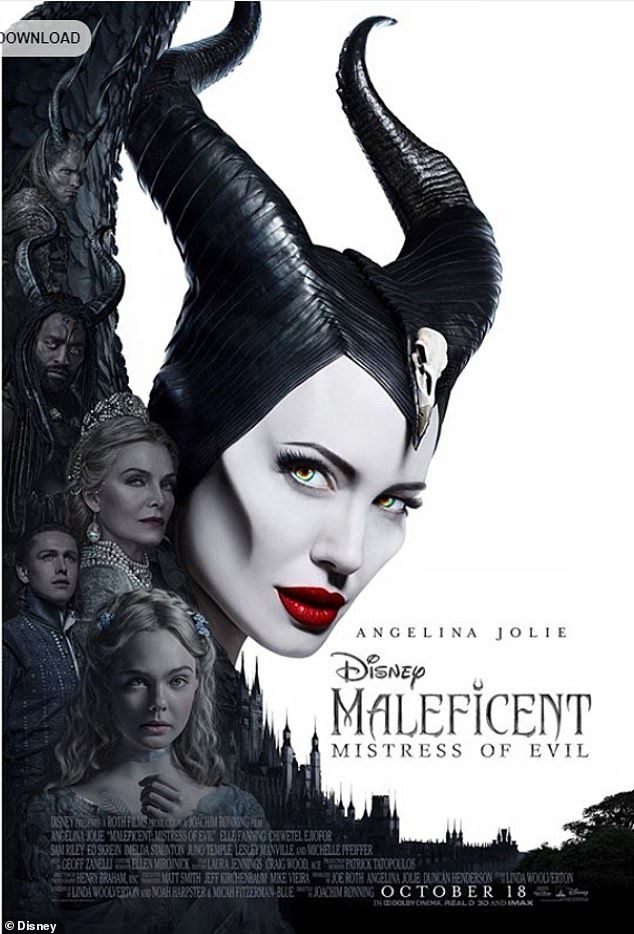
Should’ve been titled Ingris: Queen of War or maybe Disney should have featured the true mistress of the dark Elvira! After the critical and box office success of 2014’s Maleficent, this sequel, out of nowhere I might add, had some major spindles to fill. And does it live up to the original? Unfortunately not. It’s less funny, clever, creative, and even less romantic, despite a wedding being at the center of the movie. The title doesn’t even make such sense because Maleficent is barely in this movie. Our central character really is the incomparable Michelle Pfeiffer’s Queen Ingris. The movie is Maleficent in title only, but the real focus is on Ingris. Of course, I was perfectly happy with Pfeiffer stealing the show! But as a film critic, I have to acknowledge the vapid story. Literally my favorite part of the movie was when I saw that Ingris had a pet cat. A fantastic homage to Pfeiffer’s most famous role, the definitive Catwoman from Batman Returns. Other memorable characters from the original animated classic and 2014 movie are barely in this sequel as well, including our three favorite fairies that can never agree on the color of anything. Clearly there was a solid premise and well-defined direction about halfway through the movie, but then it loses narrative direction and putters to a stop.

The formidable Queen Ingris (Pfeiffer) causes a rift between Maleficent (Angelina Jolie) and Princess Aurora. Together, they must face new allies and enemies in a bid to protect the magical lands which they share.

While I hoped that this sequel would continue in the footsteps of its predecessor, there is virtually no connection to the original story at all, save a rushed bit of exposition by Queen Ingris during the start of the third act. One part romcom and another part geo-political drama, Maleficent: Mistress of Evil should have been the booster shot of originality that the latest epidemic of Disney “live action” remakes needed. What started out so well (ironically enough WITH Maleficent), has progressively gotten worse. Instead of new perspectives on past animated classics, Disney is now doing shot-for-shot remakes that add nothing new to besides photorealistic animation. Perhaps there is simply too much plot for one movie here. And in cramming as much plot as possible into 1.5hrs, the story and characters greatly suffered. There is literally enough epic world building in this movie to fill two sequels. And to be fair, I think this would have made for a much more interesting story had it been able to breath more. Everything felt so incredibly rushed. It’s also overstuffed with messages. On one hand, there are three different depictions of femininity manifested in each of our three leading ladies; but on the other, there is clearly a message of antiwar and commentary on the holocaust. The writers should have selected one of those themes to serve as the subtext for the main action plot, while the others are told through subplots. The problem is that each of them are treated with equal screentime. If you are hoping for a fantastically subserve twist like in the first movie, then don’t hold your breath.

Honestly, I could go on and on about the terrible screenplay. But I’d like to highlight what I feel that the movie did well. Casting. Reprising her phenomenal job as Maleficent is Angelina Jolie. Those razor sharp cheekbones and terrifying smile are back. Playing opposite Jolie is screen sensation Michelle Pfeiffer as the truly evil Queen Ingris. Pfeiffer steals the show! And I loved every minute of it. No matter what role she plays, she commands your attention in every frame she appears in. WIth such a larger than life screen presence, she was the perfect choice to go head-to-head with the alleged mistress of evil. The brilliant chemistry between the two is best witnessed in the first act when there is a dinner scene that turns into a twisted meet the parents scenario. Most of this scene is Ingris and Maleficent throwing metaphoric daggers at one another and peacocking who is the HBIC at that table. Tension runs incredibly high in this scene, but unfortunately the remainder of the movie’s conflict and tension never meets the bar set by that early scene. Another item of mention that the movie got right is the consistently flawless CGI of the Moors and the fairies therein. I appreciate the animation for never taking me out of the story. Both the human and animated characters coexist on the screen beautifully.

Releasing this movie in October, just two weeks prior to Halloween is an odd choice. It feels much most like an early Spring movie. There were opportunities in the movie to take it to some dark places, which could’ve boded well for mid October; however, it merely touches on dark topics and scenes. Never fully commits. If the auditorium that I was in this evening is any indication, Zombieland 2: Double Tap will out-perform Maleficent this weekend. If you were unsure whether you wanted to see it in the theatre, then I will save you the trouble and advise waiting for it to his Disney+ within a few months.

Ryan teaches screenwriting at the University of Tampa. If you like this article, check out the others and FOLLOW this blog! Interested in Ryan making a guest appearance on your podcast or contributing to your website? Send him a DM on Twitter or email him at RLTerry1@gmail.com! You can catch Ryan most weeks at Studio Movie Grill Tampa, so if you’re in the area, feel free to catch a movie with him!

Follow him!

Twitter: RLTerry1

Instagram: RL_Terry

“Pet Sematary” (2019) horror film review

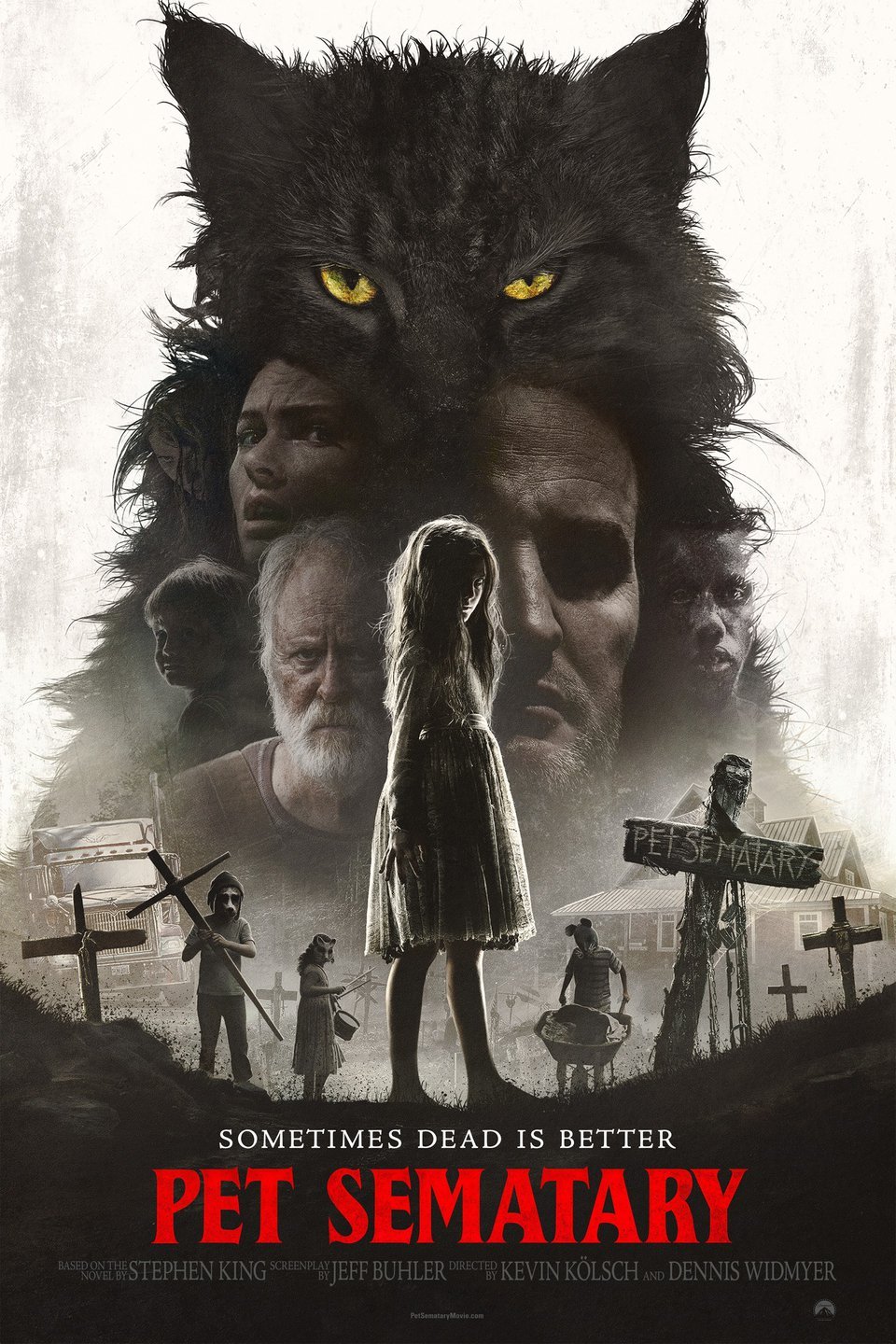
“Sometimes dead is better.” Unless you’re back from the dead with a vengeance! Brace yourself for the spine-chilling, immensely terrifying 2019 adaptation of the best-selling novel Pet Sematary by the legendary Stephen King. Whereas many remakes/reboots of earlier horror films often suffer, this one emerges from the soured soil as a force to be reckoned with. Directors Kevin Kolsch and Dennis Widmyer deliver a heartpounding rollercoaster of a nightmarish experience as Pet Sematary opens everywhere this weekend. Instead of a direct from page to screen adaptation, much like the fantastic 1989 original version (and yes, it still holds up), this version takes some creative liberties; however, the soul of the novel and even the 1989 version is clearly there. This creative latitude enabled the film to deliver new, surprising scares that are sure to frighten you. If you haven’t seen the extended trailers–DON’T–cannot say that enough. It’s best to go into this film with only the name and the initial teaser trailer in your mind. Not a spoiler, because it’s well known this this horror film and novel deals with loss, grief, and the uncanny (i.e. the return of the repressed), so the challenge of this adaptation was to force the conflict to derive from those issues and inspire the hellish events for which the story is well known. 2019’s Pet Sematary delivers in spades–quite literally. You will feel the ominous sense of dread from the moment the Creeds move into their new house and that feeling will stay with you as you are buried in a nightmare. This plot is solid.

I joined the popular podcast Mike Mike and Oscar to discuss this film, so click below to listen to the show. You are also invited to continue reading my written review.

Dr. Louis Creed (Jason Clarke) and his wife, Rachel, relocate from Boston to rural Maine with their two young children. The couple soon discover a mysterious burial ground hidden deep in the woods near their new home. When tragedy strikes, Louis turns to his neighbor Jud Crandall (John Lithgow), setting off a perilous chain reaction that unleashes an unspeakable evil with horrific consequences (IMDb summary). Sometimes dead is better

Let’s address the white ‘el’ephant in the room first. And I don’t mean the major plot twist changed from the novel and 1989 film that we saw in the trailer (c’mon, this is a well-known story and trailer at this point)–I mean the dialogue. Is the dialogue horribly bad? No. But it’s definitely the weak element in the script. Fortunately, this movie makes up for that with incredible windup, excellent deliveries, and the fact it is nightmarishly creepy. The pacing and tone are excellently crafted, and the visuals are fantastic. Never one does this film attempt to prove that it’s better than the original; in fact, it takes what many of us love about the original and use those moments as expertly designed fake-outs and false setups that are followed with something new and fun. So, it acknowledges the original without remaking it. Furthermore, it integrates many elements from the novel and original into the plot seamlessly. Achieving an overwhelming sense of dread from the very beginning of a horror film is quite difficult. That sense of unease is a combination of the atmosphere, setting, and ominous visual elements. Not five minutes into this movie, you are feeling that sense that something is definitely not right about this place. Yes, this is in part because many of us know what is to come; but even for new folks, the evil of this place can be felt all over your body. One of the creepiest scenes features the warped mirror image of an earlier cheerful moment, but it has been affected by the sour soil of the ancient burial ground.

While there isn’t much time to develop these characters, the writers were challenged with developing them enough for the story, and it works pretty well. The script isn’t quite as well-written as IT, but the margin of difference is not tremendously wide wither. As much of a fan of the original version as I am, there are areas that this version got better. For instance, the Zelda subplot–much more organically integrated into the main plot of Pet Sematary and even drives the main plot forward by revealing aspects to Rachel’s character. Two things for sure, these are two bad parents and Jud is an irresponsible neighbor. We don’t spend much time in the campus hospital where Luis Creed works, but we still get the big event of the passing of Pascow. Pascow’s character, whereas his harbinger of death or Jacob Marley (as so eloquently put by Mike Mike and Oscar) character isn’t as integral to the plot of this version, he looks more terrifying and doesn’t take a turn for the humorous. Of all the characters, I was most curious about John Lithgow’s performance as Jud. I was cautiously optimistic because Lithgow often has a way of delivering memorable performances, no matter how minor the role. His expression of Jud differs from that of Fred Gwynne’s but he still stays true to the character of Jud. And there are even moments that he channels Gwynne’s interpretation of the infamous neighbor. Just wish he had a Maine accent since he is still a local boy in this village (which is very close to Derry, according to a road sign). One of the best scenes in the movie take place as Lousi and Jud sit around a campfire, drinking, smoking and having an ill–fated heart-to-heart.

Contemporary remakes of earlier horror films often rely upon CGI versus practical effects. Cast that worry away because other than a few moments of CG, there are lots of fantastic practical effects from set design to the kills. There is such a high level of authenticity in everything the camera allows us to see, and even those moments that lie just off screen. Yes, there is still the inescapable supernatural factor in this story, but everything else is pretty well grounded in reality. From the parents building a fence to the proximity of the ancient burial ground, everything works to craft an authentic setting and characters. And yes, your Achilles tendon will still hurt in that famous kill. The directors truly seem to take into account that you cannot replace the way real light bounces off real objects and into the camera lens. Out two houses, the characters, and Church the cat exist in the time and space of each and every scene. With the exception a couple scenes that were not necessary or drawn out too far, they all work quite well to setup the following scene and point to the end of the film. There are moments that will cause you to look under beds, under stairs, and even analyze your pet more when you get home. For young audience members, watching this story for the first time, I imagine that they will be terrified just like I was when I saw the 89 one as a kid.

While I’ve read reviews claiming that this is the best Stephen Kind page to screen adaptation, I feel that other films have been more effective. Off the top of my head, I’d say that Misery is a better film both in terms of its cinematic critical value and faithfulness to the novel. Not to mention the Oscar-winning performance by Kathy Bates as Annie Wilkes! No mistaking it, 2019’s Pet Sematary is a good horror movie and one that has a moderate level of rewatchability. Highly recommend for horror fans!

You can catch Ryan most weeks at Studio Movie Grill Tampa, so if you’re in the area, let him know and you can join him at the cinema.

Ryan teaches screenwriting at the University of Tampa. If you like this article, check out the others and FOLLOW this blog! Interested in Ryan making a guest appearance on your podcast or contributing to your website? Send him a DM on Twitter!

Follow him!

Twitter: RLTerry1

Instagram: RL_Terry