Sinister Summer: Friday the 13th Retrospective Review

Ch ch ch, ah ah ah. The sleepaway summer camp experience was forever changed in the summer of 1980 when a slasher slaughtered a bunch of horny teenagers along the shores of Crystal Lake. Spanning more than three decades and a dozen feature films (too bad it’s not a baker’s dozen, wink), the Friday the 13th franchise made us never look at a hockey mask in the same way after Part 3. This iconic franchise has also found its way back into the headlines with the legal battle over the rights to the Friday the 13th name between the original screenwriter Victor Miller and producer/director Sean S. Cunningham. I recently ran a Twitter poll to determine which is the crowd favorite in the series, and the majority of respondents voted for the original movie, followed by Jason Lives. Like the majority of the 80 respondents in the poll, the original is also my favorite, although it is not a “Jason” movie per se. Releasing in 1980, Friday the 13th helped shape the modern slasher along side Texas Chainsaw Massacre and HalloweenA Nightmare on Elm Street would arrive in 1984. With his trademark hockey mask and machete, very few have lived to tell the tale of their encounter with one of the most terrifying slashers to ever appear on the silver screen. His body count is in the triple digits! From screen to screen, Jason has gone from the cineplex to your TV and computer by way of interactive media. Unlike the campy-ness of Freddy or more focussed kills of Michael, Jason is by far the scariest of his iconic counterparts. My friend Dani is a diehard Jason girl, while I am Freddy and our friend Derek is Leatherface. Let’s take a stab at exploring why this franchise continues to be a favorite!

Variety! That is what you get with Jason as opposed to Michael. Although Leatherface and Michael began the teen slasher genre, it was Jason who revolutionized it by his variety of gruesome methods of killing his victims. Whereas Freddy, much like a cat, loves to toy with his victims before going in for the final kill, Jason is a death machine who wastes no time in taking out all those who stand in his way. Motivated by his death brought about by teenage lifeguards making love while he drown in the murky waters of Crystal Lake, Jason typically murders those who are engaging in promiscuous activities. Sometimes, he will throw you for a loop by taking out someone in a wheelchair or another passerby. He is relentless. And before universe crossovers were commonplace between franchises, Freddy vs Jason got together for a terrifyingly good time in 2003, and then again at Halloween Horror Nights in 2016. While installments 2–12 feature the mask-wearing (burlap sack followed by goalie mask) machete yielding hulking man, the first film features Mrs. Pamela Voorhees (Jason’s mom) as the killer. It’s because of this that the original film feels much different than the others. But it certainly inspired the rest of the franchise. Think of the first one as Hitchcock’s Psycho in reverse,  precisely how Norman thought it was happening. A killer mother who’s overprotective of her son. Although it’s not a “Jason” movie, it did lay the groundwork for the rest of the series and the ending of the film provides the haunting moment that gave birth to the lore and legend of Jason that would carry through the remainder of the films.

Keeping the identity of the killer a secret, until the very end of the film, sets this movie apart from its predecessors Halloween, Texas Chainsaw Massacre, and Jaws. Furthermore, Friday the 13th adds more gore, kills, and gruesome makeup effects that look cheesy today but were quite shocking, back in ’80, to up the ante against the competition. The news of the gruesome effects was so intriguing that horror fans turned out in masses to see the film. By all accounts the characters are not terribly memorable–we certainly don’t have a Laurie Strode–and the killer’s identity isn’t revealed long enough to truly form an opinion; but it’s that jump scare/twist at the end that gave birth to a mammoth of a franchise that has lasted for over thirty years on big and little screens alike.

The perspective of the killer. One of the most memorable elements from the original Friday the 13th is being in the shoes of our mysterious killer. Unlike other slashers that preceded, the identity is kept secret as I mention in the previous paragraph. But it’s HOW this is accomplished that still fascinates horror fans today. We are the killer, or at least, we see through the eyes of the slasher. By Miller writing this element into the screenplay, we are forced to see things from the killer’s perspective in order to relate to and empathize with the killer. Brilliant, really. Although we sometimes assume an objective position just before or during a kill, we spend enough time as the killer’s eyes that we begin to identify with the killer. Not only can we identify with the killer, but because the main characters are teenagers, and slasher horror films are particularly of interest to teens, teenagers can easily relate to the characters in the movie. Essentially, we have a perfect combination of relatability in this film. Audience members are forced, at times, to view characters and events from the killer’s perspective but many in the audience can and will concurrently identify with the main characters. A great way to scare the audience is to place them in a situation that is close enough to reality that the prospect of something similar happening is terrifying.

First appearing in Part II but not fully taking his iconic form until Part III, Jason Voorhees has endured as one of the most recognizable horror villains who still terrifies people today. Furthermore, he has evolved to represent various thematic symbols that provide ample opportunity for analyses and close readings. While Freddy’s motivation is clear–revenge, plain and simple but still solid–Jason’s motivation(s) is a bit more complex. His mother’s motivation is clear; much like Freddy, her motivation is revenge against the camp and those who represent the horny teenagers who allowed her son Jason to drown while “getting it on,” so to speak. Jason, on the other hand, demonstrates motivations that must reach beyond classic revenge. For starters, we cannot ignore his physiological deformities that undoubtedly affected his emotional and psychological health, predisposing him to atypical or abnormal behavior prior to his untimely drowning. Judging from the misty flashbacks in the original Friday the 13th while Mrs. Voorhees is delivering rushed exposition, we can gather from Jason’s shadowed body that he is likely afflicted with hydrocephalus, a condition that traps excess fluid in the cranial cavity that compresses the brain causing a significant loss of neural activity (essentially, born with brain damage). Beyond the internal problems from hydrocephalus, this abnormally developed cranium often causes the eyes to be widely spaced and the subject typically has an enlarged skull.

Now that we have established his cognitive and physiological disabilities, we can explore just how the aforementioned plus the persistent taunting, teasing, and physical abuse from the other campers in 1957 all formed the perfect storm to motivate Jason to be the unstoppable slasher we know today. If we follow the lore of the later films, we are prevued to Jason being forcibly thrown into the lake where he eventually drown while the camp counselors were engaging in the horizontal mamba. There is sufficient evidence from the cannon of Jason films that he likely suffers from schizophrenia. As many of us are aware, this emotionally and cognitively debilitating disease causes sufferers to hallucinate imagery and voices that are controlling their mind. Jason’s ability to communicate with his mother and Mrs. Voorhees’ ability to communicate with her son, is also evidence that the schizophrenia was passed from mother to son. In real life, this disease can be hereditary. So, it is not a far reaching plausible idea to hypothesize that Mrs. Voorhees passed her schizophrenia on to Jason. But unlike mother, Jason suffered from additional disabilities that increased the intensity of the cognitive disease.

Formerly known as multiple personality syndrome, dissociative identity disorder (DID) is another affliction that Jason demonstrates through his abnormal behavior. DID is a severe psychological disorder that fragments an individual’s personality into two or more distinct personalities (or identities) coexisting, switching from one to another. Think of it as two or more people inhabiting the same body. Although one can be predisposed to DID, as Jason likely was, this disorder is often brought on by repetitive childhood trauma (which Jason experienced). Perhaps sometimes “a cigar may only be a cigar” but in this case, a mask is more than a mask. The trademark hockey goalie mask! What is it? It’s a mechanism or tool that enables Jason to disconnect himself from the murders he commits. By wearing the mask, he figuratively dissociates himself from the gruesome murders. The wearing of the mask is a direct result of DID because the mind processes the mask as conduit through which to engage in abnormal behavior because the abnormal behavior cannot be reconciled against the true self. In a sense, the mask allows for active cognitive dissonance because the behavior is opposite of how the brain wants to process information or experiences. This dissociation with the violent behaviors, enables Jason to continue on his murderous campaigns without his conscience ever prompting him to question his choices. Without the mask, he is vulnerable and may even question what he is doing; but with the mask, he is a killing machine.

The setting of Friday the 13th is also something of note. Much like Hitchcock did with the privacy of one’s bathroom in Psycho, Miller set the events of the original at a summer camp in order to shock the mind because it’s an innocent place that is about to play host to something traumatic and uncanny. Kids and teenagers attend sleepaway summer camps every year. They are traditionally seen as places where you form platonic or romantic relationships with your fellow campers or counselors. They are places of innocence that get a violent treatment in this film. Unlike Psycho where we are not prevued to the violent past of the iconic location and thus proceed through the story with our guard down, we are immediately introduced to Camp Crystal Lake’s violent past between the opening scene and the townsfolk. So, we are primed to expect something macabre at the camp. This does one very important thing. The camp immediately possesses an eerie feel, a feeling of dread of what is about to happen. The once popular summer camp falls prey to something sinister that makes the grounds incredibly creepy. Loss of innocence can be read as a theme throughout the films because we have an innocent camp that is plunged into violence, camp counselors losing their virginity, or campers engaging in dangerous behaviors. When innocence is lost, that’s when the violence begins.

Violence and gore are commonplace today (perhaps to the detriment of horror films as it has become cliche), but back in 1980, most audiences were not expecting to see closeups of murderous acts, even after Halloween and Texas Chainsaw Massacre. Despite the cheesy nature of the practical effects with blood bags and prosthetics, the violence in Friday the 13th was unexpected. In many ways, this film revolutionized the genre. But the F13 franchise didn’t start out with overstuffing itself with gore. The body count in the original is the least of the series, but it is certainly the favorite in the series by a moderately wide margin, according to my personal poll and other polls online. Therefore, we have to draw the conclusion that it’s not Jason’s kills or the gore that prompt audiences to like one over the other. If seeing Jason kill people was what audiences were looking for, then the original would not be the favorite. Now, don’t get me wrong, Jason has some pretty awesome kills and he’s fun to watch; however, don’t assume that it’s the kills or violence themselves that make a horror movie a favorite. Interestingly, the original is quite tame compared to the rest, but it’s still regarded as the crowd favorite.

If you follow the horror community on the Twittersphere or Blogosphere or even just caught the story in the news, you’ve likely heard of the fight over the rights to the Friday the 13th name between the original writer Victor Miller and Sean S. Cunningham. As to not complicate this story with the details, the long and short of it is the copyright on the Friday the 13th title is expiring soon, and according to “Mickey’s Law” (an unofficial name for what I am about to describe because it was started by the Walt Disney Company in order to continually retain the rights to Mickey), it is time for the rights to be renegotiated or the name and original plot fall into the public domain. That’s right. This iconic name Friday the 13th is on the verge of belonging to the public. Miller urges that he has the rights to the name because the title along with the story was his original concept. Cunningham argues that Miller’s screenplay was work-for-hire. Under work-for-hire, Cunningham retains the rights and is able to make decisions with it. This is a classic IP lawsuit. But one that has major implications. Essentially, Miller wants to be (and in my opinion, rightly so) compensated for using the names Friday the 13th and Jason in future films and interactive media. While he does not have the rights to Jason’s trademark look, he could own the name itself. This legal battle surfaced after the launch of the recent Friday the 13th video game, and caused the next installment in the long-running franchise to be put on hold. The decision will likely boil down to whether Miller was hired to write the original screenplay or he developed it himself then sold/optioned it to Cunningham.

It’s been 38 years since we were first introduced to Camp Crystal Lake, and the horror landscape was forever changed. Mrs. Voorhees and Jason have been terrifying audiences since before I was born, and will continue to cause you or your kids to think twice about going to summer camp. I think summer camp was made more fun because there is a little piece of you that thinks Jason could be lurking outside your cabin. I don’t always ch, ch, ch but when I do, I always ah, ah, ah.

Happy Friday the 13th!

Ryan is a screenwriting professor at the University of Tampa and works in creative services in live themed entertainment. If you like this article, check out the others and FOLLOW this blog!

Follow him!

Twitter: RLTerry1

Instagram: RL_Terry

Thrillz (theme parks): Thrillz.co
“Jurassic World Fallen Kingdom” movie review

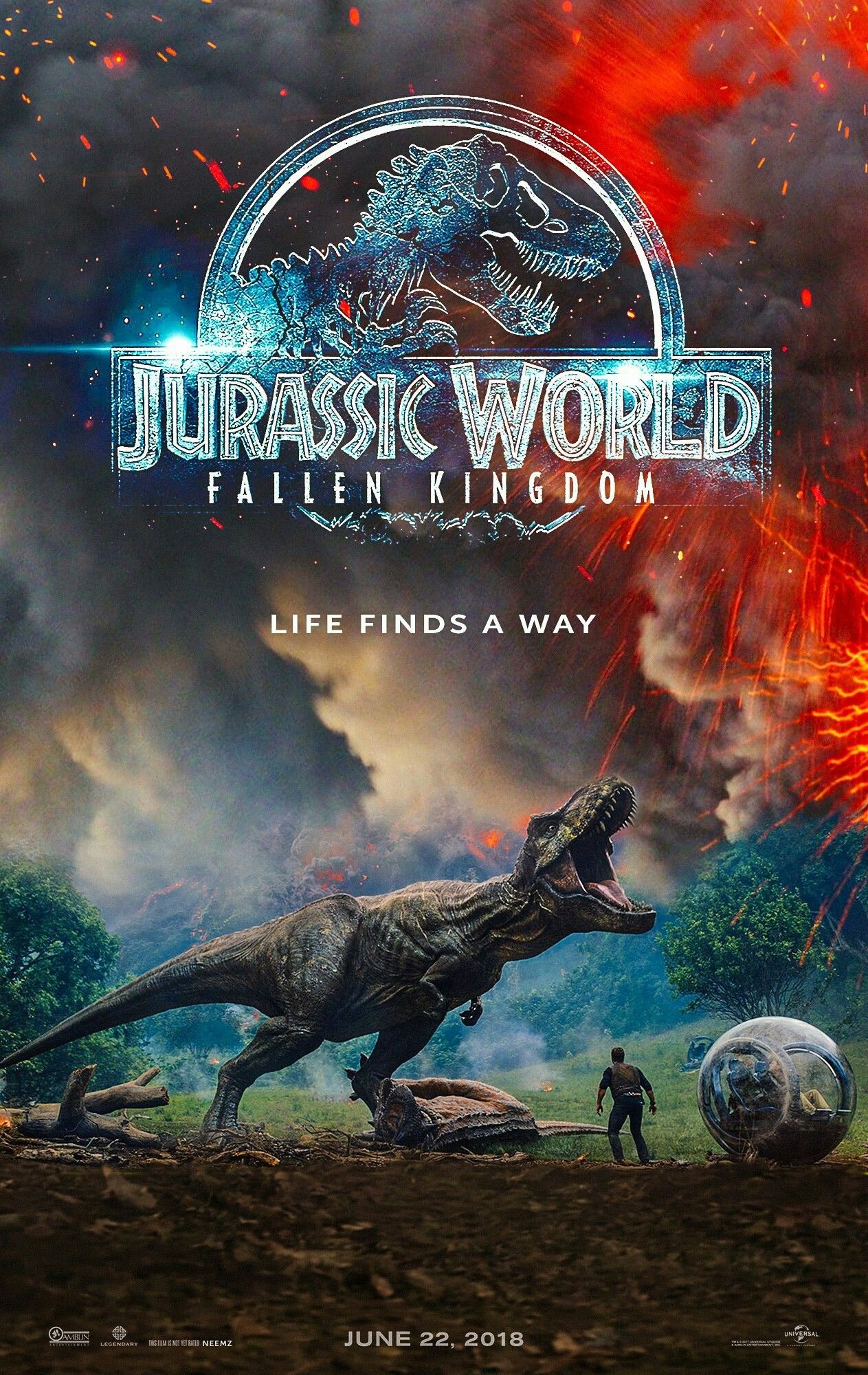
“Your (executives) were so pre-occupied with whether or not could, they didn’t stop to think if they should.” Ironic, isn’t it. A haunting but accurate assessment by Dr. Ian Malcolm. Let me say first, Jurassic Park is my favorite movie of all time, followed closely by Sunset Boulevard and Psycho, so it’s difficult to separate fanboy me from critic me. However, I shall do my best to keep my personal bias in check. As a longtime fan of the franchise that captured my imagination as a kid and with the original filled with depth, irony, tragedy, and more, I was excited as I sat down in the theatre last night to watch Jurassic World Fallen Kingdom (JWFK). And suffice it to say, my friends and I enjoyed our time and felt entertained; however, it’s simply not a great movie. And it pains me to write those words. At the end of the day, the movie suffers from a poorly written screenplay. Some may even describe the screenplay as a generic, vapid paint-by-the-numbers summer popcorn crunching blockbuster movie. The movie is not without its thrills, but I wish more attention was paid to the plot. Director J.A. Bayona takes suspension of disbelief to far reaching levels. The life of this franchise is in the balance; how I hope it finds a way to overcome the weak sequels since the strong original in 1993 that still holds up (and I’m not talking about the technology). Reasons for why it holds up could be entire articles in and of themselves (a lot has to do with the screenplay), but we are here to talk about JWFK.

Three years after the destruction of the Jurassic World theme park, Owen Grady and Claire Dearing return to the island of Isla Nublar to save the remaining dinosaurs from a volcano that’s about to erupt. When the search and transport operation meets with capitalistic opposition, the mission takes them to an underground arms market, they must stop the demented auction from placing humanity it mortal danger. During their covert operation, they encounter terrifying new breeds of gigantic dinosaurs, while uncovering a conspiracy that threatens the entire planet.

Unlike the soft opening of Jurassic World, the sequel begins with an opening scene similar to the tone of the opening of Jurassic Park. Encouraging, right? It’s dark, filled with tension, and ends with a kill. All this, and it doesn’t feel overstuffed with dinosaurs. Like a screenplay should, it hooks the audience without lots of gimmicks. The focus is on the drama, and not simply “look what we can do with dinos.” After this scene, I was looking forward to the rest of the movie. And even in the senate hearing with Dr. Ian Malcolm, this could’ve been used as a great setup for a dynamic ethics debate but it was not followed through. Like other ideas of Colin Trevorrow’s, many turning points, characters, and events are introduced but not developed. These elements often play off as mere plot devices to hurriedly cause something to be able to happen without having to truly develop it. Every character is flat. No dimension to anyone or anything, really. I cannot help but take note of the many opportunities that Trevorrow had to truly craft a cinematic story, and ostensibly ignored it. In an effort to help the vapid screenplay, J.A. Bayona attempted to add dimension to the flat plot but only so much can be done to fix a flawed story.

Examples of characters as mere plot devises are systems analyst Franklin and paleo-veterinarian Zia. Both were setup to be developed further beyond their main skill, but were abandoned. They exist only so two important actions can happen, but that is the extent of their respective development. Such wonderful opportunities to include strong characters, buy they are left as flat as the plot, lacking in any subplot or goals of their own. There is also a fantastic opportunity to provide some exposition on the days before John Hammond’s innovative theme park resort destination. We meet his former partner Benjamin Lockwood, and he explains how the first DNA was extracted in a state of the art lab in the basement of his mansion. There is also a nostalgic shot of a model of the original park’s Visitors Center, complete with Jungle Explorers and the famous gate. Although we have lost Sir Richard Attenborough, there is certainly ways of crafting a flashback to the first time DNA was extracted or even just a few moments of exposition through dialogue to learn about the early days and ultimately why Hammond and Lockwood split. We are given a reason that likely led to the split, but I imagine there was more to it, including the direction to go with the dinosaurs. Again, this is another example of exposition and dimension lost. Could’ve been used as character building and development time.

On the topic of nostalgia, there is plenty of fan service in the movie. Lockwood delivers a line taken directly from Hammond at the end of Lost World and we get to revisit the site of the Jungle Explorer that T-Rex pushed over the retaining wall in the original. There are other moments as well that remind me of the raptor kitchen and more. Furthermore, there are moments in the movie that act as a mirror to the original. Instead of seeking to lock the dinosaurs up, the goal is to free them. But I won’t get into details.

Whatever Universal and Amblin are doing presently, they need to stop and throw out the playbook from Jurassic Park III, Jurassic World, and now JWFK. I liked Jurassic World well enough but I thought the next installment was going to be more gripping, thrilling, exciting, but it went out with a whimper. I was cautiously optimistic when I heard it was going to be darker, closer to the horror that was the original 1993 blockbuster, but it wasn’t terrifying at all. And what parts were creepy, were already shown in the trailer (but that’s the marketing company’s fault, not the director or writer). Crichton is likely rolling over in his grave right about now, rest his soul. The next writer in the Jurassic franchise needs to be someone who understands what it takes to create a great story that CAN sell tickets and reach blockbuster status while holding up years down the road. Take the iconic Tim Burton Batman and Batman Returns, for examples. The reason why these, especially Returns, hold up so well is because Returns is a classic Tim Burton film that happens to have Batman characters, whereas the original is a Batman movie directed by Burton. So, the third installment in the Jurassic franchise needs to attach a writer and/or director who can write/direct a science-fiction horror movie that happens to have dinosaurs and legacy Jurassic Park characters.

While many critics are calling for this franchise to go extinct, this film scholar believes strongly that it can be saved. Much like Claire and Owen are determined to save the cloned dinos from a second extinction, Universal and Amblin need to go back to the beginning and study WHY the first one worked well. The short answer is the screenplay, followed by casting, and lastly the directing. An approach could be to write the screenplay without dinosaurs; write a solid, compelling narrative. Make sure there is a clearly defined goal with clearly defined opposition to the goal, simple plot, and complex characters. Then find places to add in the dinosaurs as anti-heroes. It’s far more effective to retroactively add dinos in and modify the screenplay than write it with a focus on seeing dinosaurs and write a story around them. The former is narrative-heavy with supporting, terrifying action sequences whereas the latter is spectacle heavy with a one-dimensional narrative. Subtext, subplot, and theme need to be infused back into the Jurassic franchise.

At the end of the day, I enjoyed myself. I did not feel as if my time was wasted. You know what, I had fun. And for that, I appreciate the movie. It may not have truly memorable characters or scenes, but it was a fun watch. If more fans speak up, perhaps the next film will go back to its DNA and deliver a sequel that would make the original proud.

For my review of Jurassic World click here.

Ryan is a screenwriting professor at the University of Tampa. If you like this article, check out the others and FOLLOW this blog!

Follow him!

Twitter: RLTerry1

Instagram: RL_Terry

Thrillz (theme parks): Thrillz.co
Blumhouse’s “Upgrade” movie review

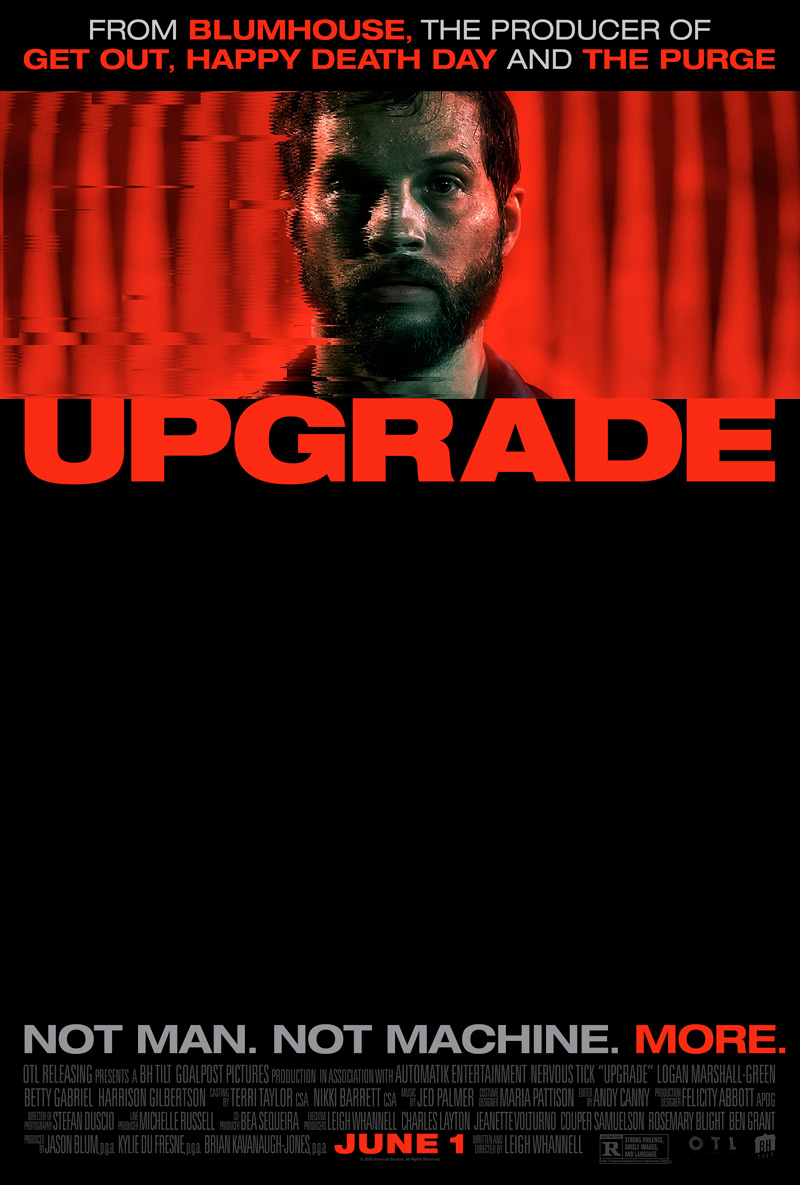
Black Mirror on crack. That is precisely what Blumhouse’s Upgrade can be likened to. Outstanding commentary on the convergence of humanity and technology that provides many thought-provoking moments. Best known for its horror, this action thriller from Blumhouse will have you on the edge of your seat the entire time. Rooted in classic science-fiction, this thriller will also deliver a healthy dose of dark comedy, heart-pounding action, and acutely shockingly violent scenes. Writer-director Leigh Whannel crafts a brilliant motion picture that is one part vigilante Robocop and another part Dr. Frankenstein’s Monster. On the surface, Whannel’s thriller comes across as a B-movie done well, but it contains prolific content that will likely inspire conversations about the relationship between humanity and technology. Perhaps it was not the intention of Whannel (co-creator of Insidious and Saw) to write a motion picture steeped with commentary on the human condition and a harbinger against allowing technology to fuse with our minds and bodies, but there is certainly material here to discuss those deeper topics. Bumhouse’s Upgrade is certainly a big screen experience, so catch it while it is there!

Set in the not-so-distant future, cars drive themselves, pizzas can be printed at home, and Alexa is built into your house. After dropping off a completely rebuilt 1980s Firebird Trans-Am at a client’s hosue, Grey Trace (Logan Marshall-Green) is left a quadriplegic following a brutal car accident and mugging that also leaves his wife dead. While recovering in the hospital, Grey is approached by a major tech company owner about an experimental surgery that is theorized to enable Grey to regain his motor skills. It worked! Only now, Grey’s realized that he has cat-like agility and reflexes as well as increased strength. With his newfound abilities, Grey seeks to assassinate those he blames for his wife’s death.

Better have an iron stomach in order to watch this thriller, because Whannel prefers shocking moments in abundance. Whereas this film is certainly not a horror–as the intent of the film is NOT to horrify audiences–it certainly contains elements borrowed from horror films in order in increase the level of threat. A director friend of mine from Germany characterized the film has having tones of a John Carpenter movie combined with Drive by Nicholas Winding Refn. Though set in a possible near-future, the cinematography, score, and lighting are quintessential 1980s. No surprise as 80s is en vogue in our movies and TV shows. Grey’s “everyman” character archetype enables audiences to identify with him quickly, thus root for him as he takes the law into his own hands to avenge the brutal death of his beloved wife. It’s the simple revenge plot that enables Whannel to build a complex character delivering dark humor and visceral violence.

Definitely an entertaining science-fiction thriller! If you enjoy TV shows like Netflix’ Black Mirror and movies like DriveHalloween, Frankenstein, and Robocop, then you’ll certainly like Blumhouse’s Upgrade.

“Life of the Party” movie review

Positively uplifting! Melissa McCarthy and Ben Falcone’s comedy Life of the Party releasing everywhere today is a quintessential Mothers Day flick that you can take your mom to and enjoy together this Sunday afternoon. McCarthy shines as the brilliant comic she is in this film. Whereas she is typically the brunt of the jokes in the film’s she and her husband often cowrite together, this film provides McCarthy with a platform to truly showcase her talents as a comedic actor who can not only play the butt of the humor but also the vixen who’s captured the eye of a hot frat guy as she sets out to complete her education. McCarthy’s brand of comedy–that authenticity, candidness, optimism–that we have come to know and love, will have laughing and empathizing throughout the movie.

Although themes such as inspiration, determination, and resilience are not uncommon for a comedy, I appreciate many tropes often associated with fish-out-of-water plots were abandoned for something more unconventional yet infectiously charming. Instead of ultimately changing herself for the world around her or changing the world to fit her, she finds her place in the world and creatively directs it to make room for her. Whatever your age, you will likely find yourself connecting with one or more of the characters in this film as it proves that you are never too old to learn something new or complete that which you chose not to earlier in life. From acoustic guitar tunes to Cyndi Lauper and even a surprise performance by Christina Aguilera, the music will have you dancing in your seat. Watch as nervous, scared girls who are afraid of unknown elements in school, grow to become incredible women who form meaningful relationships and heal from tragedy. Each of the principle cast is unique in some way, and it’s these traits that setup conflict and allow the comedy to flow from the conflict naturally. From McCarthy’s Deanna’s endearing vampire-like roommate who low key longs for a friendship to the girl who is also a non-traditional student because of being in a coma for eight years, the film is filled with a colorful cast of likable characters and of course Deanna’s ex and mistress who we love to hate.

McCarthy is joined by comedienne Maya Rudolph and the pair of them dominate any scene they are in together. It never feels overwhelming because they are both saying precisely what you and I are thinking. The two of them exhibit kind of friendship that perhaps your closest friend and you desire to have. Although there is a mild degree of suspense, the film derives most of its energy from the brilliant cast’s reactions to the varying conflicts throughout the film. As there is not much to analyze in this film, you’ll find this review far shorter than my usual ones. But, I desired to write up a piece on it because it’s been largely panned by most critics. Variety and I seem to be among the few who find so much that’s “right” with this film as opposed to what’s “wrong.” Maybe it’s not terribly deep, but it boasts a simple plot with complex characters that provides McCarthy with an opportunity to show a different side to her trademark comedy. With honors!

“Tully” film review

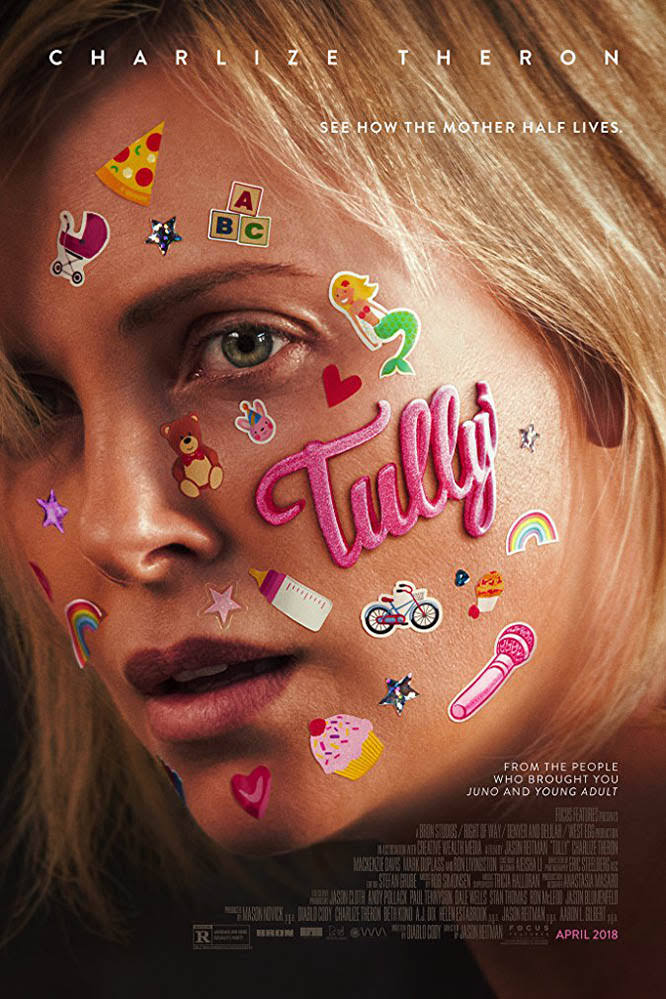
A no holds barred, unapologetic story of the realities of motherhood. Focus Features’ Tully starring Charlize Theron is a brilliant film that shies not away from what being a mom is truly about during postpartum depression, a subject seldom touched on in film or TV. Directed and written by Juno’s Jason Reitman and Diablo Cody respectively, this film represents the best work of Reitman and Cody since the groundbreaking Juno which was followed up by the outstanding Young Adult, and showcases just how incredibly diverse an actor Theron is. See her in a role unlike her typical roles as she so incredibly authentically brings to life a middle-class working mother who is faced with many obstacles as she rears her three kids, one of which is a newborn. As a male, I cannot begin to fathom just how difficult it is to be a mother (or by extension, a single father); but after watching this film, I have a whole new respect for the many hats that a mom has to wear in order to manage a household. Some might even say that this film is so incredibly effective at laying out the hardships of being a mom, that it may work better than more conventional birth control. However, the film is not only about the trials of motherhood, but it also spends time on the joys. Tully is what I characterize as a dark comedy that has some truly terrifying moments.

Already the working mother of two kids, one of which displays signs of a developmental disorder, Marlo (Charlize Theron) is not pregnant with baby number three, in what her brother identifies as an “unplanned pregnancy.” Marlo’s wealthy brother desires to help his sister by gifting her a night nanny in order to help Marlo through the rough transition of a newborn in an already chaotic house. Marlo’s husband is hardworking, makes lunches, and assists his oldest daughter with her homework, but fails to understand that Marlo needs to be taken care of as well. In order to not go completely insane during postpartum depression, Marlo reluctantly decides that she could use the night nanny that her brother offered to pay for. Hesitant to the extravagance of having a nanny at first, Marlo forms an unexpected bond with the unconventional, challenging hipster Mary Poppins named Tully.

No pretense about this story of motherhood. Cody’s brilliant penchant for self-deprecation, dry humor, and stark naked emotion is witnessed once again in Tully. I cannot think of a present screenwriter that could have created such a compelling story. Unlike her timeless modern classic Juno, Cody shies away from the comedy you may be accustomed to seeing from her, and focus on the darker side of being a mother. And it works superbly. I laughed, cringed, and cheered during the film, and so did many of the others in the audience. There is an authenticity in this story that is seldom seen in other melodramas. Possessing a raw, gritty narrative, Tully will have you empathizing quickly with the struggles Marlo continues to face throughout the film. There is so much that is praiseworthy in this story; but unfortunately the sharp, precision that supports the first two acts becomes a little dull during the realization (or resolution) on the third act–the same chutzpah that was in the DNA of the majority of the movie is not as apparent at the end. What Tully lacks is a well-defined external goal. The weak end game is uncharacteristic of Cody, as both Juno and Young Adult had solid realizations. As I tell my screenwriting students, dealing with life is not a goal (it’s incidental). Still, everything else about this film is effectively compelling.

Theron displays a genuine, uncompromising commitment to character in this motion picture. Aside from the fact she literally put on 50lbs for the role (that’s right, no fat suit), she provides audiences with a fearless portrayal that is both vulnerable and fiery. Coupled with waves of mania, anger, and complete exhaustion, Theron delivers a razor-sharp performance that will leave you breathless and bleeding from the unbridled intensity and emotional rawness. In this slice of life story, there was certainly the room to demonize Marlo’s husband, the sister-in-law, the former roommate, and school principal, but Cody includes these individuals that many moms actually have in their lives but chooses to focus on the physiological and emotional struggle of Marlo as she recovers from her unplanned pregnancy. Of course, there is a brilliantly funny scene of Marlo confronting the pretentious private school principal. It’s the kind of encounter that many of us want to have with those who refuse to shoot straight and annoyingly avoid confrontation because they are so afraid to be candid, and it just comes off as a facade. Theron’s ability to completely sell a mother on the verge of a breakdown who’s constantly facing situations in which she asks herself how-the-hell-am-I-going-to-get-through-this is unparalleled. I cannot think of another movie that has a character quite like Marlo in Tully.

The film’s title character is a Mary Poppins of sorts that comes to the aid of Marlo when she is at her wits’ end. You may be wondering why the film is named after the night nanny instead of Marlo. For the same reason Mary Poppins is the name of the story that is really about Mr. Banks. Marlo may be the central character, but Tully (Mackenzie Davis) is so incredibly instrumental in supporting Marlo through this time. Furthermore, she opens her mind to new possibilities and the joys of being a mom, even when Marlo isn’t feeling it. Tully embodies that free spirit that many of us have or had in our 20s that somehow gets lost as we get older. Tully enables Marlo to channel her younger self in an effort to be emotionally healthier for her kids. Taking care of yourself first so you can be there for your kids, is one of Tully’s many messages to Marlo. There is a whimsy about Tully that is contagious, and will put smiles on the audience’s faces amidst the majority of the film’s darker moments.

You’ll encounter all the different kinds of people that an emotionally struggling mom has to deal with on a regular basis. From an out-of-touch snobby sister-in-law to a husband who just doesn’t get you, from a pretentious and absurdly conflict aversive school principal to a former roommate, the film provides commentary on how each of these kinds of relationships affect a mom who’s trying her best to keep sane and not murder everyone. The film even touches on how having a kid with a developmental disability is physiologically and psychologically draining, even though you love your kid unconditionally. It’s important to note that Marlo’s husband is shown to be an active participant in his family by way of, not only his financial support, but being there for his kids in the evening and helping to make lunches. However, he does withdraw to playing video games after the kids have gone to bed; but that’s because he is like many fathers that are unaware that their spouses need to be comforted, cared for, and shown appreciation during this rough transitional time. Hopefully, after watching this movie, fathers will have a better idea of what their spouse may be going through. One of the strongest themes one can write into a film is a commentary on what it means to be human–the human condition–but seldom has a film been so specific to comment on what it means to be a mother. In this respect, Tully is provocatively groundbreaking.

Such a perfect film for the upcoming Mothers Day weekend. Even if you are not a mom or (let’s not forget) single father, there is something to learn from this film because you may have a mom or single father in your circle of friends or family. Never before has a film stripped away all the magic of motherhood at the time when your kids are little. No frivolous, ostentatious gender reveal parties, gym moms-to-be, or ridiculously lavish baby showers for this mom. Why? Because those are events and experiences typically found on Pinterest, in the movies, or reserved for upperclass society that is hasn’t a clue what it’s like to be a struggling mother balancing her full-time career and being a full-time mom. Tully tells it like it is for so many, and why it is such an outstanding motion picture.

Ryan is a screenwriting professor at the University of Tampa. If you like this article, check out the others and FOLLOW this blog!

Follow him!

Twitter: RLTerry1

Instagram: RL_Terry

Thrillz (theme parks): Thrillz.co