THE LITTLE MERMAID (2023) movie review

written by Dr. Leo Genco
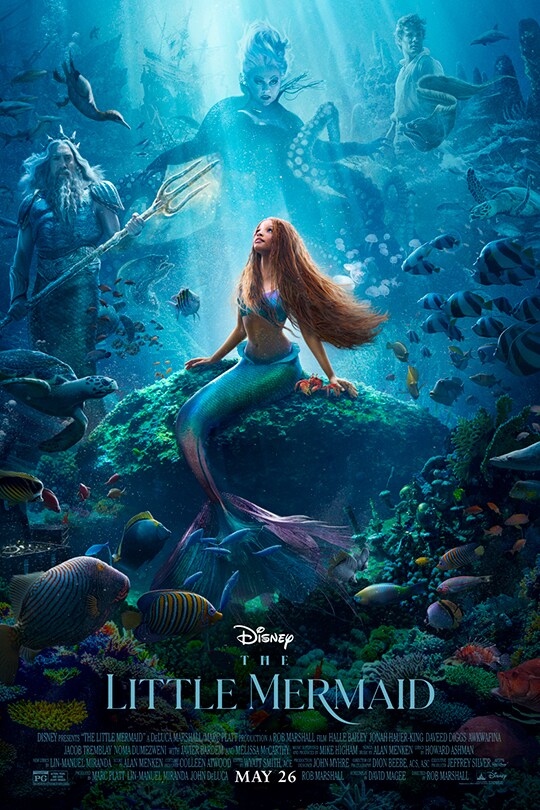
Some treasures are best left under the sea. This familiar Disney formula is only good for one thing: lining the coffers. The Little Mermaid has wonderful, bright, appealing visuals with a few new decent songs, that prove Disney is unable to capture the magic of their 2D animated films. This is unfortunate, because under the sea of this movie is the potential for a great innovative rendition of The Little Mermaid. Why? Well, Disney attempted to provide a newer telling of the original while pandering to the original material. This creates a dichotomy of moral themes in the movie, and it shows. There is a lot to unpack. If you want to skip to what the movie does right, you can skip to the end.

Let’s get the most obvious issues out the way, since they were consistently topics of discussion prior to the film’s release: race, ethnicity, and gender swapping of characters. These changes are typically common to improve diversity, and it can be done. You can look at Nick Fury in the Marvel Comics, or John Stewart as the Green Lantern in the DC Comics. One of the best race change movies is the Preacher’s Wife. The issue with the change here is how the director and writers tried to justify the change. Instead of changing the race of a whole group to maintain consistency, only individuals are changed and are rationalized through a simple bit of dialogue exhibition. Most of the human characters are an eclectic group of non-white ethnicities and races but Prince Eric is still white! The story justifies these differences by changing the location of the kingdom and having the queen adopt Eric into the family. The kingdom is not a port for the mainland but on an island, somewhere in the Americas, and this causes massive changes in the story. The whole scene with the chef and Sebastian was removed. Someone will wonder if the scene was cut because the chef was French. The essence of the original was stripped to justify the demographic changes, which would not be a problem if the movie did not pander to the original material.

The singing varies between songs and actors. The cast of a mix between stage and film actors would do that, but the main problem is how the songs were constructed. For some reason, the director added more characters into the script, but they did not contribute to the songs at all. It is very common in musicals to have the background and side characters sing the chorus and harmony for the lead singer. But this is not true for The Little Mermaid. People are expecting a chorus for Under the Sea and Kiss the Girl. This is not coming from a nostalgia perspective of the original songs. Under the Sea is a song about the sea living as a musical band of species. The dialogue before Kiss the Girl called for the various sounds of nature. For both songs we are expecting a strong sound, especially when the chorus hits. Sadly, both songs are reduced to two or three singers max and are sung as a solo piece for the majority. Overall, songs match the deaf tone of the movie.

While the animation of the under the sea creatures on par with the Lion King (take that as you will), I am not talking about the animals but the human actors who had little to not animated faces throughout their dialogue. Only three characters were animated, Queen Selina, Grimsby, and Ursula. When I say animated, I mean that their facial expression, voice, and body language spoke. Everyone seemed stiff, which is weird because Halle Bailey is a stage actor. You would think Ariel would have the most body expression because she can’t talk for half the movie. Ariel needs to be animated the most. Arial did not seem to be a curious, explorative person, but a blank manikin until a scene which required an over-the-top reaction. Luckily, this was not consistent throughout the movie. As I will mention later, the acting in the new scenes was great.

For some movie goers, background context to main characters is essential. I, on the other hand, prefer context to characters that is required to understand the journey of the main character. This means, that background context should progress information for the main character, not for the audience. The early introduction to multiple character’s background hurt the movie in two ways: (1) these small scenes for a backstory break up the pacing of the storytelling, creating jarring transitions between scenes, and (2) too many themes or messages were introduced into the film too fast. When you introduce a backstory, you need to follow through and close that story, and when you give too much information at once, people tend to forget or care about the small stories. On top of that, the movie told Ursula’s backstory but did not provide a satisfying delivery of her end. Overall, the introduction of the characters with backstory was not the best way to start the movie.

Two things carried the movie for me, the new scenes and songs and the queen and Grimsby. Adding new scenes and songs felt real. The acting in the scenes felt genuine, minus the random dancing scene halfway through the movie. These scenes had fresh magic Disney needed, but again, the director pandered to the original movie, and this created a lot of disconnect. The problem when recreating 2D animation as a real-life movie is the expression that comes from drawn imagery. This is why the drawings of human movement are different from how humans move. It allows the animator to create expressions you are physically unable to express but want to. The new scenes of the movie did not have a previous expectation of certain expressions. I believe this element allowed the actors more freedom to act.

God bless queen! Out of all the characters, the two actors who were able to pull it off throughout the whole movie was the queen and her trusty councilman, Grimsby. They were amazing. They had facial and body expressions. I had chills when the queen was on screen. Grimsby was played perfectly and became that comedy relief when the gender swapped bird, Scuttle, failed. I loved these characters, and I enjoyed every minute of screen time with them. While I would put Ursula in this category, her character was written incorrectly. While she was played very well, her lines were the least to be desired. She was written more as a grown woman who throws temper tantrums like a child than the cunning slimy sea witch, she was in the original 1991 movie. So, the queen and Grimsby saved the movie, at least for me.

Dr. Genco is a guest contributor and fellow university colleague. Follow him on Instagram at Leo.Genco.
GUARDIANS OF THE GALAXY VOL.3 movie review

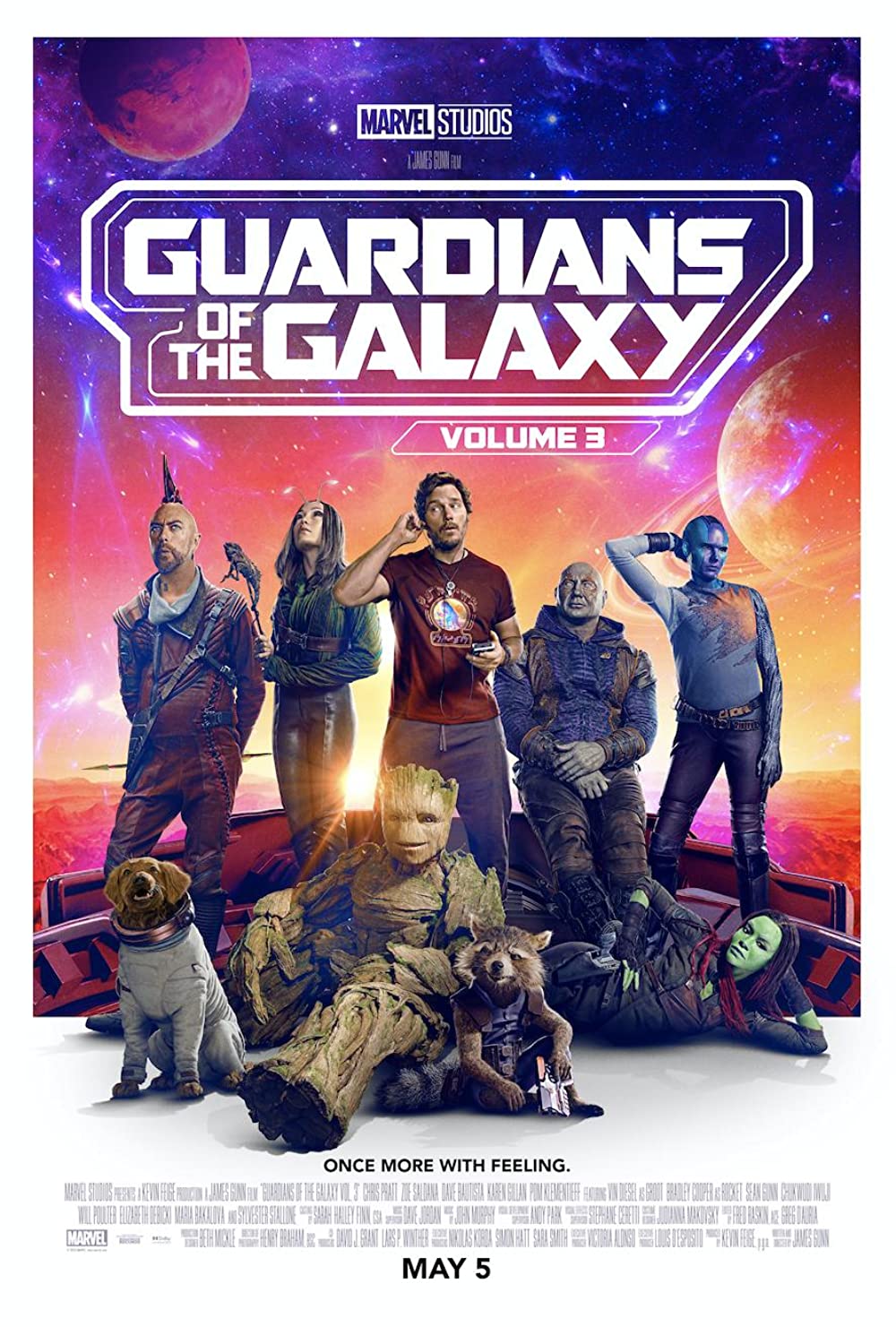
Whoa! That’s a lot of movie, and a lot to unpack. While James Gunn’s MCU swan song Guardians of the Galaxy vol.3 works well as an allegory of the Third Reich, exploring the atrocities of that nightmarish ideology and movement, the superhero movie is greatly lacking in entertainment value.

Still reeling from the loss of Gamora, Peter Quill must rally his team to defend the universe and protect one of their own. If the mission is not completely successful, it could possibly lead to the end of the Guardians as we know them.

The story is emotionally manipulative and many scenes and dialogue are inappropriate for young audiences. (As a reminder, kids are NOT little adults; kids are lacking in critical thinking skills). Furthermore, the movie suffers from squeezing too much plot into a single movie–the film overstays its welcome by about 30–45-minutes.

Clearly, James Gunn loves theses characters, and I can tell that he is a writer that genuinely cares (a trait I spotlight in my screenwriting classes), but I feel he forgot that a large segment of his MCU audience is comprised of kids, whether he accepts or likes that fact or not, and should have considered that dynamic when crafting this story. A storytelling element that is common amongst the MCU, especially within the Guardians of the Galaxy previous two movies, is levity. There is too little levity to counterbalance the dark elements of the movie. As such, the movie is incredibly heavy and sucks all the joy out of going to the cinema to attend a superhero movie. The movie is not completely without redeeming qualities or uplifting moments, but they are vastly outweighed by the somber tone of the movie as a whole.

Even though the film’s incredibly dark visual elements and themes are tastefully handled for older teen and adult audiences, as whole, this MCU installment is not appropriate for kids. If the movie’s marketing made it a point that this Guardians of the Galaxy movie was not for kids, I wouldn’t have a big a problem with content of the movie, but it’s the fact that kids were not dissuaded in any way from attending this, insofar as I am aware. When Deadpool first released, there was an entire tongue in cheek campaign to remind parents and siblings that this Marvel movie was not for kids–tastefully handled. Perhaps the studio dropped the f-bomb and increased the crass language and violence as a means to warm kids up to Deadpool 3, but that is a completely unhealthy approach as is disrespectful of what it means to be a child and young.

Looking to another franchise with which a whole generation of kids grew up, the Harry Potter movies became more mature as the seminole audience grew. Which is important, as life IS complicated and success, grief, loss, death, and disappointment are part of the human experience. However, the movies never became overly violent, increased crass language, or went to too dark a place (without counterbalancing it with levity and more lighthearted moments). Guardians of the Galaxy vol.3 is representative of the direction Marvel and Disney are going, and it’s not good nor healthy. If the MCU wants to create more movies that are adult in nature, then do that–but don’t take what has appealed to kids and decide to increase the more mature content. As I understand it, there is a whole universe of Marvel characters, and I am confident that a sub-franchise can be started that is geared towards mature audiences from the onset. And when kids get older, they can choose to eventually experience the Marvel movies that were, at one time, inappropriate for them.

What I found most fascinating about the movie is the commentary on the Third Reich (and for those that don’t remember, that is the ideology turned movement that was manifested by the Nazi party). Without going into great detail, one of the common practices at Nazi-controlled concentration camps was to further medical science by experimenting on the prisoners. Unfortunately, some of what we know today, some of the advancements that we use for healing today, came out of those nightmarish compounds. The idea was to learn from the experiments in order to increase the life experience of the master race perfect–correct that which was flawed. Moreover, the idea of a master society was carried into the idea of creating a utopia (something the Nazis had in common with the Soviets). But of course, utopia is an impossibility, and the pursuit of it often comes at the cost of life, individuality, and freedom.

The big bad villain in this movie known as the High Evolutionary is representation of and analogous with Hitler. At the core of the High Evolutionary’s goals and ambitions is the same ideology that drove and inspired Hitler. Furthermore, his speeches that feel they could have been written for a modern day Hitler. I appreciate what James Gunn did here, because it is monstrously challenging to craft a story around such heavy subject matter. Analogy and extended metaphor are outstanding tools to use in storytelling to provide commentary on a topic without talking about it. The ideology that inspired Hitler didn’t go away with him and his party, but it’s still out there, and must be kept at bay. Fictional storytelling can be used as a means to explore an observation of reality that may otherwise be uncomfortable.

If only as much thought had been put into the sets and effects of the movie. Like the perennial house guest that has worn out their welcome but continues to return anyway, prolific CGI continues to be employed instead of showcasing the craftsmanship of practical effects, real sets, and models. I’ve said it before, and I will say it again, CGI can never replace the way real light bounces off real objects into the camera lens. When I look at a monstrous creation of CGI, I am never left with the feeling that I witnessed the hand of an artist—brilliant engineer, yes–artist, no. Furthermore, not only is the CGI screaming in your face, but the movie’s music and sound effects mixes are also deafening. The kid seated next to me had his hands over his ears for a good portion of the movie. There is nothing subtle or nuanced about this movie.

Guardians of the Galaxy vol.3 represents James Gunn’s MCU swan song as he is now working on DCEU (or whatever it’s going to be called) movies. And he certainly left an indelible mark upon the MCU because few other directors (if any) could have worked the magic he did with the Guardians, a one-time obscure Marvel comic series. While I have many reservations of taking your kids to see this movie, it is one that should inspire thoughtful conversations about the parallels the villain(s) shares with the Third Reich.

Guardians of the Galaxy review | Guardians of the Galaxy vol.2 review

Ryan teaches Film Studies and Screenwriting at the University of Tampa and is a member of the Critics Association of Central Florida and Indie Film Critics of America. If you like this article, check out the others and FOLLOW this blog! Interested in Ryan making a guest appearance on your podcast or contributing to your website? Send him a DM on Twitter. If you’re ever in Tampa or Orlando, feel free to catch a movie with him.

Follow him on Twitter: RLTerry1 and LetterBoxd: RLTerry

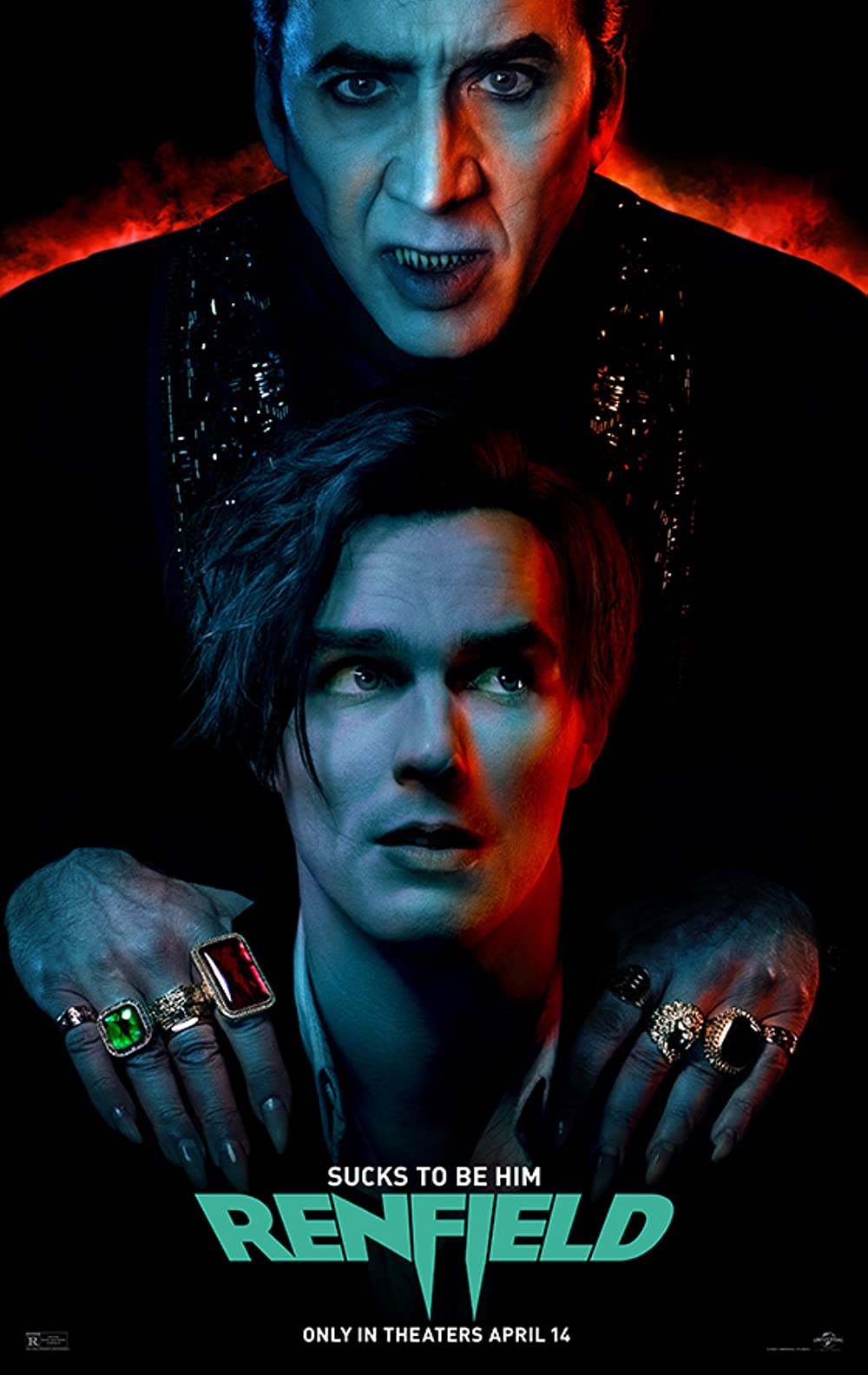
RENFIELD horror comedy review

Fangtastic! John Wick meets Van Helsing meets Warm Bodies in this imaginary adaptation of the Dracula mythos inspired by the original Universal Monster classic. While that may sound like the most unusual combination of movies, it works surprisingly well in Renfield from the birthplace of the American horror film.

Renfield, the tortured aide to his narcissistic boss, Dracula, is forced to procure his master’s prey and do his every bidding. However, after centuries of servitude, he’s ready to see if there’s a life outside the shadow of the Prince of Darkness.

Just like Dracula and Renfield, in the original Dracula, metaphorically exist in two realms simultaneously, this movie also exists in two realms: horror and comedy. And these two genres are both satisfied in the characterization and conflicts of this highly entertaining movie. Suffice it to say, it’s a really good movie–shocking–I know.

After the questionable trailers (which I try to avoid as much as possible; a practice of mine since marketing companies don’t usually know when to hold the cards back), I went into this movie with tempered expectations at best. Moreover, I honestly went in with low expectations for what I thought was going to be a ‘we set out to make a movie that is so bad that it’s good.’ The problem with that is that a filmmaker cannot intentionally create a so bad it’s good movie. It’s lightning in a bottle when it happens because the intention was to create a good movie, that just happened to turn out (to usually be) campy.

Spiritual sequels often struggle to find that place wherein the legacy film and new, reimagined approach intersect in ways that don’t rewrite or retcon the past yet provide a new experience. There have been countless official and unofficial adaptations of Bram Stoker’s Dracula, not to mention, hundreds of vampire movies that are directly inspired by the Dracula mythos. Therein lies the challenge: how to craft something new from that which is proliferated. Renfield works because the writers selected a character that factors significantly into the original material, yet has never been truly explored as a character following the events of Dracula.

Oh yeah, the recreations of the original Dracula, complete with (what looks to be) non-CGI gothic sets and lighting, made for a fantastic way to open the film.

Nicolas Cage, Nicholas Hoult, and Awkwafina were excellent casting choices, especially Cage’s Dracula, whom resembles Bela Lugosi even more than Walter Matthou’s in Ed Wood. Cage and Hoult demonstrate fantastic chemistry, and they scenes are among the best in the film. Hoult and Awkwafina may not have the chemistry that he has with Cage, but they still manage to play off one another well enough. Hoult not only looks like our original Renfield, but he finds an exemplary balance between tragedy and comedy. This film certainly provides him with a vessel to showcase his outstanding acting chops. Awkwafina brings a subdued version of her comedic brand, and it works great! Often times, her characters have annoyed me because they are often obnoxious, but not this time.

The violence is amped up to the nth degree! And it is wildly campy! I was reminded of the level of laughable violence and gore in Tucker and Dale vs Evil! While it could have been so easy for the violence and gore to be tasteless and gratuitous, it never crosses that line. Why? Because it is on a comic levels that is designed to elicit laugher instead of wincing, visceral, uncomfortable pain. Every sequence with kills is going for a laugh and not a scare or provocation. And the kills are wonderfully creative and on-brand for the tone of the film.

Renfield successfully connects the original film to this new adaptation in ways that pay respectful homage to the original but craft new expressions that are sure to please audiences. Perhaps the original isn’t a prerequisite for this one, BUT you will have far greater appreciation for the flashbacks and references to the original. If you’re a horror fan, particularly of the original Universal Monsters, then you definitely don’t want to miss Renfield!

Ryan teaches Film Studies and Screenwriting at the University of Tampa and is a member of the Critics Association of Central Florida and Indie Film Critics of America. If you like this article, check out the others and FOLLOW this blog! Interested in Ryan making a guest appearance on your podcast or contributing to your website? Send him a DM on Twitter. If you’re ever in Tampa or Orlando, feel free to catch a movie with him.

Follow him on Twitter: RLTerry1 and LetterBoxd: RLTerry

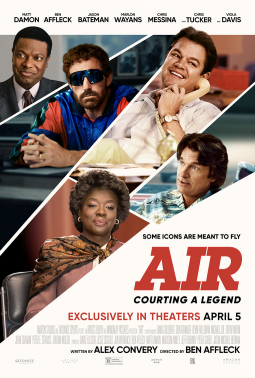
AIR movie review

Nothin’ but net! “AIR” is an outstanding biographical drama that will inspire anyone with a gut feeling, that they’re onto something great, to ”Just Do It!” The allstar cast shines brilliantly, and the screenwriting is excellent! Definitely look for this high stakes, high energy underdog story next awards season.

Sonny Vaccaro and Nike pursue basketball rookie Michael Jordan, creating a partnership that revolutionizes the world of sports and contemporary culture.

Who would have ever thought that the origins of the single best known athletic shoe would have this much ‘sole.’ It’s funny, emotionally moving, and educational. More than the risky financial move that would either launch the struggling NIKE company to success or shutter the athletic division, this story is one of resilience. Resilience in business and in character. In many ways, this movie is “Mrs. Harris Goes to Paris” meets “The Social Network,” two films to which this one will undoubtedly be compared.

Every scene in this film exemplifies exceptional screenwriting and directing. The story snaps, crackles, and pops, and the vision for direction is consistently building to the end of the story, with every scene delivering a well-defined setup–>development–>resolution.

Highly recommend watching this heartfelt motion picture!

Ryan teaches Film Studies and Screenwriting at the University of Tampa and is a member of the Critics Association of Central Florida and Indie Film Critics of America. If you like this article, check out the others and FOLLOW this blog! Interested in Ryan making a guest appearance on your podcast or contributing to your website? Send him a DM on Twitter. If you’re ever in Tampa or Orlando, feel free to catch a movie with him.

Follow him on Twitter: RLTerry1 and LetterBoxd: RLTerry

SHAZAM! FURY OF THE GODS movie review

Sufficiently entertaining. SHAZAM! Fury of the Gods starts and ends well, but the middle wanders aimlessly with the only goal to inflate runtime. After the explosive first act, the second act mostly serves as filler material to augment the narrative by making it about twenty to thirty minutes longer than it needed to be. Fortunately, the third act delivers a climatic showdown, which greatly aids in the audience experience. But the movie struggles narratively between the inciting incident (at the beginning) and the showdown at the end. Clearly, there was a good superhero movie in there, but it gets lost during the meandering developmental stage. To the movie’s credit, though, it’s the enthusiastic cast that ultimately saves the audience from complete disengagement. This is especially true with Helen Mirren and Lucy Liu, playing our villains, and Jack Dylan Grazer in his well-played comedic relief. While it’s not terribly memorable superhero movie, neither is it a bad movie.

Bestowed with the powers of the gods, Billy Batson and his fellow foster kids are still learning how to juggle teenage life with their adult superhero alter egos. When a vengeful trio of ancient gods arrives on Earth in search of the magic stolen from them long ago, Shazam and his allies get thrust into a battle for their superpowers, their lives, and the fate of the world.

If you have not seen the trailer, DON’T. While I have not seen the trailer myself, I’ve read that the BIG cameo at the end of the movie is spoiled. So, do yourself a favor and do NOT watch the trailer. As I stated in the beginning, it is sufficiently entertaining; moreover, I honestly enjoyed myself more than I thought I would for a movie aimed at kids and young teens. When I say aimed at kids and young teens, I do not use that as a pejorative or as a tool to belittle the movie. In fact, I am glad to see that there is a superhero movie that is aimed at kids. Seems like the majority of superhero movies nowadays are inappropriate for developing minds. It pleases me that we have a movie here that is suitable for the whole family.

Ryan teaches Film Studies and Screenwriting at the University of Tampa and is a member of the Critics Association of Central Florida and Indie Film Critics of America. If you like this article, check out the others and FOLLOW this blog! Interested in Ryan making a guest appearance on your podcast or contributing to your website? Send him a DM on Twitter. If you’re ever in Tampa or Orlando, feel free to catch a movie with him.

Follow him on Twitter: RLTerry1 and LetterBoxd: RLTerry