A Short History of How the Cinema Shaped Theme Parks (part 2)

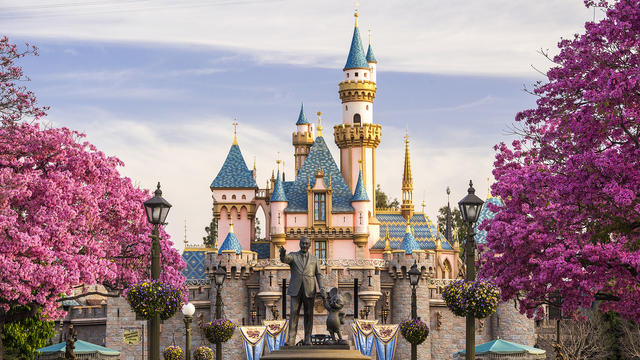
dlr_castleFollowing the ending of the Studio System, the now bankrupt motion picture studios were purchased by various conglomerates looking for new sources of income. One of the sources of income that studios began investing into was the concept of movie-based theme parks. With the opening of Walter Elias Disney’s Disneyland in 1955, Universal Studios made the decision to incorporate stand-alone attractions into its newly reopened studio tour. Both Disneyland and the future Universal Studios used their intellectual property (IP) as the basis for creating theme park rides, shows, and attractions. Although movie studios as a “park” began with Laemmle, in its current incarnation, the convergence of cinema and theme park began with Disneyland, and later was perfected by Walt Disney World and Universal Studios Florida. Since the movie studios already had dedicated movie-going audiences, it made sense to capitalize on the idea of incorporating the concepts from the movies into attractions that the general public could enjoy and be immersed in. This action both acts as advertising for the respective studios and generates income for the movies and park improvements…
For the full article on the Thrillz website, click HERE!


“Rat Race” movie review

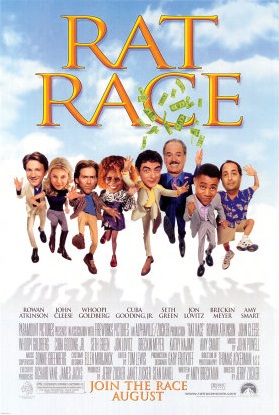
RatRaceTalk about a throwback movie this week! Ordinarily, most Mondays each week are reserved for Macabre Movie Monday with some friends of mine. We screen a horror movie and talk about it. It’s a tradition that began with an American Horror Film graduate class I took as part of my M.A. at the University of South Florida. However, my roommate is not terribly fond of horror movies and I know he grows tired of them week after week. Haha. So, we agreed to watch a comedy this past Monday. I cannot remember how, but when we thought of a fun comedy to watch, my friend Dani and I almost in unison shouted Rat Race. Such a star-studded comedy. And other than SmashMouth, it really still holds up today. Well, SmashMouth and the fact that airport security is vastly different than it was when this was shot. Although I watched it when I was a kid, it’s amazing to look at it now and wonder why my parents allowed my sister and I to watch it. Well, I am glad they did because I have always thought of this comedy as one of my favorites. If you have never seen it, and enjoy watching comedies for which you can turn off your brain and laugh until you cry, then definitely watch this one. Let’s go back to 2001 and talk about Paramount Pictures’ Rat Race.

What do you get when you combine greed, money, Las Vegas, manipulation, the ticking time bomb plot, and a star-studded ensemble cast? You get Rat Race! Eccentric casino tycoon Donald Sinclair (John Cleese) selects 6 ordinary people (and by extension, their families) to race against each other for great fortune in Silver City, New Mexico. $2Mil is stashed in a locker in an old train station and there is only one rule for the lucky 6, “no rules.” Unknown to the lucky six, Sinclair is monitoring their every move with some of the biggest high rollers in the world who love to bet on any and everything. From the famous Venetian to Silver City, this group of people will stop at nothing to get their respective hands on the money first. Whether it’s commandeering a rocket car or crashing a WWII memorial service dressed as Hitler, there is little that will come between a contestant and the fortune that awaits!

Ensemble cast films are nothing new. They’ve been around as long as the medium itself. So, the fact that Rat Race is an ensemble movie is nothing unique or special; however, the fact that it is so incredibly successful in combining the subplots and individual adventures of the six racers with the main plot is something to be admired about this film. Each of the six (and their families) have a story within the main story of the film. The writers did an excellent job at spending just the right amount of time with the individual stories without sacrificing time spent with the main plot of the film. As I have mentioned in reviews before, whether film or television, no story exists without conflict; likewise, no comedy exists without “drama.” Many film scholars and writers describe the comedy genre as drama in disguise. Let me clarify a little bit. When the casual movie-goer thinks of drama, they typically think of a film that is rather heavy, primarily dialog driven, and mostly serious. Those same casual movie-goers would likely describe comedy as funny movie with lovable characters, witty dialog, lots of laughable moments, with little degree of seriousness about it. Well-developed and written comedies are those films who integrate humor into the conflict-driven drama between two or more people. In other words, a drama is primarily focussed on the drama of a situation whereas comedy is primarily focussed don the humor of a situation. The best comedies are those that have prolific conflict between characters, but a humorous twist is added to the mix. Why did I say all this? Because in order to understand the brilliance of Rat Race it is important to recognize that it holds up so well because it’s full of drama that has irony, satire, and facetiousness thrown into the mix.

Besides the writing, this film also successfully continues to cause uncontrollable laughter because of the fantastic cast. Just look at this list of leading talent: Rowan Atkinson, John Cleese, John Lovitz, Whoopi Goldberg, Cuba Gooding Jr, Breckin Meyer, Seth Green, and Kathy Najimy. In addition to that amazing list, you also have a great group of chief supporting players and an A-list cameo: Amy Smart, Wayne Knight, Dave Thomas, Dean Cain, Vince Vieluf, Paul Rodriguez, and Lanei Chapman, and special appearance by Kathy Bates as the squirrel lady. There were also many others extras and atmospheric players that helped pull together this brilliant comedy including the performance by 90/2000s hit band SmashMouth. All the elements are here for a successful comedy! Between the writing, directing, and this phenomenal cast list, how could this movie not do well??? On that note, the movie did not fair so well with critics then and even now; scores poorly on MetaCritic, Rotten Tomatoes (no surprise there), and IMDb. However, I argue that any comedy that can still hold up and significantly create a room full of laughter over and over, is a successful comedy. Comedies are seldom going to win awards, significantly contribute to the world of the arts, or serve as inspiration for someone; but Rat Race offers an escape from the doldrums of reality and whisks you away to an over-the-top world of money, hookers, gambling, crazy exes, a buss full of Lucys, and Nazis. It offers an incredibly entertaining journey that still has a heartwarming ending.

I think it’s the utter unashamed ridiculousness of the whole plot that keeps me entertained. Furthermore, it does such a good job of telling a funny story that is both clever and well-paced. One of the best parts of watching this movie is getting to feel like at least one of the leading or supporting characters. Each have a unique set of traits that can identify with someone of a similar personality. You’ll probably also see some of your friends as one or more of the characters. These characters are so much fun to watch and just when you think it can’t get anymore ironic, unfortunate, or satirical, it surprises you. Trying to remember the first time I watched it, and even to some extent this time, I remember thinking that it really isn’t that predictable. Not predictable in that it is so ridiculous! But that’s what I love about this comedy film. It sticks to a tried and true ticking-time-bomb plot with characters that are unconventional and unpredictable in every way. Well, mostly anyway. Haha. I think my favorite part of the movie is the Pear family crashing onto the stage at the WWI Vets convention in Hitler’s car with Randy (Lovitz) trying to speak but the cigarette lighter burnt his tongue and he has a Hitler mustache caused by Eva Braun’s dark lipstick. I know, right?!?

If you are ever looking to just kick back and enjoy a comedy that is guaranteed to make you laugh hysterically, then check out Paramount Pictures’ Rat Race (2001). Whether you just want to see some of your favorite Oscar, Golden Globe, or Emmy winners in an over-the-top comedic race to the finish or just a fun movie that will keep you entertained, this one is a winner!

“10 Cloverfield Lane” movie review

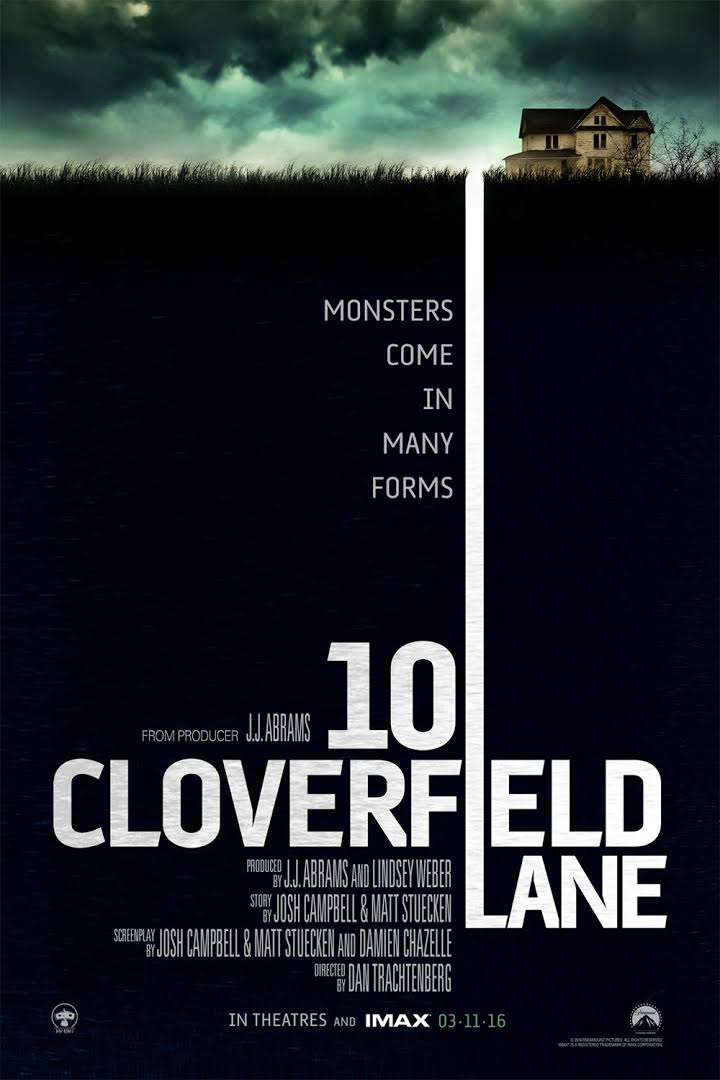
10CloverfieldExtremely suspenseful and enigmatic! Within minutes of the beginning of the movie, you will be sucked into the twisted and claustrophobic subterranean world at 10 Cloverfield Lane. Not directly connected to Cloverfield (2008), this film quite possibly takes us to a moment concurrent to or just before/after the events in New York City caught on the handicam. Director Dan Trachtenberg and Producer J.J. Abrams work together to shock the audience with a movie that will keep you guessing right up until the end. Brilliantly cast and written, 10 Cloverfield Lane is an excellent old-school feeling horror film that you have got to experience in IMAX. Just when you think you have it figured out, you will immediately begin to second guess yourself. Probably the most brilliant part of the film is the fact that three principle characters can keep your interest and attention the entire time without ever a feeling of boredom or annoyance. From the writing to the cinematography and visual effects, this film is sure to keep you on the tip of your toes.

Following a car accident, Michelle (Mary Elizabeth Winstead) wakes up with an IV in her arm and chained to a wall [wait, is this Saw?]. With no cell reception and no recollection of what happened, she begins to fear the worst. Upon meeting her capture Howard (John Goodman), she fears for her life. Not buying his story about saving her and keeping her from the hard during the fallout from the attack, Michelle attempts to escape. Failing to overcome Howard, she slowly begins to accept the worst. To her surprise, she is not the only one in Howard’s fallout shelter. Michelle meets Emmett (John Gallagher Jr). Thinking that Emmett’s injuries are from escaping, she learn that his broken arm is from fighting to get INTO Howard’s shelter. With this new revelation, Michelle begins to settle into life with Howard and Emmett. Still, something just isn’t right. From car noises to sunshine, Michelle has doubts of the alleged apocalypse and must solve the mysteries, puzzles, and covertly plan her escape.

One of the most intriguing elements of the movie is personally feeling the claustrophobia that the principle cast is experiencing in the movie. That is thanks to the excellent cinematography, production design, and lighting. That additional experiential element is not terribly common in films, even horror cinema. But it was very instrumental in generating the feeling of suspense, anticipation, and intrigue during the movie. Much like Super 8 and in the vein of other J.J. Abrams’ Bad Robot productions, the movie begins with a fantastic and blood curdling accident. Just like a rollercoaster, once that car accident hits the screen, the movie will take you up and down thrilling hills on a track that you will struggle to see 10 feet ahead. It’s difficult to talk about how the movie keeps you guessing and second guessing yourself without giving away a lot of what makes the movie thrilling. So, you will just have to take my word for it. Like with any good horror/suspense movie, it is necessary to include strategic comedic relief or lighthearted moments. And writers Drew Goddard, Daniel Casey, Matthew Stuecken, and Josh Campbell weave together a brilliant combination of terror and humor to keep the movie alive and dynamic.

John Goodman is absolutely brilliant in the film. Not that he has anything to prove. He is one of those actors who, with the slightest tweak of the face or shift of the eyes, can have you laughing one second and terrified the next. His ability to turn his character’s emotion on a dime makes him equally weird/quirky and frightening all at the same time throughout the story. Is he a weird old man who, in his own awkward and bizarre way, is keeping Michelle and Emmett from hard or his is a sadistic serial killer who forms inappropriate intimate bonds with his “guests”? That is for you to discover in the movie. Both Mary Elizabeth Winstead and John Gallagher Jr were perfect choices for their respective roles as well. Winstead brings that independent spirit and look to the character of Michelle and Gallagher provides the audience with a country boy charm. The ability for an actor to capture the emotion of extreme terror and sell it as a legitimate, believable emotion is tough. Selling that acute and powerful emotion can make or break a horror film–if the director’s intent is to make the story as real as possible and not a parody or satire of itself.

You may be wondering how this film is even loosely connected to 2008’s Cloverfield. And that connection isn’t really made until the end of the third act of the movie. Unfortunately, I cannot go into too much detail without giving away the climactic and over-the-top ending, but I can say that it does a great job of being connected just enough that it can essentially stand on its own but when you think of how it is or could be connected to Cloverfield, then the movie becomes all the more intriguing. Interestingly, the manner in which this installment in the Cloverfield universe was directed and produced, it definitely could begin a franchise with movies that are never directly connected to the previous film or even Super 8, but are taking place at or near the same time, each with it’s own respective story.

It isn’t often that I watch movies that are best seen in IMAX, but this is definitely one that is best appreciated and experienced in IMAX; however, if you want to take the old-school feel of the movie to a who other level, then you may want to consider watching the movie at a local drive-in. However you choose to watch the film, you are going to definitely enjoy the adventure.

“Whiskey Tango Foxtrot (or WTF)” movie review

WTFQuite the unexpected surprise from comedienne Tina Fey! Paramount Pictures’ Whiskey Tango Foxtrot is one part self-reflexive film on television news production and one part self-discovery. Unlike the feel of the previews, WTF is not really a comedy–not in the traditional sense anyway. There certainly are moments throughout the film that are funny and will cause you to chuckle, but it is definitely more of a drama. The brilliance of Fey’s acting in this movie is truly showcased by her ability to display that she can do serious just as well as funny. Most of the funny parts are given away in the previews, so don’t think you’re going to get more laughs during the movie. Based on actual events, WTF takes you behind the camera and behind enemy lines to depict what it is like for television news foreign correspondents in a war zone. Although the movie was not what I expected at all, I am very pleased with the story, all be it, slow burning. Beyond the self-reflexive subplot in the movie is the foreground story of self-discovery. Fey represents so many of us who just feel like we are spinning our wheels, treading water,  or even moving backwards. The inspirational elements of the movie come from her willingness to take chances, make mistakes, and get dirty (as the Magic School Bus‘s Miss Frizzle would say).

What would you do? You’re dissatisfied with your job as a television news writer/producer, have a mildly depressive boyfriend, small apartment, and just need to get away. If you’re Kim Barker (Tina Fey), then you head off to Kabul, Afghanistan to become a foreign correspondent during the early days of the War on Terror. After an expedited visa and passport, Barker embarks on her journey as a representative of the U.S. press in one of the most dangerous places on earth. Armed with her laptop, camera, notepad, and two staff members, she sets out to discover the real stories in Kabul and the surrounding areas. Thinking that she is the only girl in a military barracks, Barker is relieved to meet Tanya Vanderpoel (Margot Robbie) who takes Barker under her wings to show her the ropes of reporting the news amidst a war and hundreds of “thirsty” journalists and military personnel. While covering the stories of the war, Barker concurrently takes a journey of self-discovery that is filled with mountains and valleys.

Let’s be real here. Even if you analyze movies on a regular basis like me, you too were probably thinking that this would be a dramedy (drama/comedy). And yes, comedy is really drama in disguise; but I digress. The previews are certainly cut together in such a way that it looks like a very Fey-esque wartime comedy. I am not going so far as to saying that Paramount pulled a bait ‘n switch–because the movie is of a good quality and enjoyable–but the is no doubt that I went in expecting classic Fey and was presented with her more serious side. Still, through her witty quips and non-verbal dialog, she infuses conventional comedy and self-deprecating humor throughout the narrative. Like many dialog-driven dramas, even ones during a war, this movie has a very slow pace especially in the first act. Some additional comedy probably would have helped in the beginning to hook the audience. Speaking of the hook, that is probably what’s missing from the first few minutes of the movie. I think the studio sacrificed a traditional hook because the hook was Tina Fey herself. Fortunately, the film wastes no times in getting Kim Barker to Afghanistan, and that is definitely a good move. Although we are introduced to several chief characters in the movie, the focus is definitely on the character development of Barker with some minor development and introspect on the other principle players.

There are really two stories here: the foreground story of self-discovery and the background self-reflexive plot. Both are seamlessly married together in order to accurately tell both without sacrificing the other. Although we all know that there are foreign correspondents in war zones, we don’t always get to see what it’s really like to uncover stories, pitch to executives back in the states, and maintain sanity and safety; but through this film, we witness just how hard it really is to be a foreign television news correspondent. From networking, to interviewing, to shooting B-roll and stand-ups, Barker takes us on the journey from concept to delivery of producing news int he middle of a battle zone. Beyond the battle field, Barker is coping with her own personal and professional battles. If it isn’t the cheating boyfriend, it is the network who put her on the hourly plan and gives her no screen time. But, through it all, Barker never gives up and refuses to sit idly by and allow herself to be walked over. Fortunately, Barker does get her big break during the climax of the movie, but you’ll have to watch the movie to see what that is.

If you plan to see just one movie this weekend, I definitely encourage you to see this one. It’s gritty, funny, and inspirational. This is also a great opportunity to watch Fey in a more serious role and decide for yourself if she convinces you that she can play serious just as well as the comedy we all know and love her for. You may have seen other wartime movie, but this one plays out differently in that the focus is truly on the character development of the protagonist with the war merely being the backdrop and conduit through which we see her story of summits and pitfalls.

On Cinema and Theme Parks (part 2)

My Book

(Continued from Part 1)

Understanding the synergy or convergence that exists between the cinema and theme parks requires looking to the history of the relationship between the two entertainment giants. Before Disney’s Hollywood Studios (formerly Disney-MGM Studios), Universal Studios Florida, and more than 40 years before Disneyland was opened, the founder of Universal Studios (studio) German immigrant Carl Laemmle, opened his 250-acre-movie-making ranch, just north of Los Angeles, to the public for a mere $0.25 (Murdy, 2002). More than side income for the trailblazing studio, most well-known for its pioneering of the horror film, the original studio tour began on the outdoor backlot in March 1915. Laemmle desired to immerse the “people out there in the dark,” as famously referred to by Norma Desmond in the timeless classic Sunset Boulevard, into the magic behind the screen (Sunset Blvd, 1950).

Interestingly, according to famed psychiatrist Sigmund Freud, horror is often concerned with revealing “other” scenes to the audience (Freud, 1919). And, keeping with this theoretical approach to horror cinema, Laemmle opened this “other” scene to the guests of Universal Studios Hollywood.  But more than horror, Laemmle also brought the studio guests face-to-face with western action/drama (Murdy, 2002). From early in the 20th century, the concept of cinema and theme park convergence was born. The happy marriage, however, was not to last very long. Upon the introduction of cinema sound, Laemmle was forced to close the studio “park” to the not-so-quiet guests in order to facilitate appropriate recording sound for the motion pictures (Murdy, 2002). The Universal Studios tour would remain closed to the general public for over 30 years. But, in 1961, the studio would once again open its gates to a new generation of movie lovers (Murdy, 2002). Between 1961 and 1964, Universal outsourced the famed tram tour to the Gray Line bus company.  Following a feasibility study, conducted by researcher Buzz Price, the same man who helped determine the locations for Disneyland and Walt Disney World, Universal decided to start its own tram tour of its facilities, and Universal Studios Hollywood opened in July 1964 (Murdy, 2002).

Following the ending of the Studio System, the now bankrupt motion picture studios had been purchased by various conglomerates looking for new sources of income (Riley, 1998). One of the sources of income that studios began investing into was the concept of movie-based theme parks. With the opening of Walter Elias Disney’s Disneyland in 1955, Universal Studios made the decision to incorporate stand-alone attractions into its newly reopened studio tour (Davis, 1996). Both Disneyland and the future Universal Studios used their intellectual property (IP) as the basis for creating theme park rides, shows, and attractions. Although movie studios as a “park” began with Laemmle, in its current incarnation, the convergence of cinema and theme park began with Disneyland, and later was perfected by Walt Disney World and Universal Studios Florida. Since the movie studios already had dedicated movie-going audiences, it made sense to capitalize on the idea of incorporating the concepts from the movies into attractions that the general public could enjoy and be immersed in (Davis, 1996). This action both acts as advertising for the respective studios and generates income for the movies and park improvements.

In today’s entertainment marketplace, media conglomerates are restructuring themselves to be as large a player in entertainment and media as possible with the ability to integrate various products and services into multiple areas of exhibition (Taubman, 1970).  This is easily witnessed in how the Walt Disney Company, Sony, and Comcast companies are setup. Walt Disney Company has significant investments in: motion pictures (i.e. Disney, Buena Vista, Touchstone), theme parks, TV (i.e. ABC, Disney Channel), leisure/tourism, radio, video games, stores, and record labels). Sony has investments in consumer/commercial electronics, computers, video game systems, motion pictures (i.e. Sony, Columbia, Tristar), television (CBS), record label, recording studios, radio, and stores. And, much in the same way, Comcast has investments in motion pictures (i.e. Universal Pictures, DreamWorks-SKG), theme parks, resorts, television (i.e. NBC, Golf, SyFy), video games, radio, record labels, and recording studios.

Whereas the fall of the original studio system set the precedent for media companies not to own or operate all the elements of media creation from conception to employment to production to the distribution, also known as vertical integration, companies are now embracing the idea of horizontal integration. Horizontal integration allows a media company to push or market its products or services through various media channels. And, this is a perfect example of why media conglomerates own and operate theme parks. This is a common practice by Disney and Universal in their respective parks and resorts. Disney can release a movie, base an attraction off that movie, use that movie as the basis for a video game, and even include costume characters in the parks and on the cruise ships. In the same vein, Universal can take one of its movie properties and integrate the characters and story into a theme park experience, use the concept for a video game, and maybe even develop a TV series as a spinoff of the movie. This type of integration allows the companies to effectively customize glorified marketing campaigns for their brand. Having a given branding on various commercial outlets allows a company to maximize its exposure to general audiences/customers (Taubman, 1970). As companies acquire more intellectual properties, media outlets, and commercial infrastructure, they are able to actively change entertainment offerings over the years; and this is definitely the case with the theme parks owned by media conglomerates that also have movie studio interests.

Continue to Part 3