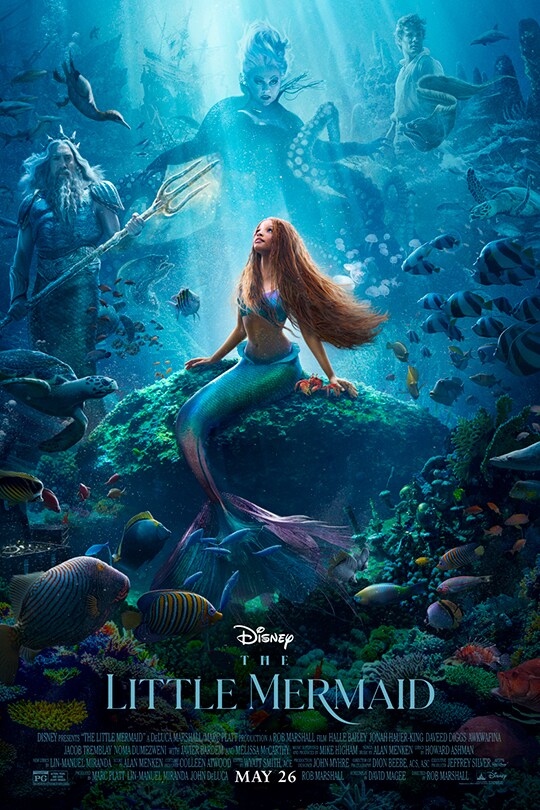
WICKED: FOR GOOD movie musical review

Some movies soar on broomsticks; this one never quite gets off the ground.
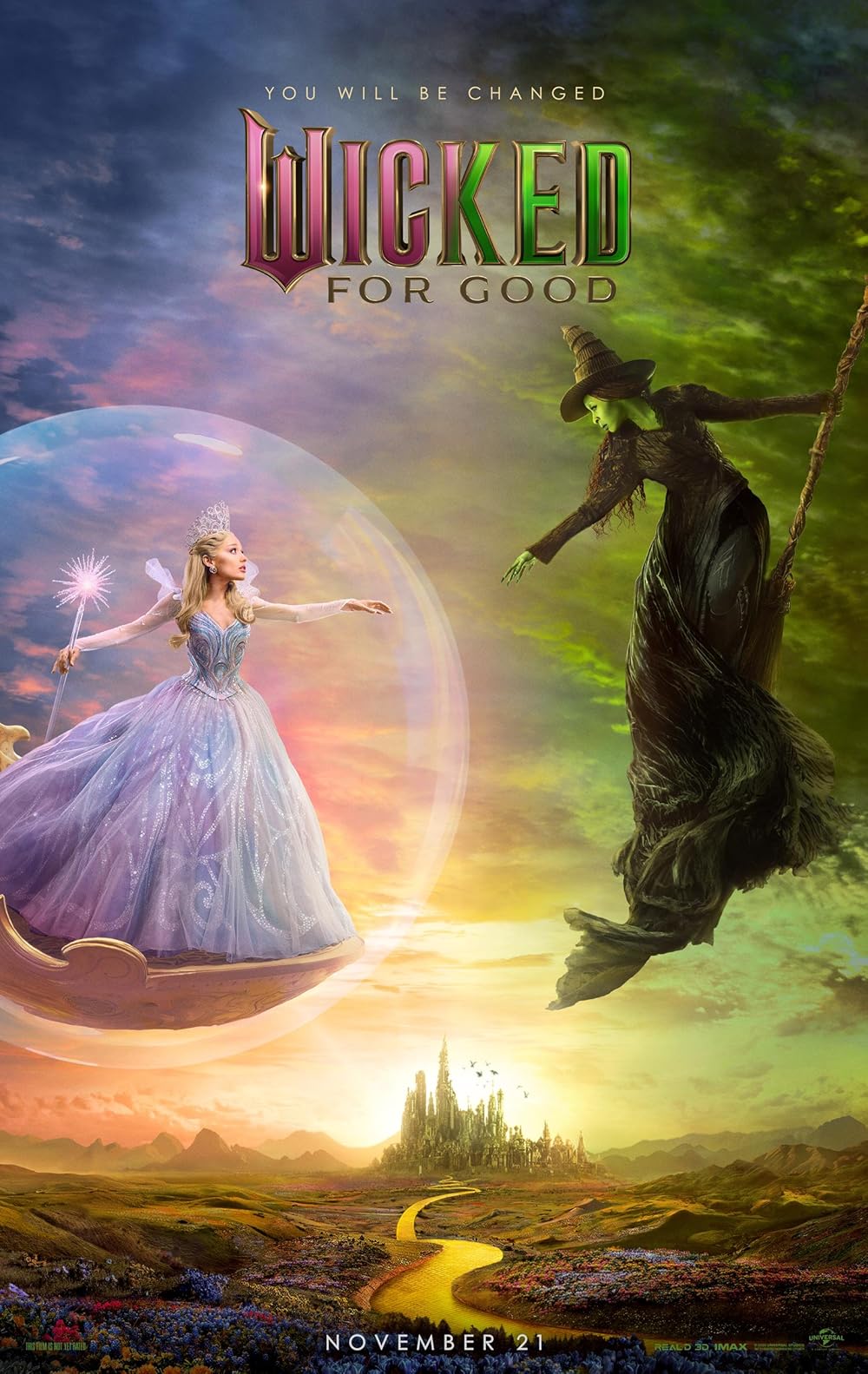
Wicked: For Good arrives with sky-high expectations, a beloved Broadway pedigree, and a cinematic world forever shaped by the 1939 Wizard of Oz. And while the heart for the material is undeniably present—director Jon M. Chu’s affection radiates through nearly every frame—the execution is fraught with problems that prevent the film from casting the spell it so eagerly attempts. It’s a movie overloaded with spectacle yet starved of narrative discipline, regrettably proving that sometimes a production can have all the right ingredients and still mix the potion incorrectly. There’s no question Jon M. Chu loves this material—his enthusiasm is evident. But passion alone isn’t enough. The film desperately needed stronger producing and organizational forces to ground the project, refine its pacing, and balance its emotional register. Instead, we get a production that feels at once over-managed and under-shaped.

Now demonized as the Wicked Witch of the West, Elphaba lives in exile in the Ozian forest, while Glinda resides at the palace in Emerald City, reveling in the perks of fame and popularity. As an angry mob rises against the Wicked Witch, she’ll need to reunite with Glinda to transform herself, and all of Oz, for good.

The most glaring issue in this movie is the pacing. This story never needed to be two movies. One Broadway show, one complete screen adaptation—simple math. Instead, Wicked and Wicked: For Good, collectively, feel like a single narrative forcibly stretched and compressed simultaneously. Scenes either end abruptly or linger with self-importance, giving the whole film a stop-and-start rhythm that betrays any emotional momentum. Moments that should breathe are suffocated, while others that should be tightened sprawl endlessly. Narratively, the film leans heavily on contrivances rather than character and plot development. Plot turns feel telegraphed or unearned, creating a sense that events are happening because the script demands it—not because the characters have earned the journey. Emotional beats are pushed rather than developed; the film tugs at heartstrings it hasn’t taken the time to weave. Many sequences feel manipulative instead of meaningful, leaving the viewer aware of the strings being pulled rather than swept up in the melody.

The film maintains the emotional equivalent of flooring the accelerator from beginning to end. Everything is heightened, everything is urgent, everything is presented at maximum volume. Without quieter resets, the story becomes exhausting rather than exhilarating. The lack of modulation leaves little room for nuance, making even potentially impactful moments blur together into one extended crescendo.

And then there’s the Oz problem itself–it was bad enough in the first movie, but this one amplifies all the flaws in this picture. From the opening Universal logo and Wicked title card, both stylized to resemble their 1930s counterparts, it’s clear the film wants to position itself adjacent to the classic Wizard of Oz. (And yes, I am aware that the Broadway show is based on books and not the 1939 classic, but this is a screen adaptation that is going to by default be connected spiritually and literally to the events, imagery, and characterizations of the original movie, but I digress). Whenever Wicked intersects with that iconic imagery, the visual and narrative disconnect is jarring. Tonally, textually, and aesthetically, nothing matches. Two of the most egregious examples are the Wicked Witch of the West’s castle, a location fundamentally misaligned with its 1939 counterpart in both history and design, and Glinda’s bubble. Hello??? She is clearly a magical being and travels by a magical bubble. To rob her of those elements is to rob her original characterization. For a film so eager to evoke some level of nostalgia, its disregard for consistency with cinema’s most beloved fantasy feels baffling.

The editing is among the film’s most distracting flaws—awkwardly timed transitions, uneven scene construction, and moments that feel spliced for convenience rather than cohesion. The cinematography dazzles with color and movement but contributes little to storytelling. It’s all flash, no narrative substance: beautiful images that ultimately amount to little more than digital confetti. And we cannot talk editing without addressing teh cringe CGI–the kind of digital spectacle that feels less like movie magic and more like a rough animatic accidentally exported at full resolution. Emerald City looks less like a tangible place and more like a high-end screensaver—everything polished to a rubbery sheen, with no texture, grit, or atmospheric depth. Characters often appear detached from their surroundings, as if composited into a digital diorama rather than inhabiting a lived-in world. Instead of mixing practical sets with digital enhancements, the film leans heavily on full-CG environments and even characters, resulting in octane-fueled and intimate moments feeling artificial. It’s like looking upon a world of fantasy that feels more like a giant animated backdrop with actors placed within versus a world that feels tangible.

Not even the presence of Michelle Yeoh is enough to elevate the film’s sense of class or gravitas. Although, it’s hard to blame her, given that she’s phoning in a performance built on scraps of narrative substance. In this second installment, her character is little more than an ornament of prestige, offering neither meaningful development nor any real impact on the story. Jeff Goldblum, likewise, delivers a surprisingly muted turn, coasting on his trademark charisma without ever fully engaging. When two performers known for commanding the screen seem this disengaged, it speaks less to their abilities and more to a film that gives them virtually nothing with which to work.

Wicked: For Good reaches for greatness but ultimately fails to stick the landing. It’s a film overflowing with heart yet undercut by structural missteps, contrived plotting, mismatched continuity, and a visual approach that prizes spectacle over substance. For a story about defying gravity, it’s ironic that this adaptation never quite lifts off the ground.
Ryan is the general manager for 90.7 WKGC Public Media and host of the show ReelTalk “where you can join the cinematic conversations frame by frame each week.” Additionally, he is the author of the upcoming film studies book titled Monsters, Madness, and Mayhem: Why People Love Horror. After teaching film studies for over eight years at the University of Tampa, he transitioned from the classroom to public media. He is a member of the Critics Association of Central Florida and Indie Film Critics of America. If you like this article, check out the others and FOLLOW this blog! Follow him on Twitter: RLTerry1 and LetterBoxd: RLTerry
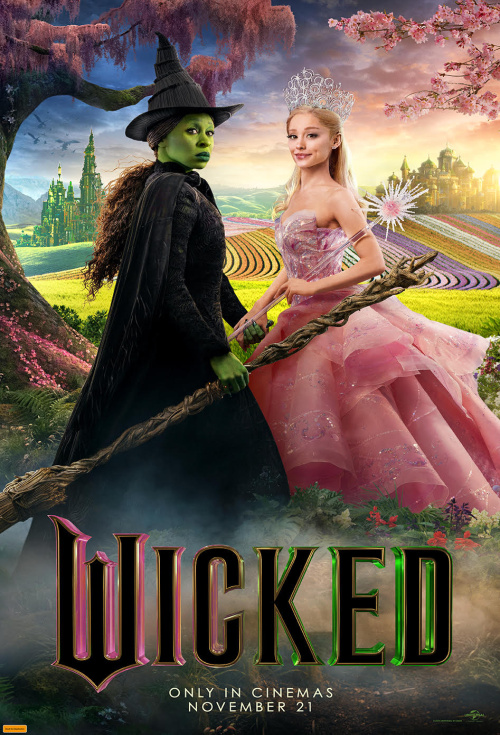
WICKED movie musical review

By Kurt Feigelis

“A true cinematic spectacle!”

Dear Journal,

It’s been so long since we talked it honestly feels like the first time. Well it happened the Wicked movie finally came out–well partly. I was lucky enough to attend the Press Screening in Tampa. The beloved musical from Broadway has been turned into a film (or more correctly two film installments), and everything leading up to this movie makes you think it wouldn’t work. But surprisingly it did.

I know you know the show, but just in case you forgot. This is the story of the Witches of Oz, of The Wizard of Oz, and boy did a lot happen before Dorothy dropped in. It follows Elphaba (Cynthia Erivo), while at Shiz University and her inevitable journey in becoming the Wicked Witch of the West. Alongside her roommate Glinda (Ariana Grande), an unlikely friendship grows. The themes of being an outsider and yearning to belong rings true in this adaptation. 

Everything leading up to this release makes you think that it should not have worked. Split into two films, Part 1 is too long, the cast has “too many stars”, and has been in development hell for over a decade. Rumors of a movie have been online for about as long as the musical has been on Broadway. Cast rumors include everyone from the original Broadway Cast, to Lea Michele and Amy Adams. But the core of the team was the producers, some of the same names you will find from the original Broadway show, and I think that is why the film works. The rare exception where the producing team delaying the movie for the right cast and director worked. Maybe development hell isn’t always a bad thing.

Wicked Part 1 sings with the feel of classic cinema. I think that came down to the Direction of Jon M. Chu (Crazy Rich AsiansIn the Heights). With a focus on real and large 360° sets, practical FX, live singing, and stunts. There is this feeling of realism to this fantastical world. The attention to detail and to do as much on camera as possible captures a live energy most movie musicals do not. Chu has a history of work in music videos, musical films, and large ensemble casts. This properly prepared him for this piece. 

Erivo is just wonderful as Elphaba. This roll is so well known with productions of the show playing all over the world in six different languages. But this is what the magic of what film does. In the theatre you got to play big, to the back of the house. Here, she is able to play it small, the little moments and movements play big for the screen. You get a closer connection to Elphaba you cannot get from the stage.  

Grande shines as well, and you know me, this was the role I was most concerned about. Grande is a very talented performer but many times it is Ariana Grande singing, when she is acting it’s always Ariana, not her character. I am happy to say she truly disappears into Glinda, the (very) Good Witch of the North. This is a testament to her work with vocal and acting coaches she started using even before she auditioned for the part. The comedic role is so often overlooked, but Grande brings something deep to Glinda in this adaptation. Erivo and Grande together, their friendship, is the heart of the movie. The rest of the supporting cast are as wonderful as you would expect with the names listed. There honestly wasn’t a surprise there. 

The musical numbers are pure entertainment. Usually in a movie musical the song and dance just doesn’t seem natural but Wicked does it right. The songs are already well know but they are modified and changed just enough to make them truly cinematic. The Wizard and IPopularDancing Through Life, and the film’s finale Defying Gravity are highlights for sure. 

If you want to nitpick some issues, the sound mixing was unbalanced throughout the movie. Between some of the musical numbers and dialogue scenes, there is an inconsistency. I don’t know if it was the theatre I was in, or the film itself. But, I feel it was the film. There are times when the score is overpowering the vocals. A film this long is always a bit intimidating, especially when trying to bring in a new audience.   But somehow the pacing works. The film doesn’t feel long while watching it. The extra moments with the characters and being brought into this world is much needed. There was not much added into this half of the story. But when transitioning from the stage to the screen. We need extra time for the camera to bring us into the world, to sit and connect to the characters. That is the reason for the additional time. Like Kill Bill, it feels more organic than forced or a money grab like other movies that get split into two.

Live musicals and Broadway adaptations are still a hard sell for audiences, even more so after Joker 2. I think the movie will do well, but with Gladiator II and Moana 2, there is stiff competition, Universal knows this which is why they upped the release date. It feels as though if a movie doesn’t make $1 Billion, it’s not a success to producers or the zeitgeist. Wicked Part 1 will do well with those who love the musical already, but I don’t know if new audiences will be pulled into this one. Which is a shame because it is a good film on its own. I’m curious what newcomers will say about the story and its quirkiness. 

The fandom of Wicked have been talking rumors for over ten years for this film. Then picking apart every visual and audio clip, still, and poster leading up to the premier. Sometimes the fandom does a disservice to what they love. Because of this I think the studio is nervous about the movie, releasing multiple interviews, behind the scenes and clips of the movie online leading up the premier. But out of context these clips are splitting its audience already familiar with the show. The reality is, the film does work. But remember this an adaptation not a remake or recreation of the stage show. Cinema has the power to expand the storytelling and that is what Wicked Part 1 is doing here.

Journal, in the end we need to remember what this movie is. It is the long awaited film adaption of a beloved Broadway Musical. To those that have seen the show I think they will love this movie without taking anything away from what they can see on stage. For a new audience, I think like Chicago, this will breathe new life into an existing phenomenon. People familiar with the show and The Wizard of Oz will see homages to both throughout the film. 

Part 2 comes out sometime in 2025, probably in November as well. We don’t know the run time of the follow up, or any details at all really, but until then we have this film to enjoy. What comes next is all the speculation, rumors and judgments for Part 2 that we had with Part 1. There is something about judging something or someone before getting to know it (or see it) that is unsettling given the story we are all here for. I think Elphaba might have something to say to us about this, but she wouldn’t be surprised.

You’re Movie Buddy,
Kurt Feigelis
R.L. Terry ReelView contributor

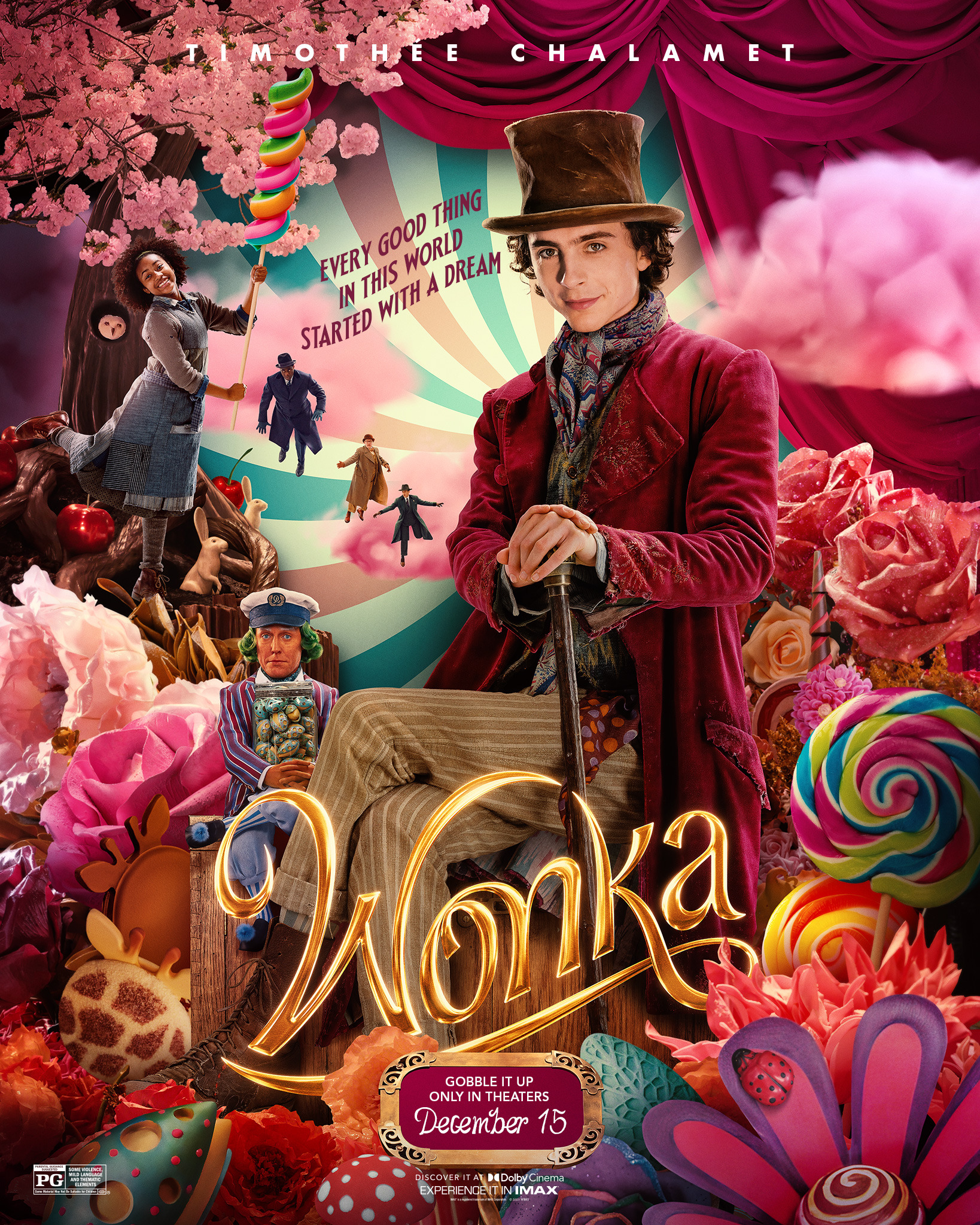
WONKA movie musical review

Charming but forgettable. Wonka is like a rich piece of candy, tasty in small amounts, but less appetizing the more you consume. However, the sufficiently charming musical will keep you entertained. But, it’s missing the moments of horror adjacency and the commentary on greed, pride, gluttony, etc. that gave the OG Willy Wonka and the Chocolate Factory some real bite! While it may not deliver the depth or quality of storytelling of the original, Wonka still delivers an entertaining diversion from the stressors of life with its whimsical world of chocolate and magic. The standout musical number is the Scrub Scrub number that is the G-rated answer to Chicago‘s infectious Cellblock Tango. Over all, Wonka will delight audiences with a throwback style musical that tastes best if not much thought is placed into the quality of ingredients.

Armed with nothing but a hatful of dreams, young chocolatier Willy Wonka manages to change the world, one delectable bite at a time.

Gone is the clever commentary on gluttony, pride, greed, sloth, lust, envy, and wrath as represented by the children and Wonka in the original book and film, but what this Wonka origin story lacks in thoughtfulness it makes up for in–well–the candy-like nature of this throwback style movie musical. It’s not deep and the quality of ingredients may be average, but it’s still sufficiently entertaining for the duration of the movie.

The casting is mostly solid! Despite his popularity, I find Chalamet to be an average actor–neither inordinately good or bad–just average; however, he was perfectly cast in this film even though there are plenty of moments that he looks like he’s phoning in his performance. He has the right look and energy for Wonka, so his casting works well. The other standout performance is Olivia Coleman as Ms. Scrubbit–she’s a great villain! And while it was great to see Sally Hawkins, she has little more than a cameo in the movie. We are treated to a brief performance by Rowan Atkinson, but he is also little more than a cameo. The rest of the actors play their respective roles sufficiently well, and each has some moments of hilarity. But the comedic stylings of Keegan Michael Key as the chief of police went grossly underutilized.

It isn’t so much the cast or music that are the true stars of this film as much as it is the outstanding production design and costuming. The whimsical production design and creative costuming are the highlights of the film. We are never told where the movie is taking place, but it’s most likely London; however, the imaginative set design creates an other-worldly sense about the movie that transports audiences from the auditorium to someplace magical that feels adjacent to our own. There is an expressionistic quality in the production design, externalizing the emotive dimension of the characters and story. It’s a combination of neo-Gothic and industrial revolution-inspired designs.

Despite its clear desire to be this year’s Greatest Showman, one of the biggest differences between the two movie musicals is the quality of original songs. Other than the Scrub Scrub number, none of the other songs are memorable. Scrub Scrub works very well, and I love how it’s clearly inspired by the Cellblock Tango from Chicago. The lyrics are rhythm are memorable and I foresee it being the material for many future GIFs. It’s a fun number along with it’s easy to sing. The rest of the songs are lacking in any degree of inspiration, and thus fall flat and forgettable. In the moment, they are fun and entertaining, but are soon forgotten. For fans of the original film, the memorable, beautiful song Pure Imagination is referenced in both score and lyric. The score for the timeless song is at the bedrock of much of the score for the film, and Wonka applies new lyrics to the music at the end, which acts as a fantastic nod to the original without feeling like it’s a vapid attempt to inject nostalgia to remind us of a better movie. It is tastefully done.

While the plotting for the A-story is good enough, there are ancillary B and C stories that are setup and resolved, but they lack any kind of development, and just come off as a lazy attempt to give the film some emotive depth. It would’ve been better to have taken the time it took to think-up the B and C stories and applied it to the A-story or the music. What the film is lacking is any meaningful subtext. One of the brilliant attributes of the original film is the commentary on the Seven Deadly Sins are represented by the kids and even Wonka. The film provides audiences with a cautionary tale of what can happen when any of those sins takes hold of the mind and body. Plus, we get those iconic Oompa-loompa musical lessons as a result of the kids’ missteps.

Wonka will provide a couple hours of laughter and glee during this Holiday season, which may come in handy if the stressors of the Holidays begin to pile up and family drama occurs while you’re home for Christmas. It may not be one that will earn near the rewatchability of the original, but as I’ve stated several times, it is sufficiently entertaining.

Ryan teaches Film Studies and Screenwriting at the University of Tampa and is a member of the Critics Association of Central Florida and Indie Film Critics of America. If you like this article, check out the others and FOLLOW this blog! Interested in Ryan making a guest appearance on your podcast or contributing to your website? Send him a DM on Twitter. If you’re ever in Tampa or Orlando, feel free to catch a movie with him.

Follow him on Twitter: RLTerry1 and LetterBoxd: RLTerry
BEETLEJUICE THE MUSICAL review

Stick to the movie. While I seldom review stage productions, whenever there is an adaptation from screen to stage, I am interested in reviewing it! Touring the country this year are Broadway versions of Beetlejuice, Moulin Rouge, Mrs. Doubtfire, and Clue. Quite the season for screen to stage adaptations. The film professor and critic in me is curious as to the narrative and experiential success of the stage version of a beloved classic movie. Some movies lend themselves to stage versions such as Moulin Rouge and Clue, but others require a bit more imagination such as Beetlejuice and Mrs. Doubtfire. I went into Beetlejuice with an open mind, as I had not read any of the reviews prior to watching it. Since I rarely watch trailers before I screen a film, I wanted to be as fair as possible to a Broadway show based on a movie. Suffice it to say, Beetlejuice the Musical failed to live up to the experience, reputation, and storytelling of the Tim Burton classic Beetlejuice.

Unfortunately, my impression of the musical was off to a negative start as the performance was delayed by 30-minutes–then compound that with two additional technical problem totaling about 30 more minutes of delays, and the musical was going to have to really work some magic to overcome the hobbling out the gate.

Since I am an expert in cinema (not Broadway), I am going to stick to my opinion of the translation from screen to stage, including narrative, design, and music.

The two areas wherein the show suffers most greatly is in narrative and music. But before I talk about the story and music, I want to focus on what the musical did well. And that is the set desigg, lighting, and effects.

Even though the set design, lighting, and effects may not be directly lifted from the stylized versions created by Tim Burton, there is a distinct style to the designs employed by the musical. All the sets feel like extensions of the movie, but still an original enough expression thereof. We even get the sandworm!! The appearance of the sandworm puppet was incredibly uplifting and brought the biggest smile to my face! Classic Burton designs are steeped in German expressionism, and that doesn’t entirely come through in the set designs; however, there are plenty of exaggerated shapes, harsh shadows, and emotive expressions in the design that remind us that this is a work inspired by the creative mind of Tim Burton. The technical theatre dimension of the show was outstanding! I adored the lighting and other effects that set the atmosphere and ambiance on stage.

The Broadway musical is a near complete departure from the movie version, and in the opening number Beetlejuice acknowledges that this is not the movie–however, it would have benefitted from being closer to the movie. When the musical is aligned with the movie, it works very well! Regrettably, when it departs from the movie, the plotting, characters, and music suffer. The best scenes in the show are the dinner party, the Netherworld, and the finale, all very much inspired by the movie. Throughout the show, there are movie moments recreated, but far too few. At least we got the memorable “I, myself, am strange and unusual” line. The stage Beetlejuice feels like a different character than Michael Keaton’s in the movie.

The dialogue and performative dimension of each character was forgettable. No one feels like they are an extension of the movie version, but a different character altogether. Even the dialogue was awful. I get it: Beetlejuice’s schtick is his crass, crude humor. But in the movie, it was always balanced out by more grounded characters and a tone of whimsy. This Beetlejuice is crass and crude simply to be crass and crude–with little paying off dramatically. While I appreciate some of the additional jokes, most were simply better suited for a standup routine than for a narrative work. The characters were speaking with the voices of the musical’s writers and not the voices of the characters as written for the movie. Each character is trying to be more over-the-top than the previous character, and what we wind up with is a cacophony of loud, boisterous, annoying characters.

The story is dramatically changed from the movie. To call it an adaptation is being generous, because there is little that is the same in both the plots from the movie and stage versions. Perhaps this is what happens when you take a 1.5hr movie and try to write a 2.5hr musical. There is simply an insufficient amount of plot to fill that additional hour. I suppose the foundation is the same, but the narrative is expressed very different in the stage version compared to the movie. When moments from the movie were included in the stage version, I literally clapped–that was about the only times I clapped during the performance. This musical should have stuck more closely to the plotting and characters of the movie instead of trying to improve upon it. Even though I will admit that some of the narrative connective tissue in the movie is a bit weak and some story elements feel disjointed, it’s in far more stable shape than the story from the musical.

Lastly, conspicuously absent from the stage version is the iconic Danny Elfman score. While there are moments in the musical’s songs and score that are somewhat reminiscent of the Elfman score, its absence was sorely felt. Not once did I hear the Beetlejuice theme music, not even in the overture or prologue. Elfman’s music is as stylistic as Burton’s cinematic visions, and this musical could have benefitted greatly from the music of Elfman. I had hoped that the musical numbers would have been like the musical numbers from The Nightmare Before Christmas, but they were not. They felt like generic AI-generated Broadway songs from another non-Burton-inspired intellectual property. Elfman’s music for films such as Beetlejuice, Batman and Batman Returns, and Nightmare Before Christmas cannot be lifted for and used for any other movie or stage production. His music is a tangible extension of the characters, plot, and atmosphere of the story. What we got was generic modern Broadway music and songs.

All in all, I was unimpressed with the musical, but I appear to be in the minority on my opinion of the show. My advice to anyone thinking of seeing this show is to go into it not wanting a stage adaptation of the movie, but rather a reimagination of the characters and concept from the movie.

Ryan teaches Film Studies and Screenwriting at the University of Tampa and is a member of the Critics Association of Central Florida and Indie Film Critics of America. If you like this article, check out the others and FOLLOW this blog! Interested in Ryan making a guest appearance on your podcast or contributing to your website? Send him a DM on Twitter. If you’re ever in Tampa or Orlando, feel free to catch a movie with him.

Follow him on Twitter: RLTerry1 and LetterBoxd: RLTerry
THE LITTLE MERMAID (2023) movie review

written by Dr. Leo Genco

Some treasures are best left under the sea. This familiar Disney formula is only good for one thing: lining the coffers. The Little Mermaid has wonderful, bright, appealing visuals with a few new decent songs, that prove Disney is unable to capture the magic of their 2D animated films. This is unfortunate, because under the sea of this movie is the potential for a great innovative rendition of The Little Mermaid. Why? Well, Disney attempted to provide a newer telling of the original while pandering to the original material. This creates a dichotomy of moral themes in the movie, and it shows. There is a lot to unpack. If you want to skip to what the movie does right, you can skip to the end.

Let’s get the most obvious issues out the way, since they were consistently topics of discussion prior to the film’s release: race, ethnicity, and gender swapping of characters. These changes are typically common to improve diversity, and it can be done. You can look at Nick Fury in the Marvel Comics, or John Stewart as the Green Lantern in the DC Comics. One of the best race change movies is the Preacher’s Wife. The issue with the change here is how the director and writers tried to justify the change. Instead of changing the race of a whole group to maintain consistency, only individuals are changed and are rationalized through a simple bit of dialogue exhibition. Most of the human characters are an eclectic group of non-white ethnicities and races but Prince Eric is still white! The story justifies these differences by changing the location of the kingdom and having the queen adopt Eric into the family. The kingdom is not a port for the mainland but on an island, somewhere in the Americas, and this causes massive changes in the story. The whole scene with the chef and Sebastian was removed. Someone will wonder if the scene was cut because the chef was French. The essence of the original was stripped to justify the demographic changes, which would not be a problem if the movie did not pander to the original material.

The singing varies between songs and actors. The cast of a mix between stage and film actors would do that, but the main problem is how the songs were constructed. For some reason, the director added more characters into the script, but they did not contribute to the songs at all. It is very common in musicals to have the background and side characters sing the chorus and harmony for the lead singer. But this is not true for The Little Mermaid. People are expecting a chorus for Under the Sea and Kiss the Girl. This is not coming from a nostalgia perspective of the original songs. Under the Sea is a song about the sea living as a musical band of species. The dialogue before Kiss the Girl called for the various sounds of nature. For both songs we are expecting a strong sound, especially when the chorus hits. Sadly, both songs are reduced to two or three singers max and are sung as a solo piece for the majority. Overall, songs match the deaf tone of the movie.

While the animation of the under the sea creatures on par with the Lion King (take that as you will), I am not talking about the animals but the human actors who had little to not animated faces throughout their dialogue. Only three characters were animated, Queen Selina, Grimsby, and Ursula. When I say animated, I mean that their facial expression, voice, and body language spoke. Everyone seemed stiff, which is weird because Halle Bailey is a stage actor. You would think Ariel would have the most body expression because she can’t talk for half the movie. Ariel needs to be animated the most. Arial did not seem to be a curious, explorative person, but a blank manikin until a scene which required an over-the-top reaction. Luckily, this was not consistent throughout the movie. As I will mention later, the acting in the new scenes was great.

For some movie goers, background context to main characters is essential. I, on the other hand, prefer context to characters that is required to understand the journey of the main character. This means, that background context should progress information for the main character, not for the audience. The early introduction to multiple character’s background hurt the movie in two ways: (1) these small scenes for a backstory break up the pacing of the storytelling, creating jarring transitions between scenes, and (2) too many themes or messages were introduced into the film too fast. When you introduce a backstory, you need to follow through and close that story, and when you give too much information at once, people tend to forget or care about the small stories. On top of that, the movie told Ursula’s backstory but did not provide a satisfying delivery of her end. Overall, the introduction of the characters with backstory was not the best way to start the movie.

Two things carried the movie for me, the new scenes and songs and the queen and Grimsby. Adding new scenes and songs felt real. The acting in the scenes felt genuine, minus the random dancing scene halfway through the movie. These scenes had fresh magic Disney needed, but again, the director pandered to the original movie, and this created a lot of disconnect. The problem when recreating 2D animation as a real-life movie is the expression that comes from drawn imagery. This is why the drawings of human movement are different from how humans move. It allows the animator to create expressions you are physically unable to express but want to. The new scenes of the movie did not have a previous expectation of certain expressions. I believe this element allowed the actors more freedom to act.

God bless queen! Out of all the characters, the two actors who were able to pull it off throughout the whole movie was the queen and her trusty councilman, Grimsby. They were amazing. They had facial and body expressions. I had chills when the queen was on screen. Grimsby was played perfectly and became that comedy relief when the gender swapped bird, Scuttle, failed. I loved these characters, and I enjoyed every minute of screen time with them. While I would put Ursula in this category, her character was written incorrectly. While she was played very well, her lines were the least to be desired. She was written more as a grown woman who throws temper tantrums like a child than the cunning slimy sea witch, she was in the original 1991 movie. So, the queen and Grimsby saved the movie, at least for me.

Dr. Genco is a guest contributor and fellow university colleague. Follow him on Instagram at Leo.Genco.