“It Comes at Night” movie review

The Doore of Red Death. A24’s highly anticipated horror film It Comes at Night by writer-director Trey Edward Shults looks beautiful and beckons for attention, but fails to live up to the storytelling and payoff of A24’s The Green Room. Another A24 film in the vein of It Comes at Night is 2016’s The Witch, which was ultimately a failed attempt to capture the magic of a horror/mystery film and leave audiences with too many unanswered questions. The only “terrifying ambiguity” (to quote The Huffington Post), in this film, is just how terrifying it is to realize you just dropped money on a film that works better for Netflix, and the ambiguity comes from the plethora of underdeveloped plot elements. Essentially, It Comes at Night reminds me of a bad M. Night Shyamalan film (before he made his outstanding comeback with The Visit and Split) and after the successes of The Sixth Sense and Lady in the Water. Like the aforementioned era of ehh Shyamalan films, the wind up is excellent but the delivery lacks any emotional impact and you’re left with realizing that you never truly cared about any one of the characters. Character development is lacking, and the third act is incredibly weak. However, there is something in particular that I find very interesting; and after reading other reviews, it seems to be something that has escaped most (if not all) the critics at this point. That is the striking similarities between this film and the timeless classic short story The Masque of Red Death by the brilliant Edgar Allan Poe. From the painting on the walls of the house depicting the bubonic plague to the ominous red door, there are quite a few parallels between It Comes at Night and The Masque of Red Death.

Nestled deep in the woods is a secluded boarded up house belonging to a family of three seeking refuge from an unknown threat. Whatever has caused this family to live off the grid and fend for their very survival is tasteless and odorless. Forced to wear gas masks whenever venturing out into the woods and even around their own home, the family is forced to take drastic measures to ensure there ability to avoid coming into direct contact with the disease. With only now way in or out of the house guarded by a red door, the family has stopped at nothing to protect themselves. One night, the family’s house is broken into and they must decide what to do with the man and his family. Having dispensed with courteousness and generosity in order to guard against any and all possible threats, the family must decide whether to listen to the man or kill him right then and there. Their decision will spark a fire that spreads into their deepest fears.

*spoiler alert* But, the analysis is fascinating.

Okay, now I know that the preceding paragraph describes what should be a brilliant horror film, but the problem lies in the greatly flawed poor storytelling, development, and realization. Lack of connection to any one of the characters is also partly responsible for the lackluster experience of watching this horror-thriller with a hint of mystery and dystopia. The only saving grace the film has is the connection to elements of Poe’s Masque of Red Death. For starters, the camera draws the audience’s (and diegetic POV) attention to a painting of a depiction of the bubonic plague (or black death). At first, I was puzzled as to why this painting. Then as I go through the movie, I realize why. Between the constant reference to and runtime spent on talking about and showing the red door, it hit me that this film reimagined Poe’s short story and set it in a dystopian or post-apocalyptic time and place. If you are unfamiliar with The Masque of Red Death, then I encourage you to read it or watch it on YouTube. It is allegory on the inevitability of death no matter how  hard you protect yourself, how much money you have, or how powerful you are. It also contains allusions to the seven deadly sins and the fate of those who party in the wake of mass death among a lower class of people. Although I find the short short to be a stronger narrative than Shults’ variation on this reimagination of the classic tale.

Both the short story and this film contain people hiding out in a fortress. Whereas The Masque of Red Death‘s Prince Prospero is held up ins abbey with his wealthy and noble friends while the red death is killing off the rest of the kingdom, A24’s It Comes at Night features a typical American family living off the land and secured in their rather tutor-looking mountain lodge. Like in Red Death, the family in It Comes receives an uninvited guest one night. Here’s where we see some difference. In Poe’s story, the guest is dressed to attend the masquerade ball and in this film, the guest attempts to break into the home. Although both stories take different approaches to the second act, once thing is in common. And that is the taking in of an outsider. All through the second act, there are hints at something not being right–a constant uneasiness. That apprehension and anxiety regarding the unknown works in the respective stories favors. The emotional impact and psychological payoff differs between the short story and film. Yes, the endings are very similar but feel incredibly different. You’ll just have to read The Masque of Red Death and watch It Comes at Night to know for yourself.

If you’re searching for a thriller to watch this weekend, as it is rain in many parts of the country, then perhaps you should watch Universal Pictures’ The Mummy instead. However, if you are curious about how well It Comes at Night parallels Poe’s short story, this definitely check it out. Not entirely sure why it’s rated R, but in case that’s important to you. To quote Dr. Ian Malcolm, “well, there it is.”

“Wonder Woman (2017)” film review

WONDERful! No seriously, this is an excellent film! And I’m just not talking about the superhero genre. DC finally hit a homer with this one. This film also serves as evidence that Zack Snyder can TELL/produce a great story but should probably stay out of the director’s chair. Warner Bros. and Ratpac Dune’s Wonder Woman is the superhero film we needed. Trailing so far behind the Marvel brand and film quality, DC needed to produce a film that would make up for Batman v Superman and Suicide Squad AND catch up to Marvel. Seemingly setting out to accomplish the impossible, this film exceeded all measurable expectations and provided a comprehensive cinematic experience. With many themes, this film hits on many topics and does so with incredible precision and elegance. It’s almost as if this film is an extension of Diana Prince herself. Never addressed or referenced as Wonder Woman actually, Diana Prince’s origin story is powerful and ever so apropos in today’s socio-political climate. If only we could all have the courage, compassion, and determination that Wonder Woman embodies and represents. There are certainly elements of this film that are directly aimed at the female audience members, but this is a film for everyone to enjoy and appreciate. Again, not just a great superhero film, but a great film period. One that’s inspirational, evocative, and without need for qualifiers.

After receiving a mysterious package from Wayne Enterprises, Diana Prince (Gal Gadot) opens it to find an old photograph of a Greco-Roman female warrior standing with British military in war-ridden Belgium. Bruce Wayne wants the story. Long before she was Wonder Woman, Diana, daughter of the queen of the Amazons, was a spirited young lady growing up on a beautiful and mysterious island inhabited by a super race of warrior women placed on the planet to watch out over those who seek to corrupt it. Being the only child on the island, she wanted to be trained alongside the other women. When her mother expresses a lack of interest in her daughter training, Diana meets secretly with her aunt. Through the years, Diana grows in strength, agility, courage, and cunning. After she rescues Captain Trevor (Chris Pine) from a downed plane that pierced the invisibility shield that hid the island from the rest of the world, she learns of the Great War happening just outside of their borders and makes the decision to leave her home and help man defeat the enemy combatants who she believes are being led by Ares, the Greek god of war. Fighting alongside men, Diana is able to realize her true destiny and powers as she stops at nothing to end the war that is killing so many innocent people and destroying the planet.

Ever since her creation in 1941 by psychologist William Marston, Wonder Woman has always been treated the best when all pre-existing inhibitions typically added to a female character in a “man’s” role are removed, allowing the feminist ethos at her core to shine and erupt with unbridled passion and strength. Among other traits, the chief characteristic that separates her from other superheroes in both the Marvel and DC universes respectively is–no, not her gender–it is her ability to integrate truth, justice, compassion, and courage in everything she does to protect the planet entrusted to her people by the Greek gods. The key to understanding Wonder Woman is not through her brute strength or supernatural powers, but through her love and compassion for innocent people and her own integrity. Rarely has any film truly given women (or anyone, for the matter) a strong female protagonist who does not pander but exhibits excellence in well-developed strength of character and a complete eruption of the fantasies of many women to rise up to serve and protect. It would have been far too easy to sell Diana Prince as a vengeful women out to destroy men or seek revenge for the destruction that has befallen the planet; but no, that is not the Diana we see. We see a heroine of others–a completely unselfish hero who is of earth. Being of the earth is truly what separates her from someone like Super Man. Sure, some strong female characters from with the world of comics, literature, theatre, TV, or film have demonstrated strong characteristics and have been leaders; but Wonder Woman sands alone as a film that provides audiences with a female protagonist who is not merely a leader, but the engineer–the author–of her own destiny and story.

Why does this film work so well??? After all, that is the question you are likely asking yourself after so many DC flops (note: that does not count the Burton or Nolan films). The short answer is that Snyder was NOT in the driver’s seat on this ride; however, there is more to it than that. Snyder’s touch is certainly evident in many scenes (especially the action sequences); furthermore, he was greatly instrumental in the overall structure, but he took a backseat to the driver of this vehicle. His approach was important in the design of the car, and even building it, but when it came time to take it for a spin, he turned the steering wheel over to Director Patty Jenkins. Films featuring strong female protagonists most often seem to fair better when there is a women at the helm. And Wonder Woman is a testament to that observation. Whereas a male director would have likely spent some time sexualizing Diana, Jenkins spends the time on her courage and compassion. Instead of focusing on the terrain of Diana’s mystical home beautifully appointed with white cliffs and sapphire water or spending time on her sleek blade or even her trademark lasso of truth, Jenkins spends a significant amount of screen time on the terrain of Diana’s face. A face that communicates the heart, mind, and soul of Diana. Instead of a face displaying anger or disgust at the world of men, her face is often bright, hopeful, containing a winning smile with eyes overflowing with optimism. In terms of the production design itself, it only bares hints of Snyder’s penchant for beautiful music videos; the production design is one that takes itself seriously, but in the perfect amounts. Although the film is quite dark, there are sufficient moments of levity.

Perhaps you’re a stereotypical dude who does not care for films that feature female protagonists and feministic themes. No fear. Wonder Woman is actually a World War I film disguised as a superhero movie. As much as Wonder Woman works as an exceptional superhero movie, it is equally an impressive World War I film. Taking place in the days leading up to Armistice Day, this film displays the atrocities of war and the determination of both sides to win. You will find yourself in the trenches in France and Belgium with the Allied forces who, against all odds, are determined to defeat the enemy in order to stop genocide and widespread devastation. Placing Wonder Woman amidst the warriors of earth, connects her to humanity in ways that most superheroes cannot. Fighting for what you believe in is a major theme in this film. Some of the best war movies are those that “show don’t tell.” And Wonder Woman certainly shows what war really looks like instead of talking about it as some abstract concept or spending time in diplomacy. In fact, diplomacy is thrown out the window, and Diana lays the need to fight on the hearts of the bureaucratic leaders and soldiers alike. Pick up your sword and fight. Don’t just sit idly by while humanity is destroyed. There is a particular scene midway through the film that nearly brought me to tears because of the strong emotion and courage displayed by Diana.

Go see it! Wonder Woman is an exceptional film that will blow your mind. I had high expectations going into the film last night after the early reviews were released, but I was not prepared for the degree to which I would thoroughly enjoy the entire experience. It’s not only a film for women, it’s sincerely a film or everyone. Next time you are faced with great opposition, when it feels that the world is caving in around you, be a Diana Prince.

Written by R.L. Terry

Edited by J.M. Wead

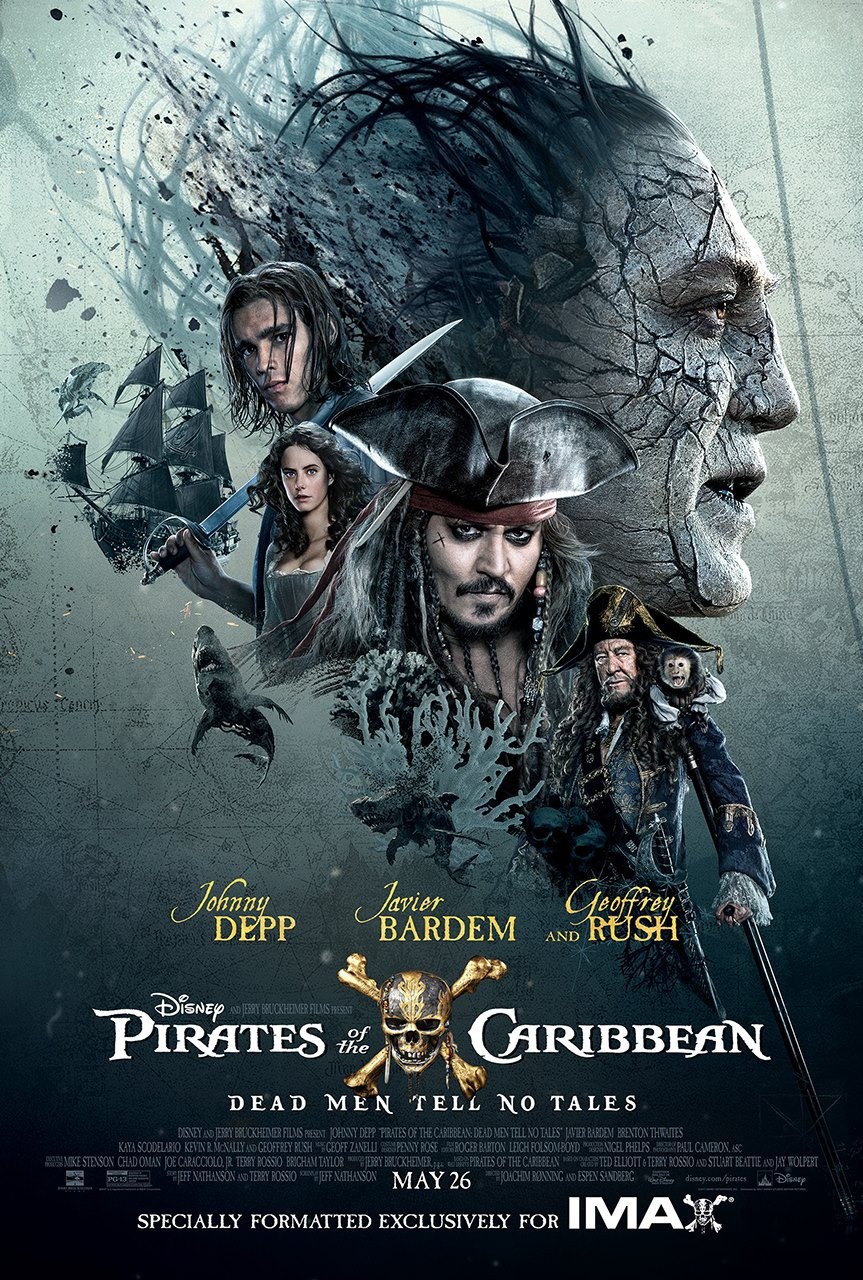
“Pirates of the Caribbean: Dead Men Tell No Tales” movie review

Of all the tales that the depths of the ocean contain, this one is quite shallow. Disney’s latest installment in the swashbuckling franchise Pirates of the Caribbean: Dead Men Tell no Tales proves that neither changing directors, writers, nor the inclusion of an undead Javier Bardem, can bail enough water out of a sinking ship. No doubt the next chapter in the life and times of Jack Sparrow was one to be anticipated by fans, but sadly the writing was not strong or developed enough to carry the waning film series. This film reminds me of the Child’s Play franchise. What??? That is likely what you’re saying. But hear me out. After the first two Chucky films, the studio realized that the series was not working as a hard horror film, so the studio went the camp route and capitalized on the ridiculousness of the characters and the situations. Dead Men Tell No Tales contains many camp elements such as completely ludicrous antics and escapes that are even too much for a Mission Impossible movie. Although there is an attempt at some closure between characters at the end of the film, it plays out as forced and on-the-nose. Still, there are moments that will mildly tug at your heartstrings during the showdown, but it’s not enough to add any dimension to this flat tale. One thing that this Pirates movie has going for it is the impressive visual effects. Both the editing and score are pretty outstanding, and certainly add to the experience of the film. However, if you watch the movie in 3D, as I did because there wasn’t a 2D option at the earliest showing, some of the magic of the undead pirates will be lost due to noticeability of editing. Over all, Disney’s Pirates of the Caribbean: Dead Men Tell No Tales is a great popcorn movie and a fun one to watch with friends or the family. Be sure to stay after the credits for a sneak peek at the next (and hopefully last) one.

Return to the swashbuckling world of the franchise inspired by the iconic Pirates of the Caribbean attraction at Disney Parks! Many years after the encounter with Davy Jones, Jack Sparrow (Depp) is being sought out by a young Henry Turner (Brenton Thwaites)–yes, that Turner. After witnessing his entire ship’s compliment slaughtered by ghost pirates led by Captain Salazar (Bardem), Turner is even more determined to find Captain Jack. Unbeknownst to Turner, Jack Sparrow’s fortune is not what it used to be. With his luck turned sour, Sparrow is captured and Turner must free him if the ghost pirates are to be stopped and the curse of Davy Jones lifted. By sheer happenstance, Sparrow is sentenced to die alongside an accused witch named Carina (Kaya Scodelario). If that wasn’t bad enough, Captain Barbosa (Rush) has been cornered by Salazar into leading him to Sparrow as well. Other than a need to find Jack, Turner, Salazar, and Carina all share a common interest in locating the trident of Poseidon. That trident is the key to unlocking the power of the ocean and breaking curses.

Like so many franchises that have come before, Disney’s Pirates of the Caribbean appears to have suffered the same fate. Although this can’t be said of every franchise, the area that fairly consistently fails to deliver is strong writing inclusive of plot and character development. Often times it seems that story is exchanged for merchandising, impressive visual effects, or pandering in longstanding franchises. After an outstanding opening sequence that instantly hooks you, the rest of the movie just plays out so paint-by-the-numbers that it becomes nearly predictable and lacks any real substance. Sometimes franchises fall into the trap of realizing that it can no longer take itself seriously and allows the camp factor to increase significantly. That is the one word that pretty much sums up this film: camp. Whether you are talking the perpetually drunk Jack Sparrow (yes, even more than usual), unbelievable escapes that defy all logic and past precedents set is previous films, or the supernatural playing off more as a joke than a serious plot device, there are many elements in this film that attempt to cover up poor writing by going for the flash in a pan approach.

One of the down sides to the recent Guardians of the Galaxy I found was the film only focusing on Acts I and III, leaving out the chunk of story development typically found in Act II. By the same token, Dead Men Tell No Tales spends most of the time in Act II, leaving Act I and again Act III to be rushed through. The common variable in both scenarios is a weak third act. To explain where I feel that this movie should have ended and the next one begin would give away a plot spoiler, so I won’t mention it. However, there is a place in this film in which there is a great opportunity to end this story on a high note of anticipation of what is to come but it just rushes through the rest of the story. Had more time been spent on developing a solid story, then this Pirates movie would definitely have turned out much better. Sadly, it seems like more time was spent in post-production and scoring the film. Certainly, the talent behind the lead characters is excellent. Perhaps the writing is poor and the screenplay was weak, but with a lead cast of Depp, Rush, and Bardem, the movie is fun to watch. And sometimes that’s all you want–a good popcorn movie.

If you ARE looking for a good popcorn movie to watch with your family or friends over the holiday weekend, then checkout Disney’s Pirates of the Caribbean: Dead Men Tell No Tales. Can’t promise that you will enjoy the story as much as the original, but you’ll still have a good time. Perhaps the sequel to this film will be stronger and pick up where this one failed to deliver.

Written by R.L. Terry

Edited by J.M. Wead

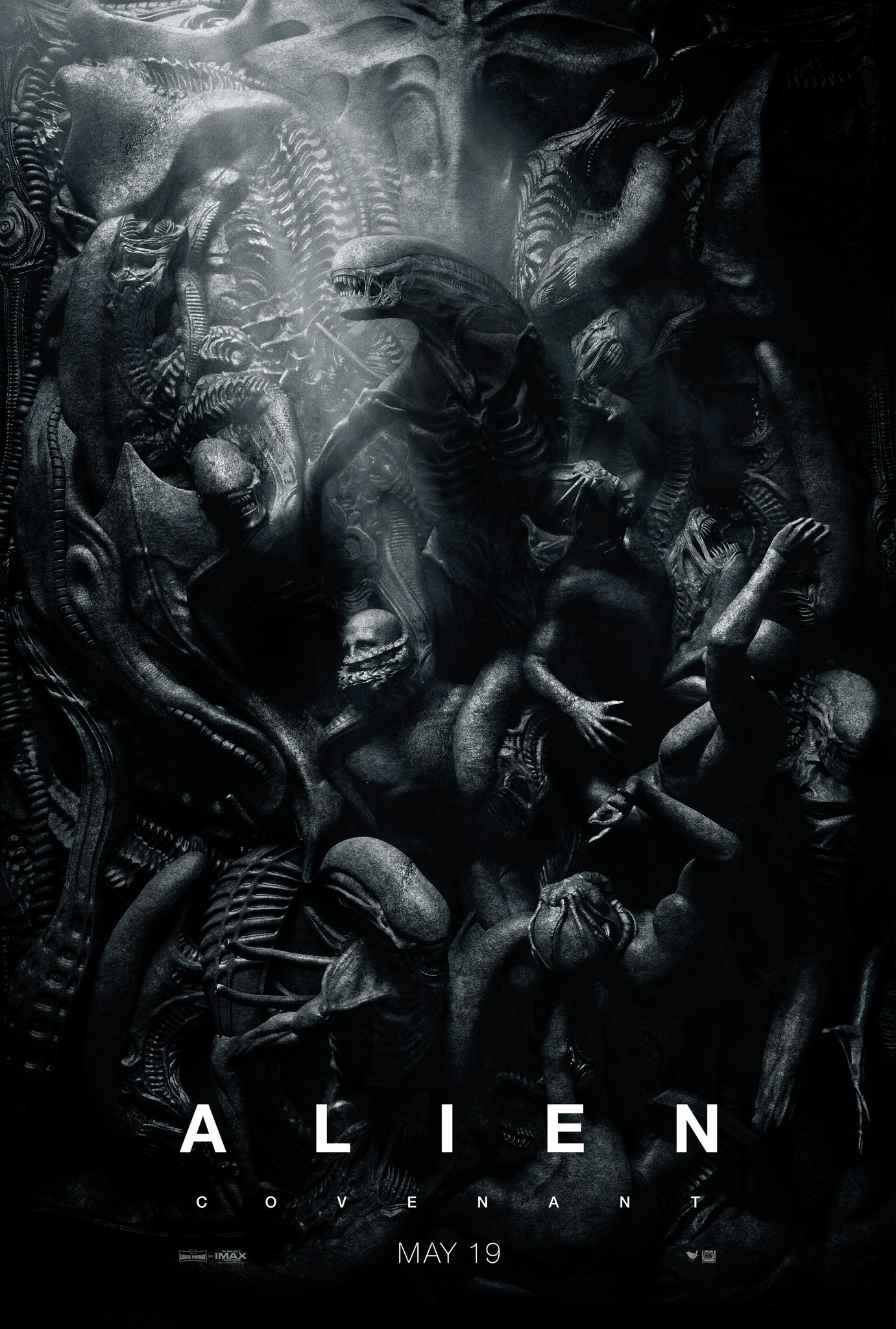
“Alien: Covenant” movie review

Alien: Covenant returns to its roots in horror. In 1979, Ridley Scott convinced audiences around the world that “in space, no one can hear you scream.” And the newest film in the line of prequels leading up to the terrifying events aboard the Nostromo, attempts to make up for the rejection of 2012’s Prometheus as a true prequel to Alien. Fortunately for fans of the franchise, Alien: Covenant is mostly successful at delivering what audiences loved about the original and missed in the subsequent Cameron and Fincher movies–the trademark horror of the xenomorph and facegrabbers. Starting off like Prometheus and finishing more like the original Alien, the newest film in the nearly 40-year-old franchise will have you screaming, cringing, and completely immersed in blood-curdling terror. That is, until you realize that only some questions from Prometheus are answered, and all new questions about events in this movie are generated and left unanswered. That appears to be Ridley Scott’s Achilles heal: always leaving more questions unanswered than providing closure or exposition, thus prohibiting the movie from being as great as it certainly had the potential to be. With one more film between this current installment and 1979’s Alien, perhaps there will be far fewer unanswered questions and provide the history for which fans are looking.

On a colonization mission, the complement of the Covenant is traveling into deep space towards a new planet that earth’s humans hope to make a new home. After encountering some severe spacial turbulence enroute to the destination, the crew of the Covenant intercept a transmission from an uncharted planet that, according to the sensors, appears to be a complete paradise. After some deliberation, it’s decided to head for this new planet. Most of the time, when something is too good to be true, it usually is. Led by the new captain Oram (Crudup) and first officer Daniels (Waterson). After an attack from an alien species, the crew is rescued by David (Fassbender), a synthetic android-like human, who is the only remaining survivor of the Prometheus expedition from some years earlier. Unbeknonst to the crew and scientists of the Covenant, they are about to come face to face with the most terrifying nightmare imaginable–make that–an unimaginable fight for survival when paradise turns to hell.

One of the first technical elements that fans of Alien will notice is the opening title sequence. It is reminiscent of the manner in which the opening credits and title of the original were revealed in the emptiness of space on screen. I appreciated this homage to the original because it set me up to prepare for an Alien movie and not a second Prometheus. Perhaps that does not seem important to non-fans; but to make a long story short, while Scott was in the conceptual phase of a sequel to Prometheus (prequel to Alien), he was told by the studio that audiences didn’t want another Prometheus–they wanted Ridley Scott’s Alien. And now the rest is history. In order to best understand the flaws of Alien: Covenant it’s necessary to understand the similar flaws of Prometheus. One of the many diegetic and technical problems with Prometheus was the fact that there was little direct connection to Alien and it felt like a whole new franchise and not an extension of the original. This lack of connection is best represented by the number of unanswered questions dwarfing the answered ones. Essentially, audiences only learned about David’s origin and, to a lesser extent, why that particular planet. But enough about Prometheus, we are here to talk Alien: Covenant.

Although vastly improved, Covenant also leaves audiences with many unanswered questions; albeit, it is successful at making up for many of the diegetic flaws of the preceding film. To get into the questions would reveal too much about the film and perhaps hint at some spoilers, so I won’t go into specifics. But enough about the flaws of this otherwise exciting and well-produced film–just know that the writing is weak but hopefully will be better in the next installment. The most impressive elements of the movie are related to the cinematography, editing, and visual effects. From the sweeping landscape shots to intimate closeups of the xenomorph and its victims, Covenant is absolutely visually stunning. There is even a mild romantic encounter between David and a member of the Covenant crew that was shot incredibly well and strategically placed in the narrative. Where the story is weak, Scott makes up for in creating an impressive cinematic experience for long-time and new fans alike. There are even shot sequences that are taken directly out of Alien. Often times, I am extremely critical of computer-generated effects and characters versus practical effects and animatronics–and for good reason–nothing can replace the way real light bounces off real objects and is really captured by the glass lenses on a camera. Furthermore, it’s rare that a character react in genuine fear to an object, villain, or murderous alien that is not really present on set. However, the combination of CGI and practical effects in Covenant is breathtaking and convincingly real. You will almost feel the facegrabber latching onto you and the xenomorph’s wet acid-breath on your skin.

Aside from the unanswered questions still residing in the minds of those who have seen the film, Covenant fails to live up to Alien in another rather conspicuous way. For everything that this film did right and make up for (in respect to Prometheus), it lacked any memorable crew members–more specifically–this film differs from Alien by not developing Dani(els) to be the strong female character that she had the potential to be. Dani could have been Covenant‘s answer to Sigourney Weaver’s Ripley in Alien. One of the diegetic elements that is most talked about and is often the topic of horror film humanities classes is the breaking of gender roles and heteronormative expectations by Ripley in Alien. Perhaps that is why Alien is almost avant-garde in the cinematic experience whereas Covenant is impressive but does not typify the art of cinematic storytelling nor contributes to groundbreaking character-types. Beyond strong female lead, the film simply fails to leave the audience with any one memorable character period. No one will be talking about any one particular character years from now. Both the unanswered questions and the lack of memorable significant characters can be traced by to one root cause: flawed writing.

If you loved the original Alien, then you will mostly enjoy Alien: Covenant. The experience is equally terrifying as it is beautiful. Whether you have seen Prometheus or not will not affect your enjoyment factor in this film. If you have seen Prometheus, then I would suggest watching the Ridley Scott short film The Crossing because it ties Prometheus to Alien: Covenant. Think of it as an extended prologue. This short film helps audiences to make the connection between the two films in hopes that it does answer some otherwise unexplained circumstances and events. After watching this film, I have an urge to rewatch the original in order to begin making those direct connections between this one and Alien. With one more film to release to finalize the events between Prometheus and Alien, I am eager to have my remaining questions answered. Bottom line: Alien: Covenant demonstrates Scott’s newfound commitment to return audiences to the space horror that makes the original so iconic.

“Guardians of the Galaxy: Vol.2” movie review

Par for the course and predictable. This movie review was written by R.L. Terry ReelView contributor and writer/producer Leon Z. Coming to you all the way from Germany where Guardians of the Galaxy Vo.2  was released last week, I thought you would be interested to hear from someone other than me this week–think of it as a fresh perspective. Meanwhile, I will be watching it in Tampa tomorrow evening at 7.

“Set to the backdrop of ‘Awesome Mixtape #2,’ Marvel’s Guardians of the Galaxy Vol. 2 continues the team’s adventures as they traverse the outer reaches of the cosmos. The Guardians must fight to keep their newfound family together as they unravel the mysteries of Peter Quill’s true parentage. Old foes become new allies and fan-favorite characters from the classic comics will come to our heroes’ aid as the Marvel cinematic universe continues to expand.“
-Marvel Studios

Guardians of the Galaxy Vol. 2 is a bit of a disappointment when compared to the first one. This might be because the novelty factor the first one had for being a funny superhero movie is gone, or because it’s just very predictable and lacks excitement and emotional engagement. Pretty much all of the CGI action extravaganzas fall flat because there is never any real danger for the characters so the viewer does not care about them. There were times in this movie where the action was pretty much all CG, which I didn’t care much about since nowadays pretty much everything can be done with a computer but audiences don’t seem to get enough of it. But fortunately, the filmmakers are not overly reliant on those scenes. The movies strong points are its humor and character development. Although most of the setup and payoff jokes are very predictable, there are still many jokes that hit. Since the movie is primarily about Peter “Starlord” Quill meeting his father, there is actually some character development; and not just for him, but also for the other guardians–well except for Groot, Rocket and Drax so basically just Gamora, but some secondary characters from the first one like Yondu and Gamora’s sister, Nebula an although some of it is clichéd it still works, mostly.

Most of the emotional moments are genuine, but some of them are a little to on the nose.

The movie also introduces new secondary characters like Peters appropriately named father Ego and his companion Mantis, which are moderately interesting, Mantis probably more so than Ego because her interactions with Drax, which cause a lot of laughter.

What drags the movie’s quality down significantly is that it is just so predictable and cliché, which makes you care a lot less because you already know what will happen most of the time.

Overall, I would recommend this movie to Marvel fans and casual moviegoers; but for more hardcore cinephiles, this movie–if at all–is a one time watch.

Written by Leon