Cinema is big. It’s the Oscars that got small.

From the Big Screen to the Smallest: The Oscars and the Final Lament for Cinema
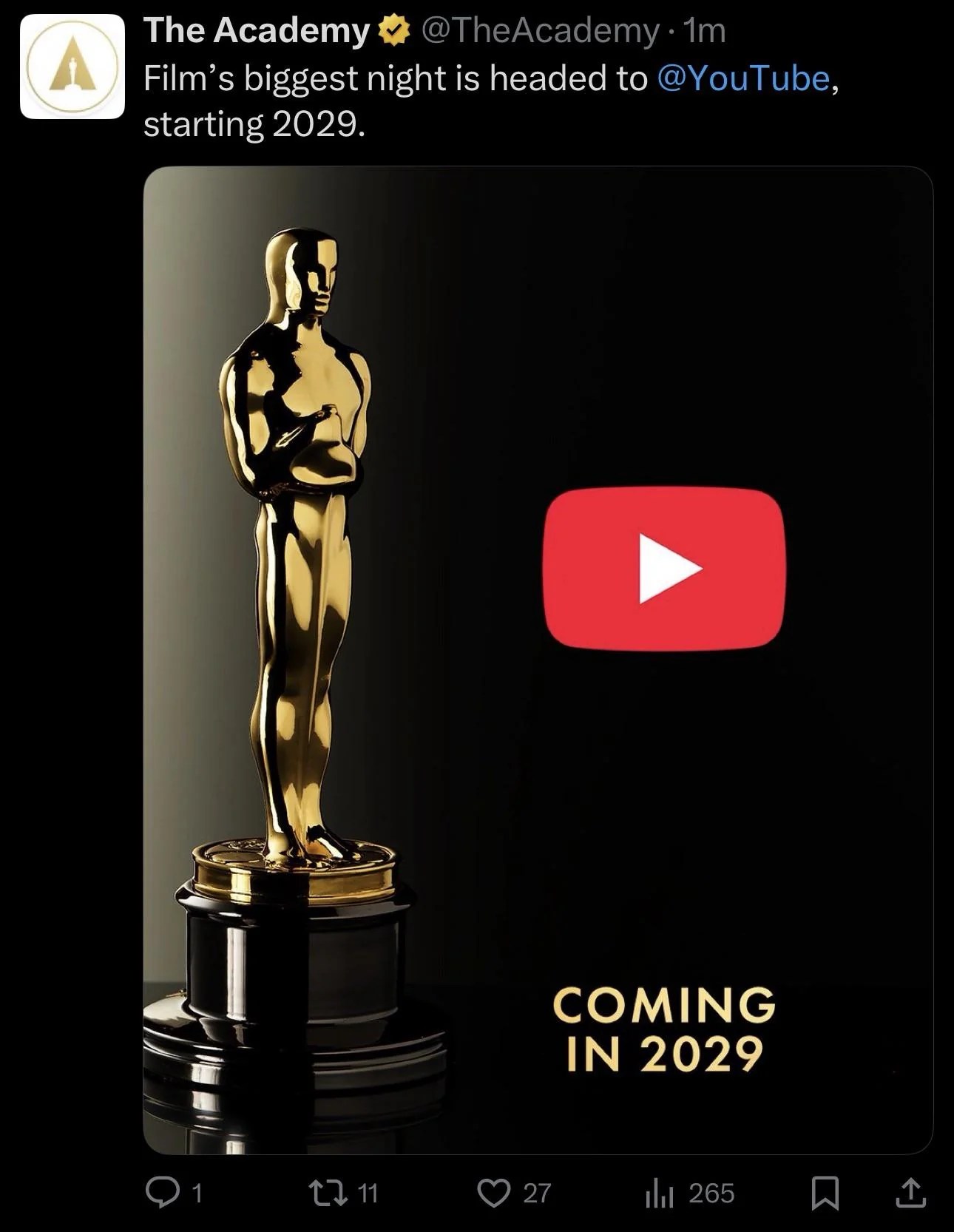
In 1929, the Academy Awards were born alongside the consolidation of cinema as the defining art form of the twentieth century. The Oscars did not merely honor motion pictures; they sanctified the big screen as a cathedral of light where stories were projected larger than life, and where audiences gathered together in reverent silence to be transformed. Nearly a century later, the announcement that the Oscars will move to YouTube in 2029 feels less like an adaptation and more like a capitulation. It’s a moment of inflection that reads, unmistakably, as a eulogy.

Anyone who has followed my work on Twitter or my blog for any length of time knows that I effectively gave up on the Oscars years ago. Even so, this announcement demands cultural analysis and reflection on its deeper implications. One needn’t be a devoted viewer of the ceremony to recognize the ongoing erosion of cinema itself; disengagement does not preclude clear sight, and distance often sharpens it.

There is a morbid irony in a ceremony created to celebrate cinema’s grand scale choosing to live on the smallest screen possible. The Oscars migrating to YouTube is not simply a platform change; it is a symbolic reversal of values. The institution that once affirmed spectacle, patience, and collective experience now aligns itself with the very medium that played a decisive role in cinema’s metaphoric death—fragmented attention, algorithmic taste-making, and content flattened into disposable scrolls. What was once king has voluntarily donned the motley of the court jester.

For decades, the Oscars functioned as a kind of cultural mass. Even when ratings declined, the ceremony retained its claim to seriousness. It insisted—sometimes stubbornly—that movies mattered, that craft mattered, that the labor of hundreds could still culminate in something worthy of ritual. To move this rite to YouTube is to concede that cinema no longer warrants ceremony at all. It is now content, indistinguishable from reaction videos, vlogs, and monetized outrage. The awards will play not to the gods of light and shadow, but to the lowest common denominator of engagement.

This decision cannot be disentangled from the broader arc traced in the manuscript on which I am presently writing Are You Still Watching? Solving the Case of the Death of Cinema, which is my followup book to Monsters, Madness, and Mayhem: Why People Love Horror releasing in October 2026. The internet did not merely change distribution; it reprogrammed desire. It replaced anticipation with immediacy, reverence with irony, and stars with personalities. The movie star—once a distant, luminous figure whose very remoteness fueled myth—has been rendered obsolete by constant access (except for you Tom Cruise–you are the last remaining movie star in the classical sense). When everyone is visible at all times, no one can remain larger than life. In this sense, the internet did not just kill the movie star; it dismantled the conditions required for stardom to exist.

The Golden Era understood something we have since forgotten: limitation creates meaning. The big screen mattered because it was rare. The theatrical experience mattered because it demanded surrender—of time, of attention, of comfort. The Oscars mattered because they crowned achievements that could not be reduced to metrics. Box office was discussed, but it did not dictate value. Craft, risk, and ambition still held currency. One cannot imagine the architects of Hollywood—those who built studios, nurtured stars, and believed in cinema as a national dream—viewing this moment without despair. The roll call of names etched into Oscar history now echoes like a rebuke.

The move to YouTube completes a long erosion. First came the shrinking theatrical window, then the dominance of streaming, then the rebranding of films as “content.” Each step was defended as pragmatic, inevitable, even democratic. Yet inevitability is often the language of surrender. By placing the Oscars on YouTube, the Academy signals that it no longer believes cinema deserves its own stage—literal or metaphorical. It accepts, finally, that movies are just another tile in the feed.

What makes this moment especially tragic is that it arrives cloaked in the rhetoric of accessibility. YouTube promises reach, youth, relevance. But to what end and at what cost? Cinema was never meant to be optimized for virality. Its power lay in duration, in immersion, in the audacity to ask audiences to sit still and feel deeply. An awards show on YouTube does not elevate cinema to the digital age; it drags cinema down to the logic of the internet, where attention is fleeting and meaning is provisional. That which is required by the desired algorithm will be that which dictates the ceremony and pageantry thereof.

And yet, this lament is not without pride. There was a time when this industry truly was an industry of dreams. When the Oscars crowned films that expanded the language of the medium. When a win could alter a career not through branding, but through trust—trust that audiences would follow artists into challenging territory. That history cannot be erased by an algorithm, even if it can be buried beneath one.

If the Oscars moving to YouTube does not signal the death of cinema, it is difficult to imagine what would. It is the final nail not because it kills something vibrant, but because it seals a coffin long prepared. What remains will continue to exist—films will still be made, awards will still be handed out—but the animating belief that cinema is a singular, communal art form has been surrendered.

The tragedy is not that the Oscars will stream on YouTube. The tragedy is that, in doing so, they admit they no longer know what they are mourning.

This loss of self-knowledge did not arrive overnight. Long before the platform shift, the ceremony began to erode its own authority through an increasing embrace of socio-political posturing by hosts and award recipients alike. What was once a night dedicated, however imperfectly, to the celebration of films, performances, and craft gradually transformed into a sequence of soapboxes. The Oscars mistook moral exhibitionism for relevance, and in doing so alienated a broad public that tuned in not for lectures, but for an affirmation that movies themselves still mattered.

This is not an argument against artists holding convictions, nor a denial that cinema has always intersected with politics. Rather, it is an indictment of a ceremony that lost the discipline to distinguish between art and advocacy. When acceptance speeches routinely overshadowed the work being honored, the implicit message was clear: the films were secondary. Viewers responded accordingly. Ratings declined not merely because of streaming competition, but because the ceremony no longer respected its own premise. Had hosts and winners remained anchored in the films—celebrating storytelling, performance, direction, and the collaborative miracle of production—the Oscars might have retained their standing as a cultural commons rather than a partisan spectacle.

In surrendering the focus on cinema itself, the Academy weakened the very case for its continued relevance.

Progress is often invoked as an unqualified good, but history suggests it is more accurately understood as an exchange—one that invariably involves loss. Sometimes that “loss” isn’t’ felt immediately, but there is inevitably some mild, moderate, or signifiant loss somewhere. Every cultural advance carries a cost, and the measure of true progress lies in whether what is gained outweighs what is surrendered. In the case of the Oscars, the pursuit of modernity, relevance, and moral signaling came at the expense of gravitas, neutrality, and shared cultural meaning. What was gained—momentary applause within narrow circles, fleeting relevance in the news cycle—proved insufficient compensation for what was lost: broad public trust, ceremonial dignity, and the sense that this night belonged to everyone who loved movies, not just those who spoke the loudest.

When institutions confuse change with improvement, they often wake to find that they have survived only in form, not in spirit.

Taken together, the Oscars decline follows a macabre logic—a ceremony founded to exalt scale, craft, and collective experience gradually surrendered its authority by de-centering movies themselves—first through moral grandstanding, then through technological appeasement, and finally through full assimilation into the internet’s attention economy. Each step was justified as necessary, inclusive, or inevitable. Yet the cumulative effect was corrosive. The Oscars did not lose relevance because audiences abandoned cinema; audiences abandoned the ceremony because it no longer stood for cinema as something distinct, demanding, and worthy of reverence.

What remains is a hollowed-out ritual, stripped of its gravitational pull, migrating to YouTube not as a bold reinvention but as an admission of defeat. The move completes the journey from cathedral to feed, from shared cultural moment to algorithmic afterthought. It confirms that the Academy has chosen survival at the cost of meaning—and in doing so, has preserved the shell of the institution while relinquishing its soul.

Gloria Swanson’s Norma Desmond, reflecting on the industry’s changing fortunes, once delivered an epitaph that now feels uncomfortably prophetic: “I am big. It’s the pictures that got small.” A century after the birth of the Oscars, her words resonate with renewed clarity. Cinema did not shrink because audiences demanded less; it shrank because its stewards accepted less.

The Oscars’ migration to the smallest screen is not progress; it’s the final confirmation that something vast, communal, and luminous has been allowed to diminish, and that what replaced it was not worth the cost. A ceremony that no longer centered movies should not be surprised when audiences stopped gathering to watch it. The move to YouTube, then, feels less like a sudden betrayal and more like the logical endpoint of a long retreat: from celebration to commentary, from reverence to rhetoric, from a shared night at the movies to just another argument in the feed.
Ryan is the general manager for 90.7 WKGC Public Media and host of the show ReelTalk “where you can join the cinematic conversations frame by frame each week.” Additionally, he is the author of the upcoming film studies book titled Monsters, Madness, and Mayhem: Why People Love Horror. After teaching film studies for over eight years at the University of Tampa, he transitioned from the classroom to public media. He is a member of the Critics Association of Central Florida and Indie Film Critics of America. If you like this article, check out the others and FOLLOW this blog! Follow him on Twitter: RLTerry1 and LetterBoxd: RLTerry
OutFoxed: Exploring the Effects of the Disney-Fox Acquisition

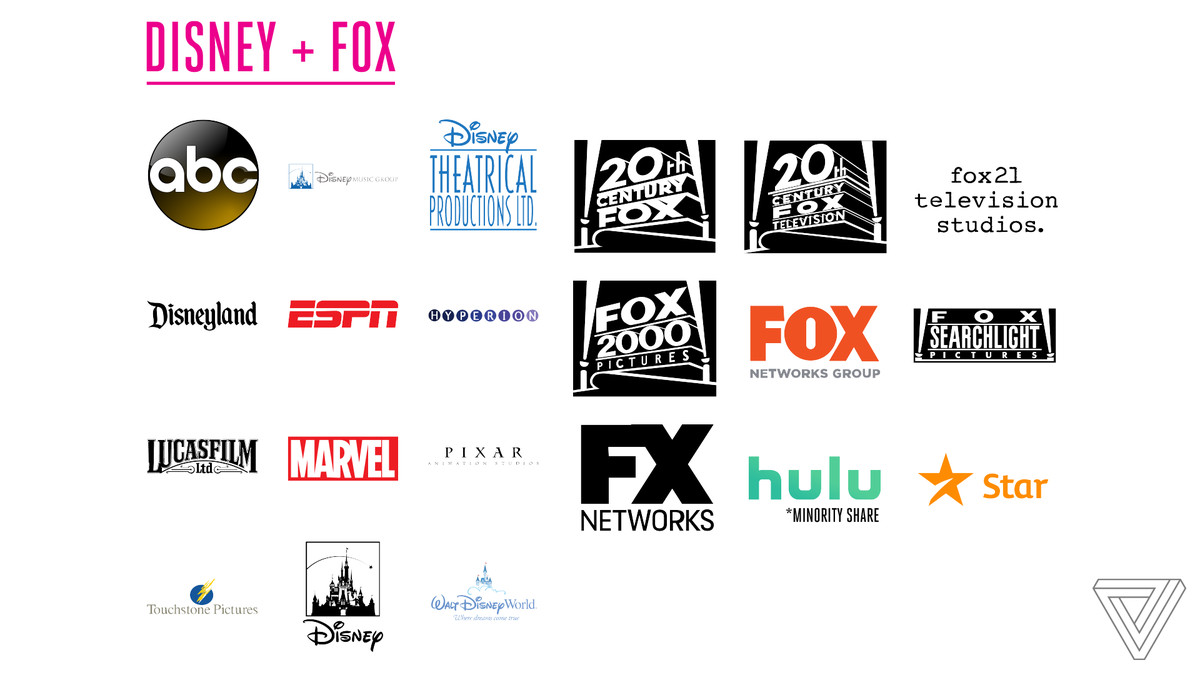
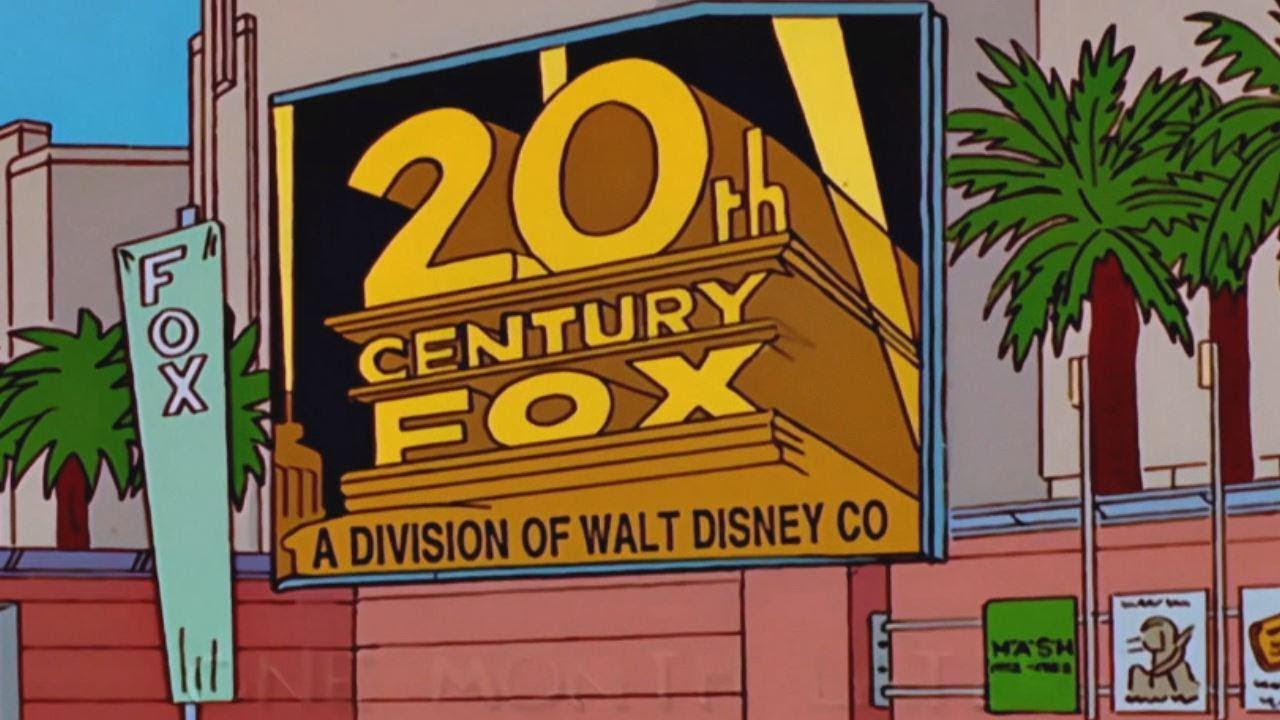
The Simpsons predicted it nearly twenty years ago, but it’s now a reality. Last week Comcast (parent company to NBC Universal) conceded victory to The Walt Disney Company for the acquisition of most of 21st Century Fox. This bidding war has been closely followed over the months, however, the war has ended and to the victor go the spoils. Today, shareholders approved the acquisition. While the broadcast channel, news, and sports will be absorbed by NewsCorp, most of the Cable/TV, Hulu, and cinema IPs will now be owned by Mickey Mouse including American Horror StoryX-MenFamily Guy, Alien, Halloween, and Deadpool, several cable/satellite channels, and more. While Disney theme park enthusiasts and MCU fanboys and girls out there are, by in large, celebrating this news, there is a lot more at stake that may alter the landscape of cinema and theme parks. Furthermore, the recent AT&T-TimeWarner and Disney-Fox deals may affect the rate at which independent filmmakers can secure distribution for their films or sell/option screenplays to producers. The world of media and entertainment is rapidly changing, but all these changes may not be for the betterment of society.

It’s not everyday that a major news story falls within my niche area of expertise on media conglomerates with major investments in themed entertainment and cinema, but this is definitely one that does. During graduate school at the preeminent University of South Florida, I studied the convergence of cinema and theme parks. This empirical study (available on Amazon) analyzed the relationship between motion pictures and theme parks/attractions as it pertained to the media holdings companies that make decisions that affect both their theme park and cinema divisions. A predictable model for creative design was produced for companies that have investments in both, are the licenser, or the licensee. Although my areas of expertise on theme park and cinema studies can be pulled on often when talking about one and/or the other, this story gets to the heart of my thesis because we are dealing with not only two, but three companies. Three? Yes. Disney and Fox are obvious, but NBC Universal may also be effected since it licenses Marvel (X-Men and Fantastic 4) and Fox (American Horror Story, Simpsons, and more) IPs for its parks. Spiderman belongs to Sony, but we won’t get that deep into this issue. With lots of IPs moving ownership and with a mostly vertically integrated company absorbing a more horizontally integrated company, there are positive and negative effects that concern producers, screenwriters, attraction designers, and others in motion picture, “television,” live entertainment, and theme parks. And not only those of us who work in showbusiness (live themed/family entertainment, here), but the fans too.

Corporate monopoly is the enemy of creativity and variety. This deal, which is one of the biggest film/media deals ever, has far reaching effects upon the industry. Some may even argue that it has danger written all over it. If there wasn’t already a rigid oligopoly amongst the studio/distribution companies, there will be now. The lion’s share of the cinematic marketplace is now controlled by Disney, TimeWarner (Warner Bros.), and Comcast (Universal), with Sony (Columbia) and Viacom (Paramount) bringing up the rear. Five. That’s right. Five companies essentially determine the future of the industry, and control the majority of the motion pictures released in theaters and the content on cable television (and the streaming services that access it). It’s a mirror image of the 1940s. Instead of The Big Five and The Little Three, we have The BIG Three and the Little Two. In the mid-20th century when the U.S. government cited anti-trust issues with the vertically structured Hollywood entertainment business model, the forced the studios to divest themselves of movie theatres, longterm talent contracts, and more in order to level the playing field for competition and creativity to thrive. The decision to end the process of being vertically integrated is known as The Paramount Decision (U.S. vs Paramount Pictures, 1948). From the big screen to the small screen, from screen to theme park, you will notice the effects of this merger. When one company controls the majority of any marketplace, it usually spells disaster for the consumer; furthermore, it means that there will be a primary gatekeeper in future artists getting his or her work out there.

Let’s explore The Paramount Decision [(U.S. V. PARAMOUNT PICTURES, INC., 334 U.S. 131 (1948)] a little more. Firstly, prior to the Paramount Decision, the motion picture industry was controlled by a few companies. Secondly, the studio owned the facilities, production companies, staff (under long-term contracts), the films themselves, distribution channels, and the movie theaters. When the studios were growing so large that they began infringing upon the free marketplace, the US Government forced the (then) eight major/minor studio players to end the practice of block booking (meaning, films would now be sold on an individual basis), divest themselves of their respective theatre chains (sell them off), and modify the practice of long-term employee contracts (though, this would continue until the 1960s). This marked the beginning of the end of the Studio System, AKA Hollywood’s decentralization. There are many similarities between the situation in the late 1940s and today. In fact, it’s a little worse today because the industry is mostly controlled by five (instead of eight) companies, and these companies have heavy investments in streaming and television programming.

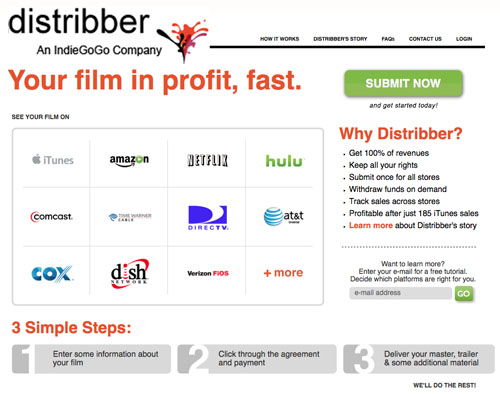
Essentially, the number of gatekeepers is shrinking. The streaming service landscape is also changing because Disney’s acquisition of Fox means that Disney now has the controlling share of the streaming giant Hulu. It’s entirely probable that independent production companies and filmmakers will find it more difficult to get their content out to the public on a well-known platform. Fortunately, Amazon still allows for self-publication but Disney’s control of Hulu will probably see fewer indie films added in the future. The media conglomerates are growing so large that if you’re not in their circle, it will be increasingly difficult to secure a distribution deal for theatrical or streaming. For many, it will feel like there are only 2-3 primary companies controlling the majority of programming on TV and a few more companies controlling a large portion of the movies that get released in movie theaters. Independent filmmakers will have to hustle and work exponentially smarter to navigate the film marketplace. It may get to the point that theatrical releases are no longer realistic or viable for small to medium sized companies because of the stiff competition for the few massive media giants pumping out blockbuster after blockbuster. Conventions like the American Film Market and companies like Distribber will become even more important for indie filmmakers.

The problem with the current state of capitalism in the United States isn’t worries of monopolies but oligopolies (monopolistic practices between a few firms that essentially control a market). Certainly the state of the film industry already lends itself to an oligopoly because of the few companies; but the buyout of 21st Century Fox by The Walt Disney Company greatly increases this issue of a blatant oligopoly. If a monopolist (in many other industries) did what Disney has done, neither the public nor the government would stand for it; but because it’s Disney, and because it’s the film industry, most of the general public is unaware of the negative consequences of such a buyout and therefore only focus on the X-Men being added to the MCU and the trademark trumpet fanfare preceding the opening title sequence of the Star Wars movies once again. Technically speaking, oligopolies are not illegal nor is monopolistic competition; however, this can be a slippery slope towards stifling creativity or making it increasingly difficult to break into any given industry as a newly emerging competitor. Incidentally, monopolistic competition causes the variety or level of differentiation of similar products (i.e. moves and TV shows) to become less heterogeneous and nearly come across as homogenous.

When a strong oligopoly exists within a specialized industry (for our purposes, media & entertainment), one of the side effects is a concept known as parallel exclusion. This concept can be described as the collective efforts of the few industry leaders who essentially act as the main gatekeepers to prevent or make it difficult for would-be newcomers to enter the arena. Parallel exclusion is nothing new, and has been in the news as recently as the last 2-3 decades within the airline and credit card industries. Throughout the eighties and nineties, Visa and MasterCard essentially blacklisted any bank that set out to do business with AmEx. Thankfully, the U.S. Justice Department stepped in when the manner in which the exclusionary rules were written crossed legal, fair trade boundaries. There were similar issues within the airline industry as well. When a few companies control the content or services in the marketplace, antitrust issues are raised

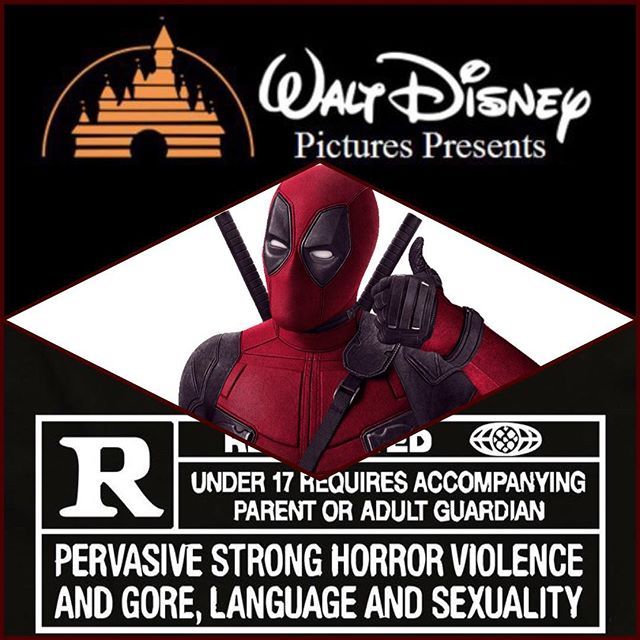
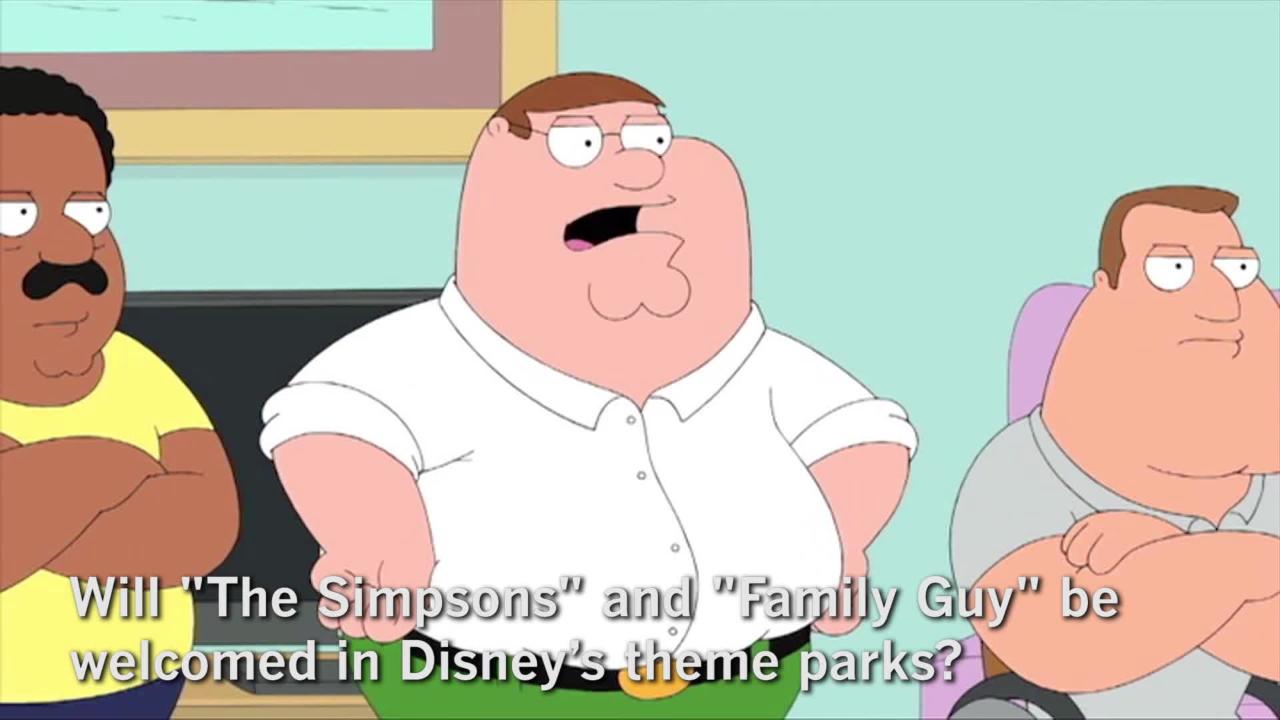
Although we are not technically facing a monopoly with the Disney-Fox acquisition, we are looking at an abuse of power that may lead to anticompetitive conduct. If nothing else, the consumer should be worried about having fewer options for programming. Not that the number of programs or movies will shrink, but there will be little difference between what is released under the Disney banner and the Fox name (if it’s still even called that). In a deal like this, it’s the consumer who gets the short end of the stick. Examples of this may be found in future Simpsons and Family Guy episodes. One of the consistently running lines of jokes are at the expense of The Walt Disney Company. Jabs at Disney can also be found in Deadpool. It will not surprise me that the humor of Simpsons, Family Guy, and Deadpool will change to no longer include jokes at the expense of the hand that now feeds them. If, through contract negotiations, shows and movies like these moved to a different company, then the humor that we have come to know and love may largely be unaffected. As it stands, we will likely see fewer (if any at all) Disney jokes in the aforementioned. These are just examples of the larger problem a few companies controlling the majority of media and entertainment content. The consumer would be wise to the possibility of a lack of competition between brands thus mitigating innovation, variety, and creativity. Innovation is often the product of healthy competition in a free marketplace just as necessity is the mother of invention.

Because the Walt Disney Company is primarily focussed on producing the biggest movies possible (after all, they made the majority of the highest grossing films last year and this), the mid-budget dramas and comedies that used to thrive in Hollywood–you know, the ones that cause you to cry and laugh–could dwindle in number–there now may be little room for them to make their respective ways into theaters with Disney controlling a significant percentage of the industry. Of course, Disney is not alone. With the recent acquisition of TimeWarner by AT&T, both Disney and AT&T are now at the top of the food chain, followed closely by Comcast and then the rest of the media companies who are small in comparison. What we are essentially talking about here are entertainment corporate monoliths, the likes of which, have never been seen before. There is one key difference in the Disney-Fox and AT&T-TimeWarner deals, and one that gives AT&T a slight advantage over Disney and deeper pockets. Disney does not own the hardware in the ground that serves as the conduit for your internet service provider (or ISP) but AT&T does. Not only does AT&T control a huge share of the media/entertainment marketplace, but it also owns a significant share of the technology that brings entertainment content to your home and mobile devices including cable, satellite services, and wireless services. Issues of net neutrality are more important now than ever because the pool of competition is shrinking in number but growing in sheer size.

Cinema and TV are not the only arms of the media and entertainment industry that will feel the effects. Major theme parks, the cash cows of media conglomerates, will change as well. How exactly is this deal going to effect the theme park industry? The short answer is, it is too early to tell; however, we can explore this topic nevertheless. If you’ve been to Universal Orlando resort, you’ve undoubtedly noticed that Marvel and the X-Men have an entire island AND the Simpsons is a land in and of itself. While I am not aware of the license agreement details with both IPs, I can tell you that typically if the ownership of an IP changes hands during the lifetime of license agreement, the agreement is grandfathered in for the length of time that is left in the contract. There are sometimes caveats to that. Often a company that holds the license (for purposes of our example)–a license that belongs to someone different than the original licenser–for a theme park attraction, the licensee cannot make any significant modifications to the look, add to the established attractions, or allow the image to fall into disrepair. If significant changes are made to the look or if the attraction falls into disrepair or if additions are made under the old agreement without consent from the new licenser, the agreement could be nullified. There is a lot more to copyright and IP law than what I’ve outlined, but I wanted to hit some main points on this issue but keep it as simplified as possible. Universal Parks may have to rebrand existing Marvel and Fox attractions as another IP within its library or license an IP from Paramount, MGM, Sony, or another media conglomerate. Presently, the licensing agreement between Universal and now Disney-Fox (Marvel, etc), should stand for now. Regarding the addition of new IPs as replacements, fortunately, DreamWorks and Nintendo give NBC-Universal plenty of latitude for creativity.

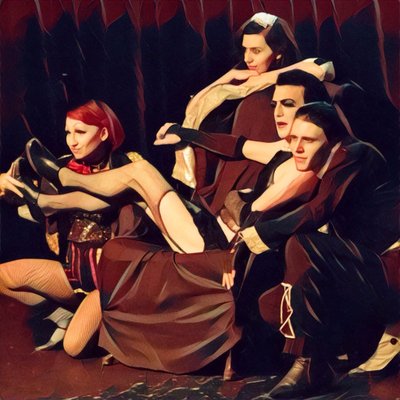
Suffice it to say, it is reasonable to conclude that Universal Parks will have to eventually remove the Marvel and Fox properties from the parks because not being able to significantly modify or add to the offerings will become too burdensome. Universal’s Halloween Horror Nights will likely also see some changes in the future because it may become more difficult to license Fox properties for houses and scare zones as Universal and Disney are direct competitors in themed entertainment. This includes American Horror Story, Alien, Predator, and Halloween. In terms of how Disney parks will benefit after this deal, the theme park division will save money on Pandora: the World of Avatar because it will no longer need to be licensed from Fox because Disney now owns the Avatar movies. Eventually, a significant Marvel presence will be felt at Disney World and any loose ends in the ownership of Star Wars will be nullified because Disney now owns the original trilogy, and not just the distribution rights. The ability to enjoy shadow casts of the iconic cult classic Rocky Horror Picture Show may also be effected because it is not unrealistic to think that Disney may crack down on RHPS troops around the country or make the licensing fees so high that many troops may not be able to afford to continue with the live performances. These weekly or monthly performances of troops around the country are an important part of the visual and performing arts. Speaking of which, if you’re in the Orlando area, checkout the Rich Weirdos at Universal Studios CityWalk and if you’re in Tampa, checkout Hell on Heels at the Villagio Cinema and Bar.

While the full effects of the recent mega media deals won’t be felt for a while, it is important to be aware of how acquisitions can effect cinema, TV, theme parks, and independent filmmakers. Corporate oligopoly is a slippery slope that can lead to anticompetitive conduct, fewer options, and become the enemy of creativity and variety.

Don’t Pass GO, Don’t Collect Your Oscar

Corporate monopoly is the enemy of creativity and variety. The biggest news in entertainment this week was the talks between Disney and Fox to sell most of 21st Century Fox to The Walt Disney Company. Whether the talks are still going on behind closed doors or not presents a fascinating topic to discuss! This deal, which would be the biggest film/media deal ever, has far reaching effects upon the industry. Some may even argue that it has danger written all over it. If there wasn’t already a rigid oligopoly amongst the studio/distribution companies, there will be if this goes through. Should this go through without the government swooping in to save the day with monopoly claims in the vein of the historic Paramount Decision, the lion’s share of the cinematic marketplace would be controlled by Disney, TimeWarner (Warner Bros.), and Comcast (Universal), with Sony (Columbia) and Viacom (Paramount) bringing up the rear. Five. That’s right. Five companies would essentially determine the future of the industry, and control the majority of the motion pictures released in theaters and the content on cable television (and the streaming services that access it). It’s a mirror image of the 1940s. Instead of The Big Five and The Little Three, we have The BIG Three and the Little Two.

From the big screen to the small screen, you will notice the effects in the programs you watch. When one company controls the majority of any marketplace, it usually spells disaster for the consumer; furthermore, it means that there will be a primary gatekeeper in future artists getting his or her work out there. Not to mention that the programming on FX and other Fox (non-broadcast) subsidiaries could begin to gradually feel and look more like ABC programming. Could this put shows like The Simpsons and Family Guy on an endangered species list of sorts? Not right now. The deal, in off-and-on talks, would sell off 21st Century Fox (movie studios) and not Fox or Fox Sports (an acquisition of that sort would not be permitted because it WOULD be illegal). So, even if this buyout were to happen, The Walt Disney Company would still continue to be the brunt of many jokes on The Simpsons and Family Guy. A buyout could mean, however, that program options will seem less varied and just more of the same ABC-schlock that already pervades the bandwidth. The two companies that have the most TV programming are Fox and Disney, with Sony (CBS), Viacom (non-broadcast Nickelodeon), Comcast (NBC), and TimeWarner (CW) trailing in original programming. That being said, TimeWarner has done very well with The CW, and I hope it continues to churn out programs such as Vampire Diaries, Supernatural, Riverdale, etc.

Beyond the negative impacts on content, which, in all honestly, can be quite subjective in nature, are there legal or ethical implications here? Is there perhaps a past precedent that could be used in the courts to stop such a buyout (or sellout rather–Fox)? Let’s look at the most famous suit brought against the major motion picture studios: The Paramount Decision [(U.S. V. PARAMOUNT PICTURES, INC., 334 U.S. 131 (1948)]. Prior to the Paramount Decision, the motion picture industry was controlled by a few companies that were heavily vertically integrated. The Studio owned the facilities, production companies, staff (under long-term contracts), the films themselves, distribution channels, and the movie theaters. When the studios were growing so large that they began infringing upon the free marketplace, the US Government forced the (then) eight major/minor studio players to end the practice of block booking (meaning, films would now be sold on an individual basis), divest themselves of their respective theatre chains (sell them off), and modify the practice of long-term employee contracts (though, this would continue until the 1960s). This marked the beginning of the end of the Studio System, AKA Hollywood’s decentralization. There are many similarities between the situation in the late 1940s and today. In fact, it’s a little worse today because the industry is mostly controlled by five (instead of eight) companies, and these companies have heavy investments in streaming and television programming.

The problem with the current state of capitalism in the Unites States isn’t worries of monopolies but oligopolies (monopolistic practices between a few firms that essentially control a market). Certainly the state of the film industry already lends itself to an oligopoly because of the few companies; but the buyout of 21st Century Fox by The Disney Company would greatly increase this issue of a blatant oligopoly. If a monopolist (in many other industries) did what Disney is doing, neither the public nor the government would stand for it; but because it’s Disney, and because it’s the film industry, most of the general public is unaware of the negative consequences of such a buyout. Technically speaking, oligopolies are not illegal nor is monopolistic competition; however, this can be a slippery slope towards stifling creativity or making is increasingly difficult to break into any given industry as a newly emerging competitor. Incidentally, monopolistic competition causes the variety or level of differentiation of similar products (i.e. moves and TV shows) to become less heterogeneous and nearly come across as homogenous. For many, it will feel like there are only two primary companies controlling the majority of programming on TV and a few companies controlling a large portion of the movies that get released in movie theaters.

When a strong oligopoly exists within a specialized industry (for our purposes, media & entertainment), one of the side effects is a concept known as parallel exclusion. This concept can be described as the collective efforts of the few industry leaders who essentially act as the main gatekeepers to prevent or make it difficult for would-be newcomers to enter the arena. Parallel exclusion is nothing new, and has been in the news as recently as the last 2-3 decades within the airline and credit card industries. Throughout the eighties and nineties, Visa and MasterCard essentially blacklisted any bank that set out to do business with AmEx. Thankfully, the U.S. Justice Department stepped in when the manner in which the exclusionary rules were written crossed legal, fair trade boundaries. There were similar issues within the airline industry as well. When a few companies control the content or services in the marketplace, antitrust issues are raised.

Although we are not facing a technical monopoly with the possible acquisition of Fox by Disney, we are looking at an abuse of power that leads to anticompetitive conduct. If nothing else, the consumer should be worried about having fewer options for programming. Not that the number of programs or movies will shrink, but there will be little difference between what is released under the Disney banner and the Fox name (if it’s still even called that). In a deal like this, it’s the consumer who gets the short end of the stick. The consumer would be wise not to give Disney a pass just because there are a small group of big film studios instead of just one. While Marvel fans may be excited that the X-Men can join the MCU (Marvel Cinematic Universe), there is the possibility of a lack of competition between brands thus mitigating innovation and ingenuity. Competition is the mother of innovation just as necessity is the mother of invention.

Because the Walt Disney Company is primarily focussed on producing the biggest movies possible (after all, they made five of the 10 most successful films last year), the mid-budget dramas and comedies that used to thrive in Hollywood–you know, the ones that cause you to cry and laugh–would dwindle in number–there would be little room for them to make their respective ways into theaters in a predominantly Disney controlled industry. What we are essentially talking about here is a corporate cinematic monolith, the likes of which, has never been seen before.

Written by R.L. Terry

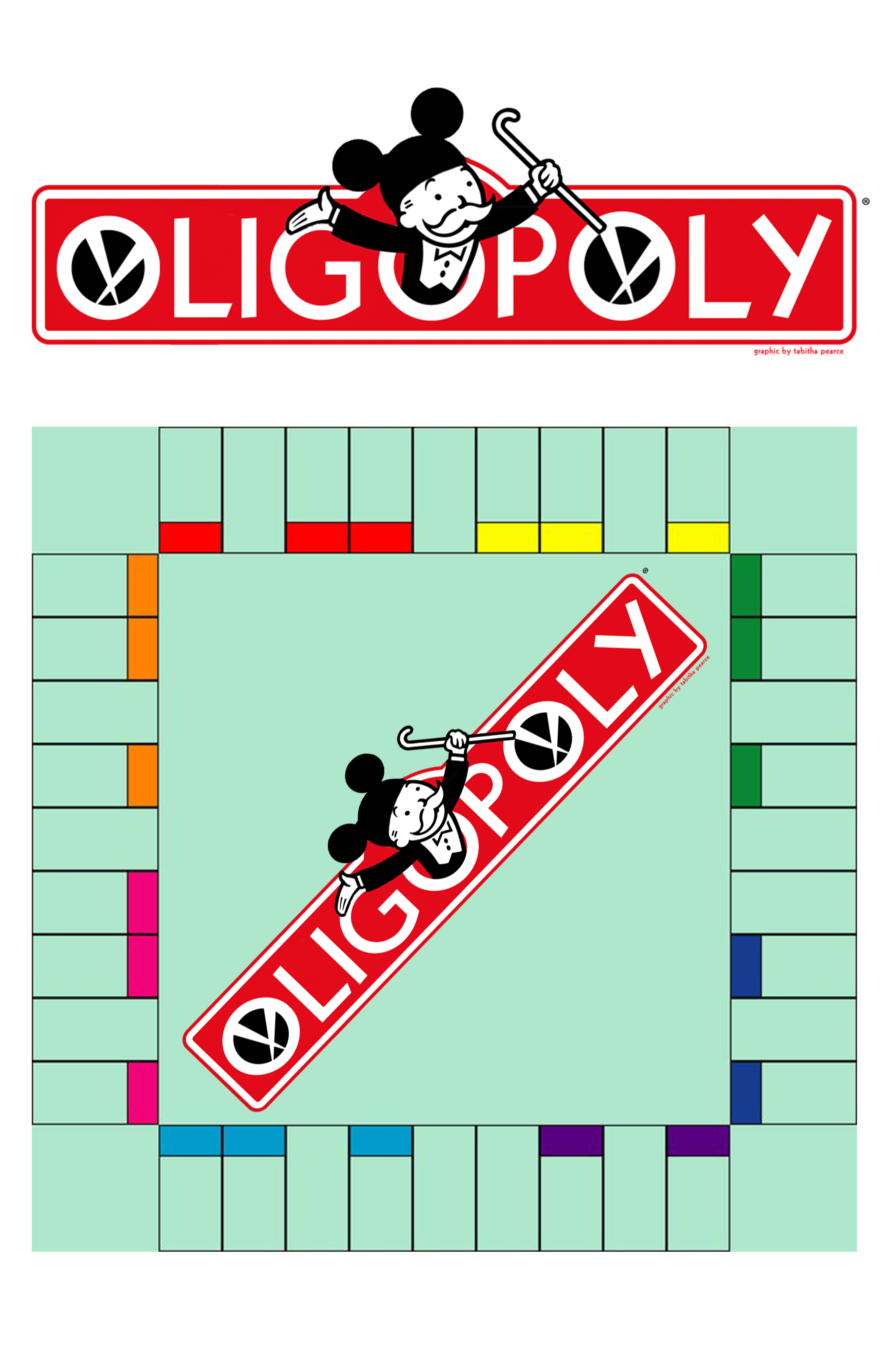
Graphic by Tabitha Pearce