
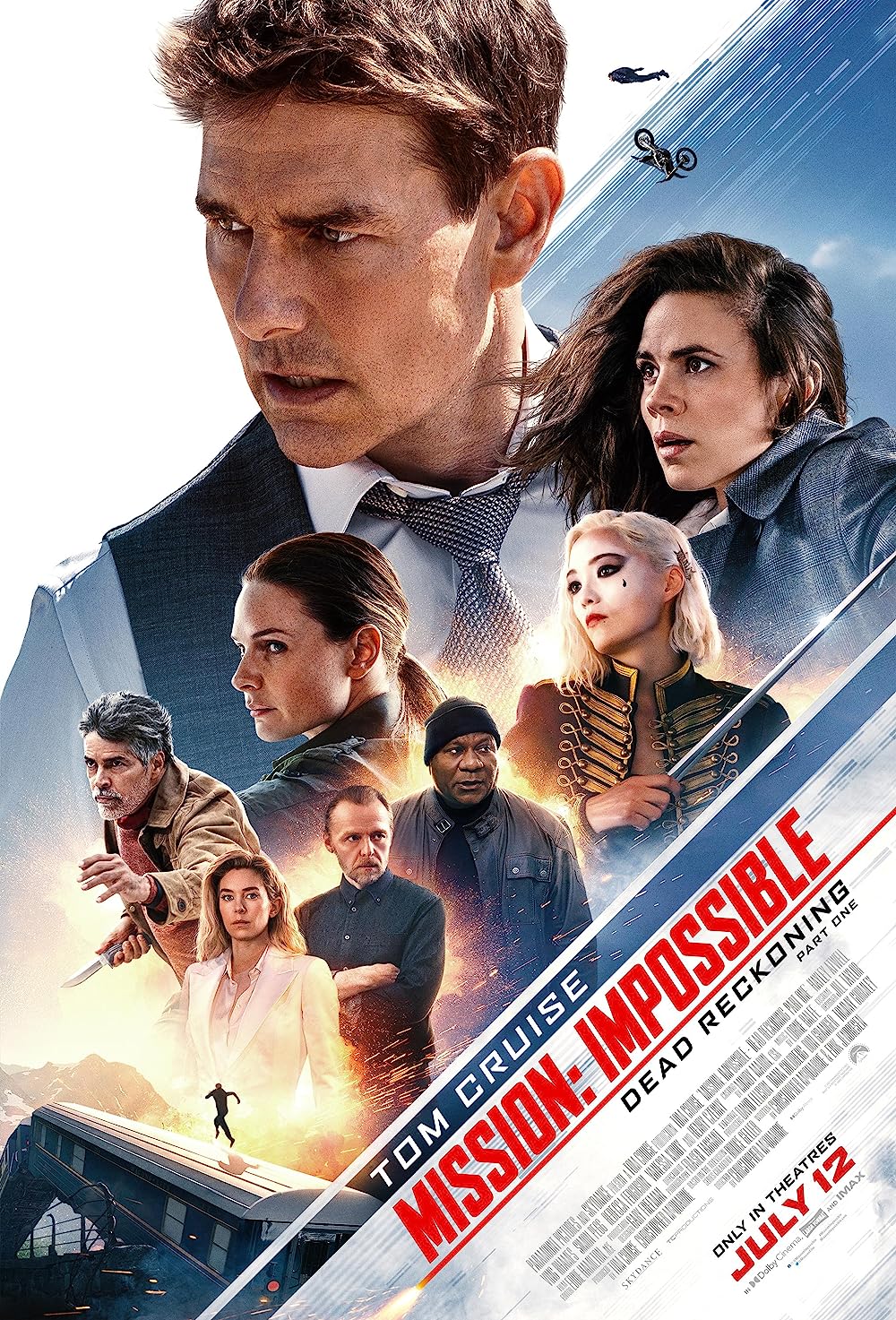
Exhilarating! Pure, unadulterated cinema! Tom Cruise and the whole Mission Impossible team deliver what is likely the most epic movie of the year!! It’s thrilling, funny, and suspenseful from beginning to explosive ending! Part 1 is both a complete story and sets up Part 2 exceptionally well. If I am to be objective, Mission: Impossible III delivers the best story; however, audiences are still going to love this movie because feels like cinema in every measurable way. Move over James Cameron, Christopher Nolan, and yes even Martin Scorsese, for it is Tom Cruise whom knows how to deliver cinema to audiences.
Ethan Hunt (Cruise) and the IMF team must track down a terrifying new weapon that threatens all of humanity if it falls into the wrong hands. With control of the future and the fate of the world at stake, a deadly race around the globe begins. Confronted by a mysterious, all-powerful enemy, Ethan is forced to consider that nothing can matter more than the mission — not even the lives of those he cares about most.
After the massive success, both critically and financially, of Top Gun: Maverick I was curious to witness whether or not Cruise would pull off another cinematic hit. Suffice it to say, he did just that! The last remaining movie star, in the classical sense, Tom Cruise continues to deliver entertaining and thoughtful cinema. In an era overridden by form over function motion pictures (though, there is certainly a place for those stylistic films), Mission Impossible: Dead Reckoning Part 1 (MI7) proves that cinema is should generally concern itself with both the form and function equally. By sticking to foundational screenwriting conventions, pairing it with sequences that make the most of every square inch of that big silver screen, the entire MI team demonstrate why cinema is not only about the art of the narrative but also in a larger-than-life experience.
The entire auditorium was electric at the screening I attended. I don’t think I felt the level of kinetic energy at the cinema since Top Gun: Maverick. It even surpassed the high-energy of the more recent The Flash. Perhaps it is the combination of classical espionage/action plotting and epic-sized set pieces and locations. While MI7 feels very much contemporary, it also never forgets its roots in both the previous MI movies or in the original TV show. Of course there are those that will overly critique the dialogue, more specifically its lack of subtext, but I argue that it is on brand with and perfectly appropriate for this genre movie. Does that mean writers and directors should simply aim for status quo? No, MI3 proved that MI movies can be exciting and full of heart, complete with characters rich with dimension. But the dialogue should not significantly impact the overall experience of this movie.
Without getting into spoilers, the mission, should you choose to accept it, is to stop the character of opposition from unleashing a destructive artificial intelligence (AI) on the world. Talk about timely social and tech commentary. The film broaches topics such as truth (subjective/interpretive truth) and truth (as in universal truth). By extension, this same idea is carried over into fact vs opinion and predictive decisions (in the vein of Minority Report). In short, the crisis that Ethan is attempting to prevent is one that would completely disrupt, retcon, and violate the very informational fabric of life. Think Skynet. While I wouldn’t characterize MI7 as being inordinately deep or thoughtful, concerning truth and AI, it does posit these questions and subjects, which provides opportunities for more discerning audiences to discuss the advantages and disadvantages of AI. More specifically, the dangers of AI falling into the wrong hands.
The set pieces and locations are cinematic in both scale and scope. From the beginning of the movie on a submarine in the Bearing Sea to the Alpine vistas of Austria, the best way to experience this motion picture is in a premium format at your local cinema. Moreover, the biggest screen with best sound possible will make the car chases and Tom Cruise’s stunts all the more outstanding! Even though we’ve all seen that stunt in which Cruise launches himself off the mountain on a motorcycle in various promotional content for this movie, watching it in the third act of the film was still so incredibly impressive!
While Cruise performing most of his own death-defying stunts is unparalleled and impressive enough, what makes these car chases and stunts even more adrenaline-pumping is the fact so little CGI is used. Tom Cruise is literally launching himself off a mountain, and he (and others) are literally driving cars through the streets of Rome. The lack of overt CGI or relying upon it to take the real danger out of the stunt sequences removes just that–the danger. These stunt sequences are all the more exciting because they are real–there is little to no simulation employed. Not to over simplify, but the dimension of real beats the flat, lifeless CGI sequences every time. Real>artificial.
And that’s precisely what we have here real cinema! On a personal note, I am so incredibly grateful for Tom Cruise keeping cinema alive! He has demonstrated through Maverick and now with MI7 that he understands what it means to craft cinematic stories for the silver screen! Before you @ me, I am fully aware that cinema takes various forms, form intimate character studies to the avant-garde, but the power of a genre movie that follows screenwriting conventions should never be devalued. Genre movies are what helped build cinema, and folkslike Tom Cruise keep them coming to entertain and thrill us.
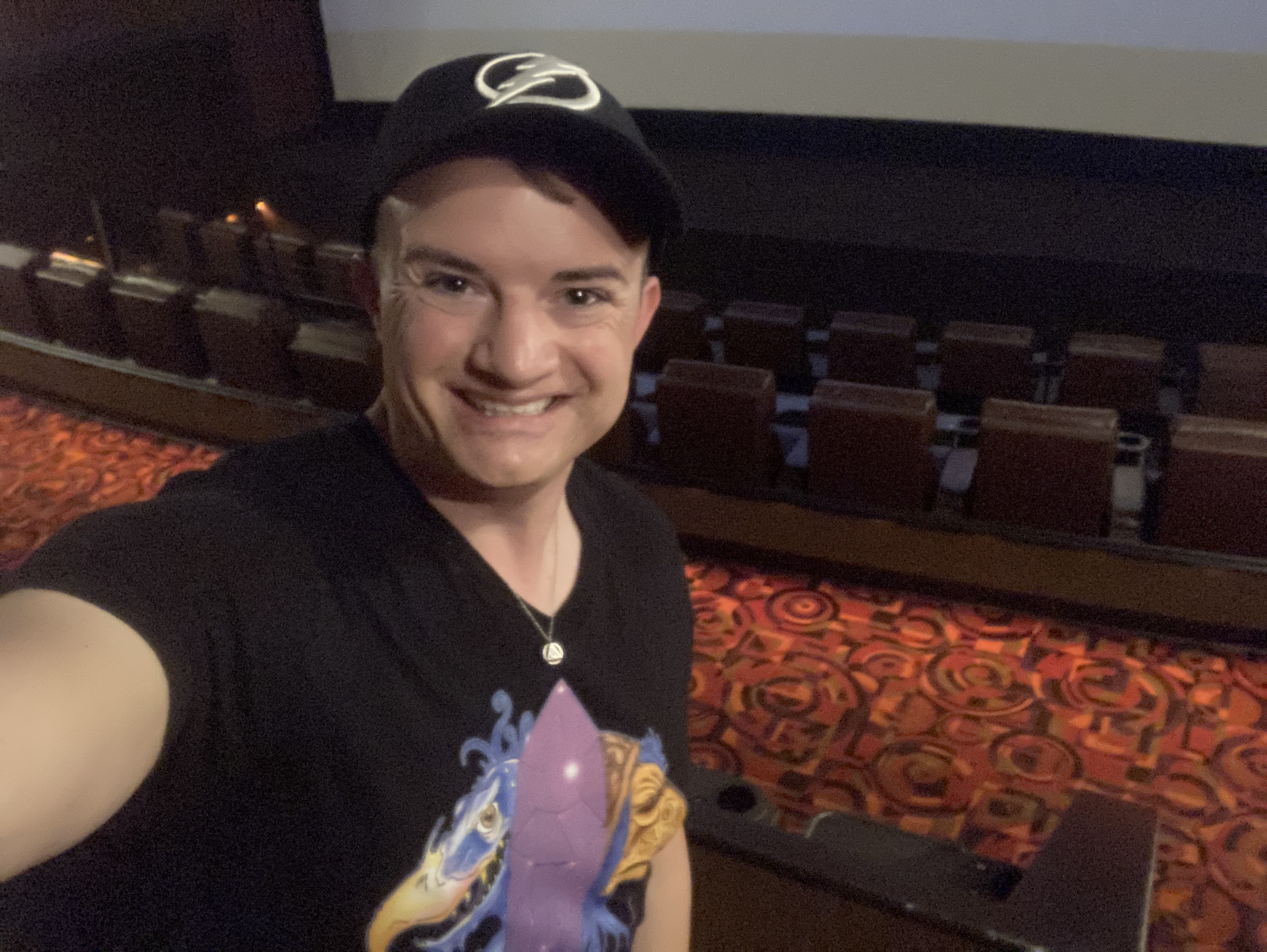
Ryan teaches Film Studies and Screenwriting at the University of Tampa and is a member of the Critics Association of Central Florida and Indie Film Critics of America. If you like this article, check out the others and FOLLOW this blog! Interested in Ryan making a guest appearance on your podcast or contributing to your website? Send him a DM on Twitter. If you’re ever in Tampa or Orlando, feel free to catch a movie with him.
 R.L. Terry ReelView