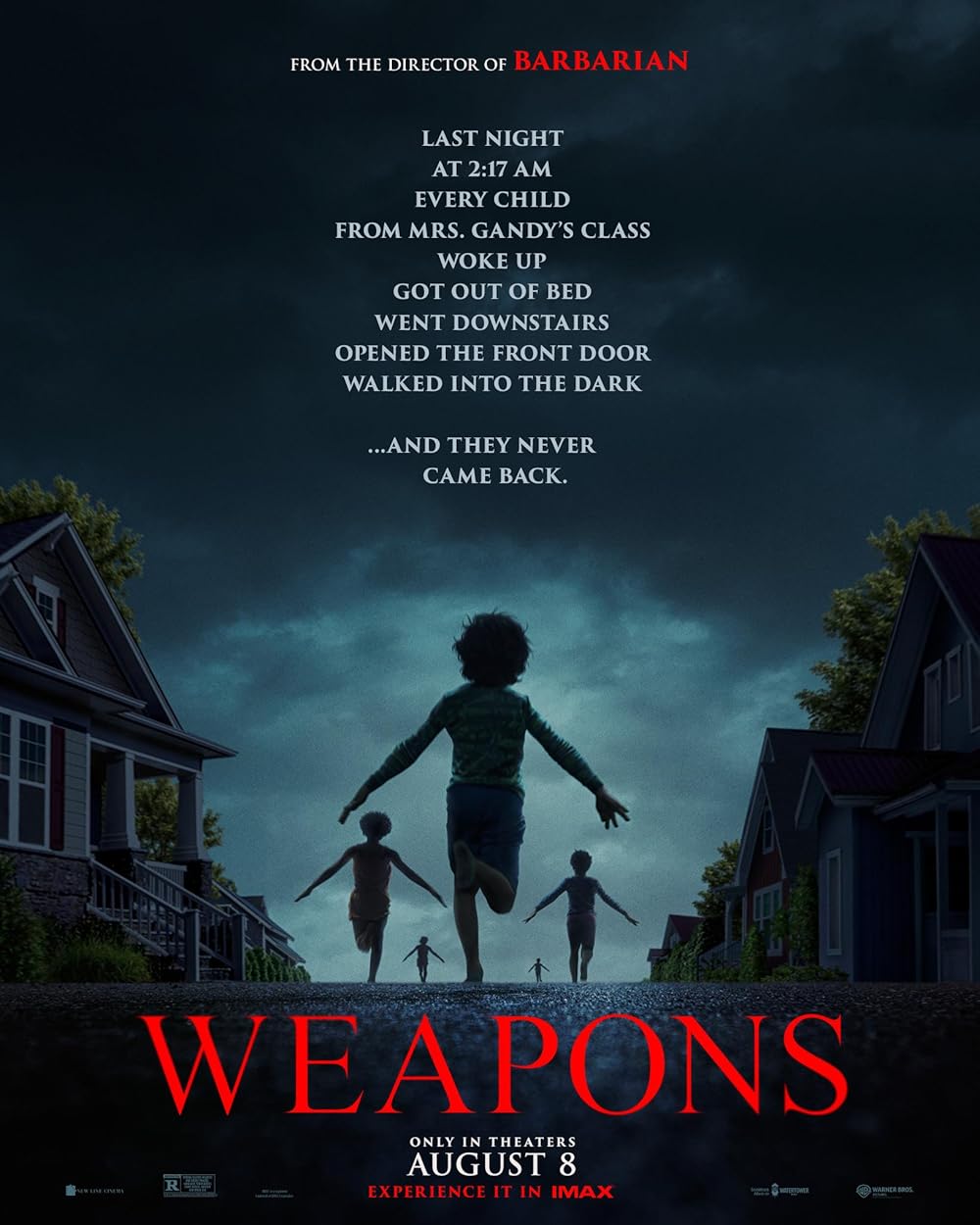
Sleek, stylish, and appears razor-honed, but needs a little sharpening. Zach Cregger’s Weapons takes audiences on a visually arresting and emotionally charged journey that blends suspense, terror, and moments of surrealism. While the film excels in crafting atmosphere through its immersive sound design, haunting imagery, and striking cinematography, its story ultimately collapses under the weight of overwriting and structural ambition. Despite moments of genuine tension and intrigue, the story struggles to cohere into something emotionally resonant or thematically satisfying. In the end, Weapons proves to be more refined in aesthetic than in substance—an experience-driven work that favors tone over storytelling.
When all but one child from the same classroom mysteriously vanish on the same night at exactly the same time, a community is left questioning who or what is behind their disappearance.
Weapons positions itself as a psychological horror anthology-adjacent film that aspires to echo the structural ambition of Trick ‘r Treat and the dread-soaked atmosphere of Hereditary. Each composition is meticulously crafted, echoing the influences of Ari Aster, David Lynch, and Paul Thomas Anderson. The film’s immersive sound design, scored with unnerving precision, deepens the psychological tension, ensuring that audiences feel trapped within the same spiraling unease as its characters. Cregger, best known for the unexpected 2022 breakout Barbarian, attempts something far more sprawling here: a multi-threaded, nonlinear horror tapestry that spans time, location, and character perspectives. On paper, the structure is bold and ambitious. But unlike Barbarian, which grounded its twists in a tightly wound narrative, Weapons ultimately feels thematically scattered and emotionally distant. Characters arrive with weight, but rarely evolve; connections are drawn, but their meaning feels underdeveloped.
What Weapons does exceptionally well is craft an experience. Cregger’s talent for generating sustained suspense, is elevated here to a more mature and stylized level. The tonal consistency, even across multiple timelines and narrative threads, is admirable. Individual sequences build atmosphere masterfully, utilizing silence and suggestion as effectively as sudden, jarring visuals. The sound design alone is enough to make your skin crawl—unsettling, precise, and deeply immersive. The cinematography delivers an unnerving blend of realism and the uncanny, grounding even the most supernatural or surreal moments in believable textures and light.
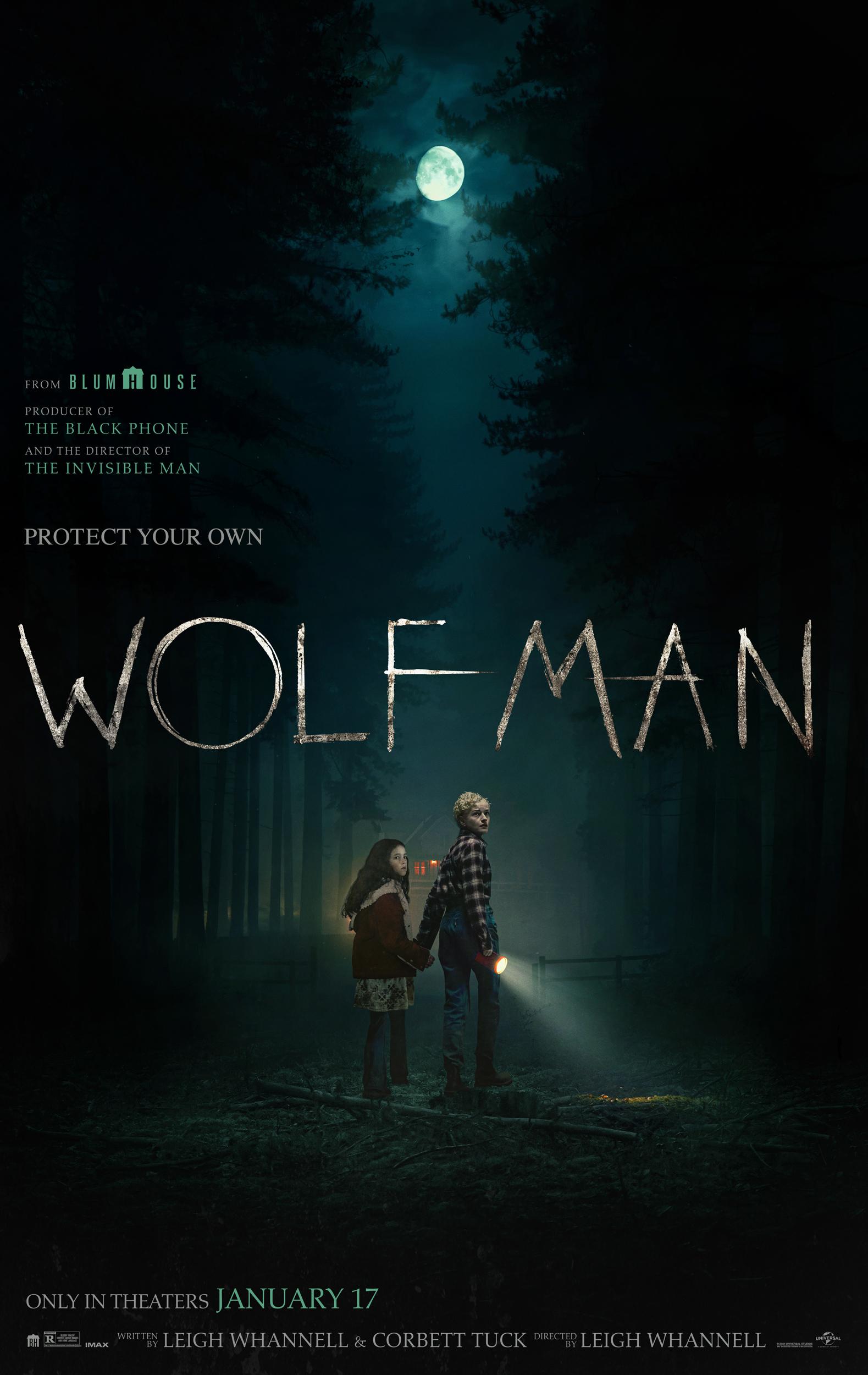
Weapons boasts an outstanding performative dimension. Each of the lead and key supporting actors deliver performances that are uniformly committed, standing out for their subtle, tortured portrayals of people unraveling in the wake of the trauma of the kids vanishing. After the mostly disappointing Wolf Man earlier this year, I was curious to see if this film would be the vehicle needed for Julia Garner (until the Madonna bio pic that’s calling her name) to showcase her acting chops. The performative quality we witnessed of her in Ozark is what we have in Weapons. Josh Brolin offers stoic gravitas, while Austin Abrams adds a jittery, unpredictable energy. And then there’s Cary Christopher’s unsettling Alex, complete with enough creepy kid energy to fill a whole classroom. Collectively, their efforts lend some gravitas and humanity to a film that often prioritizes vision over narrative.
Without getting in to spoilers, the film takes a turn midway through the second act that completely shifts the experience and even the tone of the picture. One might say that the movie sets up one mystery and eventual payoff, but then deviates onto a different (and ultimately more predictable) path. Once that (unfortunately too obvious) reveal is made midway through the investigation into the disappearance of the classroom of kids–save one (Alex)–then it becomes quite the twisted fairytale. But therein likes one of the most significant problems I have with the film–because of this twist, there are questions that emerge for which we will not be provided answers. We can certainly draw conclusions, that are most likely correct, but this isn’t the type of picture that should require that level of guesswork. When that twist is revealed, explanations of reasons for the motivation and consequences, should the plan fair, are not sufficiently clear.
Horror thrives in that liminal space between order and chaos, but Weapons leans too heavily into the latter. Instead of meticulously peeling back layers to reveal a deeper truth, it obscures character arcs and emotional payoffs beneath narrative experimentation. In striving to be a psychological puzzle-box, the film forgets to provide the audience with enough meaningful pieces to solve it. As a result, Weapons leaves audiences with questions that the film should have answered because it clearly desires to be a genre horror film–it’s not Memento. However, the climax of the picture, while somewhat predictable, is none-the-less satisfyingly bold.
In the end, Weapons is a film that demands attention but struggles to justify its complexities. It will certainly appeal to fans of the prestige horror aesthetic, but despite the converging narratives it never quite hits the mark of a film that invites multiple viewings in order to fully appreciate the story and the apparatus thereof. But for general audiences, or those seeking a tightly woven narrative, the film’s impact may feel more like a glancing blow than a direct hit. Visually stunning and rich in atmosphere, Weapons captivates the senses but lacks the narrative clarity and cohesion to land its thematic strikes. A bold motion picture outing, it’s a film that’s more experience than story—one that feels sharpened in presentation but blunted in meaning.
Ryan is the general manager for 90.7 WKGC Public Media in Panama City and host of the public radio show ReelTalk “where you can join the cinematic conversations frame by frame each week.” Additionally, he is the author of the upcoming film studies book titled Monsters, Madness, and Mayhem: Why People Love Horror. After teaching film studies for over eight years at the University of Tampa, he transitioned from the classroom to public media. He is a member of the Critics Association of Central Florida and Indie Film Critics of America. If you like this article, check out the others and FOLLOW this blog! Follow him on Twitter: RLTerry1 and LetterBoxd: RLTerry
 R.L. Terry ReelView