SHELBY OAKS horror movie review

A cautionary tale of when YouTubers confuse content with cinema.
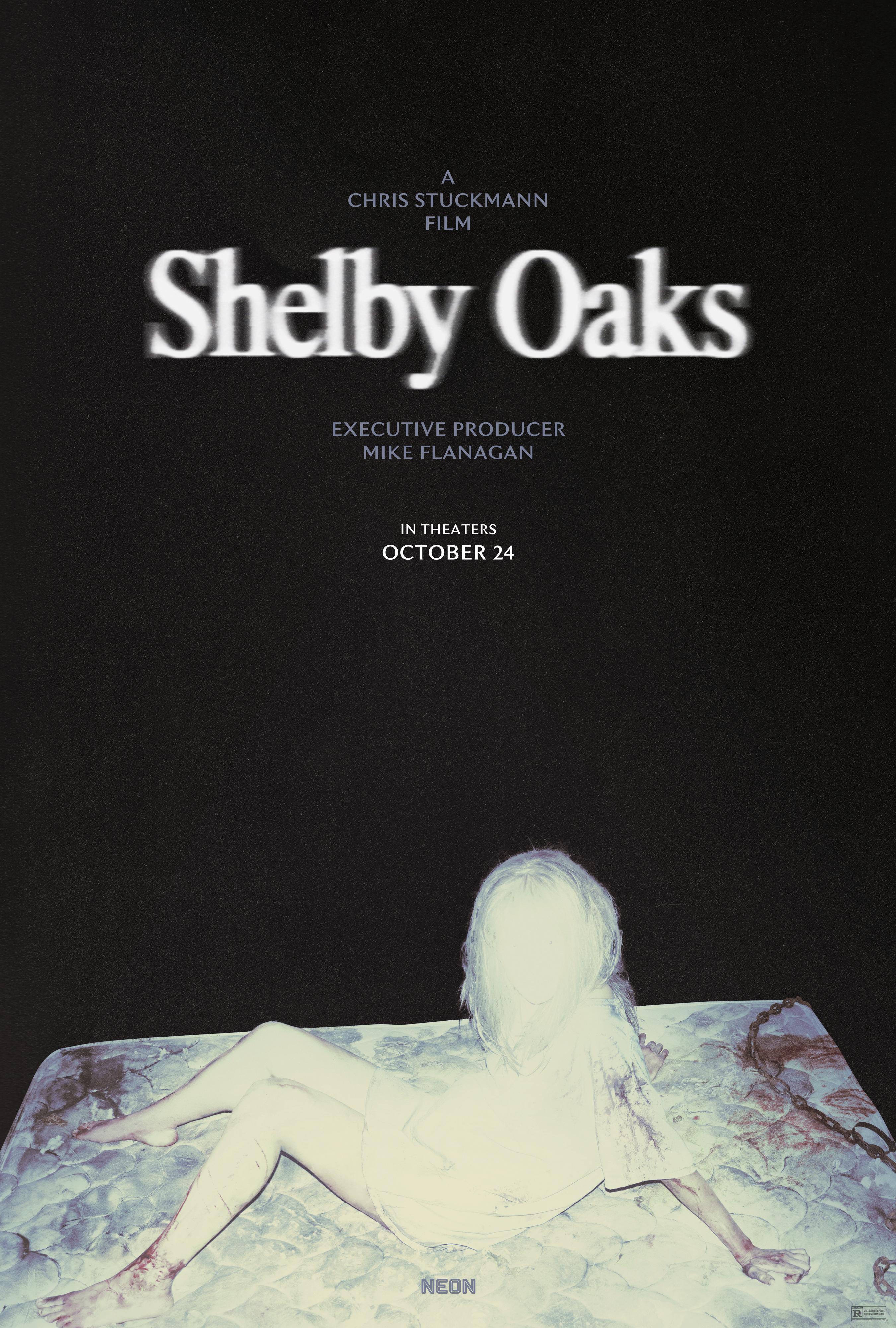
Chris Stuckmann’s Shelby Oaks arrives with all the makings of a breakthrough: (1) it’s one of the most successful Kickstarter-funded indie films ever, and (2) it’s directed by one of YouTube’s most popular influencer-critics. In fact, I’ve used some of his videos in my own classroom—good material: informative, engaging, and accessible for budding cinephiles. But therein lies the rub: informative and engaging does not a motion picture make. The premise, though, is undeniably intriguing—a reimagining of familiar horror tropes with contemporary urgency. Stuckmann delivers a film that has the bones of something potent—think The Blair Witch Project meets Rosemary’s Baby: paranoia, obsession, and the horror of the unseen, all wrapped in a missing-person mystery and topped with a bow of supernatural dread.

Shelby Oaks is about Mia’s search for her long-lost sister and paranormal investigator Riley becomes an obsession when she realizes an event from her past may have opened the door to something far more sinister than she could have ever imagined.

Like many contemporary filmmakers–particularly those that got their start on YouTube–Shelby Oaks excels in technical achievement and marketing. The cinematography is confident and atmospheric, drenched in moody lighting that evokes gothic horror. There is little doubt that Stuckmann clearly understands shot composition, pacing within the frame, even editing in-camera and the importance of visual tone. All the technical elements are quite impressive for a debut feature. And if all a motion picture was–was the visual elements–it’d be easy to admire. But it isn’t. Even Hitchcock knew that. Which is why Hitch never wrote his own screenplays–he generated the idea, even outlined entire scenes and sequences–but he knew that he needed to work with a screenwriter, that understood the material, in order to fully realize his movie idea for the screen. What is greatly lacking in contemporary cinema is an understanding of what makes a great story–plot structure, mechanics, and the emotional substructure.

But Shelby Oaks falters where too many YouTube-born filmmakers stumble—storytelling. Shelby Oaks has a great idea for a movie, but not a fully realized narrative. At its core, the narrative never builds sufficient momentum. Why? Simple–because there’s no real opposition. “Evil,” in the abstract, isn’t conflict. Opposition must manifest into something tangible between the character and his or her external goal, whether that’s a person, a system, or her own inner demons. For all the supernatural activity in the film, there never truly emerges a character of opposition. The result is a macabre mystery that depicts scenes and sequences wherein Mia’s pursuit unfolds, but without the benefit of a tangible sense of escalation or even revelation. Shelby Oaks is more of a proof of concept rather than a complete story.

Stuckmann, for all his film knowledge, seems more comfortable replicating tone and texture than constructing narrative architecture. His background in reviewing movies gives him an eye for what looks right—but not yet the discipline to shape what feels right. He understands what sells, what gets views, and even genre conventions. But sadly, none of the characters, including Mia, possess real dimension or agency. She and the rest of the characters are vehicles for mood rather than emotional engagement.

What works on YouTube—enthusiasm, charisma, and technical dissection—doesn’t automatically translate to cinema. His channel reveals a deep love of horror and a commendable understanding of its visual language, yet Shelby Oaks exposes the gap between appreciating a genre and authoring it. The film lacks what isn’t needed in (and can even get in the way of) YouTube content: storytelling mechanics, structure, and the discipline of narrative design. It’s one thing to analyze story beats; it’s another to build them, to shape character arcs, rhythm, and tension through the grammar of storytelling rather than the syntax of spectacle. Often, YouTube videos have great hooks, but they lack the narrative substance behind the hook.

What’s most frustrating is how close Shelby Oaks comes to working. The concept is rich, and the craftsmanship is undeniably strong. Stuckmann clearly loves cinema, and there’s passion behind every frame. But cinema isn’t content creation—it’s storytelling. And storytelling requires more than aesthetic confidence; it demands structure, development, and resolution.

The YouTube garden is flourishing with emerging directors, cinematographers, and editors—talented creators who’ve mastered the language of cameras, lighting, and cutting for attention. But what it’s not producing are writers. The art—and science—of writing seems to be withering in the age of influencer cinema. Many creators know how to make something look good but not why it should matter. Storytelling requires patience, discipline, and a willingness to think beyond the thumbnail and algorithm. In a culture where speed and spectacle drive engagement, screenwriting—the slow, deliberate architecture of character, conflict, and change—feels almost antiquated. And yet, it remains the soul of cinema. Without writers, we get films that resemble content: sleek, competent, and hollow.

Shelby Oaks stands as a cautionary tale of when YouTubers confuse content with cinema. Furthermore, this movie is an example of the hollowness of contemporary cinema, how cinema is feeling more and more disposable as the months and years pass the silver screen. The tools are there, the ambition is there, but without mastery of story, all that remains are haunting images in search of a heartbeat.
Ryan is the general manager for 90.7 WKGC Public Media in Panama City and host of the public radio show ReelTalk “where you can join the cinematic conversations frame by frame each week.” Additionally, he is the author of the upcoming film studies book titled Monsters, Madness, and Mayhem: Why People Love Horror. After teaching film studies for over eight years at the University of Tampa, he transitioned from the classroom to public media. He is a member of the Critics Association of Central Florida and Indie Film Critics of America. If you like this article, check out the others and FOLLOW this blog! Follow him on Twitter: RLTerry1 and LetterBoxd: RLTerry
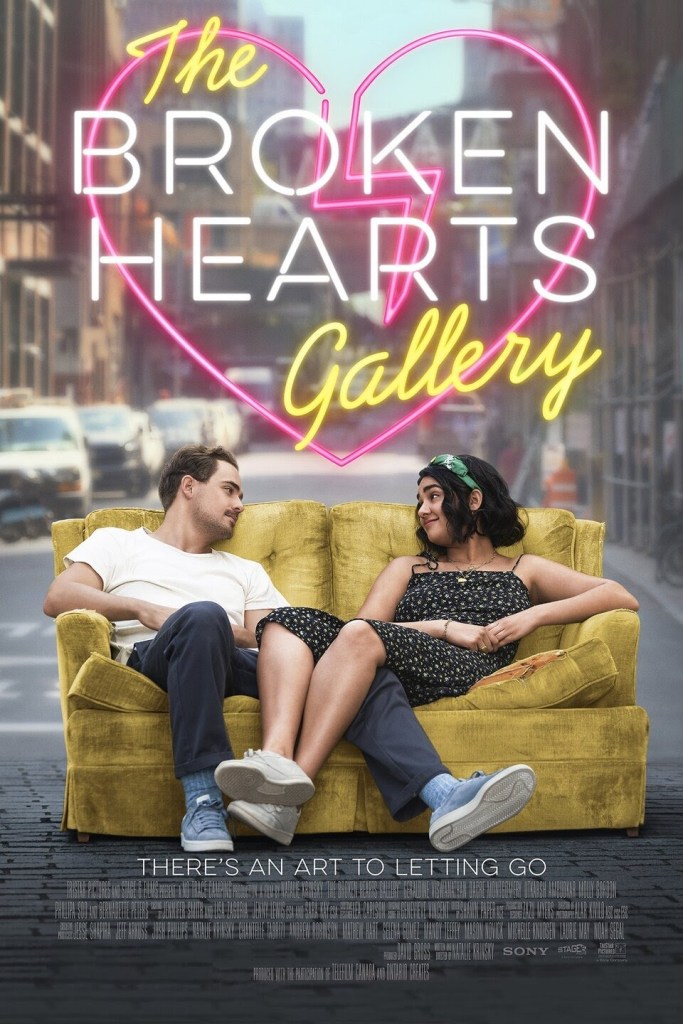
“Broken Hearts Gallery” Mini Film Review

Clever concept wrapped up in a paint-by-the-numbers romcom. Broken Hearts Gallery has all the makings of a delightful romantic comedy. Furthermore, its path to success looks to be clear of any plot-blematic traffic jams; however, despite the promising start to the journey, unexpected congestion forces the cute movie to take the nearest exit into the town of Mediocrity where it resides in perpetuity. This movie is a prime example of how a thoughtful story can suffer from thoughtless plotting. Continuing the roadway analogy, plotting is the method by which the story is told, the roadmap, if you will. It follows accepted conventions that enable a writer to construct just how you get from the beginning to the end. Sometimes, a movie can have a great narrative, but then the promising narrative gets rerouted or derailed along the lines. At the end of the day, it’s a screenwriting problem. Often times, the setups and punchlines are delivered in such as if to be followed up by a laugh track. And don’t get me wrong, I love the laugh track. Hence why it is part of my newly launched audio sitcom Four’s a Crowd. However, a motion picture is not the place to utilize writing tools best suited for a half-hour situation comedy. This movie’s lean into sitcom writing should not come as a surprise since the producer Selena Gomez got her start as a sitcom star and the director Natalie Krinsky has written for Gossip Girl. The worlds of teen sitcoms and dramas are the worlds with which this talented team is most familiar. Often times these types of movies include a great cameos or supporting roles from an A-list star of the stage or screen, and this movie is no different; however, the A-list supporting role of the gallery owner played by the incomparable Bernadette Peters is completely wasted. While the talent of Peters is underutilized and misappropriated, the rest of the cast is charming! What this movie lacks in strong writing, it makes up for in keeping the audience entertained by the banter and witty dialogue between characters. Again, something better suited for a television comedy in which the plot is somewhat secondary to the campy performances and unrealistic comedic exchanges between characters.

Broken Hearts Gallery is about art gallery assistant Lucy (Geraldine Viswanathan) who gets dumped by her longtime boyfriend, and decides to create an art exhibit featuring carefully curated pieces representing past relationships.

If you’re looking for an uplifting movie to accompany your weekend, then this will do the trick. What’s funny is that movies that should release in theatres are releasing at home; and then you have this glorified Netflix or Prime original movie that should be released at home, somehow releasing in theatres. Distribution companies have this whole thing backwards.

Ryan teaches screenwriting and American cinema at the University of Tampa. If you like this article, check out the others and FOLLOW this blog! Ryan is also the creator of the Four’s a Crowd sitcom podcast now streaming on your favorite podcatcher. Interested in Ryan making a guest appearance on your podcast or contributing to your website? Send him a DM on Twitter or email him at RLTerry1@gmail.com! If you’re ever in Tampa or Orlando, feel free to catch a movie with or meet him in the theme parks!

Follow him on Twitter: RLTerry1

“Union Bridge” (2019) Indie Film Review

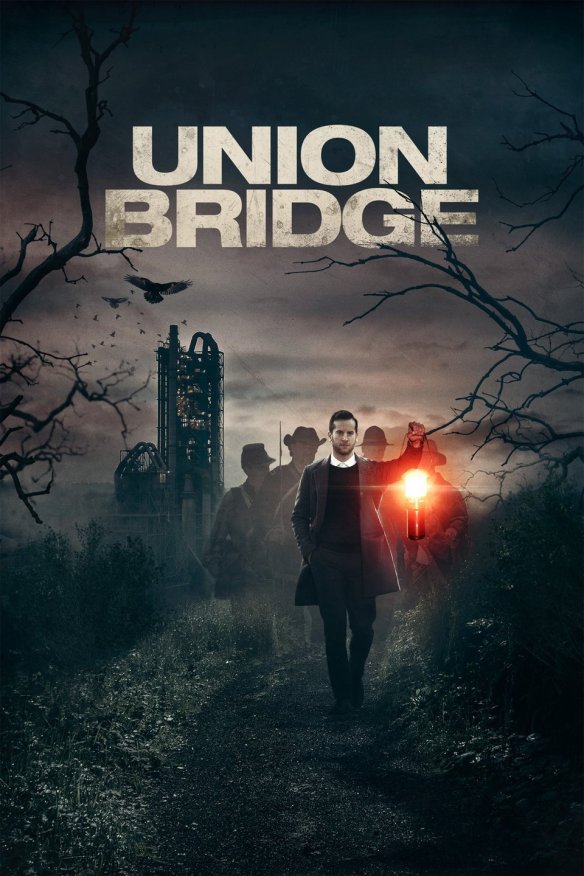
A neo-noir southern gothic directorial debut that delivers overwhelmingly on its foreboding sense of surreal dread, but underwhelmingly on its narrative substance in this slow-burn film. First-time writer-director Brian Levin showcases his command of atmosphere and world-building, but his screenplay lacks focus and direction. Levin certainly demonstrates his keen eye for crafting a haunting ambiance in the vein of David Lynch, but the overall experience suffers diegetically. While the premise is intriguing, the plot is all over the place. Following the central character who has returned to his hometown from the big city, the audience is taken on a surreal psychological journey into the darker side of this otherwise wholesome-looking town. Unfortunately, this journey lacks a destination and ultimately leaves the audience wondering why they should care about anything that happens in the film. Levin’s debut feature strikes the right tone for a neo-noir that teeters towards thriller-adjacency; but despite thriller being in the billing, it never quite reaches that goal. Perhaps screenwriting is not Levin’s strong suit; that said, there is much to be admired in his endeavor. All the mise en scene elements work together seamlessly to create an atmosphere that stimulates the senses and draws you in from the moment that the film opens. Union Bridge has everything else going for it in terms of casting, cinematography, score, editing, and production quality. Which tells me that Levin has what it takes to craft a visually compelling story for the screen, but needs to leave the writing to someone else. Should he pair up with a screenwriter that has a penchant for neo-noir or horror next time, then it is entirely possible that we may be having a different discussion.

Will Shipe (Scott Friend), the scion of a powerful family living near the Mason Dixon line, moves back home after years in the big city. His old friend Nick (Alex Breaux), who still lives in town, is feverishly digging in the land because of a vision he can’t escape. What is buried in this small town and the events around it have repercussions that effect many people. Most of all, Will Shipe, and the past and future of his legacy. Assisted by his high school sweetheart Mary (Emma Duncan), Will must uncover the long-kept family secrets buried beneath the fields of his hometown.

If you go into this expecting a southern gothic thriller, you will be disappointed. Not because it doesn’t feel like a gothic horror, but because it never delivers on the thrill. There really isn’t any suspense either, by Hitchcock definition, because the audience is never supplied with information. Incidentally, the audience will be desperately seeking information to make some sense of what is happening on screen. Levin introduces and sets up some potentially juicy plot devises and backstory, but never revisits any of them in a manner that pays off at any level. We never figure out what the family’s dark secret is, why Will has to return to his hometown (tho, it’s vaguely hinted at), or why Will’s mom’s despises her late husband. Will’s childhood sweetheart is said to be practicing a form of witchcraft, but Levin goes nowhere with that either. The family’s and town’s past and present are only connected because we are, in not so many words, told they are. So many ideas for a southern gothic thriller, but they come off as more of a stream of consciousness or outline than a coherent narrative. Even the romance between Mary and Will goes nowhere of particular interest. And when Will’s childhood friend Nick (spoiler alert) dies, you simply won’t care. This film deeply desires for you to give yourself over to it, but you won’t form an emotional connection with any aspect to the story. Perhaps this “story” can be characterized as the plot to nowhere–speaking of which–I’m still wondering where the “bridge” in the title even comes from; there is simply no bridge, past or present, in this landlocked town.

Okay, now that I got all the negative out of the way, I want to spend time on highlighting what I enjoyed in this picture. I’m often hesitant to be too professor-y or critical with a directorial debut, because I commend anyone, who for the first time, sets out to make a picture and get it distributed. So, I offer congratulations on a job well-done to Mr. Levin on completing something he set out to do. Thousands of people set out to shoot films that are often left incomplete for one reason or another. Where this film fails to deliver is the story–and no mistaking it–that is HUGE; however, Levin can use this as a learning opportunity that teaches him that he has director chops, not necessarily screenwriting chops. Should he choose to work with a different screenwriter, other than himself the next time, then he has what it takes to guide the production from page to screen.

I am a fan of David Lynch, and Muholland Drive and the TV show Twin Peaks are among my favorites of his. Even without knowing from press materials that Levin is also a fan of Lynch, I knew it within with first five minutes of the film. The cinematography, editing, and score are all reminiscent of Lynch, specifically Twin Peaks. Levin successfully blends the macabre and mundane nature of this town in a manner that reveals that the former is contained within the latter. Furthermore, Levin crafts an atmosphere that is familiar yet foreign to Will, and by extension, the audience. Although this story feels like it should have taken place in Georgia or South Carolina, the settings in Maryland were ideally suited for Union Bridge. The factories represent the past whereas Will represents the future (or let’s be real, the present), much in the same way that his mother lives in the past, and resists living in the present. When the past and present come face to face, the blurred area between the two is where this nightmare resides. Levin’s talent for direction is also witnessed in the actors’ performances. All the performances are generally fantastic, especially Breaux’s character of Nick. Each character is right out of a Lynchian film, and works perfectly in Levin’s surreal Maryland town. There are some beautiful nuances to the technical elements that work together to create this idyllic setting surrounded by an emanation of dread. Atmospherically, Levin knows precisely what to do, and I hope to see more of his craft paired with a better story in the future.

Union Bridge is available on a streaming service near you.

Ryan teaches screenwriting at the University of Tampa. If you like this article, check out the others and FOLLOW this blog! Interested in Ryan making a guest appearance on your podcast or contributing to your website? Send him a DM on Twitter or email him at RLTerry1@gmail.com! If you’re ever in the Tampa area, feel free to catch a movie with him!

Follow him!

Twitter: RLTerry1

“The Tell-Tale Heart” (2020) Horror Short Film Review

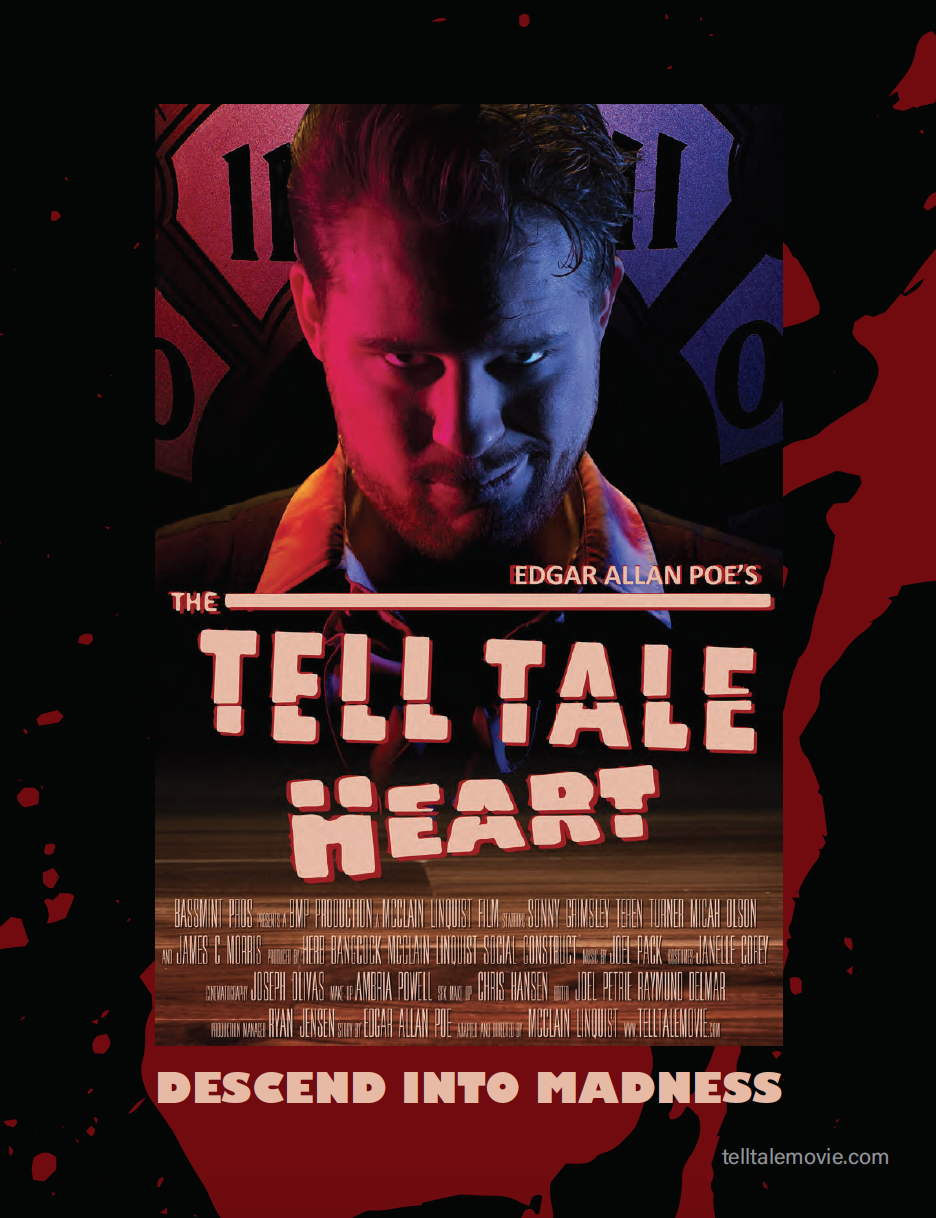
Tell-tale signs of outstanding cinematic talent right here! I don’t often choose to write a formal review of short films for which I receive screeners. Usually, I Tweet my thoughts on the film when I receive a request from an eager filmmaker who’s interested in what Professor Horror, as I’ve come to be known on #FilmTwitter, has to say about his or her motion picture endeavor. Writer-Director McClain Lindquist crafts a wholly original expression of the familiar macabre tale. While there have been many adaptations of Edgar Allan Poe’s The Tell-Tale Heart, this is arguably one of the best and freshest interpretations of the masterful storytelling of Poe. I appreciate this adaptation for its fresh take on a familiar story whilst delivering the visceral horror and intellectually-driven elements of the bizarre tale of murder. Every nuance of Poe’s short story is depicted with sheer reverence for the source material, while delivering an original expression of the timeless literary work.

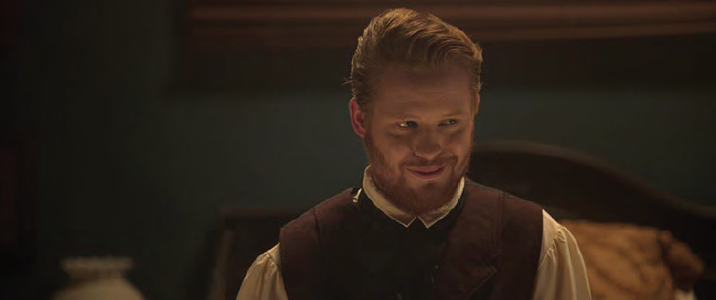
Lindquist reimagines this story through the lens of a David Lynchian approach (with the color pallet of David Fincher), delivering vibes of Muholland Drive. While there are clearly some cracks in the veneer related to the time period in which this story takes place, these cracks are insignificant enough not to detract from the overall cinematic experience. Lindquist should have selected either a modern or gothic period in which to set his adaptation. Actor Sonny Grimsley (what a great last name for horror) not only brings the words of The Narrator to the screen, but he talks to the audience with such incredible sincerity that the utter madness of it all is visualized beautifully. One of the points I hammer in my screenwriting class is dramatize don’t tell. Dramatizing means more than showing the audience the story, it means finding the conflict in every beat of every scene. Fortunately for this adaptation, Grimsley brilliantly dramatizes every word spoken in such a manner that you will be completely enveloped in the twisted tale to which he beckons you to listen.

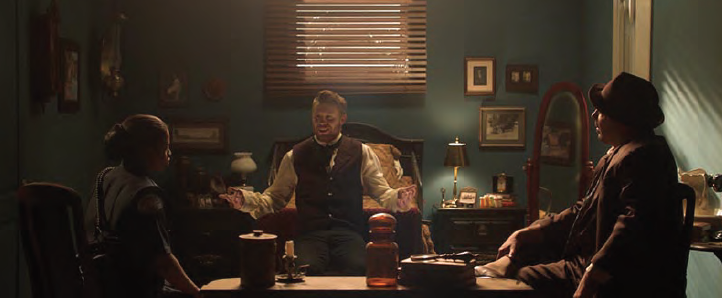
Both the cinematography and stylistic editing are on point, and compliment the tone wonderfully. Although there are a number of standout moments from the film, I want to highlight how the duality of the narrator was expressed dramatically through the use of costuming and set design as well as a mirror. It would be all too easy for The Narrator to express his duality through verbal exposition (as this is taken from a short story), but the creative choice to couple the words of Poe with these striking images shows a strong knowledge of how to effectively go from page to screen. Often short films suffer from poorly executed technical elements, but I am pleased to report that all technical elements demonstrate an exemplary understanding of the art and science of cinematic storytelling. In addition to the technical elements is the haunting and unsettling score by Joel Pack. Lacking a true score is all too commonplace in many short films; not so with Lindquists’s The Tell-Tale Heart, Pack’s score is a character in and of itself. However, it never steals the scene, which allows the audience to become fully wrapped up in everything The Narrator says and does. I love seeing practical effects in all films, but especially horror. Thankfully, there are plenty of gruesome special makeup effects in this film for even the most insatiable appetite for gore, which never falling into the gratuitous category.

Lindquist certainly knows how to capture the madness in The Tell-Tale Heart. In many of Poe’s works, madness is often represented a lack of sufficient reasoning for committing murder or some other undesirable behavior. Lindquist illustrates The Narrator’s madness through the unreasonable rationale he uses to justify the murder of his roommate. Not only do we hear about the attempt at rationalization, it is dramatized for the screen. The only reason the narrator provides, in an attempt to justify the murder, is the simple fact that the roommate’s blind eye covered with a murky blue film bothers him a great deal–haunts him, even. He goes onto explain that he feels that he is being watched all the time. Being angered by the man’s eye is such a petty reason for the narrator to murder him, which proves that he is mentally unstable. Developing his plan for over a week, his madness is further represented through the meticulous premeditation of the method of murder. Furthermore, when The Narrator initially proposes that the “vulture eye” is his motive for murdering his roommate, he is not even fully certain that this was indeed his reason for committing the murder. And through the direction of Lindquist and the impeccable performance by Grimsley, we get into the mind of a madman in terrifying ways that are sure to induce nightmares.

Lindquist’s The Tell-Tale Heart is evidence of a future successful career as a horror filmmaker. I am eager to follow his filmography as he will hopefully use this short film as a springboard to write and direct original content, because we need more original storytellers in this sea of remakes and reboots.

The Tell-Tale Heart plans to release on select streaming platforms Fall 2020. Checkout the trailer!

  • Director: McClain Lindquist
  • Cinematographer: Joseph Olivas
  • Editors: Joel Petrie & Raymund Delmar
  • Sound Effects: Jacob Proctor
  • Makeup Effects: Ambira Powell
  • Music: Joel Pack

Social Media for The Tell-Tale Heart (2020)

Ryan teaches screenwriting at the University of Tampa. If you like this article, check out the others and FOLLOW this blog! Interested in Ryan making a guest appearance on your podcast or contributing to your website? Send him a DM on Twitter or email him at RLTerry1@gmail.com! If you’re ever in the Tampa area, feel free to catch a movie with him!

Follow him!

Twitter: RLTerry1

Instagram: RL_Terry

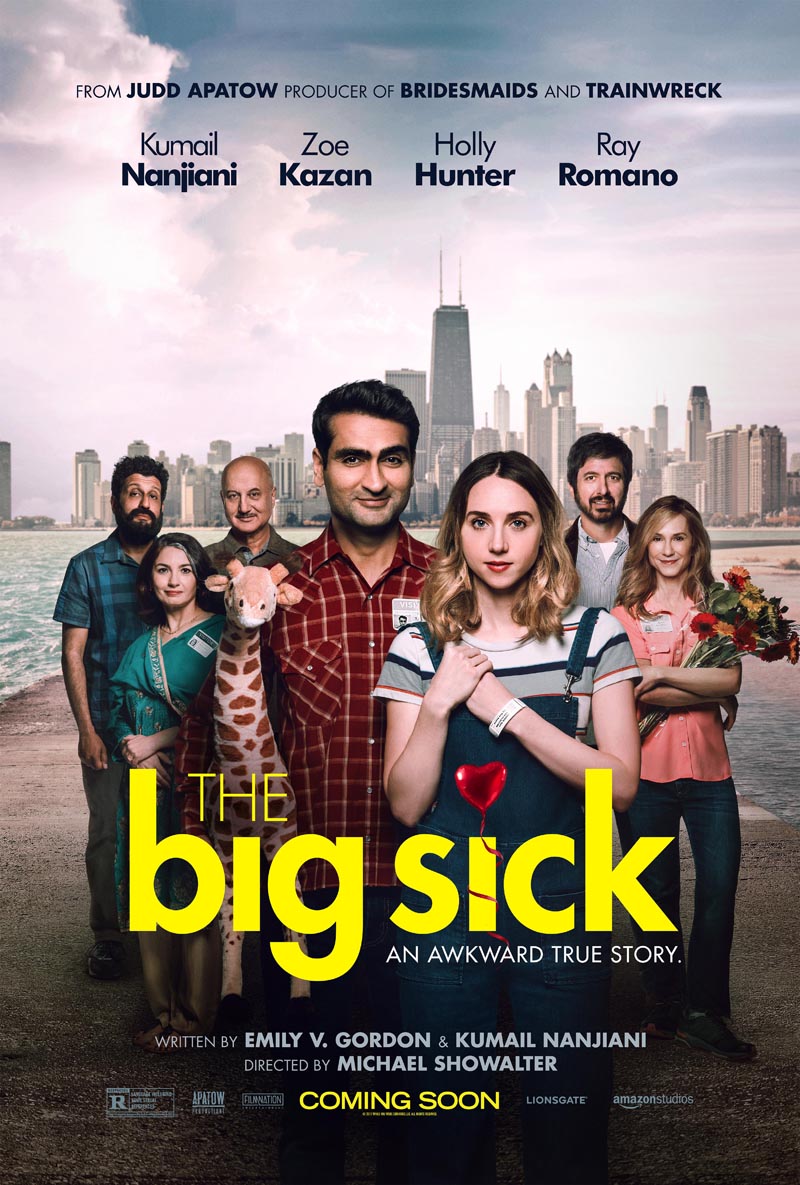
“The Big Sick” movie review

Organic and relatable. From Amazon Studios and Lionsgate comes Judd Apatow’s The Big Sick directed by Michael Showalter. Despite being billed as a romantic comedy (romcom), it is more like a family drama with comedic moments. What makes the plot of The Big Sick so incredibly relatable is its central focus on two star-cross’d lovers caught between two seemingly incompatible worlds. Beyond featuring two people who fall in love quickly, then realize how there is little chance of a future in which they are together, this story has little in common with Romeo & Juliet. No feuding families or riots here, just two 20-somethings who are trying to make it in this world, and by sheer happenstance fall for each other. However, much like the families from which Romeo and Juliet came, there are two opposing forces at work in this love story. It is clear from the screenplay and cast that all the elements are at work to generate a response from the audiences that would make this an endearing classic in the vein of Terms of Endearment. The relatability and organicness of this film comes from the fact that the entire cast–not just the lead characters–are every-day 21st century Americans who are facing the real mountains and pitfalls of romance, acceptance, honesty, and devotion.

The Big Sick tells the true-life story of the courtship between Pakistani-American Kumail (Kumail Nanjiani) and Chicago native Emily (Zoe Kazan). Kumail is a stand-up comic–or rather–he is desperately trying to be. He’s good enough for a small venue but he dreams of performing at the Montreal Comedy Festival. Emily is a graduate student at the University of Chicago studying psychology. Between family backgrounds and professional interests, the two of them could not be more different. When Kumail and Emily fall in love with each other, everything seems to be going so incredibly well over the next few months; but when Emily learns that Kumail cannot take the next step from dating to engagement because of his Pakistani family’s traditions regarding arranged marriage to a Pakistani girl, their relationship falls apart. As circumstance would have it, Emily must be placed under a medically-induced coma in order to stabilize after her health takes an acute turn downward. With Emily’s parents (Holly Hunter and Ray Romano) in town, Kumail must deal with his ex-girlfriend’s health condition and the fact that her her parents despise Kumail after he led their daughter on. Realizing that he cannot allow his family to determine his fate, Kumail is determined to win over Emilys parents and show Emily that he can be who she needs him to be.

What sets The Big Sick apart from a typical par-for-the-course romcom is the dimension and depth of the plot and characters. Ordinarily, a romcom contains a lighthearted story that requires little critical thinking and analysis because it is meant to be simply entertaining with a little heart along the way. Great for date nights and girls nights. Often times, in a traditionally structures romcom, the female character is the most interesting with the rest of the cast playing a lesser role. However, in this film, the most interesting character is the male love interest. Furthermore, the character chemistry and plot are greatly helped by Kumail and Emily being interesting respectively. The underdog trope is often applied to romcoms, and it certainly played a role in this film. In addition to the character and plot development on screen, the audience also goes through some soul-searching. Incidentally, the movie opens the door of discussion regarding the predisposition to how Pakistani and Americans view marriage and dating. Just like past films that commentated on marriage or dating between the black and white communities–which is what was needed in the not so distant past–this film raises awareness regarding marriage and dating as it relates to middle-eastern and American relationships. A timeless plot told through a contemporary setting.